Chapitre 1
The Magical Palette: Where Design Meets the Mystical
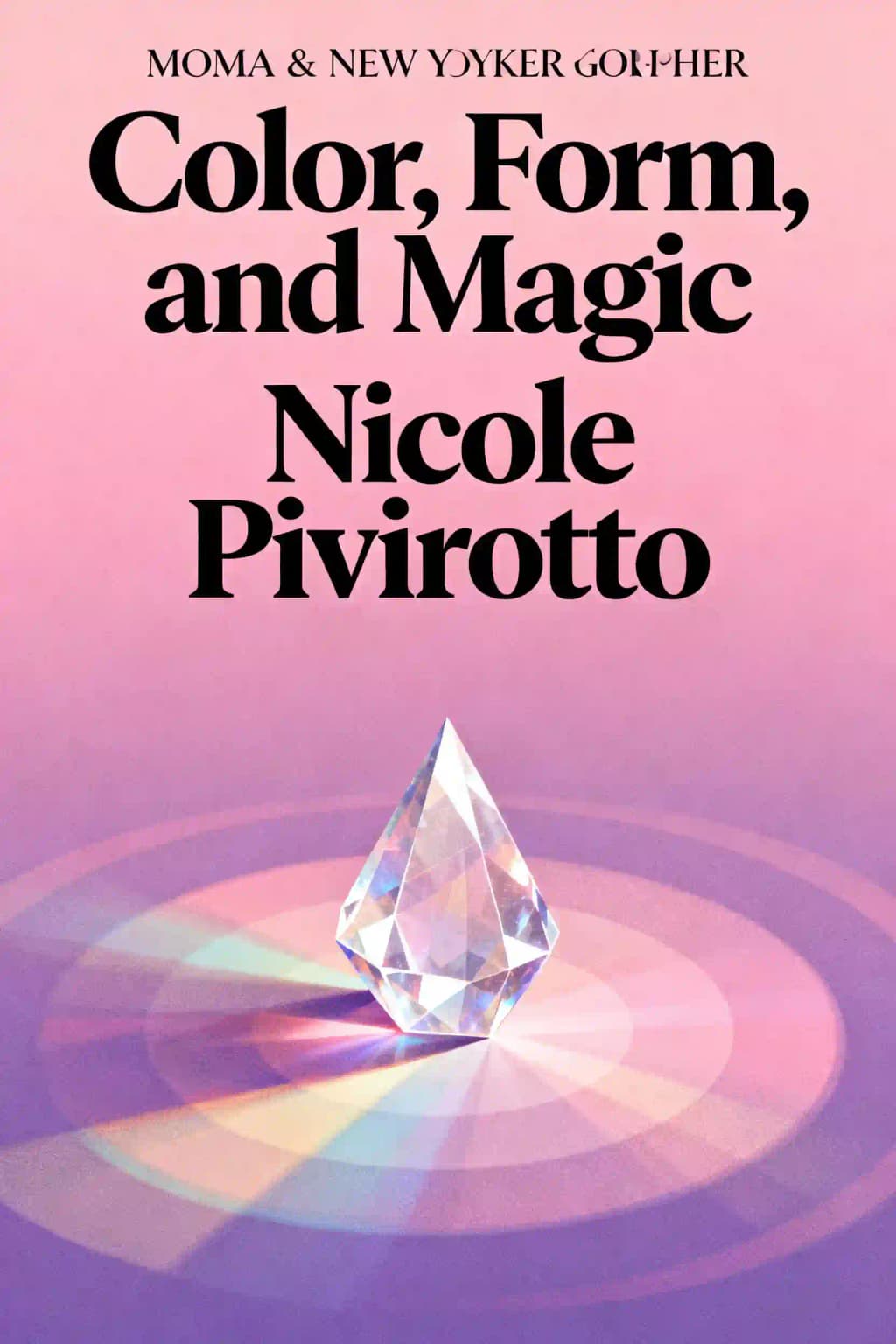
Have you ever wondered why certain colors make you feel energized while others calm your racing thoughts? Or why some shapes seem to radiate stability while others suggest movement and change? Nicole Pivirotto's "Color, Form, and Magic" reveals the hidden connections between visual aesthetics and magical practice, offering a fresh perspective that has captivated both design enthusiasts and spiritual practitioners alike. This groundbreaking work has become something of a cult classic among modern witches and designers seeking to infuse their creative work with intentional energy. Drawing from her unique background spanning both professional graphic design and various spiritual traditions, Pivirotto bridges worlds that have always been connected but rarely explored together with such clarity. In a time when visual communication dominates our digital landscape and interest in personal spiritual practices continues to surge, this book arrives as a timely guide for anyone seeking to harness the power of visual elements for both creative expression and magical transformation.
Chapitre 2
The Intersection of Aesthetics and Magic
The power of color and form surrounds us constantly-from the advertisements designed to capture our attention to the clothing we choose to express our identity. What many don't realize is that these visual elements have been tools of magical practitioners for centuries, serving as conduits for intention and manifestation. This connection between design principles and magical practice forms the foundation of Pivirotto's approach.
Drawing from her dual experience as a graphic designer and spiritual practitioner, she illuminates the significant overlap between how designers strategically employ color and form and how these same elements function in magical traditions. The approach presented is refreshingly agnostic, drawing primarily from neo-paganism, color magic, and chaos magic while remaining adaptable to individual belief systems.
This flexibility acknowledges an important truth: our relationships with color, shape, and magic are profoundly influenced by language, culture, and personal experience. A color that signifies mourning in one culture might represent purity in another. A shape that feels protective to one person might feel restrictive to someone else. By recognizing these subjective dimensions, Pivirotto invites readers to adapt the principles she presents to their own unique perspectives and needs.
Rather than presenting a rigid system, the book offers a framework for exploration-a starting point from which readers can develop personalized practices that resonate with their individual creative and spiritual journeys. This approach democratizes magical practice, making it accessible regardless of spiritual background while still honoring the rich traditions from which these practices emerge.
The magic described here isn't about supernatural powers or dramatic transformations. Instead, it's about harnessing subtle energies and focusing intentions through visual elements that speak directly to our subconscious minds. By understanding the psychological and emotional impacts of colors and shapes, we gain tools for influencing both our internal states and our external environments.
Chapitre 3
The Science and Psychology of Color
Color permeates nearly every aspect of our lives, serving as a silent language that communicates everything from food ripeness to emotional states. Our responses to color operate on multiple levels-physical, emotional, and metaphysical-making color an extraordinarily powerful tool for both designers and magical practitioners.
The science of color begins with Isaac Newton's groundbreaking work in the mid-17th century, when he passed light through a prism to reveal the visible spectrum. This experiment led to the creation of the first color wheel, a tool that continues to guide our understanding of color relationships today. Newton's work revealed two fascinating aspects of color: white light is created through additive color mixing (combining all colors of light), while black results from subtractive color mixing (blending all color pigments together). This dual nature-both can be seen as either the absence of color or all colors combined-explains why black and white share many psychological and cultural associations despite appearing as opposites.
The mechanics of color perception are equally fascinating. Objects appear a specific color because they absorb certain wavelengths of the visible spectrum while reflecting others. A blue flower, for instance, absorbs violet, green, yellow, orange, and red light while reflecting blue light back to our eyes. Our retinas contain specialized cells-rods for lightness/darkness and cones for color vision-that translate these reflected wavelengths into the colors we perceive.
Yet perception varies widely among individuals. Approximately 4.5% of people experience color-blindness, while rare individuals called tetrachromats possess four types of cones (rather than the typical three), allowing them to perceive more colors than average. Those with synesthesia might experience color through non-visual senses, "tasting" purple or "hearing" yellow. Beyond these physiological differences, our perception is shaped by geography, language, and personal experience-some languages have numerous words for what English speakers would simply call "blue," allowing speakers to perceive more subtle distinctions.
Beyond the visible spectrum lies the invisible-electromagnetic radiation wavelengths the human eye cannot detect, including gamma rays, X-rays, and radio waves. In magical traditions, this invisible spectrum extends to concepts like auras (colored energy fields surrounding the body) and chakras (energy centers). The seven chakras, first mentioned in ancient Vedic texts and developed in Tantric tradition, govern different aspects of mind, body, and spirit, represented by colors ranging from red at the base of the spine to violet at the crown of the head.
Understanding both the science and metaphysics of color provides a foundation for working with color energy in healing, magical practice, and creative work. By surrounding yourself with orange when you need motivation or incorporating yellow into a Sunday ritual for confidence, you can harness color's power to influence both your internal state and external circumstances.
Chapitre 4
The Emotional Language of Red and Orange
Red commands attention like no other color, connecting us to our most primal instincts and physical responses. With the longest wavelength in the visible spectrum, red triggers measurable physiological reactions-increased heart rate, elevated blood pressure, and heightened alertness. This visceral quality makes red both powerful and potentially overwhelming.
As the color of blood, red carries dual associations with both life and death, pain and vitality. This duality explains why red serves as both a universal warning signal (stop signs, emergency exits) and a symbol of passion and desire. Its connection to Mars-both the "red planet" and the Roman god of war-reinforces its associations with competition and aggression. Studies have even shown that combat athletes wearing red are statistically more likely to win their matches, suggesting our psychological response to this color influences real-world outcomes.
Red also represents the mystery of life itself-the womb, menstruation, and sexuality. In magical practice, the Root Energy Center at the base of the spine is represented by red, grounding us in our physical existence and connecting us to new beginnings. When working with red in magical contexts, its energy can be directed toward courage, passion, protection, or physical vitality.
Orange occupies an interesting middle ground, sharing red's intensity but with a more playful, accessible quality. Historically, orange was one of the last colors named in English, first recorded in 1502 and originally called "geoluread" (yellow-red). This linguistic history reflects orange's ambiguous nature-its associations vary dramatically depending on saturation and tone.
Orange combines red's energy with yellow's cheerfulness, creating a color that stimulates both physical and mental activity. This stimulating quality explains why fast food restaurants frequently use orange in their branding-it keeps customers energized but doesn't encourage lingering. Orange carries a distinctly playful, childlike energy while simultaneously offering warmth and happiness.
In many cultures, orange symbolizes fertility and abundance, possibly related to the fruit that shares its name. In China, oranges are traditionally gifted during weddings as symbols of prosperity and good fortune. The Sacral Energy Center, represented by orange, governs sexuality, movement, pleasure, and creative birth-all aspects of generative energy.
When working with orange magically, it can help overcome lethargy, stimulate creativity, or enhance social connection. Its warmth makes it particularly effective for breaking through emotional blockages or periods of stagnation, inviting both movement and joy into one's life.
Chapitre 5
Yellow, Green, and the Power of Balance
Yellow radiates the cheerful optimism of sunshine, stimulating our nervous system and activating our intellectual capacities. As a primary color, yellow possesses remarkable visual impact, making it the color of choice for caution signs, taxis, and other objects that need to be immediately noticed. This attention-grabbing quality explains why yellow can feel either invigorating or overwhelming, depending on context and personal sensitivity.
Yellow carries fascinating contradictions-it symbolizes both confidence and cowardice, clarity and caution. It enhances positivity and self-esteem while connecting to illumination and divine wisdom (particularly in its golden variations). However, yellow can also suggest illness (as in jaundice) and has been shown to trigger anxiety or depression when overused in environments.
Associated with the sun and solar deities across cultures, yellow connects to the astrological sign of Leo and the element of air (linking it to Gemini). The Solar Plexus Energy Center, represented by yellow, governs self-esteem and personal power. Located above our adrenal glands, which control our fight-or-flight response, this energy center influences how we assert ourselves in the world.
Green occupies the central position in the visible spectrum, created by the blending of blue and yellow. This middle position gives green unique properties-it's the easiest color for our eyes to process, requiring minimal adjustment of the eye's focusing lens. This explains green's restful, balancing qualities and why spending time in nature reduces stress and mental fatigue.
As the color of chlorophyll, green represents nature, growth, and life cycles. This association makes it particularly effective in environmental marketing and healing contexts. Green symbolizes the Heart Energy Center, governing love and compassion, and provides balance as the central point among the seven primary energy centers.
Green's nature contains fascinating dualities-while representing abundance and love, it also carries associations with envy, as immortalized by Shakespeare's phrases "green-eyed jealousy" and "green-ey'd monster." Green also connects historically to poison, as arsenic was once a common ingredient in green pigments, causing illness and death among those who worked with these colors.
The central positioning of green in the spectrum makes it particularly valuable in magical work requiring balance, healing, or growth. Its connection to the heart center allows it to serve as a bridge between the physical energies of the lower centers and the spiritual energies of the upper centers, making it uniquely suited for integration work that honors both material and spiritual aspects of life.
Chapitre 6
The Spiritual Spectrum: Blue to Purple
Blue consistently ranks as the most commonly favored color worldwide, perhaps because of its remarkable effects on mental clarity and emotional calm. Blue light influences our circadian rhythm and can be used therapeutically to treat depression and seasonal affective disorder, demonstrating its profound impact on our psychological state.
What makes blue particularly fascinating is its relative rarity in nature-outside of sky and water, true blue appears infrequently in the natural world. The first manufactured blue pigment was created by ancient Egyptians around 2500 BCE, who may have originated blue's association with trust and divine protection. This early blue, called "Egyptian blue," was used in religious contexts and royal decoration, establishing blue's connection to spiritual authority.
Blue carries religious significance across diverse cultures, symbolizing purification, healing, and divine communication. It represents the Throat Energy Center, governing communication and sound, and connects to clarity of expression. When working with blue magically, it can enhance truthful communication, promote peaceful resolution of conflicts, or deepen spiritual connection.
Purple occupies the end of the visible spectrum with the shortest wavelength, combining red's power with blue's logic and spirituality. Its intensity and character vary dramatically based on whether it leans more toward red (creating a warmer, more energetic purple) or blue (resulting in a cooler, more contemplative shade).
Purple's royal associations date back to the 15th century BCE with the creation of Tyrian Purple, a Lebanese dye requiring approximately 250,000 mollusks to produce just one ounce of pigment. This extraordinary effort made the dye worth 10-20 times its weight in gold, restricting its use to royalty and establishing purple's connection to wealth, power, and exclusivity.
In contemporary contexts, purple maintains its associations with honor and spirituality. In America, the Purple Heart symbolizes military honor and sacrifice, while in witchcraft traditions, purple enhances creativity, spiritual awareness, and meditation. Two energy centers utilize purple: the indigo Third Eye Center (governing intuition and imagination) and the violet Crown Center (connecting to higher consciousness and divine wisdom).
Purple's position at the edge of the visible spectrum, bordering on wavelengths our eyes cannot perceive, makes it particularly valuable for magical work involving intuition, spiritual connection, and transformation. Its dual nature-combining the physical power of red with the spiritual insight of blue-creates a bridge between material and mystical realms, making it especially suited for work that seeks to manifest spiritual insights in tangible form.
Chapitre 7
The Subtle Power of Pink, Brown, Black, and White
Pink was the last color named in English, appearing in the Oxford English Dictionary only in the late seventeenth century. As a softer version of red's passionate energy, pink carries romantic and intimate connotations, connected to Venus which rules love and beauty. This association explains why pink commonly appears on sweet confections and treats-it visually suggests the pleasure and comfort these foods provide.
While today pink is strongly associated with femininity in English-speaking countries, this wasn't always the case. An 1893 New York Times article advised parents to "always give pink to a boy and blue to a girl," with these gender associations only switching by the 1940s. This historical shift reminds us that color meanings are culturally constructed rather than inherent, evolving over time with changing social contexts.
Pink's personality varies dramatically by shade: lighter tones suggest nourishment and comfort (Baker-Miller pink has even been shown to reduce aggression in prison settings), while brighter versions like magenta can be as invigorating as red. In magical practice, pink serves as a gentler alternative to red for work involving self-love, compassion, and healing emotional wounds.
Brown represents comfort, dependability, and practicality. Connected to Planet Earth and the astrological signs Capricorn and Virgo, it embodies the earth element and the northern direction in many magical traditions. Brown can symbolize both stability and dullness, warmth and humorlessness, connecting to nature, organic materials, and structure.
Technically, brown is a very dark orange created by combining the three primary colors, then adjusting for lightness or darkness. In design and marketing, brown conveys sustainability, organic qualities, and rustic authenticity. Like a hot coffee or chocolate cake, it offers warmth and comfort while sometimes being perceived as boring or drab. Magically, brown serves as a powerful grounding force, helping to manifest intentions in physical reality.
White reflects all colors in the visible spectrum in perfect harmony, though true white is almost impossible to achieve outside of pure sunlight. It signifies peace, transcendence, and spiritual connection, associated with the Crown Energy Center and divine halos across religious traditions. White represents both death and mourning in many cultures, with ghosts often portrayed in this color.
White conveys cleanliness and sterility but can feel cold and isolating in the extreme. In minimalist design from Apple products to architecture, white embodies simplicity and clarity. In witchcraft and color magic, white serves as an all-purpose color suitable for any ritual intention, making it particularly valuable for beginners or those working with limited materials.
Black absorbs all colors of pigment and light, making true black nearly impossible to view as it would require complete darkness. Associated with death and underworld deities across cultures, black became a mourning color in ancient Rome. Its heavier quality makes it effective in protection rituals, believed to absorb negative energy directed toward the practitioner.
In India, a black dot protects babies from the evil eye, while ancient Egyptians saw black as a fertility symbol from the Nile's dark soil. Beyond mourning, black represents glamour and sophistication in fashion, from Chanel's iconic "little black dress" to its adoption by countercultures as an expression of rebellion and coolness. Magically, black serves as a powerful protective barrier and can help with shadow work and transformative processes.
Chapitre 8
The Language of Shapes and Symbols
While colors speak directly to our emotions, shapes and symbols function as a visual language that communicates meaning across cultural and linguistic boundaries. From the corporate logos that identify brands to the ancient symbols used in magical practices, these visual elements serve as powerful tools for focusing intention and manifesting change.
The most fundamental shapes-circle, square, and triangle-form the foundation from which almost all other geometric forms derive. These basic forms appear across cultures in symbolic representations, in nature, and as structural elements in architecture and cities. Understanding their inherent meanings allows for intentional incorporation into both creative and magical practices.
The circle represents creation, divinity, equality, infinity, protection, and unity. Found in atoms (the smallest units of matter) and Western astrological charts, circles have been considered divine shapes across many spiritual traditions. Mathematicians view the circle as a polygon with infinite sides, while ancient Babylonians used it to mark time-a practice we continue with analog clocks.
The circle's endless nature symbolizes eternity, making rings common symbols of unity and devotion. Carl Jung saw the circle as representing the complete psyche. In ritual magic, "casting a circle" creates an invisible protective boundary against unwanted energies, and the circle holds the pentacle, a powerful occult symbol.
The square embodies structure, stability, foundation, order, and practicality. Considered the shape of humanity itself, squares have shaped cities architecturally and influenced writing systems including Chinese calligraphy, Latin letterforms, and the Hebrew alphabet. Jung viewed the square as symbolizing the human body, earthly matter, and reality.
In numerology, "4-square consciousness" signals security and discipline. We often organize time and space in quadrants: four elements, directions, and seasons. Squares also represent creative possibilities through magic squares (number grids with equal sums in all directions) and origami (transforming paper squares into three-dimensional forms).
The triangle symbolizes direction, harmony, movement, mystery, and proportion. An equilateral triangle touches three boundaries within a square and joins equidistant points within a circle, its equal sides creating harmony. Associated with wisdom and enlightenment, it represents unity between dualities.
Triangles possess mystical qualities, forming the Egyptian pyramids and appearing in alchemical and runic symbols used by magical practitioners. The alchemical symbols for earth, air, water, and fire all incorporate triangular forms. An inverted triangle symbolizes the yoni (Sanskrit for womb or source). In practical applications, arrows (modified triangles) guide direction, while triangular signs often indicate warnings or hazards.
Beyond these basic shapes, symbols from various traditions offer a rich vocabulary for magical work. From ancient Egyptian ankhs to astrological glyphs to modern vernacular symbols, these visual elements provide ways to encode intentions and focus energy. The power of symbols lies in their ability to communicate directly with our subconscious mind, bypassing rational thought to access deeper levels of awareness and intention.
Chapitre 9
The Fundamentals of Magical Practice
Magic transcends simple definition-it functions simultaneously as energy work, prayer, ritual practice, and mystery. As both timeless art and spiritual practice dating to humanity's earliest days, magic harnesses unseen forces to alter events and amplify personal potential. The approach presented in Pivirotto's work draws primarily from neo-pagan traditions, color magic, and chaos magic, with an intentionally minimalist framework requiring only essential tools.
At its core, magic functions as both a tool for introspection and a mechanism for goal achievement, accessible to anyone regardless of spiritual beliefs. Magic sends concentrated intention into the universe through ritual-essentially an elaborate form of focused thought or prayer. The process requires clear intentions followed by active participation in manifestation.
Contrary to popular misconception, spellwork alone rarely produces results; it serves as an "energetic booster" that must be paired with practical action. When manifestation fails, the cause may be insufficient effort, unconscious resistance, or external forces beyond personal control. Magic can address both personal goals and broader social change through intentional practice.
The foundation of magical practice lies in clearly defined intentions (present energy directed toward change) and goals (desired outcomes). These complementary elements work together-intentions like "reducing daily anxiety" pair with concrete goals like "establishing a meditation practice." Clarity about what you want, why you want it, and how it serves you creates purpose and meaning.
The manifestation process draws inspiration from "design thinking" and follows a structured yet flexible approach. After setting an intention, you must create a custom-tailored spell, then actively explore multiple pathways toward your goal. For example, if seeking financial stability, this means applying for better positions, requesting raises, creating budgets, or learning investment strategies.
This process is iterative and nonlinear-you may discover new solutions or realize your true desires differ from initial goals. The magic lies in identifying and working toward intentions, sending energy into the universe that meets you halfway, ultimately serving as a form of empowerment.
The ethical foundation of many magical traditions is captured in the Wiccan Rede: "An' it harm none, do what thou wilt," cautioning against magic that harms others or restricts their free will. Many believe energy sent through spells returns threefold. While not everyone follows these principles, they merit consideration, especially for beginners. Practitioners should accept responsibility for any unforeseen consequences of their workings.
Ritual preparation requires shifting mentally from everyday life to sacred work. This can be as simple as taking deep breaths and grounding yourself, or more elaborate like taking an Epsom or sea salt bath with intention-aligned essential oils. Creating sacred space requires a private, undisturbed area where you can comfortably work. After gathering supplies and arranging them appropriately, energetically cleanse the space by burning herbs like rosemary or lavender.
Chapitre 10
Harnessing Lunar Energy and Meditative Practices
Lunar workings form an important part of magical practice, as aligning spellwork with moon phases taps into nature's rhythm and enhances magical power. Each phase carries specific vibrations and serves as a natural calendar for magical work.
The new moon-when the moon is darkest and invisible-marks the beginning of a lunar cycle, representing rebirth and renewal. This phase is ideal for setting intentions, creating personal growth action plans, or focusing on energies you wish to invite into your life.
During the waxing phase, as the moon grows from dark to full, its expanding energy provides excellent opportunities to nurture intentions set during the new moon. This is the time to begin working toward goals and initiating plans. Repeated spellwork is particularly powerful now, such as a nightly meditation practice started at the new moon and continued through this phase.
When the moon reaches maximum brightness, it creates an ideal time for any intention-setting, especially for enhancing intuition and spiritual communion. The full moon perfectly culminates spellwork begun during the new moon. Its illuminating quality also makes it excellent for reflecting on what no longer serves you, preparing for release during the waning phase.
As the moon transitions from bright to dark, the waning phase supports releasing what doesn't serve you-representing a "death" phase that concludes life cycles. This might involve letting go of counterproductive habits or obstacles blocking your intentions. Like the waxing phase, repeated spellwork throughout this period can be powerful, culminating at the new moon.
Meditation serves as an essential tool for navigating stress, finding stillness, and grounding yourself. In magical practice, it helps practitioners access intuition and tap into manifestation energies-what neo-paganism traditions call "raising power." The basic meditation technique involves finding a quiet space, sitting with proper posture, focusing on breath, scanning the body without judgment, counting breaths from 1-10 repeatedly, maintaining this for 5-20 minutes while gently setting aside intrusive thoughts, and slowly returning to awareness when complete.
For magical purposes, meditation can be enhanced by focusing on specific colors and symbols that correlate with your intention. For example, to grow confidence, you might visualize yellow or a confidence symbol in yellow. Imagine the color filling your body, spilling into your auric field, and filling the room. Visualize the symbol melting into your heart or solar plexus, then imagine yourself living confidently throughout your day, cultivating that feeling deeply before ending the meditation.
This focused meditation practice creates a bridge between your conscious intention and subconscious mind, programming your awareness to recognize opportunities aligned with your goals and building the emotional foundation necessary for manifestation.
Chapitre 11
Practical Applications: Bringing Magic Into Everyday Life
The true power of working with color, form, and magic lies in their practical application to everyday life. From personal style to home decoration to creative expression, these elements can be intentionally incorporated to alter mindsets or attract specific energies.
Working with color and shape through clothing employs sympathetic magic-like attracts like. You can either choose outfits symbolizing personal intentions (wearing green and pink to invite love) or dress to influence others' perceptions (wearing yellow to project power). Nail polish, connected to the Heart Energy Center, and jewelry inscribed with symbols can serve as talismans. For protection, wearing circular black stones like jet or onyx can help, as black and these crystals have protective properties.
Home decoration choices work magically by affecting how people feel in a space. You can create motifs to attract specific energies (light pink for calm in bedrooms) or design schemes that influence others' feelings in communal spaces. Artwork easily alters a home's vibration-pieces featuring red can cultivate courage, while orange and yellow objects grouped together in the kitchen can invite socialization and happiness, as these colors communicate cheerfulness and groupings signify togetherness.
Altars serve as sacred spaces for worship or ritual practice across many religions. These curated object groupings visually signify intentions for manifestation, healing, honoring loved ones, deities, moon cycles, or holidays. Traditional neo-pagan altars include representations of the four elements-plants for earth, feathers for air, seashells for water, and candles for fire-plus items specific to the altar's purpose.
While some traditions have strict rules, the most important aspect is that the altar feels authentic to its purpose. When creating one, carefully select objects representing your intention, place it anywhere in your home, and refresh or dismantle it when its work feels complete.
Custom symbols are a variation of sigil magick that incorporate supportive symbols and colors unique to your intention. The process involves writing your intention in present tense, removing vowels and repeating letters, then deconstructing the remaining letterforms into shapes and lines. These elements are recombined into a new symbol, potentially enhanced with additional symbols and colors. Once created, the symbol is activated through meditation on your intention, then kept somewhere meaningful-in a pillowcase, wallet, pocket, desk, carved into a candle, or turned into artwork.
Candle magic sends intentions to the universe through fire, providing time to reflect as the candle burns. After choosing a candle and symbols aligned with your goal, cleanse it with herb smoke, carve your symbols, name, and astrological sign into it. Oil is applied from bottom to top to send energy away (for releasing) or top to bottom to draw energy in (for gaining). To activate, hold the candle while visualizing your achieved goal, imagine your intention filling the candle like water, then light it. The spell completes when the candle fully burns down.
For those who prefer a more contemporary approach, creating modern art for manifestation offers a "secret spell" that infuses intention into spaces without revealing its magical purpose. After selecting colored paper and shapes that align with your intention (like green tones and bisected squares for balance), cut out shapes, arrange them to match the emotion of your intention, and glue them down. To activate, close your eyes and imagine your intention enveloping you and infusing into the artwork before placing it somewhere meaningful.
Chapitre 12
The Creative Journey of Personal Magic
Colors, shapes, and symbols serve as powerful tools that evoke emotion, memory, and physiological responses. They function as psychological instruments in magical practice, providing visual representations of intentions while enhancing creative expression. While we can learn from how spiritual practitioners and artists have used color and form throughout history, there remains vast territory for personal discovery and exploration.
Magic is inherently creative and playful, guided by intuition and the drive to push beyond perceived limitations. The most effective magical practice emerges from personal resonance rather than rigid adherence to external rules. By understanding the foundations of color theory, symbolic language, and magical traditions, practitioners can develop approaches that speak to their unique sensibilities and needs.
The intersection of design principles and magical practice offers particularly fertile ground for innovation. Designers and artists intuitively use color and shape to evoke emotions and create visual narratives. When used intentionally, these elements can improve mental states and enhance magical workings. The process involves first identifying the emotion or state you wish to achieve, then selecting shapes and colors that align with that intention.
This creative approach to magic democratizes spiritual practice, making it accessible to everyone regardless of religious background or formal training. By focusing on intention, personal resonance, and practical application rather than complex rituals or extensive knowledge, even beginners can create meaningful magical experiences.
The journey of developing a personal magical practice mirrors the creative process itself-it involves experimentation, refinement, and a willingness to trust intuition. Some approaches will resonate deeply while others might feel flat or ineffective. This process of discovery becomes part of the magic, as each practitioner develops a unique relationship with colors, shapes, and symbols that speaks to their individual experience.
Ultimately, the magic of color and form lies not in rigid formulas or ancient secrets but in the living relationship between practitioner and practice. By engaging thoughtfully with these elements, we can create experiences that transform both our internal landscapes and external circumstances, bringing greater intention and meaning to everyday life.
The journey begins with curiosity and openness-a willingness to explore how visual elements affect our thoughts, emotions, and energy. From there, each step becomes part of an ongoing conversation between self and world, between intention and manifestation, between the visible and invisible dimensions of experience. In this creative dialogue lies the true magic of color and form-a magic available to anyone willing to see the world through both artistic and mystical eyes.