Chapitre 1
When Sacred Words Became Secret Weapons
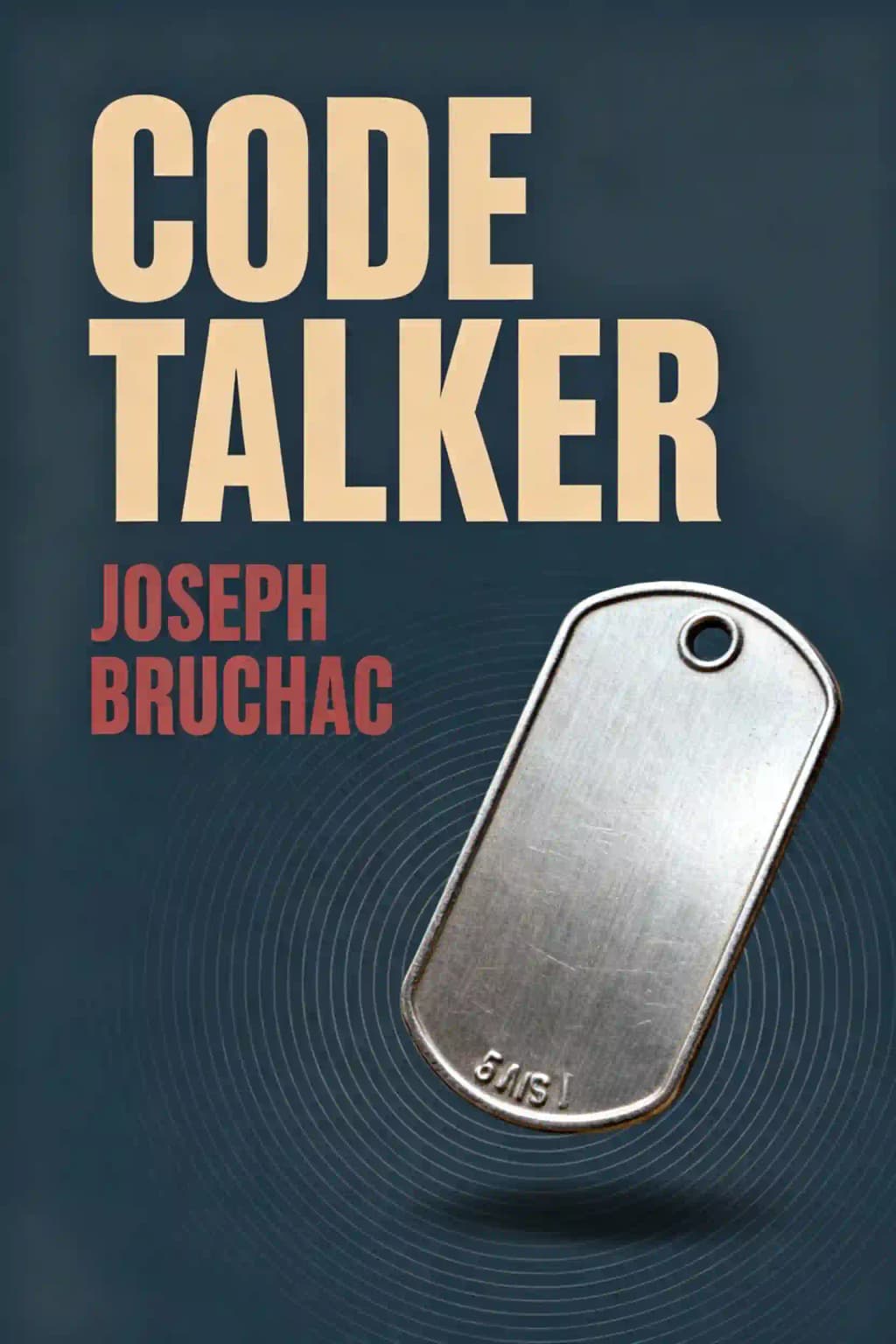
In the vast expanse of the Pacific theater during World War II, a unique weapon emerged that no enemy could crack-the Navajo language. While cryptographers worldwide developed increasingly complex codes only to see them broken, the U.S. Marines deployed approximately 400 young Navajo men whose native tongue became America's most unbreakable military code. Joseph Bruchac's "Code Talker" reveals this remarkable story through the eyes of Ned Begay, a fictional Navajo Marine whose experiences mirror those of actual code talkers. The book has gained significant recognition in educational settings, with teachers across America using it to illuminate this overlooked chapter of history. Even Hollywood took notice with the 2002 film "Windtalkers" starring Nicolas Cage, though many code talkers criticized its historical inaccuracies. Most importantly, in 2001, President George W. Bush awarded Congressional Gold Medals to the original 29 code talkers, finally giving national recognition to these Native American heroes whose contributions remained classified until 1969.
Chapitre 2
From Sacred Language to Forbidden Words
Young Kii Yazhi's world changed forever when his uncle explained why he must leave their hogan to attend the bilagaana (white people's) school. "You are not going just for yourself," his uncle said. "You are going for all of us." The Navajo people had endured the brutal Long Walk to Fort Sumner where hundreds died during four years of imprisonment. Though eventually allowed to return to their homeland, they now lived under white men's laws written in English. Understanding this language had become essential for survival.
Upon arriving at Rehoboth Mission School, Kii Yazhi faced immediate cultural assault. Mr. Jacob Benally, a Navajo employee, delivered the devastating news: "You must not speak Navajo. You must speak only English." When children naturally introduced themselves by name and clan following Navajo custom, Principal O'Sullivan appeared, his face red with anger, shouting incomprehensible English words. His message became painfully clear in the following weeks-"Navajo is no good, of no use at all!"
The systematic erasure of Navajo identity continued as the children's long hair-sacred in their culture-was roughly cut off. Their beautiful traditional clothing and jewelry were confiscated and replaced with military-style uniforms. Even their names were taken. When asked his father's name, Kii Yazhi answered "Daghaatbahi Biye'" (son of the One with a Gray Mustache). The administrator misunderstood and assigned him the surname "Begay." Thus began his transformation from Kii Yazhi to Ned Begay-a change imposed on paper but never fully accepted in his heart.
Chapitre 3
Resistance Through Excellence
A large wooden sign in front of the mission school proclaimed "TRADITION IS THE ENEMY OF PROGRESS," setting the tone for the cultural reprogramming ahead. Speaking Navajo brought swift punishment-having soap shoved into your mouth until foam spilled from nose and mouth. Some defiant students like John Roanhorse continued speaking their language despite beatings and even being chained in dark basements for days with only stale bread and water.
Ned adopted a different strategy of resistance. Outwardly compliant, saying "Yes, teacher" and excelling academically, he secretly maintained his cultural identity. Behind the woodshed or in basement corners, he and other students spoke Navajo, sharing songs and stories from home. Rather than destroying his connection to his language, boarding school intensified his determination to preserve it. "I had no idea," Ned reflects, "that someday the very language they were trying to beat out of me would be needed by important white men."
When Ned advanced to Navajo High School, he found two advantages-proximity to home allowing weekend visits with family, and better educational resources including a real library. Too small for sports, he focused on academics, sometimes earning condescending praise from teachers who patted his head while saying he was "almost as bright as a little white child." Despite this, Ned dreamed of becoming a teacher who would respect Indian students and expect excellence from them.
His world history studies took a special focus on Japan after his school organized a food drive for Japanese suffering from natural disasters. Ned continued reading about Japan, watching with growing concern as their military leaders rejected international aid in favor of conquest, building powerful armed forces that would eventually threaten America across the Pacific.
Chapitre 4
A Nation Calls, A People Responds
The Japanese attack on Pearl Harbor on December 7, 1941, transformed America overnight. For Ned and his classmates, gathered around a radio in their dormitory, the news was shocking but also oddly validating. The Navajo Tribal Council had already passed a resolution in 1940 pledging loyalty and readiness to defend America, recognizing the growing threats from abroad.
Despite centuries of mistreatment, Navajos responded enthusiastically to America's call for military service. Many men rode in with their guns to volunteer but were rejected because they spoke limited English. Ned, only fourteen, feared the war would end before he could join.
Everything changed in April 1942 when Marine recruiters specifically sought Navajos fluent in both English and Navajo for "special work." First Sergeant Frank Shinn, an impressive Marine with a straight back and commanding presence, promised opportunity and adventure to those who enlisted. Though desperate to join, fifteen-year-old Ned was still too young. When he asked his parents to help him lie about his age, they insisted he wait another year before giving their blessing.
The Marines carefully selected twenty-nine Navajos for this mysterious assignment, examining them physically and testing their language fluency. When these recruits disappeared without the expected ten-day leave after boot camp, families grew concerned. Influential fathers like Mr. Bitsie and Mr. Gorman complained to officials but received only vague assurances their sons were "doing well" on "special duty." People began joking that perhaps the white men had eaten them.
Chapitre 5
Sacred Preparation for War
After waiting a year as promised to his parents, sixteen-year-old Ned received their blessing to enlist with one condition - he must participate in a Blessingway ceremony for protection. The singer they chose was Big Schoolboy (Olta'i' Tsoh), also known as Frank Mitchell, a respected tribal council member and friend of Ned's uncle. Mitchell's reputation as a spiritual leader extended far beyond their local community, and many sought his guidance for important life transitions.
Though Ned's family practiced Catholicism like many Navajos of that era, they still honored the traditional Navajo Way, recognizing the deep wisdom embedded in their ancestral practices. This spiritual duality was common among Navajo families who found strength in both belief systems. Hosteen Mitchell was not only respected but enjoyable company, often making Ned laugh with his storytelling and calling him Wolachii' (ant) for his strength despite his small size. The nickname carried special significance, as ants in Navajo culture symbolize industriousness and community spirit.
The singer thoughtfully discussed similarities between Catholic and Navajo beliefs, finding common ground between seemingly different spiritual traditions. He explained how both emphasized harmony with creation, respect for sacred forces, and the importance of blessing and protection. Mitchell spoke of how the Holy People of Navajo tradition and the saints of Catholicism both served as intermediaries between humans and the divine.
The comprehensive ceremony began precisely at noon, following ancient protocols that had protected Navajo warriors for generations. After the initial prayers, there was a ceremonial pause for reflection and preparation. The evening brought twelve sacred Hogan Songs, each carrying specific protective powers and teachings. Throughout the night, additional songs were sung - Protection Way songs, Journey songs, and Warriors' songs - each serving a distinct spiritual purpose in preparing Ned for his path ahead.
At dawn's first light, Hosteen Mitchell performed the final sacred acts. He blessed Ned's body with corn pollen, a substance considered the essence of life itself in Navajo tradition. The four pinches of pollen Ned consumed represented the four sacred directions and the balance of all things. The trail created outside symbolized his life path ahead. Following ancient tradition, Ned took five deliberate steps toward the dawn - representing the five fingers of protection - scattered pollen from north to south to unite the directions, and inhaled the sacred dawn air four times in prayer. Each breath connected him to the four sacred mountains of Navajo territory.
With mind, body, spirit and emotions brought into perfect harmony through these careful ceremonies, Ned was now properly prepared to begin his journey as a warrior for America. The ceremony had transformed him from a youth into a protected warrior, carrying both his Catholic faith and Navajo spiritual strength into whatever challenges lay ahead.
Chapitre 6
From Punishment to Pride: The Language Becomes a Weapon
After excelling in boot camp with the all-Navajo 297th Platoon, Ned and his fellow Marines were not granted furloughs like other graduates. Instead, they were immediately transported to Camp Elliott and escorted to a building with barred windows and locked doors. Inside, they were shocked to hear two Navajo men in Marine uniforms-Corporal Johnny Manuelito and Corporal John Benally-address them in their native language.
The instructors began testing their ability to translate Navajo words like "wolachii'" (ant) and "shash" (bear) into English. This was their introduction to becoming "code talkers," creating an unbreakable code based on the Navajo language for battlefield communications. Johnny Manuelito emphasized the life-or-death importance of their work: "The lives of many men will depend on your messages. You have to get it right the first time. Every time."
Their code consisted of Navajo words representing letters of the English alphabet, with "wolachii'" (ant) for A and "beesh doott'izh" (zinc) for Z. To prevent code-breaking through frequency analysis, they added seventeen additional Navajo words for commonly used letters. For efficiency, they created specific code words for military terms-"too'tsoh" (whale) meant battleship, "gini" (chicken hawk) was dive bomber.
The irony wasn't lost on Ned-after years of being punished for speaking Navajo in school, it was now his greatest strength. Speaking Navajo freely with each other brought immense joy. Unlike at reservation schools, no one told them to stop using their language-it was respected and valued. They approached their work with pride and humility, remembering their elders who had passed down this sacred language through generations.
Chapitre 7
Into the Pacific Cauldron
As Admiral Nimitz prepared amphibious assaults on the Gilbert Islands in August 1943, Ned was assigned to the signal corps of the Third Marine Division under Admiral Halsey. Their destination would be Bougainville in the Solomon Islands, where they would face their first combat experience.
Despite being raised to fear deep water and water monsters in Navajo tradition, Ned found comfort when his fellow code talker Bill Toledo pointed to the sky before boarding their transport ship: "Even out on the ocean, Father Sky will be above us. We will never be forgotten by the sky." This simple reminder of their spiritual connection helped calm Ned's fears about crossing the vast Pacific.
In Hawaii, all code talkers gathered to update each other on changes to the code, making them perhaps the best-informed Marines about the true state of the war. From veteran code talkers who had served at Guadalcanal, Ned learned that their enemies were more human than monstrous. These experienced Marines described how their first demonstration of the Navajo code to Lieutenant Hunt had proven its worth when they transmitted a message in just two minutes and thirty seconds-a task that would have taken four hours using conventional coding methods.
Before shipping to the South Pacific, they trained on Hawaii's Big Island, which offered both rainforest and desert terrain. During a two-day desert exercise, while other Marines quickly depleted their water supplies, the four Navajos-Kee, Bill, Henry and Ned-secretly cut prickly pear cactuses, scraped off the spines, and extracted the juice. By the second afternoon, they were the only Marines still standing when Lieutenant "Stormy" needed messengers to request water trucks.
Chapitre 8
Baptism by Fire
Operation Cartwheel was the Allied plan that included the invasion of Bougainville-aptly named because it aimed to turn the tide from defensive to offensive operations in the Pacific. Though 35,000 Japanese soldiers occupied the island, the Marines planned to land at Empress Augusta Bay, far from their main concentrations.
On November 1, 1943, Ned experienced his first combat landing. The pre-dawn naval bombardment lit up the darkness "like exotic blossoms," but Ned sensed Japanese soldiers remained alive in reinforced bunkers, waiting with weapons ready. The landing at Blue Beach One proved to be the worst of the twelve landing zones, with Japanese pillboxes dug deep into the coral and concealed under thatch surviving the bombardment unscathed.
Despite the chaos, by nightfall they had managed to bring almost 14,000 Marines and 6,000 tons of equipment ashore. Their casualties were seventy Marines killed or missing and 124 wounded. The strangest thing about that first day of combat was that despite all the fighting, Ned never actually saw a single Japanese soldier.
The days following their landing were spent establishing their base at Cape Torokina and exploring the island's challenging terrain. Bougainville was nothing but swampy jungle beyond the beach-foxholes filled with water as soon as they were dug. The climate was steamier than Guadalcanal, with fiercer insects tormenting them constantly.
Tragedy struck when Harry Tsosie, one of the original code talkers, was killed by friendly fire after leaving his foxhole at night. The Japanese were a constant threat-the Marines called them "mouse" for their stealthy movements-attacking either in mass "banzai" suicide charges or through silent infiltration.
Chapitre 9
The Code Proves Its Worth
The value of the Navajo code talkers became evident in combat situations where conventional communications failed. On Bougainville, when Marines took an enemy position faster than expected, they began receiving friendly fire. The white radioman couldn't convince headquarters to stop shelling until they asked "DO YOU HAVE A NAVAJO?" When Ned grabbed the microphone and transmitted in their code, the shelling stopped immediately.
Marine Corps generals unanimously requested more code talkers, praising them in official reports: "The Navajos have proved to be excellent Marines, intelligent, industrious, easily taught to send and receive by key and excellent in the field." Every signal company needed eight code talkers, with each Marine division requiring at least 100.
Yet the code talkers faced dangers beyond enemy fire. On New Britain Island, Alex Williams was nearly killed by a fellow Marine who mistook him for Japanese despite giving the correct password. Only the intervention of Sergeant Curtis saved him. This highlighted a persistent problem-in the chaos of battle, Navajo Marines were sometimes mistaken for the enemy by their own side.
During quiet periods between battles, Ned found comfort in his Navajo traditions-using corn pollen at dawn and knowing his family was praying for him. Being Navajo and following the Way helped him survive not just the fighting but those anxious periods of waiting that weren't yet peace. While many Marines, including some code talkers, turned to heavy drinking to forget the horrors they'd witnessed, Ned relied on his cultural practices for spiritual strength.
Chapitre 10
The Ultimate Test: Iwo Jima
In February 1945, the largest Marine force ever assembled prepared to assault Iwo Jima, a small volcanic island just 600 miles south of Tokyo. Despite months of bombing and naval bombardment, the Japanese defenses had only grown stronger. Under General Kuribayashi's command, they'd constructed sixteen miles of tunnels, hidden artillery positions, and dummy targets to draw American fire.
My fellow Marines, veterans of brutal battles at Tarawa, Peleliu, and Guadalcanal, confidently predicted Iwo Jima would be easier than previous campaigns. They were tragically mistaken-it would prove the worst nightmare of all.
The landing began deceptively calm. Before boarding his LST, Ned faced east at dawn, placed pollen on his tongue and head, and prayed to the Holy People for clear thoughts and a good path. At 0906 their amphibious vehicle crawled onto the black volcanic sand, and they poured out, meeting eerie silence instead of gunfire. For nearly thirty minutes, 9,000 Marines landed unopposed.
Then the Japanese sprung their trap. A hurricane of mortars, machine guns and rifle fire erupted from hidden positions. Amphibious vehicles couldn't climb the loose sand terraces to form a protective line. Ned and his friend Smitty clawed their way up slopes like "swimming up a waterfall," only to become perfect targets on the plateau above.
From hastily dug foxholes, Ned transmitted desperate messages-requests for ammunition, air strikes, casualty reports. Through that day and the next, Navajo voices remained calm over the radio despite Japanese attempts to jam their frequency. Their language web held firm while the battle raged around them.
Chapitre 11
The Flag on Suribachi
It took four days of crawling forward inch by bloody inch before Company E could finally attempt to capture Mount Suribachi's summit. Forty men crawled up the rocky, nearly vertical slope, avoiding trails for fear of mines. At 1015, they spilled over into the crater, finding no enemies. They fastened a small American flag to a metal pipe and raised it. Six men, including Louis Charlo, a Crow Indian Marine, participated in this first flag-raising.
Though Ned couldn't see the flag from his position, word of it spread rapidly down the slope. Teddy Draper, the code talker highest up Suribachi, sent the historic message to General Smith in the Navajo code. All across the beachhead, Marines celebrated with cheers, whistles and horns. Secretary of the Navy James Forrestal declared, "This means a Marine Corps for the next five hundred years."
During this battle, they lost three more code talkers: Paul Kinlahcheeny, Sam Morgan, and Willie Notah. Paul's last words to Jimmie Gleason were simply "Tell my folks." Jimmie survived despite losing his leg below the knee after being trapped in crossfire for two days.
After being wounded on Guam, Ned had been sent to a hospital ship. His shoulder injury was minor-the bullet passed through cleanly-but it gave him a brief respite from combat. Many others on that ship suffered from "battle fatigue"-a sickness of mind and spirit that left some crying in bed, others babbling meaninglessly, and some staring blankly into space. Ned understood this condition well. His ancestors knew that killing other humans injures part of oneself. He recalled how even Monster Slayer in ancient Navajo stories became ill after destroying enemies and needed the first Enemyway ceremony to restore his balance.
Chapitre 12
The Final Island: Okinawa and Beyond
Landing on Okinawa initially seemed too easy-they met no resistance as they stepped ashore, just a gentle wind. Hour after hour passed without the ambush they feared, prompting Ned's friend Georgia Boy to rename it "love day." By nightfall, they'd reached objectives meant to take days.
But on April 8, they hit Kakazu Ridge, where General Ushijima's forces had dug in, heavily camouflaged. Their strategy was to "bleed us white"-make the Americans lose so many men they'd give up. They fought from ridge to ridge for 83 days until the island was declared secure on June 2, 1945. The cost was staggering: 12,000 Americans dead or missing, 36 ships sunk by kamikazes, 110,000 Japanese soldiers and 80,000 Okinawan civilians dead.
The thought of invading Japan's main islands was terrifying-commanders estimated at least one million American casualties. Despite ordinary Japanese citizens' desire for peace, the military leadership refused surrender.
On August 6, America's secret weapon-an atomic bomb-destroyed Hiroshima, killing over 70,000 people. Two days later, a second bomb fell on Nagasaki. These catastrophes finally moved Emperor Hirohito to directly address the Supreme Council: "I swallow my own tears and give my sanction to the Allied proposal."
The code talkers received the surrender message first. Ned shouted the news, and the Navajos tore off their shirts, grabbed drums from the bandsmen's tents, and danced down the road singing in Navajo. After years of war, it was finally over.
Chapitre 13
The Long Road Home to Recognition
Despite the war's end, the code talkers couldn't immediately return home or reveal their secret work. Ned suffered terrible nightmares of battle until his family arranged an Enemyway ceremony with Hosteen Mitchell that finally restored his balance. During the ceremony, he had a vision where he returned to Bougainville at night. Everything that once seemed threatening now appeared beautiful-every leaf, flower, and creature was in perfect harmony. When he opened his eyes, he was truly home, at peace, ready to walk forward on a path of beauty.
Through the years they kept their code talking secret, Ned worked hard as a teacher and community member. Many code talkers pursued education and careers despite unfair treatment-unlike white veterans, they couldn't use the G.I. Bill to build homes on their reservation lands. Though he never accomplished everything he hoped for, Ned remained determined, working for education reform and tribal government.
Finally in 1969, their story was declassified when computers made their code obsolete. They formed a Code Talkers Association, received recognition, and were invited to the White House by multiple presidents. More important than any medal was finally being able to tell their children and grandchildren how their sacred language helped America win the war.
The deeper irony of the code talkers' story is that many had grandparents who survived the U.S. Army's campaign to destroy the Navajos in the 1860s. The very language that government boarding schools tried to eradicate became America's secret weapon. These men who served with distinction despite centuries of mistreatment went on to become teachers, businesspeople, artists, and tribal leaders who shaped their nation's future.
As Ned tells his grandchildren at the story's conclusion, this isn't just his story but the story of the Navajo people and the strength that comes from their language. "I pray you'll never face battle as I did," he says, "but that you'll fight to preserve our language with the same warrior spirit. Let our language keep you strong, and you will never forget what it means to be Navajo, to walk in beauty."