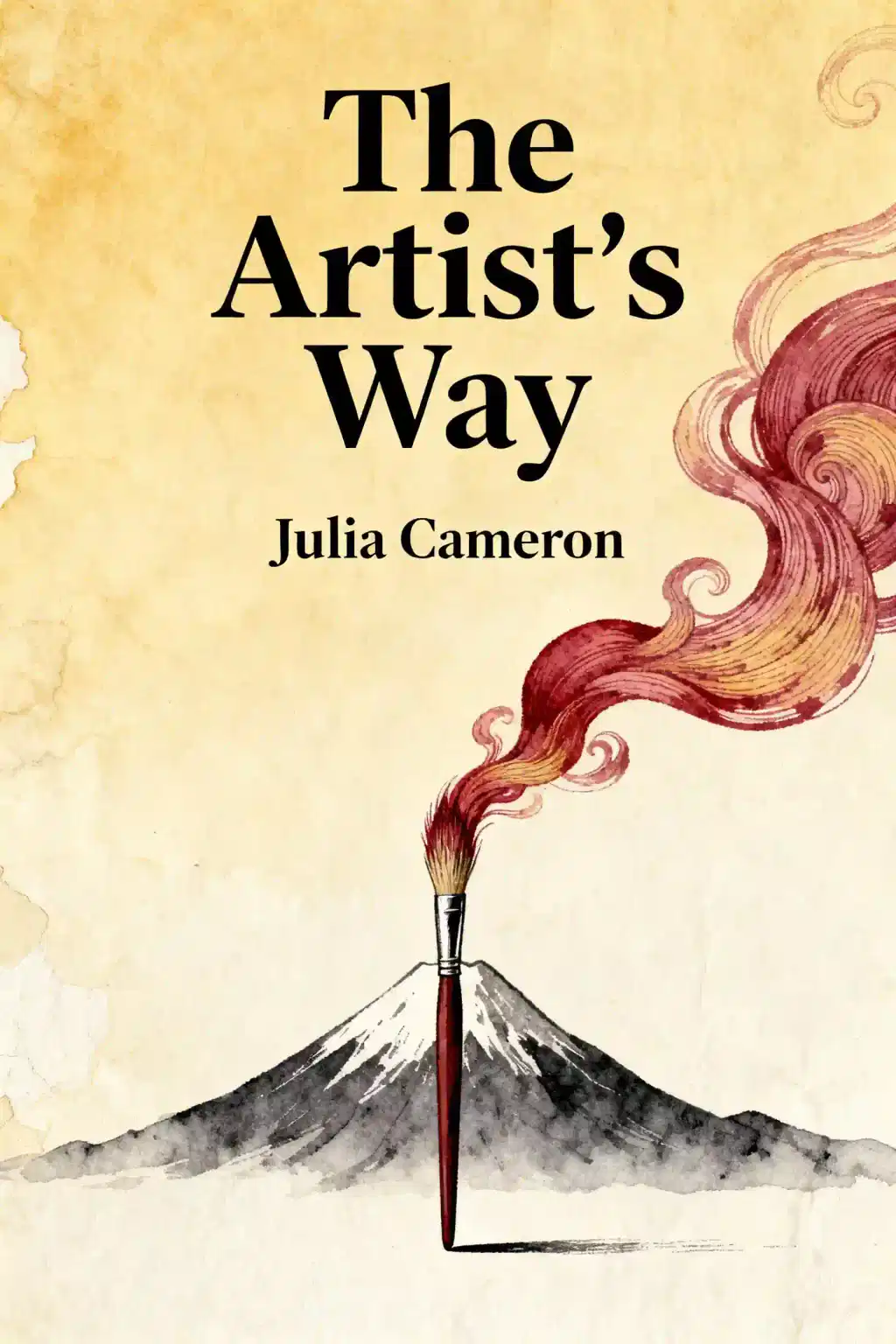
Unlock your creative genius with Eric Maisel's revolutionary guide that transforms artistic blocks into breakthroughs. Endorsed as "required reading" by creative professionals, this psychological toolkit offers 12 practical skills that helped countless artists silence their inner critics and produce their most meaningful work ever.
Eric Maisel, author of Coaching the Artist Within, is an internationally recognized creativity coach and bestselling self-help expert. He has written over 50 books on art, psychology, and personal growth.
A retired family therapist and pioneer of creativity coaching, Maisel combines clinical expertise with artistic insight. He addresses themes of creative blocks, existential fulfillment, and sustaining artistic practice.
His Psychology Today blog “Rethinking Mental Health,” with 3.5 million views, and leadership in the Critical Psychology and Critical Psychiatry book series cement his authority in mental wellness. Maisel’s other influential works, including The Van Gogh Blues and Why Smart People Hurt, explore similar themes of purpose and resilience.
He co-created the life navigation app Purposely and trains coaches globally through programs with Noble-Manhattan Coaching. Featured on NPR, TEDx, and Professional Artist Magazine, Maisel’s frameworks are used in workshops from San Francisco to Rome. His books have sold hundreds of thousands of copies and are recommended in art schools and therapeutic programs worldwide.
Coaching the Artist Within by Eric Maisel is a guide for artists tackling psychological barriers like self-doubt, creative blocks, and resistance. It offers 12 practical lessons and 22 exercises to help writers, actors, visual artists, and musicians cultivate self-coaching skills, manage anxiety, and sustain a meaningful creative practice. The book emphasizes self-awareness, goal-oriented processes, and maintaining momentum even amid challenges.
This book is ideal for writers, actors, musicians, visual artists, and creatives struggling with self-doubt, procrastination, or creative blocks. It’s also valuable for coaches, therapists, or educators seeking actionable strategies to support artists. Maisel’s insights resonate with anyone aiming to build resilience, refine their creative mindset, or navigate the emotional complexities of artistic work.
Yes, the book is praised for its accessible, actionable advice backed by Maisel’s decades of experience as a creativity coach and psychotherapist. Readers gain tools to reframe negative self-talk, overcome resistance, and create consistently. Real-life examples from artists and structured exercises make it a practical resource for sustaining a fulfilling creative life.
Key concepts include:
Maisel identifies resistance and self-doubt as root causes of blocks. He advises artists to acknowledge these emotions without judgment, reframe negative thoughts, and take small, consistent actions. Exercises like “creating in the middle of things” encourage starting even when motivation is low, fostering progress through imperfect effort.
The book teaches artists to:
Maisel reframes anxiety as a natural part of the creative process. Strategies include mindfulness practices to stay present, physical grounding techniques (e.g., deep breathing), and reframing anxiety as energy to channel into art. The book also emphasizes accepting uncertainty rather than resisting it.
These quotes underscore the book’s focus on perseverance and embracing discomfort.
Exercises include:
Unlike abstract theoretical guides, Maisel’s book blends psychology with hands-on coaching techniques. It focuses on shifting mindset (e.g., eliminating dualistic thinking like “success vs. failure”) while providing structured exercises, making it a hybrid of self-help and practical workbook.
In an era of constant distractions and pressure to monetize art, Maisel’s strategies help artists prioritize authenticity, navigate rejection, and sustain motivation. The book’s emphasis on mental resilience aligns with growing interest in holistic approaches to creative well-being.
Eric Maisel, Ph.D., is a psychotherapist, coach, and author of 50+ books on creativity and mental health. He trains coaches globally and writes the “Rethinking Mental Health” blog for Psychology Today. His expertise combines clinical psychology with decades of coaching artists, lending credibility to his methods.
Ressentez le livre à travers la voix de l'auteur
Transformez les connaissances en idées captivantes et riches en exemples
Capturez les idées clés en un éclair pour un apprentissage rapide
Profitez du livre de manière ludique et engageante
The foundation of self-coaching is deciding to matter.
"Get a grip on your mind!"
Wrong thinking causes needless suffering.
The key is moving quickly between chairs to maintain momentum and avoid wallowing in negativity.
Décomposez les idées clés de Coaching the Artist Within en points faciles à comprendre pour découvrir comment les équipes innovantes créent, collaborent et grandissent.
Découvrez Coaching the Artist Within à travers des récits vivants qui transforment les leçons d'innovation en moments mémorables et applicables.
Posez vos questions, choisissez votre style d’apprentissage et co-créez des idées qui vous correspondent vraiment.

Cree par des anciens de Columbia University a San Francisco
"Instead of endless scrolling, I just hit play on BeFreed. It saves me so much time."
"I never knew where to start with nonfiction—BeFreed’s book lists turned into podcasts gave me a clear path."
"Perfect balance between learning and entertainment. Finished ‘Thinking, Fast and Slow’ on my commute this week."
"Crazy how much I learned while walking the dog. BeFreed = small habits → big gains."
"Reading used to feel like a chore. Now it’s just part of my lifestyle."
"Feels effortless compared to reading. I’ve finished 6 books this month already."
"BeFreed turned my guilty doomscrolling into something that feels productive and inspiring."
"BeFreed turned my commute into learning time. 20-min podcasts are perfect for finishing books I never had time for."
"BeFreed replaced my podcast queue. Imagine Spotify for books — that’s it. 🙌"
"It is great for me to learn something from the book without reading it."
"The themed book list podcasts help me connect ideas across authors—like a guided audio journey."
"Makes me feel smarter every time before going to work"
Cree par des anciens de Columbia University a San Francisco

Obtenez le resume de Coaching the Artist Within en PDF ou EPUB gratuit. Imprimez-le ou lisez-le hors ligne a tout moment.
Have you ever wondered what separates those who merely dream of creating from those who actually do? The difference isn't talent, luck, or even discipline - it's the ability to coach yourself through the inevitable challenges of creative work. Every artist faces internal barriers: the screenwriter who can't face her "serious" work, the musician who hates his recent songs, the aspiring novelist paralyzed by perfectionism. These creators aren't lacking ability but struggling with the psychological obstacles that block authentic expression. The journey to unlocking your creative potential begins with becoming your own compassionate ally - someone who notices your defensive maneuvers while motivating, congratulating, and occasionally challenging you. Without this inner coach, you remain "three-quarters blind," making anxiety-driven decisions rather than fulfilling your creative mission. Developing an effective inner coach requires mental distance - enough separation to positively influence yourself. Try the "Chatting with Yourself" exercise: position two chairs facing each other, one where you sit as yourself, the other where you become your "inner creativity coach." When in the coach's chair, ask probing questions with genuine curiosity about your creative blocks. The key is moving quickly between chairs to maintain momentum and avoid wallowing in negativity. Most people never achieve this level of self-awareness, choosing instead to soothe themselves with distractions while decades pass in a trance. These aren't cowards; they've survived divorces, raised children with disabilities, faced genuine hardships. Yet creative courage eludes them because they fear opening a frightening can of worms - their own personalities, the hard work of creating, the marketplace, and core issues of meaning.
Making meaning begins with deciding that you matter. If you don't believe your work matters, you'll lack motivation to create. Try affirming "I matter" or "My creative work matters" daily until you feel resolved to be significant. Choose to lead a principled, creative life supporting your cherished ideals, despite minimal external support. Declare your intention to make meaning regardless of existential uncertainties. A complete life purpose typically combines using your talents daily, serving important values, finding satisfaction, working on meaningful projects, and forming loving relationships. To create your life purpose statement, list your purposes, rank them by importance, identify primary versus secondary ones, and craft a single guiding sentence. This statement becomes your north star for decisions. Hold this intention firmly and approach meaning-making with genuine passion-something most people avoid out of fear.
"Get a grip on your mind!" the Buddha said - and there's no more important lesson for creators. Wrong thinking causes needless suffering and prevents deep creation, appearing as self-battering, disguised "objective thinking," or as bravado. We mask anxiety through phrases like "I'm not ready" or "I can't do it." Simply noticing these patterns can transform your creative practice. After identifying negative thinking, replace wrong thoughts with right ones. Effective affirmations are short, positive phrases that redirect thinking: "I am fine just as I am," "I am off to create," "I trust my resources." Equally destructive is dualistic thinking - seeing creative choices as either/or propositions. We have powerful reasons both for creating and not creating, but most people let negatives outweigh positives. Instead of asking "Should I be disciplined or spontaneous?" ask "What does my work require?" This shift allows decisions based on an integrative approach rather than false dichotomies.
Mental energy powers creative work through interest, passion, and meaning, unlike physical energy which comes from calories. Many creators have abundant energy for hobbies yet feel drained when facing their actual creative work. Clear patterns govern mental energy and creativity: depression drains while passion energizes; meaninglessness depletes while purpose invigorates. Master your mental energy by understanding what generates it, what saps it, and what replenishes it. Cultivate positive obsession through passionate self-talk to generate creative energy. Bring your project to mind with enthusiastic phrases like "You fascinate me" or "I'm dying to work on you." This approach instantly creates the mental energy needed for creative work. We should reclaim "mania" from clinical pathology as necessary fuel for meaning-making. The key distinction is between "mediated mania" - where creators maintain control despite moving at breathtaking speed - and "unmediated mania," where one loses control completely.
People never create in a vacuum - they're always embedded in particular cultures, personalities, and circumstances with countless worries and pressures. We must learn to create "in the middle of things" or we simply won't create at all. History's great creators demonstrate this necessity: Newton developed calculus while fleeing the plague; Dostoyevsky wrote while his wife was dying; Shostakovich composed during Stalin's terror. Even ordinary disruptions can halt creative work if we let them. To create amid chaos, you must achieve a calm, centered presence even when feeling scattered. The Centering Sequence - a six-breath, six-thought, one-minute technique - helps you grow calm at will. The six steps (CENTER) are: Come to a complete stop, Empty yourself of expectations, Name your work, Trust your resources, Embrace the present moment, and Return with strength. This simple practice grounds you instantly, creating the mental space necessary for creative work despite life's distractions and responsibilities.
Practical strategies for creating amid life's chaos include "suit up and show up" (showing up regardless of feelings), "don't snivel" (eliminating complaints to free energy), "avoiding anticipation" (starting without expectations), and "imagining a flawless ignition system" (visualizing an effortless creative start). Learn to drop everything to create - your resistance, doubts, to-do lists, and excuses. Take creative impulses seriously enough to act immediately. Planning remains essential despite past abandoned resolutions. Create simple, flexible plans that match your personal style and revisit them regularly. Planning provides a container for your creative work and strengthens your connection to your project. Two approaches exist: "goal-less process" and "goal-oriented process." Many choose the easier goal-less approach, like admiring whatever grows in an untended garden. However, if your garden must feed your family, you need active cultivation - understanding your soil and working to grow what's needed. Creativity similarly requires commitment to goal-oriented process.
You begin writing with enthusiasm, but soon "resignation sets in," as Virginia Woolf noted. You realize your work won't simply flow from your muse. Sometimes hating your work is part of the process - not a cosmic joke but reality. Accept this truth and say, "I can do this even though it hurts," rather than fantasizing that others create masterpieces effortlessly. Eventually, you must actually do the creative work, not just wish for it or make excuses. Your creative journey isn't about perfection - it's about presence. It's showing up with courage, managing your anxiety rather than being managed by it, and committing to the process even when it feels impossible. The artist within you is waiting not for perfect circumstances or divine inspiration, but simply for you to begin coaching yourself toward your creative life. The blank page isn't your enemy - it's your invitation to matter, make meaning, and transform creative dreams into reality.