Chapitre 1
Behind the Headlines: A Reporter's Decade-Long Journey with Hillary Clinton
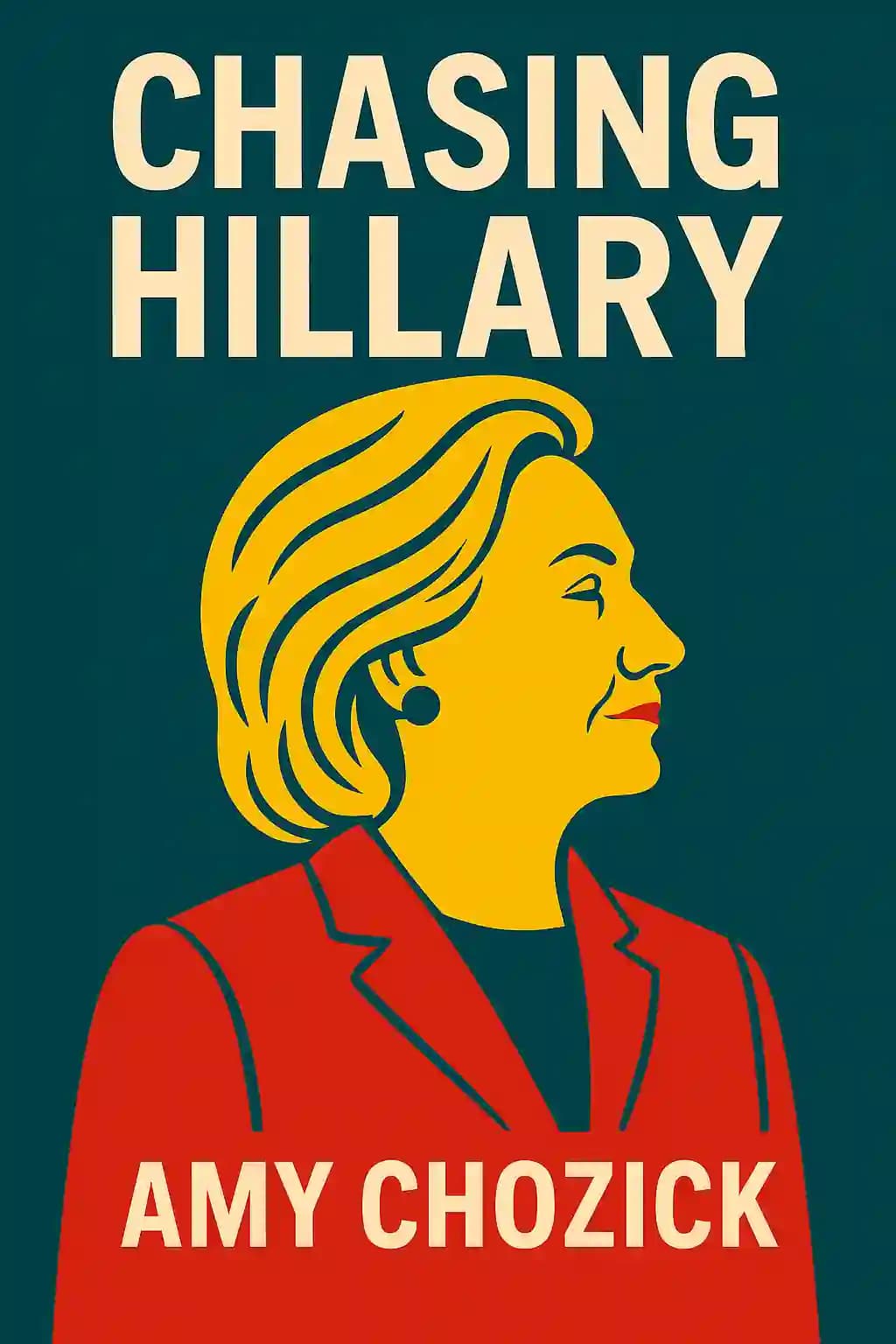
In the summer of 2016, I found myself in a scorching Las Vegas casino watching Hillary Clinton embrace Latina housekeepers who erupted in tears and exclamations of "Ay, Dios mio!" and "La Hillary!" This was the Hillary few saw - messy-haired, makeup-free, genuinely connecting with hotel workers on their midnight shift. It was a stark contrast to the calculated, inaccessible candidate portrayed in media narratives. Amy Chozick's "Chasing Hillary" offers this rare insider perspective after spending a decade covering Clinton's presidential ambitions. The book became an instant bestseller upon its 2018 release, with figures from Samantha Bee to Katie Couric praising its unflinching honesty. Even Hillary's most ardent supporters found themselves nodding along to Chozick's revelations about the campaign's fatal flaws. Beyond political junkies, the memoir resonated with women navigating male-dominated professions, becoming required reading in journalism schools nationwide for its exploration of gender, media, and the complex relationship between reporters and their subjects.
Chapitre 2
The Reluctant Star: Hillary's Complicated Relationship with the Press
Hillary Clinton and the press corps had a relationship that resembled a dysfunctional marriage - mutual dependence mixed with deep-seated resentment that dated back to her years as First Lady. "The Guys" - Hillary's protective, almost exclusively male press team led by veteran operatives - viewed journalists as adversaries rather than conduits to voters. They weaponized access with military precision, timing strategic rants for weekends to maximize reporter anxiety, and maintained detailed dossiers on journalists' perceived slights going back years. When Chozick wrote about the Clinton Foundation buying a first-class ticket for Natalie Portman's dog, they erupted in collective outrage, launching a week-long campaign of angry calls and emails that exemplified their aggressive approach to media management.
Hillary herself maintained an icy distance from reporters, studying their faces in a meticulously maintained "Face Book" not to engage with them but to avoid mistaking them for actual voters at campaign events. Her rare interactions with the press were carefully choreographed affairs. During infrequent off-the-record drinks at JD's Tavern in Manchester, she delivered soul-crushing criticism of political reporters as gossip peddlers too dim to understand policy, while simultaneously demonstrating an encyclopedic knowledge of their personal backgrounds and previous coverage.
The campaign's obsession with controlling the narrative extended to the microscopic level. When reporter Ruby Cramer rolled a clementine with "Would you rather have dinner with Trump or Putin?" written on its peel into the front cabin, the resulting minor scandal over Hillary's "Putin" response (which turned out to be from an aide) sparked a week of internal investigations and demonstrated how even the smallest interaction became fraught with tension. Similar incidents, like a reporter's innocent tweet about Hillary's sandwich choice, would trigger hours of damage control meetings.
The press corps' initial excitement over finally getting a campaign plane (dubbed "Stronger Together") in September 2016 quickly deflated when Hillary's visits to the press cabin remained painfully stilted. Her most authentic moments came during brief conversations about TV shows like "The Good Wife" and "Madam Secretary," shows that ironically portrayed more accessible versions of powerful women in politics. Even these moments were carefully monitored by hovering staffers ready to intervene at the first sign of trouble.
This mutual distrust created a vicious cycle that defined the campaign's media strategy: Hillary's avoidance of press conferences (she went 84 days without one during the campaign) fed increasingly negative coverage, which reinforced her belief that reporters were out to get her. The campaign's response was to further restrict access, creating what one senior staffer called a "bunker mentality." As veteran journalist Jill Abramson advised young female journalists: "You're either hated or you're irrelevant" - words Chozick kept on a sticky note throughout the campaign as a reminder of the impossible dynamics at play in covering the potential first female president.
Chapitre 3
Saint Hillary: The Candidate's Hidden Spiritual Core
In black churches across America, a different Hillary Clinton emerged - one who opened services with Psalm 118:24 ("This is the day the Lord has made; let us rejoice and be glad in it"), fluently quoted scripture, and spoke passionately about her faith journey. This wasn't political pandering but genuine theological depth from a woman who could have been a Methodist pastor in another life. Chozick had glimpsed Hillary reading her well-worn leather-bound Bible on the campaign plane in 2008, highlighting passages and making notes in the margins, but only in churches did this deeply personal side of her emerge publicly.
Hillary once spoke openly about her faith, delivering a memorable 1993 speech about America's "crisis of meaning" that led to a New York Times Magazine cover story titled "Saint Hillary." The article explored her vision of a society built on mutual responsibility and spiritual renewal. But the subsequent mockery and cynical media coverage drove her to rarely discuss her spiritual side again publicly. Unlike Republican candidates awkwardly flaunting their Christianity with rehearsed Bible verses, Hillary's faith ran deep and authentic - you don't casually quote the prophet Micah about doing justice and loving mercy or reference theologian Henri Nouwen's writings on contemplative spirituality if you're just checking political boxes.
This spiritual core emerged most powerfully during her visit to Flint, Michigan during its devastating water crisis. The human toll was overwhelming: Chozick witnessed a woman who'd miscarried twins after drinking contaminated water, an eight-year-old whose tested intelligence had markedly declined from lead poisoning, and a man with an unmovable chalky rash that doctors couldn't explain. When Chozick asked local residents if they thought Hillary came just to court black votes, Pastor Bobby Blake of the Greater Holy Temple Church replied with raw honesty: "I don't care why she came. This town has been living out of a bottle. My question is, where's everybody else?"
At House of Prayer Missionary Baptist Church, Hillary spoke with moral clarity that drew from her Methodist roots: "Clean water is not optional, it is not a luxury... What happened in Flint is immoral." This wasn't a politician speaking calculated words, but Saint Hillary - the passionate Sunday school teacher awakened by her lifelong Methodist belief that "the ultimate test of a moral society is the kind of world that it leaves to its children." She connected the crisis to her broader vision of social justice and collective responsibility.
Yet this authentic, spiritually-grounded Hillary remained largely hidden from most voters. Her campaign strategists prioritized detailed policy papers and careful messaging over personal connection, failing to recognize that Americans weren't primarily looking for a technocrat but someone who understood their pain and could speak to their values. As one frustrated advisor noted after reviewing Hillary's Wall Street speeches: "They are angry. She isn't." This disconnect between Hillary's genuine spiritual depth and her public persona ultimately contributed to her struggle to connect with voters seeking moral leadership in troubled times.
Chapitre 4
The Pied Piper Strategy: How Clinton's Campaign Elevated Trump
In one of the campaign's most consequential miscalculations, Brooklyn strategists dubbed Trump their "Pied Piper" - a charismatic showman who could drive Republican moderates out of the race. "We need to be elevating the Pied Piper candidates [including Trump, Ben Carson, and Ted Cruz]," read an early strategy memo to the DNC. Campaign meetings explicitly asked, "How do we maximize Trump?" The strategy involved deliberately amplifying Trump's voice through media coverage and debate responses, believing his extreme positions would force other Republican candidates to take similar stances or risk losing their base.
The Clinton campaign actively worked to position Trump as the face of the Republican Party through targeted media placements and strategic messaging. They encouraged surrogates to discuss Trump extensively on cable news, provided opposition research to journalists about his business dealings, and crafted responses that linked all Republicans to his controversial statements. Paul Begala assured Chozick that Trump would help Hillary by exposing "the GOP as the radical right-wing anger society it has become." This approach was championed by senior strategists who believed Trump's nomination would ensure an easy general election victory.
The strategy reflected a fundamental misreading of the electorate's mood and the changing media landscape. While Hillary's team focused on Trump's offensive comments about women, minorities, and immigrants, assuming they would disqualify him, they missed how his economic populism and "America First" message resonated with voters feeling left behind by globalization and technological change. Bill Clinton, drawing on his political instincts, recognized this genius, noting Trump's ability to deliver bite-size solutions in an "Instagram election" where voters wanted simple answers to complex problems. Trump's promises to bring back manufacturing jobs, build a border wall, and "drain the swamp" connected emotionally with voters in ways that Hillary's detailed policy proposals did not.
Despite Trump's persistent popularity in polls throughout 2015, the campaign continued elevating him through October, dismissing his support as "a summer fling" even as it solidified across key demographics. Their opposition research on Trump was surprisingly thin at just 157 pages, compared to thousands of pages on traditional candidates like Jeb Bush and Marco Rubio. The campaign believed Trump would self-destruct with his offensive comments, leading to their "Let Donald be Donald" strategy - one they would come to deeply regret.
The irony was particularly painful - the candidate who claimed to understand everyday Americans had fundamentally misunderstood the country's anger and desire for change. While Hillary spent August 2016 raising $143 million at exclusive fundraisers in the Hamptons, Martha's Vineyard, and Silicon Valley, Trump was holding rallies in economically distressed communities and connecting with voters who felt the system was rigged against them. His message of economic nationalism and anti-establishment rhetoric resonated particularly strongly in crucial Rust Belt states that would ultimately decide the election. As Chuck Schumer implored Brooklyn to hire someone solely to respond to Trump hourly, veteran political strategist Matthew Dowd warned, "Hillary has built a large tanker ship and she's about to confront Somali pirates" - a prescient metaphor for the campaign's inability to adapt to Trump's unconventional and agile campaign style.
Chapitre 5
The Everydays: Hillary's Disconnect from Working-Class Voters
Hillary Clinton had spent years immersed in policy papers and consulting with high-level experts who advised her that Americans, still scarred by the 2008 financial crisis, were rejecting the term "middle class" as outdated and insufficient. Her team of consultants, led by focus group data, rebranded these voters as "Everyday Americans" - a phrase that inadvertently echoed corporate marketing speak, particularly Walmart's ubiquitous "Every Day Low Prices" slogan. The press corps, cynical from years of political messaging, quickly transformed "Everydays" into a proper noun, using it as insider shorthand for the carefully selected voters at Hillary's events. "C'mon, my editors need me to quote some Everydays," became a common refrain among journalists trying to navigate campaign security.
Her campaign events reflected this manufactured approach to voter outreach. They were orchestrated as meticulously produced roundtables, each focusing on specific policy themes - mental health challenges in New Hampshire, the growing heroin epidemic in Ohio, small business concerns in Iowa. Hillary would position herself at carefully arranged horseshoe-shaped tables, surrounded by pre-vetted "Everyday Americans" who received specific instructions to address her as "Hillary" rather than her formal title. These sessions typically devolved into policy seminars, with Clinton reciting statistics about income inequality, healthcare costs, and education reform while furiously taking notes in her leather-bound notebook. Her constant refrain about how much she "really liked listening to people" became a running joke among her staff, even as she diligently sent policy memos based on these conversations to her team.
The disconnect was particularly striking given her recent role as Secretary of State. After four years of diplomatic missions and meetings with world leaders, she appeared genuinely shocked by the scope of the opioid crisis devastating rural communities and seemed unaware of the deep economic anxiety and anger brewing across the country. Even Hillary recognized the "Everyday Americans" slogan was falling flat. Campaign chairman John Podesta's leaked email to the speechwriting team revealed the extent of the problem: "I know she has begun to hate everyday Americans," he wrote, while cautioning that "if she doesn't say it once, people will notice."
The campaign's desperate search for authentic messaging led to an exhaustive testing of 84 potential replacement slogans, grouped into themes like "Fairness/Families," "Fighter," "Basic Bargain," "Strength," "Results," "In It Together," "Future/Forward," and "It's About You." They ultimately cycled through "Fighting for Us," "Breaking Down Barriers," and "Building Ladders of Opportunity" - with Hillary particularly championing the "Ladders" metaphor despite its obvious political artificiality.
This disconnect manifested physically as well. While Donald Trump managed to maintain his populist image despite eating Kentucky Fried Chicken on his gold-plated Boeing 757, Hillary struggled to shake the perception of being a wealthy Westchester County elite. Her physical separation from the press corps, who flew on separate charter planes, reinforced the image of a candidate isolated from regular people. The optics of her traveling with her inner circle at thirty-six thousand feet while journalists followed in a separate aircraft only heightened the impression of a candidate living in a rarefied bubble, surrounded by courtiers rather than connecting with voters on the ground.
Chapitre 6
The Deplorables: How a Single Comment Crystallized Campaign Missteps
Hillary always categorized Trump supporters into three distinct baskets: Republicans who would vote GOP regardless of nominee; voters whose livelihoods had disappeared and felt abandoned; and "the Deplorables" - "the racist, sexist, homophobic, xenophobic, Islamophobic - you name it." This last category reliably got laughs at exclusive fundraisers in the Hamptons, Martha's Vineyard, Beverly Hills, and Silicon Valley.
At an LGBT fundraiser at Cipriani in September 2016, a loopy Hillary made her fateful "basket of deplorables" comment, saying "half of Trump's supporters" fit that description. By the next day, she issued a statement regretting saying "half." The "Deplorables" line exemplified what Brown Loafers called the Gaffe Matrix: damning statements that aides anticipate but lack courage to stop. Like Michelle Obama's "first time in my adult life" comment or Romney's "47 percent," Hillary's senior aides heard her use the baskets analogy repeatedly at private events but never warned her how it would play publicly.
The comment crystallized the campaign's fundamental contradiction - while portraying Trump as embodying "a system where the rich and powerful stick it to everybody else," she averaged $150,000 an hour at exclusive gatherings. At Jimmy Buffett's beachside estate, where guests paid $100,000 to attend, Hillary tested lines like "I stand between you and the apocalypse!" that later appeared in interviews and headlines.
This disconnect between message and messenger undermined her credibility with working-class voters. When college girls in line for pork chops at the Iowa State Fair told Chozick they supported Trump because "at least he says it like it is," they were expressing a sentiment that would prove fatal to Hillary's campaign - authenticity mattered more than policy expertise.
The "Deplorables" comment also revealed how Hillary's humor had become calculated and risk-averse. After a joke about her email server backfired spectacularly ("You may have seen that I recently launched a Snapchat account. I love it. Those messages disappear all by themselves"), she developed what Chozick calls "a chronic inability to crack a simple joke." The campaign's joke-writing process devolved into absurd committee work, with staffers (whom one called "ninnies") endlessly debating every potential quip until even simple punchlines felt overworked.
Chapitre 7
Bill's Last Stand: The Former President's Fading Influence
At seventy, Bill Clinton had always imagined Hillary in the White House while he continued running his foundation from Chappaqua. "I hope I'll get permission to keep this foundation going," he'd told Queen Latifah in 2014. But by 2016, it was clear his post-presidential life would be dramatically altered. His ego had taken hits, like overhearing young girls at Hillary's Roosevelt Island kickoff pointing at him saying, "Look, there's Hillary's husband!"
Beyond the foundation, the entire election had become a repudiation of the Clinton years - NAFTA, the crime bill, financial deregulation, welfare reform. People linked Trump's rise and the degradation of the presidency to Clinton's Oval Office lies. It seemed the whole country was revolting against a presidency most had previously considered successful.
Clinton felt unseen by Brooklyn, who treated him like a problematic child needing to be kept busy. He splintered off, venturing on "Stronger Together" bus tours to places Hillary wouldn't go - North Florida, eastern Ohio, Iowa, rural Pennsylvania, Wisconsin, Michigan - trying to reach the white working-class voters who'd elected him. He ate french fries off customers' plates and reminded everyone he wasn't nineteen anymore, though he envied NBA players' bodies.
He believed he understood Trump voters better than anyone, using the Zulu greeting "sawubona" ("I see you") to explain: "An enormous number of people feel like they're not seen." When confronted by Bernie supporters about welfare reform and Wall Street, he couldn't walk away, defending his legacy even as his aides physically nudged him to move on: "If you never have to make a decision, then you can cherry-pick everything for a narrative that is blatantly false."
Bill's most consequential action came when he stepped onto Attorney General Loretta Lynch's airplane on a Phoenix tarmac for twenty minutes of small talk - a meeting that would force Lynch to recuse herself from the email investigation and give James Comey greater authority. When asked about this "irresponsible" act, a source who knew Clinton well texted Chozick: "OTR - President Clinton is 'irresponsible' like a fox."
Chapitre 8
Russian Shadows: How Hacking and Emails Derailed the Campaign
The Russian hack provided Brooklyn with a perfect good-versus-evil narrative. "There have been larger forces at work to hurt Hillary Clinton," Robby declared at the convention's opening. Hillary had long maintained a contentious relationship with Putin. Months before declaring her candidacy, she'd mocked him during a paid speech in Winnipeg, putting on a deep accent and swaying her head: "Vladimir, you think you'd like to be president again..." Now, as she tried to woo Republicans, she sounded Reaganesque criticizing Trump's Russophilia: "Putin will eat your lunch" and a Trump presidency would be like "Christmas in the Kremlin."
But the campaign's handling of the Russian threat revealed troubling blind spots. When asked if campaign emails might have been hacked, Podesta claimed ignorance: "We don't know the answer to that, and we feel like we have robust security within the campaign." When pressed whether the FBI had warned them, he cut off the question with a firm "No. The FBI, no." Days later, Yahoo News revealed the FBI had indeed warned the campaign about potential cyberattacks the previous spring.
Meanwhile, Trump publicly encouraged Russian intelligence to hack Hillary's emails: "Russia, if you're listening, I hope you're able to find the thirty thousand emails that are missing." What Trump didn't know was that Russian hackers had already sent Podesta a phishing email in March, which he'd clicked on and changed his password.
The WikiLeaks releases of Podesta's emails created an ethical dilemma for journalists like Chozick. As Times columnist David Leonhardt later wrote, "the overhyped coverage of the hacked emails was the media's worst mistake in 2016 - one sure to be repeated if not properly understood." Chozick herself would later reflect: "The moment you realize you've unwittingly ended up on the wrong side of history is dizzying. After being called terrible names throughout the campaign, nothing hurt worse than my own colleagues calling me 'a de facto instrument of Russian intelligence.' The worst part was they were right."
Chapitre 9
"They Were Never Going to Let Me Be President"
On election night, three power centers formed: the Javits Center where celebrities and supporters gathered, the Peninsula hotel where Hillary and family watched returns, and a makeshift war room in Hillary's Midtown office. By 9:17 PM, Chelsea had popped champagne in the Peninsula suite, still believing victory was inevitable despite warning signs.
The campaign's optimism collapsed as Elan Kriegel revealed their models could be wrong everywhere, not just Florida. Meanwhile, at the Javits Center, the mood transformed from celebration to funeral as supporters watched states turn red on CNN's map. When Robby Mook finally delivered the news to Hillary that she couldn't win, she responded with a line that encapsulated her decades-long struggle: "I knew it. I knew this would happen to me... They were never going to let me be president."
The next morning, Hillary entered the New Yorker Hotel ballroom wearing purple, her eyes betraying recent tears. "I know how disappointed you feel, because I feel it too," she said, reminding little girls they were "valuable and powerful and deserving of every chance." The female press corps looked broken, their own insecurities as professional women exposed by Hillary's defeat.
In that moment, Chozick realized what it had all been for - the fights with The Guys, postponing a baby, becoming an unwitting Russian agent. The decade-long chase had ended not with the historic breakthrough they'd all anticipated but with a painful reminder that progress isn't inevitable. Hillary's loss represented not just a political defeat but a cultural one - a rejection of the careful, qualified, prepared woman in favor of her bombastic, inexperienced male opponent.
Yet the story of Hillary Clinton's failed presidential bids isn't simply one of sexism or media bias or campaign missteps. It's a complex tapestry of all these factors, woven together with the personal ambitions and insecurities of a woman who spent decades in the public eye trying to balance authenticity with political survival. As Chozick's intimate portrait reveals, the tragedy of Hillary Clinton may be that in trying so hard to become what she thought America wanted in a president, she lost the very qualities that might have made her one.