Chapitre 1
The Art of Building a Business That Sells Itself
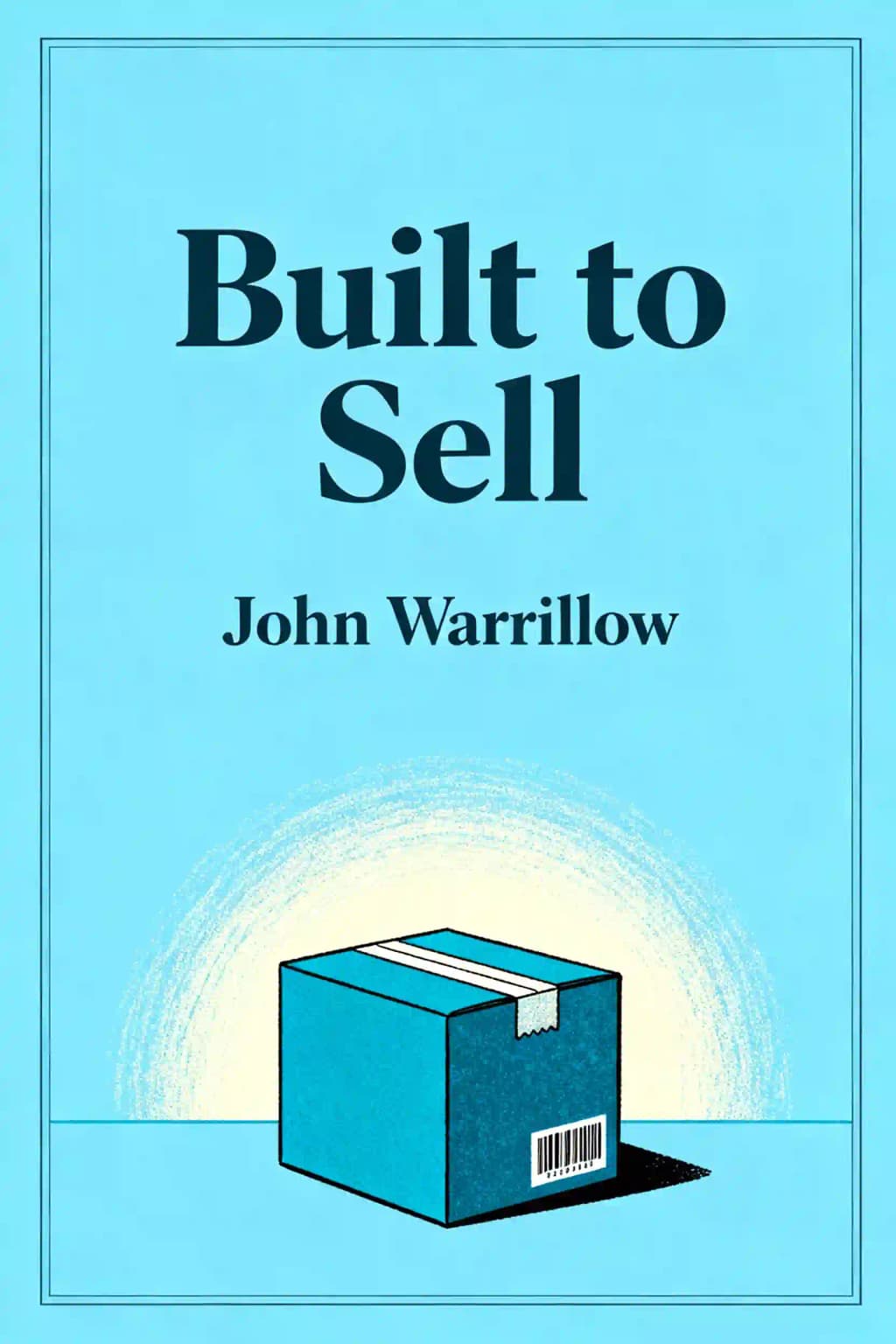
Ever wondered why some entrepreneurs retire in their forties with millions in the bank while others work into their seventies, trapped in businesses they can't sell? The answer lies in a fundamental shift in thinking that John Warrillow explores in his business classic "Built to Sell." Since its publication in 2011, this book has become required reading in MBA programs and entrepreneur circles worldwide. Oprah Winfrey reportedly gifted copies to her entire business network, while Richard Branson cited it as inspiration for structuring Virgin's numerous successful exits. At its core, the book reveals a counterintuitive truth: the best way to build a valuable business isn't to make yourself indispensable-it's to create a company that can thrive without you.
Chapitre 2
The Entrepreneur's Dilemma: Trapped in Your Own Success
Alex Stapleton had achieved what many would consider success. His advertising agency occupied stylish offices in downtown Chicago, complete with exposed brick walls, ergonomic workstations, and modern furniture-all the carefully chosen trappings of creative legitimacy. From the outside, the gleaming glass entrance and prestigious address projected confidence and prosperity. He had built an impressive client roster, including MNY Bank which represented nearly 40% of his revenue, along with several mid-sized regional brands that provided steady work.
One Monday morning finds Alex rushing through morning traffic to a client meeting with MNY Bank's marketing manager John Stevens. In the bank's imposing boardroom, Stevens impatiently reviews design concepts for their new credit card campaign before demanding numerous changes - suggesting different fonts, colors, and layouts despite having no design expertise. The creative brief they'd agreed upon weeks ago sits forgotten on the corner of the table. Alex leaves feeling demoralized but powerless to push back given MNY's importance to his business. He calculates that losing them would mean laying off three staff members and possibly downsizing the office.
Back at the agency, Alex must break the news to his senior designer Sarah about the weekend revisions needed for MNY Bank. He sees the frustration in her eyes - it's the third weekend in a row she'll need to work. He then rushes to lunch with another client, nervously using his maxed-out credit card to pay for the $200 meal at an upscale restaurant. Between bites, he rehearses his pitch for Urban Sports Warehouse, a growing retail chain that might finally free him from dependency on MNY Bank. After spending hours perfecting the proposal late into the evening, he leaves an after-hours voicemail for his bank manager about extending his already stretched line of credit to cover next week's payroll.
The following Monday, Alex finds a resignation note from Sarah, his best designer and the only team member capable of managing complex projects independently. Looking around at his mediocre team - a mix of junior designers who require constant supervision and account managers who lack initiative - he sees clients who all insist on dealing directly with him for every decision. His dream of building a prestigious agency that would eventually be acquired has morphed into something far less appealing - he's created a demanding job, not a valuable asset. The realization hits him: he's not running a business; the business is running him.
This scenario plays out daily for countless business owners who find themselves trapped in the paradox of entrepreneurial success: they've built businesses entirely dependent on their personal expertise, relationships, and daily involvement. Their companies have become golden handcuffs - too successful to walk away from, yet not successful enough to provide true freedom. They own their companies on paper, but in reality, their companies own them, demanding their presence for every significant decision and client interaction. The trappings of success - the office, the staff, the prestigious clients - have become a carefully constructed cage.
Chapitre 3
The Harsh Truth: What Makes a Business Valuable
When Alex meets with his friend Ted Gordon to discuss selling his agency, Ted delivers a brutal assessment: "Your business is virtually worthless today." This statement cuts to the heart of what makes a business valuable to potential buyers.
Ted explains that Alex's agency suffers from three fatal flaws that destroy its market value:
First, it's a service business highly dependent on Alex personally. Every client wants to work directly with him, making the business unsellable without him agreeing to stay for years after the sale-a scenario called an "earn-out" that essentially means working for someone else without control.
Second, the agency relies on a small client group, with MNY Bank representing a dangerous 40% of revenue. Any potential buyer would see this concentration as an unacceptable risk.
Third, the agency competes with countless similar providers offering generic services, with nothing proprietary or unique to command premium pricing or prevent clients from leaving.
These realizations hit Alex hard. He had built what he thought was a successful business, but from an investor's perspective, he had merely created a job for himself-one with considerable stress, financial risk, and no real exit strategy.
This harsh truth reflects the reality for many business owners. According to Warrillow's research, of America's approximately 23 million businesses, only a few hundred thousand sell each year-meaning just 1% create something someone will buy. The vast majority of owners end up simply closing their doors when they retire, capturing none of the value they've built over decades.
The path forward requires a fundamental shift in thinking: from building a business around the owner's talents to creating a systematic operation that can run without the owner's daily involvement.
Chapitre 4
The Transformation: From Service Provider to Product Business
Ted offers Alex a lifeline-a methodology to transform his agency from a custom service business into something more akin to a product business with standardized offerings, repeatable processes, and predictable outcomes.
The first step requires Alex to identify what his agency does exceptionally well. After analysis, Alex discovers his team excels at designing logos through a consistent five-step process: Visioning (understanding client goals), Personification (determining brand personality), Sketch Concepts (hand-drawing initial designs), Black-and-White Proofs (refining concepts digitally), and Final Design (adding color and delivering files).
This realization becomes the foundation for transformation. Rather than continuing as a generalist agency offering whatever services clients request, Ted suggests Alex specialize exclusively in logo design. This specialization strategy runs counter to conventional business wisdom that preaches diversification, but it creates several powerful advantages:
1. It allows the business to develop genuine expertise in one area rather than mediocrity across many
2. It makes training employees straightforward since they need to master only one process
3. It creates a clear, compelling message for marketing and sales
4. It establishes premium pricing power through specialized expertise
Alex creates a sell sheet for his "Five-Step Logo Design Process" and begins pitching it to prospects. His third meeting is with Ziggy Epstein from Natural Foods Inc., who needs a logo for her new organic ice cream line-a perfect fit for the specialized offering.
This transformation from service provider to product business represents the core philosophy of Warrillow's approach. By standardizing what you sell, you create something that can be systematized, taught to others, and eventually sold. You move from selling your time and expertise (which dies with you) to selling a process or system (which can outlive you and be transferred to new owners).
The shift isn't merely semantic-it fundamentally changes how the business operates, how it's valued, and ultimately, whether it can be sold at all.
Chapitre 5
The Painful Pivot: Saying No to Good Money
The most challenging aspect of Alex's transformation comes when he must turn down work outside his new specialized focus. This test arrives dramatically when Urban Sports Warehouse (USW) offers to make his agency their agency of record-a prestigious relationship worth $50,000 monthly.
Despite the temptation of this significant revenue stream, Ted warns that accepting would mean selling his business with a five-year earn-out agreement, essentially working for a big agency without control. Following Ted's advice about creating a business that can exist without him, Alex declines USW's offer, earning a hostile response from their representative Blair Donaldson.
Even more difficult is the conversation with MNY Bank, which represents 40% of his current revenue. When Alex informs John Stevens that the Stapleton Agency will no longer accept non-logo work, he's walking away from his financial security blanket. Despite John's disappointment and reminder of MNY's substantial monthly revenue, Alex stands firm in his specialization decision.
These painful decisions reveal a counterintuitive truth about building valuable businesses: sometimes you must say no to revenue that doesn't fit your model. While conventional business wisdom encourages entrepreneurs to chase every dollar, this approach often leads to unfocused businesses that lack differentiation and depend entirely on the owner's ability to juggle diverse client demands.
The financial consequences are immediate and severe. Harry, Alex's accountant, delivers disturbing news: the agency is projected to lose $12,000 this month and $9,000 the next. Though cash flow remains strong from upfront logo payments, accounting principles require recognizing revenue across three months, effectively cutting monthly revenue by two-thirds on paper.
When Alex consults Ted about these financial challenges, Ted explains this temporary setback is necessary for building a sellable business, requiring a two-year commitment and sacrifice of this year's bonus. Alex must break the difficult news to his wife Pam that there won't be a bonus this year to pay off their mortgage or fund their promised Hawaii vacation.
This short-term pain for long-term gain represents perhaps the most difficult psychological hurdle for business owners. It requires faith that specialization will eventually lead to greater success than generalization-a leap many entrepreneurs struggle to make when faced with immediate financial pressures.
Chapitre 6
Building Systems: The Owner-Proof Business
With his specialized offering established, Alex faces the next challenge: documenting his processes so thoroughly that employees can implement them without his involvement. Ted instructs Alex to create detailed instruction manuals for each step of the Five-Step Logo Design Process-comprehensive enough that employees can follow them without supervision, like operating machines on an assembly line.
When Alex presents this systematic approach to his team, he receives mixed reactions. While some express enthusiasm, others resist. Elijah complains it feels like "working in a factory," Dean worries about building client relationships when "flogging one service," and Sarah resists being "pigeonholed" by rules. The confrontation culminates with Alex firing Elijah for his defiance.
This resistance highlights another challenge in building a sellable business: overcoming the natural tendency of creative professionals to resist standardization. Many service providers pride themselves on customization and flexibility, seeing standardized processes as limiting their creativity or diminishing their craft.
Yet standardization creates tremendous value. It allows:
1. Consistent quality regardless of who performs the work
2. Scalability through hiring and training new team members
3. Efficiency through eliminating reinvention with each project
4. Transferability of knowledge when key people leave
5. Measurability of results against established benchmarks
The most valuable businesses are those with documented systems that produce consistent results regardless of who implements them. This "owner-proof" quality makes them attractive acquisition targets because buyers can reasonably expect the business to maintain its performance after the founder departs.
Alex's agency transformation continues with hiring decisions that support his new model. He fires underperforming team members Tony and Dean, saving $125,000 annually, and decides not to replace Sarah, saving another $70,000-enough to hire two salespeople without increasing costs.
Chapitre 7
The Sales Engine: From Founder-Driven to Scalable Growth
With his specialized offering and documented processes in place, Alex must address another critical dependency: himself as the primary rainmaker. If he remains the main sales driver while others deliver the service, he won't be able to sell his business without a risky earn-out arrangement.
Ted advises Alex to hire "Angies not Blakes"-product salespeople rather than service-oriented salespeople. Product salespeople excel at positioning standardized offerings, while service salespeople tend to customize solutions for each client, undermining the standardization Alex has worked to establish.
Alex interviews several candidates and hires Angie Thacker, a methodical top performer from yellow pages advertising who approaches sales systematically. She quickly proves her worth, hitting her stride by setting ten appointments weekly and selling her first logo by month's end. She recommends Seamus O'Reilly, another top performer from her previous company, whom Alex hires immediately.
Together they create a competitive sales environment with a whiteboard tracking appointments and sales, each targeting one logo per week. Alex feels profound satisfaction building something larger than himself when Angie closes a deal without his involvement-a crucial milestone in creating a sellable business.
Ted emphasizes the importance of hiring at least two salespeople rather than just one. This approach offers several advantages:
1. It creates healthy internal competition that drives performance
2. It proves to potential buyers that the sales model is replicable rather than dependent on one superstar
3. It provides redundancy if one salesperson leaves
4. It allows for testing different approaches to refine the sales process
This sales engine becomes the growth driver for Alex's transformed agency. Within months, the Stapleton Agency establishes a productive routine with Angie and Seamus consistently selling about one logo each per week. As operations run smoothly, Alex takes a day off at Ted's beach house for strategic planning-something that would have been impossible in his previous business model where he was essential to daily operations.
Chapitre 8
Building a Management Team: The Final Piece
As the agency experiences rapid expansion, Alex confronts a critical scaling challenge: his existing staff members are increasingly overwhelmed, trying to balance their core responsibilities while training and managing an influx of new employees. The strain becomes particularly evident in key departments where senior team members struggle to maintain their own productivity while overseeing growing teams. Following Ted's strategic advice, Alex implements a comprehensive restructuring, promoting three trusted veterans: Angie is elevated to VP of sales, where she can formalize the sales process she helped develop; Rhina becomes VP of client services, bringing her exceptional client management skills to a leadership role; and Chris steps up as VP and creative director, allowing him to mentor junior designers while maintaining creative standards.
Rather than diluting ownership through equity distribution, Alex designs a sophisticated long-term incentive plan that combines immediate rewards with future benefits. The structure includes annual performance-based bonuses tied to departmental goals and a special retention pool that vests in three equal portions over three years. This carefully crafted approach serves multiple purposes: it rewards current performance, incentivizes long-term commitment, and provides managers with a compelling reason to remain engaged through and after a potential acquisition. The plan also helps Alex maintain clean cap tables and avoid the complications of equity negotiations.
The new management structure addresses a fundamental concern that sophisticated buyers consistently raise: business dependency on the founder. By developing a robust second tier of leadership capable of independently handling daily operations, client relationships, and team management, Alex creates tangible evidence that the business has evolved beyond a founder-centric model. Each VP now owns their department's P&L, manages their team's hiring and development, and contributes to strategic planning, demonstrating operational autonomy.
This management development represents the culmination of Alex's efforts to create a truly sellable business. The financial metrics support this transformation, with mid-year results showing impressive growth: $1.28 million in revenue coupled with $285,000 in pretax profit, indicating both scale and profitability. The systematic approach to leadership development also creates clear career paths for junior employees, improving retention and recruitment.
The market's shifting perception becomes strikingly apparent through the changed attitude of Mary Pradham from his bank. Previously concerned about his credit worthiness and regularly questioning his credit line usage, she now actively pursues his business, offering preferential interest rates and proposing to double his credit line to $300,000. This dramatic reversal reflects how the market now views his company: no longer as a personality-dependent service provider but as a systematized, growing enterprise with predictable cash flow, professional management, and sustainable operations. The transformation from a founder-dependent business to an institutionalized organization is complete, making it an attractive acquisition target for strategic buyers.
Chapitre 9
The Selling Process: Creating Competitive Tension
With his business transformation complete, Alex decides to sell. Ted recommends he interview brokers who can represent him through the 6-8 month selling process. Alex meets with two potential brokers: Mark Travers and Peggy Moyles.
Mark offers to charge only 5% commission with no retainer, suggesting he could quickly sell to Multicom. Peggy charges 5% plus a $7,000 monthly retainer to ensure seller commitment. Ted warns Alex against Mark, explaining he likely wants to deliver Alex to Multicom without creating competitive tension. Ted recommends Peggy, who appreciates Alex's specialized business and will work exclusively for him rather than serving buyer interests.
Once hired, Peggy asks Alex to create a three-year business plan for the Stapleton Agency. Ted challenges Alex to "sprinkle a little Starbucks" in his plan-meaning he should imagine having unlimited resources to expand his business. Rather than being conservative, Alex should paint a picture of what's possible with an acquirer's backing: satellite offices nationwide, expanded sales teams, and innovative approaches.
This ambitious planning serves two purposes. First, it helps potential buyers envision how they could grow the business beyond its current state. Second, it creates competitive tension among multiple bidders rather than limiting options to a single buyer.
Peggy and Alex brainstorm strategic buyers who could leverage his business model, narrowing to twenty-three companies with compelling reasons to acquire the Stapleton Agency. This targeted approach focuses on finding buyers who would gain strategic advantages from the acquisition rather than purely financial buyers looking for bargain prices.
During the selling process, Alex faces a pivotal moment when meeting with potential buyers from RTX Printing. When asked why he wants to sell his business, Alex answers honestly that after ten years, he's ready to spend more time with his family. Peggy later explains this was the wrong approach-buyers want to hear that he sees a future for the business and wants their help reaching the next level, not that he's looking to exit.
This insight reveals the psychology of acquisition: buyers want to believe they're getting something with untapped potential, not a business the owner has exhausted or lost passion for.
Chapitre 10
The Final Negotiation: From Letter of Intent to Closing
After months of preparation, Print Technology Group prepares an offer for the Stapleton Agency: $6 million upfront plus a potential $3 million earn-out if projections are met. The offer requires a 60-day due diligence period with exclusivity.
Though Alex is ecstatic, Ted cautions that the non-binding letter of intent is just the beginning of a challenging process. For 45 grueling days, Print Technology Group scrutinizes every aspect of the Stapleton Agency-market size calculations, customer files, processes, and financial statements.
As Alex grows impatient with the endless questioning, Ted suggests applying pressure to force a decision, explaining that the buyer is now invested in completing the deal after spending months on it. Alex confronts the buyer about the prolonged process, threatening to walk away. They apologize and agree to set a closing date within two weeks.
However, at their meeting, the buyer reveals that due diligence uncovered concerns about the market size methodology, reducing their offer from $6 million to $5.2 million. Alex is devastated by this last-minute change, but when he returns to his office, he finds the envelope containing his original goal: $5 million.
Reflecting on his journey-from dependency on MNY Bank to building a sellable business-Alex accepts the offer with the condition of closing by November 30. On closing day, after signing the documents, Alex receives confirmation of the wire transfer. Despite the reduced price, he's achieved his goal and gained his freedom.
This negotiation process highlights a common pattern in business acquisitions: the initial offer rarely matches the final price. Buyers typically find reasons during due diligence to reduce their offer, and sellers must decide whether the revised terms still meet their minimum acceptable outcome.
Chapitre 11
The Freedom Formula: Creating Options, Not Just Exits
The story of Alex Stapleton illustrates a profound truth about entrepreneurship: building a sellable business isn't just about creating an exit strategy-it's about creating options for yourself. When your business can thrive without you, you gain the freedom to choose your level of involvement, to sell if the right offer comes along, or to keep it as a wealth-generating asset.
This "options strategy" represents the fundamental paradox that the smartest entrepreneurs understand: always run a company as if it will last forever, yet constantly maximize its value so it can be sold at any moment for the highest price.
The transformation process involves several key steps:
1. Specialize in a single product or service that can be systematized
2. Document your processes so others can implement them without you
3. Diversify your customer base so no single client represents more than 15% of revenue
4. Build a sales team that can generate business without your involvement
5. Create a management team that can run operations independently
6. Implement financial systems that generate positive cash flow
7. Develop metrics that demonstrate the business's health to potential buyers
This approach doesn't just create a sellable business-it creates a better business. Companies built this way typically grow faster, generate more consistent profits, and provide more freedom for their owners even if they never sell.
The journey from owner-dependent service provider to systematized product business isn't easy. It requires difficult decisions, short-term financial sacrifices, and the courage to turn down revenue that doesn't fit your model. But the rewards-both financial and personal-make the transformation worthwhile.
Whether you're planning for retirement, starting another venture, addressing personal finances, wanting more time, or simply seeking peace of mind knowing you could sell if needed, building a business that can thrive without you is the ultimate entrepreneurial achievement. It represents true freedom-the ability to choose your future rather than being trapped by the business you've created.