Chapitre 1
Breaking Generational Chains: The Journey to Healing
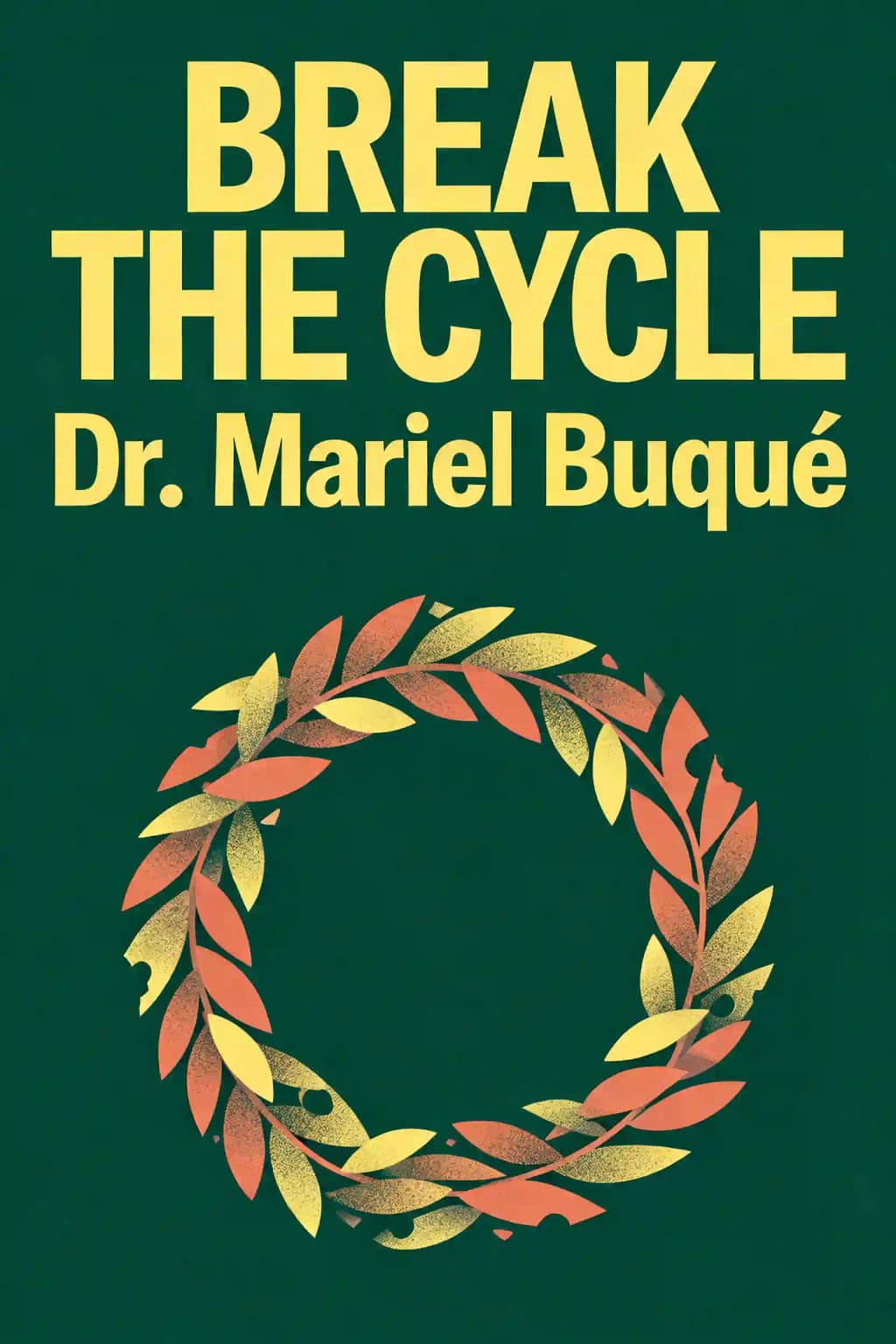
When Dr. Mariel Buque's grandmother's cherished mug shattered in her hands, she experienced a profound revelation. This wasn't just about a broken possession-it was a metaphor for the intergenerational trauma work she would dedicate her life to. This moment taught her that physical objects could be released while spiritual connections remained intact, shaping her holistic approach to trauma healing that addresses mind, body, and spirit simultaneously.
"Break the Cycle" has become a phenomenon among trauma survivors and mental health professionals alike, with celebrities like Oprah Winfrey and Brene Brown praising its revolutionary approach. The book has sparked a movement of "cycle breakers"-individuals committed to ending patterns of intergenerational trauma in their families. Dr. Buque, with her unique blend of Western psychological training from Columbia University and ancestral healing wisdom from her Dominican heritage, offers readers not just understanding but practical tools for transformation. In a culture increasingly aware of how trauma shapes our lives, this book arrives at precisely the moment we need it most.
Chapitre 2
The Cycle Breaker's Calling: Recognizing Your Power
What exactly is a cycle breaker? They're individuals who consciously choose to create a different legacy than the one they inherited. Rather than passively accepting harmful patterns, they actively disrupt them, sending healing ripples both backward and forward through their lineage. Though this journey challenges every fiber of your being, it ultimately leads to the lightness of inner peace.
Cycle breakers share several defining characteristics. They recognize generational wisdom while disrupting trauma responses. They acknowledge their own role in perpetuating cycles while committing to inner work. They maintain practices that positively influence their epigenome and ground themselves spiritually. Perhaps most importantly, they reject the notion that DNA equals destiny, seeing themselves instead as living ancestors with profound influence over future generations.
No cycle breaker ever feels fully ready for this work. Readiness often comes through unexpected signals-perhaps a dream, a conversation that strikes a chord, or an internal voice indicating your soul is prepared for transformation. These messages can feel like ancestors whispering encouragement, providing the necessary courage to begin your healing journey.
The path requires addressing mind, body, and spirit together. When we focus solely on cognitive aspects while ignoring how trauma lives in our bodies or disconnects us spiritually, healing remains incomplete. True liberation demands attention to all dimensions of self.
This work isn't linear-expect emotional waves with highs and lows. Since deep healing can trigger stress responses and put your body in survival mode, having coping strategies is essential. Find a quiet space when overwhelmed, use grounding techniques like the five senses exercise (identify five things you can see, four you can touch, three you can hear, two you can smell, and one you can taste), and practice deep breathing to remind yourself that every challenge is survivable.
To break cycles, you must first break your unconscious agreement to maintain old patterns. Consider writing down your old "contract" with wounded patterns, then ceremonially tearing it up before creating a new commitment to cycle-breaking. This ritual marks your conscious step into your identity as a cycle breaker-not just for yourself, but for your entire lineage.
Chapitre 3
Your Intergenerational Higher Self: Accessing Ancestral Wisdom
"You are one person but when you move an entire community walks through you you go nowhere alone." This powerful quote from poet Rupi Kaur captures the essence of our intergenerational existence. While much focus in trauma work centers on pain transmission, Dr. Buque emphasizes connecting with inherited resilience first through what she calls the "intergenerational higher self."
This higher self represents the combination of your personal wisdom and ancestral knowledge-not a perfectly healed being, but your wisest consciousness that embodies intergenerational abundance and purpose. Consider Dr. Buque's experience with impostor syndrome at an Ivy League institution. Her mother's words-"You come from a lineage of strong and resourceful people"-helped her recognize that feelings of not belonging stemmed from generations of marginalization, not her personal truth.
When attuned to your intergenerational higher self, you experience greater calm, trust, curiosity, and self-awareness. This connection counteracts how intergenerational trauma numbs creativity and joy, allowing you to rewire your brain and nervous system to experience greater ease during stress.
Several pathways can help you connect with this wisdom: sitting in silence to clear mental clutter; active meditation through walking, yoga or dance; paying attention to dreams that tap into your subconscious; connecting with nature to access Earth's ancestral wisdom; dialoguing directly with your wiser self through mirror conversations; writing letters or journal entries as "written meditations"; and visualization exercises to imagine your intergenerational higher self.
These practices help gain new perspectives, feel more grounded, develop patience and compassion, recognize interconnectedness, embrace multilayered identity, and maintain hope despite past difficulties. One particularly powerful technique is a modified version of the Gestalt therapy "empty chair technique" using three chairs: one representing your wounded self carrying intergenerational trauma, another your intergenerational higher self, and a third your intergenerational ancestral self holding ancestral wisdom. Moving between these positions allows you to address and integrate these different aspects of your being.
Chapitre 4
The Body's Memory: How Trauma Lives in Your Cells
When our bodies experience chronic stress, they begin to wear down. Our neurological wear-and-tear meter-the allostatic load-accumulates burden over time, and without sufficient rest, it overwhelms our body's capacity to find balance. This is especially significant for those carrying intergenerational strain, whose bodies and ancestors' bodies have been in allostatic overload for generations.
An estimated 60-80% of primary care visits stem from stress-related causes, highlighting how inextricably linked mind and body truly are. When you heal your mind, your body feels lighter; when you relax your body, your mind heals. Traditional Western medicine often treats organs independently rather than as an interactive system, failing to address how emotional factors trigger physical symptoms. A holistic approach recognizing mind and body as a single system is essential for sustainable healing.
Consider the story of Dr. Buque's sister Lady, who developed serious lung disease after being parentified as a child. Eastern traditions teach that grief is captured in the lungs and heart chakra-knowledge that might have provided preventative care. For her sister, breaking the cycle meant reconnecting to her body holistically and abandoning her burden of saving everyone-a common trauma response of eldest immigrant daughters-while grieving her lost childhood.
Stress-influenced chronic diseases run through generations, particularly inflammatory conditions like autoimmune disorders and heart disease. Children with adverse childhood experiences (ACEs) face higher risks of chronic inflammation throughout life. Studies reveal striking connections: psychological abuse correlates with heart disease; people with lupus often share histories of childhood emotional deprivation; and those reporting less warm relationships with caregivers show higher rates of cancer and hypertension in midlife.
Ancient healing traditions-spanning Ayurveda, Chinese medicine, African-derived healing, and Indigenous wisdom-have effectively treated illness for over 60,000 years by addressing mind-body-spirit imbalances. Dr. Buque shares her family's "tea therapy" tradition, particularly her grandmother's lemongrass tea from Barahona, Dominican Republic, which offers powerful anti-inflammatory benefits alongside cultural connection.
Since your body carries ancestral layers, regulating it requires layered approaches. Vagal toning-stimulating the ventral vagus nerve responsible for nervous system rest-produces immediate calming effects with lasting emotional benefits. A simple humming exercise while visualizing healing vibrations penetrating your nervous system can help regulate not just your own stress response but connect you to ancestors who need liberation from stress as well.
Chapitre 5
Unhealed Trauma: The Legacy That Spreads
Unhealed emotional wounds spread beyond the individual, contaminating relationships and causing devastating effects on entire families and communities. Consider Nola, who suffered from "chronic emptiness"-a deep depression that prevented her from finding joy despite her accomplishments in motherhood and career. Her depression manifested as irritability and angry outbursts, creating conflict with everyone in her life and perpetuating a cycle of misery that had affected her mother and grandmother before her.
Recognizing intergenerational trauma often begins with personal revelations-like realizing your inability to let go of small material things is actually a trauma symptom. You might notice unhealthy relationship patterns reflected in your childhood home, realize your emotional suffering stems from insufficient love from caretakers who experienced the same fate, or find yourself repeating toxic relationship cycles witnessed in your parents. You might discover family secrets causing emotional plague, recognize toxic family dynamics previously normalized, identify people-pleasing behaviors that originated generations ago, or notice codependent patterns you assumed were normal.
Intergenerational strain is the accumulated multigenerational distress that becomes engrained in your soul, influencing how you engage with both life's difficulties and joys. Ancient wisdom recognized this phenomenon before modern medicine; some Afro-Indigenous cultures view psychological crises as spiritual connections to lost ancestral gifts, while Native Americans believe stress carriers hold sorrows from up to seven generations back that, without resolution, could affect seven future generations.
Consider this: seven generations of ancestry means you carry at least 255 direct histories within you-from 128 fifth great-grandparents down to yourself. The author recommends approaching lineage reflection as data collection, analyzing patterns and seeking solutions like a researcher, gathering knowledge to develop intergenerational abundance while acknowledging that trauma makes life heavier but doesn't determine your entire existence.
After identifying intergenerational trauma in your life, gathering information about what contributed to the cycle becomes crucial. The Intergenerational Trauma Healing Assessment serves as both a personal healing tool and a resource for understanding generational pain. Before beginning this assessment, create a healing space embodying groundedness, tranquility, and safety-whether indoors or outdoors-with comforting objects that hold personal value. Ground yourself in the present moment through meditation, then approach this vulnerable work with courage, tapping into your core generational resilience.
Chapitre 6
The Biological Inheritance: How Trauma Travels Through Generations
Intergenerational trauma flows from one generation to the next when emotions remain unresolved or unattended. This legacy becomes both a biological and social inheritance, perpetuating because most people lack the awareness to identify, claim, or resolve it. More problematically, these traumas have become so normalized across communities they're nearly invisible-and what remains unseen cannot be healed.
We must distinguish between big-T traumas (extreme experiences threatening safety) like abandonment, neglect, sexual violations, identity-based persecution, and displacement, and little-t traumas (common occurrences causing emotional injury without safety threats) like relocating, losing support systems, or experiencing difficult work relationships. Though seemingly minor, when compounded over time, little-t traumas can have significant intergenerational impacts, especially in unhealthy emotional environments.
Strong environments-persistently stressful social settings like homes with bad-tempered parents or unsafe neighborhoods-can leave imprints on your epigenome, causing devastating consequences for you and your descendants. Studies of Holocaust survivors' descendants revealed unique genetic markers, including lower cortisol levels indicative of PTSD. Similar patterns appear in descendants of African diaspora communities, Native Americans, Aboriginal people, and other populations who've experienced collective trauma.
When facing stress, our bodies naturally activate alarm systems, releasing cortisol and adrenaline. Normally, once the threat passes, our nervous systems return to balance. However, when stressors persist or overwhelm us, the body cannot properly discharge the accumulated energy, leading to chronic symptoms. Traumatic symptoms are incomplete physical responses detained in the body-energy that becomes frozen when not released.
Trauma transmission begins at conception through sex cells. Studies show stress-related gene expressions appear in sperm cells, which replicate throughout life. Since fetuses develop precursor sex cells in utero, you originated as cells in your parents while they were embryos in your grandmothers' wombs-three generations sharing one body. Whatever stress hormones circulated in your grandmothers' bloodstreams filtered to your parents and to your precursor cells, potentially triggering epigenetic regulation that impacted your development before your parents were even born.
Beyond inheriting physical traits, we inherit personality characteristics and stress-coping mechanisms. Scientists discovered in the 1980s that genes can activate or deactivate based on social environment signals. Brooklyn, a client born to break cycles, experienced this cellular memory as "deep grief"-a familiar, almost comforting state she would unconsciously seek when life felt too positive, sabotaging opportunities and relationships to return to darkness.
We're also biologically connected to our families' stress through neurons, which transmit sensory information as electrical signals to our brains. Mirror neurons fire when we experience someone else's emotions. After repeatedly absorbing others' experiences, these neurons can overfire and form habitual responses, especially in families with intense emotional exchanges. This creates an intergenerational nervous system where one person's emotions trigger collective responses-when one feels sorrow, all feel it; when one feels anger, all become angry.
Chapitre 7
Your Nervous System's Inheritance: Breaking Response Patterns
Our nervous system processes stress temporarily before releasing it, but unresolved trauma creates constant elevated responses with little room for relaxation. The nervous system has three parts: the sympathetic system (fight-or-flight), the dorsal vagal system (freeze/fawn), and the ventral vagal system, which helps us move safely out of protection responses.
When multiple destabilized nervous systems interact in families, they create an intergenerational nervous system where stress responses are shared and amplified. Scientific studies, including Dr. LeManuel Lee Bitsoi's genome research with Native American families, reveal how intergenerational trauma affects both mental and physical health through epigenetic transmission.
Your "intergenerational window of tolerance" represents your emotional comfort zone layered with the emotional limitations of your ancestors. When parents have chronically stressed nervous systems, their children become susceptible to similar patterns through both biological inheritance and behavioral modeling. Like Zuri's father who shut down under minimal stress and turned to alcohol, children often inherit both the genetic predisposition and the modeled coping strategies, creating cycles of diminished stress tolerance across generations.
Intergenerational memories form a vast network of buried recollections that can trigger responses across generations. Like Leon, whose aversion to coffee was inherited from his grandfather's traumatic assault, these memories are stored in our DNA through cellular memory (stress carried in cells and genes), procedural memory (emotional strain in the brain and nervous system activated by sensory triggers), and intuitive memory (inner knowing of ancestral grief).
Expanding your window of tolerance requires daily practice to boost stress tolerance and prevent trauma from becoming embedded. The intergenerational emotional freedom technique (EFT) combines tapping on meridian points with the Sanskrit mantra "om" to stimulate the ventral vagal nerve. This practice involves alternating between visualizing yourself calm and sending healing energy to ancestors while tapping specific points connected to fear, emotional repression, despair, shame, and other feelings-ultimately disrupting trauma patterns in your nervous system.
Chapitre 8
The Inner Child's Legacy: Healing Attachment Wounds
Early childhood relationships, especially with caregivers, form the foundation of our attachment styles. Safe, supportive environments foster secure attachment and healthy trust, while unsafe environments create insecure attachment and inner child wounds that affect all future relationships.
Humans are hardwired for connection from birth, with consistent caregiver responsiveness building secure attachment. When caregivers respond to a baby's needs with comfort and reassurance, the child learns trust. But in homes with trauma, this pattern is disrupted by abuse, neglect, mental illness, or emotional disconnection. When parents are emotionally unavailable or dissociating, babies exhaust themselves trying to regain attention before eventually shutting down emotionally-creating insecure children whose need for validation grows while receiving messages they're "too much" or "hard to love."
During critical developmental periods-in the womb and the first few years of life-stress responses become hardwired in our nervous systems. When babies experience persistent stress, like hearing frequent yelling, their tiny bodies flood with stress hormones, creating fight-flight-freeze responses that can become stuck patterns. This stress transmission becomes intergenerational when unregulated adults pass their dysregulation to their children.
Trauma victims often become emotionally stuck at the age when their safety was compromised, developing what psychologists call "inner child wounds." These suppressed childhood emotions resurface in adulthood as abandonment fears, low self-esteem, people-pleasing tendencies, insecurity, or persistent guilt. Everyone has an inner child-including your parents. When they couldn't heal their own childhood wounds, they transmitted these patterns to you through both modeling (demonstrating harmful relationship patterns you internalized) and direct harm (perpetuating cycles of abuse).
In healthy families, caregivers serve as emotional containers for their children's feelings, tolerating their independence and needs. But emotionally immature caregivers cannot regulate their triggers and instead use their children as emotional depositories for their unhealed pain. This creates "emotional incest" where children take on adult-like roles, absorbing their parents' worries and developing empathic stress.
Consider Yara, who developed intense self-sufficiency after her father abandoned her following a school pickup incident. Blaming herself for needing him in the first place, she grew into a hyperindependent adult who couldn't trust others to show up for her. This intergenerational wound mirrored her father's own abandonment experiences. Her healing journey began with small trust exercises-allowing a friend to reserve concert tickets, then pick them up, and eventually drive her to events. Through these graduated challenges, Yara learned to reparent herself with deep breaths and affirmations.
Reparenting is the process of providing yourself with what you needed but didn't receive as a child. This healing practice soothes your inner child, reconciles emotional wounds, and repairs insecure attachments. Practical reparenting strategies include reciting affirmations you wished you'd heard as a child, giving yourself loving embraces, offering daily gifts of encouragement, speaking to yourself gently, recreating cherished childhood memories, engaging in missed playful activities, connecting with safe people, and embracing childlike laughter.
Chapitre 9
From Grief to Legacy: Transforming Your Inheritance
Breaking cycles requires the painful process of shedding-letting go of antiquated expectations, old self-perceptions, and expired worldviews to embrace authentic living. This means digging into family shadows, acknowledging mental health issues, and confronting family secrets despite potential resistance and gaslighting from family members. You must prepare for disappointment and let go of fantasies that those who hurt you will fully hear or change.
We humans naturally gravitate toward the familiar, even when it hurts us, because uncertainty feels terrifying. This "intergenerational loyalty" keeps us tied to dysfunctional family bonds that feel predictable. Many cycle breakers were socialized to maintain family facades, carry secrets, and preserve dysfunction. Breaking this loyalty isn't about publicly broadcasting family shame, but courageously addressing unspoken tensions through ongoing conversations.
Shame-the belief that you are inherently bad, broken or inadequate-is prevalent among trauma sufferers and a core emotion that maintains traumatic cycles. Breaking up with shame means leaving your comfort zone and risking an existential crisis to discover your authentic self. Shame emerges when someone believes something is globally wrong with them, leading to avoidant and self-destructive behaviors. Children naturally assume their parents are good, so when bad things happen, they conclude they must be the bad ones deserving punishment.
You're already healing your lineage by healing yourself. When you show up more healed, others must adjust their way of being around you, creating ripple effects throughout your family and community. However, having a desire to heal family members differs from feeling a duty to heal them-which often stems from childhood savior fantasies, particularly in children of immature or substance-using parents.
Forgiveness is not required for healing from trauma. Some actions are simply unforgivable, and forcing yourself to pardon someone can actually impede your healing journey by adding emotional weight to an already heavy experience. You can love someone without condoning their harmful behaviors. Being a cycle breaker doesn't mean letting everyone off the hook-sometimes not forgiving offers greater peace and is the only way forward.
Sometimes resolution simply isn't possible or would be too dangerous. When change in others isn't an option, focus on change within yourself. Many cycle breakers must walk away from family members without receiving an apology, love, or acknowledgment of transmitted pain. This means laying to rest your "false family"-the idealized version you thought you had-and embracing your "true family" with all their flaws, toxicity, and intergenerational wounds.
Moving toward an intergenerational legacy requires transitioning through grief-particularly the wish of what could have been. Writing a farewell letter to your false family can help with this process, identifying what you wished they had done, what they actually did, the intergenerational thread behind their behavior, what positive aspects you'll take with you, what you're letting go of, what you'll replace this void with, and how this contributes to your legacy building.
Chapitre 10
Becoming the Ancestor You Needed: Your Generational Gift
You are the alchemist of your family's intergenerational legacy. Every skill learned and breath taken has drawn you closer to this inheritance of healing that will impact you, your family, and communities. A legacy means living in alignment with the bigger purpose of breaking trauma cycles-shifting from passively accepting intergenerational trauma to actively creating a new narrative.
Future generations will tell stories about how you disrupted family patterns, advocated for communities, and shifted history. Through cycle-breaking work, you've gained generational privilege-the knowledge that intergenerational trauma exists and the tools to create something better. This privilege offers the choice to break cycles rather than remaining trapped in them.
Becoming a legacy-building ancestor requires embodying your healing and dedicating yourself to leaving wisdom for others. This position is selfless-healing for yourself and the collective to prevent passing hurt to future generations. We don't need to change the entire world alone-we simply do our part in breaking cycles, which together creates generational shifts that impact collective descendants.
Some choose not to have children to discontinue trauma transmission-a valid way to give the gift of ease to their lineage. For those who choose to parent as cycle breakers, they face the challenge of enacting new practices largely through intuition, building different foundations for their children.
Cycle-breaking parenting requires dual focus: caring for yourself and caring for your children. Parents with improved emotional regulation can be more mindful in their parenting and create healthier communication. "Parenting Back-Parenting Forward" means first settling your own nervous system through intergenerational reparenting, then consciously focusing on legacy-centered parenting. Key practices include teaching children nervous system regulation, forming secure attachments, modeling safety, offering affirmations, avoiding physical punishment, prioritizing children's voices, encouraging emotional expression, apologizing when wrong, fostering creativity and play, and connecting them with community wisdom.
Dr. Buque shares a powerful metaphor from the Dominican Republic, where during power outages, communities create sancocho-a communal stew made from perishable foods. This tradition of cooking together in darkness to create nourishment parallels the cycle-breaking work of "cooking in the darkness of our pain." Your "legacy sancocho" becomes a container of practices and reminders to sustain your healing work.
As Dr. Buque's mother beautifully declared at age sixty-five: "Estoy en mi era de paz" ("I am in my peace era"), finally letting go of intergenerational guilt. Her father identified their family's "inheritance of love" despite pain. Breaking cycles requires daily commitment to stepping into courage, shedding old patterns, and honoring ancestral rest. You now carry the tools to continue this journey whenever needed, becoming the ancestor you wish you had.





![Couverture du livre Facing Codependence [ABRIDGED]](/_next/image?url=https%3A%2F%2Fd1y2du6z1jfm9e.cloudfront.net%2Fcovers%2F1d91cc59-653c-487c-bb06-0a03ac09820d%2Fimage_resized.webp&w=1024&q=50)