Chapitre 1
Rediscovering Paradise: The Forgotten Wisdom of Childhood
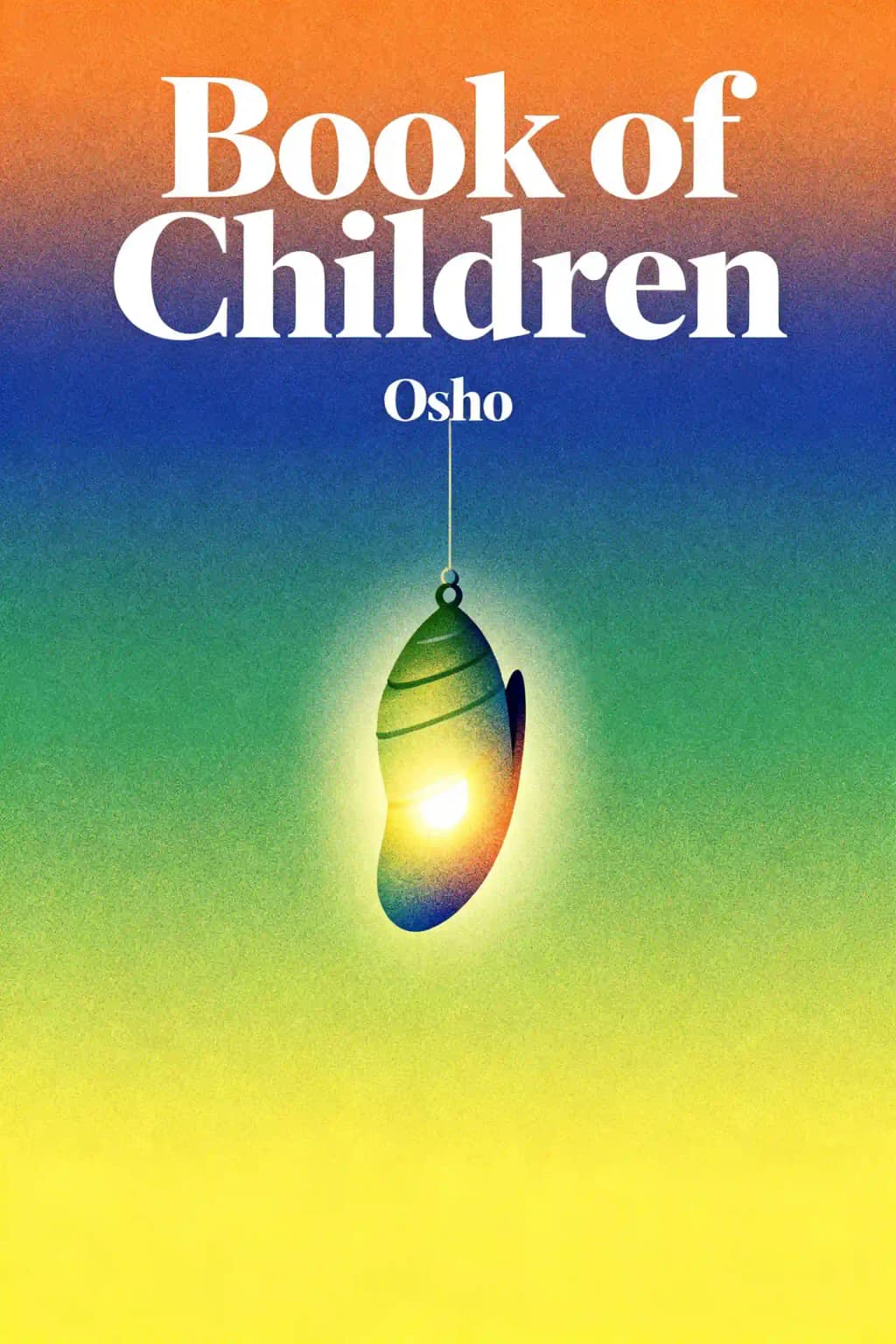
The Book of Children by Osho has become a cult classic among celebrities like Russell Brand and Oprah Winfrey, who cite its radical perspective on childhood as transformative to their understanding of human development. In a world obsessed with molding children into productive adults, Osho's counterintuitive approach has gained renewed relevance amid rising mental health concerns among youth. His provocative assertion that "every child is born enlightened" challenges our fundamental assumptions about education and parenting. What if, instead of teaching children how to live, we allowed them to remind us what living truly means? This revolutionary text invites us to reconsider whether our so-called progress has actually moved us further from our natural state of wonder, playfulness, and authentic being.
Chapitre 2
The Qualities of the Natural Child: What We've Lost and Must Reclaim
The haunting memory of childhood innocence follows intelligent people throughout their lives-that sense of wonder and beauty now feels like a distant dream. All religions share the parable that humans once lived in paradise and were expelled, symbolizing how each person is born in paradise but somehow loses it. While the unintelligent forget this paradise entirely, the sensitive and creative are haunted by its faint memory and search for it again.
Children possess natural playfulness that society systematically destroys for trivial reasons. The obedient child receives praise while the playful child faces condemnation-not because their play is harmful but because it contains the potential for rebellion. A playful child growing with freedom becomes a rebellious youth who won't be easily enslaved, forced into armies, marriages, or particular jobs. This rebellious spirit threatens parents who often wish to fulfill their own unfulfilled longings through their children.
Intelligence isn't something acquired but inborn-intrinsic to life itself. What makes humans unique is our awareness of our own intelligence, which creates both opportunity and problems. This self-awareness breeds ego, which we strengthen in children believing it necessary for survival. As the ego grows stronger, it surrounds intelligence like darkness enveloping light. Society discourages children's natural intelligence because intelligent children see falsities in social systems and become rebellious individuals who resist conformity.
Children demonstrate remarkable intelligence when asked questions requiring immediate response rather than stored information. When a child is asked, "What is two plus two?" they might hesitate, searching memory for the correct answer. But ask them, "Where is your nose?" and they point instantly-pure intelligence without thought interference. Meditation's function is precisely this: to dig into your being until you rediscover the springs of your own intelligence-when you find your inner child again.
Innocence is everyone's birthright-we all enter the world as blank slates. The tragedy is that children don't understand their integrity is more valuable than anything the world offers. In Osho's case, being raised by grandparents who didn't interfere with his natural development allowed him to maintain his wildness and clarity. His grandmother insisted, "Let this child be uninfluenced by us," preventing him from being formally educated until age seven. This created self-sufficiency and clarity that lasted his lifetime.
What appears as innocence and clarity is simply remaining untouched by civilization-wildness preserved. The child's natural state contains the seeds of enlightenment that most adults spend decades trying to reclaim through spiritual practices.
Chapitre 3
The Sacred Journey: From Conception to Early Childhood
The right time for parenthood is when one is neither neurotic nor enlightened, but mentally healthy with some degree of awareness. Neurotic people tend to have many children to fill their inner emptiness, while enlightened beings have given ultimate birth to themselves. The ideal parent has overcome neurosis and developed enough awareness to offer their children more than just inherited psychological problems.
When conceiving a child, the parents' consciousness level determines what type of soul enters. Most people make love from lower centers-when merely sexual, angry, or as mechanical routine-opening doors to lower souls. Love should be like prayer, sacred and holy. Prepare yourself through meditation to become vulnerable to a higher quality soul.
During pregnancy, the mother should remain happy and loving, avoiding all negativities which can enter the child's makeup. The mother's mind becomes the blueprint for the child during those nine months. She should rejoice, pray, dance, sing, and listen to classical music that reaches the child's unconscious. The father should help create positive environments, be more loving and less focused on sex.
The conventional birth process creates unnecessary shock. Birth should happen in darkness or soft candlelight, not glaring hospital lights that damage the child's fragile eyes. Don't rush to cut the umbilical cord-let the child lie on the mother's belly first, becoming acquainted with her from the outside. Wait until the child begins breathing naturally before cutting the cord, rather than forcing breath with slaps.
When a mother feeds her child, she provides more than milk-she transfers energy. During breastfeeding, energy flows both ways. When a mother truly loves her child, she experiences almost orgasmic joy while nursing, and the child senses this warmth and acceptance. A cold, hurried feeding makes the child feel unwanted. The mother represents the child's entire existence-if she doesn't love him, he'll feel alienated from the world, unable to trust anyone.
Crying fulfills a deep necessity for the child-a daily catharsis to release frustrations. When parents constantly distract or console a crying child to stop the disturbance, they interrupt this natural release mechanism. Without this release, frustrations accumulate within the child, creating a "piled-up cry" that remains into adulthood.
Toilet training can cause significant damage when children are forced to control bowel movements before they're developmentally ready. Unable to truly control this function, children simply clench their anal muscles, becoming "anally fixated." This explains why constipation is uniquely human-no wild animals suffer from it. This physical restriction creates psychological patterns of hoarding that extend beyond the body.
Children naturally progress through three sexual stages. First is autosexual-the child loves their own body, especially the highly sensitive sexual organs, without any concept of them being "sexual." When parents angrily stop this natural exploration, they create the first trauma. The second natural stage is homosexual-children are drawn to bodies like their own before making the leap to the opposite sex. The final mature stage is heterosexual, where one can appreciate and connect with a completely different organism and energy system.
Chapitre 4
The Conditioning Process: How Society Crushes Natural Intelligence
People repress themselves for survival. The child's fragility and dependency makes them vulnerable to exploitation through reward and punishment-the same Skinnerian techniques used to train circus animals. Parents unconsciously perpetuate this conditioning cycle, teaching arbitrary notions of right and wrong based on cultural and personal preferences. When children comply, they receive approval and affection; when they don't, they face anger, punishment, and withdrawal of love.
The child's survival depends on parental approval, making them vulnerable to conditioning. Parents reward obedience and punish disobedience until these patterns become the child's "conscience"-an internalized voice that continues the control even without parental presence. This conditioning includes instilling fear and guilt about natural behaviors like exploring one's body.
By adulthood, after twenty-five years of repetitive conditioning, these patterns become deeply embedded. Though children initially resist, parents' power eventually prevails. This creates deep-seated anger that persists into adulthood, explaining why societies must teach "respect" for parents. The human child, being the weakest in existence, is especially vulnerable to exploitation.
Parents, teachers, and religious institutions all demand obedience, using fear (hell) and rewards (heaven) to maintain control. The obedient child becomes mediocre while disobedience requires intelligence. This system perpetuates itself through generations, protecting vested interests of those in power.
Children arrive with an unnamed presence, an indefinable aliveness and freshness that slowly disappears as society conditions them. Their eyes contain an immeasurable depth that becomes superficial through layers of conditioning. The child exists in pure consciousness without thoughts-having no past, only future, and no problems about which to think. This original face, once yours too, waits within to be rediscovered.
To preserve a child's original face requires the difficult art of non-doing-keeping away and allowing the child to develop naturally despite societal fears that an uncontrolled child will become "savage." This approach brings trouble for parents but yields immeasurable value. The greatest gift to children is non-interference, letting them explore the unknown despite parental fears.
Chapitre 5
The Seven-Year Cycles: Understanding the Natural Rhythm of Development
Life moves in seven-year cycles, with the first seven years being most crucial as they form our foundation. During this period, religions rush to claim children through rituals like circumcision-essentially branding them as possessions. These early years are when children are conditioned with ideas that will cloud their perception throughout life, becoming embedded in their very being.
The greatest expression of love is leaving a child completely unconditioned during these first seven years-allowing them to remain "wild" and "pagan." Parents should protect children not just from external dangers but from themselves and others who would impose limiting beliefs. Like a young plant needing temporary protective wiring, children need protection from influences until they complete their first seven-year circle, at which point they become well-grounded and centered in their authentic selves.
The second seven-year circle (ages 7-14) introduces the first stirrings of sexual energy as a kind of rehearsal. This is precisely when parents interfere most, repeating patterns imposed on them. Children should be allowed coeducational environments where they can mix freely without risk of pregnancy or other complications. This natural rehearsal would eliminate nearly 90% of sexual perversions and interest in pornography.
When boys and girls grow separately, they develop as if belonging to different species, creating barriers that damage their entire sexual development. The rehearsal period prepares children for the third circle (14-21) when sex fully matures and romantic qualities emerge-not yet focused on reproduction or marriage, but on beauty, love, and poetry.
Between ages 21-28, young people can choose their own partners based on their accumulated experiences. This choice comes as a profound "hunch"-not through arithmetic, astrology or palmistry, but through an unmistakable certainty when something "clicks" with another person. From 28-35 follows the most joyous, peaceful and harmonious period as two people begin melting and merging into each other.
Every child inherently understands that their perception of reality differs from their parents'. They see different values-while parents chase money, children treasure seashells and butterflies. The difference isn't in intelligence but in assertiveness. Society condemns courage in children, rewarding only obedience.
Children must learn to counter power with power-if parents threaten to withhold food, a child can threaten to beg; if they impose curfews, a child can create public embarrassment. The secret is clarity about one's rightness and having reasons to support it. Parents can only threaten, not truly harm, and once children recognize this, they can negotiate for their freedom and individuality.
Chapitre 6
Reimagining Family: The Commune as Alternative
The family as we know it has outlived its usefulness-it's already dead though few recognize it. While it helped humanity survive, it also corrupted the human mind. The future should offer multiple alternative lifestyles. Only about 1% of families are truly beautiful-where growth happens without authority, possessiveness or power trips. For the majority, family creates mental illness.
The commune represents the best alternative-a liquid family where children belong to all, not just two parents. In communes, children develop richer souls by learning from many adults rather than becoming carbon copies of their parents. They avoid the obsession with finding partners who resemble their parents. Families breed injustice by demanding loyalty regardless of right and wrong, while communes foster justice and less aggression.
In this vision, people will live together purely for joy, separating without grudges when happiness fades. Children will observe genuine love rather than the deadlock of loveless marriages, giving them hope for their own futures. The family perpetuates neuroses across generations, while meditative people in communes can celebrate life without the nonsense of monopolizing love.
Parents must avoid excessive concern about making children happy, as happiness cannot be directly given but emerges when children become absorbed in activities. Children are intuitive beings who sense parental unhappiness immediately. Rather than focusing on the child's happiness, parents should cultivate their own joy, allowing children to play freely without interrogating them about their emotional state.
Happiness exists only when one is completely lost in something-playing, collecting shells, or any absorbing activity. Parents often unconsciously repeat patterns from their own upbringing, but becoming aware allows breaking these cycles. Avoid compensating with idealistic parenting-be natural instead. Neither parents fearing children nor children fearing parents creates healthy relationships.
Accept that parent-child relationships can never be perfect, and remember that children need both love and discipline to prepare for life's realities. Mothers provide love and fathers provide structure, creating a balanced child who can respond appropriately to different life situations.
Chapitre 7
The Teenage Years: Navigating the Bridge to Adulthood
Each new generation is naturally more intelligent than the previous one-this is how evolution progresses. Modern children stand on the shoulders of all past wisdom, with better access to knowledge than ever before. The problem arises because parents still expect traditional respect while being increasingly outdated in their knowledge.
In ancient times, parents were teachers (like a carpenter teaching his son), but now professional teachers with current information educate children. When children return from school knowing more than their parents, the old dynamic of respect based on superior knowledge collapses. The solution isn't forcing children to respect parents, but for parents to respect children's up-to-date knowledge and learn from them.
Teenagers should be completely honest with their parents, expressing their feelings and desires humbly but truthfully. The gap between generations widens when both sides hide things from each other. When teenagers approach parents with sincerity about their true thoughts and feelings-even uncomfortable topics like sexuality-it often triggers reciprocal openness from parents who are also burdened by societal prohibitions.
Teenage shyness and indecisiveness stem primarily from sexual repression. When young people are given freedom in their love relationships, particularly now that contraception eliminates pregnancy concerns, they develop natural decisiveness without special training. Sexual repression creates an inner split that manifests as hesitation in all areas of life-when teenagers can't make decisions about something as fundamental as their own sexuality, they become uncertain about everything else.
Teenagers seek group belonging precisely because they no longer feel connected to their families yet are too young to face the world alone. In Eastern cultures where family bonds remain intact, phenomena like hippies, punks and skinheads don't emerge. Western teenagers, feeling the gap between themselves and their parents, become vulnerable and join any available group for security.
Fantasies and dreams are essential parts of youth's growth process. Let teenagers enjoy their dreams before life's burdens arrive. These fantasies harm no one and will naturally fade as life itself makes them realistic. These dream experiences will actually help them remember that life need not be miserable-there exists possibility beyond suffering.
Sports are perfectly right for teenagers, but they should be participants, not merely observers. The problem today is thousands watch while only professionals play. Every teenager should actively participate in sports for physical health, agility and intelligence development. Sports teach a beautiful lesson: what matters isn't victory or defeat but playing totally, intensely, without holding back.
Chapitre 8
Education Reimagined: Developing the Whole Person
Learning is not knowledge-it's the opposite. The more knowledgeable a person becomes, the less capable of learning they are. Children learn better than adults because they function from a state of not-knowing. Learning requires spaciousness, innocence, and wonder. It means never functioning from ready-made answers from scriptures, universities, teachers, parents, or even your own past experience.
Man is born as a seed, as potential rather than actuality-unlike other animals who are born instinctively perfect. This makes humans the only imperfect animal with the possibility for growth and evolution. True education serves as a bridge between potentiality and actuality, helping you become what exists in you only as a seed. Current education merely prepares people for jobs and earning, not for life itself.
Education has two beautiful meanings: to draw out what's within you like water from a well, and to lead you from darkness to light. But current education does neither-instead it crams information into you like programming computers. Real education would make you luminous by awakening your consciousness.
Today's education has become obsolete due to the knowledge explosion. While change has always existed, the rate of change has become qualitatively different. This unprecedented rate of change means memory-based education is useless-by the time you've memorized something, it's outdated. We must now teach intelligence to help children respond to future realities we cannot even imagine.
Intellect is not merely an obstacle but can become a stepping-stone. Without intellectual training, children would remain like wild animals-innocent but not meditative. Consider children raised by wolves: they develop no human qualities, only animal instincts. Training the intellect is necessary, but transcending it is equally important.
My vision replaces traditional education with five-dimensional education without conventional exams. The five dimensions are: First, informative subjects including languages; second, scientific inquiry; third, the art of living-transforming anger and hatred into love, developing humor, reverence for life, and a dancing spirit; fourth, creativity through arts, crafts, and skills; fifth, the art of dying-meditation techniques revealing eternal life.
Religious education should never impose beliefs on children. When children discover that religious stories they were taught as absolute truth are merely fables, they lose interest in spirituality altogether. Children should be encouraged to maintain their natural wonder and capacity for awe-the true foundations of religiousness. Religion arises from experiencing wonder, not from memorizing scriptures or attending services.
Not judging doesn't mean teachers can't evaluate answers or correct students. It means distinguishing between judging actions and judging people. A teacher should assess whether an answer is right or wrong, but without condemning the whole person for a single mistake. When correcting students, do so from a meditative state rather than from prejudice or convention.
Chapitre 9
Healing the Parent-Child Relationship
Anger toward parents is natural but useless. Your parents did what was done to them, unconsciously passing down conditioning from generation to generation. They had good intentions but lacked consciousness. Feel compassion for them instead-they weren't fortunate enough to have a master explain these psychological mechanisms.
Rather than wasting energy fighting the past, transform yourself. Become more conscious, alert and loving. Your changed individuality-your freshness, understanding and unconditional love-will be the only real argument that might transform your parents. They'll wonder what happened to you and how.
The fundamental problem with family is that children grow out of childhood, but parents never grow out of parenthood. Parents don't understand when to withdraw from their child's life. Parenthood should end when the child becomes self-sufficient, but parents cling to it forever, creating anxiety and guilt.
The natural flow of love moves forward, not backward. Parents love their children, but children naturally love their own children, not their parents in the same way. This is nature's design for species survival. Your mother has already received her reward through the joy of carrying you in her womb, nourishing you, and watching you grow. Nature rewards immediately; it doesn't keep accounts.
Every child struggles to forgive parents because they represent the original source of guilt and conditioning. In their presence, you revert to childhood helplessness despite being an adult now, creating defensive reactions. For three months, live exactly as you wish. When parental voices arise within, recognize that you're now mature enough to take responsibility for your own life.
In the East, parent-child relationships aren't typically "unfinished" because children offer continuous reverence and respect. This rapport is crucial not just for parents but for yourself-half your being comes from each parent, and their conflicts and anxieties continue within you.
Chapitre 10
Meditation: Rediscovering Our Original Face
Everyone is born a mystic-someone exploring life's mysteries with wonder and awe. Children are natural mystics before society transforms them into businesspeople, clerks, or ministers. Meditation liberates this innate mysticism without indoctrination or belief systems. Unlike religious conditioning that imposes absurd doctrines, meditation simply invites children to experience no-thought.
Children are especially capable because they're still close to the source, retaining the fragrance of the other world. Their natural grace and beauty fade when they lose their spontaneity and intelligence, imprisoned by thought-chains they cannot see.
Such experiences happen to many children but aren't supported by the surrounding culture. Children naturally explore states of non-identification, like whirling-where they can observe their own bodies spinning while their consciousness remains still. These valuable experiences should be nourished rather than stopped.
Children enter meditation easily when approached correctly-never through coercion but through invitation and play. Make meditation a game, dance with them, sing with them, sit in silence together. They'll begin enjoying it and ask to "play meditation." Creating a meditative atmosphere is key, as children intuitively absorb the vibes around them.
For children, meditation means disappearing into an activity-swaying like a tree, dancing, whirling, or jogging until self-consciousness dissolves. This forgetfulness of self is meditation in its most natural form for children.
Give children fifteen or twenty minutes twice daily to go completely mad-jump, scream, shout. Participate with them so they enjoy it fully. Then tell them to stop and remain silent for five minutes-this becomes their meditation. Their pent-up energy needs release. Within months, you'll see remarkable changes-better intelligence, concentration, and understanding.
The Gibberish Meditation encourages expressive body movements in two stages. For 15 minutes, speak nonsense sounds without using any known language, allowing complete freedom like birds. Move totally in gibberish, expressing whatever needs release while maintaining awareness. This breaks the mind's pattern of verbalization. Then for 15 minutes, lie on your stomach, merging with mother earth, feeling yourself sinking into the ground with each exhalation.
The Osho Born Again Meditation helps regain childhood innocence. First hour: behave like a child, doing whatever you wanted-dancing, singing, jumping, crying-without interfering with others. Second hour: sit silently in meditation, experiencing the freshness and innocence that emerges naturally after playfulness.
Chapitre 11
Paradise Regained: The Second Childhood
The feeling of childlikeness marks a great achievement-regaining your lost childhood innocence. While first childhood innocence comes from ignorance, second childhood innocence emerges through experience, mature and centered. This is meditation's existential meaning-finding your essential core that remains with you everywhere.
Jesus meant this when saying "unless you are born again"-dying as personality to emerge as innocent individuality. Unlike our serious society, childlike playfulness is the truly virtuous behavior, transcending humanity into godliness.
This transformation is a miracle-feeling like a child again completes life's circle. By consciously nurturing this childlike quality despite your personality's resistance, you'll feel unburdened and renewed. The softer, waterlike quality ultimately defeats rocklike rigidity; the child defeats the old man.
Spend time with children, follow their example of total involvement in each moment. Though vulnerability feels frightening after years of armoring yourself, this openness is beautiful. Whenever possible, invite this childlike state and simply be a child again.
In this second childhood, we don't return to ignorance but arrive at a knowing innocence-one that has journeyed through the complexities of life and emerged with the simplicity of a child combined with the wisdom of experience. This is the ultimate goal of all spiritual seeking: to die to all that is false and be reborn into our authentic nature, reclaiming the paradise that was never truly lost, only forgotten.