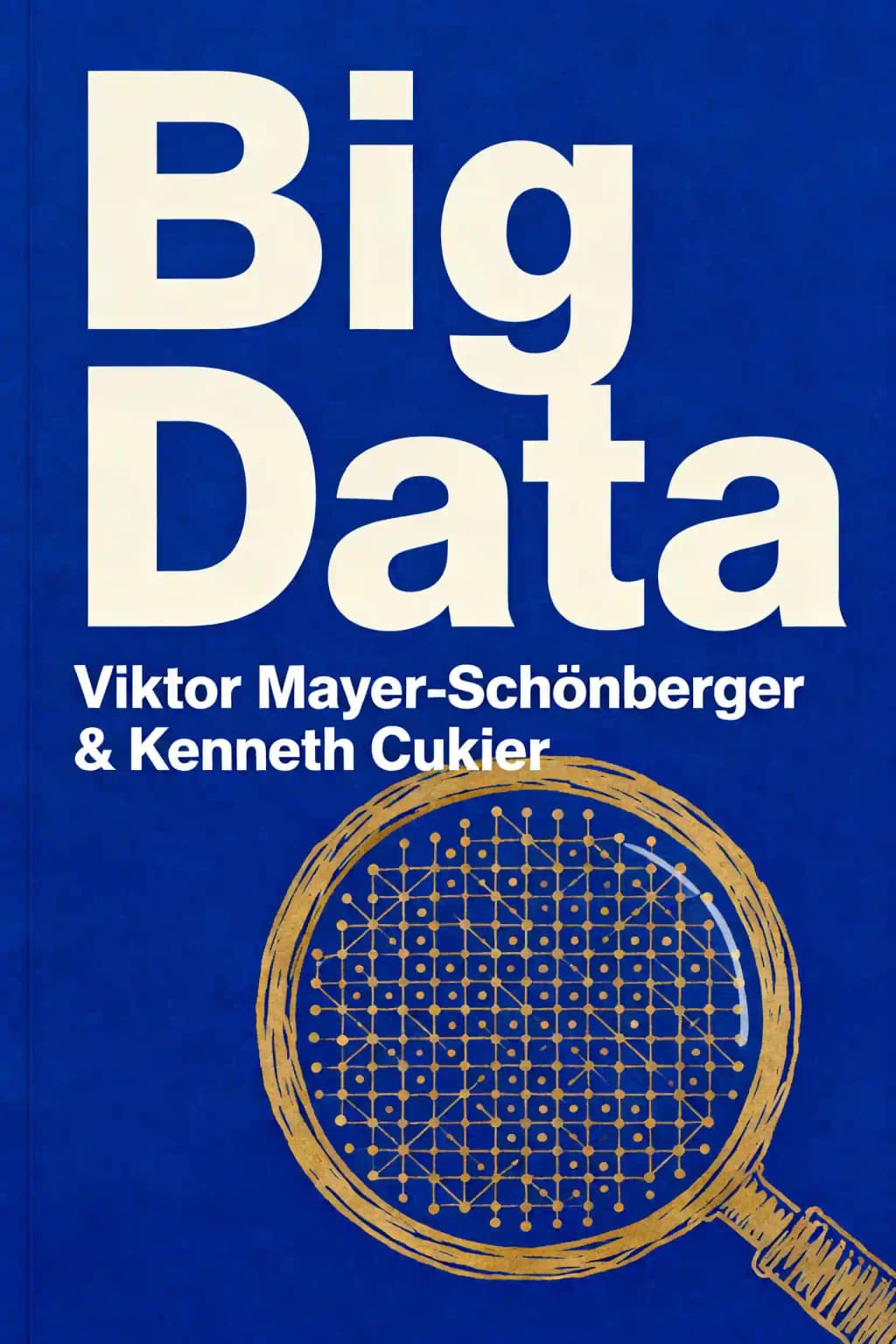
Résumé de Le big data : Une révolution qui va transformer notre façon de travailler, de vivre et de penser
Une révolution qui transformera notre façon de vivre, de travailler et de penser
Vue d’ensemble du Résumé de Le big data : Une révolution qui va transformer notre façon de travailler, de vivre et de penser
« Big Data » révèle comment les ensembles de données massifs révolutionnent tout, de la prédiction de la grippe à la prévention du crime. Présenté sur la liste de lecture de l'US Air Force, le professeur d'Oxford Mayer-Schönberger montre pourquoi la corrélation l'emporte désormais sur la causalité. Votre empreinte numérique pourrait-elle prédire votre prochain achat - ou une maladie ?
Thèmes clés du Résumé de Le big data : Une révolution qui va transformer notre façon de travailler, de vivre et de penser
- algorithmic prediction
- data-driven decision making
- correlation over causation
- statistical sampling shifts
- information messiness
Meilleures citations du Résumé de Le big data : Une révolution qui va transformer notre façon de travailler, de vivre et de penser
This is a revolution that will transform how we live, work, and think.
With enough data, the numbers speak for themselves.
Big data is about prediction.
Sometimes, more messy data trumps less perfect data.
Personnages du Résumé de Le big data : Une révolution qui va transformer notre façon de travailler, de vivre et de penser
- Viktor Mayer-SchönbergerCo-author and professor of internet governance
- Kenneth CukierCo-author and data editor at The Economist
- Herman HollerithInventor of the punch card system for the census
- Steven LevittEconomist who used data to find sumo match-fixing
- Albert-László BarabásiResearcher who analyzed mobile network stability
Telecharger le resume de Le big data : Une révolution qui va transformer notre façon de travailler, de vivre et de penser
Obtenez le resume de Le big data : Une révolution qui va transformer notre façon de travailler, de vivre et de penser en PDF ou EPUB gratuit. Imprimez-le ou lisez-le hors ligne a tout moment.