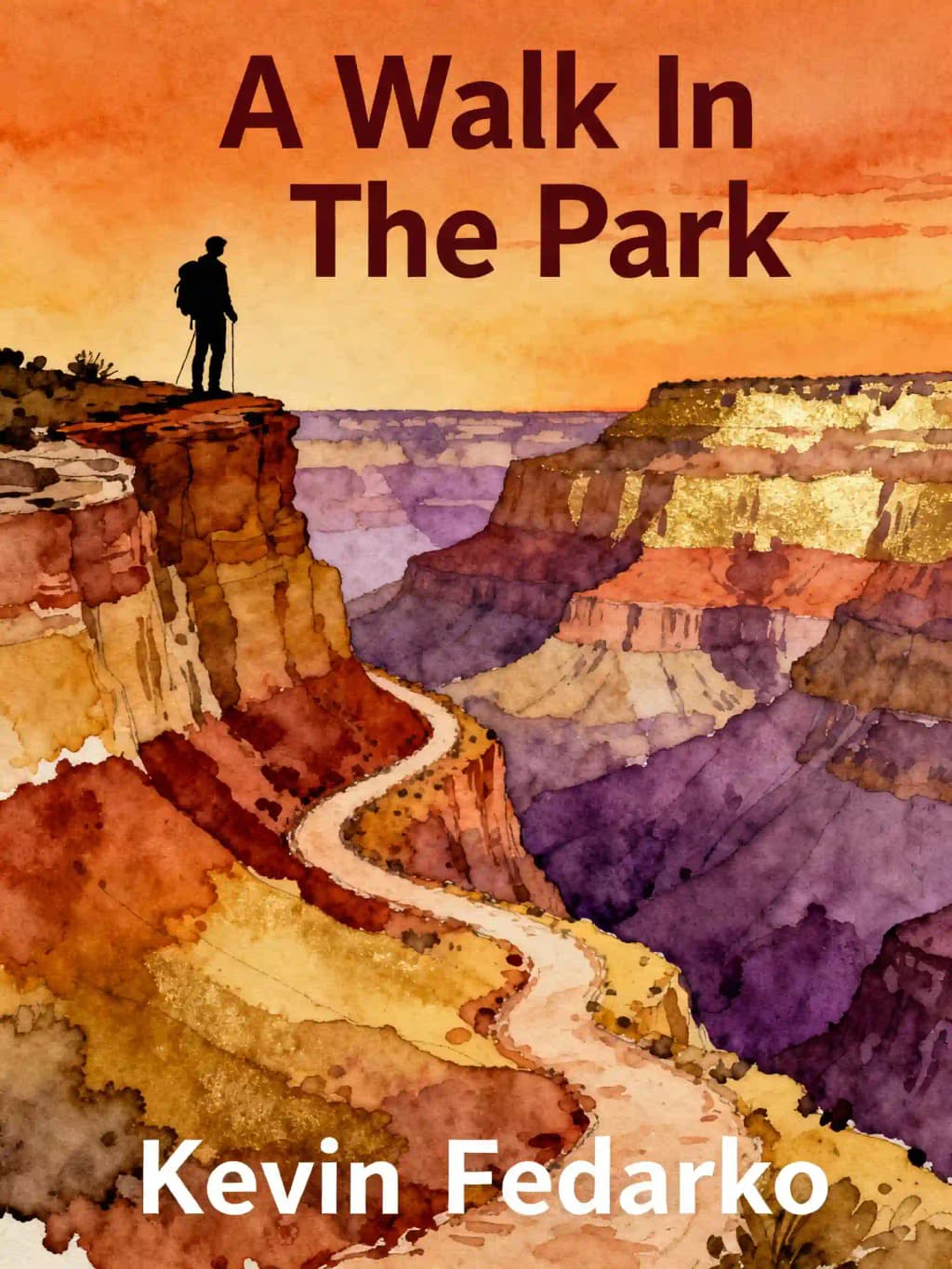
Walk in the Park
The True Story of a Spectacular Misadventure in the Grand Canyon
Aperçu de Walk in the Park
In "A Walk in the Park," Fedarko's 750-mile Grand Canyon odyssey nearly claims his life while revealing America's threatened wilderness. This NYT bestseller and Carnegie Medal winner transforms a perilous adventure into an urgent plea for preserving our most iconic - and imperiled - national treasure.

Thèmes clés dans Walk in the Park
- grand canyon thru-hiking
- wilderness conservation advocacy
- geological time
- river guide culture
- extreme physical endurance
Citations de Walk in the Park
The Grand Canyon has always been more than a mere landscape.
The canyon hosts four distinct biomes.
Grua believed there was an absolutely right way to do everything in the canyon.
Unlike Fletcher, Grua never sought publicity for his achievement.
The Grand Canyon is America's open-air cathedral in the desert.
Personnages de Walk in the Park
- Kevin FedarkoAuthor and adventurer who walked the Grand Canyon
- Pete McBridePhotographer who joined the 750-mile expedition
- Kenton GruaLegendary river guide and canyon speed-hiker
- Colin FletcherPioneering backpacker and author of canyon lore
À propos de l'auteur
À propos de l'auteur de Walk in the Park
Kevin Fedarko, the New York Times bestselling author of The Emerald Mile and an award-winning chronicler of adventure and conservation, delivers his latest work, A Walk in the Park: The True Story of a Spectacular Misadventure in the Grand Canyon.
This gripping narrative adventure explores themes of exploration, human perseverance, and the awe-inspiring Grand Canyon landscape—a setting Fedarko knows intimately from his two decades of writing about the region and working as a part-time whitewater guide.
His expertise shines through his contributions to major publications like Time, Outside, National Geographic, and The New York Times, and his editorial roles at Time and Outside underscore his authority in adventure journalism.
Fedarko's previous book, The Emerald Mile—winner of the National Outdoor Book Award and a finalist for the PEN Literary Sports Writing Award—is also available in our collection. A Walk in the Park continues his legacy of masterful storytelling about America’s natural wonders, published in 2024 to critical acclaim.
Telecharger le resume de Walk in the Park
Obtenez le resume de Walk in the Park en PDF ou EPUB gratuit. Imprimez-le ou lisez-le hors ligne a tout moment.
FAQ sur ce livre
Kevin Fedarko's A Walk in the Park chronicles his 14-month, death-defying odyssey hiking the entire Grand Canyon with photographer Pete McBride. Blending adventure, anthropology, and environmental advocacy, it explores the canyon's hidden landscapes while confronting physical extremes and ecological threats. The narrative combines firsthand peril with deep historical context, revealing why this natural wonder demands preservation.
Kevin Fedarko is an award-winning author and journalist specializing in conservation and exploration, particularly of the Grand Canyon. A former staff writer for Time and senior editor at Outside, he’s written for National Geographic and The New York Times. His bestselling debut, The Emerald Mile, won the National Outdoor Book Award. He lives in Flagstaff, Arizona, and works as a part-time Grand Canyon river guide.
This book is ideal for outdoor enthusiasts, conservation advocates, and readers seeking immersive adventure narratives. Fans of Fedarko’s The Emerald Mile, wilderness memoir lovers, and those interested in anthropology or National Geographic-style expeditions will find it compelling. Its themes of perseverance and environmental urgency also resonate with anyone passionate about protecting natural wonders.
Absolutely. Hailed as "a triumph" by The New York Times and a Financial Times Best Book of 2024, it offers superb writing, thrilling adventure, and profound ecological insights. Fedarko’s firsthand account of extreme physical challenges and the canyon’s fragile beauty makes it both a page-turner and a call to action for conservation.
Fedarko battled treacherous terrain, extreme temperatures, dehydration, and near-vertical cliffs across the canyon’s 800-mile expanse. The journey—completed without established trails—required navigating deadly flash floods, wildlife encounters, and sections so remote that rescue was impossible. These hardships underscore the canyon’s raw power and the team’s extraordinary resilience.
The book exposes urgent threats to the Grand Canyon, including mining proposals, tourism pressures, and water rights disputes. Fedarko argues that firsthand experience of the canyon’s fragility is key to protecting it, weaving advocacy with vivid descriptions of ecosystems at risk. This dual focus makes it a powerful tool for environmental awareness.
Unlike typical adventure tales, it merges extreme physical endeavor with deep anthropological and historical research, revealing the canyon’s human and ecological layers. Fedarko’s background as a river guide and journalist enables rich storytelling that balances personal struggle with broader themes like indigenous heritage and climate change.
While The Emerald Mile focused on a record-breaking 1983 river run, A Walk in the Park shifts to traversing the canyon on foot, emphasizing land-based exploration and current conservation battles. Both celebrate human daring and the Grand Canyon’s majesty, but the new work adopts a more explicitly activist tone against modern threats.
Lauded as "life-affirming" by The Wall Street Journal and "a masterpiece" by Bookreporter, it earned spots on prestigious "Best of 2024" lists. Critics praise its lyrical prose, meticulous research, and ability to transform a grueling trek into a meditation on humanity’s relationship with nature.
Notable lines include:
"The canyon doesn’t care if you live or die."
This underscores the indifferent power of wilderness. Another reflection:
"We walk to remember that wonder is not optional—it’s essential."
These emphasize the journey’s emotional core: rediscovering awe in a threatened landscape.
As climate change accelerates and public lands face political battles, Fedarko’s journey highlights the Grand Canyon’s symbolic and ecological significance. It frames conservation not as abstract policy but as a visceral, human-scale struggle—making it timely for debates about environmental stewardship in 2024 and beyond.