Chapitre 1
Awakening to Your Authentic Self: The Revolution Within
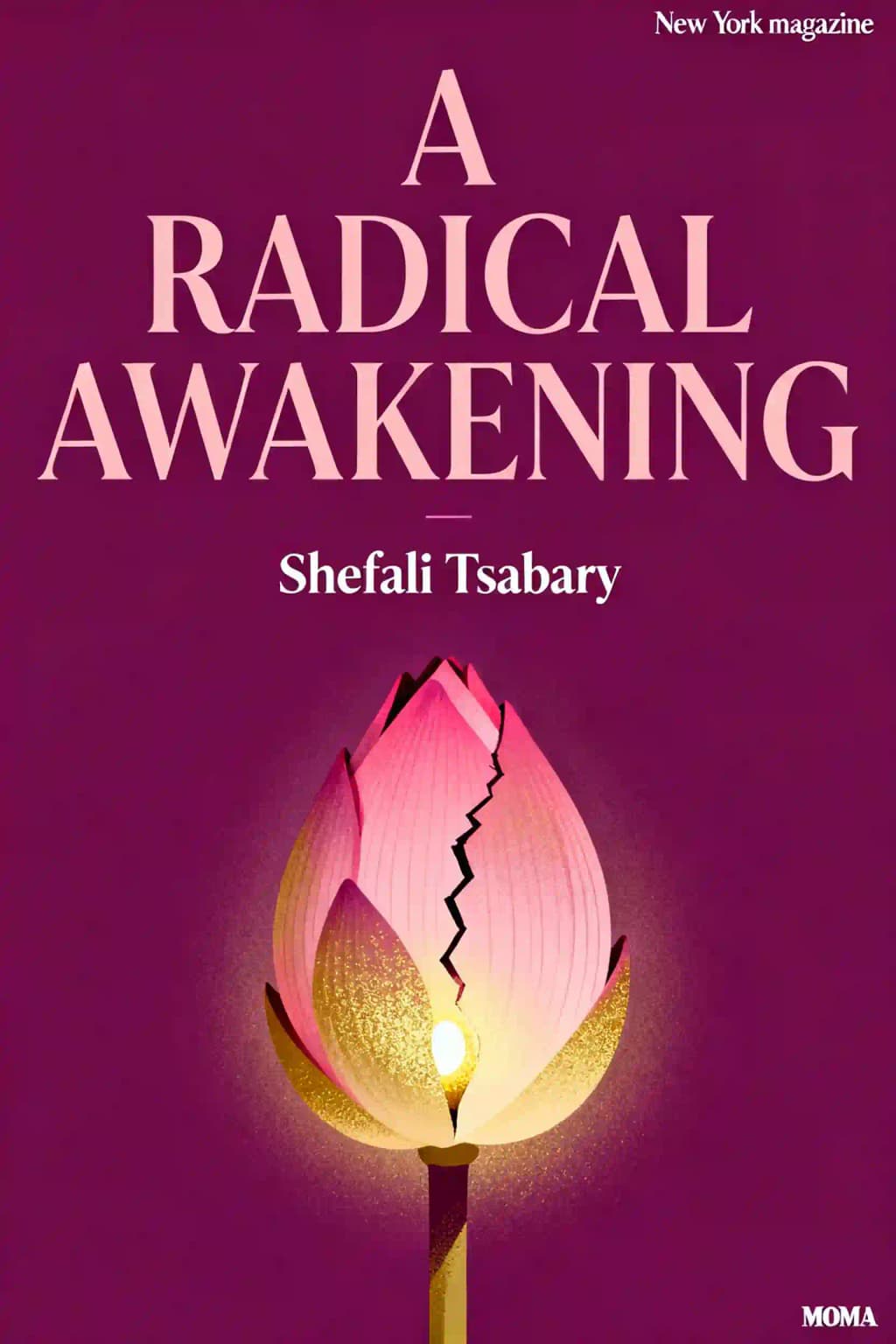
Imagine a moment when everything you've believed about yourself shatters. For Dr. Shefali Tsabary, this awakening came dramatically-finding herself in a roadside ditch after falling asleep while driving, physically unharmed but spiritually devastated. This pivotal moment launched her journey toward radical authenticity that she now shares in her groundbreaking work. A favorite among celebrities like Oprah Winfrey, who called it "revolutionary," and Gwyneth Paltrow, who credits the book with transforming her approach to relationships, "A Radical Awakening" has sparked a movement of women reclaiming their authentic selves. The book has sold over a million copies worldwide, resonating deeply with women seeking liberation from societal conditioning. As we navigate an era where women are increasingly questioning traditional roles and expectations, Tsabary's message couldn't be more timely: the most revolutionary act is to awaken to your true self.
Chapitre 2
The Silent Erosion of a Woman's Soul
Soul erosion happens gradually, chipping away at our authentic selves until we lose our power, voice, and inner knowing. Most women don't even realize they're living in a fog created by patriarchy-a system that silences and denigrates women through subtle cultural conditioning. This fog produces what Tsabary calls "vision blindness," causing us to deny reality and rationalize mistreatment.
Consider Trista, who at age six was severely punished by her father for crying over a broken doll. This single incident taught her that expressing emotions was dangerous, setting the pattern for a lifetime of emotional suppression. By adulthood, most women have developed elaborate facades-what Tsabary calls "the ego"-that help us fit into society by creating false selves that ensure our needs for love and validation are met.
This transformation happens so gradually that we don't notice how we're changing to fit others' expectations until their picture of us becomes our own self-image. We instinctively learn to be wary around men, to dim ourselves, to follow like sheep. Fear becomes our ruling emotion-fear of rejection, failure, ostracism, loneliness, unworthiness, and abuse.
Women often take blame rather than responsibility, perpetuating our own victimization through silence and complicity. We make excuses for toxic behavior we endure, creating an endless cycle of fear-blame-shame that keeps us trapped. We're afraid to speak up, then ashamed of our lack of courage, then blame ourselves for the very mistreatment we've endured.
Awakening begins when we name this fog for what it is-when we distinguish between taking blame (which keeps us silent) and taking responsibility (which allows us to see our participation in our victimization and rise with courage). Only when we hit rock bottom-that moment when our tried-and-true strategies for running from our truth finally fail-can true transformation begin.
When Pam finally reached her breaking point after decades of exhausting herself tending to everyone else's needs while her own health deteriorated, she faced a crucial question: Could she really return to living in that fog of fear, rituals, traditions, and conveyor-belt predictability? Her healing meant shedding her need to be validated as a rescuer and learning to say no-a simple word that revolutionized her entire existence.
Chapitre 3
The Myth of "That Woman"
No woman truly loses herself to another-she comes to relationships already lost. The straying from our authentic self begins in childhood, passed down through generations. Most women are trained from girlhood to crave the "triple threat" of approval, validation, and praise as substitutes for the void where our essence should blossom.
Our essence is an identity untethered to external goals, but others have played the central role in our psyche more than ourselves. Whether raised in Pakistan or Ohio, women are conditioned to prioritize others' needs, especially men's, before our own. This conditioning is so pervasive it seems embedded in women's emotional DNA-we've been trained to forget our true selves for generations.
The "good girl" learns her value comes from compliance, service to others, and sometimes excellence. But there's a huge difference between being authentic and being "good"-the latter keeps us divorced from our inner knowing. "Good" is a benign cover-up for something sinister and unachievable-behavior that conforms to external standards regardless of our internal truth.
Women essentially shape-shift to obtain approval, validation, and praise, morphing into whoever others wish us to be. We're incessantly judged for our looks, tying our worth to something external that's largely beyond our control. This creates a cycle where we resent other women who possess what we think we need to feel worthy.
The cultural script presents marriage and motherhood as a woman's ultimate destination, with deviation seeming like social suicide. Following the way of "That Woman" becomes the path of least resistance. The countless things women do to alter appearance-hair treatments, nail art, makeup, shapewear, uncomfortable clothing-speak to our monumental inner disconnect.
When we notice our addiction to seeking external validation, we might dare to ask what it means to give ourselves love. This inquiry often reveals how little we value ourselves and our inner voice. By checking in with ourselves moment by moment, we can catch acts of self-betrayal as they happen. We must question whether we're acting from obligation and fear or from alignment and authenticity.
The path to self-connection requires inner stillness and reflection. As we develop companionship with our inner being, we learn to value our own opinions and desires. This shift from self-loathing to self-love leads to a renewed understanding of our authentic power and purpose.
Chapitre 4
Patterns That Keep Us Trapped
We don't live a life; we live a pattern. Most of us don't notice these patterns because we're desperately seeking love and worth from the outside world. We believe we're passive victims of circumstances, when in reality we're active participants in creating our experiences.
The ego manifests differently each time, making us believe we're experiencing something new when we're actually repeating the same emotional patterns. This explains why second marriages often fail at higher rates than first ones. Self-awareness is the "ego exterminator"-by questioning what faces our ego wears, when it's triggered, and what it's protecting, we prevent it from dominating our lives.
My own clarity came after twenty-two years of marriage-I could no longer continue as things stood. My childhood conditioning had created psychological structures where I betrayed myself, allowing my authentic power to be crushed. I became the emotional caregiver, silencing my needs to keep peace. I clenched my jaw in silence, swallowed my dignity, and blamed myself for not being "good enough."
When we change our patterns, we create upheavals in our relationships. People in the old system naturally resist these changes, creating a clash. Either the one changing stops growing (which typically happens), or the one resisting welcomes the growth. In my case, neither happened-we had grown too emotionally distant.
Being a mother made my awakening more challenging. I feared changing my marriage would cause my daughter emotional distress. The conflict between my children's well-being and my own liberation seemed impossible to resolve. Only when I became convinced that staying would be more toxic than transformation did I move forward. I realized I would be a better mother and role model outside the marriage than within it.
Many women remain stuck in indecision for years, finding both staying and leaving equally treacherous. When fear permeates both choices, the moment to make the final choice hasn't yet appeared. "Sitting in it" becomes a legitimate spiritual strategy-observing the struggle with gentle kindness, allowing both sides to tell their story without rushing to conclusions.
For women in physically dangerous relationships, there isn't the luxury of time-when things become physically abusive, leaving is the only option. These women often blame themselves, their lack of self-worth preventing them from escaping abuse. They must learn the difference between fear and terror-when fear crosses into terror, even just once, a woman needs to take bold action and create an exit strategy.
Chapitre 5
The Many Masks We Wear
To keep our fears at bay, we don masks of the ego that helped us survive childhood. After decades, these masks become our second skin, making it difficult to distinguish between what's false and true. Understanding the root of these behaviors brings deep empathy rather than mere judgment.
The Giver facade is one of the most common defenses for "good girls" in despair. When fearing rejection and abandonment, sensitive and empathic women deploy this mask, forsaking their inner truth to sacrifice themselves for others' comfort. Their natural tendency to give becomes exaggerated when fear enters.
The Victim keeps us in a lesser-than position, waiting for rescue. Like Marilyn, who remained paralyzed in her dead-end job despite wanting to leave, victims find ways to sabotage solutions and blame everyone but themselves. The antidote is taking responsibility and choosing empowerment over subservience.
The Martyr, exemplified by Sasha-a driven corporate lawyer juggling motherhood, caring for her invalid father, supporting her CEO husband, and donating pro bono hours-sets up her entire life in service to others while silently resenting them for taking her for granted. The healing process requires grieving childhood losses and learning to lavish on herself the attention she gives to others.
The Savior complex afflicts many in helping professions. This excessive boundary invasion isn't about others' needs but our own inner longing. My "savior" mask fulfilled multiple needs: it made me feel significant, worthy, and superior; it allowed me to avoid confronting my own pain; it gave me a sense of control; and it attracted dependent people who reinforced my savior identity. The antidote is learning to tolerate suffering-starting with our own.
The Bleeding Empath feels others' pain deeply and desires to alleviate suffering at any cost. The shadow side includes dismal boundaries and excusing others' bad behavior as stemming from pain. The empath's excessive giving comes from inner lack-their identity depends on others' dependency. This is why empaths typically enter relationships with predatory narcissists.
Controllers are highly anxious people who convert their anxiety into controlling their environment to feel competent and in charge. They appear as Perfectionists, Helicopters, Passive-Aggressive Tyrants, or Shields. While Givers want to be seen as good, Controllers want to be seen as competent.
The Diva believes she's earned the right to boss people around and have things her way. Considering herself superior, she expects undivided attention, unlimited praise, and special treatment. When denied validation or faced with criticism, divas crumble because their need for power stems from inner emptiness, not true confidence.
Chapitre 6
Reclaiming Our Natural Design
Our awakening journey requires understanding ourselves at the foundational level of our biology. While sex is inherent at birth, gender identity develops through psychological and cultural interactions. Understanding the biopsychological differences between females and males helps us comprehend ourselves more deeply.
A woman's body is designed for giving-our wombs create space for children, our bodies stretch to accommodate them, our breasts produce milk. While biology designed women as givers, culture exploited this quality, reshaping it into a stifling mandate that undermines our power. Nature empowers our giving without demanding self-sacrifice; culture imposes shame on women who don't mother.
The vagina-mysterious, complex, and protected-embodies both passive reception and active creation. Modern culture taught us to avoid and deny our vaginas, conditioning us to believe we're "bad" if we explore our sexuality. When we reject a part of our body, we create an internal disconnect that pervades all aspects of life. By reclaiming our vaginas and our sexual pleasure-even self-pleasure-we declare emancipation from patriarchy.
In the opening of her body, a woman holds tremendous power to elevate sexual experiences. Yet this very opening makes her vulnerable to unwanted advances, requiring greater protection than men. The awakened woman understands her vagina's power and chooses wisely whom to share it with.
Men and women are constructed in vastly different ways, both biologically and psychologically. Men are wired to be aroused by visual stimulation as part of their neurochemical blueprint. Nature designed males with easy arousal to fulfill their reproductive function. Men operate on a 24-hour hormonal cycle compared to women's 28-30 day ovulatory cycle, and have 10-50 times more testosterone, creating a fundamentally different mindset.
While men produce billions of sperm daily and can ejaculate millions at once, women release just one precious egg monthly, with a limited lifetime supply. Nature designed this disparity purposefully-sperm is plentiful, but the egg is golden and rare. A woman's fertility window is hidden, giving her control over reproduction. This biological reality should empower women to be selective about potential mates.
Most women are exhausted by constantly being prey. Whether directly approached or not, we're always on men's sexual radar-in grocery stores, gyms, airplanes, malls, and workplaces. The freedom men have from not being preyed upon is something women can barely imagine. Understanding the predator-prey dynamic helps us suffer less when rejected, as it's rarely personal but biological.
Chapitre 7
Breaking Free from Cultural Lies
The lies culture tells us weren't created by us but seeped into our parents' minds and were passed down. We've internalized these voices as our own, losing ourselves in unnatural beliefs we don't question. Our conditioning is as pervasive as water to fish-we don't even recognize it as conditioning.
Facts are verifiable realities that need no belief: the sun is hot, the earth is round. Nature simply is what it is, requiring no faith or argument. Fiction encompasses everything else-beliefs, wishes, hopes, stories we create and cling to. As we awaken, we realize how little our thinking is based on facts.
Commercial interests manipulate our beliefs-Valentine's Day traditions and diamond engagement rings are prime examples of how we've been programmed to equate specific consumer behaviors with love and romance. We blindly follow cultural customs without realizing we're being played by systems of consumerism designed to profit from our compliance.
Modern notions of love have imprisoned women in emotional cages. We're raised on fairy tales about finding one magical soulmate who completes us, making us believe we're incomplete until we find our "missing piece." This idea of "forever love" drives the diamond industry and fuels countless romance novels and films. This cultural script tells us to find someone who "completes us," implying we're not whole without another person and making us dependent on them for our identity.
True love is a powerful, complex force that exists beyond boundaries-chemical, physical, emotional, psychological, and spiritual. Unlike conventional notions, genuine love is spontaneous, unpredictable and free-it can't be forced, planned or contained. It exists beyond the mind and duality of "you and me," making it accessible only to those who've released their ego attachments.
Marriage has transformed from a simple social contract into a divine institution that bottles the uncapturable essence of love, diluting it with artificial ingredients of boundaries and strictures. By making love contractual and conditional, marriage often turns stagnant and sour. Our culture celebrates only marriages that last, not those that foster growth and transformation.
Before agricultural settlement, humans lived nomadically in small communities where men and women loosely paired and children were raised communally. Marriage emerged as a practical arrangement to control assets-land, wives, and children-and ensure property remained within families. It's fundamentally patriarchal, ordained by men under religious authority and legal systems.
Chapitre 8
Reclaiming Our Sexuality
Sex remains one of society's most powerful taboos despite being the natural force through which we all came into existence. This discomfort stems from oppressive conditioning that has perverted our most organic expression of self into something shameful. We've developed serious hang-ups about our bodies, particularly genitalia, despite these being no different than any other body part.
The repercussions of sexual suppression are profound: we cannot talk, share, learn, grow, or integrate these essential aspects of ourselves. This breeds inauthenticity and disconnection. Everyone suffers from this suppression-women, men, and especially children.
Contrary to spiritual teachings suggesting sexual abstinence equals enlightenment, my experience shows the opposite: spiritual awakening enhances sexual awakening. As wisdom blossoms, sexuality integrates naturally into our being. Sex becomes not something we perform but an expression of who we are.
Religion has conditioned us to feel ashamed of self-pleasure, creating fear around our authentic power and disconnection from our bodies. When religion claimed marriage, it also claimed sex-making it "holy" only within marriage and "unholy" outside it. Sex became entangled with notions of good and evil rather than remaining natural and organic.
Infidelity remains one of the leading causes of divorce, with women often suffering most because we've deeply internalized cultural narratives about monogamy. The data shows that before Western imperialism, 83 percent of indigenous societies practiced polygyny, with only 16 percent practicing monogamy.
Nature built us for connection and sexuality without dogma or prescriptions. My challenge isn't that we should abandon monogamy but that we understand it as a cultural construction rather than our natural state-and therefore something that should be a conscious choice.
Men who engage in extramarital affairs often report they didn't consciously want to cheat-they simply felt they couldn't confide in their partners about their desires. They wished for an open dialogue that might have prevented secretive behavior. Instead of vilifying men, we can develop conscious awareness of their biology.
True intimacy goes far beyond sex. While we often use "intimacy" as a euphemism for sex, much of what passes for sex is merely copulation-a physical act devoid of deeper connection. Conscious sexuality begins not in our loins but in our minds and hearts. Physical attraction creates fiery energy, but this rarely lasts beyond the honeymoon phase. What endures is mental and emotional connection.
Chapitre 9
Motherhood Reimagined
From childhood, most women are conditioned to see motherhood as an essential life milestone-a checkbox they "should" mark off at all costs. Those who choose not to have children face constant demands to explain their choice to an unforgiving culture. This cultural lie suggests women are somehow lesser if they don't become mothers.
Motherhood often comes with extreme codependency-"a mental illness" as one movie puts it. This attachment creates deep bonds but can morph into unhealthy enmeshment. Many women who give up careers for motherhood fill the resulting void through their children, projecting unfulfilled longings onto them.
Conscious parenting challenges this dynamic by focusing on the parent rather than the child. Parents must examine how their own childhood experiences impact their parenting, recognizing how they use children to heal incomplete parts of themselves.
Motherhood often amplifies perfectionism to new heights. We project our own "golden woman" curse onto our children, expecting them to become "the golden child." Their achievements become our achievements, their failures our failures. When they shine, we shine-and when they struggle, we blame ourselves.
The saying "You are only as happy as your least happy child" reveals our problematic enmeshment with our children's emotions. This cultural belief that parents should mirror their children's feelings isn't caring-it's codependency. We've turned happiness into a goal rather than recognizing it as a fleeting emotion.
When we begin seeing our children as teachers for our own growth, motherhood transforms. Unless we heal our childhood wounds, we project our inner "holes" onto our children. The journey becomes less about their happiness and success and more about our inner healing-moving beyond the role of mother to discover our mothering essence.
We must release our enmeshment with our children, one of a mother's hardest spiritual tasks. Our purpose shifts from wanting the best for our kids so we feel worthy, to wanting the best for ourselves so we don't burden them with our expectations.
Chapitre 10
The Path to Radical Awakening
Breaking free from attachments requires recognizing our survivor mode existence. The path to awakening demands courage to shift from external focus to internal guidance. Through meditation and pausing before reacting, we can disrupt old patterns and create new ones aligned with our authentic selves.
Discernment-understanding both our own and others' consciousness quotients-is essential for self-honor. Unlike judgment that seeks to dominate, discernment recognizes each person's unique journey and level of self-awareness. With this understanding, we become conscious architects of our lives, selecting relationships based on consciousness compatibility rather than passively accepting anyone.
Setting boundaries means simply saying no to what doesn't feel right. This isn't about changing others but stopping our own participation in unhealthy dynamics. It's a declaration to ourselves that we will no longer play unconscious roles that diminish our worth. Many of us avoid saying no because we think it requires explanation or conflict, but it simply means disengaging from toxic patterns.
The awakened woman must learn to embrace her sovereign power, even when it means being labeled a "bitch." This word often signals not a personal flaw but rather our refusal to be submissive. Culture attempts to control powerful women through shaming terms, and understanding this helps us stop taking such words personally.
The Queen archetype represents a woman who no longer apologizes for taking up space. She's grounded in her heart yet unwavering in her wisdom. She sees herself as equal at any table, regardless of credentials or wealth. The Queen values her own voice so highly that she places herself in a position of honor, no longer dependent on others for validation or approval.
Accountability marks our spiritual awakening-taking full responsibility for ourselves and ending the blame-game. We move from believing life happens to us to understanding it happens with us. We must break our unconscious "avoidance of responsibility" contract by examining how we've contributed to our current situations, identifying our patterns, and committing to change.
Purpose isn't something to find externally but a state of being that emerges when we connect with our authentic selves. It's not about fancy cars or achievements but about alignment with our truest nature. When we're present and authentic, everything becomes purposeful-from making breakfast to pursuing our passions.
True self-compassion means accepting all parts of ourselves-good, bad, and ugly-even the parts that cannot have compassion. Like a loving mother who finds something endearing about each child, we must understand how all our parts came to be. When we resist our negative aspects, they only grow stronger. The moment we accept something as natural, it no longer needs to fight for significance.
The ultimate healing occurs when we move beyond the limits of our childhood and the parenting we received. The journey involves releasing our parents from our expectations and needs while activating our own inner parenting abilities. As we evolve, we forgive our parents for their humanity and realize that we were our own healers all along.
Detachment isn't coldheartedness or indifference-it's the opposite. It means releasing false clinging and accepting life as-is, understanding impermanence as fundamental to existence. This surrender dissolves expectations and allows us to enter unconditional love. When we're attached, we impose our needs and expectations onto others. True detachment means recognizing when our love turns to attachment-when we use others for validation or fulfillment.
Our beliefs stop us from fully living. Because we don't recognize that they're inherited from childhood and culture, we think our beliefs are our identity. By deconstructing and releasing our beliefs, we enter a state of "emptiness of mind," finally experiencing reality as it is rather than how we believe it should be. This is the beginning of emotional liberation.
Our "self" isn't fixed but an ever-fluid, ever-changing state of energy. Understanding this impermanence allows us to release attachment to ourselves and stop obsessing over others' perceptions. When we embrace nonduality, we see reality as an interplay of causes and effects, tolerating the not knowing rather than concocting gods and goddesses.
To rest in this groundlessness is to revel in the universe's mysteries. We are simultaneously significant and irrelevant-something and nothing. Embracing this paradox sets us free, allowing us to see ourselves as both infinite as the galaxies and infinitesimal as a speck on a sunbeam. When you arrive at your essential emptiness, you arrive at your essence-the beginning of your radical awakening.