Chapitre 1
The Emotional Tapestry That Shapes Our World
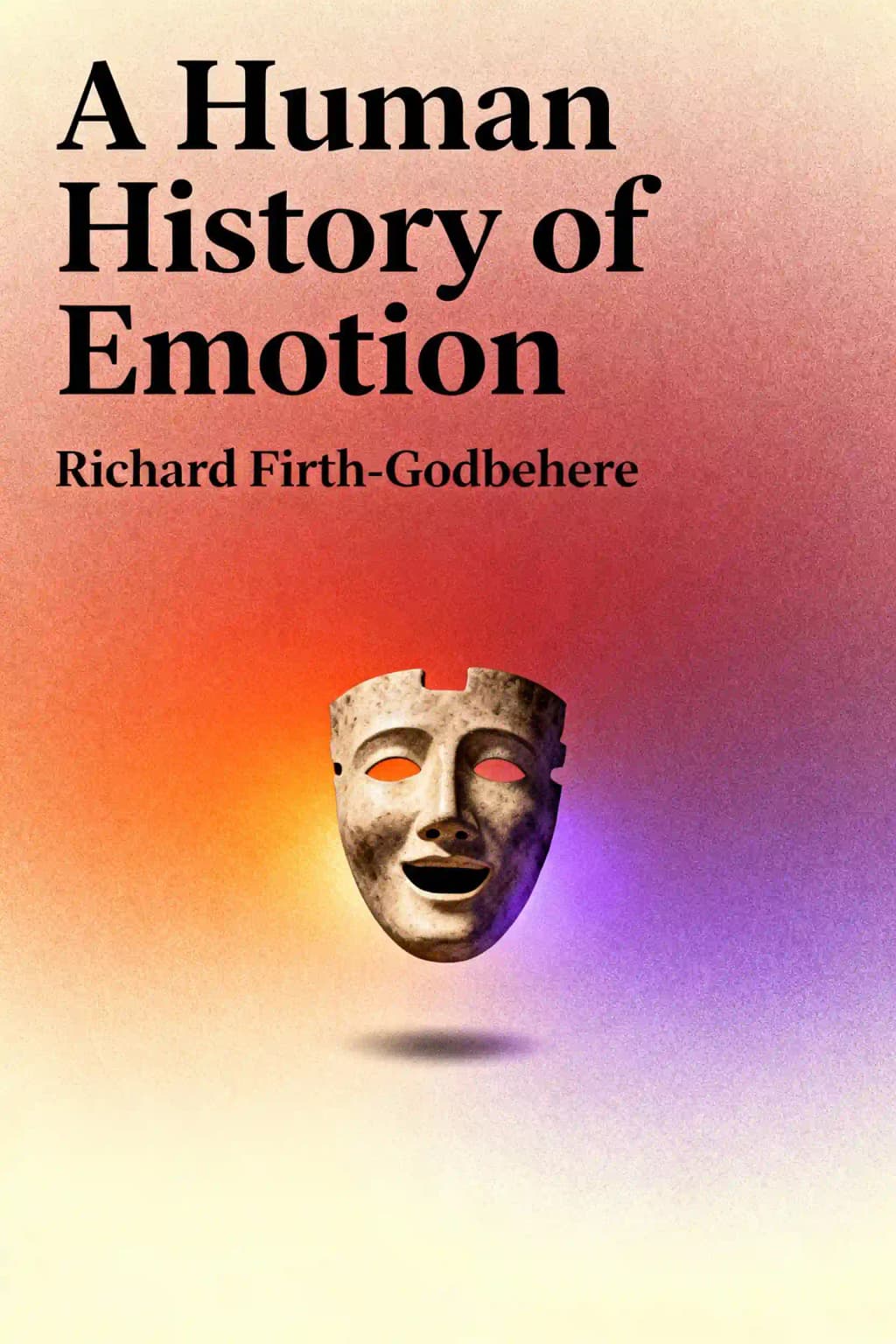
Have you ever wondered why we feel what we feel? Why some cultures embrace emotional displays while others prize stoicism? Richard Firth-Godbehere's "A Human History of Emotion" has become something of a cultural phenomenon since its publication, finding its way onto the bookshelves of celebrities like Emma Watson and Barack Obama, who cited it as one of his favorite explorations of human psychology. This interdisciplinary masterpiece has transformed how we understand our emotional lives, drawing from history, psychology, philosophy, and neuroscience to reveal the hidden forces that have shaped civilizations. As Brene Brown noted, "This book completely changed how I understand my own emotional responses." What makes this work so revolutionary is Firth-Godbehere's ability to show that emotions aren't just personal experiences-they're powerful cultural forces that have toppled empires, launched revolutions, and continue to shape our modern world in ways we rarely recognize.
Chapitre 2
The Ancient Roots of Emotional Understanding
In 399 BCE, a physically imposing young man nicknamed "Broad" (Plato) lay ill while his beloved teacher Socrates faced execution. This wrestler-turned-philosopher would go on to establish the Academy and create dialogues that became foundational to Western thought-what Alfred North Whitehead later described as works to which all subsequent philosophy merely adds footnotes.
For the ancient Greeks, emotions were called pathe-experiences or sufferings that disturbed the soul's balance. Plato viewed these disturbances through his theory of perfect forms, arguing that our souls were imperfect versions of ideal forms existing in his wise cosmos (kosmos noetos). To explain conflicting emotions, he divided the soul into three parts: the logos (divine reason), the epithumetikon (animal desires), and the thymos (spirited motivation). The logos pursues eros (greater good) while animal desires seek boulesis (pleasure). True virtue, Plato believed, required evaluating what's right through reason rather than following emotional impulses.
This philosophy was dramatically demonstrated in Socrates' death. When he willingly drank hemlock poison, his followers began weeping. He scolded them for this "unseemliness," insisting one should "die in good omened silence." His followers immediately suppressed their tears, recognizing their grief as selfish-mourning their own loss rather than honoring Socrates' contentment. Their emotional restraint exemplified Plato's regime of virtue, which demanded men control emotions that women might freely express.
Aristotle, though Plato's student, developed a distinctly different approach to emotions. While both philosophers conceptualized a three-part soul, Aristotle rejected Plato's view that the soul was external to the body. Instead, he saw body and soul as inseparable co-creators of life, with souls existing in hierarchical complexity: plants possessed only the "vegetative" soul, animals added the "sensitive" soul, while humans uniquely possessed the "rational" soul.
Unlike Plato, who advocated emotional suppression for spiritual good, Aristotle viewed emotions as tools for rhetoric-the art of persuasion. He systematically cataloged emotions as paired opposites stemming from pleasure (an unperturbed soul) and pain (a perturbed soul). Mastering these feelings in oneself and manipulating them in others was essential to winning arguments, as demonstrated by Alexander the Great's strategic use of Aristotelian rhetoric to motivate his troops against the Persians.
This philosophical divide between Plato and Aristotle-spiritual elevation versus practical manipulation-formed the cornerstone of Western emotional thought for nearly two millennia. Their theories influenced every subsequent philosopher and helped establish Western cultural foundations until the 1600s, when their ideas were first seriously challenged.
Chapitre 3
Eastern Paths to Emotional Liberation
While Greek philosophers were developing their theories of emotion, equally sophisticated frameworks were emerging in India. The story of King Chandashoka (known as "Ashoka the Cruel") provides a powerful illustration. After witnessing the horrific carnage of his war against Kalinga, which killed over 100,000 people and displaced 150,000 more, Ashoka underwent one of history's most profound spiritual conversions, becoming "Ashoka the Great." This transformation centered on a fundamental shift in his desires-a concept central to ancient Indian religions.
Desire differs fundamentally from other emotions. While most feelings are "world-to-brain" (external stimuli creating internal feelings), desire operates as "brain-to-world"-we feel desire, then act upon it. Hindu traditions recognize four types of desire or aims (purusarthas): dharma (one's true path), artha (material necessities), kama (worldly pleasures), and moksha (desire to know one's true self). These desires can either lead to genuine bliss through following dharma, or to suffering (dukkha) if one lets kama or artha dominate.
Buddhism, founded by Siddhartha Gautama (the Buddha), approached desire differently. After abandoning his royal life upon encountering suffering, Gautama eventually achieved enlightenment (nirvana) and developed his Four Noble Truths: suffering exists, desire causes suffering, nirvana ends suffering. His unique contribution was the Noble Eightfold Path-a practical method for reaching nirvana.
At Buddhism's core are the Five Aggregates of Clinging (skandhas). The first type of desire is clinging (upadana)-a sticky hedonic desire that keeps beings trapped in reincarnation. The second type, chanda, is paradoxically a desire not to desire. By mastering chanda through right effort, right mindfulness, and right samadhi (deep meditation), one can escape suffering and reach nirvana.
Ashoka's conversion to Buddhism transformed not just his life but history itself. He built stupas and temples, sent Buddhist educators throughout his kingdom, dispatched missionaries to neighboring lands, banned hunting, and planted mango groves for travelers. His influence likely contributed to Buddhism's spread throughout Asia, with regions like Sri Lanka, Tibet, Myanmar and Thailand remaining predominantly Buddhist today.
Despite surface differences, ancient Greek and Indian conceptions of emotion share crucial similarities: both emphasize pleasure and pain, warn of desire's dangers, advocate for emotional control, and recognize the intertwining of thoughts, feelings, actions and perceptions. These Eastern ideas likely influenced Greek Stoicism, which Saint Paul later merged with ancient Hebrew understandings of emotion to create a strand of Christian thought that remains dominant today.
Chapitre 4
The Birth of Christian Emotional Frameworks
Around 58 CE, Paul-a small man with piercing eyes, bushy eyebrows, and unshakable self-confidence-entered Jerusalem's Temple for a purification ritual, hoping to prove his Jewish loyalty despite rumors he was converting Gentiles without requiring Jewish customs. His plan backfired when the crowd recognized him, erupting in rage and dragging him through the streets toward likely execution before Roman soldiers intervened.
Paul's dual identity as both Roman citizen and Jewish Pharisee proved crucial to his immense influence on Christianity. Raised as a zealous Pharisee, Saul (his Jewish name) studied under the renowned teacher Gamaliel in Jerusalem, becoming a gifted lawyer seemingly destined for the Jewish supreme court. After witnessing Stephen's execution, he became obsessed with stamping out Christianity, rejecting his teacher's more tolerant approach.
Everything changed during a journey to Damascus when he experienced a blinding light and heard Jesus's voice asking why he was persecuting him. After three days of blindness, a Christian named Ananias healed him. Saul was baptized and became Paul, becoming as zealous for Christianity as he'd been against it.
Paul's understanding of emotion profoundly shaped Christianity by fusing two powerful concepts. First, the ancient Hebrew idea that sin causes God aversion, requiring blood sacrifice (now understood as Christ's crucifixion) for forgiveness. Second, the Stoic concept that happiness comes only through focusing on genuine virtue-in this case, desiring forgiveness of sins.
The Stoics distinguished between pathe (disturbing emotions) and eupatheia (proper emotions), identifying four core emotional responses: for future good things, either desire (pathe) or wishing (eupatheia); for present good things, either pleasure (pathe) or joy (eupatheia); for future bad things, either fear (pathe) or caution (eupatheia); and for present bad things, only sorrow (pathe). The goal was ataraxia-inner calmness achieved by giving thought priority over feeling.
Paul's brilliant synthesis of Hebrew emotional concepts with Stoic philosophy made Christianity accessible to Greek-speaking people, allowing the faith to spread widely. By melding how he felt about Jesus as both a Hebrew and a Stoic, Paul created a theological framework that would eventually attract 2.4 billion followers worldwide, making Christianity the world's largest religion.
Chapitre 5
Love, War, and Religious Transformation
In 1095, Pope Urban II delivered a pivotal speech at the Council of Clermont that launched the First Crusade, beginning 176 years of Crusades-violent pilgrimages that saw both successes and failures. Behind these campaigns lay a powerful emotional force: love, as conceptualized by Saint Augustine.
In August 386 CE, Aurelius Augustinus (later Saint Augustine) experienced a profound spiritual crisis in Milan. After hearing a child's voice saying "Take up and read," he opened the New Testament to Romans and experienced an emotional conversion that transformed him into one of Christianity's most influential theologians. His concept of dividing love into selfish cupiditas (self-love) and charitable caritas (love of God and neighbor) would reshape Western emotional understanding for centuries.
Augustine simplified Plato's three-part soul into a binary system: the dark outer soul (flesh) and light inner soul (reason). Unlike the Manichaeans, he believed we caused this split ourselves through original sin. Augustine saw love as the path to wisdom and God, distinguishing between frui (loving God for His own sake) and uti (loving others as a means to reach God). His revolutionary idea that "God is love" and his reframing of Jesus's crucifixion as an act of grace rather than blood sacrifice became central to Christianity.
Pope Urban II's speech at Clermont employed Augustinian concepts of love to launch the Crusades. In multiple accounts, he addressed Christians as "beloved brethren," tapping into their brotherly (uti) love for fellow Christians against a common enemy. Balderic of Dol's version had Urban declare: "It is the only warfare that is righteous, for it is charity to risk your life for your brothers." The word used was caritas-Augustine's "right sort of love." Urban also invoked frui love for Christ to motivate people to leave their families, promising eternal rewards.
Augustine's emotional regime transformed Christianity from a religion based on blood sacrifice to one centered on divine love and grace. His understanding that love is an affectionate attachment based on valuing and uniting with God remains at Christianity's core. His concept that loving one's neighbor serves God, and that feelings gain value through their use rather than their nature, still resonates in Christian churches today.
Chapitre 6
Fear and the Ottoman Conquest
Outside Constantinople on May 28, 1453, Sultan Mehmed II's Ottoman forces prepared for their final assault after a six-week siege. For these soldiers, capturing Constantinople would demonstrate Ottoman power and serve Allah, driven by a particular type of fear that could inspire greatness.
Modern science shows fear originates when the amygdala perceives threats, triggering fight, flight, or freeze responses. But fear encompasses more than these immediate reactions-it includes persistent dread and hypervigilance, often resulting from trauma. The Ottomans and their contemporaries didn't view fear as inherently bad; rather, its value depended on how it was directed. The Ottomans embraced a positive fear of Allah that drove them to remain steadfast and accomplish great things.
This concept originated with Muhammad, who in 610 experienced a terrifying vision on Mount Hira when an otherworldly voice commanded him to read. Terrified and refusing twice, Muhammad was embraced by the entity until the first words of the Koran burst unbidden from his mouth. Though initially convinced he was possessed by a demon, Muhammad eventually understood he had encountered Allah's raw power and become His prophet.
The Koran teaches that failing to behave as a proper Muslim means losing Allah's love and mercy, leading to damnation. The godly fear helps believers remain mindful of Allah, control natural passions, and ultimately receive heavenly rewards. The Koran places both emotions and reasoning (aql) in the heart rather than the head, viewing thinking and feeling as interconnected rather than separate processes.
Ibn Sina (known to the West as Avicenna) expanded on these ideas, believing emotions were physically manifested through the body's four humors: blood (sanguine), black bile (melancholy), yellow bile (choleric), and phlegm (phlegmatic). He proposed that breath originates in the heart as Allah's life-breath, filtering through the body to interact with humors. By treating emotions as medical conditions rather than spiritual failings, Ibn Sina suggested balancing humors could control unruly feelings and keep one on Allah's path.
The Ottoman army comprised diverse communities called millet or taife, divided by ethnicity or faith. Despite these divisions, battle created an overarching emotional community bound by concepts like rza ve sukran (consent and gratitude) and kendi halinde olmak (being inoffensive and harmless). The Koranic concept of ummah (community commanded by Allah) unified these separate groups. This emotional bonding worked-the Ottoman army conquered Constantinople the next day, ending the Byzantine Empire. The victory, driven by emotional rather than purely tactical motivations, reshaped history by giving Ottomans control of the Silk Road, ultimately redefining Europe's boundaries and launching the early modern age.
Chapitre 7
Abomination, Disgust, and the Witch Hunts
In seventeenth-century Europe, elderly women without family support often survived by making medicines and relying on community charity. While initially tolerated as "wise women," they could quickly be labeled as witches if misfortune befell someone who had wronged them. The persistent accusations and ostracism could eventually drive these women to rage and despair, making them vulnerable to what they perceived as demonic temptation.
The emotional foundation for these witch hunts came from Thomas Aquinas's theories about passions. His unfinished masterpiece, the Summa Theologiae, contains what is likely the first dedicated work about emotion ever written. Aquinas distinguished between passiones animae (passions of the soul) that begin in the body and influence the mind, and affects that travel from mind to body. He categorized primary passions into concupiscible (desiring) and irascible (angry) groups.
The sixteenth and seventeenth centuries were marked by profound fear across Europe. Following the Ottoman conquest of Constantinople in 1453, Europeans sought new trade routes, leading to Columbus's accidental discovery of the Americas in 1492-shaking European understanding of the world. Religious wars devastated Europe with 124 conflicts between major powers from 1480-1700. Simultaneously, the Little Ice Age brought extreme weather and famines, while disease ravaged populations. This perfect storm of war, famine, disease, and challenged knowledge left Europeans profoundly scared and on edge.
Crucially, Aquinas separated fear from fleeing, unlike modern psychology which considers them components of the same response. In the Thomist view, fear emerged after the opportunity to flee had passed-more akin to what we now call panic. The passion of "abomination" was similar to modern disgust but with key differences. While both concern the repulsive and morally wrong, abomination was deeply rooted in biblical language as God's revulsion toward sin. Both disgust and abomination share the concept of "sympathetic magic"-the belief that objects can be contaminated by evil essence through contact, making the abominable contagious.
Finding a witch in the 16th-17th centuries meant seeking someone who evoked abomination-preferably a woman, as women comprised 80% of European witch executions. This stemmed from deep Christian misogyny that blamed Eve for humanity's fall and viewed women as weak, emotional, and uncontrolled. Ideal witch candidates were poor, old (over forty), childless widows, or strangers living on society's margins. The "abomination" supposedly came from their filth and stench, but actually reflected male objectification of women's bodies. The message to women was clear: stay young, pretty, emotionally reserved, and obedient to avoid accusation.
The historical witch crazes reveal an era dominated by fear and misogyny, but witch trials aren't merely historical. Beyond metaphorical modern "witch hunts," literal witch prosecutions continue worldwide. Tanzania alone saw approximately 40,000 people killed as witches between 1960-2000. Cases persist in India, Papua New Guinea, Amazonia, and sub-Saharan Africa, driven by the same emotions as historical witch hunts.
Chapitre 8
Desire, Taste, and Revolutionary Change
The American colonists' rebellion against British taxation reveals how powerful desires for luxury goods can shape history. When Samuel Adams led protests against the Tea Act of 1773, the issue wasn't merely tea but the violation of natural rights. The colonists, influenced by Enlightenment thinkers like Locke and his concept of "inalienable rights," saw Britain's taxation without representation as fundamentally unjust. After Governor Hutchinson refused to send tea ships back to England, angry Bostonians disguised as Native Americans dumped 342 chests of tea into the harbor, making the War of Independence inevitable.
The concept of desire underwent a fascinating transformation as luxury goods flooded into Europe. Historically, "first-order desires" for material wealth were condemned as greed, while "second-order desires"-the desire to control one's desires-were celebrated as virtuous. But wealthy Europeans wanted both heavenly rewards and earthly pleasures, leading philosophers to develop a new concept: taste as sentiment.
By the early 17th century, luxury goods had become more accessible as prices dropped and wages rose. The nobility, upset by this democratization of luxury, sought ways to distinguish themselves from the lower classes. Bernard Mandeville argued this "odious pride" drove innovation and commerce in a cycle we now call fashion. Philosophers like the Earl of Shaftesbury defined beauty through harmony, order, symmetry, and proportion, while Francis Hutcheson suggested good taste could be cultivated through education, while the poor supposedly liked folk music and ugly houses only because they hadn't been exposed to better.
The Enlightenment wasn't just about reason-it introduced "sentiments," feelings that arise when witnessing good or evil acts. Shaftesbury called this our "moral sense." Philosophers explained sentiments differently: Shaftesbury saw them as intrinsic to our nature, Hutcheson as reactions to balance, Hume tied them to utility, and Smith to sympathy. This philosophical shift made material desires virtuous, provided one had good taste.
The reconciliation of taste with morality transformed history in two profound ways. First, it helped form the modern state-the fiscal-military state where taxes funded armies to protect trade, creating a self-sustaining loop. Second, it enabled modern capitalism by making desire morally acceptable. Competition, fashion cycles, and social mobility all stemmed from coveting goods while feeling virtuous about it. When Americans dumped tea into Boston Harbor, they chose freedom over luxury-yet the Declaration of Independence replaced Locke's "property" with "the pursuit of happiness," ultimately tying happiness to desire and wealth in America's foundation.
Chapitre 9
The Birth of Modern Emotions
The modern concept of "emotion" is surprisingly recent, emerging only about two hundred years ago. Before that, we examined feelings that aren't quite the same as modern emotions: pathe (perturbations in the soul from sensory pleasure or pain), passions (similar feelings in the sensitive soul that can influence the rational soul), and sentiments (feelings guiding moral or aesthetic judgments).
In 1650, Rene Descartes lay dying of pneumonia in Stockholm, Sweden. Despite his impressive achievements as a military engineer, mathematician, and philosopher, his revolutionary work on emotions was built on two key beliefs: that the universe operates mechanically like clockwork, and his famous "I think, therefore I am"-establishing that thinking proves existence.
Descartes rejected the Greek three-part soul, instead dividing humans into just two components: the mechanical body and the immaterial soul. He believed these parts interacted through the pineal gland, where physical sensations were interpreted by the soul. In "Passions of the Soul," Descartes identified admiration (acknowledging something's existence) as the foundational passion, followed by love, hate, desire, joy, and sadness. Most significantly, he connected passions with "emotion"-a term he redefined from simply meaning "commotion" to describing how sensory experiences cause atoms to move through the body, creating physical reactions like blushing or trembling.
In 1651, Thomas Hobbes published "Leviathan," proposing that passions arise when atoms hit sensory organs and cause internal bodily motions. These "endeavors" build until noticed, producing two basic feelings: appetite (desire) and aversion. Unlike earlier philosophers, Hobbes categorized passions based on how they make you feel rather than their moral value-those causing pleasure are "good" while those causing pain are "evil," regardless of religious or social judgment.
In the early nineteenth century, Thomas Brown, a multitalented Scottish academic, developed a revolutionary concept of emotion. Brown proposed that emotions are simply feelings that arise directly from perceiving, remembering, or imagining objects-requiring no thought. This brilliantly separated feelings from thinking, something Enlightenment thinkers had struggled with. With this simple definition in a lecture at the University of Edinburgh, Brown invented the modern mental concept of emotion that would eventually replace earlier ideas of passions, affects, and sentiments.
Brown's definition gained widespread acceptance, with influential figures like Charles Darwin adopting it. Darwin's 1872 book "The Expression of the Emotions in Man and Animals" proposed that emotions begin when the brain and nervous system react to stimuli, causing bodily changes that are sometimes instinctual and often shared between humans and animals. Later, William James and Carl Lange independently developed the James-Lange theory in 1884, suggesting that emotions begin in the body's reactions even before the brain processes them-"We feel sorry because we cry, angry because we strike, afraid because we tremble."
The birth of emotions as a concept had profound impacts. Hobbes's work on feelings influenced the development of legal systems with final arbiters worldwide and pioneered the idea that positive emotions feel good while negative ones feel bad. Brown's concept of emotion became so ingrained in English language and culture that we now take it for granted, despite psychologists having identified 101 different definitions of "emotion" by 1981.
Chapitre 10
Emotions Across Cultures: Shame, Anger, and National Identity
While Brown's ideas about emotion were spreading through the Western world, other cultures maintained their own distinct emotional frameworks. In 1859, a twenty-nine-year-old Japanese man named Yoshida Shoin sat in prison after a failed assassination attempt against a shogunate representative. His concerns about Japan's inability to defend itself against foreign powers like the United States, whose Commodore Perry had forced Japan to open trade in 1853, led him to increasingly radical actions driven by shame.
In her 1946 book The Chrysanthemum and the Sword, Ruth Benedict characterized Japan as a "shame culture" in contrast to America's "guilt culture." She argued that while guilt cultures focus on personal wrongdoing and punishment, shame cultures like Japan emphasize social ostracism and dishonor to one's group. Though all cultures incorporate shame, guilt, fear and other emotions, the Japanese concept of haji did play a significant role in the nation's reemergence on the world stage.
Shinto mythology reveals early Japanese conceptions of shame through the story of divine beings Izanami and Izanagi. After Izanagi broke taboo by lighting a torch to see his deceased wife in the underworld, revealing her decomposed form, both experienced haji-Izanami for being seen in her rotted state, Izanagi for breaking sacred rules. This eighth-century understanding of shame aligns with modern concepts: emotions should follow social rules, and breaking taboos creates shame requiring ritual cleansing (harae).
The samurai's concept of haji was distilled from multiple influences: Buddhist reluctance to reveal secrets, Confucian emotional restraint, and Shinto disgust. Their honor culture revolved around name (na), pride (iji), face (mengoku), honor (meiyo), and two types of shame-stigma (chijoku) and haji. Yoshida Shoin believed haji was key to rekindling samurai honor, targeting the elite who felt shame at Japan's unpreparedness against foreign powers. Though executed in 1859 for plotting assassination, Shoin's ideas lived on through his students, who overthrew the shogunate in the Meiji Restoration. The new government used national shame as motivation to rapidly modernize Japan, transforming the country into an industrial power.
Moving to West Africa, we find another understanding of feelings in the story of Yaa Asantewaa, queen mother of the Edweso tribe of the Asante. In 1900, she was furious when British governor Frederick Mitchell Hodgson demanded the Golden Stool-the sacred seat of Asante power believed to house the soul of the nation. When the chiefs considered compromising with the British, she rebuked them fiercely, challenging their manhood and firing a rifle to signal rebellion. Her actions sparked the War of the Golden Stool, driven by her understanding of anger within Akan emotional frameworks.
The Akan believe humans possess an okra (soul) from Onyame (God) and a sunsum that represents the ability to act and think. While the sunsum contains personality traits, complex emotions exist in the okra. Neither Twi nor Fante (mutually intelligible Akan languages) have words precisely matching the English "emotion." Instead, they use atenka (Twi) or atsinka (Fante) to describe all internal feelings, including emotions, hunger, and tiredness.
Akan society balances strong community bonds with what researchers call "enemyship." As a collectivist society, the Akan prioritize group needs over individual desires, believing that humans exist within networks of social interactions that predate and will outlast them. The Akan practice an "anger-in" approach to emotions, considering public displays of negative feelings an act of anyimguase (face-floored disgrace). The exception is hatred toward enemies, as dislike of certain groups forms part of collective identity.
Chapitre 11
Modern Emotional Transformations
World War I brought unprecedented psychological trauma that challenged existing emotional frameworks. W.D. Esplin, a returning soldier, described the shame he felt when greeted by an unwelcoming crowd who dismissed soldiers without visible wounds as "barmy ones." His hope for relief at Netley Hospital was shattered by this reception, highlighting society's lack of understanding about psychological trauma.
Unlike modern concepts of "manning up," historical masculinity varied across cultures and time. The Industrial Revolution transformed masculinity into something requiring toughness, discipline, and emotional control. Rudyard Kipling's poem "If-" epitomized late Victorian masculinity, celebrating stoicism and emotional restraint as the hallmarks of being a "Man." This new machine age ideal of tough, emotionless manhood would profoundly influence how shell shock was understood and treated.
In 1885, Jean-Martin Charcot began studying male hysteria at Saltpetriere hospital in Paris, with Sigmund Freud as one of his students. While he believed women's hysteria was "natural," he argued men's hysteria required trauma-industrial accidents, near-drownings, or railway incidents. Meanwhile, Freud developed his own theory of "affects"-physical manifestations triggered by objects or experiences-arguing that anxiety was a dangerous discharge of pent-up emotions that could manifest as disorders like shell shock.
Despite the progressive theories of Charcot and Freud, outdated ideas about emotions persisted during World War I. These older concepts were reframed through Darwinian evolution, replacing the religious hierarchy of the soul with an evolutionary "ladder of life." This resembled Aristotle's Great Chain of Being, which ranked all matter with rocks at bottom and God at top. In this hierarchy, men were placed just below angels, while women occupied a lower position-considered less evolved.
In July 1917, decorated war hero Siegfried Sassoon's anti-war letter was read in Parliament, declaring he could no longer participate in a conflict that had devolved from a noble cause to one of conquest. Rather than court-martial this celebrated soldier (nicknamed "Mad Jack" for his bravery), authorities sent him to Craiglockhart War Hospital, effectively labeling him shell-shocked. Shell shock was considered a man's disease that revealed which soldiers hadn't fully matured into proper manhood, with their emotional control shattered by the horrors of industrial warfare.
Though the prevailing understanding of emotions failed to explain shell shock adequately, this failure ultimately strengthened psychology as a scientific discipline. Despite early practitioners being "almost completely wrong about everything," their work conferred legitimacy on the field, allowing it to evolve. Modern PTSD treatment and prevention have progressed significantly thanks to these pioneering efforts.
Chapitre 12
The Future of Human Emotion
The nature-nurture debate in emotion research is dissolving as new scientific literature emerges, challenging both universalist and purely constructivist models. One of the most influential rebels is Lisa Feldman Barrett, whose work is changing the entire field.
In the late 1980s, Barrett encountered a problem while testing self-discrepancy theory. Her subjects weren't distinguishing between anxiety and depression or between fear and sadness as the theory predicted. After eight failed attempts to replicate established findings, Barrett realized the issue wasn't with her experiments but with how emotions were being measured. This led her to develop the theory of constructed emotion, which views emotions as interpretations of bodily sensations (core affect) based on concepts shaped by personal experience and culture.
Despite the historical diversity of emotions explored throughout this book, our future emotional landscape might become increasingly homogenized through technology. The standardization of emotions risks creating a self-fulfilling prophecy, especially when research is dominated by WEIRD subjects (white, educated people from industrialized, rich, democratic countries), creating cultural blind spots that plague both psychology and the tech industry.
Affective computing aims to create machines that recognize human emotions and potentially feel emotions themselves. Companies like Amazon and Google already program their virtual assistants with emotional responses to build customer trust. Amazon is developing voice analysis software to detect moods, potentially offering mental health support when users seem distressed. Meanwhile, Affectiva is creating technology to monitor drivers' emotional states, taking control of vehicles when road rage or depression might lead to dangerous driving.
Modern affective computing systems analyze facial expressions, voice patterns, and body language to detect emotions, but these systems fundamentally don't work. Lisa Feldman Barrett and James Russell's "psychological construction of emotions" model demonstrates why: emotions are constructed through complex interactions between internal feelings, external perceptions, and learned cultural patterns. Our brains recognize emotions in others not just through physical expressions but crucially through understanding context-something machines struggle with.
Even if we could build machines that recognize emotions and use dynamic categorization for memory, they would still lack true empathy-essentially becoming "metal psychopaths." For AI to truly feel emotions, it would need a body (physical or virtual) that can experience affects-the pleasant or unpleasant sensations that help evaluate context. Without this embodiment, as Barrett argues, a "disembodied brain would not experience emotion."
Emojis and emoticons represent the birth of a new written language for emotional expression that's developing at unprecedented speed. Unlike traditional languages, this system is being created by its users from the ground up and is becoming internationally understood. As emojis replace emoticons, cultural differences are beginning to merge into standardized expressions. With affective computers and emojis pushing toward homogeneous emotional expression, Ekman's contested "basic emotions" may ironically become universal through Western technological dominance, potentially marking "the last hurrah of Western imperialism" as it inadvertently westernizes global emotional expression.
Understanding how people felt is essential to truly knowing the past and navigating our emotional future. Without a history of emotion, we have no meaningful history at all-and without acknowledging the diversity of emotional experiences across cultures and time periods, we risk creating a homogenized emotional landscape that fails to capture the rich tapestry of human feeling.