Chapitre 1
When Children Burn: A Story of Occupation, Separation, and Heartbreak
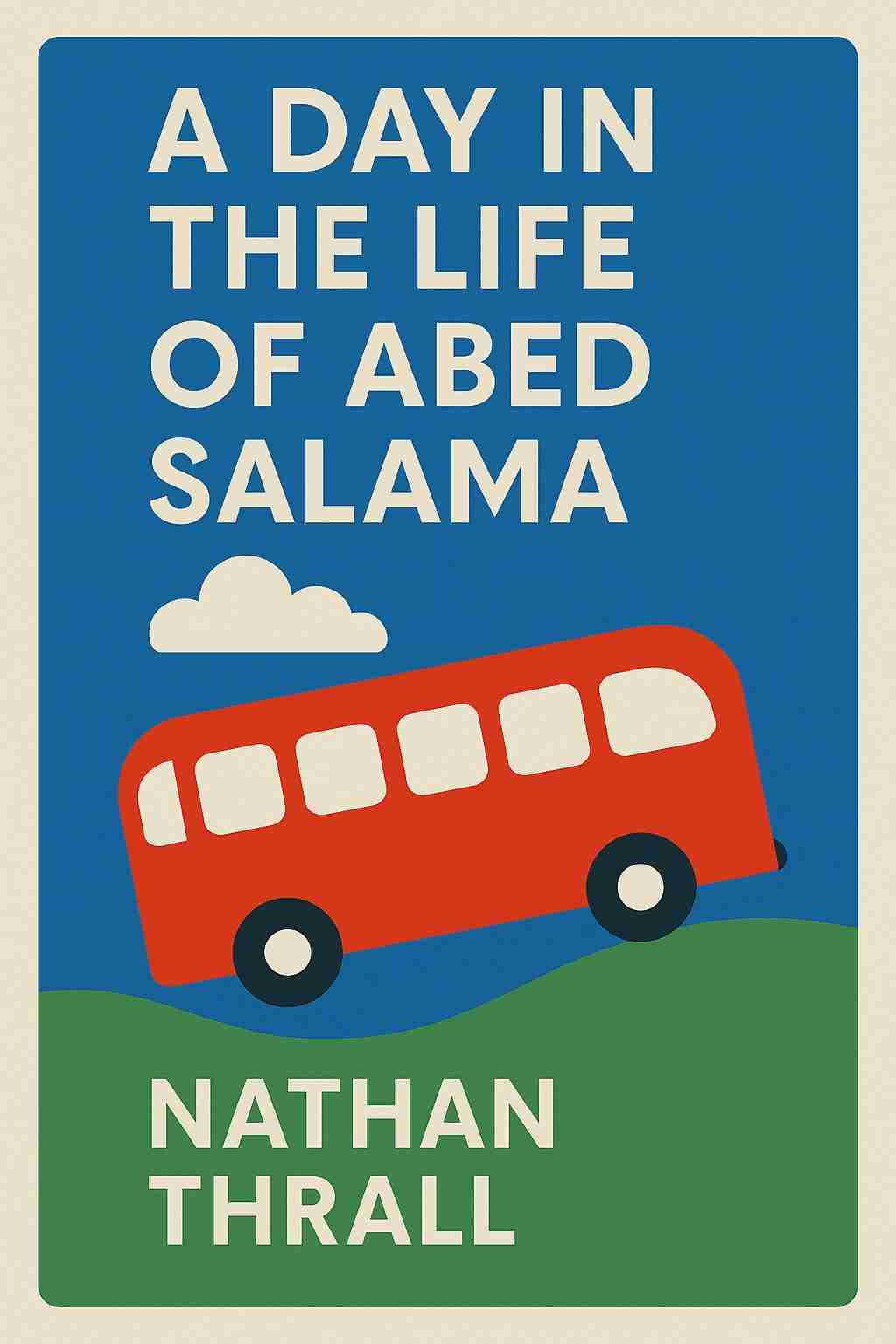
On a rainy February morning in 2012, five-year-old Milad Salama boarded his kindergarten bus for a field trip, clutching treats his father Abed had bought him the night before. Hours later, Abed would find himself racing through checkpoints and barriers of the occupied West Bank, desperately trying to find his son after hearing news of a horrific bus accident. This devastating personal journey forms the backbone of Nathan Thrall's haunting examination of life under occupation, which has garnered praise from luminaries like Colm Toibin and Ayad Akhtar. The book, named one of the best of 2023 by The New Yorker and The New York Times, transcends typical political analysis by revealing how the seemingly mundane infrastructure of occupation-checkpoints, permits, walls, and segregated roads-transforms a simple school trip into an unimaginable tragedy. Through one father's desperate search for his son, Thrall illuminates the profound human cost of a system designed to separate and control, showing how bureaucratic violence can be as devastating as physical conflict.
Chapitre 2
A Landscape of Forbidden Love and Political Resistance
Abed Salama's early life in Anata, a village gradually transformed by Israeli occupation, was defined by his forbidden love for Ghazl Hamdan. Their courtship unfolded through secret letters and hurried phone calls from Jerusalem pay phones, mirroring his father's thwarted romance with another Hamdan woman years before. Coming from the town's aristocracy-both his grandfathers were former village leaders-Abed watched as his community changed through land seizures, settlements, and segregated infrastructure.
When the First Intifada erupted in December 1987, Abed, unable to attend university abroad due to his father's refusal to help obtain a passport, was recruited into the Democratic Front for the Liberation of Palestine. He rose through the ranks, distributing banned political leaflets and organizing protests. His sister Naheel narrowly escaped serious imprisonment after being arrested at a demonstration at Damascus Gate. After his brother-in-law Abu Wisaam was imprisoned, Abed took over leadership of Anata's DFLP, working closely with Ghazl, who proved adept at recruiting women to the cause.
Family tensions erupted when Abed's cousin Ahmad falsely accused the DFLP of attacking him, leading to a violent confrontation where Abed was slashed by Ahmad's brother Ameen. In the hospital aftermath, Abed's troubled brother Na'el scarred Ahmad's face in revenge. Throughout this turbulence, Abed and Ghazl's relationship deepened, though the only time they ever touched was when she returned his lost necklace with their intertwined initials-a moment of profound intimacy amid the violence.
Their seven-year romance would eventually be derailed not by the occupation but by a cruel family deception. When Abed finally decided to propose, his meddling sister-in-law Layla falsely claimed that Ghazl's father had rejected him because "he's a Salama." Humiliated, Abed impulsively withdrew his proposal. Years later, he would discover that Abu Hassan had never rejected him-Layla had fabricated the entire story, a realization that would haunt him through three marriages.
Chapitre 3
The Architecture of Separation: Lives Divided by Walls and IDs
The occupation's most visible symbol-the separation barrier-transformed daily life for Palestinians in ways both obvious and insidious. Its architect, Dany Tirza, headed IDF strategic planning in the West Bank for thirteen years while living in Kfar Adumim settlement, built on land confiscated from Anata. After serving in the IDF for over thirty years, Dany led the "Rainbow Administration," creating a transportation network that segregated Jews from Palestinians through bypass roads, "sterile roads" forbidden to Palestinians, and what officials privately called "apartheid roads."
When tasked with building the full separation wall after March 2002-the bloodiest month of the Second Intifada-Dany faced complex decisions about its placement. The debate wasn't whether to build it but where: the political right fearing and the left hoping it would become a permanent border. Sharon aimed to avoid the appearance of drawing a final border while still claiming significant West Bank territory. In early plans, 90 percent of the barrier strayed from the Green Line, seizing 16 percent of the West Bank.
Working with twenty experts, Dany examined every inch of the proposed 450-mile route. The final barrier, more than twice the length of the Green Line, incorporated 80 percent of settlers while creating closed Palestinian enclaves. Though mostly consisting of fences, trenches, and surveillance systems, over forty miles became a twenty-six-foot concrete wall cutting across the landscape.
The wall's impact on Jerusalem proved particularly devastating. Dany chose a route that followed the municipal border while excluding several densely populated annexed areas including Kufr Aqab and the Shuafat Camp enclave. This created neglected ghettos of tens of thousands of Jerusalem residents who, though technically still under municipal responsibility, were ignored by authorities. Emergency services were blocked by Border Police-in one case, paramedics had to defy orders and run through a checkpoint to reach a heart attack victim, who died during the two-hour delay.
What might seem like abstract policy decisions had devastating real-world consequences. The wall created a complex system of identity cards and permits that determined who could travel where. For Palestinians, these colored cards became the physical manifestation of their restricted freedom-a fitting symbol, Abed thought, of how every Palestinian lived as a kind of prisoner.
Chapitre 4
The Oslo Illusion: Peace Process and Deepening Control
The 1993 Oslo Accords, which many Palestinians initially celebrated as a path to statehood, ultimately entrenched the occupation's control mechanisms. Dany Tirza's hand drew the crucial Oslo maps that divided the West Bank into Areas A, B, and C-transforming Palestinian territory dotted with Israeli settlements into its inverse: an Israeli West Bank surrounding small islands of limited Palestinian self-rule. Area A (just 3% of the West Bank) gave Palestinians the most autonomy, Area B allowed municipal control but Israeli security oversight, while Area C (73%) remained under direct Israeli control.
When shown these maps, Palestinian negotiator Abu Ala protested: "You've turned our autonomy into a prison for us." Arafat later exploded when told Palestinian police would need Israeli permission to travel outside Area A: "I am not your slave!" Yet ultimately, Arafat accepted what he had vowed to reject. Palestinian space shrank, settlements expanded, and the supposedly temporary Oslo system became permanent.
Many Palestinians, like Ibrahim Salama, believed an Israeli-Palestinian agreement was imminent. A strong Oslo supporter, he convinced himself that cooperating with Israel would lead to a Palestinian state-not just because he wanted it, but because he believed it served Israel's self-interest, as his IDF contacts repeatedly assured him.
Ibrahim's political journey began painfully. At eighteen, he tried joining Fatah fighters in Lebanon but was stopped. Later arrested during the First Intifada, he was charged with throwing a Molotov cocktail, recruiting for Fatah, and forming military cells. During his ten-year sentence, he spent over a year in solitary confinement-a tiny cell barely larger than a bed.
Released early during the Oslo process, Ibrahim immediately joined the Palestinian Authority's Preventive Security Organization-ironically transitioning from investigating collaborators with Israel to investigating those who resisted it. Despite Israel's decades-long settlement expansion under governments of all political stripes, Ibrahim believed his Israeli contacts who claimed the settlement project was merely an aberration driven by religious extremists rather than state policy.
This belief in eventual peace led to unlikely friendships across the divide. Through the Economic Cooperation Foundation, Ibrahim was introduced to Adi Shpeter from the settlement of Anatot. Their cooperation evolved into genuine friendship-their families visited each other, their children played together, and Ibrahim called Adi his brother. This relationship persisted despite Ibrahim's imprisonment history and loss of family land, and despite disapproval from people like Abed.
Chapitre 5
Exile, Return, and the Burden of Memory
The Palestinian experience of displacement forms a crucial backdrop to the story. Huda Dahbour, a 51-year-old endocrinologist who would later assist at the bus accident scene, grew up on stories of her family's life in Haifa's Wadi Nisnas neighborhood, where Muslims, Christians, and Jews lived side by side before 1948.
Her grandmother was raising teenage Mustafa-Huda's father-when the Nakba forced them to flee. In April 1948, Jewish paramilitary forces attacked Palestinian areas of Haifa in "Operation Bi'ur Chametz," broadcasting evacuation orders while bombing neighborhoods and firing at civilians.
The Dahbours joined the refugee exodus, with Huda's grandmother giving birth to a daughter in a cave during their flight north. After reaching Lebanon, they settled in Syria's Homs Camp, where UNRWA housed Palestinian refugees in former military barracks. Despite the poverty and exile, they created a community, naming streets after Palestinian towns and preserving memories of their homeland-describing Haifa to children as a paradise where "the Carmel mountain moved when children played on it."
Huda's uncle Kamel was a Fatah fighter who would visit briefly without warning. After her grandmother reported him to authorities hoping to keep him safe, he was forced into the Palestine Liberation Army controlled by Syria. He later deserted to defend Tel al-Zaatar refugee camp, where he was killed during a 52-day siege that ended in massacre. Huda's grandmother never recovered from the guilt of having reported him.
Following the Oslo Accords, Huda insisted her family return to Palestine against her husband Ismail's wishes to remain in comfortable Bucharest. She wanted their fourth child born on Palestinian soil, a symbolic replanting in their ancestral homeland. They arrived in September 1995, just before Israel halted entry of PLO personnel.
As a "returnee," Huda felt disconnected from local Palestinians. The village of Sawahre where they settled seemed foreign to her, nothing like her grandmother's stories of cosmopolitan Haifa. She observed growing resentment toward returnees like herself, who filled senior positions in Arafat's expanding patronage network while ordinary Palestinians faced unemployment and greater restrictions.
Chapitre 6
The Day Everything Changed: Anatomy of a Tragedy
On a rainy February morning in 2012, the structural violence of occupation would transform into literal tragedy. The day before the accident, Radwan Tawam reluctantly agreed to drive kindergartners from Nour al-Houda school during the approaching storm. After passing the Jaba checkpoint at 8:45 AM in heavy rain, the bus was suddenly struck by a massive force-a truck driven by Ashraf who had lost control on the long, straight stretch.
As the truck veered into oncoming traffic, its trailer swung wildly across the entire road. Though the school bus slowed to a near stop on the shoulder, the truck struck its front, shoving it backward before spinning around. The trailer then slammed into the bus, flipping it over. The impact caused a short circuit in the fuse box, igniting a fire fanned by strong winds.
What followed was a horrific scene captured on video by onlookers. The overturned bus became a burning chassis with flames shooting skyward and thick black smoke billowing above the rocky cliff. Desperate rescuers ran with small fire extinguishers and water bottles, making futile attempts to douse the growing inferno. Men paced in anguish, some hitting themselves in despair as they discovered children's bodies.
Huda Dahbour, who happened to be passing by with her mobile health clinic team, immediately mobilized to help. With the help of a local man named Salem, they pulled out the injured driver who begged them to save the children instead. Salem heroically crawled into the burning bus multiple times, followed by teacher Ula Joulani, who had escaped but returned when she heard children calling her name.
Despite the catastrophe unfolding in Israeli-controlled Area C, no Israeli emergency services arrived for crucial minutes. Palestinian paramedic Nader Morrar arrived first at 8:54 AM, followed by Israeli paramedic Eldad Benshtein at 9:09 AM-twenty-four minutes after the crash. Palestinian firefighters later confirmed no bodies remained on the bus.
The tragedy left Salem with PTSD and physical injuries, while Eldad, traumatized by memories of suicide bombings, wept alone after transferring a severely burned girl to the hospital. Ultra-Orthodox ZAKA volunteer Dubi Weissenstern arrived last to collect the dead, his presence completing the tragic tableau of a disaster that revealed the complex, fractured nature of emergency response in the occupied territories.
Chapitre 7
The Desperate Search: A Father's Nightmare
When Abed learned of the school bus accident near Jaba while at a butcher shop, he raced to the scene with his cousin Hilmi, leaving behind his half-cut order and a bewildered shopkeeper. The February morning had started like any other, but within moments, his world had shattered. What he found was horrific: a burned-out bus shell flipped on its side, the acrid smell of burned metal and rubber hanging heavy in the air. His despised cousin Ameen, known for his cruel streak, deliberately mentioned "burned bodies" with a disturbing casualness, sending Abed into a spiral of panic and dread.
What should have been a straightforward search for his son became a nightmare of bureaucratic obstacles and conflicting information. Surrounded by swirling rumors about where the children had been taken-a small clinic in a-Ram, the heavily fortified Rama military base, Ramallah's overcrowded medical center, or the advanced facilities at Hadassah Hospital-Abed found himself paralyzed by restrictions. His West Bank ID, a simple green card that defined the boundaries of his existence, prevented him from entering Jerusalem, where he believed his son might be fighting for his life.
The separation system that had seemed abstract, something Palestinians grimly joked about over coffee, suddenly became brutally personal. The colored ID cards-green for West Bank, blue for Jerusalem residents-the maze of checkpoints with their young soldiers and metal detectors, the towering concrete walls that snaked through the landscape-all the infrastructure of occupation that Palestinians had learned to navigate daily now stood as insurmountable barriers between a father and his injured or dying son. Every minute counted, yet Abed found himself trapped in a system designed specifically to limit his movement, forced to rely on others with different colored cards for help.
At Hadassah Ein Kerem, Jerusalem's largest hospital with its state-of-the-art burn unit, social worker Livnat Wieder found herself at the epicenter of chaos. The emergency department, usually well-organized, was overwhelmed by the influx of Palestinian families searching for their children. Despite being ill-equipped to handle the language barrier and cultural sensitivities of traumatized Palestinian families, she worked tirelessly with Arabic-speaking staff members to compile information about missing children, creating makeshift translation systems and family identification protocols.
The hospital had activated its mass casualty protocol, transforming its lobby into an emergency command center with designated areas for information, triage, and family support. Hundreds of relatives crowded the family center, many from the West Bank struggling with emergency permit issues to enter Jerusalem, their faces marked by desperation and fear. As the day progressed into evening, Livnat faced the most heartbreaking task of her career: helping parents identify three severely burned children, their small bodies almost unrecognizable, while trying to maintain her professional composure in the face of overwhelming grief.
Chapitre 8
Three Funerals: The Aftermath of Tragedy
The morning after the accident, Abed and Haifa waited at his mother's house for news about Milad. A delegation from the semitrailer driver's family came seeking an atwa (temporary truce), which Abed granted, caring only about finding his son. By afternoon, Ibrahim called with the DNA results confirming Milad was among the dead children in the morgue.
Rain fell as thousands gathered in Anata for Milad's funeral. His body, too severely burned for traditional washing rituals, was taken directly to the mosque in a shroud and brown blanket. After prayers, the massive crowd moved to the hillside cemetery where Milad was buried in the northernmost plot of the family tomb. Abed, surrounded by supporters, couldn't get close to the grave as his brother Wa'el placed Milad's body facing Mecca.
During the three-day azza (mourning period), Ghazl visited, their first encounter in fifteen years. After the mourning period, Haifa withdrew into herself, never speaking of Milad, while Abed refused to be silent about their son.
Nansy Qawasme, one of the youngest mothers at Nour al-Houda, faced her own nightmare. After identifying her son Salaah's teddy bear boxers and jacket edge, she confirmed her worst fears. Her grief was compounded by her husband Azzam's cruelty. After the funeral, he demanded divorce and that she sign away her compensation rights from Salaah's death. He beat her repeatedly, even threatening her life. After giving birth to another daughter in 2014, Nansy finally escaped with her three children to her parents' home, leaving behind a marriage destroyed by grief and abuse.
Haya al-Hindi was the first mother to arrive at Hadassah Hospital searching for her son Abdullah. When she couldn't find him, she was directed to view a badly burned boy's clothes, which she insisted weren't Abdullah's despite pressure from officials. After hours of desperate searching across multiple hospitals, Haya returned to Ramallah Hospital where a guard cruelly asked if she wanted to see "charcoal." She collapsed, spending the night in anguish, until dawn when the mosque loudspeaker announced Abdullah's death.
Chapitre 9
The Humanity Behind the Headlines
A month after the accident, Israeli television reporter Arik Weiss came to Abed's home to film a segment titled "An Arab Kid Died, Ha Ha Ha Ha," focusing on the shocking celebration of Palestinian children's deaths on social media by young Israelis. The reporter was disturbed that teenagers, many using their real names, posted comments like "Great! Fewer terrorists!!!!" and "Joyous news to start the morning." Interviewing high school students, he found unrepentant hatred, with one boy confirming he meant "from the heart" that Palestinian children "deserve to die."
Off-camera, Abed told the reporter that many Palestinians believed Israeli authorities had deliberately let the children die, noting how quickly forces would respond to stone-throwing yet had allowed the bus to burn for over thirty minutes. This stark contrast-between the rapid response to perceived security threats and the delayed reaction to a humanitarian emergency-encapsulated the priorities of the occupation system.
What makes Thrall's account so powerful is how it reveals the human cost of policies often discussed in abstract terms. Through Abed's desperate search for his son, we see how walls, checkpoints, and ID cards-the infrastructure of separation-transform a school bus accident into a uniquely Palestinian tragedy. The bureaucratic violence of the occupation becomes as devastating as physical conflict.
In the end, this is not merely a story about politics but about people caught in systems beyond their control. It's about fathers like Abed, mothers like Nansy and Haya, and children like Milad and Salaah-all trying to live normal lives in circumstances designed to make normalcy impossible. By focusing on these intimate human stories, Thrall reveals the true nature of occupation more powerfully than any political analysis could achieve.
Chapitre 10
The Weight of History in Everyday Life
What emerges most clearly from this narrative is how the past is never truly past in this conflict. Historical traumas-the Nakba of 1948, the occupation of 1967, the intifadas-continue to shape daily life in profound ways. The displacement of hundreds of thousands during the Nakba lives on in family stories, lost property deeds, and rusted keys to homes that no longer exist. Ghazl and Abed's thwarted romance, Huda's family's exile from Haifa, the settlement built on Abed's grandfather's land-all these personal stories intertwine with larger historical forces, showing how political decisions from decades ago still determine where people can live, work, and love today.
The tragedy of the burning bus becomes a microcosm of the entire conflict: the segregated infrastructure, the unequal emergency response, the bureaucratic obstacles preventing parents from reaching their children-all reflect decades of policies designed to separate and control. Palestinian parents were forced to wait at checkpoints while their children were in danger, Israeli emergency services arrived first but initially focused on Israeli passengers, and the very existence of separate transportation systems highlighted the deep divisions in the society. Even in moments of pure human suffering, the weight of this history cannot be escaped, as demonstrated by the different colored ID cards, separate license plates, and distinct legal systems that governed the response to the crisis.
Yet amid this darkness, the book also reveals moments of profound humanity. Salem risking his life repeatedly to save children from the burning bus, pulling them through windows without checking their identity or background. Huda defying her supervisors to provide care to impoverished communities, crossing invisible but powerful boundaries to treat patients in need. Ibrahim and Adi forming a friendship across seemingly unbridgeable divides, sharing meals and family stories despite the social pressure to remain apart. These glimpses of connection remind us that even in the most entrenched conflicts, our shared humanity persists, often emerging most powerfully in moments of crisis.
The book documents countless small acts of resistance against the separation: doctors treating patients regardless of origin, neighbors warning each other of upcoming raids, children playing together in rare neutral spaces. These moments illuminate how ordinary people navigate and sometimes transcend the barriers erected by history and politics.
Perhaps this is the book's most important message: behind the headlines and political debates are real people with dreams, loves, and heartbreaks. By bringing us into their intimate worlds - their family dinners, their wedding preparations, their hospital shifts - Thrall challenges us to see the conflict not as an abstract geopolitical puzzle but as a human tragedy that continues to unfold day by day, life by life. And in doing so, he reminds us that any lasting solution must address not just territorial claims and security concerns, but the profound human cost of a system that separates people from each other and from their own humanity. The weight of history shapes every interaction, yet the persistence of human connection suggests the possibility of a different future.