The Russian Plot Twist: Empire to Modernity
Explore the high-stakes evolution of Russia, from the chaotic Time of Troubles and the 1917 collapse to the rise and fall of the Soviet iron grip.
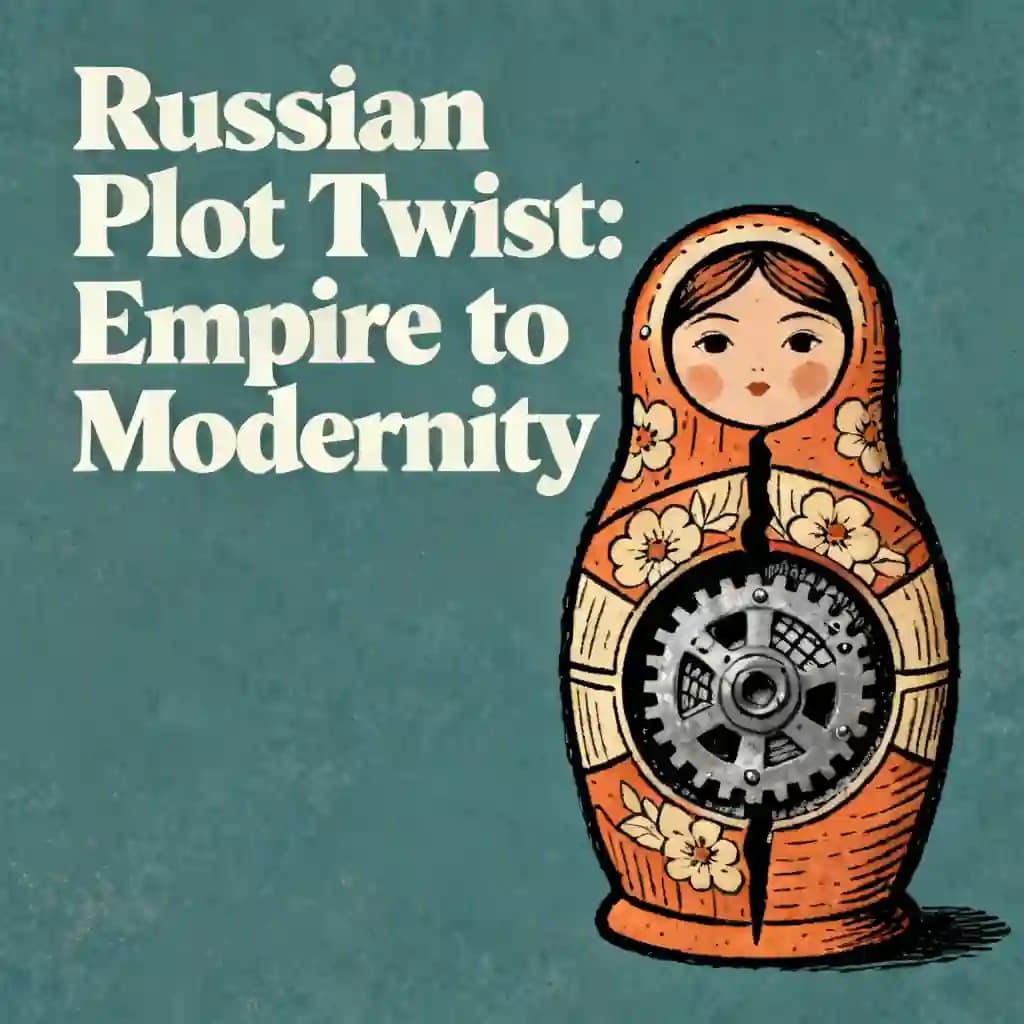
Bestes Zitat aus The Russian Plot Twist: Empire to Modernity
The Russian system can look solid on the outside while being hollow on the inside, often requiring a massive external shock to finally break the 'compound' of centralized power and personal rule.
Generated by Rio-Nick
Russian history

Häufig gestellte Fragen
Dual Power, or dvoyevlastiye, refers to the period when Russia was governed by two competing bodies: the Provisional Government and the Petrograd Soviet. While the Provisional Government held the official titles and sought to establish a Western-style democracy, the Petrograd Soviet held the "real" power because it commanded the loyalty of the workers and soldiers. This arrangement created a state of political paralysis, as the Soviet controlled essential infrastructure like railroads and telegraphs, undermining the Provisional Government's ability to rule effectively.
The Provisional Government made the fatal mistake of remaining committed to World War I despite widespread public exhaustion. Leaders like Alexander Kerensky felt honor-bound to allies like Britain and France and hoped a military victory would grant them legitimacy. However, the failure of the June Offensive led to mass desertions and plummeted morale. This allowed Vladimir Lenin to capitalize on the population's primary grievances with the simple, effective slogan "Peace, Land, and Bread," which addressed the immediate needs of a starving and war-weary public.
The Bolsheviks, or "Reds," succeeded primarily due to superior organization and geographical advantages. Under Leon Trotsky, the Red Army became a disciplined force of five million men, supported by political commissars to ensure loyalty. Geographically, the Bolsheviks controlled the industrial heartland, including Moscow and Petrograd, which allowed them to utilize the central railroad networks. In contrast, the "White" armies were a fractured alliance of monarchists and liberals who failed to coordinate and refused to promise land to peasants or independence to national minorities, leading many to view the Bolsheviks as the lesser evil.
The "Soviet compound" describes a system where the official rigid structures of the state are supported by an unofficial "lubricating oil" of corruption, black markets, and personal connections. This dualism allowed the country to function despite the inefficiencies of central planning. Modern Russian governance under Vladimir Putin has adopted a similar "nationalist-imperialist" synthesis, blending Tsarist traditions and Soviet-era superpower status. While the state appears centralized and orderly on the surface, it still relies on a "clientalist" system of loyalty and resource control, mirroring the historical patterns of prioritizing state security over individual rights.
Von Columbia University Alumni in San Francisco entwickelt
"Instead of endless scrolling, I just hit play on BeFreed. It saves me so much time."


"I never knew where to start with nonfiction—BeFreed’s book lists turned into podcasts gave me a clear path."


"Perfect balance between learning and entertainment. Finished ‘Thinking, Fast and Slow’ on my commute this week."
"Crazy how much I learned while walking the dog. BeFreed = small habits → big gains."
"Reading used to feel like a chore. Now it’s just part of my lifestyle."

"Feels effortless compared to reading. I’ve finished 6 books this month already."
"BeFreed turned my guilty doomscrolling into something that feels productive and inspiring."

"BeFreed turned my commute into learning time. 20-min podcasts are perfect for finishing books I never had time for."
"BeFreed replaced my podcast queue. Imagine Spotify for books — that’s it. 🙌"

"It is great for me to learn something from the book without reading it."
"The themed book list podcasts help me connect ideas across authors—like a guided audio journey."
"Makes me feel smarter every time before going to work"
Von Columbia University Alumni in San Francisco entwickelt
"Instead of endless scrolling, I just hit play on BeFreed. It saves me so much time."
"I never knew where to start with nonfiction—BeFreed’s book lists turned into podcasts gave me a clear path."
"Perfect balance between learning and entertainment. Finished ‘Thinking, Fast and Slow’ on my commute this week."
"Crazy how much I learned while walking the dog. BeFreed = small habits → big gains."
"Reading used to feel like a chore. Now it’s just part of my lifestyle."
"Feels effortless compared to reading. I’ve finished 6 books this month already."
"BeFreed turned my guilty doomscrolling into something that feels productive and inspiring."
"BeFreed turned my commute into learning time. 20-min podcasts are perfect for finishing books I never had time for."
"BeFreed replaced my podcast queue. Imagine Spotify for books — that’s it. 🙌"
"It is great for me to learn something from the book without reading it."
"The themed book list podcasts help me connect ideas across authors—like a guided audio journey."
"Makes me feel smarter every time before going to work"
"Instead of endless scrolling, I just hit play on BeFreed. It saves me so much time."
"I never knew where to start with nonfiction—BeFreed’s book lists turned into podcasts gave me a clear path."
"Perfect balance between learning and entertainment. Finished ‘Thinking, Fast and Slow’ on my commute this week."
"Crazy how much I learned while walking the dog. BeFreed = small habits → big gains."
"Reading used to feel like a chore. Now it’s just part of my lifestyle."
"Feels effortless compared to reading. I’ve finished 6 books this month already."
"BeFreed turned my guilty doomscrolling into something that feels productive and inspiring."
"BeFreed turned my commute into learning time. 20-min podcasts are perfect for finishing books I never had time for."
"BeFreed replaced my podcast queue. Imagine Spotify for books — that’s it. 🙌"
"It is great for me to learn something from the book without reading it."
"The themed book list podcasts help me connect ideas across authors—like a guided audio journey."
"Makes me feel smarter every time before going to work"
"Instead of endless scrolling, I just hit play on BeFreed. It saves me so much time."
"I never knew where to start with nonfiction—BeFreed’s book lists turned into podcasts gave me a clear path."
"Perfect balance between learning and entertainment. Finished ‘Thinking, Fast and Slow’ on my commute this week."
"Crazy how much I learned while walking the dog. BeFreed = small habits → big gains."
"Reading used to feel like a chore. Now it’s just part of my lifestyle."
"Feels effortless compared to reading. I’ve finished 6 books this month already."
"BeFreed turned my guilty doomscrolling into something that feels productive and inspiring."
"BeFreed turned my commute into learning time. 20-min podcasts are perfect for finishing books I never had time for."
"BeFreed replaced my podcast queue. Imagine Spotify for books — that’s it. 🙌"
"It is great for me to learn something from the book without reading it."
"The themed book list podcasts help me connect ideas across authors—like a guided audio journey."
"Makes me feel smarter every time before going to work"