The Right Hand: How Movement and Handedness Shape Morality
Explore how handedness and the body-specificity hypothesis shape our concepts of good and bad. Learn how movement influences cognitive architecture and morality.
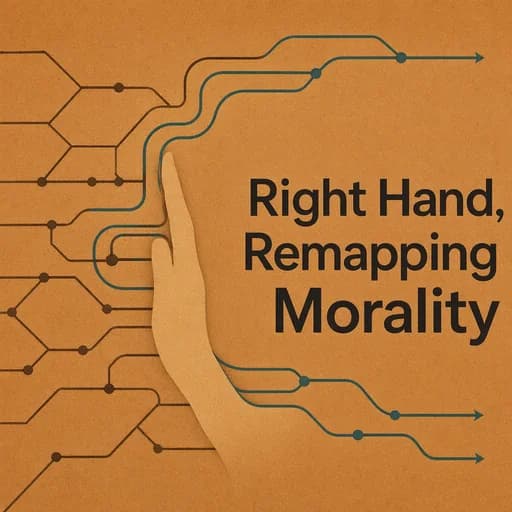
Bestes Zitat aus The Right Hand: How Movement and Handedness Shape Morality
Our abstract thoughts about goodness are constantly being updated by our motor experience; the way you move through the physical world actually constructs the architecture of how you think about good and bad.

Diese Audiolektion wurde von einem BeFreed-Community-Mitglied erstellt
Why the doctor says stop using the left hand meaning phycologically and always use the right? Or try to use it, on a spiritual level what does that mean as well?






Häufig gestellte Fragen
The body-specificity hypothesis suggests that the way an individual moves through the physical world, specifically based on whether they are left-handed or right-handed, constructs the architecture of their thoughts. According to this psychological phenomenon, our physical interactions and dominant movements actually help define how we perceive abstract concepts like 'good' and 'bad' rather than these ideas being purely lofty or abstract.
Research indicates that our moral compass may be anchored in our dominant hand. In experiments conducted by Daniel Casasanto at Stanford, right-handers typically associated the right side with positive attributes, while left-handers associated the left side with 'good.' This suggests that the physical side of the body we use most frequently to interact with the world shapes our internal definitions of morality and preference.
Daniel Casasanto's research involved an experiment where participants placed 'good' and 'bad' animals in boxes located on either the left or right side of a character. The results showed a clear divide based on handedness: right-handed individuals placed positive items on the right, whereas natural left-handers placed them on the left. This study highlights how our cognitive architecture and moral judgments are physically grounded in our bodily experiences.
Mehr entdecken

Rewriting Your Inner Money Script
This learning plan is essential for anyone who feels an irrational sense of dread or unworthiness regarding their finances despite their professional success. It is designed for individuals ready to dismantle deep-seated psychological barriers and transform their relationship with money from one of fear to one of intention.

Rewire Nervous System & Build New Pathways
This plan is essential for individuals seeking to overcome chronic stress, trauma, or repetitive negative patterns by leveraging the science of neuroplasticity. It is ideal for anyone looking to transition from survival mode to a state of regulated self-leadership and emotional resilience.

The Map of Your Inner World
This learning plan is essential for individuals feeling disconnected from their intuition or overwhelmed by self-criticism. It provides a practical framework for anyone seeking to transition from external approval to a grounded, self-led life.

Power of the subconscious mind
This plan is essential for anyone feeling stuck in self-sabotaging patterns or seeking to unlock their full potential. It bridges the gap between cognitive science and personal mastery, making it ideal for high-performers and individuals focused on deep psychological growth.
Revenging a manipulator
This plan is essential for anyone seeking to break free from toxic cycles and reclaim their autonomy. It provides a strategic roadmap for victims of manipulation to transform into empowered survivors through psychological mastery and boundary setting.

The Science of Self-Sabotage
This plan is essential for high-achievers and chronic caretakers who feel stuck in repetitive patterns of failure or burnout. It offers a deep dive into the neurobiology of behavior, making it ideal for anyone looking to reclaim control over their choices and mental well-being.

Design Your New Identity
This learning plan is essential for individuals feeling stuck in outdated patterns or limited by their past self-conceptions. It provides a structured framework for anyone looking to reinvent themselves by systematically auditing and editing their internal dialogue.

Healing the Patterns You Inherited
This plan is essential for individuals who feel stuck in repetitive emotional cycles or high-functioning anxiety rooted in family history. It is ideal for those seeking to move beyond intellectual understanding into somatic healing and genuine self-integration.
Von Columbia University Alumni in San Francisco entwickelt
"Instead of endless scrolling, I just hit play on BeFreed. It saves me so much time."


"I never knew where to start with nonfiction—BeFreed’s book lists turned into podcasts gave me a clear path."


"Perfect balance between learning and entertainment. Finished ‘Thinking, Fast and Slow’ on my commute this week."
"Crazy how much I learned while walking the dog. BeFreed = small habits → big gains."
"Reading used to feel like a chore. Now it’s just part of my lifestyle."

"Feels effortless compared to reading. I’ve finished 6 books this month already."
"BeFreed turned my guilty doomscrolling into something that feels productive and inspiring."

"BeFreed turned my commute into learning time. 20-min podcasts are perfect for finishing books I never had time for."
"BeFreed replaced my podcast queue. Imagine Spotify for books — that’s it. 🙌"

"It is great for me to learn something from the book without reading it."
"The themed book list podcasts help me connect ideas across authors—like a guided audio journey."
"Makes me feel smarter every time before going to work"
Von Columbia University Alumni in San Francisco entwickelt
"Instead of endless scrolling, I just hit play on BeFreed. It saves me so much time."
"I never knew where to start with nonfiction—BeFreed’s book lists turned into podcasts gave me a clear path."
"Perfect balance between learning and entertainment. Finished ‘Thinking, Fast and Slow’ on my commute this week."
"Crazy how much I learned while walking the dog. BeFreed = small habits → big gains."
"Reading used to feel like a chore. Now it’s just part of my lifestyle."
"Feels effortless compared to reading. I’ve finished 6 books this month already."
"BeFreed turned my guilty doomscrolling into something that feels productive and inspiring."
"BeFreed turned my commute into learning time. 20-min podcasts are perfect for finishing books I never had time for."
"BeFreed replaced my podcast queue. Imagine Spotify for books — that’s it. 🙌"
"It is great for me to learn something from the book without reading it."
"The themed book list podcasts help me connect ideas across authors—like a guided audio journey."
"Makes me feel smarter every time before going to work"
"Instead of endless scrolling, I just hit play on BeFreed. It saves me so much time."
"I never knew where to start with nonfiction—BeFreed’s book lists turned into podcasts gave me a clear path."
"Perfect balance between learning and entertainment. Finished ‘Thinking, Fast and Slow’ on my commute this week."
"Crazy how much I learned while walking the dog. BeFreed = small habits → big gains."
"Reading used to feel like a chore. Now it’s just part of my lifestyle."
"Feels effortless compared to reading. I’ve finished 6 books this month already."
"BeFreed turned my guilty doomscrolling into something that feels productive and inspiring."
"BeFreed turned my commute into learning time. 20-min podcasts are perfect for finishing books I never had time for."
"BeFreed replaced my podcast queue. Imagine Spotify for books — that’s it. 🙌"
"It is great for me to learn something from the book without reading it."
"The themed book list podcasts help me connect ideas across authors—like a guided audio journey."
"Makes me feel smarter every time before going to work"
"Instead of endless scrolling, I just hit play on BeFreed. It saves me so much time."
"I never knew where to start with nonfiction—BeFreed’s book lists turned into podcasts gave me a clear path."
"Perfect balance between learning and entertainment. Finished ‘Thinking, Fast and Slow’ on my commute this week."
"Crazy how much I learned while walking the dog. BeFreed = small habits → big gains."
"Reading used to feel like a chore. Now it’s just part of my lifestyle."
"Feels effortless compared to reading. I’ve finished 6 books this month already."
"BeFreed turned my guilty doomscrolling into something that feels productive and inspiring."
"BeFreed turned my commute into learning time. 20-min podcasts are perfect for finishing books I never had time for."
"BeFreed replaced my podcast queue. Imagine Spotify for books — that’s it. 🙌"
"It is great for me to learn something from the book without reading it."
"The themed book list podcasts help me connect ideas across authors—like a guided audio journey."
"Makes me feel smarter every time before going to work"