Kapitel 1
Breaking Free from the Chains of Self-Sabotage
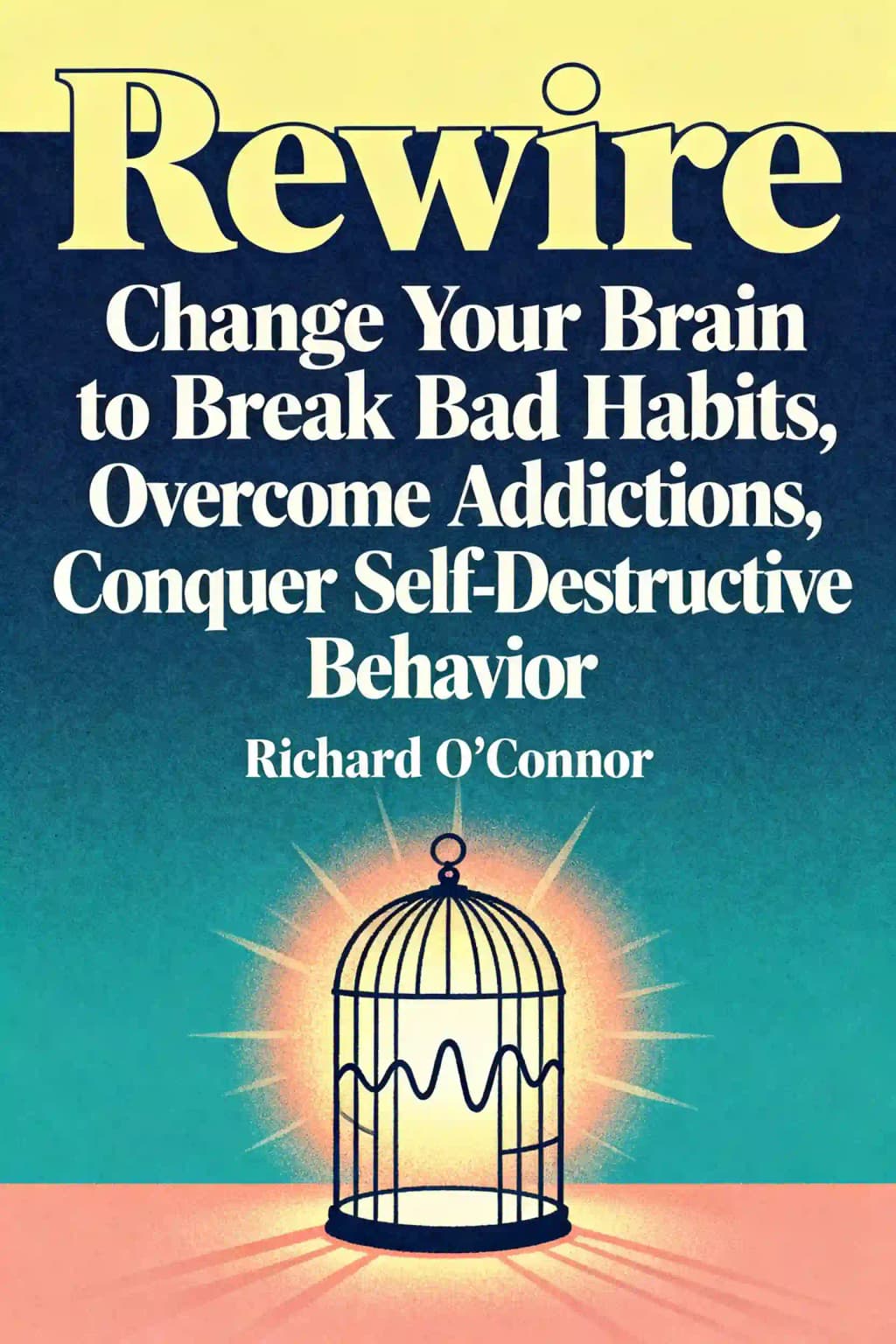
Have you ever found yourself repeatedly making the same self-destructive choices despite knowing better? Perhaps you've promised to start that important project tomorrow (again), reached for that extra drink you swore you wouldn't have, or stayed in a relationship you knew was toxic. You're not alone. According to psychotherapist Richard O'Connor, this universal human struggle stems from having not one but two brains that often work against each other. His groundbreaking book has become something of a bible for those struggling with self-sabotage, endorsed by mental health professionals worldwide and frequently cited in psychology courses. What makes this work particularly compelling is how it merges cutting-edge neuroscience with practical strategies that anyone can implement. As Brene Brown noted, "O'Connor's work gives us something rare in self-help literature: a roadmap based on solid science that doesn't oversimplify the complexity of being human."
Kapitel 2
Two Minds at War: Understanding Our Divided Self
We all have two distinct mental systems constantly at work within us, operating like parallel processors with different specialties and priorities. The conscious self resides in our neocortex-thoughtful, deliberate, and capable of planning. This system handles complex decision-making, analytical thinking, and future planning. Meanwhile, our automatic self operates beneath awareness, handling 99% of our daily functioning through established neural pathways and emotional reactions. This includes everything from breathing and heartbeat regulation to emotional responses and ingrained habits. When these two systems communicate poorly or work at cross-purposes, self-destruction follows.
The automatic self causes most of our troubles because it operates according to unconscious motives, outdated frames of reference, and denied feelings. While it efficiently handles routine tasks like driving or recognizing faces, it also makes critical mistakes through four main channels: inherent prejudices that form snap judgments, faulty logic patterns that jump to conclusions, social influence that shapes behavior without awareness, and distorted assumptions about reality based on past experiences. For instance, someone might automatically tense up around authority figures due to childhood experiences, even when the current situation calls for relaxed engagement.
Our brains physically change in response to experience-a concept called neuroplasticity that offers tremendous hope for personal transformation. Every time we practice a behavior, whether healthy or destructive, we strengthen its neural pathway through a process called myelination, where frequently used neural connections become more efficient. Research provides compelling evidence: College students who practiced juggling for three months showed visible growth in areas controlling visual-motor coordination that disappeared after three months without practice. Piano players developed enlarged brain areas controlling practiced fingers after just five days of training. Most remarkably, even mental rehearsal produced nearly identical brain changes as physical practice, with visualization exercises creating similar neural pathway strengthening.
This neuroplasticity explains why bad habits are so difficult to break-they've created physical pathways in our brains through repeated use. We don't erase these pathways when building new ones; they simply fall into disuse but remain available for reactivation, like old trails through a forest. The key to overcoming self-destruction isn't merely strengthening willpower but training the automatic self to make wiser unconscious decisions while developing greater self-awareness. This requires consistent practice of new behaviors combined with mindful attention to our automatic responses.
As O'Connor explains, "Neurons that fire together, wire together"-creating physical pathways for habits through Hebbian learning. Through consistent practice with focused attention, we can literally rewire our brains, making healthy choices progressively easier and more natural over time. This process requires patience and persistence, as new neural pathways typically take 30-60 days of consistent practice to become established. The good news is that each repetition of a positive behavior strengthens these new pathways, gradually making beneficial choices more automatic and requiring less conscious effort.
Kapitel 3
The Autodestruct Mechanism: How Our Minds Sabotage Success
Our minds organize experiences into patterns that form our assumptive world-a set of implicit beliefs about how life works. These aren't just thoughts but emotional and behavioral patterns that make the world predictable. Unfortunately, these assumptions resist change because our automatic self views everything through established neural pathways, and because our assumptions themselves limit what we perceive.
We surround ourselves with friends who share our views, choose work that doesn't challenge our expectations, and consume media that supports our prejudices. If we engage in self-destructive behaviors like excessive drinking or gambling, we find people who encourage us while avoiding those who challenge us.
Most happy, confident people are slightly delusional. We believe we're better than average-more honest, ethical, and impartial than most. We attribute successes to our innate talents while blaming failures on circumstances. We remember victories more than defeats, trust positive feedback while doubting criticism, and believe our good traits are rare while our flaws are common.
Our paradigms become physically embodied, creating changes in our brain and other bodily systems. New technology reveals how chronic anxiety damages the hippocampus, causing nerve cells to shrivel and die. This is visible in brain scans of child abuse victims and combat veterans. Our mental attitudes directly affect physical health-people with positive self-assumptions live longer, have fewer heart attacks, require less anesthesia during surgery, heal more quickly from wounds, and those with positive attitudes about aging live an average of 7.5 years longer than those with negative attitudes.
We employ countless defensive strategies to protect our self-image when confronted with evidence that contradicts our positive self-perception. We rationalize failures, selectively forget embarrassing experiences, and distort memories that make us look bad. For those with depression or negative self-image, the opposite occurs-they discount success and reject love, feeling fraudulent when praised.
One particularly damaging assumption is that intelligence is fixed rather than learnable. When students believe intelligence is a skill they can develop, their performance improves dramatically. Other comforting illusions that lead to self-destructive outcomes include consistently underestimating how long tasks will take, trying not to think about something (which makes it more likely you will), judging ourselves by intentions but others by actions, and preferring smaller rewards now over larger rewards later.
Kapitel 4
Fear Incognito: The Hidden Driver of Self-Sabotage
Powerful emotions like fear often operate outside our awareness, driving self-destructive choices in ways that can feel mysterious and uncontrollable. Many of us become developmentally stuck around these emotions, freezing when we feel them or reacting with learned patterns from childhood. Fear-whether of success, failure, love, or responsibility-often underlies self-sabotage, though we may only dimly recognize its influence in our daily decisions and reactions.
Fear is both an inevitable part of human consciousness and a necessary warning system that evolved to protect us from genuine threats. Unfortunately, our nervous systems can learn to fear things that aren't actually dangerous, or respond disproportionately to minimal risks. These fears, deeply damaging to our self-esteem and potential, get pushed into the unconscious where they manifest through various behavioral patterns: perfectionism that prevents completion, chronic procrastination, persistent disorganization, debilitating social anxiety, and an inability to commit to relationships or goals.
When thoughts or feelings make us stressed or fearful, the automatic self resorts to sophisticated defenses to modulate anxiety-usually by stuffing away or transmuting the unacceptable emotions into more manageable forms. These defense mechanisms, unconscious mental tricks that distort reality, are essential building blocks of our character structure. While "healthy" defenses like humor, sublimation, or altruism exist and can be adaptive, others-such as projection, passive aggression, denial, and rationalization-quickly lead to self-destructive consequences and relationship difficulties.
When defenses blind us to difficult realities, three significant negative consequences typically occur: First, emotions we're trying to block inevitably leak out elsewhere, often in inappropriate contexts. Second, reality eventually catches up to us, often with devastating impact when our defenses finally crack. Third, our character becomes warped by overuse of the defense, creating rigid personality patterns. We become fundamentally dishonest with ourselves and therefore untrustworthy to others, damaging our closest relationships.
Procrastination stands as perhaps the most universal form of self-destructive behavior, with research showing almost everyone engages in it to some degree. It's becoming an increasingly prevalent social problem-in the 1970s, less than 5 percent of Americans felt procrastination was a significant personal problem, while today that figure has climbed to 20-25 percent. Rita Emmett's Law astutely observes: "The dread of doing a task uses up more time and energy than doing the task itself." To combat this, O'Connor recommends starting with just five minutes of focused work, strictly ignoring distractions, then taking a short break before another five-minute session - a technique that helps overcome initial resistance.
Mindfulness-the ability to look at yourself calmly, objectively, and compassionately-emerges as a powerful antidote to fear-driven behaviors. It requires developing confidence that uncomfortable feelings won't destroy you and teaching the conscious self to objectively observe the automatic self without judgment. Regular mindfulness meditation practice has demonstrated numerous powerful effects: improved emotional regulation, decreased emotional reactivity, better interpersonal relations, and significant mental health benefits including measurable relief from depression, anxiety, and chronic stress. Brain imaging studies show it strengthens regions associated with positive emotions and better control over negative ones, literally rewiring neural pathways for greater emotional resilience.
Kapitel 5
Rebels Without Causes: When Anger Drives Self-Destruction
Anger, like fear, serves a vital evolutionary purpose in protecting ourselves and ensuring justice, but modern society often considers angry feelings unacceptable or unprofessional. When repressed in the automatic self, anger doesn't simply disappear-it seeps through in disguised ways or toward inappropriate targets, much like a blocked river finding new channels.
Misplaced rebellion often stems from feeling oppressed or disappointed by authority figures or life circumstances. Many individuals work diligently to please parents, bosses, or mentors but feel perpetually unrecognized or criticized. This constant struggle creates a deep well of anger and frustration that they may deny and stuff into the unconscious, only to have it emerge in self-sabotaging behaviors-being chronically late, producing halfhearted work, "forgetting" important commitments, or displaying passive resistance through calculated inattention.
Anger operating in our automatic self expresses itself through several common archetypal patterns. The "bad attitude" archetype manifests as refusing to follow instructions simply because they're instructions, regardless of their merit. Some children, particularly those who experience early trauma or neglect, respond by developing defiant pseudo-independence rather than people-pleasing tendencies, leading to habitual defiance of authority even when it harms their interests. Others transform into bullying personalities, using aggression and dominance to mask their fundamental fear of weakness and vulnerability.
Behind many "nice" personas lurks deeply buried anger. These individuals employ reaction formation-doing precisely the opposite of their unconscious desires as a psychological defense mechanism. Their conscious efforts to be unfailingly kind and accommodating mask an automatic self swirling with suppressed rage. According to Robert Glover's research, these "nice" individuals typically display four key characteristics: dishonesty (saying what others want to hear rather than speaking truth), passive-aggression (expressing anger through subtle sabotage or withdrawal), suppressed rage (that occasionally explodes in disproportionate responses to minor triggers), and poor communication skills (preoccupied with mind-reading to avoid potential conflict).
Much self-destructive behavior stems from impossibly high personal standards and perfectionism. When we inevitably fail to meet these unrealistic standards, we become angry or disappointed with ourselves, creating a cycle of self-punishment. Binge eating, for example, often occurs in strict dieters obsessively counting every calorie-the binge represents temporary escape from constant self-scrutiny and rigid control. These high standards frequently accompany a "punitive superego" or Inner Critic that harshly judges our efforts, often originating from parents or authority figures who seemed impossible to please, creating a legacy of perpetual self-criticism.
Addressing misplaced anger requires mindfulness and three key therapeutic strategies: prevention (identifying and addressing the root causes of anger rather than merely managing its displacement), assertiveness training (learning to speak up effectively about needs and feelings before they become overwhelming), and values clarification (examining whether our expectations are realistic and aligned with what truly brings fulfillment rather than societal or inherited standards). This process often involves challenging long-held beliefs about the acceptability of anger and learning to express it in healthy, constructive ways rather than allowing it to fuel self-destructive patterns.
Kapitel 6
Because You're Special: The Entitlement Trap
When both the automatic and conscious self share the delusion that you're special and exempt from normal rules, self-destruction follows. This entitlement mentality appears dramatically in celebrities who overdose or politicians who philander, but also manifests subtly in ordinary people's daily choices. The underlying paradigm-"I'm special"-creates a closed loop where failure is blamed on others rather than oneself, leading to repeated patterns of destructive behavior. For example, an employee might consistently arrive late, believing their contribution is so valuable that normal scheduling rules don't apply to them.
While healthy pride is normal, we all tend to be "spin doctors" who interpret reality to confirm what we want to believe about ourselves. Research shows that 93% of drivers rate themselves as above average, and most people consider themselves more intelligent, attractive, and ethical than their peers. This selective attention to positive feedback while ignoring contradictory input becomes particularly dangerous when it causes us to miss important warning signals, such as ignoring health symptoms or dismissing financial difficulties.
For many, grandiosity masks deep vulnerability rooted in childhood experiences. Children naturally go through developmental phases of feeling special and powerful - like believing they're superheroes or princesses - which should evolve into healthy self-esteem when parents respond appropriately. But when parents are unavailable, depressed, or intolerant, children miss these crucial developmental opportunities and grow up with fragile self-worth. As adults, they may develop entitlement as a defense against feeling powerless and unlovable, creating an artificial sense of superiority to compensate for deep-seated insecurity.
People who feel entitled often develop self-destructive patterns that ultimately lead to rejection and isolation. Some view effort as beneath them, considering it a sign of weakness rather than understanding that hard work creates talent. This mindset leads to chronic underachievement despite potential. Others never accept success because they feel so empty inside that nothing satisfies them - the CEO who keeps pushing for more power, the artist who dismisses acclaim as meaningless.
Entitlement leads to predictable self-destructive patterns: overindulgence in food, substances and risky behaviors; financial troubles from compulsive spending and expectations of bailouts; chronic conflicts with authority figures; one-sided relationships where others exist only to serve their needs; dramatic acting out when denied special treatment; and somatic symptoms that are "milked" for sympathy rather than addressed through responsible self-care. These patterns often escalate over time as the entitled person needs increasingly dramatic gestures to maintain their sense of specialness.
Many entitled people actually do have consciences, creating a vicious cycle of self-destruction. When they cheat or manipulate others, they feel guilty and ashamed deep inside, adding to accumulated self-loathing. They defend against this shame through increasingly elaborate denial and rationalization, which paradoxically makes them act more entitled to escape their feelings. This cycle continues until either they face their underlying pain or experience severe consequences that force change.
Kapitel 7
The Enemy Is Us: How Self-Hate Drives Self-Destruction
Self-hate operates largely unconsciously but drives many self-destructive behaviors. Like Pogo's famous quote "We have met the enemy, and he is us," the divided self develops when one part feels hatred, disgust, shame or rage toward another part. This "cancer of the soul" invades before we're aware of it, causing self-sabotage in career advancement, relationships, and personal growth. The internal critic becomes so familiar that its voice seems like truth rather than the distorted lens it actually represents.
Signs of self-hate manifest in daily life: waking with self-critical thoughts before even getting out of bed; having negative thoughts intrude during mental downtime like driving or showering; avoiding mirrors or wincing at reflections; using harsh self-deprecating names when making even minor mistakes; feeling fundamentally unworthy of your partner's love; obsessively ruminating about minor social missteps for days or weeks; self-sabotaging just as success comes within reach; actively avoiding or blocking childhood memories; neglecting basic health needs like medical checkups; constantly comparing yourself unfavorably to others while dismissing your achievements; putting yourself in dangerous situations without concern for consequences; and carefully hiding these feelings from even the most intimate partners.
Self-hate often originates in childhood, where even minor transgressions can leave lasting marks on our conscience. For children who felt unloved or were abused, self-hate becomes particularly entrenched. These children often blame themselves for their mistreatment ("If I was better, Mommy wouldn't get so mad"), believing they deserve the abuse rather than facing the terrifying reality that their protectors aren't protecting them. This protective mechanism, while helping the child survive emotionally at the time, becomes deeply embedded in their psyche and continues operating long after its usefulness has expired.
While guilt concerns specific actions we've taken or failed to take, shame encompasses our entire self-worth and perceived value as a human being. Both can operate unconsciously, punishing us for thoughts we're not even aware of having. Shame proves more destructive than guilt because it targets our core identity rather than specific behaviors - it's the difference between "I made a mistake" and "I am a mistake." This shame-based identity becomes a lens through which all experiences are filtered and interpreted.
Self-hate manifests through both subtle and dramatic behaviors. Subtle signs include self-handicapping before challenges, deliberately staying in the background during social situations, chronic procrastination on important tasks, and neglecting physical and mental health needs. More visible symptoms include extreme perfectionism, compulsive overwork, deliberate self-sabotage of opportunities, severe social anxiety, and intentionally making oneself unattractive or undesirable. Self-hate can drive the maintenance of guilty secrets, self-mutilation, engagement in high-risk behaviors, outbursts of violence, repeatedly choosing abusive partners, and disordered eating patterns.
Self-hate inevitably affects relationships, creating patterns that reinforce the negative self-image. Those who hate themselves either partner with someone who mirrors their self-hatred through criticism and abuse, or keep their self-hatred carefully hidden, maintaining only superficial connections to avoid true intimacy. Many cycle through relationships by unconsciously testing partners to see if they can drive them away, preferring to actively trigger rejection rather than live with its constant anxious expectation. This self-fulfilling prophecy confirms their worst beliefs about themselves.
Recovery begins by recognizing when self-hate is operating before it does damage, then exposing these thoughts and feelings to mindful awareness and examination. Like vampires, these feelings can't survive in the light-their underlying beliefs are too unfair and absurd to withstand rational examination. The key is learning to catch self-hatred in action, challenging its assumptions, and gradually developing a more balanced, compassionate relationship with oneself.
Kapitel 8
Rewiring the Brain: The Path to Lasting Change
Overcoming self-destructive patterns requires understanding that powerful forces within us resist change, even when we clearly see what would benefit us. The automatic self has learned many habits below our awareness that lead to unintended negative consequences.
Will power can be strengthened like a muscle. Studies show that exercising self-discipline in one area improves it across all areas of life. With practice, self-control becomes more automatic, requiring less mental effort over time. Good nutrition supports willpower-maintaining steady glucose levels through protein intake is crucial as the brain's glucose declines with decision fatigue.
The greatest secret to developing willpower is making good behaviors automatic through habit formation. People with high self-control report less stress because they handle routine matters semi-automatically, preserving willpower for important decisions.
To overcome self-destructive patterns, start with one manageable habit rather than your most difficult challenge. Begin by honestly acknowledging your powerlessness over these behaviors and recognizing that your brain's default circuits will continue resurfacing when you're tired or stressed. Set realistic, measurable goals and make these initial goals almost certain to achieve, creating a no-fail experience.
The "Undertow" represents the mysterious force that sabotages recovery just as we begin feeling safe. The Undertow gains power from neural pathways etched by bad habits-one slip can return us to abandoned but still-existing brain circuits. While we can build new, healthier pathways through practice, the old ones remain accessible.
To protect against the Undertow's pull, practice mindfulness and willpower daily until they become automatic. Recognize stress triggers and intrusive thoughts as "just noise" to make wiser decisions. Approach self-knowledge with compassionate curiosity, valuing yourself as you are rather than who you think you should be.
Even "faking it till you make it" creates virtuous circles in the brain-pretending to be kind or courageous gradually changes self-image as new neural pathways form. Accept unconscious drives while learning to interpret emotional messages properly, practice honest intimacy with trusted others, and find community to counter our isolated culture.
Lasting control over self-destructive tendencies requires facing distorted paradigms and acknowledging the damage done. Allow yourself to grieve missed opportunities and hurts you've caused others without excessive self-blame, making amends where possible. This recovery demands lifelong commitment-those old neural circuits remain dormant but ready for reactivation. Though the Undertow always waits, vigilance itself becomes automatic with practice. The more you choose what's best in the present moment, the easier it becomes next time as your brain strengthens these connections through repeated use.
Recent brain science gives us hope: adults do grow new brain cells, and our brains physically change with experience. Self-control and willpower aren't fixed traits but skills we can develop through practice. Understanding our dual nature and applying these new psychological tools can help us gain greater control over destructive patterns, becoming wiser and more conscious in our choices.