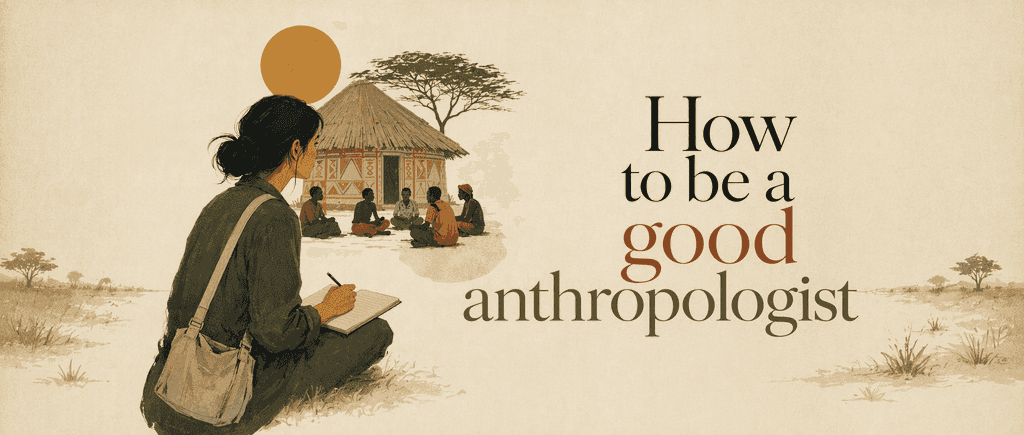
Sosyal ve Kültürel Antropoloji: İnsan Deneyiminin Derinlikleri
Malinowski'nin Trobriand Adaları'ndaki saha araştırmasından modern dijital toplumlara uzanan bu yolculukta, katılımcı gözlem ve kültürel rölativizmin toplumsal dokuyu nasıl aydınlattığını keşfedin.

Bestes Zitat aus Sosyal ve Kültürel Antropoloji: İnsan Deneyiminin Derinlikleri
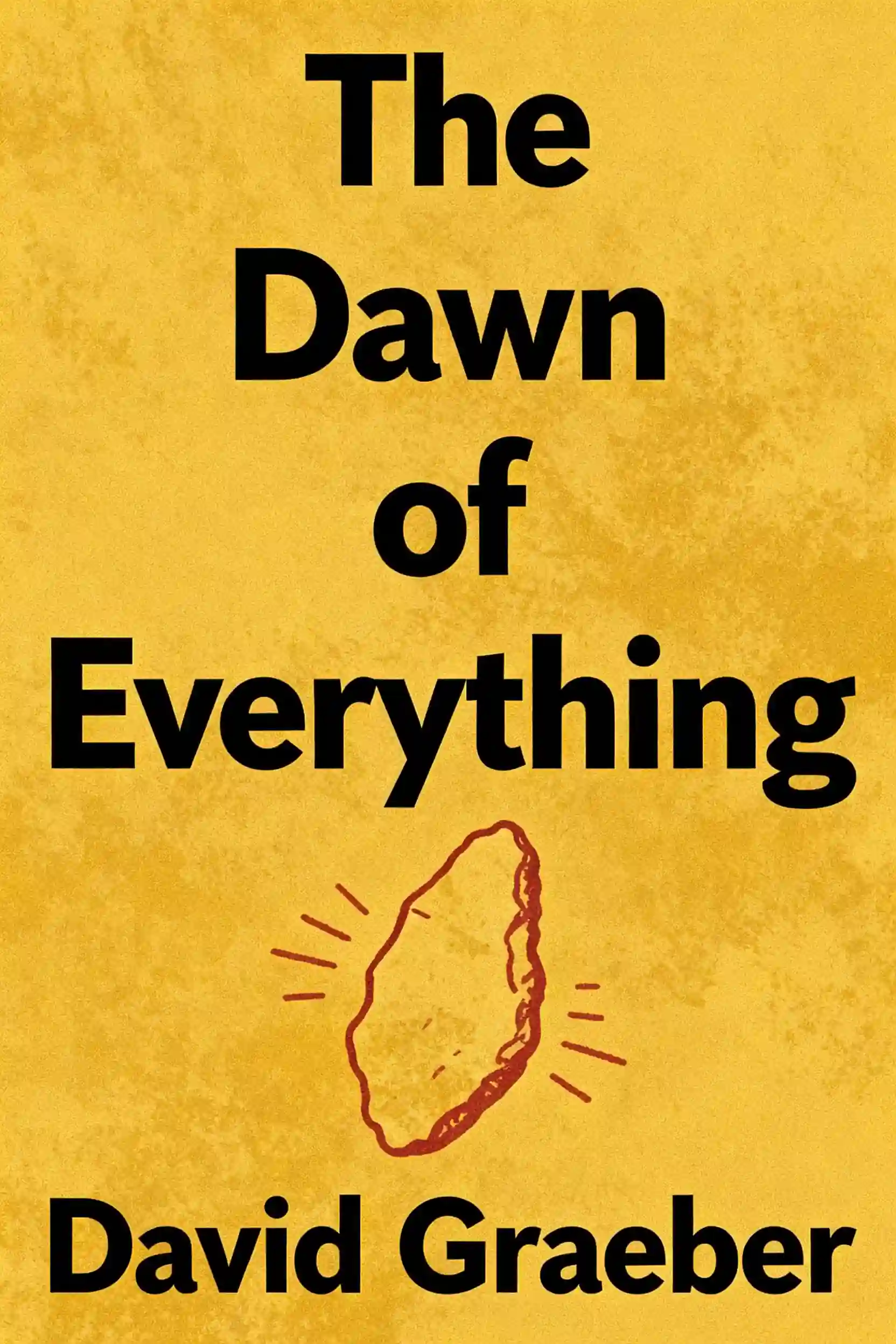
Anthropology pulls you out of the water so you can see it for what it is. It’s a subversive science because it says: 'Things don't have to be this way. Look at all these other possibilities.'
Generated by Ozen
Sosyal ve kulturel antropoloji



Häufig gestellte Fragen
Armchair anthropology was a 19th-century approach where scholars like James Frazer stayed in libraries and relied on biased reports from missionaries or traders to draw conclusions about cultures. In contrast, Bronislaw Malinowski pioneered "participant observation," which requires the researcher to live among a community for an extended period, learn the language, and engage in daily activities. This "off the veranda" method shifts the focus from distant observation to gaining an insider’s perspective by experiencing the "daily grit" of a society firsthand.
The Hawthorne effect occurs when people change their behavior because they know they are being watched, which can distort a researcher's data. To combat this, anthropologists prioritize building "rapport"—a comfortable, trusting working relationship with the community. By spending months or even years in the field, the researcher eventually stops being seen as a "stranger with a notebook" and becomes a fixture of the community, allowing people to act more naturally and at ease.
While biological reproduction is universal, kinship is a system of social relations that dictates rights, obligations, and power structures. Different cultures reckon descent in various ways; for example, in patrilineal societies, a father’s brother may be considered a "second father," while in matrilineal systems, the mother’s brother often holds more authority over a child than the biological father. Kinship is about "doing" rather than just "being," involving the daily work of caring, feeding, and protecting that defines who belongs to a group.
The "emic" perspective represents the insider’s view—how a member of a culture perceives and categorizes their own world. The "etic" perspective is the outsider’s analytical view, which uses social science theories to compare and explain cultural practices. Modern ethnography seeks to balance both perspectives to create "thick description," a term used to describe a deep understanding of the shared meanings and symbols behind human actions, such as knowing whether a wink is a physical twitch or a secret signal.
Cultural relativism is the principle of understanding a culture on its own terms without judgment, but this becomes difficult when practices seem to cause harm. Anthropologists today often distinguish between "understanding" a practice and "accepting" it. While they use a relativistic lens to see the internal logic of a tradition, many follow a "do no harm" ethical code and focus on "empowerment" rather than "intervention." This involves providing communities with information to make their own choices rather than imposing Western values from the outside.
Von Columbia University Alumni in San Francisco entwickelt
"Instead of endless scrolling, I just hit play on BeFreed. It saves me so much time."


"I never knew where to start with nonfiction—BeFreed’s book lists turned into podcasts gave me a clear path."


"Perfect balance between learning and entertainment. Finished ‘Thinking, Fast and Slow’ on my commute this week."
"Crazy how much I learned while walking the dog. BeFreed = small habits → big gains."
"Reading used to feel like a chore. Now it’s just part of my lifestyle."

"Feels effortless compared to reading. I’ve finished 6 books this month already."
"BeFreed turned my guilty doomscrolling into something that feels productive and inspiring."

"BeFreed turned my commute into learning time. 20-min podcasts are perfect for finishing books I never had time for."
"BeFreed replaced my podcast queue. Imagine Spotify for books — that’s it. 🙌"

"It is great for me to learn something from the book without reading it."
"The themed book list podcasts help me connect ideas across authors—like a guided audio journey."
"Makes me feel smarter every time before going to work"
 Ask ChatGPT
 Ask Claude
Von Columbia University Alumni in San Francisco entwickelt
"Instead of endless scrolling, I just hit play on BeFreed. It saves me so much time."
"I never knew where to start with nonfiction—BeFreed’s book lists turned into podcasts gave me a clear path."
"Perfect balance between learning and entertainment. Finished ‘Thinking, Fast and Slow’ on my commute this week."
"Crazy how much I learned while walking the dog. BeFreed = small habits → big gains."
"Reading used to feel like a chore. Now it’s just part of my lifestyle."
"Feels effortless compared to reading. I’ve finished 6 books this month already."
"BeFreed turned my guilty doomscrolling into something that feels productive and inspiring."
"BeFreed turned my commute into learning time. 20-min podcasts are perfect for finishing books I never had time for."
"BeFreed replaced my podcast queue. Imagine Spotify for books — that’s it. 🙌"
"It is great for me to learn something from the book without reading it."
"The themed book list podcasts help me connect ideas across authors—like a guided audio journey."
"Makes me feel smarter every time before going to work"
"Instead of endless scrolling, I just hit play on BeFreed. It saves me so much time."
"I never knew where to start with nonfiction—BeFreed’s book lists turned into podcasts gave me a clear path."
"Perfect balance between learning and entertainment. Finished ‘Thinking, Fast and Slow’ on my commute this week."
"Crazy how much I learned while walking the dog. BeFreed = small habits → big gains."
"Reading used to feel like a chore. Now it’s just part of my lifestyle."
"Feels effortless compared to reading. I’ve finished 6 books this month already."
"BeFreed turned my guilty doomscrolling into something that feels productive and inspiring."
"BeFreed turned my commute into learning time. 20-min podcasts are perfect for finishing books I never had time for."
"BeFreed replaced my podcast queue. Imagine Spotify for books — that’s it. 🙌"
"It is great for me to learn something from the book without reading it."
"The themed book list podcasts help me connect ideas across authors—like a guided audio journey."
"Makes me feel smarter every time before going to work"
"Instead of endless scrolling, I just hit play on BeFreed. It saves me so much time."
"I never knew where to start with nonfiction—BeFreed’s book lists turned into podcasts gave me a clear path."
"Perfect balance between learning and entertainment. Finished ‘Thinking, Fast and Slow’ on my commute this week."
"Crazy how much I learned while walking the dog. BeFreed = small habits → big gains."
"Reading used to feel like a chore. Now it’s just part of my lifestyle."
"Feels effortless compared to reading. I’ve finished 6 books this month already."
"BeFreed turned my guilty doomscrolling into something that feels productive and inspiring."
"BeFreed turned my commute into learning time. 20-min podcasts are perfect for finishing books I never had time for."
"BeFreed replaced my podcast queue. Imagine Spotify for books — that’s it. 🙌"
"It is great for me to learn something from the book without reading it."
"The themed book list podcasts help me connect ideas across authors—like a guided audio journey."
"Makes me feel smarter every time before going to work"