Chili Cultivation: Synthetic NPK vs. Organic Fertilizers
Explore the choice between synthetic NPK and organic methods in chili cultivation. Learn how nutrient timing impacts capsaicin levels and overall plant health.
Bestes Zitat aus Chili Cultivation: Synthetic NPK vs. Organic Fertilizers
The choice between synthetic NPK and organic methods is a crossroad between efficiency and ecology; while synthetics offer surgical precision for immediate growth, organic approaches build a sustainable soil ecosystem that produces peppers with significantly higher levels of antioxidants and Vitamin C.
Generated by Mark
A detailed comparison of NPK fertilizer vs. organic approaches for growing chili plants from seeds. Focus on: 1) How NPK fertilizers work across different growth cycles. 2) Advantages/disadvantages of synthetic NPK vs. organic methods. 3) The 'harm' or environmental/soil impact of synthetic fertilizers. 4) Feasibility of 100% organic chili farming and whether the resulting peppers are actually healthier.






Häufig gestellte Fragen
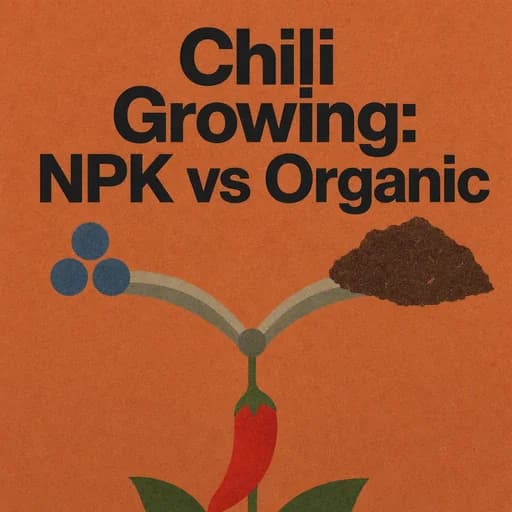
The choice between synthetic NPK and organic methods represents a tension between efficiency and ecology. Synthetic fertilizers offer surgical precision and a quick rush of growth, often compared to 'fast food' for plants. In contrast, organic gardening follows a 'slow food' movement, focusing on building soil health from the ground up. While synthetics provide immediate results, organic approaches require more patience to develop the holistic rhythm necessary for long-term productivity.
Chili peppers are classified as heavy feeders because they require high overall nutrient levels to thrive and become productive, bushy giants. Despite their high demand for nutrients, these plants have a surprisingly low transfer rate of nutrients from their leaves to their fruit. This unique biological trait means that the specific timing and method of plant fertilization are critical for ensuring the peppers develop both the desired punch of capsaicin and deep flavor.
In the world of chili cultivation, there is a concern that synthetic NPK fertilizers can potentially 'burn' the soil if not used carefully. While they provide the precision needed for explosive growth, they lack the soil-building properties of organic methods. Choosing between these paths involves understanding that synthetics prioritize immediate plant size and efficiency, whereas organic cultivation focuses on the slower process of maintaining a healthy, living soil ecosystem for the plants.
Von Columbia University Alumni in San Francisco entwickelt
"Instead of endless scrolling, I just hit play on BeFreed. It saves me so much time."


"I never knew where to start with nonfiction—BeFreed’s book lists turned into podcasts gave me a clear path."


"Perfect balance between learning and entertainment. Finished ‘Thinking, Fast and Slow’ on my commute this week."
"Crazy how much I learned while walking the dog. BeFreed = small habits → big gains."
"Reading used to feel like a chore. Now it’s just part of my lifestyle."

"Feels effortless compared to reading. I’ve finished 6 books this month already."
"BeFreed turned my guilty doomscrolling into something that feels productive and inspiring."

"BeFreed turned my commute into learning time. 20-min podcasts are perfect for finishing books I never had time for."
"BeFreed replaced my podcast queue. Imagine Spotify for books — that’s it. 🙌"

"It is great for me to learn something from the book without reading it."
"The themed book list podcasts help me connect ideas across authors—like a guided audio journey."
"Makes me feel smarter every time before going to work"
Von Columbia University Alumni in San Francisco entwickelt
"Instead of endless scrolling, I just hit play on BeFreed. It saves me so much time."
"I never knew where to start with nonfiction—BeFreed’s book lists turned into podcasts gave me a clear path."
"Perfect balance between learning and entertainment. Finished ‘Thinking, Fast and Slow’ on my commute this week."
"Crazy how much I learned while walking the dog. BeFreed = small habits → big gains."
"Reading used to feel like a chore. Now it’s just part of my lifestyle."
"Feels effortless compared to reading. I’ve finished 6 books this month already."
"BeFreed turned my guilty doomscrolling into something that feels productive and inspiring."
"BeFreed turned my commute into learning time. 20-min podcasts are perfect for finishing books I never had time for."
"BeFreed replaced my podcast queue. Imagine Spotify for books — that’s it. 🙌"
"It is great for me to learn something from the book without reading it."
"The themed book list podcasts help me connect ideas across authors—like a guided audio journey."
"Makes me feel smarter every time before going to work"
"Instead of endless scrolling, I just hit play on BeFreed. It saves me so much time."
"I never knew where to start with nonfiction—BeFreed’s book lists turned into podcasts gave me a clear path."
"Perfect balance between learning and entertainment. Finished ‘Thinking, Fast and Slow’ on my commute this week."
"Crazy how much I learned while walking the dog. BeFreed = small habits → big gains."
"Reading used to feel like a chore. Now it’s just part of my lifestyle."
"Feels effortless compared to reading. I’ve finished 6 books this month already."
"BeFreed turned my guilty doomscrolling into something that feels productive and inspiring."
"BeFreed turned my commute into learning time. 20-min podcasts are perfect for finishing books I never had time for."
"BeFreed replaced my podcast queue. Imagine Spotify for books — that’s it. 🙌"
"It is great for me to learn something from the book without reading it."
"The themed book list podcasts help me connect ideas across authors—like a guided audio journey."
"Makes me feel smarter every time before going to work"
"Instead of endless scrolling, I just hit play on BeFreed. It saves me so much time."
"I never knew where to start with nonfiction—BeFreed’s book lists turned into podcasts gave me a clear path."
"Perfect balance between learning and entertainment. Finished ‘Thinking, Fast and Slow’ on my commute this week."
"Crazy how much I learned while walking the dog. BeFreed = small habits → big gains."
"Reading used to feel like a chore. Now it’s just part of my lifestyle."
"Feels effortless compared to reading. I’ve finished 6 books this month already."
"BeFreed turned my guilty doomscrolling into something that feels productive and inspiring."
"BeFreed turned my commute into learning time. 20-min podcasts are perfect for finishing books I never had time for."
"BeFreed replaced my podcast queue. Imagine Spotify for books — that’s it. 🙌"
"It is great for me to learn something from the book without reading it."
"The themed book list podcasts help me connect ideas across authors—like a guided audio journey."
"Makes me feel smarter every time before going to work"