From Sprout to Soil: Mastering Chili Seedling Transplants
Learn the essential readiness checklist for your chili seedlings, from identifying 'true leaves' to mixing the perfect soil and avoiding root shock during their first major move.
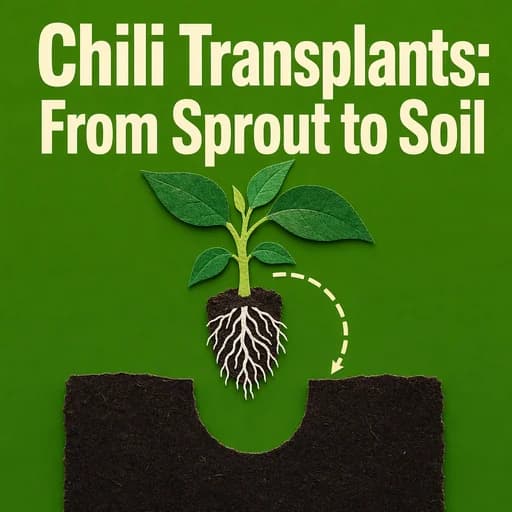
Bestes Zitat aus From Sprout to Soil: Mastering Chili Seedling Transplants
Patience is a gardener's best friend here. Rushing into the garden might feel productive, but the person who waits for the right temperature and follows the process often ends up with a much bigger harvest.
Generated by Mark
So building on previous lessons about chili pepper germination I have many small plants that have germinated. What are the next steps? When do I transplant them into larger containers? What soil should I use when I transplant?

Häufig gestellte Fragen
The first two leaves that emerge from a pepper seed are called cotyledons, or seed leaves. These function like a temporary "lunchbox" of energy and are typically narrow and pointy. True leaves usually appear about a week later from the center of the plant and look like mature pepper leaves—broader and more textured. You should wait until the plant has at least three sets of these true leaves, which usually occurs when the plant is three to four weeks old, before considering a transplant.
Beyond having three sets of true leaves, you should check the health and growth of the roots. Healthy pepper roots should be bright white; if they are brown or mushy, the plant may be suffering from overwatering or underdevelopment. You are looking for a strong root ball where white roots are beginning to reach the drainage holes or coil at the bottom of the container. Additionally, the stem should be robust and compact rather than "leggy" or thin like a thread.
Moving a small plant into a massive pot, such as a five-gallon bucket, often leads to "wet feet." Because a small seedling cannot drink all the water contained in a large volume of soil, the mix stays soaking wet for too long, leading to mold, fungus, and root rot. It is more efficient to move plants into intermediate three or four-inch pots first, as they actually grow faster when they can effectively fill a smaller space before their final move to the garden.
Hardening off is a seven-to-ten-day "boot camp" that gradually acclimates plants to the intensity of the outdoors. Indoor environments lack wind and UV rays, which are filtered by window glass; moving a plant outside abruptly can cause "sun scald," turning leaves white and papery. The process involves placing plants in a shaded, sheltered spot for a few hours on the first day and slowly increasing their exposure to direct sunlight and wind over a week until they can withstand outdoor conditions and overnight temperatures.
Peppers are tropical plants that require warm conditions to thrive. The soil temperature should be consistently at least 70 degrees Fahrenheit, which usually occurs about two weeks after the last frost date. Furthermore, nighttime air temperatures should consistently stay above 55 or 60 degrees Fahrenheit. If peppers are planted in cold soil or exposed to nights in the 40s, their growth can be stunted for weeks.
Von Columbia University Alumni in San Francisco entwickelt
"Instead of endless scrolling, I just hit play on BeFreed. It saves me so much time."


"I never knew where to start with nonfiction—BeFreed’s book lists turned into podcasts gave me a clear path."


"Perfect balance between learning and entertainment. Finished ‘Thinking, Fast and Slow’ on my commute this week."
"Crazy how much I learned while walking the dog. BeFreed = small habits → big gains."
"Reading used to feel like a chore. Now it’s just part of my lifestyle."

"Feels effortless compared to reading. I’ve finished 6 books this month already."
"BeFreed turned my guilty doomscrolling into something that feels productive and inspiring."

"BeFreed turned my commute into learning time. 20-min podcasts are perfect for finishing books I never had time for."
"BeFreed replaced my podcast queue. Imagine Spotify for books — that’s it. 🙌"

"It is great for me to learn something from the book without reading it."
"The themed book list podcasts help me connect ideas across authors—like a guided audio journey."
"Makes me feel smarter every time before going to work"
Von Columbia University Alumni in San Francisco entwickelt
"Instead of endless scrolling, I just hit play on BeFreed. It saves me so much time."
"I never knew where to start with nonfiction—BeFreed’s book lists turned into podcasts gave me a clear path."
"Perfect balance between learning and entertainment. Finished ‘Thinking, Fast and Slow’ on my commute this week."
"Crazy how much I learned while walking the dog. BeFreed = small habits → big gains."
"Reading used to feel like a chore. Now it’s just part of my lifestyle."
"Feels effortless compared to reading. I’ve finished 6 books this month already."
"BeFreed turned my guilty doomscrolling into something that feels productive and inspiring."
"BeFreed turned my commute into learning time. 20-min podcasts are perfect for finishing books I never had time for."
"BeFreed replaced my podcast queue. Imagine Spotify for books — that’s it. 🙌"
"It is great for me to learn something from the book without reading it."
"The themed book list podcasts help me connect ideas across authors—like a guided audio journey."
"Makes me feel smarter every time before going to work"
"Instead of endless scrolling, I just hit play on BeFreed. It saves me so much time."
"I never knew where to start with nonfiction—BeFreed’s book lists turned into podcasts gave me a clear path."
"Perfect balance between learning and entertainment. Finished ‘Thinking, Fast and Slow’ on my commute this week."
"Crazy how much I learned while walking the dog. BeFreed = small habits → big gains."
"Reading used to feel like a chore. Now it’s just part of my lifestyle."
"Feels effortless compared to reading. I’ve finished 6 books this month already."
"BeFreed turned my guilty doomscrolling into something that feels productive and inspiring."
"BeFreed turned my commute into learning time. 20-min podcasts are perfect for finishing books I never had time for."
"BeFreed replaced my podcast queue. Imagine Spotify for books — that’s it. 🙌"
"It is great for me to learn something from the book without reading it."
"The themed book list podcasts help me connect ideas across authors—like a guided audio journey."
"Makes me feel smarter every time before going to work"
"Instead of endless scrolling, I just hit play on BeFreed. It saves me so much time."
"I never knew where to start with nonfiction—BeFreed’s book lists turned into podcasts gave me a clear path."
"Perfect balance between learning and entertainment. Finished ‘Thinking, Fast and Slow’ on my commute this week."
"Crazy how much I learned while walking the dog. BeFreed = small habits → big gains."
"Reading used to feel like a chore. Now it’s just part of my lifestyle."
"Feels effortless compared to reading. I’ve finished 6 books this month already."
"BeFreed turned my guilty doomscrolling into something that feels productive and inspiring."
"BeFreed turned my commute into learning time. 20-min podcasts are perfect for finishing books I never had time for."
"BeFreed replaced my podcast queue. Imagine Spotify for books — that’s it. 🙌"
"It is great for me to learn something from the book without reading it."
"The themed book list podcasts help me connect ideas across authors—like a guided audio journey."
"Makes me feel smarter every time before going to work"