Kapitel 4
The Mathematics of Measuring Pleasure
Quantifying taste preferences presents remarkable challenges. The nine-point hedonic scale, developed in 1944 at Chicago's Quartermaster Food and Container Institute for military rations, has become the industry standard for measuring food liking. Yet this seemingly simple tool has profound limitations. People rarely use the extreme values (1 or 9), effectively reducing it to a seven-point scale. Subjects hedge their ratings, reluctant to give maximum scores in case something better appears in the next sample.
Our own taste perceptions confound measurement efforts. When asked to rate favorite and least favorite foods before and after consumption, people consistently mark favorites lower and disliked foods higher after eating them - a "regression to the mean" effect suggesting "the bad is never as bad as we think it is, the good never as good."
Military food research at Natick offers unique insights because it tests pure liking uncorrupted by price, advertising or choice. Their research on food monotony determined soldiers could subsist on MREs for 21 days without significant body mass loss, though preferences remain crucial for maintaining consumption and morale. Broad appeal matters more than niche excellence - even beloved foods like New England clam chowder failed military testing when unfamiliar to many soldiers.
Paradoxically, the most-liked items in initial taste tests often become least-liked after repeated exposure. We protect our enjoyment of favorite foods by deliberately choosing variety - what Howard Moskowitz calls avoiding "death by hamburger." Yet economist Tyler Cowen questions why we resist eating the same cuisine repeatedly when people in those countries do exactly that. Bland foods actually induce less fatigue than flavorful ones, possibly because they fade from memory more quickly ("variety amnesia").
Context dramatically affects food enjoyment. The same MREs rated "acceptable" by both soldiers in Hawaii and MIT students were consumed in greater quantities by students, demonstrating environment's impact on appetite. Similarly, restaurant decor, music, group size, tableware weight, plate color, and wait times all influence our enjoyment. Like Miles drinking fine wine from a Styrofoam cup in Sideways, context can undermine even exceptional food experiences.
Kapitel 5
The Social Choreography of Taste
Detecting fake reviews has become a science. Cornell researchers created algorithms that identify deception patterns with 90% accuracy - better than humans who suffer from "truth bias." Fabricated reviews typically contain fewer contextual details, more superlatives, and are shorter since lying requires mental effort. Liars use more verbs than nouns (easier to describe actions than appearances) and fewer personal pronouns to distance themselves from deception - except in fake positive reviews where they overcompensate with self-references to appear credible.
Beyond outright fakes, legitimate reviews suffer from numerous distortions. Only about 5% of customers write reviews, creating a biased sample. Reviews tend toward a "J-shaped distribution" or "brag and moan phenomenon" with clusters at extremes. Despite this, there's a strong "positivity bias" - Goodreads averages 3.8/5 stars, TripAdvisor 3.7/5, and ratings are even higher on platforms where reciprocal reviewing occurs. This led YouTube to abandon its five-star system for binary thumbs up/down.
Social influence powerfully shapes opinions. MIT research showed that artificially seeding a positive first vote created a cascade of positivity that boosted overall scores by 25%. While we "herd on positive opinions," over time ratings often decline as later reviewers react against extreme ratings and try to stand out. Prize-winning books actually receive worse ratings after winning - the "paradox of publicity" - as expectations rise and less-matched readers are attracted, triggering polarization where negative reviews receive disproportionate "likes."
The social dimension of taste extends beyond online reviews. Humans are fundamentally imitative creatures. As French sociologist Gabriel Tarde noted in 1890, "The social being, in the degree that he is social, is essentially imitative." This social learning capacity is what makes human culture uniquely adaptive and successful across diverse environments. Unlike other primates, humans have thrived in environments from the Arctic to deserts through cultural knowledge transmission rather than genetic adaptation.
This imitative tendency creates the paradox of "conformist distinction" - we simultaneously want to belong to groups while maintaining individual identity. We select right-sized groups, demonstrate "superior conformity" within our chosen tribes, or even embrace "normcore" anti-fashion as a form of distinction. When Stanford researchers sold Livestrong wristbands to a "geeky" dorm, wearers in the "target" dorm abandoned them by 32% - not because they disliked the geeks, but because they weren't "like" them.
Kapitel 6
The Neural Pathways of Pleasure
Most of what we perceive as taste actually comes through our nose. This fundamental sensory fact becomes startlingly clear in the "jelly bean test" - when holding your nose, all jelly beans taste merely sweet, but releasing your nostrils floods your senses with distinct flavors. While our tongues detect only basic tastes (sweet, sour, bitter, salty, umami), all finer distinctions arrive "retronasally" through the nasal passage.
Kent Berridge's groundbreaking experiments with rats demonstrate how deeply unpleasant tastes can be transformed into desired ones through neural conditioning. In one study, rats were conditioned to associate sounds with either pleasant sucrose or intensely unpleasant "Dead Sea salt" solutions. When researchers later altered the rats' brains to simulate salt craving, the rats immediately approached the salt-associated sound with pleasure expressions-before even tasting it. This reveals how neural circuits can dramatically transform disliking into wanting.
Similar mechanisms operate in humans. When students were subliminally shown happy or sad faces before tasting a fruit beverage, those who saw happy faces rated the drink 50% more enjoyable. As Berridge explains, the "wanting" circuits activated by the happy faces remained undetected until finding an appropriate target in the sweet drink.
Our brains actively construct our experiences of liking. In a classic study, people given identical smells rated them differently when told they were "cheese" versus "body odor." The cheese group showed more activation across brain regions, suggesting liking requires more neural processing than disliking. Even when given neutral smells but told what to expect, brain activity patterns changed in anticipation.
With coffee, the bitter signal at the brain stem remains unchanged, but higher cognitive processes transform it into pleasure. "Whatever pleasure we are getting," Berridge notes, "is probably coming from the same basic pleasure circuits that sweetness has a special privilege tapping into." The brain effectively sweetens your coffee.
Kapitel 7
The Unpredictable Evolution of Preferences
In the forests of the Berkshires, researchers discovered that chestnut-sided warblers completely changed their repertoire of unaccented songs over just seven years. These changes weren't driven by innovation or prestige but simply by errors in imitation that accumulated over time. While mate-attracting songs remained consistent (where precision matters for reproduction), the territorial songs evolved through imperfect copying. This pattern reveals how randomness shapes cultural evolution - whether in birdsong, language, or human preferences.
From guitar distortion emerging from equipment malfunctions to the seemingly random shifts in dog breed popularity, many taste changes follow what researchers call the "neutral model" - where popularity shifts not through inherent superiority but through random copying. Studies show popular dog breeds rarely correlate with positive breed characteristics, and even Westminster winners no longer boost registrations. Like Pantone's color forecasters who spot emerging trends, cultural change often follows nonlinear patterns where popularity suddenly surges from seemingly nowhere.
Baby names exemplify how tastes evolve through random processes rather than rational selection. Researcher Stanley Lieberson found that names shifted from tradition-bound choices to fashion statements in the late nineteenth century. While external factors like famous people occasionally influence naming trends, more important are the "internal mechanisms" that drive taste changes even without external shifts. Through what Lieberson calls the "ratchet effect," small mutations (like changing Jenny to Jenna) gradually expand in a similar direction until reaching a point of ridiculousness - echoing Raymond Loewy's "most advanced, yet acceptable" principle of design evolution.
The internet promised to democratize taste by making obscure cultural products as accessible as popular ones. Music critic Chris Molanphy explains that contrary to expectations, digital access has made popularity more concentrated, not less. "The big have gotten bigger" - hit songs now command an even larger share of the music market than before, creating "snowball smashes" with unprecedented staying power.
This concentration reflects William McPhee's "double jeopardy" theory: less popular items are both less known and less chosen by those who know them. When people can see others' choices, popularity becomes more unpredictable and unequal - social influence creates steeper hierarchies.
Kapitel 8
The Expert's Eye: How Judges Judge
To understand how people make more deliberate quality judgments, we must examine how experts evaluate quality in competitive settings. At the Salon International du Chat in Paris, Dutch psychology professor Peter Moormann combines his psychology expertise with his cat judging experience. As owners present their cats - which display an almost French waiter-like haughtiness - Moormann examines them methodically, feeling for skull deformations, scanning for tail faults, and probing for physical attributes that match breed standards. For each breed, there are dozens of specific criteria to evaluate, from ear placement to coat texture to the subtle curve of the spine.
Moormann describes two fundamental judging approaches: the "analytic style" where points are assigned to specific attributes (though no objective measuring device exists beyond the judge's brain), and the "holistic style" where judges compare cats to an ideal mental image, seeking that special "charismatic" quality that transcends individual features. The analytic approach breaks down evaluation into precise categories - 15 points for head type, 20 for body structure, 10 for coat quality, and so on. The holistic method requires years of experience to develop that internal ideal specimen against which all others are measured. Memory proves crucial for judges, who must compare each specimen against all others they've ever seen, sometimes spanning decades of experience and thousands of animals.
Yet judging remains susceptible to various cognitive biases and psychological effects. Language affinity can sway scores - judges tend to rate contestants who speak their native language more favorably. Order effects are particularly powerful, where later contestants typically score higher due to memory effects and cognitive processing. As researcher Wandi Bruine de Bruin demonstrated through extensive analysis of Eurovision Song Contest data, "Judges may base their final rating of a performance on how well they remember it." Later performances benefit from being more fresh in judges' minds. In figure skating championships, Bruine de Bruin discovered an upward linear pattern of scores even when appearance order was randomly drawn. This "direction of comparison effect" occurs because judges naturally compare later performances with earlier ones, not vice versa, creating an unconscious scoring bias.
These comparison effects extend far beyond formal judging contexts into everyday perception. The "cheerleader effect" makes people appear more attractive in groups than alone, as our brains average out features in group settings. Even subliminal exposure to images can dramatically affect self-assessment - students rated their athletic abilities significantly lower after unconsciously viewing images of Michael Jordan for just milliseconds. What we compare things with fundamentally alters our perception, as does the way we make comparisons. When evaluating two options, focusing on unique positives versus unique negatives can completely reverse our preferences. This demonstrates how our judgment process is inherently relative rather than absolute, shaped by context and comparison more than we realize.
Kapitel 9
The Language of Sensation
Describing taste presents unique challenges that reveal fundamental limitations in human language and perception. Asked what a carrot tastes like, most people struggle to articulate it beyond "carroty." They might mention brightness (not a taste), crunchiness (texture), or orangeness (color), demonstrating how we often conflate different sensory experiences. Even expert sensory panels trained in carrot evaluation ultimately include "carroty" among their descriptors, though they add more nuanced terms like "piney," "earthy," "cloves," or "minerally." These experts might detect subtle variations between heritage varieties, noting that purple carrots often carry hints of pepper while white carrots tend toward parsnip-like qualities.
This linguistic poverty troubled philosophers like John Locke, who noted our limited vocabulary for tastes: "Sweet, bitter, sour, harsh and salt are almost all of the epithets we have to denominate that numberless variety of relishes." This observation reflects a deeper historical context where taste was viewed primarily as a survival mechanism rather than a domain for refined understanding. Ancient Greek philosophers similarly struggled, with Aristotle proposing just seven basic tastes, showing how even great thinkers grappled with taste's complexity.
The quest to articulate flavor has produced numerous sensory "wheels" and lexicons for everything from whiskey to cheddar cheese. Wine tasting wheels feature over 100 descriptors, ranging from "cat pee" in Sauvignon Blanc to "petroleum" in aged Riesling. Even seemingly simple items like maple syrup (with grades from "delicate" to "robust") and carbonation ("prickly" to "aggressive") have their own dedicated terminology systems. This echoes Locke's philosophical dilemma with the pineapple - the impossibility of truly conveying taste through language alone. How do you describe something someone has never experienced? Words inevitably fall short, as evidenced by "fresh pineapple" appearing in a cheddar cheese lexicon, or sommeliers describing wines using terms like "forest floor" or "wet stone."
At McCormick, the global flavoring giant, this challenge is addressed daily through a sophisticated blend of science and sensory analysis. Their laboratories combine scientific precision with human evaluation, employing both gas chromatography-mass spectrometry and trained tasting panels. Their scientists can identify specific molecules that create flavors - like the thiazole that makes a swimming pool smell like tomato plants with just one drop - and produce gas chromatograms showing the "molecular fingerprints" of different oreganos from Turkey, Mexico, and Greece. Yet humans aren't machines; we bring our own interpretive mechanisms to taste. A touch of vanilla in low-fat milk makes it seem sweeter, creamier and thicker, though it changes none of these properties. Similarly, the color of food can dramatically affect perceived taste - white wine dyed red is often described using red wine terminology, demonstrating how visual cues influence our taste perception.
Kapitel 10
Finding Your Way Through the Taste Labyrinth
The picture of taste I've presented is hardly reassuring. We often don't know what we like or why we like what we do. Our preferences are riddled with unconscious biases, easily swayed by contextual and social influences. There's less chance than we think that we'll like tomorrow what we liked today and even less chance of remembering what led us to our previous likes. Even experts are hardly infallible guides.
Yet through our explorations, small themes have emerged-signposts on a confusing path. We know what we like before we know why, in milliseconds. We should get beyond simple "like" and "dislike" labels, which often end more interesting conversations. Our likes may be unconsciously influenced by context or expectation rather than authentic preference. Talking about why we like something helps us remember and process the experience. We like things more when they can be categorized, and we should be wary of the "easy like" that provides immediate but fleeting pleasure.
Our liking is shaped by what we expect to like and what we remember liking. Three tensions explain much of our taste: novelty versus familiarity, conformity versus distinction, and simplicity versus complexity. Dislikes register more powerfully than likes-our facial muscles work harder to express food dislike, and negative reviews carry more weight than positive ones. The more interesting question isn't what we like, but why we like it.
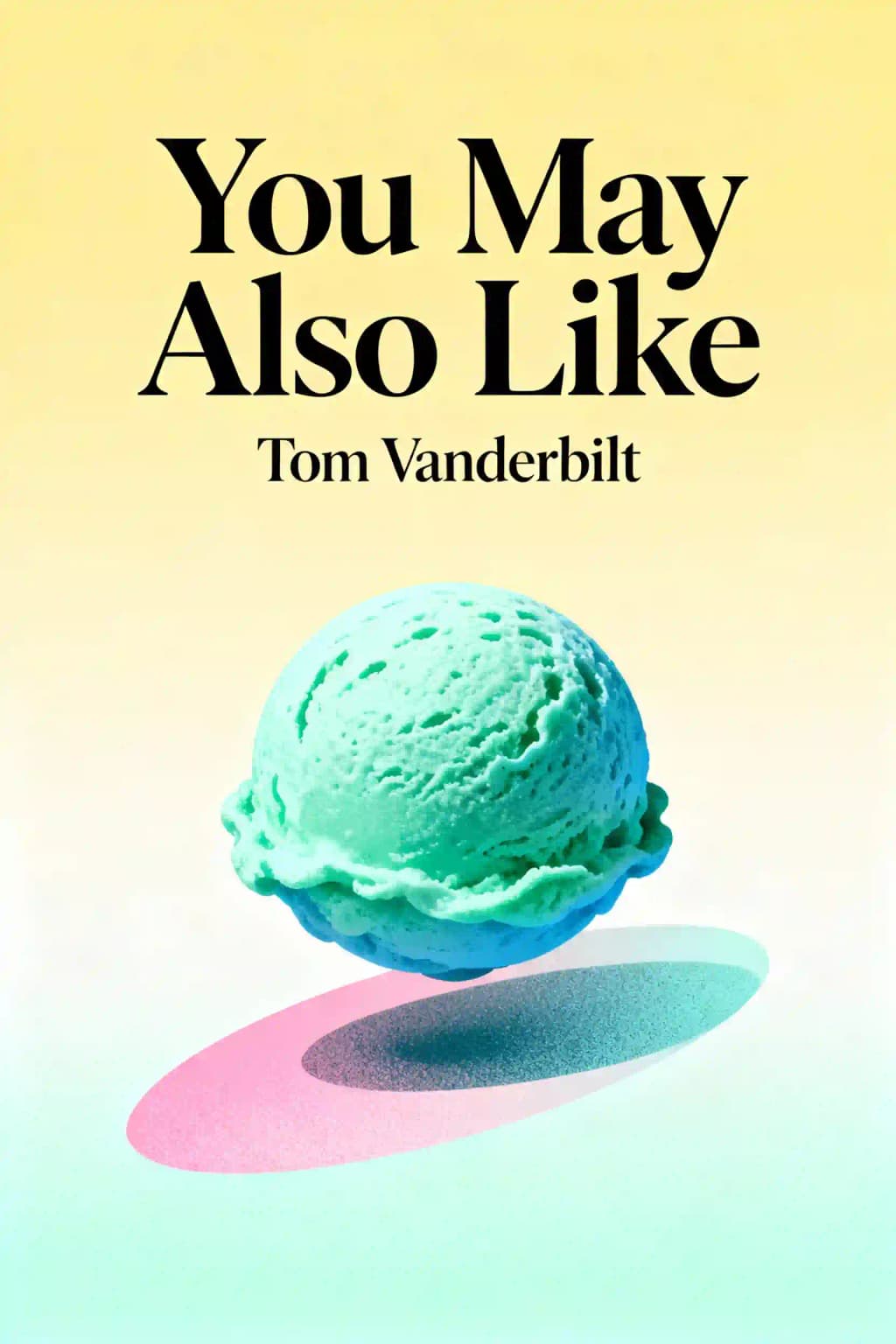
Perhaps the most profound insight from Vanderbilt's exploration is that taste isn't a fixed quality residing within us, but an ongoing negotiation between our biology, psychology, social context, and cultural environment. When someone asks what your favorite beer is, perhaps the wisest answer is the one given by beer judge Brad Kraus: "I don't have a favorite beer. I usually say it's the one in my hand." In that simple statement lies a profound truth - that our preferences exist not as abstract ideals but as lived experiences, constantly shifting with context and time, forever elusive yet endlessly fascinating.