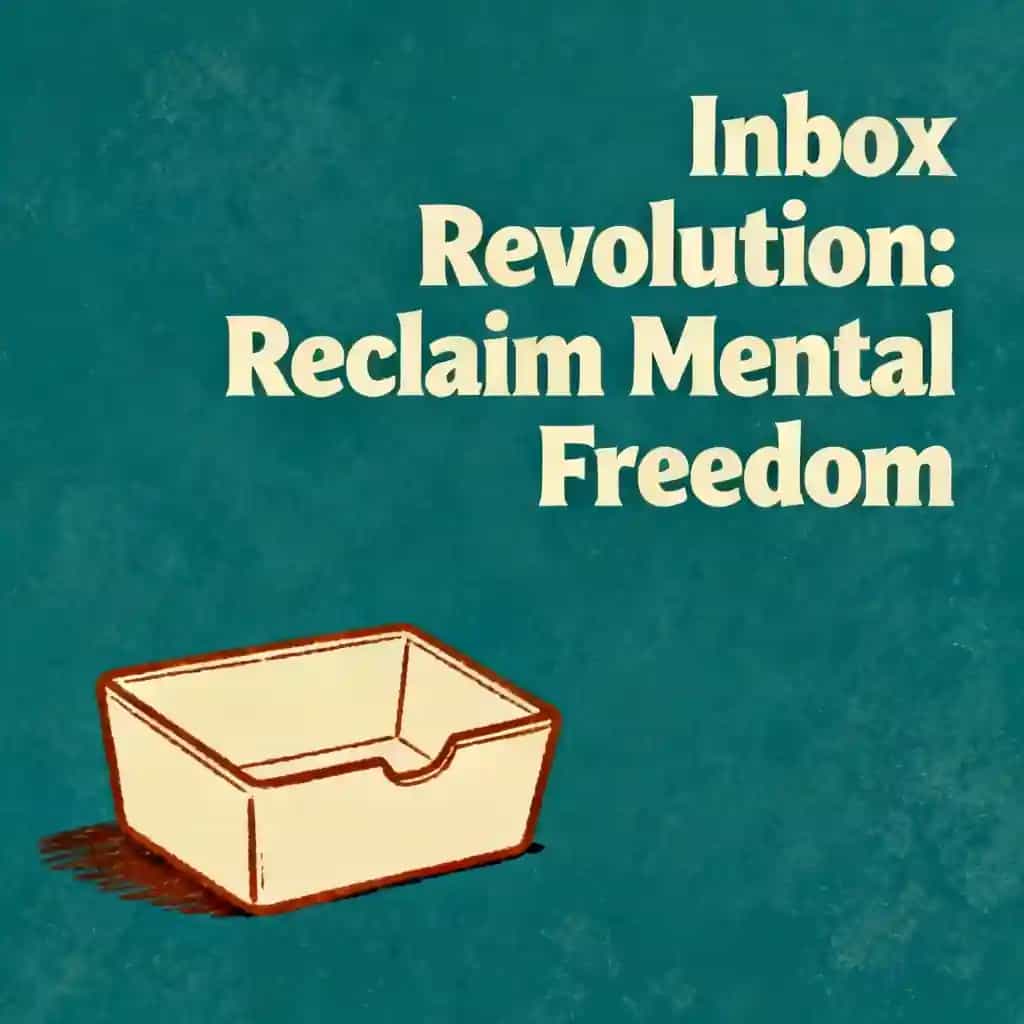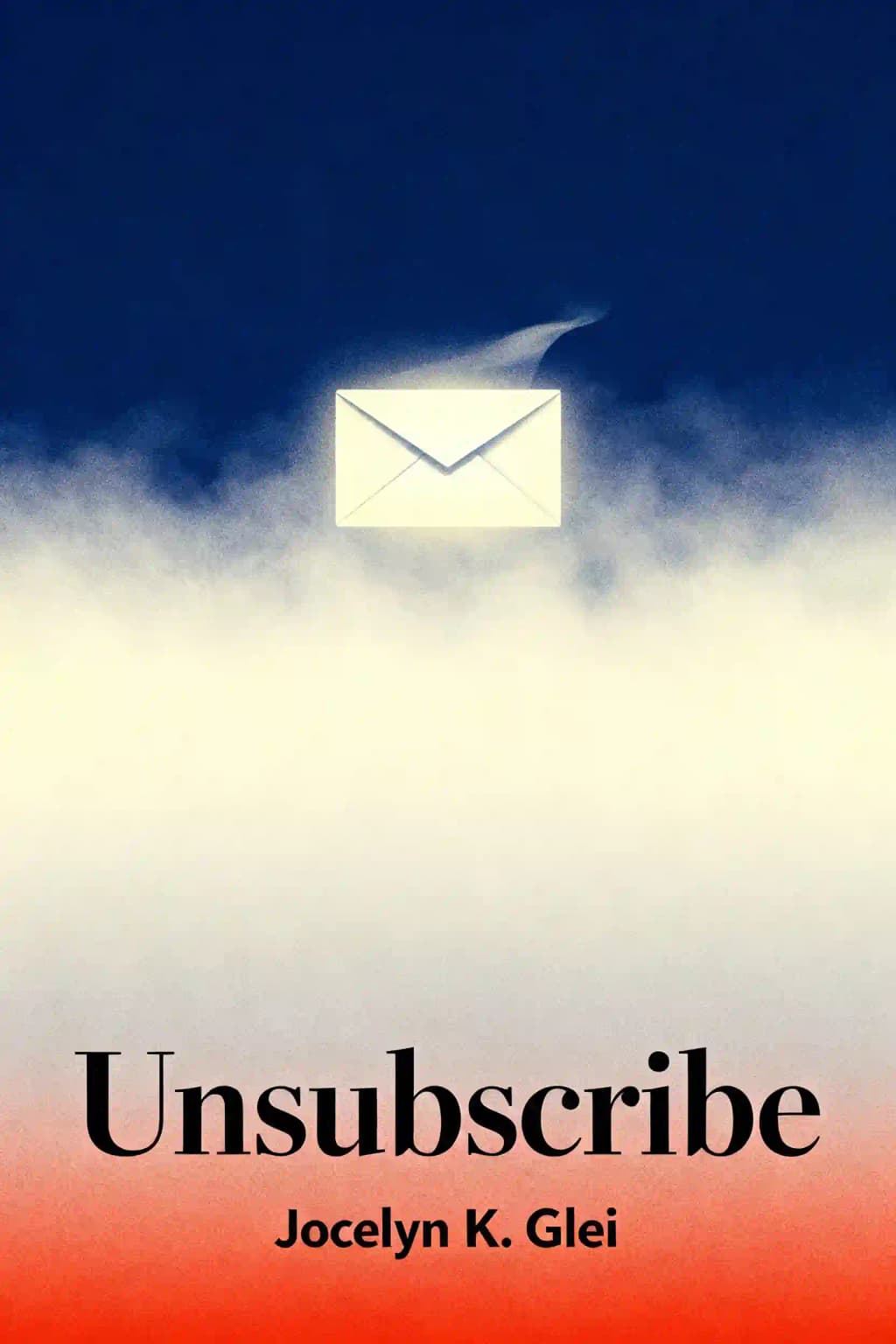
"Unsubscribe" reveals how checking email 74 times daily costs you 25 minutes per check and lowers IQ by 10 points. Jocelyn K. Glei's 2016 manifesto gives you back your most precious resource - time. Could your inbox be quietly sabotaging your success?
Jocelyn K. Glei, author of Unsubscribe: How to Kill Email Anxiety, Avoid Distractions, and Get Real Work Done, is a bestselling author and productivity expert renowned for redefining modern work habits.
A former editor-in-chief of the Webby Award-winning 99U platform, she spearheaded its acclaimed conference and book series—including Manage Your Day-to-Day and Make Your Mark—which distill insights from top creatives into actionable strategies. Her work bridges creativity and efficiency, informed by her own burnout recovery and two decades of editorial leadership at organizations like Behance and Flavorpill.
Glei hosts the Hurry Slowly podcast, downloaded over 2.9 million times, where she explores mindful productivity through interviews and essays. Her online courses, including RESET and Radiate, have guided thousands toward sustainable work practices.
Unsubscribe builds on her mission to dismantle toxic productivity culture, offering science-backed solutions to reclaim focus. The 99U book series has become mandatory reading for creatives and entrepreneurs worldwide, solidifying Glei’s status as a leading voice in work-life transformation.
Unsubscribe is a practical guide to overcoming email overload, reducing digital distractions, and reclaiming productivity. It combines psychology-backed insights on why email is addictive with actionable strategies for managing inboxes efficiently, crafting clearer messages, and prioritizing meaningful work. The book also includes email templates for common scenarios like giving feedback or setting boundaries.
This book is ideal for office workers, managers, or entrepreneurs struggling with email anxiety or time management. It’s particularly useful for those who spend 28%+ of their workday on email, seek work-life balance, or want to reduce stress caused by constant digital notifications.
Yes, Unsubscribe offers concise, research-backed solutions tailored to modern email challenges. Readers praise its actionable frameworks, like the “VIP Sideline” tactic for prioritizing critical messages and the “2-slot rule” for limiting email checks to twice daily. However, some note that pre-written scripts are available online.
The Progress Paradox describes how people favor quick, easy tasks (like clearing emails) over meaningful work to create a false sense of achievement. Glei argues this habit sabotages long-term productivity and recommends dedicating your first 60-90 minutes daily to high-impact projects instead.
Glei explains that recipients often misinterpret email tone as more negative than intended. For example, enthusiasm reads as neutral, and neutrality reads as criticism. To counter this, she advises using clear subject lines, emojis for warmth, and avoiding ambiguous phrasing.
This tactic involves creating a separate folder or label for messages from critical contacts (e.g., clients, bosses). By routing these emails outside your main inbox, you reduce noise and ensure urgent requests aren’t buried under less important threads.
Unlike broad productivity guides, Unsubscribe focuses specifically on email—a top workplace stressor. It blends behavioral science (e.g., why reciprocity drives email volume) with tactical fixes, distinguishing it from titles like Atomic Habits or Deep Work.
Glei is a productivity expert and former director of 99U, a platform for creative professionals. She’s authored/edited multiple bestselling books, including Manage Your Day-to-Day, and her work is informed by 15+ years of studying workplace efficiency and digital habits.
With remote work reliant on asynchronous communication, the book’s email templates and time-blocking strategies remain relevant. Its emphasis on reducing “zoom fatigue” from constant inbox checks aligns with 2025 trends toward mindful tech use and focus preservation.
Some readers argue that its email scripts lack originality, as similar templates circulate freely online. Others note the book’s corporate-centric examples may not resonate with solopreneurs or freelancers facing lighter email volumes.
Glei describes meaningful work as projects that:
She contrasts this with “busywork” like reactive emailing, which offers临时成就感 but no lasting value.
Key tools include:
Erlebe das Buch durch die Stimme des Autors
Verwandle Wissen in fesselnde, beispielreiche Erkenntnisse
Erfasse Schlüsselideen blitzschnell für effektives Lernen
Genieße das Buch auf unterhaltsame und ansprechende Weise
Our relationship with email is fundamentally irrational.
Email inherently downgrades positivity.
Email martyrdom only increases blood pressure, not productivity.
The more you send, the more you receive.
Zerlegen Sie die Kernideen von Unsubscribe in leicht verständliche Punkte, um zu verstehen, wie innovative Teams kreieren, zusammenarbeiten und wachsen.
Erleben Sie Unsubscribe durch lebhafte Erzählungen, die Innovationslektionen in unvergessliche und anwendbare Momente verwandeln.
Fragen Sie alles, wählen Sie Ihren Lernstil und gestalten Sie Erkenntnisse, die wirklich zu Ihnen passen.

Von Columbia University Alumni in San Francisco entwickelt
"Instead of endless scrolling, I just hit play on BeFreed. It saves me so much time."
"I never knew where to start with nonfiction—BeFreed’s book lists turned into podcasts gave me a clear path."
"Perfect balance between learning and entertainment. Finished ‘Thinking, Fast and Slow’ on my commute this week."
"Crazy how much I learned while walking the dog. BeFreed = small habits → big gains."
"Reading used to feel like a chore. Now it’s just part of my lifestyle."
"Feels effortless compared to reading. I’ve finished 6 books this month already."
"BeFreed turned my guilty doomscrolling into something that feels productive and inspiring."
"BeFreed turned my commute into learning time. 20-min podcasts are perfect for finishing books I never had time for."
"BeFreed replaced my podcast queue. Imagine Spotify for books — that’s it. 🙌"
"It is great for me to learn something from the book without reading it."
"The themed book list podcasts help me connect ideas across authors—like a guided audio journey."
"Makes me feel smarter every time before going to work"
Von Columbia University Alumni in San Francisco entwickelt

Erhalten Sie die Unsubscribe-Zusammenfassung als kostenloses PDF oder EPUB. Drucken Sie es aus oder lesen Sie es jederzeit offline.
Imagine checking your phone 74 times daily, spending nearly a third of your workday managing an endless stream of messages. This isn't hypothetical - it's the reality for the average office worker. What began as a productivity tool has morphed into a psychological trap that hijacks our attention and fractures our focus. But what if your inbox wasn't a source of stress but simply a tool that served your deeper purposes? What if you could break free from the compulsive checking that keeps you chained to constant connectivity? The path to email freedom isn't about abandonment - it's about putting this powerful tool in its proper place so you can focus on work that truly matters.
Email functions like a slot machine in our brains. While most messages are mundane or stressful, the occasional exciting message creates a variable reward schedule that drives compulsive checking behavior - similar to B.F. Skinner's rat experiments. Unlike meaningful work, email provides visible progress markers. Clearing our inbox triggers dopamine rewards, while creative projects often lack such clear milestones. This creates a "progress paradox" where technology highlights trivial achievements while obscuring substantial ones. Email exploits our innate sense of social obligation. The "rule of reciprocity" that evolved for human cooperation now compels us to respond to messages, even from strangers who invested minimal effort. The medium strips away crucial social feedback loops present in face-to-face communication. Without real-time cues like facial expressions and tone, messages suffer from "negativity bias" - positive intent often reads as neutral, while neutral intent can be perceived as negative. This explains why seemingly harmless messages can offend recipients. Those "unprofessional" emoticons and exclamation points actually serve as substitutes for the social cues we'd naturally convey in person.
The physics of email is simple: the more you send, the more you receive. Every response sets expectations - reply quickly consistently, and people will expect that speed always. Success requires clarity on your bigger goals first. "Meaningful work" falls into three categories: mission-based (your calling), project-based (completing specific goals), and skills-based (enhancing capabilities). Clear, measurable goals provide both an alternative to email's pull and a framework for prioritizing messages. Create a mental hierarchy of contacts: VIPs (requiring same-day responses) are those you depend on for love and livelihood. The next tier comprises key collaborators - colleagues, smaller clients, and close advisers - who typically need responses within 1-3 days. Remember: not everything is urgent. While senders believe their needs are pressing, they don't understand your workload or priorities. Without boundaries, you'll spend days fielding others' requests at the expense of strategic work. Start your day with 60-90 minutes of meaningful work before checking email. Become a "batcher" by checking email 2-3 times daily in scheduled blocks, rather than a constant "reactor." Research shows batchers are more productive and less stressed, avoiding the 25-minute concentration recovery cost of each email check.
Start by eliminating focus-draining default settings - disable notifications, remove preview panes, and batch process messages. Create an organized folder structure: "Reply Required" for urgent items, "Waiting For" for pending responses, "Reference" for important information, and "Archive" for completed items. Choose communication channels strategically - email works best for documentation and simple requests, not sensitive discussions or complex planning. Practice email triage by handling quick responses immediately, sending brief acknowledgments for items needing more time, and closing conversations clearly. Follow-ups demonstrate commitment rather than pushiness. Send them Tuesday through Thursday for optimal response rates, avoiding Monday mornings and Friday afternoons. Include clear subject lines referencing original threads, brief recaps, and specific calls to action. For managing increased visibility, evaluate unsolicited emails based on alignment with priorities, specificity of requests, and sender's respect for your time. Use template responses for common scenarios to maintain consistency while preserving time.
Writing an email today is like yelling across a busy intersection to someone rushing to an appointment. People exist in a state of partial attention, constantly switching between communication channels. Most emails get their first view on mobile phones through quick inbox scans, and the average professional receives over 120 emails daily. Though written alone, every email is a conversation requiring courtesy. Before writing, consider your audience: whether it's your boss, an important stranger, or an upset customer. Put yourself in their position: assess their time constraints, information needs, and what would make them comfortable. Everyone has an internal efficiency filter for evaluating emails against competing priorities. When attention is scarce, respect others' time through clear, actionable communication. Emails exceeding 200 words typically receive fewer responses. Lead with your request in the first two sentences. Establish credibility by explaining why they should care, and specify exactly what you want. Propose solutions rather than just asking questions. Make emails scannable with bullets and bold text. Include clear deadlines - busy people appreciate knowing timeframes for action items.
Email faces two key challenges: recipients' "busy bias" and tendency to interpret messages more negatively than intended. Since most emails request action, careful phrasing is crucial. Use conditional language ("Could you?") rather than imperatives ("do this") to respect autonomy. Frame requests by highlighting benefits and emphasizing what's in it for the recipient - whether it's quality improvement, progress, or appreciation. Provide context and show progress to tap into people's completion drive. Acknowledge their workload and explain why you've chosen them specifically. Don't be afraid to show enthusiasm - email's negativity bias means warmth and positivity help convey tone. Use exclamation points judiciously, as terseness is a privilege of position. Always express gratitude - research shows it increases future cooperation. Before sending, consider if email is the right medium. While ideal for scheduling, updates, and initial contacts, avoid using email for debates, feedback, complex discussions, or group decision-making.
Email exemplifies our broader relationship with technology. With professionals receiving 120+ emails daily across multiple devices, this constant interruption fragments our attention - taking 23 minutes on average to regain focus after each disruption. These addictive patterns extend beyond email. Social media, messaging, and chat programs all function as random reward systems, creating dopamine loops that drive compulsive checking behavior. Digital communication has eliminated natural constraints on information flow, making success increasingly dependent on maintaining focus amid endless distractions. As written communication replaces face-to-face interaction, strong writing skills have become crucial for commanding attention. More importantly, email mastery represents a gateway to protecting our capacity for meaningful work. Research shows that deep work requires 15-30 minutes of sustained focus to achieve flow state. Consider how your life might change if you spent your best hours on meaningful work rather than managing messages. The path to digital freedom starts with intentional attention management. Your inbox will always be full, but your life doesn't have to be. Choose to master your tools rather than serve them, and watch your productivity - and peace of mind - transform.