Audie Murphy's raw WWII memoir transforms from poverty-stricken orphan to America's most decorated soldier. What makes a hero deliberately omit his own medals? This bestseller sparked early PTSD discussions, becoming both literary benchmark and Hollywood blockbuster - combat's brutal truth through humble eyes.
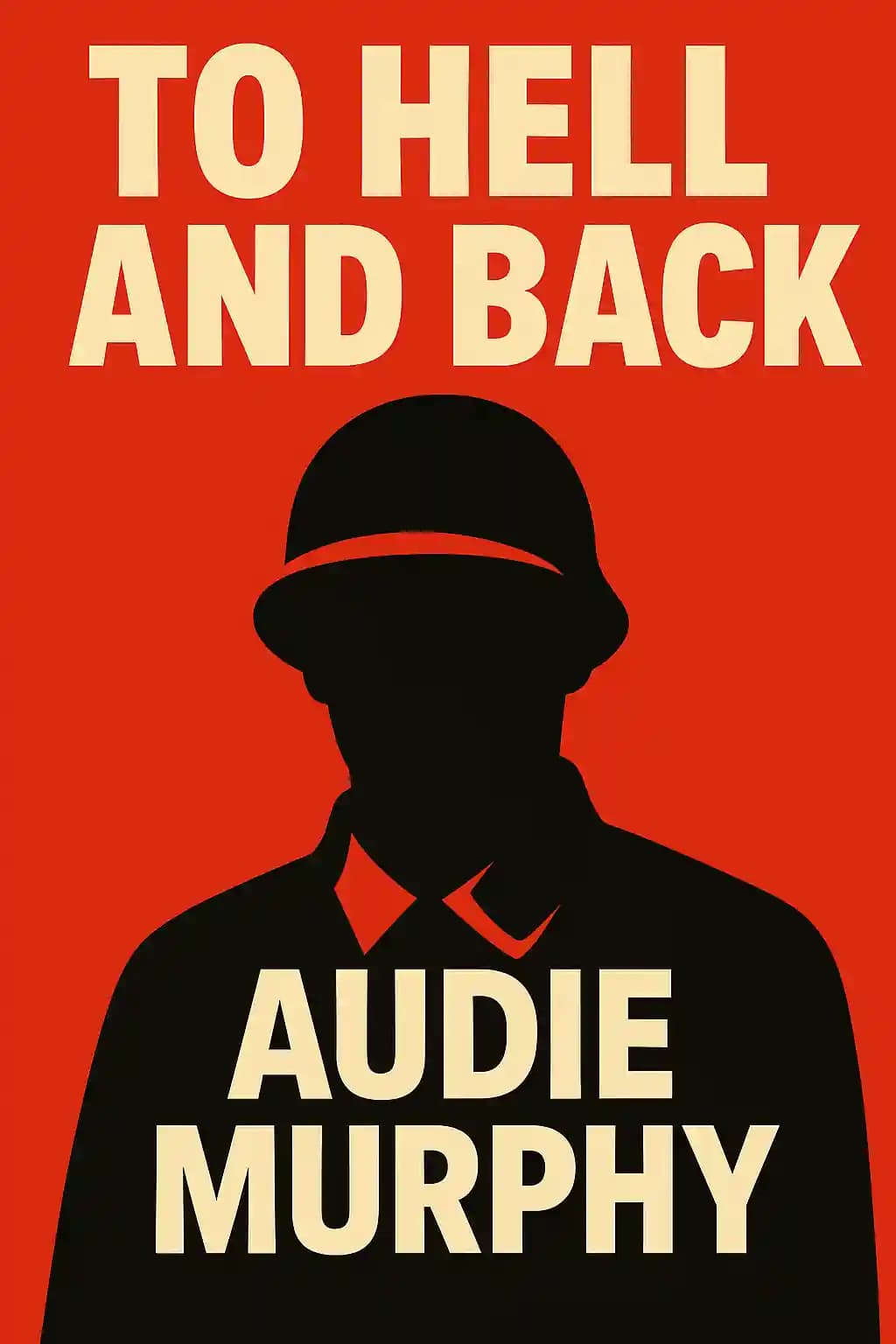
Audie Murphy (1925–1971) was the most decorated American combat soldier of World War II and the author of the bestselling memoir To Hell and Back.
This autobiographical work details his combat experiences and psychological trauma, drawing directly from his Medal of Honor actions at the Colmar Pocket and service across nine campaigns.
Murphy’s firsthand account provides unparalleled insight into infantry warfare and PTSD, themes amplified by his post-military Hollywood career where he starred in over 40 films—including the acclaimed adaptation of his own book. His expertise in combat leadership and veteran advocacy, including congressional testimony for PTSD treatment, anchors the memoir’s authenticity.
To Hell and Back has sold millions of copies and was adapted into Universal Pictures’ highest-grossing film of 1955.
"To Hell and Back" is Audie Murphy's autobiography detailing his journey from impoverished Texas childhood to becoming World War II's most decorated U.S. soldier. The book vividly chronicles frontline combat experiences across Europe, his acts of valor (including Medal of Honor heroics), and the psychological toll of war. Through raw, unflinching prose, Murphy exposes war's brutality while reflecting on resilience, loss, and the struggle to reintegrate into civilian life.
This memoir is essential for WWII historians, military enthusiasts, and readers seeking firsthand accounts of combat psychology. Its themes of trauma and resilience resonate with those studying veterans' experiences, while Murphy's accessible narrative appeals to anyone interested in human stories behind historical events. Critics note it offers no "feel-good" resolution, making it suited for mature audiences prepared for graphic wartime realities.
Key themes include:
Murphy received the Medal of Honor for single-handedly holding off a German company at Colmar Pocket (January 1945). Wounded and alone, he mounted a burning tank destroyer—risking explosion—to man its .50-caliber machine gun. For an hour, he repelled 250 infantry and six tanks, killing dozens before leading a counterattack. This action saved his company from encirclement.
Critics highlight:
Murphy’s narrative emphasizes combat fatigue’s pervasiveness: soldiers lose track of time, endure "doomlike" despair, and develop morbid resignation. His own postwar struggles—gambling debts, violent outbursts, and insomnia—illustrate war’s lingering trauma. The memoir suggests such psychological wounds often outweighed physical injuries for veterans.
Its unvarnished depiction of warfare’s human cost remains vital for understanding veteran experiences and the futility of conflict. Modern readers connect its themes to contemporary issues like PTSD management and moral injury. The book’s exploration of leadership under extreme pressure also offers timeless insights for military training and crisis response.
Leadership emerges through reluctant duty: Murphy commands his platoon with minimal enthusiasm, focusing on practical survival. Key moments—like forcing a resentful soldier to bury dead cows—showcase discipline over inspiration. He highlights distrust toward replacements and the burden of responsibility when comrades die under one’s command.
Murphy employs crisp, somber prose with minimal embellishment. His detached narration—avoiding sentimentality—amplifies war’s horrors. Dialogue-heavy scenes use soldiers’ dark humor as a coping mechanism. The style’s effectiveness lies in its stark authenticity, immersing readers in the infantryman’s perspective.
Unlike strategic analyses (e.g., Eisenhower), Murphy’s ground-level focus parallels Eugene Sledge’s "With the Old Breed" in visceral intensity. Its unheroic tone contrasts with romanticized war narratives, while the author’s celebrity status (as a postwar actor) adds cultural dimension absent in peers’ works.
The memoir details:
Erlebe das Buch durch die Stimme des Autors
Verwandle Wissen in fesselnde, beispielreiche Erkenntnisse
Erfasse Schlüsselideen blitzschnell für effektives Lernen
Genieße das Buch auf unterhaltsame und ansprechende Weise
We left regulations in the rear. They were too goddamned heavy to carry.
hell is six feet deep.
I got to look after him.
Zerlegen Sie die Kernideen von The coldest winter in leicht verständliche Punkte, um zu verstehen, wie innovative Teams kreieren, zusammenarbeiten und wachsen.
Destillieren Sie The coldest winter in schnelle Gedächtnisstützen, die die Schlüsselprinzipien von Offenheit, Teamarbeit und kreativer Resilienz hervorheben.

Erleben Sie The coldest winter durch lebhafte Erzählungen, die Innovationslektionen in unvergessliche und anwendbare Momente verwandeln.
Fragen Sie alles, wählen Sie die Stimme und erschaffen Sie gemeinsam Erkenntnisse, die wirklich bei Ihnen ankommen.

Von Columbia University Alumni in San Francisco entwickelt
"Instead of endless scrolling, I just hit play on BeFreed. It saves me so much time."
"I never knew where to start with nonfiction—BeFreed’s book lists turned into podcasts gave me a clear path."
"Perfect balance between learning and entertainment. Finished ‘Thinking, Fast and Slow’ on my commute this week."
"Crazy how much I learned while walking the dog. BeFreed = small habits → big gains."
"Reading used to feel like a chore. Now it’s just part of my lifestyle."
"Feels effortless compared to reading. I’ve finished 6 books this month already."
"BeFreed turned my guilty doomscrolling into something that feels productive and inspiring."
"BeFreed turned my commute into learning time. 20-min podcasts are perfect for finishing books I never had time for."
"BeFreed replaced my podcast queue. Imagine Spotify for books — that’s it. 🙌"
"It is great for me to learn something from the book without reading it."
"The themed book list podcasts help me connect ideas across authors—like a guided audio journey."
"Makes me feel smarter every time before going to work"
Von Columbia University Alumni in San Francisco entwickelt

Erhalten Sie die The coldest winter-Zusammenfassung als kostenloses PDF oder EPUB. Drucken Sie es aus oder lesen Sie es jederzeit offline.
In the frozen foxholes of Europe, a malaria-stricken farmboy from Texas faced a choice that would define him: return to combat or be branded a coward. This was Audie Murphy's reality-America's most decorated World War II soldier whose unflinching memoir captured the brutal essence of combat with such raw honesty that Ernest Hemingway called it "one of the finest American war memoirs ever written." Why does Murphy's story continue to resonate decades later? Perhaps because it represents the quintessential American narrative-a poverty-stricken youth who became an unlikely hero through extraordinary courage. His experiences speak so powerfully to the military experience that copies of his memoir are still distributed to soldiers in combat zones today, a testament to its enduring lessons about resilience under unimaginable pressure.