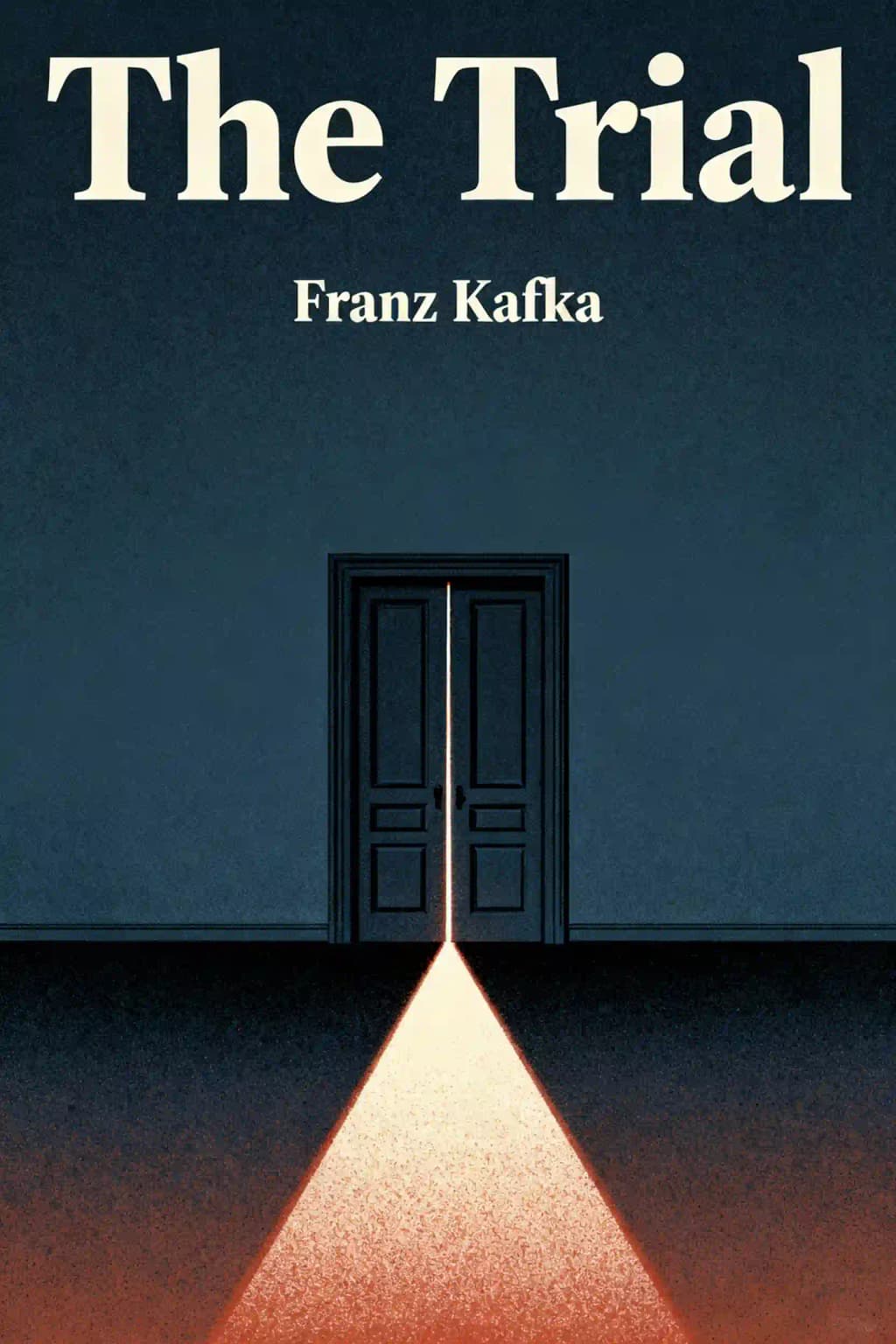
In Kafka's posthumous masterpiece, an ordinary man faces trial without knowing his crime. This nightmarish bureaucratic labyrinth influenced existentialist giants like Camus and Sartre, eerily predicting totalitarian regimes. Which is more terrifying - the system's power or your inability to understand it?
Franz Kafka (1883–1924), the visionary modernist author of The Trial, revolutionized existential fiction with his haunting explorations of bureaucracy, alienation, and absurdity.
A German-speaking Jewish writer from Prague, Kafka drew from his career as an insurance lawyer to craft the novel’s nightmarish portrayal of an opaque legal system, blending his firsthand understanding of institutional mechanics with psychological depth. His seminal works—including The Metamorphosis and The Castle—similarly dissect themes of powerlessness and identity through Kafkaesque scenarios that merge the mundane with the surreal.
Despite publishing little during his lifetime, Kafka’s posthumously released novels and short stories, preserved against his wishes by friend Max Brod, became cornerstones of 20th-century literature. The Trial has been translated into over 30 languages and adapted into multiple films, cementing its status as a defining work of literary modernism.
The Trial follows Josef K., a bank clerk arrested by a mysterious authority for an unspecified crime. As he navigates a labyrinthine legal system filled with opaque protocols and absurd bureaucrats, his futile attempts to defend himself reveal themes of existential dread, institutional corruption, and the illusion of justice. The novel ends with his execution, symbolizing the individual’s powerlessness against irrational authority.
Fans of existential literature, absurdist fiction, or critiques of bureaucratic systems will find The Trial compelling. It’s ideal for readers interested in philosophical explorations of guilt, alienation, and the human condition. Kafka’s surreal narrative style appeals to those who appreciate ambiguous, thought-provoking storytelling.
Yes—The Trial is a cornerstone of 20th-century literature, offering a haunting critique of dehumanizing institutions. Its exploration of existential anxiety and unchecked authority remains eerily relevant in modern societies. While challenging, its symbolic depth and unsettling atmosphere make it a landmark work in modernist fiction.
Key themes include:
Josef K.’s execution—“Like a dog!”—underscores his dehumanization and the system’s merciless efficiency. The grotesque finale reflects Kafka’s view of life’s inherent absurdity and the impossibility of resisting faceless power structures. His shame in death mirrors the internalized guilt manipulated by the court.
The novel portrays bureaucracy as a self-serving, omnipotent entity that thrives on confusion and fear. Officials like the corrupt lawyer Huld and the elusive judges symbolize systemic inefficiency and moral decay, trapping individuals in endless, meaningless procedures.
Told by the prison chaplain, this allegory reveals the Law’s elitism and unattainability. The doorkeeper’s refusal to admit the man—despite a lifetime of waiting—mirrors Josef K.’s futile quest for clarity, illustrating how authority manipulates hope and perpetuates submission.
Josef K. is never formally charged, yet he internalizes societal and self-imposed guilt. His paranoia and compliance reflect Kafka’s view of guilt as a tool of control, where the accused collaborates in their own oppression.
Women like Leni (the lawyer’s lover) and the washerwoman symbolize fleeting distractions or manipulative forces. Their interactions with Josef K. highlight his desperation and the court’s exploitation of human vulnerability.
Kafka blends realism with surrealism, using sparse, clinical prose to amplify the story’s nightmarish quality. His ambiguous settings and unresolved plots create a claustrophobic atmosphere that mirrors modern existential anxiety.
Some argue the narrative’s deliberate vagueness frustrates resolution, while others view its bleakness as overly pessimistic. However, these elements are intentional, reinforcing themes of existential uncertainty and institutional absurdity.
Like The Metamorphosis and The Castle, The Trial examines alienation and oppressive systems. However, its focus on legal absurdity and individual futility makes it uniquely prescient in critiquing modern governance.
Its depiction of opaque bureaucracies, surveillance, and eroded individual agency resonates in an era of digital tracking and centralized power. Josef K.’s helplessness mirrors contemporary anxieties about privacy and institutional overreach.
Erlebe das Buch durch die Stimme des Autors
Verwandle Wissen in fesselnde, beispielreiche Erkenntnisse
Erfasse Schlüsselideen blitzschnell für effektives Lernen
Genieße das Buch auf unterhaltsame und ansprechende Weise
Someone must have slandered Josef K., for one morning, without having done anything truly wrong, he was arrested.
‘You see,’ said the priest, ‘it is not necessary to accept everything as true, one must only accept it as necessary.’
The right perception of any matter and a misunderstanding of the same matter do not wholly exclude each other.
‘The verdict is not suddenly arrived at, the proceedings only gradually merge into the verdict.’
‘Logic may be unshakeable, but it cannot withstand a man who wants to live.’
Zerlegen Sie die Kernideen von The Trial in leicht verständliche Punkte, um zu verstehen, wie innovative Teams kreieren, zusammenarbeiten und wachsen.
Destillieren Sie The Trial in schnelle Gedächtnisstützen, die die Schlüsselprinzipien von Offenheit, Teamarbeit und kreativer Resilienz hervorheben.

Erleben Sie The Trial durch lebhafte Erzählungen, die Innovationslektionen in unvergessliche und anwendbare Momente verwandeln.
Fragen Sie alles, wählen Sie die Stimme und erschaffen Sie gemeinsam Erkenntnisse, die wirklich bei Ihnen ankommen.

Von Columbia University Alumni in San Francisco entwickelt
"Instead of endless scrolling, I just hit play on BeFreed. It saves me so much time."
"I never knew where to start with nonfiction—BeFreed’s book lists turned into podcasts gave me a clear path."
"Perfect balance between learning and entertainment. Finished ‘Thinking, Fast and Slow’ on my commute this week."
"Crazy how much I learned while walking the dog. BeFreed = small habits → big gains."
"Reading used to feel like a chore. Now it’s just part of my lifestyle."
"Feels effortless compared to reading. I’ve finished 6 books this month already."
"BeFreed turned my guilty doomscrolling into something that feels productive and inspiring."
"BeFreed turned my commute into learning time. 20-min podcasts are perfect for finishing books I never had time for."
"BeFreed replaced my podcast queue. Imagine Spotify for books — that’s it. 🙌"
"It is great for me to learn something from the book without reading it."
"The themed book list podcasts help me connect ideas across authors—like a guided audio journey."
"Makes me feel smarter every time before going to work"
Von Columbia University Alumni in San Francisco entwickelt

Erhalten Sie die The Trial-Zusammenfassung als kostenloses PDF oder EPUB. Drucken Sie es aus oder lesen Sie es jederzeit offline.
One morning, without warning, Joseph K. wakes to find strangers in his bedroom. Two men in ill-fitting clothes inform him he's under arrest-but refuse to say why. They help themselves to his breakfast, rifle through his belongings, and treat his private space like their office. An Inspector arrives, sits in K.'s favorite chair, and rearranges items on his nightstand with casual indifference, as if reorganizing someone's life were perfectly routine. When K. demands to know the charges, the Inspector offers only cryptic advice: "Think less about us and more about yourself." Then comes the truly absurd part-K. is under arrest, but he's free to go to work at the bank and continue his normal life. How can you be arrested yet free? This paradox launches K. into a nightmare where nothing makes sense, where his ordinary bedroom transforms into a courtroom, and where his identity shifts from respected professional to accused criminal-all while maintaining an air of mundane normality that makes everything more terrifying.