Kapitel 1
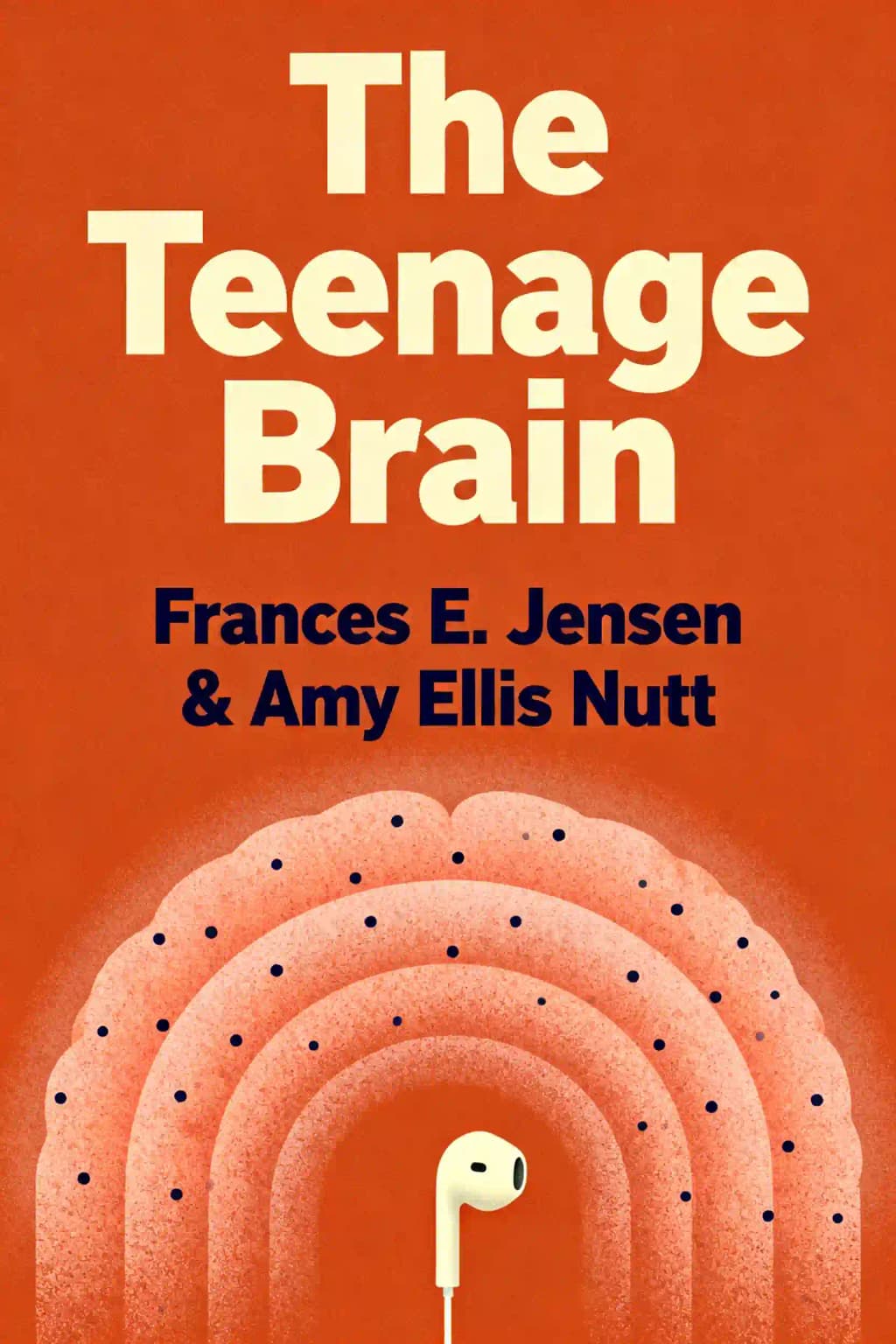
The Teenage Brain: A Neurological Rollercoaster Worth Understanding
Have you ever watched your teenager make a decision so baffling that you wondered if aliens had replaced your once-reasonable child? You're not alone. "The Teenage Brain" by Frances E. Jensen has become a revelation for confused parents worldwide, including celebrities like Reese Witherspoon who recommended it as essential reading for understanding adolescents. This groundbreaking work has transformed how we view teenage behavior, shifting the conversation from "What's wrong with them?" to "What's happening in their developing brains?" As both a neurologist and mother of two sons, Jensen brings unique dual perspectives that bridge the gap between scientific research and practical parenting. The book has influenced educational policy discussions about school start times and juvenile justice reform, making it not just a parenting guide but a catalyst for societal change in how we nurture our next generation through their most neurologically vulnerable and promising years.
Kapitel 2
Building a Brain: The Teenage Construction Zone
The teenage brain isn't simply an adult brain with less experience-it's fundamentally different in structure and function. Picture it as a brand-new Ferrari: powerful engine, sleek design, but without proper road testing or a fully functioning brake system. This paradoxical combination of power and underdevelopment creates the perfect storm of teenage behavior that both amazes and terrifies parents.
While impressive in its complexity-containing 100 billion neurons that could circle Earth four times if stretched end-to-end-the brain remains our most incomplete organ at birth. It develops from back to front, with the frontal lobes (housing executive functions like judgment, insight, and planning) maturing last. These frontal regions, representing 40% of human brain volume, are precisely the areas least developed in teenagers.
The brain's complexity comes not just from neurons themselves but from their connections. During critical developmental periods, the brain creates an astonishing two million synapses per second. This neural "overgrowth" gives teens exceptional learning abilities but can also cause cognitive confusion from too many signals. Imagine trying to drive through a city where new streets appear daily while old ones occasionally disappear-navigation becomes challenging even with tremendous potential for exploration.
Neurons communicate through electrical signals called action potentials that travel through dendrites to the cell body, then down axons to release neurotransmitters at synapses. These chemical messengers cross the tiny gap between neurons to trigger responses in receiving cells. Helper cells called glia support neurons: astrocytes nourish and clean, microglia fight infections and maintain synapses, and oligodendrocytes produce myelin that insulates axons for faster signal transmission.
This myelin-the white fatty coating around axons-dramatically increases transmission speed up to a hundredfold and allows for faster recovery between firings. While a baby's brainstem is nearly fully myelinated at birth to control vital functions, the cortex develops myelin gradually-sensory and motor regions first, followed by language areas, with complex frontal regions not fully myelinated until the mid-twenties. This explains why teenagers can look like adults but neurologically remain under construction.
Kapitel 3
Learning: The Teenage Brain's Superpower
Teenagers possess an extraordinary capacity for learning that exceeds both children and adults in many ways. Their brains exhibit heightened neuroplasticity-the ability to form new neural connections in response to experiences. This explains why skills acquired during adolescence, from languages to musical instruments, often become deeply ingrained for life.
The science behind this learning superpower is fascinating. Long-term potentiation (LTP)-the strengthening of synaptic connections through repeated activation-is significantly more robust in teens than adults. Studies on rat brain slices show adolescent synapses have a 1.5 times greater increase in strength after stimulation, and these changes last longer. This explains why memories formed during teen years are easier to make and more durable than those acquired as adults.
This enhanced learning ability isn't just theoretical. Consider how teenagers can master complex video games in hours while their parents struggle with basic controls, or how immigrant teens typically acquire new languages more rapidly than their parents. The teenage brain combines peak learning efficiency with underdeveloped attention, self-discipline, and emotional regulation-a powerful but sometimes chaotic combination.
Contrary to conventional wisdom, IQ isn't fixed during adolescence. Between ages 13-17, one-third of people significantly raise their IQ scores, with corresponding changes in brain structure. This period represents a prime opportunity to identify strengths, develop talents, and address learning difficulties.
Learning actually increases sleep needs-a crucial insight for understanding teenage behavior. Washington University researchers found that fruit flies raised in enriched social environments grew more neural branches and synapses, requiring 2-3 more hours of sleep than isolated flies. After sleep, these synapses returned to normal size-suggesting sleep helps the brain prune and prioritize connections, preserving only the most important information.
Parents can leverage this understanding by encouraging deep engagement with subjects that interest their teens, explaining that the more one learns, the easier learning becomes. However, they should also recognize limitations: limit instructions to one or two points at a time, encourage organization through calendars, set clear boundaries on digital activities, and explain rather than excuse behavior based on neuroscience.
Kapitel 4
Sleep: The Misunderstood Necessity for Teen Development
When your teenager sleeps until noon on weekends, they're not being lazy-their brain is following its biological programming. Teenage sleep patterns represent normal physiological changes rather than signs of rebellion. Sleep chronotypes shift throughout life-children are "larks" (early risers) while adolescents become "owls" (night owls), a pattern that eventually reverts to earlier rising in adulthood.
This shift occurs because melatonin, the sleep-inducing hormone, is released about two hours later in teen brains and remains in their system longer, making early mornings particularly difficult. When teenagers are forced to wake early for school but still can't fall asleep until late, they develop chronic sleep deprivation. Studies show teens naturally need 9-10 hours of sleep, but when forced into early school schedules, they lose about 2.75 hours daily. Only 15% of American teenagers get their required nine and a quarter hours of sleep, with most getting fewer than six and a half hours nightly.
The consequences of this sleep deficit are profound. Sleep dramatically enhances learning and memory formation. Studies show that students who sleep after learning retain information better than those who don't. In one experiment, learners who practiced skills before bedtime showed no decay in ability the next day, while those who practiced earlier showed regression. Sleep deprivation severely impairs long-term potentiation (LTP), with even one day without proper sleep diminishing the brain's learning capacity.
Memory consolidation occurs in two crucial sleep stages: slow-wave sleep and REM sleep. During puberty, deep slow-wave sleep decreases by up to 40%, while REM sleep later in the cycle helps solidify information through dreams. This explains why studying right before an exam is less effective than studying the night before and getting proper sleep-the brain needs sleep time to convert learning into memories.
Research confirms the relationship between sleep and academic performance. When Minneapolis and Edina, Minnesota schools moved start times just 70 minutes later (7:30 to 8:40 AM), students reported more sleep, better grades, and fewer depression episodes. Kentucky schools that delayed start times saw improved attendance, higher test scores, and fewer car crashes among students.
Beyond academics, sleep deprivation in teens has profound effects on health and behavior. Studies link poor teen sleep habits to depression, obesity, high blood pressure, cardiovascular disease, unhealthy eating, reduced physical activity, and increased screen time. Sleep-deprived teens show higher rates of property crimes and violence, with those sleeping under 5 hours showing significantly more violent behavior than peers sleeping 8-10 hours.
Parents can help by removing electronic devices from bedrooms, encouraging consistent pre-sleep routines with non-tech activities, suggesting making to-do lists to ease anxiety, and avoiding bedtime arguments. Remember the old adage: "Never let the sun set on an argument."
Kapitel 5
Risk-Taking: When Reward Trumps Reason
Why would a straight-A student with a bright future risk everything for a momentary thrill? The answer lies in the unique architecture of the teenage brain. Adolescence naturally involves risk-taking and rebellion as teens evolutionarily separate from parents to establish independence. While their reasoning abilities are fully developed by age fifteen, teens' underdeveloped frontal cortex impairs their ability to foresee consequences of risky actions.
Contrary to popular belief, teens aren't irrational-they simply experience greater reward sensations than adults due to enhanced dopamine release and response in their developing brains. University of Pittsburgh research showed that by age fifteen, sufficiently motivated teens can perform nearly as well as adults in inhibiting impulsive responses, but brain scans revealed teens must engage far more brain regions while adults efficiently use their frontal lobes.
Dartmouth College experiments demonstrated teens take about a sixth of a second longer than adults to identify dangerous activities as "bad ideas," relying on reasoning rather than adults' automatic visceral responses. Adults also learn better from mistakes thanks to their developed anterior cingulate cortex, which acts as a behavioral monitor-a capability still developing in teens.
The chief predictor of teen risk-taking isn't risk perception but reward anticipation despite known dangers. This is driven by heightened activity in the nucleus accumbens and ventral tegmental area (VTA)-the brain's pleasure centers responsible for dopamine release. While adults' fully myelinated frontal lobes can mute these reward circuits through impulse control, teens lack this regulatory capability.
This explains why teens might understand intellectually that texting while driving is dangerous yet do it anyway-the immediate reward of social connection outweighs the abstract possibility of an accident. Studies show that even when instructed not to, teens are more likely than adults to respond to reward stimuli like happy faces. Adolescents experience "greater intensity of positive feelings" during wins, with immediacy and emotion linked to risk-taking and inability to delay gratification.
This vulnerability extends to substance use. Addiction forms more readily in teen brains because neurons fire at much higher rates, making them "at the ready" to be co-opted for addictive behaviors. Research shows dopamine neurons in young mice fire more action potentials than those in adult mice when stimulated, explaining teens' heightened reward-seeking.
Parents can help by providing structure and supervision while acknowledging teens' need for independence. Encouraging team sports and positive social activities provides protective value against risk-taking behaviors. Most importantly, maintaining open communication allows parents to guide teens through this neurologically vulnerable period without alienating them.
Kapitel 6
Substance Use: A Special Danger for Developing Brains
Teenagers get addicted to every substance faster than adults and once addicted have much greater difficulty quitting-not just during adolescence but throughout their lives. Addiction essentially hard-wires itself into the developing brain, creating pathways that can persist for decades.
The processes of learning and addiction are remarkably similar in the teen brain: both arise from repeated exposure to stimuli that strengthen over time. With learning, the result is good memory; with addiction, it's increased craving for substances. This explains why adolescence represents a period of both tremendous potential and unique vulnerability.
Alcohol presents serious dangers for adolescents. Daily, 4,750 American youth take their first full drink, with 10.5 million teens reporting drinking in the past month and 7 million admitting to binge drinking. Adolescent brains handle alcohol differently than adult brains-they experience fewer sedative effects due to having fewer GABA receptors, leading to greater tolerance and continued drinking. Despite this tolerance for immediate effects, alcohol causes devastating long-term damage to teen brains.
Alcohol directly interferes with memory formation by blocking long-term potentiation (LTP) in the hippocampus. While normal brain tissue shows increased synaptic strength after stimulation, alcohol-treated tissue shows almost no response. This explains memory lapses during drinking-from minor "cocktail party memory deficits" to complete blackouts. Research shows alcohol impairs memory more severely in adolescents than adults, with teen brains recovering more slowly.
Marijuana, often perceived as harmless, poses significant risks for developing brains. With THC concentrations nearly 10% today compared to just 4% in 1985, modern marijuana is more potent than what parents may have experienced in their youth. Most critically for teens, THC disrupts neural pathway development in still-developing brains.
Early teen marijuana users face twice the addiction risk and make twice as many mistakes on tests involving planning and abstract thinking. Studies show white matter in the corpus callosum is thinner and less myelinated in chronic adolescent users. British research found cannabis doubles psychosis risk, with marijuana use in childhood potentially accelerating psychotic behavior onset by three years.
"Hard drugs" pose even greater dangers. Ecstasy (MDMA) damages white matter maturation and hippocampal development even at low doses. Adolescents process cocaine differently than adults, with the drug stimulating greater dopamine release in teen brains. Teen addiction develops rapidly-transitioning from experimentation to weekly use in under three months. Research reveals cocaine can permanently alter adolescent brain processing, making it more susceptible to addiction even in adulthood.
Parents should leverage teens' fear of losing parental trust, be honest about past use while emphasizing today's more potent substances, and consistently discuss the dangers rather than avoiding the topic. Addiction should be treated as a medical disease rather than mere delinquent behavior, requiring prompt intervention through resources like the National Institute on Drug Abuse.
Kapitel 7
The Digital World: New Frontiers in Teen Brain Development
The digital world presents unique challenges for teenage brains. From a neurobiological perspective, Internet addiction involves the same reward centers as drugs, making teenagers particularly susceptible as they navigate social challenges. When University of Maryland professor Susan Moeller asked students worldwide to abstain from all media for 24 hours, their responses revealed profound dependence. Students described feeling "paralyzed," "empty," and experiencing "panic mode" without their devices. Many compared their experience to drug withdrawal, using addiction terminology to describe their relationship with technology.
According to the Pew Research Center, 95 percent of young people use the Internet and 80 percent use social media. Teenagers demonstrate extreme attachment to smartphones, with some going to elaborate lengths to hide devices from school authorities-concealing phones in biscuit sandwiches or hair buns. Many teens report their "whole life" is in their phones, and two-thirds of users experience phantom-vibration syndrome. This attachment manifests in behaviors similar to addiction: concealment, lying, neglect of normal activities, and social isolation.
Internet addiction operates on both behavioral and biochemical levels. Each notification delivers an "Oh, wow" moment, releasing dopamine in the brain like a digital gift. Functional MRI studies show that Internet addiction alters brain connectivity patterns similar to cocaine and methamphetamine addiction, but remarkably without chemical substances-purely "mind over matter." These studies may reveal the purest addiction circuits yet identified.
Video gaming has alarming effects on adolescent brains, with studies showing compulsive gamers experience up to 20% shrinkage in brain regions controlling speech, memory and impulse inhibition. White matter abnormalities in memory centers impair decision-making abilities, including the critical ability to stop playing. Online gambling presents a "double whammy" addiction risk, combining technology and gambling behaviors. Studies show 70-80% of teenagers have tried online gambling, with addiction rates (8%) more than double those of adults (3%).
Despite teenagers' belief in their multitasking abilities, studies reveal it takes 25-400% longer to complete homework when multitasking. The emotional satisfaction teens derive from multitasking-feeling entertained while studying-masks its inefficiency. Chronic multitasking triggers stress hormones like cortisol and adrenaline, potentially leading to aggression, memory loss, and cardiovascular issues.
Digital behavior carries serious legal implications for teenagers. From drunk driving confessions on Facebook resulting in arrests to texting-while-driving laws with severe penalties, teens face adult consequences for digital missteps. More concerning is how social media amplifies teenage conflicts-a single Instagram photo with a derogatory caption can escalate to physical confrontations organized through Twitter, resulting in arrests and academic consequences.
Parents should move computers from bedrooms to common areas, use monitoring software, and most importantly, communicate with teens about their online activities. Rather than punishing digital overuse, frame it as helping teens maintain balance and avoid isolation. Even tech executives recognize the need for digital boundaries-Stuart Crabb, a Facebook director, compared digital overload to "a frog in cold water" being slowly boiled to death.
Kapitel 8
Gender Differences: Two Paths Through Adolescence
Gender differences in teenage brain development create distinct cognitive and behavioral patterns between adolescent boys and girls. At a school symposium, language expert Maryanne Wolf demonstrated the stark difference in verbal fluency between teenage boys and girls. When asked to name words beginning with specific letters in one minute, thirteen-year-old girls consistently outperform boys by a significant margin-naming twice as many words.
This disparity stems from developmental differences in how language processing areas in the parietotemporal region connect with decision-making centers in the frontal lobe. Girls are typically 1-1.5 years ahead in language development, particularly reading and writing. These differences aren't merely developmental speed variations but reflect genuine anatomical and physiological distinctions between male and female adolescent brains.
While male brains average 6-10% larger than female brains (with differences up to 50% during childhood growth spurts), females show greater connectivity between hemispheres. These anatomical differences begin in fetal development through hormonal influences, particularly in the hypothalamus. Sandra Witelson's research on over 120 normal brains reveals subtle but consistent gender differences-adolescent girls have corpus callosa approximately 25% larger than boys, enhancing cross-hemisphere communication.
Girls gain developmental advantages through earlier maturation of key brain structures. The amygdala (emotion center) develops about 18 months sooner in girls, while the hippocampus shows gender-specific structural differences-asymmetrical in males but symmetrical in females. These limbic system differences help explain why teenage girls often communicate emotions more readily than boys, who struggle to articulate feelings about social rejection or disappointments.
Organizational skills also develop earlier in girls, creating significant academic advantages in today's complex educational environment where planning, attention management, and organizational abilities significantly impact academic performance. The developmental gap between teenage boys and girls creates educational challenges. Girls now outperform boys academically, with higher SAT scores and greater likelihood to complete high school and pursue higher education.
Despite this progress, gender stereotypes persist, though science increasingly refutes them. While 74% of middle school girls express interest in STEM subjects, only 0.3% choose computer science as a college major. Research shows girls who believe boys are better at math avoid harder courses, creating a self-fulfilling prophecy. Recent studies found no gender difference in math performance through high school, suggesting educational equity is improving.
Parents and educators should recognize these differences without reinforcing stereotypes. Understanding the neurological basis for gender differences can help create supportive environments that allow both boys and girls to develop at their own pace while challenging them appropriately.
Kapitel 9
Beyond Adolescence: The Continuing Journey of Brain Development
Young adulthood remains a critical developmental period with significant brain plasticity. College graduates working in professional environments undergo transformations in accountability, communication skills, and confidence. Organizational abilities, judgment, and abstract thinking improve as frontal lobes become more accessible. Many countries recognize this developmental stage through gap years or national service programs, which provide valuable maturation experiences before higher education.
Young adulthood as a distinct developmental stage has evolved from Erik Erikson's mid-20th century theories through Kenneth Keniston's 1970 research identifying a person's twenties as a unique "youth" stage characterized by freedom, change, and ambivalence. Psychologist Jeffrey Jensen Arnett later expanded this concept as "emerging adulthood," describing a period of exploration, instability, and self-involvement shaped by cultural and economic changes. Today's twenty-somethings often face uncertainty about careers, relationships, and identity while taking longer to achieve traditional adult milestones.
The millennial generation displays higher rates of narcissistic personality disorder-three times that of those over 65, according to NIH research. This self-centeredness, exemplified by the popularity of "selfies" (Oxford's 2013 word of the year), may stem from parenting styles that overpraised children. Psychologist Roy Baumeister suggests parents "accidentally" instilled excessive self-confidence, creating narcissism and entitlement.
Despite growing up amid 9/11, wars, and recession, millennials remain earnest, pragmatic, and optimistic. Yet they face unique stressors, feeling overwhelmed by competing demands to follow passions, build careers, find love, and maintain wellbeing. Statistics reveal their instability: a third move yearly, 40% return to parents after college, they average seven job changes before thirty, and 60% feel simultaneously grown-up yet not quite adult.
Parents must strike a delicate balance: providing too little context leaves teens feeling lost, while providing too much creates unrealistic confidence that causes problems later in life. The most effective approach combines structure with gradually increasing independence, allowing young adults to develop decision-making skills while maintaining a safety net.
Understanding that brain development continues well into the twenties helps explain why many young adults still need guidance and support. The frontal lobes continue to develop and strengthen connections with emotional centers, improving impulse control and decision-making. This ongoing development offers hope that even challenging adolescent periods can lead to successful adulthood with proper support and understanding.
Teenagers aren't aliens but developing humans whose brains aren't yet in sync. Parents should approach teens with tolerance, explaining their neurological development when mistakes happen. Communication is vital-emphasize positives, encourage exploration, and be available for advice. Even texting can facilitate meaningful conversations. Use scientific information to avoid confrontational patterns, and provide explanations when criticizing behavior. Parents must invest more time than anticipated, determining whether academic or behavioral issues stem from independence assertions, peer pressure, substance abuse, or mental health concerns. Creating a calm environment, being aware of teens' cultural influences, and modeling positive behavior are essential. Ultimately, parents are their children's most important role models, teaching through their own approach to life's challenges.