Kapitel 1
Economics: From Firelight to Financial Crises
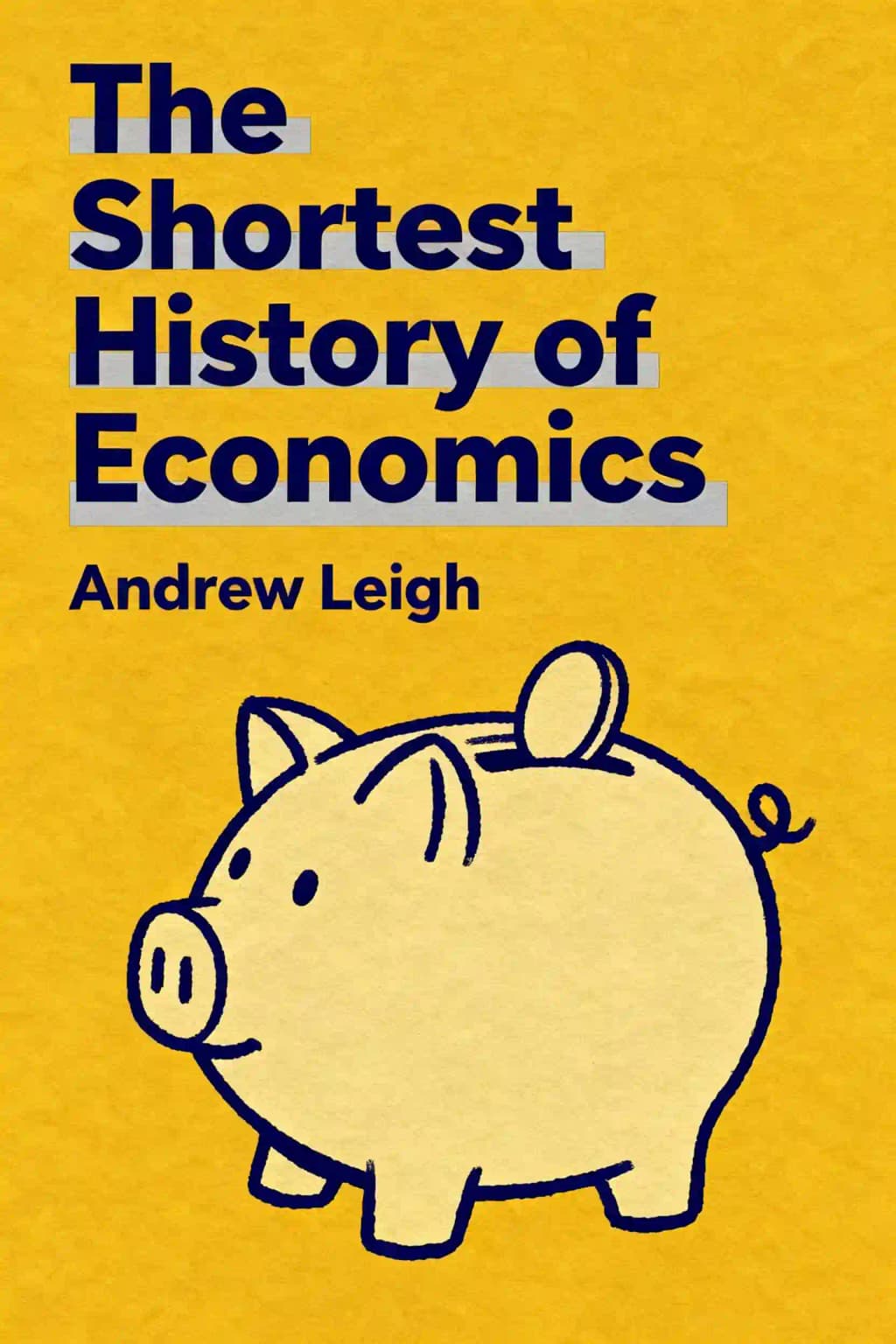
What if I told you that 300,000 years ago, our ancestors spent nearly 60 hours gathering wood to produce the same amount of light a modern bulb generates in just one second? This staggering fact opens Andrew Leigh's "The Shortest History of Economics," a book that Bill Gates called "the most accessible economic history I've ever read." Leigh, both a Harvard-educated economist and an Australian parliamentarian, crafts a narrative that traces humanity's economic evolution from prehistoric scarcity to modern abundance. The book has become required reading in economics departments worldwide and earned praise from Nobel laureate Daniel Kahneman for its "remarkable combination of breadth, depth, and clarity." Through vivid storytelling that connects ancient trade routes to modern AI challenges, Leigh demonstrates how economics isn't just about money-it's the story of human ingenuity transforming our relationship with scarcity across millennia.
Kapitel 2
From Hunter-Gatherers to Agricultural Revolutionaries
When modern humans evolved in southern Africa around 300,000 years ago, life was brutally harsh. With 40% infant mortality, a life expectancy of just 33 years, and violence claiming 15% of lives in nomadic societies, human existence was defined by constant struggle. The agricultural revolution transformed this precarious existence, creating the first great economic leap forward in human history.
At archaeological sites like Kalibangan in northwestern India, we find evidence of the oldest ploughed fields dating back to the Indus Valley civilization (3300-1300 BCE). This shift from hunting and gathering to settled agriculture allowed communities to build permanent homes, develop specialized tools, create recreational items like toys, and establish trade networks using wheeled carts and boats. Unlike other ancient civilizations that built monuments reflecting vast inequality, the Indus Valley civilization was relatively egalitarian, which partly explains why it remained undiscovered until the 1920s.
The plough revolutionized agriculture by harnessing animal energy to till soil. From Egyptian scratch ploughs to the Chinese turn plough developed during the Qin and Han dynasties (221 BCE-220 CE), this technology made farming five to six times more productive than foraging. Beyond efficiency, ploughs reshaped gender dynamics-while digging stick agriculture was relatively gender-equal, plough farming required upper body strength, making it male-dominated. This technological legacy persists today: countries with historical plough use show less gender equality than those without.
Geography played a decisive role in agricultural development. Eurasia possessed plants like barley, wheat and legumes that could be stored for months, while other regions had quickly-spoiling crops like bananas and yams. Similarly, Eurasia had domesticable animals like goats, sheep and cattle, while Africa's zebras and Australia's kangaroos proved difficult to tame. These initial geographic advantages ultimately enabled Eurasia to colonize other continents through agricultural surpluses that funded military expansion.
The agricultural revolution created unprecedented potential for specialization and prosperity. However, it also enabled exploitation-farming surpluses allowed rulers to enrich themselves, fund repressive armies, and maintain power through fear. Agriculture initially worsened human health-skeletal evidence shows average heights dropped by 10 centimeters after the transition to farming, as diets became less diverse and disease spread in crowded settlements. Despite these setbacks, agriculture ultimately enabled intellectual advancement through specialization, leading to breakthroughs in mathematics, astronomy, art, and even early welfare systems.
Kapitel 3
Trade Networks and the Power of Ideas
Water transportation revolutionized commerce, with rivers and oceans becoming more important than roads. China's 1600-kilometer Grand Canal, built during the Sui dynasty to collect grain taxes, spurred interprovincial trade and contributed to China's prosperity during the Tang dynasty. By 1000 CE, Chinese living standards exceeded England's. Coastal cities with deep-water ports like Lisbon, Alexandria, and Athens thrived in this maritime age, becoming financial centers where innovative risk-sharing arrangements emerged.
Throughout history, social status has been remarkably persistent. Under China's fengjian system, India's caste system, and European feudalism, a person's position was determined at birth. Modern societies value mobility, but its levels vary significantly-highest in Scandinavia, lowest in Latin America. This correlates with inequality: when the gap between rungs on the economic ladder widens, climbing becomes harder-a relationship called the "Great Gatsby Curve."
Economist Gregory Clark's research using rare surnames reveals astonishing dynastic persistence. The Pepys family has attended Oxford and Cambridge at twenty times the general rate over five centuries. Similar patterns appear with elite surnames in America, Japan, China, Chile, and Sweden, where high-status names from centuries ago remain overrepresented in prestigious professions today-evidence that social status can persist across ten generations.
Trade and migration were most valuable when they brought new ideas and replicable products. Reading glasses (invented in Italy around 1290) spread rapidly across Europe. Traders introduced maize to China in the 1300s, providing food sources in regions with insufficient rainfall for rice cultivation. The movable-type printing press (Germany, 1440) revolutionized knowledge dissemination-more books were produced in the following fifty years than in the previous millennium.
The bubonic plague originated in Central Asia and reached Europe in 1347 via Genoese traders. It killed around one-third of Europe's population and half of Cairo's. Economically, the plague dramatically shifted power balances-worker scarcity doubled real wages while land rents declined, effectively killing feudalism. Food prices changed too, with wheat becoming cheaper while labor-intensive goods grew more expensive. Farmers shifted to land-intensive agriculture like cattle farming, and workers began consuming more meat and beer as living standards rose.
Kapitel 4
The Age of Exploration and Global Exchange
Europe's relative prosperity funded steady improvements in maritime technology. Three-masted ships with sturdier hulls, better rudders and improved sails made longer voyages possible. Advances in navigation tools like compasses, maps and the sea astrolabe helped sailors determine latitude and follow faster routes. These improvements enabled major expeditions like Columbus's 1492 Atlantic crossing, da Gama's 1498 sea route to India, and Magellan's 1519 global circumnavigation attempt-all driven by economic motivations to find new products, markets and land.
The 1500s "Columbian exchange" brought corn, potatoes and chillies from the Americas to Europe, while oranges, sugar and pigs went to the Americas. Tragically, European diseases like smallpox and measles killed over four-fifths of some American populations. This era also saw the horrific trafficking of more than 12 million people across the Atlantic between 1501 and 1866, with Europeans enslaving around 10% of Africa's population in the 1700s.
From 1500 to 1800, tens of thousands of tons of silver were shipped to Spain from Mexico and Bolivia. However, this massive influx of precious metals ultimately harmed Spain's economy-equivalent to printing too much money, causing prices to rise while imports grew and exports shrank. Spain went from being one of the world's wealthiest nations in 1500 to a backwater two centuries later-an early example of the "resource curse" that still affects resource-rich nations today.
Italy's Medici family, among history's most successful philanthropists, sponsored artists like Da Vinci, Michelangelo and Raphael, helping bring about the Italian Renaissance. Originally textile traders from northern Tuscany, they formed the Medici Bank in 1397, which became Europe's largest bank. As bankers, they valued economic stability and focused on acquiring resources through trade rather than conquest.
Disease patterns shaped colonialism during the "Age of Discovery." In areas with high European settler mortality, like West Africa where half of settlers died within a year from malaria and tropical diseases, colonial powers took an extractive approach-removing wealth without investing in infrastructure. In contrast, territories with lower mortality rates like Canada, the US, and Australia saw colonial investment in railways and universities.
The Dutch East India Company, formed in 1602, may have been history's largest company. It functioned like a colonial power-maintaining armed forces, building forts, and concluding treaties with native rulers. As the world's first public company, it offered investors risk-pooling through shared ownership rather than staking everything on a single hazardous voyage. Both the Dutch and British East India Companies wielded monopoly power granted by their governments, allowing them to overcharge consumers while generating enormous profits that shaped world history.
Kapitel 5
The Industrial Revolution and Economic Thought
The industrial revolution's success depended on vital institutions. Britain's stable currency, independent courts, constrained monarchy and pro-entrepreneurship parliament created the perfect environment for risk-taking and investment. Modern economics emerged alongside these industrial innovations. On March 9, 1776, Adam Smith published "The Wealth of Nations" just one day after James Watt's first profitable steam engine entered the market. Smith demonstrated how specialization dramatically increased productivity through his famous pin factory example. He showed markets coordinate self-interest for social benefit, though he remained concerned about monopolies and business collusion.
Economic thinking of this era was rooted in philosophy, particularly Jeremy Bentham's utilitarianism-"the greatest happiness of the greatest number." William Stanley Jevons built on Bentham's work, introducing diminishing marginal utility-why we enjoy the first glass of water more than the fifth. This principle explains diverse preferences and justifies progressive taxation. John Stuart Mill shaped the notion of Homo economicus (rational utility-maximizing humans) and introduced opportunity cost-comparing choices against the next best alternative.
Not everyone embraced industrial innovation. In 1811, textile workers calling themselves Luddites threatened to smash mechanical knitting machines. Despite support from figures like Lord Byron, the British government mobilized more troops against them than against Napoleon, making machine-breaking a capital offense. While handloom weavers' wages did fall, the Luddites were wrong about technology causing mass unemployment-British jobs actually increased by over 10% between 1811-1821.
Britain's parish-based welfare system collapsed under industrialization's population growth and mobility. The 1834 Poor Law established impersonal workhouses based on the assumption that poverty stemmed from laziness. These institutions deliberately made conditions unpleasant with prison-like uniforms and gender separation. In Ireland, this inadequate system proved catastrophic during the 1840s potato famine, when approximately one million died and another million fled.
French economist Frederic Bastiat brilliantly exposed protectionist fallacies through satire. His mock petition from candlemakers requesting protection from unfair competition from the sun highlighted how blocking new technologies creates unseen costs. David Ricardo, a wealthy stockbroker-turned-parliamentarian, campaigned against grain import tariffs, introducing the principle of comparative advantage that explains why even unproductive nations benefit from trade. Though Ricardo died before the Corn Laws were scrapped, he played a vital role in putting Britain on the path toward free trade.
Kapitel 6
The Rise of Modern Capitalism
The 1840s "hungry forties" saw failed harvests push up British grain prices while growing urban industrialist power pressured rural aristocrats. Economics took center stage in English political debate, with The Economist founded in 1843 with help from the Anti-Corn Law League. When the Corn Laws were abolished in 1846, analysis showed the bottom 90% of Britons benefited while only the top 10% were left worse off.
While Britain embraced free trade domestically, it forced trade on others through violence. When China refused to allow British traders to import opium from India, British warships attacked in what scholars call "narco-imperialism," killing over 3,000 people. Similarly, the United States sent warships to Japan in 1853, demanding an end to trade restrictions. This invasion helped end Japan's seven-century shogun era, leading to the 1867 Meiji restoration which opened Japan to the world while emphasizing education and technology adoption.
Corporations proved fundamental to advancing the industrial revolution by allowing investors to pool risks across ventures. The 1855 Limited Liability Act in the United Kingdom protected shareholders from personal liability if companies collapsed, encouraging investment in risky ventures. However, corporations' massive bargaining power over individual workers led to the creation of trade unions. Initially illegal, unions gained public support after incidents like the 1834 transportation of the Tolpuddle Martyrs to Australia, whose sentences were overturned following public marches and an 800,000-signature petition.
The industrial revolution's benefits took surprisingly long to reach British workers. By the 1830s, half a century after industrialization began, real wages had barely grown and life expectancy remained between thirty-five and forty, similar to 1500s levels. City-dwellers lived about a decade less than rural residents due to poor sanitation and cramped conditions. Only in the 1840s did British wages begin rising alongside other development markers, with literacy rates increasing from half to three-quarters of the population between 1820 and 1870.
Industrialization brought industrial-scale warfare, exemplified by the American Civil War (1861-1865). Using mass-produced weapons, railroads, steamships and telegraphs, the war claimed over 600,000 combatants-one in five soldiers. The North's economic advantage proved decisive: 21 million people versus the South's 9 million, producing 90% of manufactured goods and 97% of firearms. While the North funded just 13% of war costs through inflation, the South funded 60%, printing so much money that by war's end, goods cost ninety-two times their pre-war prices.
Kapitel 7
The Birth of Modern Economics
At the turn of the twentieth century, Alfred Marshall became the world's most influential economist. His 1890 textbook "Principles of Economics" applied his mathematical talents to improving social wellbeing. Marshall's enduring contribution was his clear explanation of supply and demand as complementary forces-like scissors blades. On a graph with price and quantity axes, supply slopes upward (higher prices attract more sellers) while demand slopes downward (reflecting diminishing marginal utility). Where these lines intersect is the market equilibrium. This "Marshallian Cross" remains fundamental to economic analysis, as does his distinction between a company's fixed costs (land, buildings) and variable costs (labor, materials).
The automobile industry revolutionized manufacturing through specialization. In 1908, Ford executive Peter Martin proposed the assembly line concept after visiting Chicago slaughterhouses where carcasses moved between workers. This radical approach of moving cars toward parts rather than vice versa became standard practice in manufacturing worldwide.
Retail underwent dramatic transformation in the early 1900s. Harry Selfridge opened his revolutionary London department store in 1909, making shopping entertaining by letting customers handle merchandise, training specialized staff, and positioning perfume counters at entrances. He famously declared "the customer is always right." Meanwhile, Frank Woolworth pioneered the "five-and-dime" stores operating on the "pile 'em high and sell 'em cheap" principle. By 1912, Woolworth had 596 stores, using scale to negotiate lower supplier prices-a strategy inherited by modern retail giants like Walmart and Aldi.
The early 1900s saw unprecedented migration enabled by improved transportation. Steel-hulled, coal-powered ships reduced the Liverpool-to-New York journey from fifty-three days in the 1850s to just eight days by the 1910s. Passports were rarely required, allowing millions to relocate globally. Economists recognize migrants not merely as new consumers but as productive contributors who bring labor, skills and innovation to their new homes.
World War I shattered this interconnected world despite strong commercial ties between combatants. The Allied powers' eventual victory reflected their overwhelming economic advantage-five times the population, eleven times the territory, and three times the income of the Central powers. Meanwhile, Russia's 1917 communist revolution, promising "peace, land and bread," instead delivered civil war and economic collapse. Average incomes quickly halved, caloric intake plummeted in cities, and the prohibition on private land ownership would persist until 1990.
Kapitel 8
From Depression to Global Order
The economic devastation of World War I extended well beyond the armistice. Germany was burdened with reparations of 132 billion gold marks-approximately half the country's pre-war wealth. Unable to meet these impossible payments, the German government resorted to printing money, triggering hyperinflation so severe that by 1923, items costing 1 mark in 1918 required 1 trillion marks.
The "roaring twenties" boom ended abruptly in October 1929, despite economist Irving Fisher's claim that stock prices had reached a "permanently high plateau." The market crashed just days later, eventually falling 89% from its peak. Unemployment reached 25% in the US, with tent cities appearing in major parks worldwide. The Depression contributed to authoritarian nationalism in Latin America, with military juntas seizing power in Argentina and Brazil in 1930.
Two economists offered competing explanations for the Depression. John Maynard Keynes argued that economic downturns occurred because individual actions affected others unexpectedly-like thrifty bees whose collective saving collapses their colony. His solution: government spending on public works. Friedrich von Hayek countered that recessions were necessary corrections following imprudent borrowing encouraged by artificially low interest rates. Their personal lives reflected their economics-Keynes was cosmopolitan, optimistic and socially connected; Hayek austere and reserved with few close friends.
The Depression's length was exacerbated by protectionist policies. The 1930 Smoot-Hawley Tariff Act raised tariffs on over 20,000 imports despite 1,028 economists urging a veto. Other nations retaliated with their own tariffs. Immigration restrictions tightened globally-Australia imposed fees equivalent to a quarter of average annual wages, Thailand introduced literacy tests, and New Zealand closed its immigration department.
The Depression created conditions for progressive reform. Frances Perkins, appointed as the first female US cabinet member in 1933, helped design the Social Security Act of 1935. This program dramatically reduced elderly poverty by providing direct payments, often exceeding contributions. The first beneficiary, Ida Fuller, paid $25 in taxes but received $22,889 in benefits-over 200 times her contribution when adjusted for inflation.
World War II's outcome could have been predicted from economic fundamentals-the Allied powers possessed twice as many people, seven times more territory, and 40% higher combined income than the Axis. The economic damage exceeded that of WWI due to advances in killing technology, with three times as many lives lost. The post-war peace proved more enduring partly because nations learned from previous mistakes, with the Marshall Plan providing significant aid to Western Europe.
In 1944, representatives from forty-four Allied nations met at Bretton Woods, New Hampshire. This gathering established a framework to end economic isolationism. The resulting agreement created the World Bank to raise living standards in poor nations and the International Monetary Fund to help countries avoid financial crises. It partially restored the gold standard, with the dollar fixed at 1/35th of an ounce of gold and other currencies pegged to the dollar.
Kapitel 9
The Golden Age and Market Revolution
The post-war decades saw remarkable economic growth across advanced nations, with each country proudly naming their boom period-the French called it "les Trente Glorieuses," Italians "il boom economico," and Germans "das Wunder am Rhein." This era featured expanding welfare states, highly progressive taxation (the Beatles faced 95% tax rates), powerful labor unions, rising education levels, and widespread wealth distribution through home ownership. The period brought first-time car ownership to many Europeans, first freezers to Americans, and saw women entering the workforce in large numbers.
World War II dramatically expanded the welfare state as governments raised taxes, introduced rationing, and provided family payments. The 1942 Beveridge Report in the UK identified five social evils-squalor, ignorance, want, idleness and disease-proposing universal government insurance programs. This vision of cradle-to-grave social safety proved so powerful that British voters ousted Churchill in 1945, electing a Labour government committed to implementing it.
Labor unions became increasingly powerful in the post-war era, affecting nearly every aspect of working life through different models across countries. By the 1970s, one in three OECD employees were union members (compared to less than one in six today). Unions thrived particularly in manufacturing sectors, helping secure good wages that offered pathways to the middle class for workers with limited formal education.
The prosperity of the post-war period wasn't universal. Under Mao Zedong, China suffered economic devastation through collectivization, the Great Leap Forward's disastrous policies, and the Cultural Revolution's attack on intellectuals. While neighboring economies like Hong Kong, South Korea and Japan flourished, China stagnated. The stark differences between East and West Germany, and North and South Korea, demonstrated how communism suppressed both prosperity and human capabilities.
In 1978, eighteen villagers in Xiaogang, China signed a secret contract that could have cost them their lives but ultimately transformed China's economy. Having suffered terribly during the Great Leap Forward when over half the village population died, they knew agricultural output could improve with better incentives. Their dangerous agreement allowed each family private plots and retention of some output. The results were dramatic-farmers who previously worked only when signaled now began before sunrise, and that year's harvest exceeded the previous five years combined. Within a few years, their "secret" became China's pathway out of poverty, with practice outpacing legal changes.
As China increased market freedoms, the UK and US moved in similar directions under Margaret Thatcher (elected 1979) and Ronald Reagan (1980). Thatcher privatized utilities and sold over a million public housing units to tenants. Reagan slashed top tax rates from 70% to 28%, broke union power by firing 11,000 striking air traffic controllers, and deregulated industries. Both leaders were influenced by Milton Friedman, the libertarian University of Chicago economist who advocated smaller government.
Kapitel 10
Globalization and Its Discontents
The 1980s saw economic policymakers successfully reduce inflation after the hyperinflation disasters experienced in countries like post-WWII Hungary, Argentina, and Zimbabwe. Central banks gained independence from political control, ending the "political business cycle" where governments engineered pre-election booms followed by post-election busts. Starting with New Zealand in 1990, countries adopted explicit inflation targets around 2%-high enough to avoid deflation but low enough for price stability.
In 1991, facing a foreign exchange crisis with barely two weeks of reserves remaining, Indian Finance Minister Manmohan Singh introduced sweeping reforms that abolished most of the restrictive "licence raj" system. The rupee was devalued to benefit exporters, and industries opened to foreign investment. Like Britain's repeal of the Corn Laws and China's property reforms, India's changes dramatically accelerated economic growth, enabling companies like the Tata Group to expand globally.
From 1985 to 1995, trade volumes accelerated dramatically relative to global economic output-a period trade historians call "the decade in which the world changed." Countries opened markets due to foreign exchange shortages, World Bank and IMF persuasion, and democratization trends that opposed crony protectionism. The World Trade Organization finally formed in 1994, after the US Senate had rejected the original Bretton Woods proposal for an International Trade Organisation.
Asia's economic transformation followed an export-led growth model, beginning with the four "tiger" economies (Korea, Taiwan, Hong Kong and Singapore) from the 1960s-1980s. China secured most favored nation status with Western powers in the 1980s before joining the WTO in 2001. Five "tiger cub" economies-Indonesia, Malaysia, the Philippines, Thailand and Vietnam-followed similar paths, transforming from low to middle-income nations within two generations through export manufacturing, foreign investment, and education improvements.
Technological innovation has repeatedly disproven Malthusian predictions of mass starvation. Despite dire forecasts like the Ehrlichs' 1968 prediction that "hundreds of millions" would starve in the 1970s, India's population has doubled while improving nutrition and life expectancy. Agricultural innovations like barbed wire, tractors, the Haber-Bosch fertilizer process, and Norman Borlaug's high-yield wheat varieties have dramatically increased food production.
Despite technological progress and global market access, many nations remain trapped in middle-income status, with 719 million people still living in extreme poverty (under $2.15 daily), mostly in Sub-Saharan Africa. Inequality has risen in most countries, with the rich accelerating away from the rest. The "elephant curve" visualization shows global growth distribution since 1980: sluggish growth at the very bottom, rapid growth for emerging economies' middle classes, weak growth for advanced nations' middle classes, and spectacular growth for global elites.
Kapitel 11
Modern Challenges and Future Horizons
The early 2000s witnessed the dramatic rise and fall of the dot-com bubble, exemplified by pets.com, which ran a million-dollar Super Bowl ad and raised $82 million in its IPO in 2000, only to see its stock price crash from $11 to $0.19 per share by year's end due to an unsustainable business model. In 2002, psychologist Daniel Kahneman received the Nobel Prize in Economics for his groundbreaking work in behavioral economics, demonstrating systematic departures from the rational economic model.
In 2005, Nicholas Stern's landmark report on climate change economics concluded that global warming represented the world's largest market failure. Carbon pollution imposed massive social costs without emitters facing incentives to reduce emissions. Stern argued that unchecked climate change would cost at least 5% of global income annually forever (possibly up to 20%), while mitigation would cost only about 1% of global income.
By 2005, a housing boom was underway across advanced economies. The average price of a modest apartment in capital cities had risen from seven years of middle-income earnings in 1995 to ten years by 2005. Lending standards deteriorated with "NINJA loans" (no income, no job, no assets) being granted to unqualified borrowers on the assumption that rising prices would enable refinancing.
The 2008 financial crisis resulted from multiple factors-greedy bankers, incompetent credit rating agencies, gullible homeowners, and lax policymakers. When the market crashed, average US home values dropped by one-fifth, leaving one in ten mortgage holders underwater. Millions lost their homes while Goldman Sachs remained profitable, paying billions in bonuses including $9 million to CEO Lloyd Blankfein.
After the financial crisis, investors began questioning the expertise of money managers. The data is damning: 65% of actively managed US equity funds underperform the market in a typical year, rising to 92% underperformance over ten years. This validates the efficient market hypothesis-that stock prices already reflect all publicly available information, making consistent outperformance nearly impossible.
In early 2020, COVID plunged the world into the worst downturn since the Great Depression. Global income fell 5% in Q2 2020, with 400 million jobs lost worldwide. Governments provided over $10 trillion in support, increasing global government debt from ten months to a full year of worldwide income. Post-lockdown inflation surprised economists as pent-up spending combined with Russia's invasion of Ukraine driving energy prices higher.
The pandemic exposed vulnerabilities created by market concentration, as seen in the US infant formula crisis when Abbott's plant closure left 70% of supermarkets without stock. Tech giants particularly exemplify winner-takes-all dynamics, with MAMAA (Meta, Apple, Microsoft, Alphabet, Amazon) dominating Western markets and BATX (Baidu, Alibaba, Tencent, Xiaomi) controlling China's digital economy.
Kapitel 12
The Enduring Value of Economic Thinking
If we had newspapers that published every fifty years instead of daily, they would highlight remarkable long-term positive trends rather than sensationalist stories. The front page might announce global child mortality dropping from 14% to 4%, or services employment becoming the majority of jobs worldwide. Workers today earn more in a day than their 1900 counterparts earned in a week. Technology from the plough to the internet has revolutionized economies, while specialization and trade have generated unprecedented prosperity, lifting hundreds of millions in China from poverty.
Humanity has overcome feudalism, colonialism and slavery. Steven Pinker celebrates that smallpox-which killed 500 million people in its final century-can now be discussed in past tense. IQ scores have risen so dramatically that today's average person would outperform 98% of the population from a century ago. Murder rates in Europe are less than one-tenth what they were 500 years ago, and attitudes on gender, race and sexuality have become progressively more tolerant globally.
The rise in inequality isn't our only economic concern. George Akerlof's work on identity economics reminds us that people define themselves by what they produce, not just what they consume. When technology and trade eliminate factory jobs in advanced nations, cheaper televisions offer little consolation to the struggling middle class. Artificial intelligence represents the latest technological challenge. Like coal-powered steam engines and electricity before it, AI may ultimately transform society, boosting average incomes while eliminating many jobs.
Climate change represents another key vulnerability for humanity. Economists discuss "tail risk"-small chances of very bad outcomes-noting that global warming carries significant uncertainty about future carbon emissions and planetary reactions. When facing small chances of catastrophe in personal life, economic thinking suggests buying insurance. Similarly, humanity should invest modestly now in ethical AI and carbon reduction to avert potential disasters.
Nearly a century after the Great Depression, economists have failed to tame the boom-and-bust cycle-a significant disappointment for the profession. Yet markets themselves remain remarkable. During COVID, brief toilet paper shortages shocked people precisely because market abundance is so reliable we take it for granted. Economics offers practical advice for all aspects of life, from investment strategies to decision-making frameworks. By weighing costs and benefits, considering opportunity costs, thinking at the margin, and accounting for externalities, economics helps us live better lives in a world still defined by scarcity and opportunity.