Kapitel 4
The Unraveling: Bunny's Threat and Mounting Pressure
Bunny, excluded from the ritual due to his inability to take it seriously, discovers the truth when he finds the blood-soaked group returning to Henry's apartment. Though initially shocked, he accepts their hastily constructed lie about hitting a deer. However, weeks later, when a newspaper article appears about a "Mysterious Death in Battenkill County," Bunny connects the dots.
Rather than immediately reporting his friends, Bunny begins a campaign of psychological torture-making jokes about murder, pretending to call police tip lines, and leaving newspaper clippings where they'll find them. His behavior grows increasingly erratic and cruel, not just about the murder but in all aspects of his interaction with the group.
Bunny's transformation is particularly disturbing because it magnifies traits that were always present but previously seemed harmless. His casual bigotry, once dismissed as ignorant joking, reveals itself as genuine prejudice. He torments Francis about his sexuality, Charles about his drinking, and Richard about his humble background. With Camilla, he assumes a paternalistic stance, suggesting she's out of her intellectual depth simply because she's female.
The psychological pressure becomes unbearable as Bunny threatens to expose them while simultaneously expecting them to finance his extravagant lifestyle. Henry takes Bunny to Italy, hoping to placate him, but the situation deteriorates further when Bunny discovers Henry's diary containing references to the murder. Upon returning to Hampden, Bunny's behavior grows more unpredictable, alternating between rage and normalcy in ways that leave the group constantly on edge.
What makes this section of the novel so compelling is how it illustrates the way small cruelties can accumulate to justify terrible actions. As Richard reflects: "What was I thinking as I watched his eyes widen with startled incredulity for the last time? Not of saving my friends, not of fear or guilt-but of small things. Insults, innuendos, petty cruelties. The hundreds of small, unavenged humiliations that had accumulated for months."
Kapitel 5
The Perfect Crime: Planning and Execution
Henry, the group's natural leader, begins formulating plans to silence Bunny permanently. His first approach involves poisonous mushrooms-specifically Amanita phalloides, the death cap-which he researches extensively and even tests on a neighbor's dog. The plan is mathematically calculated around Bunny's predictable gluttony: he would inevitably eat more than anyone else at a meal, ensuring he would receive a lethal dose while the others might only become ill.
When this proves too complex, Henry shifts to a simpler solution. Knowing Bunny takes regular walks along a ravine, they decide to push him to his death, making it appear accidental. The cold calculation behind their planning is chilling-they choose a Sunday afternoon when the campus will be empty, position themselves along Bunny's route, and wait.
The murder itself happens with disturbing simplicity. When Bunny appears, Henry steps forward and pushes him over the edge. Richard describes the moment with detached precision: "Bunny fell quickly, arms windmilling, hand clawing at a branch and missing, as crows exploded from the underbrush." The actual killing takes mere seconds, with Bunny "traveling at more than thirty-two feet per second when he hit the rocks below."
What's most disturbing about this sequence is not the violence itself but the rational, methodical way these educated young people approach murder. They discuss alibis, weather conditions, and timing with the same analytical precision they might apply to a Greek translation. Their classical education, which emphasizes different moral values than contemporary society, has created a dangerous moral relativism. As Julian had taught them through Nietzsche: "A thing is neither good nor bad, except if one thinks it so."
The snowfall that night conceals Bunny's body for ten days, giving them time to establish their alibis and prepare their reactions. When the body is finally discovered, they have rehearsed their shock and grief to perfection.
Kapitel 6
The Aftermath: Grief Theater and Growing Paranoia
After Bunny's death, Hampden College erupts in what Richard calls "grief theater"-a bizarre display of public mourning by people who barely knew Bunny in life. The flag flies at half-mast, counselors are on call, and memorial services proliferate. Even the hippies, who had been at "perpetual war" with Bunny, perform rituals with mandalas and drums to mark his passing.
This performative grief creates a surreal backdrop against which the actual killers must play their parts. They attend vigils, speak at memorials, and comfort Bunny's family while carrying the weight of their guilt. The contrast between public displays of sorrow and their private knowledge creates an almost unbearable tension.
The investigation brings FBI agents to campus, though they quickly conclude Bunny's death was an accident. The evidence suggests he slipped and fell while walking along the ravine-exactly as the group had planned. But even as the official investigation winds down, the psychological investigation within each character intensifies.
The funeral scene at the Corcoran family home represents the emotional climax of this aftermath. Surrounded by Bunny's grieving family-his father swinging between joviality and breakdown, his mother coldly composed but brittle-the full weight of their crime finally descends. Richard observes Mr. Corcoran's tearful recollection of how Bunny and Henry became friends, unaware of the bitter irony that Henry was his son's murderer.
The most haunting moment comes at the graveside, when Henry-serving as pallbearer-picks up a handful of dirt, lets it trickle into the grave, and absently drags his hand across his chest, smearing mud on his immaculate clothes. This gesture horrifies the others, but Henry seems unaware he's done anything unusual-a sign of his growing detachment from normal human emotion.
Kapitel 7
The Disintegration: Individual and Collective Breakdown
In the weeks following the funeral, the group that once seemed inseparable begins to fracture along fault lines that grow deeper with each passing day. The shared secret that initially bound them together now drives them apart, as each member processes their guilt through increasingly destructive patterns. Their carefully constructed world of intellectual superiority and classical ideals crumbles, revealing the fragile humans beneath.
Charles's descent into alcoholism becomes particularly dramatic. He progresses from casual drinking to morning vodka, hiding bottles throughout his room and appearing increasingly disheveled in class. His hands shake during Greek translations, and he frequently misses seminars altogether. His transformation from a charming, witty student to a desperate alcoholic serves as perhaps the most visible symbol of their collective downfall.
Francis develops severe anxiety and hypochondria, convinced he's dying of various diseases - first heart problems, then brain tumors, then rare blood disorders. He makes weekly visits to different doctors, collecting prescriptions and diagnoses, unable to face that his real illness is psychological. His once-elegant apartment becomes a fortress of medical references and pill bottles, his conversations increasingly centered on symptoms and mortality.
Richard, always the outsider looking in, chooses chemical escape through an escalating addiction to pills. He begins with borrowed Demerol from Francis but graduates to whatever he can obtain, creating elaborate systems to track his dosages while his academic work suffers. His narrative voice becomes increasingly unreliable as his drug use intensifies, reflecting the group's loosening grip on reality.
Henry, despite his outward composure, shows signs of severe psychological strain through physical symptoms. His migraine headaches become so debilitating that he spends days in darkened rooms, speaking ancient Greek in his delirium. During these episodes, he experiences complex visual auras and loses his ability to communicate in English - a symbolic breakdown of the intellectual framework that once defined him. His normally precise handwriting becomes illegible, his letters to Richard filled with crossed-out passages and incomplete thoughts.
Camilla maintains a facade of normalcy, but her relationship with Charles deteriorates dramatically. Their twin bond, once so close it excluded others, breaks down as Charles's drinking makes him volatile and unpredictable. She begins staying with Henry more frequently, unable to watch her brother's dissolution, yet this only accelerates Charles's decline.
Julian, their beloved professor, notices subtle changes: empty seats in his seminars, declining quality of work, strange tensions during discussions of Greek tragedy. When he finally pieces together the truth about Bunny's death, his reaction is devastating - not just disappearing but formally resigning from the college. His departure represents the final collapse of their intellectual justification for murder, leaving them to face the consequences without the philosophical framework that once seemed to excuse their actions.
The novel masterfully portrays how a single act of violence creates expanding circles of destruction, consuming not just the victim but the perpetrators as well. Their classical education, which they once used to elevate themselves above conventional morality, becomes the lens through which they understand their own downfall - a modern Greek tragedy where intellectual hubris leads inevitably to complete psychological and social destruction.
Kapitel 8
The Final Tragedy: Henry's Choice and the Group's Dissolution
The mounting pressure eventually leads to a violent confrontation at the Hampton Inn, where Charles-drunk, paranoid, and increasingly unstable-grabs a gun and accidentally shoots Richard during a heated argument about their shared guilt. The bullet grazes Richard's abdomen, creating chaos in the small hotel room as blood spreads across his shirt. In the ensuing pandemonium, as the hotel manager pounds frantically on the door and threatens to call the police, Henry makes a decision that perfectly aligns with the classical logic and philosophy he has lived by throughout their time together.
Rather than face arrest or watch his carefully constructed world crumble as his friends destroy each other, Henry takes control of the situation in the most definitive way possible. With characteristic calm and deliberation, he puts the gun to his temple and pulls the trigger twice. The second shot proves necessary, a detail that adds a particularly gruesome note to his determined exit. The scene unfolds with the terrible inevitability of a Greek tragedy, each character frozen in their respective roles as witnesses to the destruction of their shared illusion.
Henry's suicide represents both an escape and a final assertion of control-choosing his own ending rather than submitting to fate or justice. Richard, despite his injury, observes Henry's final moments with haunting clarity, perceiving in Henry's expression "rapt concentration, of triumph, almost, a high diver rushing to the end of the board." It's the action of someone who has lived by classical principles to the end, choosing what he sees as a noble death over an ignoble life, following in the footsteps of Cato and other ancient philosophers who chose suicide as their final act of free will.
The aftermath scatters the survivors like leaves in autumn, each carrying their own burden of guilt and trauma after graduation. Richard moves to California, putting physical distance between himself and the events in Vermont. He pursues graduate studies in English literature, finding himself drawn particularly to Jacobean dramatists with their "candlelit and treacherous universe" of "sin unpunished" and "innocence destroyed." The dark themes of revenge, betrayal, and moral corruption in these plays mirror his own experiences.
Francis, struggling with his identity and family expectations, attempts suicide years later rather than enter a loveless marriage arranged by his wealthy grandfather, who discovered his homosexuality and threatened to cut him off financially. He survives the attempt but remains haunted by the past. Charles, perhaps the most deeply affected, disappears into the vast expanse of Texas and severe alcoholism, deliberately breaking all contact with his twin sister Camilla. Camilla herself chooses a life of solitude, living alone in a small house in Virginia, still carrying her love for Henry like a secret wound despite his violent end.
In the epilogue, Richard recounts a recurring dream that captures the unresolved nature of their tragedy. He encounters Henry in a strange, twilight city that seems to exist between life and death. Henry appears with a powder burn and dark hole in his temple but speaks matter-of-factly, insisting he's "not dead," just having "trouble with my passport" and that his "movements are restricted." The bureaucratic language masks deeper truths about guilt and punishment. Before they part, Henry acknowledges neither of them is happy where they are-a poignant admission that surviving such events doesn't necessarily mean living well, and that some wounds never truly heal.
Kapitel 9
The Eternal Question: Can We Ever Truly Escape Our Actions?
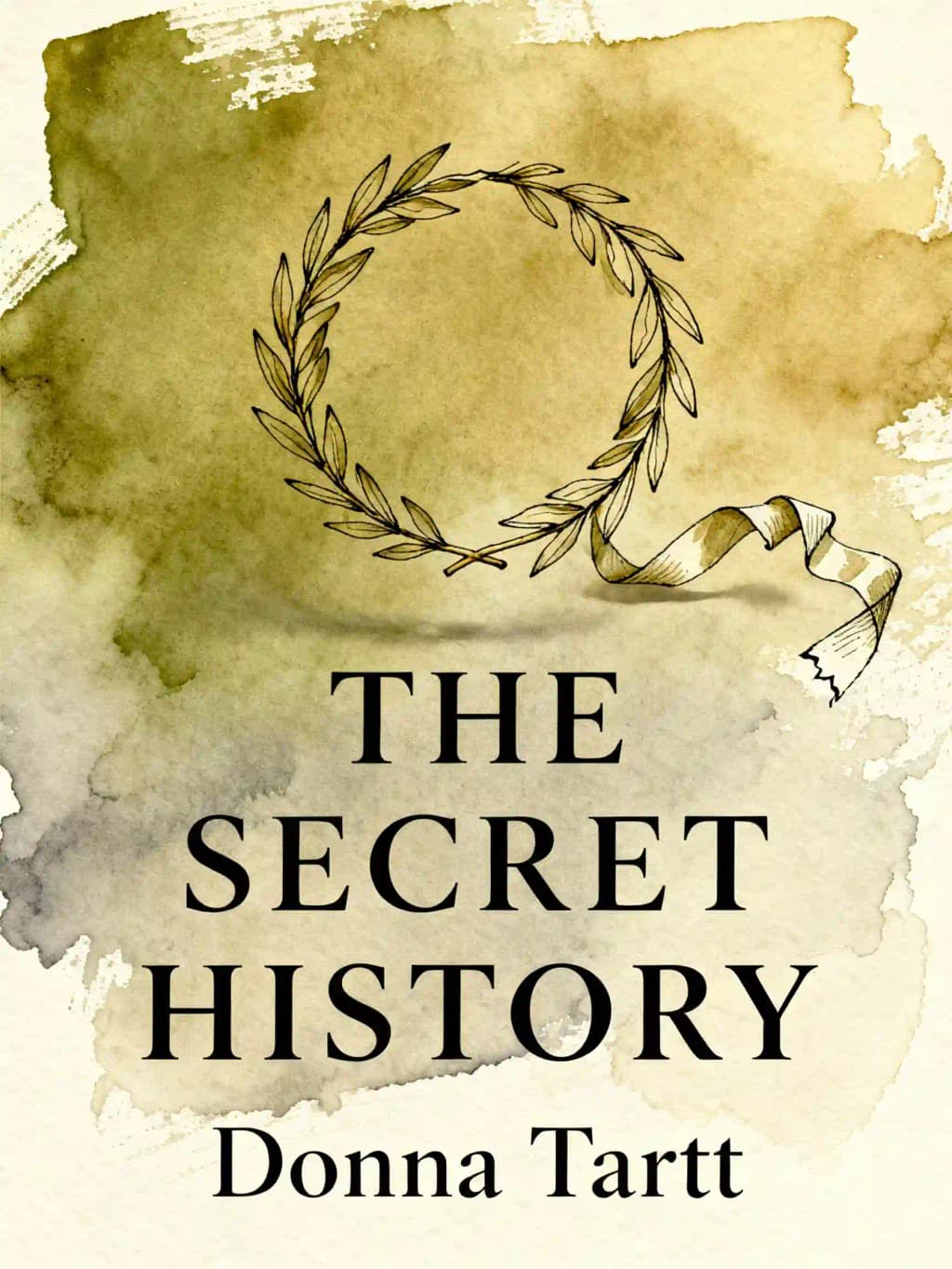
"The Secret History" ultimately asks whether we can ever escape the consequences of our actions, even when we evade legal justice. Though the group is never caught or punished by authorities, each member suffers a form of internal punishment more severe than imprisonment.
Richard, our narrator, carries his guilt forward into a life of emotional detachment. "I suppose at one time in my life I might have had any number of stories, but now there is no other," he confesses in the prologue. "This is the only story I will ever be able to tell." His complicity in murder has narrowed his existence to a single narrative from which he cannot escape.
The novel suggests that classical education without moral grounding can be dangerous-that knowledge without wisdom leads to tragedy. Julian's teachings emphasized beauty and experience over conventional morality, creating students who could justify murder through philosophical reasoning. When theory meets practice without ethical constraints, the results are devastating.
What makes "The Secret History" so compelling is how it implicates the reader in its moral universe. We find ourselves understanding, if not quite condoning, the characters' choices. We feel the allure of their exclusive world and the desperate measures they take to preserve it. Like Richard, we become complicit observers, unable to look away from the tragedy unfolding before us.
In the end, the novel suggests that our actions shape us more profoundly than our knowledge or intentions. The group sought transcendence through ancient rituals but found only destruction. Their attempt to live by classical ideals in the modern world created a dissonance that could only be resolved through further violence. As Henry tells Richard, "Beauty is terror. Whatever we call beautiful, we quiver before it."
Kapitel 10
The Enduring Appeal: Why We Can't Look Away
"The Secret History" has maintained its grip on readers for decades because it speaks to universal desires and fears-the longing to belong, the allure of intellectual elitism, and the terrifying consequences of crossing moral boundaries. It's a modern Greek tragedy dressed in tweed and speaking ancient Greek, a story where the past literally destroys the present. Like the classical texts it references, the novel taps into timeless themes of hubris, nemesis, and the fatal flaw that brings down even the most promising individuals.
The novel's reverse structure-telling us the crime at the beginning-shifts our focus from "who did it" to the more unsettling questions of "why" and "what happens next." This approach forces us to consider the psychological aftermath of violence rather than the act itself. We watch as characters we've grown to care about disintegrate under the weight of their actions, making choices that further entangle them in tragedy. The narrative becomes a slow-motion car crash, where we observe every excruciating detail of their descent, from Julian's subtle manipulations to Bunny's increasing instability, to Henry's final, devastating choice.
Perhaps most disturbingly, the novel suggests that intelligence and education don't necessarily lead to better moral choices-they may simply provide more sophisticated justifications for terrible actions. The characters' classical education gives them a framework to rationalize murder, but it cannot protect them from the psychological consequences. Their knowledge of Greek tragedy becomes both a blueprint and a curse, as they unconsciously follow the very patterns they study. The Dionysian rituals, far from liberating them, trap them in an ancient cycle of violence and retribution.
In our current era of moral relativism and intellectual bubbles, "The Secret History" remains relevant as a cautionary tale about the dangers of insular thinking and the rejection of conventional morality. The exclusive study group mirrors modern echo chambers, where shared beliefs can justify increasingly extreme actions. The novel explores how privilege - both intellectual and social - can create a dangerous sense of exemption from ordinary moral constraints. Richard's outsider perspective serves as our window into this rarefied world, showing how seductive such exemption can be.
The book's lasting power lies in its exploration of fundamental human weaknesses: the desire to be special, the yearning for transcendent experience, and the temptation to believe that superior knowledge confers superior rights. As Henry discovers too late, even the most brilliant mind cannot outthink guilt, nor can the most perfect crime create perfect peace. The novel suggests that classical education, while valuable, can become dangerous when it leads to detachment from human reality and contemporary moral frameworks. In the end, the characters learn that no amount of philosophical sophistication can shield them from the primal forces of conscience and consequence.