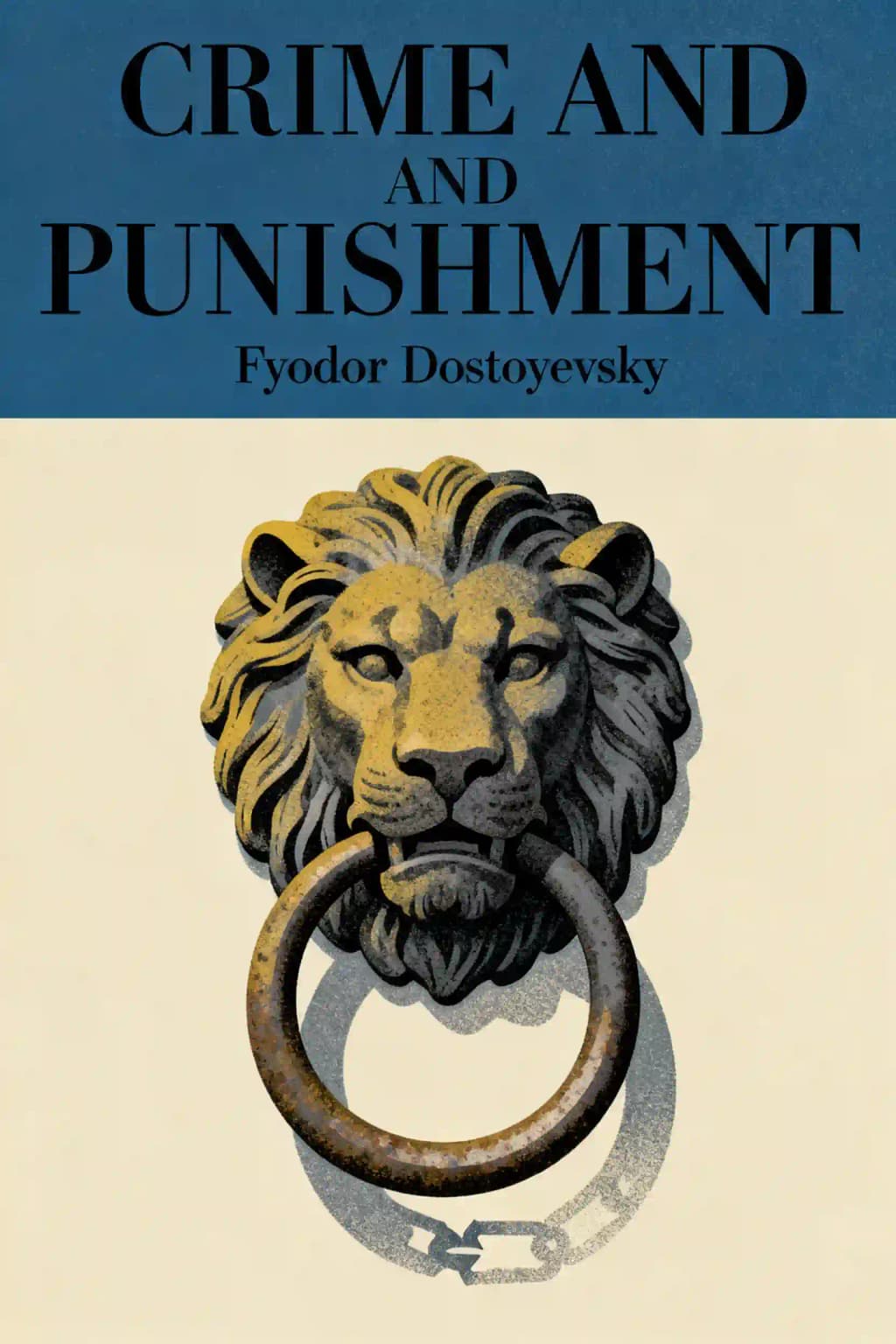
Dostoevsky's psychological masterpiece plunges readers into a murderer's tormented mind. Ranked among the world's greatest novels, this 1866 classic inspired existentialist philosophy and countless adaptations. Even Woody Allen couldn't resist its dark allure in "Crimes and Misdemeanors." Ready to confront your own morality?
Erlebe das Buch durch die Stimme des Autors
Verwandle Wissen in fesselnde, beispielreiche Erkenntnisse
Erfasse Schlüsselideen blitzschnell für effektives Lernen
Genieße das Buch auf unterhaltsame und ansprechende Weise
What drives a brilliant young man to murder? In the sweltering summer heat of St. Petersburg, Raskolnikov-a former student living in abject poverty-convinces himself that killing a "worthless" pawnbroker would benefit society while solving his financial problems. His cramped garret room with peeling yellow wallpaper mirrors his spiritual death, a coffin-like existence where his mind fractures under its own contradictions. Raskolnikov has developed a theory dividing humanity: "ordinary" people must obey laws, while "extraordinary" individuals (like Napoleon) may transgress moral boundaries for the greater good. The brilliance of this psychological portrait lies in how we understand Raskolnikov's twisted logic without endorsing it. We witness his elaborate justifications-the pawnbroker is "a louse," someone whose death would benefit others-while simultaneously seeing glimpses of his better nature through spontaneous acts of generosity. When he finally commits the murder, the carefully planned crime immediately unravels when the pawnbroker's innocent sister unexpectedly appears, forcing him to kill her too. The visceral details-the axe striking bone, trembling hands, growing panic-reveal how quickly grand philosophical justifications crumble in the face of brutal reality.
Zerlegen Sie die Kernideen von Crime and Punishment in leicht verständliche Punkte, um zu verstehen, wie innovative Teams kreieren, zusammenarbeiten und wachsen.
Destillieren Sie Crime and Punishment in schnelle Gedächtnisstützen, die die Schlüsselprinzipien von Offenheit, Teamarbeit und kreativer Resilienz hervorheben.

Erleben Sie Crime and Punishment durch lebhafte Erzählungen, die Innovationslektionen in unvergessliche und anwendbare Momente verwandeln.
Fragen Sie alles, wählen Sie die Stimme und erschaffen Sie gemeinsam Erkenntnisse, die wirklich bei Ihnen ankommen.

Von Columbia University Alumni in San Francisco entwickelt
"Instead of endless scrolling, I just hit play on BeFreed. It saves me so much time."
"I never knew where to start with nonfiction—BeFreed’s book lists turned into podcasts gave me a clear path."
"Perfect balance between learning and entertainment. Finished ‘Thinking, Fast and Slow’ on my commute this week."
"Crazy how much I learned while walking the dog. BeFreed = small habits → big gains."
"Reading used to feel like a chore. Now it’s just part of my lifestyle."
"Feels effortless compared to reading. I’ve finished 6 books this month already."
"BeFreed turned my guilty doomscrolling into something that feels productive and inspiring."
"BeFreed turned my commute into learning time. 20-min podcasts are perfect for finishing books I never had time for."
"BeFreed replaced my podcast queue. Imagine Spotify for books — that’s it. 🙌"
"It is great for me to learn something from the book without reading it."
"The themed book list podcasts help me connect ideas across authors—like a guided audio journey."
"Makes me feel smarter every time before going to work"
Von Columbia University Alumni in San Francisco entwickelt

Erhalten Sie die Crime and Punishment-Zusammenfassung als kostenloses PDF oder EPUB. Drucken Sie es aus oder lesen Sie es jederzeit offline.