Kapitel 1
The Work Trap: Breaking Free from a Life of Labor
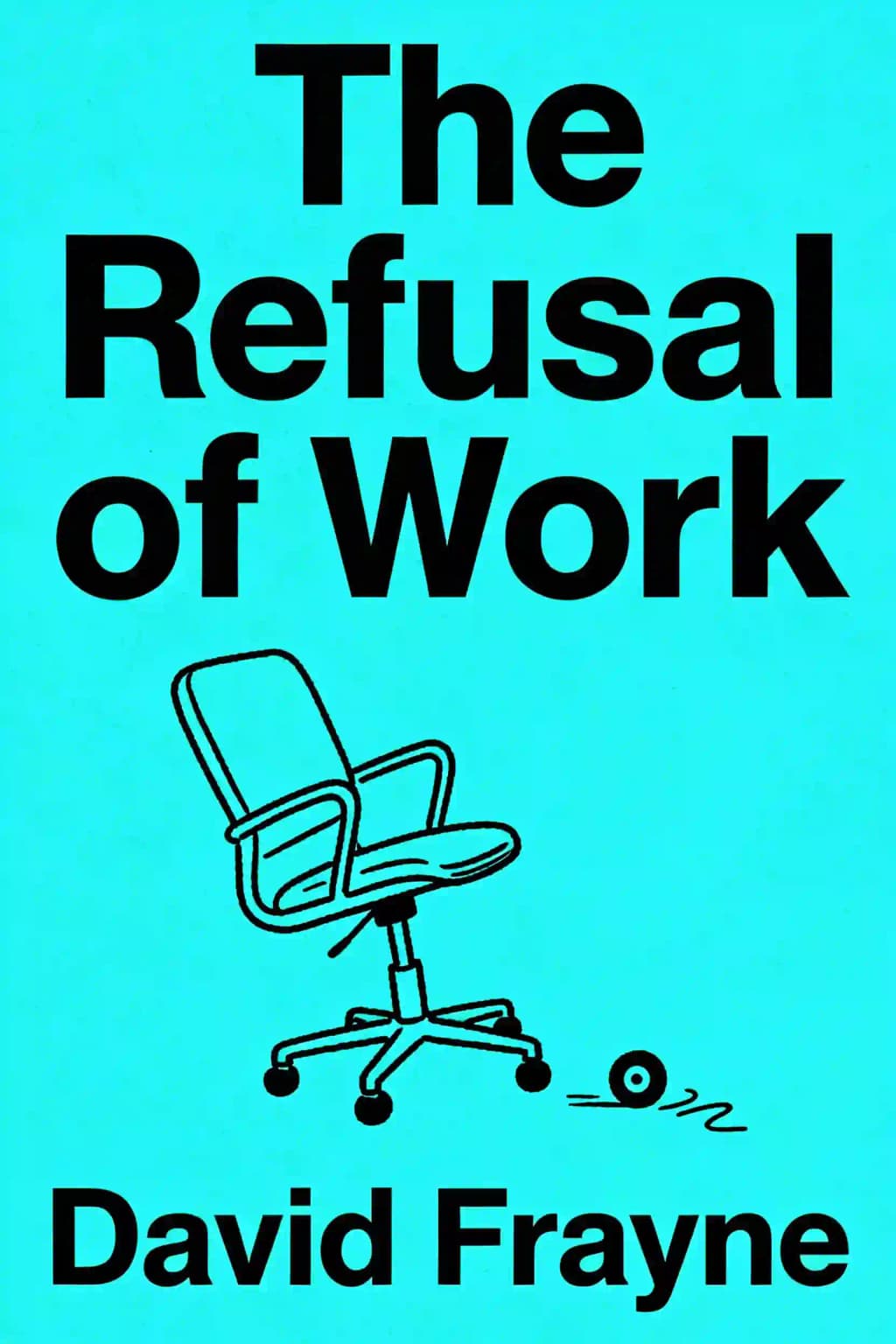
In 2009, a curious book titled "The Refusal of Work" began making waves in intellectual circles. Written by sociologist David Frayne, it quickly became the go-to manifesto for those questioning our society's obsession with employment. While not reaching the mainstream popularity of productivity bestsellers, it developed a devoted following among academics, social critics, and everyday people feeling crushed by work culture. Celebrities like Russell Brand have referenced its ideas in their critiques of capitalism, and its central thesis-that we should question the moral superiority of work-has influenced movements from "lying flat" in China to the four-day workweek campaigns gaining traction globally. Frayne's book asks a provocative question: In a world of unprecedented productivity, why are we still working so much? And what might happen if we collectively decided to work less?
Kapitel 2
The Work Dogma: How Labor Colonized Our Lives
The Autonomist movement in 1960s-70s Italy fought not just for better working conditions but for workers' right to fuller lives outside of work-to feel the sun, play with their children, and develop interests beyond the factory. This radical perspective echoes through Frayne's analysis of our work-centered society, where employment dominates nearly every aspect of life.
Work isn't just how we earn money-it's become our primary identity marker. Think about it: "What do you do?" is typically the first question we ask when meeting someone new. We prepare children for careers from an early age, restructuring education around "employability" rather than curiosity or citizenship. Even our language reveals this obsession, with euphemisms designed to elevate less prestigious jobs-bin men become "waste management professionals," fry cooks join "culinary teams," and the unemployed are delicately described as "between jobs."
Beyond culture, work dominates politics. Apart from brief interest in "work-life balance" in the mid-2000s, working hours and people's entitlement to varied lives outside work remain absent from mainstream political agendas. Politicians focus obsessively on job creation and employability while promoting traditional beliefs about work's sanctity. This appears most clearly in moral discussions about unemployment, with neoliberalism reinforcing stark distinctions between "hardworking people" versus "scroungers." Social policies increasingly enforce work regardless of its social utility, with welfare systems implementing stringent audits and penalties for non-workers.
What's particularly striking is how this work-centered worldview persists despite mounting evidence of its failures. The labor market increasingly fails to provide gratifying jobs, unemployment rises despite productivity gains, and work increasingly dominates our personal lives-yet the ethical superiority of work remains largely untouchable in public discourse. It's as though we're collectively trapped in a belief system that no longer serves most people's interests.
Kapitel 3
The Historical Contingency of Work
To critically examine work, we must first recognize its historical contingency. Productive activity hasn't always been valued as beneficial or morally superior. In Genesis, work was explicitly framed as God's punishment for Adam and Eve's disobedience - "By the sweat of your brow you will eat your food." This biblical perspective positioned labor as a burden rather than a blessing. Ancient Greeks went further, actively disdaining work as a base activity symbolizing necessity and bodily survival needs-something free people shouldn't perform. In their social hierarchy, work was designated to slaves, whose labors excluded them from pursuits considered worthy of citizens like politics, art, and philosophical contemplation. Aristotle specifically argued that excessive involvement in work corrupted both body and mind, making one unfit for virtue and citizenship.
The modern glorification of work emerged alongside industrial capitalism, which needed to motivate a reluctant population to accept factory discipline. Through various cultural, religious, and political mechanisms, work gradually transformed from a necessary evil into a moral virtue-what Max Weber famously called the "Protestant work ethic." Religious reformers like Calvin and Luther recast labor as a divine calling, while industrialists promoted the idea that productivity indicated moral character. This shift was reinforced through education systems, poor laws, and social reforms that stigmatized idleness while celebrating industriousness. Factory bells, time cards, and supervised workspaces created new forms of temporal and spatial discipline previously unknown to agricultural societies.
When we define work, we must distinguish between different forms of productive activity. Following Andre Gorz, Frayne defines work as activity carried out for wages-things we "go to" and "come home from." This "work in the economic sense" represents exchanging productive time for payment, distinct from "work-for-ourselves" (activities performed for direct personal or relational benefit) and "autonomous activities" (actions performed as ends in themselves, pursuing what the subject defines as Good, True, or Beautiful). Examples of work-for-ourselves include growing food in a garden, caring for children, or maintaining one's living space. Autonomous activities might encompass artistic creation, learning for its own sake, or community organizing.
This distinction is crucial because the critique presented isn't targeting productive activity generally but specifically paid employment and the systems that make it mandatory. The goal isn't idleness but widening space for autonomous activities and reclaiming time to work for ourselves. Historical examples show alternative arrangements are possible: medieval peasants typically worked fewer hours than modern employees, while hunter-gatherer societies often devoted just a few hours daily to subsistence activities. The current arrangement of 40+ hour workweeks, year-round employment, and the equation of income with survival represents a specific historical development rather than an unchangeable reality.
Kapitel 4
The End of Work: An Intellectual Tradition
The question of whether people might work less connects to a centuries-old intellectual tradition spanning diverse thinkers united by their concern for society's emancipatory transformation. Thomas More's Utopia (1516) proposed a radical reimagining of work, advocating for reducing toil through three key mechanisms: producing sturdier, longer-lasting goods rather than disposable ones; limiting superfluous production of luxury items; and sharing necessary work equally among all capable citizens. This vision suggested a six-hour workday as sufficient for meeting society's needs. William Morris, building on these ideas in the Victorian era, believed advancing technology could eventually make unattractive labor "a very light burden on each individual," allowing people to pursue creative and fulfilling activities.
Marx's analysis delved deeper into work's psychological and social implications. In Capital, he relegated work to the mundane "realm of necessity" that must be surmounted before humans can enter the "realm of freedom," suggesting this freedom could expand by shortening the working day. While Marx saw machines under capitalism as instruments for controlling workers, he recognized their revolutionary potential to reduce necessary labor, creating "social disposable time" for everyone's self-development. His writings explored how technological advancement could liberate humanity from drudgery, though he warned this potential would be constrained by capitalist relations of production.
This theoretical foundation foreshadowed the "end of work" argument that technological advances are eliminating human labor needs. John Maynard Keynes, in his 1930 essay "Economic Possibilities for our Grandchildren," predicted that productivity advances might reduce work to fifteen hours weekly by 2030, allowing people to confront what he saw as the deeper problem of how to "live wisely and agreeably" with their freedom. Critical theorists like Herbert Marcuse built on this, questioning why, despite unprecedented technological capabilities, lives remained characterized by toil. Marcuse's concept of "surplus repression" explained this paradox by pointing to an irrational social system that maintained unnecessary labor discipline.
Andre Gorz's work stands out for its unswerving commitment to human freedom, refusing to reduce work's problems merely to wages and conditions. His core contribution was promoting a "politics of time"-a democratic discussion about production goals and the social distribution of working hours. Gorz celebrated productivity gains but posed crucial questions about what should be done with time saved by these advances: Would society enhance life outside work and pursue self-development, or would economic rationality demand the same work commitment? He emphasized that shorter working hours could enable a dual transformation: reducing environmental impact while increasing individual autonomy. His vision included practical proposals like work-sharing schemes and universal basic income to facilitate this transition.
This intellectual lineage continues to influence contemporary debates about automation, artificial intelligence, and the future of work, suggesting that technological progress should serve human freedom rather than merely economic efficiency.
Kapitel 5
Working Pains: The Reality of Modern Employment
Despite work's sanctity in modern society, many people experience their jobs as tiring and meaningless activities undertaken mainly out of necessity. The concept of alienation, most famously articulated by Marx, describes how work has ceased to be an activity expressing the human need to shape the world and instead becomes performed joylessly out of necessity.
While Western economies have shifted from industrial to post-industrial models with more service and information jobs, this transformation hasn't delivered the promised improvements in work quality. Despite statistical increases in service and information jobs, many modern workers experience alienation similar to industrial laborers. Computer technologies have been harnessed not to enhance worker capacities but to enforce new extremes of work intensification and control.
Call centers exemplify this with auto-dialers connecting calls without breaks, monitoring software tracking productivity, and automated systems reporting underperforming workers. Amazon warehouse workers describe themselves as "machines" or "robots" held to unreasonable time limits by handheld computers. Even in Richard Sennett's bakery case study, computerization made the baking process "opaque" to workers who never touched dough, leading to indifference rather than pride in their work.
While traditional alienation describes workers' detachment from their work, a new form of alienation has emerged in the 21st century characterized not by excluding human qualities from work but by exploiting them. This new form demands workers become fully invested in their jobs, bringing their emotions, personalities, and individuality to work.
Drawing on C. Wright Mills and Arlie Hochschild's concept of "emotional labor," this phenomenon involves workers managing their emotions as a commercial asset. Service workers must "induce or suppress feeling" to create the proper impression in customers. Hochschild's study of flight attendants revealed intensive coaching to adopt warm personalities and enthusiasm, essentially creating emotional standardization-a kind of affective Taylorism.
This emotional labor creates psychological strain from constantly separating external performance from internal feelings. Retail workers follow scripts and simulations of friendliness, monitored by surveillance cameras and mystery shoppers. As Franco Berardi notes, communication loses its "gratuitous, pleasurable and erotic contact" to become "economic necessity, a joyless fiction."
Kapitel 6
The Colonizing Power of Work
Arlie Hochschild's study of time-starved professionals who invest in pristine kitchen appliances they never use reveals a profound irony: these unused ovens symbolize the leisurely lifestyle people wish they had but cannot attain due to work demands. Work doesn't just dominate our time on the job-it colonizes our entire lives.
When does work truly end? Theodor Adorno argues that non-work time isn't genuinely free but merely prepares us for returning to work. Alienating jobs drain our energy, ensuring that free time is spent recovering through passive entertainment or compensatory consumption rather than engaging in meaningful activities.
The standard workday fractures our time into shards, leaving little opportunity for substantial self-directed activities requiring steady investment of time and concentration. Today's exhausted worker, commuting home with emails to answer and too drained for family engagement, exemplifies this degradation of leisure.
Modern technology has intensified this problem as networked devices enable work to invade previously protected spaces. Melissa Gregg's research shows how asynchronous communication tools paradoxically create pressure for constant availability. As one professional notes, "Clients will not tolerate an 'I was on vacation' excuse"-workers must remain perpetually on standby.
In today's insecure economy, individuals must constantly work to maintain their employability, a lifelong vocation that colonizes all aspects of life. As Gorz noted, selling one's labor depends on "unpaid, voluntary, unseen work" to reproduce it anew. The pressure of employability subordinates life enjoyment to market cultivation. Even children internalize this mentality, as evidenced by a twelve-year-old who valued an anti-smoking program because "it will look good on my CV."
This creates a "restless sense of endless potentiality" where workers declare constant war on themselves, smoothing over personality traits that don't fit the model employee image. Unlike traditional exploitation limited to work hours, employability demands continuous self-policing as boundaries between work and life dissolve.
Kapitel 7
Breaking Points: Why People Refuse Work
Between 2009 and 2013, Frayne conducted research with people who had taken significant measures to prevent work from colonizing their lives. Some reduced hours while others abandoned work entirely. These weren't radical activists but ordinary people who had reached personal breaking points with employment.
The decision to resist work often came as an awakening or epiphany-what participants described as "taking life off autopilot" or having "woken up from a long sleep." Many expressed disdain for colleagues who lived ritualistically without questioning their circumstances. Adam criticized careers as "just one job plugged into another job" where people avoid discussing deeper questions about purpose.
Three common routes into work resistance emerged: the rubbish job, the mini utopia, and the broken body.
Larry, a social worker in his fifties, exemplified resistance stemming from job deterioration. Having negotiated a reduced workday to manage stress, he lamented how his profession had transformed from meaningful client engagement to bureaucratic paper-pushing. What troubled Larry most was losing the freedom to make professional judgments about clients' needs. The standardization of procedures undermined his identity as a social worker, destroying his sense of moral agency.
Matthew, a philosophy graduate, similarly struggled with work's meaning. Living on benefits with his wife Lucy, he feared being forced into menial or ethically dubious employment. His previous experience as an administrative assistant had been miserable, particularly the emotional labor required: "There was a huge amount of pressure to be emotionally chirpy... having to put on these acts really scares me."
For people to actively resist their alienation, they first need a taste of autonomy-an experience that makes the constraints of work feel unbearable by comparison. These "mini utopias" teach us "to desire better, to desire more, and above all to desire in a different way," as E.P. Thompson wrote. For many graduates, university itself becomes this unsettling mini utopia-a time when they could follow their own interests, work on their own schedule, and blend work with play.
While some resist work voluntarily, others do so out of necessity-as an act of self-preservation. Several interviewees described their "breakpoints" as physical or mental collapses. Bruce, formerly a mental health support worker, recalled the day his body "broke": "I literally just broke... a switch in me just went psssh... I started to get all of these pains and spasms and twitches. I couldn't sleep." Rather than suppressing these symptoms, Bruce interpreted them as his body "shouting" that "enough is enough."
Kapitel 8
Alternative Pleasures: Life Beyond Consumption
Resistance to work involves significant material risks in a society where income access primarily comes through employment. Anyone reducing working hours must carefully consider whether they can still secure basic provisions like food, shelter, and utilities. In advanced capitalism, where increasingly more everyday needs have become commodified - from childcare to entertainment to social connection - the risks extend beyond material deprivation to cultural exclusion and social isolation. Even basic activities like exercise, once free through walking or playing sports, are now often packaged as gym memberships or fitness classes.
Despite these challenges, many interviewees emphatically rejected the notion that their lifestyle choices were puritanical or sacrificial. Samantha, the attorney-turned-waitress, described her choice as "massively indulgent," contrasting her newfound freedom with her former London colleagues who were "knackered and working really long hours" while struggling to maintain basic work-life balance. Eleanor similarly described the full-time working lifestyle as a grinding cycle of "working to pay ridiculous rent" followed by "getting completely hammered" on weekends just to recover enough mental and physical energy to repeat the cycle - a pattern she saw as fundamentally unsustainable.
This perspective strongly aligns with what philosopher Kate Soper calls "alternative hedonism" - focusing on deep reservations about the supposed subjective gratifications of affluent consumer societies. Beyond acknowledging the obvious exploitation and environmental harm, Soper highlights how affluent lifestyles generate profound unhappiness through chronic stress, urban pollution, mind-numbing work routines, and increasing social isolation. She argues that the promised pleasures of consumption often mask deeper forms of dissatisfaction.
The interviewees consistently questioned consumerism's fundamental hedonic value. Like Juliet Schor's "downshifters," they consciously prioritized time wealth over money wealth. Mike emphasized he wouldn't "get a job I detest" merely to buy nice things, noting how his reduced income actually increased his life satisfaction. Cheryl drew a fascinating distinction between "outward" people (materialistic, status-conscious, competitive) and "inward" people (valuing time, relationships, personal growth) - closely echoing Erich Fromm's influential distinction between "having" and "being" modes of existence. This framework helped many participants understand their own shifting values.
By working less, participants discovered the deep pleasure of spontaneity and slowness - qualities increasingly rare in our scheduled, optimized world. Cheryl found renewed sexual intimacy with her partner, while others reclaimed the ritual of cooking and sharing meals - experiences that inherently resist scheduling and demand savoring. Several described rediscovering simple pleasures like reading, gardening, and conversation. Working less also enabled participants to discover the profound pleasures of self-production and self-reliance. Rather than experiencing deprivation when reducing consumption, interviewees described feeling empowered and deeply satisfied in meeting their needs without excessive market dependency. Many learned new skills like basic repairs, cooking, and crafting that provided both practical value and personal fulfillment.
Kapitel 9
Half a Person: The Stigma of Worklessness
The stigma of joblessness creates a crisis of social recognition where the unemployed feel disqualified from full social acceptance. Erving Goffman defines stigma as possessing an attribute that marks one as "less desirable" or even "bad, dangerous, or weak." For those avoiding work, this stigma manifests as shame and perceived moral failure.
Work provides not just income but crucial social validation. Gerald, a former academic, missed the "warm glow of appreciation" from students and colleagues. Without employment's built-in recognition system, work-resisters must find alternative sources of validation and meaning.
Several participants struggled with feeling incomplete or judged. Matthew hesitated to call himself a writer despite writing daily because people would question its market value. His wife Lucy became visibly upset discussing how she felt she was "letting everybody down" by not working. Emma faced persistent judgment from family despite medical reasons for not working. Samantha's parents interpreted her shift from attorney to part-time waitress as regression to adolescence.
"What do you do?"-this seemingly innocent question follows only "What's your name?" in social introductions, but for work-resisters, it's fraught with anxiety. Bruce called it "the dreaded question" that he had no answer for. Participants developed various strategies to handle this question, from proud declarations of unemployment to humor to careful information management.
The most revealing aspect was how participants judged themselves. Bruce's "inner critic" tormented him even when alone-he felt shame when the postman delivered packages, wondering if he was being judged for being home during work hours. This internalized stigma reflects what George Herbert Mead calls the "generalized other"-cultural values absorbed through socialization that become shame even without direct disapproval.
To survive the stigma of worklessness, participants developed strategies to insulate themselves from judgment. Some managed this better than others. Eleanor retreated to an autonomous rural community where her values were shared, avoiding the constant need to defend her lifestyle. Lucy withdrew almost completely, surrounding herself with a small network of sympathetic people. In the absence of physically present supporters, many turned to literature or online communities like the Idlers' Alliance.
Kapitel 10
From Escapism to Autonomy: Toward a Politics of Time
The UK's early 2000s work-life balance campaign represents the closest recent movement toward reduced work hours, but ultimately fell short as a vehicle for genuine change. Melissa Gregg describes it as an "ideological ruse" that placed responsibility for managing work demands on individuals rather than addressing systemic issues.
Rather than merely advocating "balance," we need Andre Gorz's "politics of time"-a concerted discussion about work's quantity and distribution to allow everyone greater freedom for autonomous development. A society-wide policy of shorter working hours would reduce unemployment by distributing necessary work more evenly across the population, reversing the division between occupational elites and the precariously employed. Each person would work less so more could work.
The long-term goal would transform society so work wasn't an inviolable source of income, rights and belonging. Free time would become more than just recovery from work-people would pursue various productive and non-productive activities according to their own standards. With more time for self-directed work, fewer activities would need to be formalized as paid jobs.
Despite the appeal of a less work-centered society, there currently exists no cohesive cultural movement capable of developing a politics of time. Work resistance remains more a mentality than a coherent political project, lacking public voice or unity beyond shared experiences. While a change in mentality has occurred, what's "cruelly lacking is a public translation of its meaning and its latent radicalism."
Critics of work must make concerted efforts to appeal beyond academia to the general public, creating a more public inquiry into the lived realities of work and worklessness. The conversation has multiple entry points-ecological sustainability, public health, feminism, and human autonomy all offer compelling reasons to question our work-centered society.
We must champion utopian thinking-defined by Ruth Levitas as "the expression of the desire for a better way of living"-against its common dismissal as unrealistic or potentially totalitarian. Economic crises alone cannot generate positive social change without our collective openness to alternatives. Utopian thinking "neutralizes the hold of the present," helping us see beyond familiar horizons of possibility.
Work undeniably provides vital pleasures-social interaction, income, status, public existence-but why must these benefits depend on submission to often exploitative, environmentally harmful, and increasingly scarce employment? We should begin political discussions by exploring alternative ways to satisfy needs for income, rights, and belonging. A society that cannot envision social solidarity and purpose beyond commodity relations is profoundly impoverished.