Kapitel 1
The Transformative Journey of Motherhood: Redefining Success on Your Own Terms
When I first had to explain "what I do" after leaving my job, I felt completely exposed. Standing at a pool club with my infant son, I couldn't give my usual impressive answer about running brand strategy for a tech startup. Instead, I rambled awkwardly, unable to confidently own my decision to be home with my child. This moment crystallized a challenge faced by countless women who choose to pause careers for motherhood: society has clear (and often negative) ideas about stay-at-home mothers, but little understanding of the profound growth, purpose, and potential these pauses can contain.
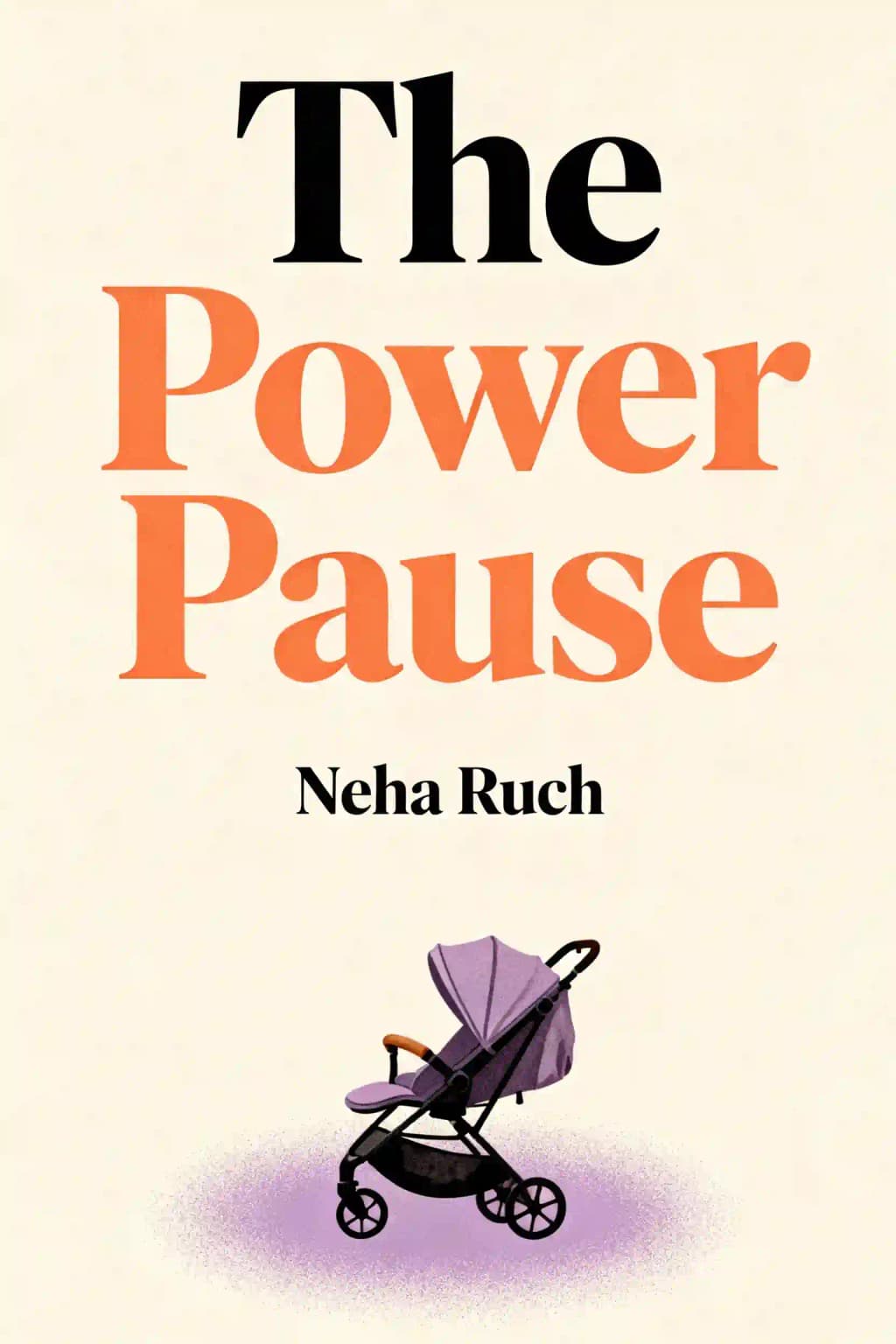
The Power Pause has become a cultural phenomenon, with celebrities like Eva Mendes and Jessica Alba openly discussing their career breaks to focus on family. Far from the outdated stereotype of the 1950s housewife, today's pausing mothers are redefining what it means to step away from professional life temporarily. This modern approach to motherhood represents a significant shift in how we view work-life integration, with research showing that strategic pauses can actually enhance long-term career satisfaction and success when approached intentionally.
Kapitel 2
Dismantling the Stay-at-Home Mother Stereotype
The traditional portrait of the stay-at-home mother has always been largely fictional. Historian Andrea O'Reilly explains that "the majority of American mothers have always worked outside the home." In early America, mothers were economic producers on family farms or in factories, while middle and upper-class women typically delegated childcare to governesses and housemaids.
The housewife archetype emerged in the 1830s but became cemented in American consciousness after World War II, when media waged "ideological warfare" to push women back to domesticity. This invented new values where housekeeping became virtue rather than outsourced labor. This "traditional" nuclear family model was actually "a historical fluke" that lasted "maybe fifteen years for twenty percent of the population."
When feminism emerged in the 1960s, stay-at-home mothers became unfairly categorized as anti-feminist traditionalists, creating a false dichotomy between "working" and "stay-at-home" mothers that persists today. Missing from this narrative were the community contributions of at-home mothers and those working part-time in the "gray area."
Remarkably, fictional June Cleaver remains the most recognized stay-at-home mother (cited by 22% of survey respondents), while working mothers are represented by admired contemporaries like Michelle Obama and Beyonce. The fallout is clear: ambitious women who want to focus on family have few role models, with stay-at-home mothers often dismissed as privileged or lazy.
Creating an identity beyond work requires focusing on motherhood as a critical, elevated role while transferring professional skills to parenting. The persuasive communication skills developed in advertising now help present new routines to children. Other transferable skills include empathy, prioritization, and research abilities.
When answering "What do you do?", a simple formula works best: Start with "right now" to indicate this is one chapter, keep it succinct, choose positive phrasing ("I get to be home with my kids"), and optionally add one specific secondary interest. This approach acknowledges your choice while maintaining your dignity and complexity.
Kapitel 3
Navigating the Financial Transition with Confidence
Every January, my husband Dan and I have a special date - our annual budget forecast. We book a sitter, head to a restaurant, and review a detailed spreadsheet of our anticipated income and expenses. This budgeting ritual isn't merely about finances - we discuss our feelings about our lives, reflect on what worked the previous year, and plan what we want to experience in the coming one.
One of the most significant adjustments to at-home parenting is your relationship with money. While most stay-at-home mothers report the pause is worth the financial loss, 44% worry about money due to their decision. Remember depositing your first paycheck? Landing that six-figure salary? Money validates our ambition and achievement. But as lawyer and financial planner Feraud Calixte wisely notes, "Your net worth is not your self-worth."
Women considering career pauses typically fall into two camps: those whose salary barely covers childcare costs, and higher earners who want to stay home despite the financial impact. In our society, stay-at-home motherhood is often labeled a "luxury," but there's nothing luxurious about changing diapers and managing tantrums. The real privilege is having the choice about how to spend your time.
When pausing your career, you're sacrificing not just your current salary but potential future earnings. Women who pause for over two years typically earn 79 cents for every dollar a man who hadn't paused would earn. But these statistics aren't destiny - strategic planning can help you navigate the transition successfully.
Approach your family finances like a business where both partners are investors. Build cash reserves (3-6 months of expenses), clarify fixed versus discretionary spending, create a values-based budget, write an informal agreement defining roles and timeframe, merge finances, and hold regular money meetings.
Financial advisor Calixte recommends dual-income couples maintain three months of living expenses in a high-yield savings account, increasing to six months or more when transitioning to a single income. The exact amount depends on your risk tolerance and available safety nets, such as family who could help in emergencies.
Creating a budget is fundamentally about defining what matters to you. Financial advisor Dalgleish suggests starting budget conversations by identifying your values-what's meaningful and important right now. After establishing priorities, examine your fixed costs to identify potential savings through mortgage renegotiation, cheaper phone plans, or more affordable transportation.
Regular financial check-ins are essential for maintaining your voice in family finances and building a team mentality in your marriage. These conversations often address relationship dynamics: "What do you appreciate about our relationship? How did you feel about the support I gave you last week? What's your biggest mental load right now?"
Kapitel 4
Strategic Career Pausing: Preserving Your Professional Future
After leaving a prominent marketing role at a hot e-commerce startup due to insecurity and imposter syndrome, I learned valuable lessons about resignation. I had mistakenly believed my colleagues disliked me and my job was at risk, only to discover during my abrupt resignation that they valued me highly. Two years later when pausing my career for motherhood, I approached resignation more wisely, giving three months' notice and maintaining professional relationships.
Despite legitimate concerns about career gaps, a family pause isn't career suicide. Many women fear losing hard-fought positions or being stereotyped when returning to work-valid worries supported by research showing employers often undervalue stay-at-home parents. However, most women who pause successfully return to work, often in new fields that offer greater meaning and flexibility.
Most women don't simply "go back" to their old jobs after pausing-they reinvent themselves. Many find new sectors offering greater flexibility and meaning, like Zarna Garg who transitioned from attorney to stand-up comedian after 18 years of motherhood, or Julie Aigner-Clark who went from teaching English to founding Baby Einstein (later sold to Disney for $25 million). Nancy Pelosi credits her family-raising experience with developing the skills needed for her political career.
When planning your exit, begin conversations with your boss months before resigning. Organizational psychologists call this the "in the loop" resignation method, which research shows managers respond least negatively to. Consider part-time options, which help maintain industry connections and provide income. Research suggests mothers working part-time may experience fewer depression symptoms than full-time stay-at-home mothers.
Review your employee handbook and follow resignation protocols precisely-what researchers call the "by the book" resignation style. While companies typically require two weeks' notice, offering a longer transition period demonstrates consideration and maturity, potentially keeping doors open for future opportunities.
Your final impression matters more than you might think. Let go of grudges and express genuine appreciation to your manager, highlighting specific qualities you admire. Consider leaving a handwritten note on your last day.
Your final weeks offer the perfect opportunity to build your future on-ramp. Create a list of colleagues who view you positively and could become allies later, thinking broadly across departments and roles. Schedule strategic conversations that fortify your reputation. When meeting with these contacts, own your decision without apology, asking questions like: "What strategic actions should I take to help the door reopen when I'm ready?"
Kapitel 5
Defining Success on Your Own Terms
At twenty-four, I was named the first digital strategist at a major Boston advertising agency, moving to a windowed corner office on the thirty-fourth floor. This promotion came with sacrifices-keeping toiletries for all-nighters and taking late-night car services home after 9 p.m. During corporate annual reviews, discussions about professional benchmarks often felt like charades disguising my desire for title bumps and office perks.
In contrast, setting goals for motherhood requires deep, authentic work because you're reporting to yourself. Parenthood offers a powerful opportunity to rediscover what brings you joy and meaning, asking: "When I look back on this time, what do I hope to see and feel?"
While recovery is essential if you're entering motherhood from grief, exhaustion, or trauma, many mothers regret "floating" without meaningful goals for too long. Goal setting extends beyond productivity-studies by Edwin Locke and Gary Latham have linked vivid goals with "higher motivation, self-esteem, self-confidence, and autonomy." During anxiety periods, maintaining purpose can reinstate control feelings, while making progress toward goals increases hopefulness and confidence.
My moment to begin goal setting arrived around my son's first birthday. As newborn milestones faded and questions about my plans increased, I felt scrutinized. I restarted journaling, exploring my daily motivations until themes emerged and I landed on my overarching objective: "I want to be present through each day with my family and be the calmest and most content version of myself that I can be." This became my North Star.
A North Star isn't just an ancient navigation guide but a corporate organizational principle-the singular vision an entire company works toward. The North Star approach speaks best to our life stage: the one broad outcome that is non-negotiable for your contentment, aligning your focus, time, creativity, and energy.
Your North Star provides long-term vision, but achieving it requires concrete, timely, and measurable short-term goals. Following Burnett and Evans' approach from "Designing Your Life," focus on three categories: personal goals (what you want as an individual), career goals (from creative hobbies to paid work), and family goals (experiences with kids and partner).
When asked about goals, mothers typically focus on their children-"I want to raise confident kids" or "I want my baby to be bilingual." When pressed about goals for themselves, most pause in what seems like panicked soul-searching. Remember: pursuing your own fulfillment shows children how to live richly.
Kapitel 6
Creating Daily Rhythms That Serve Everyone
During my first year of motherhood, I approached parenting like my former corporate job-with a packed calendar of baby classes, playgroups, scheduled feedings, and strict nap routines. While this structure created predictable rhythms and helped my children become good sleepers, I overlooked a crucial difference between office work and stay-at-home parenting: there's no moment of transition from work to home life.
In a traditional job, you eventually go home, creating a natural boundary that reminds you to take time for yourself. At home with children, this delineation disappears. Though I'd mastered creating a rhythm for my son, I hadn't done the same for myself.
While media glorifies rigid daily routines with headlines like "10 Things Highly Successful People Do Every Morning," the word "routine" suggests a rigidity that's unrealistic with young children. Instead, focus on establishing a rhythm-a flexible framework that provides structure without strict scheduling.
A rhythm might simply determine when your family wakes up and winds down, with meals, snacks, and naps in between. Julie Morgenstern, author of Time to Parent, identifies five daily "islands of predictability" for children: waking up, leaving the house, reuniting with family, dinner, and bedtime. "Kids thrive on consistency," she explains. "In a child's world, everything is still fairly new and unpredictable... so it's helpful to have several predictable anchors in each day."
Planning weekly rather than daily gives you 168 hours instead of just 17 to work with. As Kornick explains, "We become overwhelmed because there are so many things that we want to fit into this perfect day," from yoga to meditation to time with your spouse. Taking a broader weekly view "gives you the opportunity to be consistent without doing something daily."
We live in a productivity-obsessed culture that values quantity over quality, but crossing twenty items off your to-do list can still leave you feeling unfulfilled if none of them matter to you. The hard truth is that parenting's to-do list never ends-there's always another lunch to pack or permission slip to sign. If you wait to enjoy life until the mundane tasks are complete, you'll wait forever. Instead, redefine productivity around what matters most to you.
When you're constantly referred to as your child's parent rather than your actual name, reconnecting with your individual identity becomes crucial. Self-care affects not just happiness but physical health too. Leslie Forde explains that women face greater risk for stress-related illnesses and disproportionately suffer from anxiety and depression. Finding "me time" requires effort-parents average just thirty-two minutes daily, with women having three fewer hours of leisure weekly than men.
Kapitel 7
Building Your Support System Without Guilt
The chapter opens with a haunting memory of yelling at my three-year-old son when trying to balance his needs with those of his infant sister. This crystallizing moment made me realize both my children and I would benefit from more support. Despite having a stay-at-home mother who never paid for childcare, my mom encouraged me to get help, saying she would have enjoyed motherhood more with occasional breaks.
This highlights a common misconception: while full-time working parents need full-time childcare and part-time workers need part-time care, many believe stay-at-home parents need no childcare at all-a false assumption holding back countless women from embracing the full potential of stay-at-home motherhood.
The United States ranks near bottom (second-to-last) among 41 rich countries for parental leave and childcare policies, contributing only $500 annually toward toddler childcare compared to the $14,000 average in other wealthy nations. This systemic devaluation of care work leads stay-at-home parents to internalize the message that they're "not contributing" or "not working."
The guilt around childcare is pervasive and multifaceted. I felt guilty when I snapped at my son because I lacked childcare support, but also experienced a different guilt when using childcare without "needing" it for paid work. This reflects the misconception that childcare is only justified when doing work for others.
Every job deserves support, including unpaid parenting work. Just as you had colleagues in your professional life, you need a team for parenting too. Parenting is harder than most people expect-62% of parents say it's harder than anticipated, with 30% of mothers saying it's much harder. Childcare isn't admitting defeat; it's recognizing that you need support to avoid burnout and to create space for yourself.
Stay-at-home parents often justify their role by focusing on the money they save rather than earn. However, childcare expenses should be viewed as a family investment rather than a personal expenditure. As a stay-at-home parent, you're not just a cost-cutter but someone running a household, caregiving, and ensuring children are raised according to family values.
Childcare solutions are diverse and flexible. The author has used various arrangements: a twice-weekly babysitter, grandparent support, husband sharing weekend hours, and a mother's helper for cooking, laundry, and childcare during a transition period. As work becomes more flexible, so do childcare options-from part-time daycare to playdate swaps with friends.
Kapitel 8
The Essential Role of Community in Motherhood
Sitting on the dusty linoleum floor of a Babies"R"Us basement, I exchanged knowing glances with two mothers during a baby movement class. These women-Suzi, polished despite her burp cloth collection, and Caroline, radiating warmth-would become my first mom friends. We represented different careers and backgrounds but shared the common ground of motherhood.
After class, I invited them for coffee at my home, where our conversations evolved from in-laws and nap schedules to deeper discussions about our ambitions and stressors. Though we initially bonded over our children, these friendships served me professionally and personally, offering camaraderie when I had no coworkers and adult conversation when I desperately needed it.
Parenting at home without colleagues can be profoundly isolating. I found myself chatting with baby Bodie as if he could engage in small talk-partly for his development, but mostly because I craved adult interaction after being accustomed to workplace conversation. This isolation reflects a broader epidemic of loneliness in America, with the U.S. Surgeon General reporting that even before the pandemic, about half of American adults experienced measurable loneliness.
Despite how counterintuitive it seems, early motherhood is actually an ideal time for forming deep friendships. The vulnerability of new parenthood breaks down defenses-when I met Caroline and Suzi at baby movement class, I was too tired to pretend I had everything figured out, which fast-tracked our connection. Experts confirm vulnerability is key to deepening relationships, and parenthood naturally creates this openness.
As my children grew older, I developed what I'd call a "familiar enough" circuit-some intimate friendships, some friendly acquaintanceships. This wasn't the picture-perfect "mom squad" that social media portrays-those cohesive groups taking family vacations together. Don't let this illusion prevent you from building a valuable roster of connections who fulfill different needs, even if they don't form a perfect, cohesive group.
For mothers on career pauses, building connections serves multiple purposes beyond social fulfillment. These friendships create a web of connections you can access when returning to work, keep you top-of-mind for potential opportunities, and provide valuable sounding boards for professional ideas.
When building your mom network, think strategically like companies assembling boards with complementary roles. No single friend can check all boxes-you need a variety who motivate health habits, relate to parenting challenges, understand career transitions, or simply provide fun company.
Kapitel 9
Embracing Growth and New Passions During Your Pause
When I launched Mother Untitled, my blog about stay-at-home motherhood, I felt both excitement and anxiety. Would my network roll their eyes at this new venture? Instead, I received dozens of thoughtful responses that validated my project. A career pause offers the freedom to explore personal development-whether through hobbies, passion projects, learning, volunteering, or self-improvement.
Though only 40% of stay-at-home moms participate in activities outside motherhood, 90% of those who do report improved mood-significant given that stay-at-home mothers historically report more depression and sadness. Research shows creative pursuits improve happiness with effects lasting for days, and can even enhance qualities like helpfulness and collaboration.
Personal development encompasses activities that help you grow and feel engaged. These include hobbies (regular activities done for enjoyment that reduce stress), passion projects (focused efforts with specific goals but limited financial pressure), learning opportunities (courses to acquire new skills or maintain existing ones), volunteer work (contributing to causes while keeping practical skills sharp), and self-improvement (personal work like therapy or educational content that helps you feel better).
A career pause isn't a life pause-it's a time for immense growth. You develop parenting and household management skills that translate professionally, while potentially discovering unexpected talents. As Amri Kibbler of HeyMama notes, motherhood requires nimbleness and adaptability as you interact differently with each child and engage with their activities.
For those unsure what passion to pursue during their pause, self-reflection is key. Rather than randomly trying activities, mothers should observe their own interests the way they study their children's natural inclinations. Jill Elliott, a former chief creative officer who pivoted to owning her creative studio, suggests paying attention to the content you naturally consume-what makes you linger longer might reveal your passions.
For mothers on pause, pursuing personal projects requires accepting the reality of limited time. Unlike pre-parenthood days when you could dedicate hours to passions, now you must work with small windows-early mornings, nap times, or after bedtime. This slower pace can feel frustrating, but experts insist meaningful progress doesn't require massive time blocks.
That nagging voice questioning if you deserve success can plague anyone starting something new. Whether you're a novice nutritionist, artist, writer, or coach, you'll inevitably wonder if you're trained enough. You're not alone-75 percent of female executives have experienced imposter syndrome. Remember that there will always be someone more experienced, but that shouldn't stop your growth.
Kapitel 10
Crafting Your Return on Your Own Terms
I'm writing this final chapter as my kids have both started school-Bodie in second grade and Lyla in pre-K. For the first time, they're both in school all day, prompting me to reevaluate my goals and rhythms. I've ramped up my career, working Monday through Thursday from nine to four-thirty (with an after-school sitter) and Fridays until school pickup. This transition feels as complicated and emotional as my decision to pause initially.
The circumstances that led to your pause will inevitably change as your kids grow. Whether they're starting school or graduating, these transitions provide opportunities to reassess how you spend your days and consider your next phase. But these moments don't mean you must reenter the workforce-that decision should be made thoughtfully, not reactively.
When their youngest starts kindergarten, many mothers feel intense societal pressure to return to work, as if they need an "excuse" to not be working while children are at school. But being a primary parent to school-aged children remains a full-time job between sick days, holidays, and family administration.
Pausing isn't like pausing Netflix-the goal isn't to press play and continue exactly where you left off. When you restart, you should do so with deeper knowledge of your values and priorities. Many mothers need clarity on what they want their next iteration to look like, which is why return-to-work coaches are in such demand.
Nearly 70 percent of U.S. workers have employment gaps on their resumes, so you're not alone if you're anxious about yours. LinkedIn found that 56 percent of workers acquired new skills during their professional breaks, and more than half of women believe they're better at their jobs now than before their pause.
Yet we still have progress to make-nearly three-quarters of stay-at-home moms report encountering bias in the hiring process, and 20 percent of hiring managers reject candidates with career gaps. But your story is yours to tell. With the right language and confidence, you can help hiring managers recognize your pause not as a mindless vacation where skills atrophied, but as a detour that provided its own valuable skills and perspectives.
Today's workforce offers multiple pathways back after a pause beyond traditional full-time employment. Options include part-time work, freelancing, job sharing, remote positions, or entrepreneurship. Some major companies like Johnson & Johnson, Costco, and JPMorgan Chase now offer benefits to part-time workers. "Returnships"-short-term internships with training and mentorship-can provide a bridge back to full-time work.
Research shows a parent's career status-whether stay-at-home or working-has no bearing on children's happiness. What matters most is having a parent who feels fulfilled. As child development psychologist Tovah Klein explains, "A more centered mother who feels good about herself in all of her identities is a better parent." Any work-family arrangement that supports a woman's confidence and sense of purpose makes her a better parent.