Kapitel 1
Death by Design: When Science Turned Detective
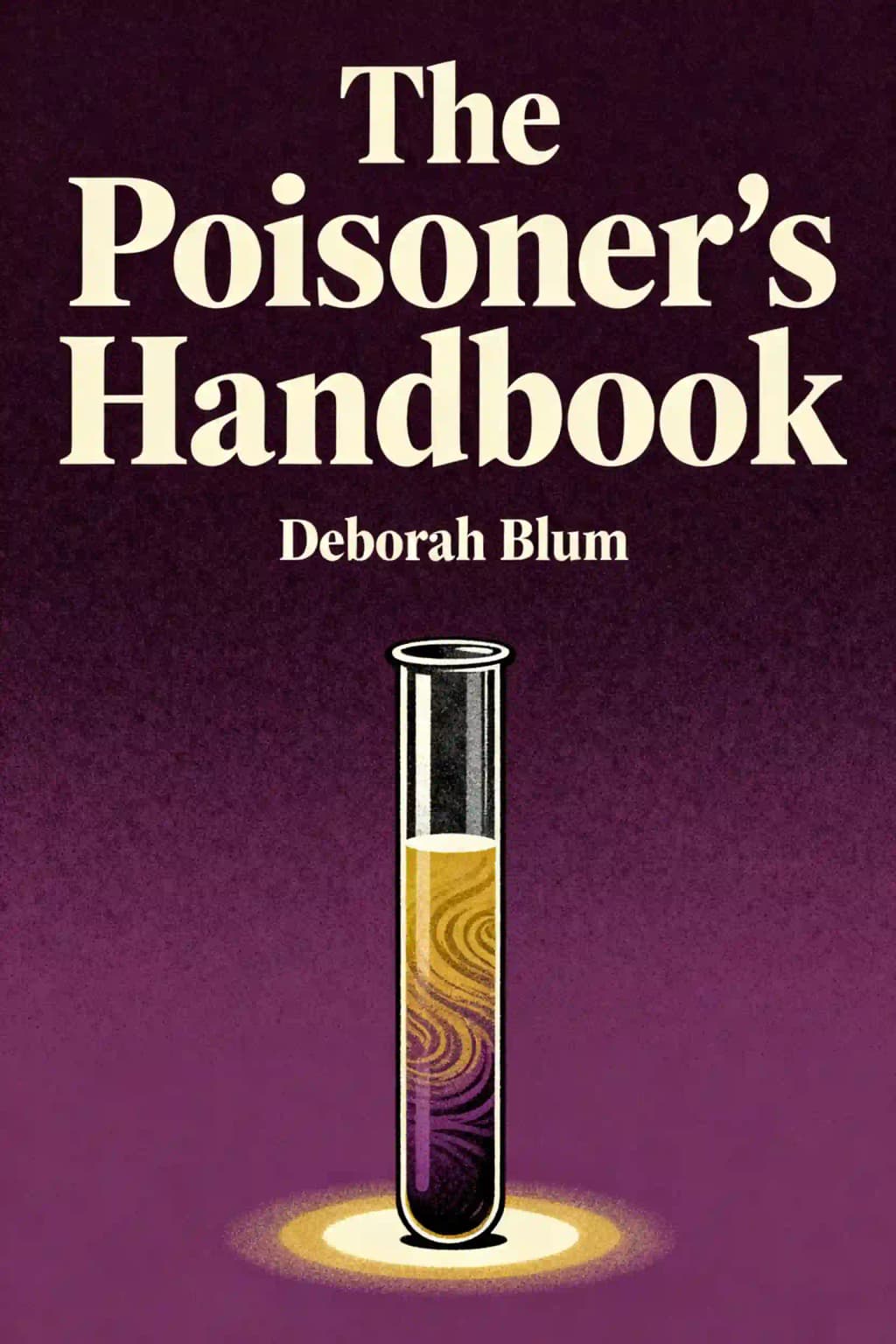
In the early 20th century, poison was the perfect murder weapon. Until 1918, New York City's corrupt coroner system meant murderers using arsenic, cyanide, or chloroform could kill with virtual impunity. Deborah Blum's "The Poisoner's Handbook" chronicles how two remarkable men-Charles Norris, the city's first scientifically trained medical examiner, and Alexander Gettler, his brilliant toxicologist-revolutionized forensic science amid the chaos of Prohibition. The book became an instant New York Times bestseller and PBS documentary, with Neil deGrasse Tyson calling it "a captivating portrait of how science and law came together to create forensic criminal investigation." Through their meticulous work with the era's deadliest substances, these pioneers transformed poison from the perfect crime to the perfect evidence.
Kapitel 2
The Birth of Forensic Medicine in America's Deadliest City
New York City in 1915 was a metropolis where death lurked around every corner and justice remained persistently elusive. With over 5 million inhabitants crammed into tenements and newly erected skyscrapers, the city recorded nearly 75,000 deaths annually - but determining which were natural and which were criminal proved nearly impossible. The coroner system, a relic of medieval England, operated as a political patronage machine where appointments went to loyal party supporters rather than qualified medical professionals.
The corruption was staggering in its scope and brazenness. Coroners like Patrick Riordan exemplified everything wrong with the system - he routinely appeared intoxicated at crime scenes, sold falsified death certificates for $5-$20 each, and maintained lucrative arrangements with funeral homes who paid him to direct bodies their way. Death certificates from this era read like exercises in creative writing, listing causes such as "visitation by God," "stopped breathing," or simply "natural causes" - convenient covers for potential homicides, particularly poisonings.
The case of Frederic Mors became the perfect illustration of this dysfunctional system. The Austrian immigrant, working as a porter at the German Odd Fellows home in Yonkers, confessed in explicit detail to murdering eight elderly residents using chloroform-soaked cloths pressed to their faces while they slept. Despite his thorough confession and clear pattern of deaths, investigators hit a wall when the coroner incorrectly declared that chloroform couldn't be detected in exhumed bodies. This was demonstrably false - European scientists had proven that chloroform could persist in human tissue for months, concentrating particularly in brain matter, and reliable chemical tests had existed since the 1890s. The coroners' ignorance of basic forensic science allowed Mors to escape murder charges entirely.
This spectacular failure catalyzed reform efforts. Leonard Wallstein, appointed by progressive Mayor John Purroy Mitchel to investigate the coroner system, produced a scathing 225-page report that laid bare its inadequacies. His conclusion that "skillful poisoning can be carried on almost with impunity" in New York resonated with public fears about untraceable murders. After intense lobbying, the state legislature finally passed a bill replacing coroners with medical examiners who had to be licensed physicians with pathology expertise.
The transition wasn't smooth. When Tammany Hall reclaimed power in 1918, newly elected Mayor John "Red Mike" Hylan attempted to subvert the reforms by appointing the notorious Patrick Riordan as chief medical examiner. The ensuing public outcry forced him to instead select Charles Norris, whose credentials were impeccable - Yale Medical School, postgraduate work in Germany and Austria, and extensive pathology experience. Despite knowing he would face constant political interference and budget battles, Norris accepted the position out of a deep commitment to public service and scientific progress.
Norris's first crucial decision was recruiting Alexander Gettler as the department's chief chemist. Gettler, the brilliant son of Hungarian immigrants, had worked nights as a ferry ticket taker to put himself through chemistry studies at City College and Columbia University. Together, they would build America's first modern forensic toxicology laboratory, transforming death investigation from a corrupt political sideshow into a rigorous scientific discipline. Their methods and standards would eventually be adopted nationwide, bringing scientific certainty to courtrooms and justice to countless victims whose murders would have previously gone undetected.
Kapitel 3
Prohibition's Deadly Experiment in Chemical Warfare
When Prohibition began in January 1920, it unleashed an unprecedented wave of death that would test the new medical examiner's office beyond its limits. As Alexander Gettler had predicted with chilling accuracy, illicit alcohol purveyors quickly emerged across New York City, offering deadly brews that caused deaths nationwide. Within months, speakeasies proliferated behind locked doors with elaborate peepholes and hidden escape routes, while police chemists discovered an alarming array of toxic substances - industrial alcohol, kerosene, mercury, and commercial disinfectants - contaminating the city's underground liquor supply.
In impoverished neighborhoods like the Bowery, where legitimate alcohol was unaffordable, deadly "Smoke" - pure methyl alcohol - sold for fifteen cents a glass, causing multiple deaths daily. The science behind these deaths was particularly gruesome: unlike ethyl alcohol found in traditional spirits, methyl alcohol metabolized in a two-stage process, first converting to formaldehyde and then to formic acid. This toxic transformation caused catastrophic damage to the human body, beginning with blindness from optic nerve destruction and progressing to fatal damage of the lungs and other vital organs. By 1926, Gettler's meticulous laboratory work had documented 1,200 New Yorkers sickened or permanently blinded by industrial alcohol, with 400 deaths concentrated among the city's poorest residents.
The federal government's response to this crisis was not only inadequate but actively harmful. To enforce Prohibition, officials implemented a deliberate strategy of adding increasingly lethal poisons to industrial alcohol supplies, fully aware that bootleggers would redistribute this toxic product as drinking alcohol. The formula included deadly substances like methyl alcohol, benzene, cadmium, and even strychnine. When confronted about the mounting death toll, Prohibition officials remained callously unmoved. Wayne Wheeler, the powerful head of federal Prohibition enforcement, exemplified this attitude with his infamous declaration: "The government is under no obligation to furnish people with alcohol that is drinkable when the Constitution prohibits it." This policy effectively transformed industrial alcohol from a workplace hazard into a weapon of mass poisoning.
Charles Norris, the chief medical examiner, was incensed by this calculated brutality. In his blistering 1926 report titled "Our Experiment in Extermination," he publicly condemned the government for what he saw as the deliberate poisoning of its citizens. "The government knows it is not stopping drinking by putting poison in alcohol," he wrote with barely contained fury. "Yet it continues its poisoning processes, heedless of the fact that people determined to drink are daily absorbing that poison. Knowing this to be true, the government deliberately continues to poison industrial alcohol."
By 1927, the death toll had reached staggering proportions. Norris's detailed documentation revealed that in 1926 alone, New York City had witnessed 1,200 poisonings resulting in 400 deaths from toxic alcohol - numbers that represented only a fraction of the national toll. The class divide in alcohol consumption became stark: wealthy New Yorkers could afford safer bootlegged spirits smuggled from Canada or Europe, while the poor resorted to drinking deadly "nickel whiskey" containing a lethal cocktail of industrial chemicals - gasoline, formaldehyde, and various metal pollutants. Based on the escalating trend, Norris grimly predicted 700 alcohol-related deaths by year's end.
What had begun as Prohibition's "noble experiment" in temperance had devolved into what Norris accurately termed "our national experiment in extermination" - an unprecedented government-sanctioned chemical warfare campaign against its own citizens. This deadly policy would continue unabated until Prohibition's final repeal in December 1933, leaving behind a tragic legacy of preventable deaths and a stark reminder of how moralistic legislation could lead to devastating unintended consequences.
Kapitel 4
The Radium Girls: When Science Confronts Industry
In 1928, Alexander Gettler received a package containing human bones from Harrison Martland, the Essex County medical examiner. These were the remains of Amelia Maggia, a 25-year-old woman who had died five years earlier after working as a dial painter at the U.S. Radium Corporation in Orange, New Jersey. When Gettler and his colleagues tested the bones, they found them still intensely radioactive - so much so that they could expose photographic film through paper wrapping.
The "Radium Girls" tragedy had begun years earlier when young women were hired to paint luminous watch dials using radium-based paint. Their employers instructed them to "point" their brushes by putting them between their lips, causing them to ingest minute amounts of radium with each stroke. The company assured them the paint was harmless - executives even demonstrated by rubbing it on their own skin, though they carefully avoided ingesting it themselves.
By the mid-1920s, the dial painters began dying horrible deaths. Their jaws disintegrated, their bones spontaneously fractured, and they developed devastating blood diseases. When five women sued U.S. Radium Corporation in 1925, the company deployed a strategy that would become standard in toxic tort cases: deny, delay, and discredit the science.
For three years, the company's lawyers used legal maneuvers to delay the trial, hoping the women would die before their case could be heard. Meanwhile, the company hired its own scientists who claimed the women's illnesses had nothing to do with radium. When Harvard researchers found the factory thick with radium dust and workers "glowing like luminous ghosts" in darkness, the company suppressed their findings.
Harrison Martland made the crucial discovery that the women were exhaling radon gas - proof that radium had been deposited in their bones. When ingested, radium was processed by the body like calcium, becoming permanently incorporated into the skeleton. With a half-life of 1,600 years, it would remain there, bombarding surrounding tissues with radiation until death.
Gettler's analysis of Maggia's bones provided irrefutable scientific evidence that radium was still present and active years after her death. In court demonstrations, they connected a Geiger counter to loudspeakers, amplifying the bone's radioactive crackle "like enemy fire" for jurors to hear. This scientific evidence finally forced U.S. Radium to settle with the dying women in 1928.
The case represented a turning point in American industrial safety, establishing that companies could be held liable for workplace exposures even when effects appeared years later. Yet despite this landmark case, the government remained reluctant to regulate radioactive materials until 1932, when a wealthy industrialist named Eben Byers died after consuming a radium-based health tonic called Radithor. Only when a member of the social elite suffered the same fate as factory workers did meaningful regulation follow.
Kapitel 5
The Chemistry of Murder: Poisons as Criminal Weapons
While industrial poisons claimed thousands of lives during the 1920s and 30s, deliberate poisonings continued to challenge Norris and Gettler's growing expertise. The Jackson case at Brooklyn's Hotel Margaret in 1922 exemplified the evolving science of poison detection. When an elderly couple was found dead in their bathroom with bluish faces and bloody froth at their lips, investigators initially suspected cyanide poisoning.
Cyanides had a long, dark history as poisons, occurring naturally in plants like cherry laurel and bitter almonds. Ancient Egyptians referenced "death by peach" in hieroglyphics, suggesting cyanide executions. In the industrial era, cyanide compounds became valuable in photography, metal polishing, and pest control, despite their extreme toxicity.
Most murderers avoided cyanide because it left obvious evidence - discolored corpses twisted by convulsions and often bearing the poison's characteristic almond scent. It killed by shutting down the body's ability to use oxygen, attaching to hemoglobin proteins in blood and destroying cellular respiration mechanisms. After death, the skin showed bluish mottling, and autopsy revealed dark purple blood from oxygen deprivation.
When Gettler examined the Jacksons' tissues, he found no signs of cyanide's typical damage. The mystery deepened until investigators discovered the hotel had secretly fumigated the basement with hydrogen cyanide gas, which had seeped upward through water pipes to kill the couple. Despite this evidence, defense attorneys successfully attacked Gettler's scientific credibility, and the hotel manager and fumigator were acquitted.
This defeat galvanized Gettler to perfect his cyanide detection methods through meticulous research. He discovered that chilling his meat grinder preserved more cyanide during tissue preparation and disproved defense claims by proving cyanide persisted in decomposing tissue (90% remained after four weeks). His landmark 1938 paper "The Toxicology of Cyanide" would be referenced by scientists well into the 21st century.
Other poisoners used arsenic, historically known as "inheritance powder" for its near tastelessness when mixed into food. In 1922, sixty people were poisoned after eating at Manhattan's Shelbourne Restaurant, with six dead by day's end. The victims had all consumed blackberry or huckleberry pie laced with arsenic. Despite an extensive investigation, the killer was never identified.
Mercury compounds also featured in murder cases, though they left distinctive damage - burned, darkened mucous membranes and stomachs eroded into bleeding ulcers. Gettler had been refining detection methods for mercury poisoning since 1917, developing techniques sensitive enough to detect 1/500,000 of a grain of mercury salts.
Through these cases and countless others, Gettler built a comprehensive understanding of how poisons acted in the body and how to detect them, transforming forensic toxicology from guesswork into a precise science that could speak for the dead and bring justice to their killers.
Kapitel 6
Carbon Monoxide: The Silent Killer of Modern Life
As automobiles flooded American streets in the 1920s, a new poison emerged as a leading cause of death in New York City. Carbon monoxide (CO) formed during incomplete combustion when carbon bonded with only one oxygen atom. It drifted from kilns, furnaces, heaters, gas lighting, and especially automobile tailpipes, which contained up to 25% carbon monoxide. Illuminating gas, used for lighting and appliances, contained over 40% CO.
Charles Norris estimated CO killed nearly 1,000 New Yorkers yearly - 618 accidents, 388 suicides, and 3 homicides in 1925 alone. The risks became quickly apparent - a 22-horsepower Model T generated enough carbon monoxide to make a closed garage deadly within minutes. By 1925, the numbers had risen dramatically, with fifteen people killed in a single January day.
Carbon monoxide killed by muscling oxygen out of the way. Normally, oxygen bonded to hemoglobin's iron core, creating oxyhemoglobin that delivered oxygen throughout the body. But carbon monoxide's attraction to hemoglobin was 200 times stronger than oxygen's. When present, CO displaced oxygen, creating carboxyhemoglobin and effectively causing chemical suffocation.
Early symptoms included drowsiness, headaches, dizziness, confusion and nausea - often mistaken for drunkenness or mental illness. The poisoning also induced dementia, memory loss, irritability, loss of coordination and depression, frequently recognized only when too late to save victims.
Carbon monoxide poisoning left distinctive markers that Gettler could identify during autopsy. Arterial blood turned bright cherry-red instead of bluish-red, flushing skin a deep rose color. Muscle tissues and organs gleamed crimson, throat and lung membranes appeared bright red covered with frothy mucus, and the brain often looked battered and blood-streaked. In Gettler's laboratory, testing was simple - mixing blood with lye turned normal blood into dark, gelatinous ooze, while carbon monoxide-saturated blood remained a glossy crimson.
Murderers frequently exploited carbon monoxide, typically blaming deaths on leaky heaters or gas valves to make them appear as common accidents. In 1933, a group of struggling businessmen attempted to kill a homeless alcoholic named Michael Malloy for insurance money. After failing to kill him with alcohol, poisoned food, and even running him over with a car, they finally succeeded using carbon monoxide from a gas lamp.
Gettler's research into carbon monoxide's effects extended beyond murder cases. He discovered that cigarette smokers had significantly elevated carbon monoxide levels in their blood - 8-19% carboxyhemoglobin saturation compared to less than 1% in rural non-smokers and about 3% in Manhattan street cleaners exposed to traffic fumes. This research demonstrated that "tobacco smoking appreciably increases the carbon monoxide in the blood and cannot be ignored in the interpretation of laboratory results."
Through his meticulous studies, Gettler established how carbon monoxide persisted in corpses, how quickly it killed at various concentrations, and how individual susceptibility varied. His work not only solved murders but also laid the groundwork for understanding environmental and occupational exposures to this ubiquitous modern poison.
Kapitel 7
The Science of Intoxication: Alcohol as a Forensic Challenge
Despite Prohibition's deadly consequences, Gettler recognized that ethyl alcohol itself - the intoxicating element in "good liquor" - remained "the most important poison with which medical men and jurists have to deal," causing more deaths and diseases than any other substance. By 1930, he had assembled a team to study alcohol's effects on the human body, especially the brain.
Insurance companies confirmed the deadly trend. Metropolitan Life reported deaths from alcoholism were 600 percent higher among policyholders than in 1920. Prudential estimated about 3 in every 100,000 Americans died from acute alcoholism, with rates highest in New York and, ironically, in Washington D.C. where Prohibition laws were written.
Gettler was fascinated by ethyl alcohol as a chemical study in paradox - how the most fundamental elements of life (carbon, oxygen, and hydrogen) could also create deadly substances. While methyl alcohol (CH3OH) broke down into toxic formaldehyde and formic acid, ethyl alcohol (C2H5OH) dissolved into relatively harmless acetic acid, carbon dioxide, and water.
Before Prohibition, alcoholic beverages were regulated - beer at 2-6 percent alcohol, wine at 7-20 percent, and whiskey at 40 percent. Bootlegged whiskey often reached 60 percent alcohol or higher. After ten years of Prohibition, every drink was a stiff one - an ironic description considering alcohol-saturated corpses often remained rigid for days, as if pickled by their own consumption.
Attorneys often challenged Gettler in court: "Can't the same amount of alcohol affect two people differently?" His consistent response was that he wasn't analyzing what people drank, but rather "the alcoholic content of the brain. Once it gets to the brain, it has an effect, and that effect is proportionate to the amount present."
Over five years, Gettler and his assistant Arthur Tiber analyzed some six thousand brains in a process he described as "gruesomely tedious." Through painstaking work, he established that normal brain tissue always contains traces of ethyl alcohol (about 0.002%) from natural metabolic processes, giving him a baseline for comparison.
Gettler's scale used plus signs to indicate intoxication levels: + for minimal impairment (brain alcohol below 0.1%), ++ for slight inebriation (0.1-0.25%, like bar fighters), +++ for obvious drunkenness (0.25-0.4%, unsteady and loud), and ++++ for fatal alcohol poisoning (0.4-0.6%). This scientific scale worked perfectly for establishing intoxication at time of death.
Working with Abe Freireich, Gettler also conducted a two-year experiment with twenty-four dogs, half habituated to alcohol. When given the same amounts, the chronic drinkers showed far less impairment than the novices. Analysis of their organs revealed twice as much alcohol in the novice dogs' tissues.
The study demonstrated that habitual drinkers' bodies became more efficient at metabolizing alcohol - their livers generated more enzymes to break it down, allowing less to reach the bloodstream and brain. However, this wasn't immunity - even experienced dogs became intoxicated once brain alcohol levels exceeded 0.25%. Chronic drinkers simply needed more alcohol to reach intoxication, leading to what Gettler called "the deceptively healthy, ultimately destructive internal chemistry of the habitual drunkard."
This pioneering research established scientific standards for determining alcohol impairment that would transform both forensic science and law enforcement in the decades to come.
Kapitel 8
Legacy: How Two Men Changed the Poison Game
On September 11, 1935, Charles Norris died of heart failure at age sixty-seven after returning from a South American vacation. His funeral at St. Thomas Episcopal Church drew over 300 mourners, including thirty police officers forming an honor guard, dignitaries from medicine and law enforcement, and his devoted staff. His colleagues established the Charles Norris Fellowship in Forensic Medicine at NYU to honor his legacy.
Alexander Gettler continued as New York City's chief toxicologist until 1959, retiring at age seventy-five after analyzing an estimated 100,000 bodies. He published extensively on various poisons and testing methods while training a new generation of forensic toxicologists known as the "Gettler Boys." Colleagues considered him the "father of toxicology and forensic chemistry in the United States."
Together, these two men had transformed forensic science from a corrupt political system into a rigorous scientific discipline. When Norris took office in 1918, poisoners operated with near impunity in New York City. By the time of his death, the medical examiner's office had become a model for the nation, with its findings respected in courtrooms and its methods emulated by departments across the country.
Their legacy extended far beyond solving individual murder cases. Their research into industrial poisons like radium and tetraethyl lead helped establish workplace safety standards that saved countless lives. Their investigations into carbon monoxide poisoning from automobiles and cigarettes laid groundwork for understanding environmental exposures. Their meticulous documentation of alcohol's effects on the body created scientific standards for determining intoxication that would transform both medicine and law enforcement.
Perhaps most importantly, they established the principle that science could speak for the dead when no one else could. In a society increasingly dominated by complex chemicals, they provided a voice for victims who might otherwise have remained silent.
The tragic irony of their career was that as they perfected methods for detecting traditional poisons like arsenic and cyanide, industrial innovation flooded America with hundreds of new toxic compounds. Each advance in detection seemed matched by the introduction of new, unregulated chemicals into everyday life. Yet their methodical approach to toxicology - carefully documenting symptoms, developing reliable tests, establishing lethal thresholds - created a framework that forensic scientists still use today.
By the time Prohibition ended in December 1933, Norris and Gettler had fundamentally changed what the New York Times had once called "the poison game." Through their tireless work, they had transformed poison from the perfect crime to the perfect evidence - a silent witness that, in the hands of skilled scientists, could reveal the truth about how a person died and who was responsible. Their legacy lives on in every modern forensic laboratory where toxicologists continue their work of letting the dead speak through the language of chemistry.