Kapitel 1
The Silent Threat That Could Change Our World Overnight
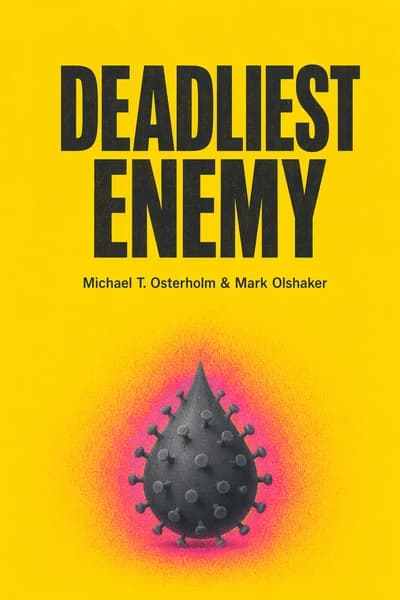
When Michael T. Osterholm was Minnesota's state epidemiologist, colleagues nicknamed him "Bad News Mike" for his unwelcome but necessary warnings to officials. This book, however, isn't about scaring you with dramatic images of bleeding eyeballs. It's about understanding the genuine threats we face from infectious diseases-humanity's deadliest enemy and the only illness type that can simultaneously disrupt society's functioning, halt travel and trade, and foster political instability worldwide.
Osterholm practices what he calls "consequential epidemiology"-changing what could happen through action rather than merely recording history after the fact. This approach was exemplified by giants like Dr. Bill Foege, who helped eradicate smallpox and saved countless millions. Despite Osterholm's 2005 warning in Foreign Affairs that time was running out to prepare for the next pandemic, little has changed. The book has become a favorite among public health experts, with Bill Gates calling it "the most important book you'll read this year" and The New York Times praising its "urgent clarity" about threats we cannot afford to ignore.
Kapitel 2
When the Unthinkable Becomes Reality
As public health epidemiologists, we connect dots to understand disease outbreaks by asking fundamental questions: Who? What? When? Where? Why? How? This detective work reveals patterns that help us confront emerging threats before they become catastrophic. Through careful analysis of data, patient histories, and transmission patterns, epidemiologists piece together the complex puzzle of how diseases spread through populations and communities.
The AIDS crisis demonstrated how a "black swan" infectious disease could emerge unexpectedly and cause immense suffering despite our understanding of transmission routes. In 1984, Secretary Heckler's promise of an AIDS vaccine within two years ignored HIV's fundamental nature as a retrovirus that persists indefinitely in cells, making it virtually impossible for vaccine-produced antibodies to win the earliest battle against infection. This optimistic timeline reflected a fundamental misunderstanding of HIV's unique characteristics and ability to evade immune responses, leading to decades of frustrated vaccine development efforts.
The human toll of AIDS became deeply personal for many healthcare workers and families. I experienced this firsthand when my aunt, Sister Romana Marie Ryan, contracted HIV from a contaminated blood transfusion during hip surgery in 1983. She died painfully in 1985 from Pneumocystis pneumonia, yet never complained, instead praying for others suffering from the disease. Her story exemplifies thousands of similar tragedies from the early years of the epidemic, when blood screening protocols were still being developed and implemented.
By 2014, nearly 37 million people worldwide were living with HIV, with 2 million new cases annually. Though 15 million receive antiretroviral therapy, 22 million do not. These statistics reflect both progress and persistent challenges in global healthcare access and distribution of life-saving medications. In sub-Saharan Africa, where the epidemic hit hardest, entire communities have been devastated, leaving behind generations of orphaned children and fractured social structures.
The AIDS epidemic serves as a dire warning about what's possible: despite understanding transmission routes, we couldn't halt behaviors that spread it. Evidence, knowledge, and logic weren't always enough to change human behavior-a lesson that applies to many infectious disease threats we face today. Cultural factors, stigma, lack of access to healthcare, and social inequalities all contributed to the virus's continued spread, demonstrating that medical knowledge alone is insufficient to combat major epidemics. The persistence of high-risk behaviors, even among well-informed populations, shows how complex the relationship is between human behavior and disease transmission.
This sobering reality has profound implications for how we approach current and future disease outbreaks, suggesting that successful public health interventions must address not only the medical aspects of disease but also the social, cultural, and behavioral factors that influence its spread. The lessons learned from AIDS continue to inform our approach to emerging infectious diseases, reminding us that scientific understanding must be coupled with effective communication, community engagement, and accessible healthcare solutions.
Kapitel 3
The Science of Disease Detection and Prevention
Growing up in Waukon, Iowa with an alcoholic, abusive father taught me when to stand my ground-a lesson that shaped my life and career in public health. My early experiences fostered resilience and an unwavering determination to help others. My interest in science merged with my love for mysteries when I discovered Berton Roueche's medical detective stories in The New Yorker. These meticulously researched narratives of disease outbreaks and their investigations set me on my path long before I knew the term "epidemiologist," showing how scientific methodology could solve real-world health puzzles.
Epidemiology studies disease patterns in populations to prevent illness, examining everything from infectious outbreaks to chronic conditions and environmental health threats. Public health, meanwhile, encompasses broader actions taken to improve community health, including policy changes, education programs, and preventive measures. My hero William "Bill" Foege, who helped eradicate smallpox globally, eloquently stated that "the purpose of public health is to promote social justice," with epidemiology as its scientific foundation. Quoting Primo Levi, he noted, "When you know how to relieve torment and don't, then you become the tormentor." This ethical imperative drives our field.
The public health agenda isn't preventing death-which remains 100% inevitable-but replacing bad deaths with good ones by preventing early, needless suffering. We strive to ensure people live full lives and die naturally of old age rather than preventable causes. Our dual goals are prevention first, through vaccination programs, health education, and environmental interventions, and when that fails, minimizing disease and disability through medical countermeasures and treatment protocols.
This approach was exemplified in my work with toxic shock syndrome (TSS) in 1980, a case study in modern epidemiology. When cases suddenly appeared in Minnesota, Wisconsin, and Utah, primarily affecting menstruating women, we launched a comprehensive investigation combining laboratory analysis, patient interviews, and statistical studies. Our research revealed that tampon absorbency, not just brand, was the critical factor-high-absorbency tampons released oxygen into the normally anaerobic vagina, transforming S. aureus bacteria into toxin factories. This discovery led to immediate practical applications: when manufacturers reduced tampon absorbency based on our findings, TSS cases dropped dramatically from thousands to dozens annually.
This investigation taught me crucial lessons that would guide my entire career: data can be easily misinterpreted without proper context, multiple scientific perspectives are vital for solving complex health problems, and asking the right questions prevents wrong answers. We learned to consider both biological mechanisms and real-world usage patterns, demonstrating how epidemiology bridges laboratory science and public health practice. The TSS investigation also highlighted the importance of clear communication with both industry and the public to implement effective solutions.
Kapitel 4
Understanding Our Microbial Adversaries
To understand infectious disease threats, we must recognize the ancient relationship between microbes and humans. Earth formed 4.5 billion years ago, with single-cell life appearing within the next billion years. For over 3 billion years, microbes were Earth's only life forms, creating conditions necessary for plants and animals to exist by producing our oxygen atmosphere and making soil nutrients available.
The crucial perspective is that microbes existed before us, coevolved with us, and will remain after we're gone. Despite our human superiority complex, we're the ones responding to their evolution, not vice versa. Microbes reproduce approximately every 20 minutes, while humans reproduce every 25 years-giving them a 40-million-to-1 generational advantage in evolutionary adaptation.
We further complicate matters by venturing into rainforests, concentrating populations, intensive livestock farming, and misusing antimicrobial drugs-all forcing microbes to adapt under new pressures. Among the microbe families (prions, viruses, rickettsia, bacteria, fungi, and parasites), viruses pose the greatest pandemic threat because they can rapidly mutate and some spread efficiently through respiratory routes.
Throughout most of human history, infectious disease outbreaks were limited by our scattered populations. The agricultural revolution 10,000 years ago changed everything by concentrating humans in villages and cities while domesticating animals, creating perfect conditions for zoonotic diseases to emerge.
Today's world has changed dramatically in ways that favor microbes. Global cooperation has declined since the Cold War era when superpowers could enforce health initiatives. Population growth has been explosive-from 800 million humans in 1900 to 7.6 billion today. Food animal populations have grown even faster, with each animal a potential incubator for new pathogens. Global travel and trade have accelerated dramatically, allowing diseases to spread worldwide before we even detect them. Climate change will likely expand the range of tropical diseases.
The battle lines are clear: microbial genetic simplicity and evolutionary speed versus human intellect and social organization. We can't overwhelm pathogens through numbers, so our survival depends on outsmarting them.
Kapitel 5
Our Most Powerful Weapon: Vaccination
Vaccines have profoundly shaped human history, offering unparalleled protection against deadly diseases. The concept traces back a millennium to Chinese healers who practiced variolation-scratching smallpox pus into skin or inhaling dried pus powder to confer immunity, despite significant risks.
Edward Jenner revolutionized this approach by using cowpox to immunize against smallpox, earning recognition as vaccination's father. American leaders quickly embraced this innovation-George Washington mandated smallpox inoculation for Continental Army soldiers, Thomas Jefferson declared in 1807 that "Medicine has never before produced any single improvement of such utility," and James Madison instructed the Post Office to carry smallpox vaccine without charge.
The impact has been staggering. Comparing 20th century disease rates to 2014 shows pertussis cases down 84%, measles down 99%, and polio, diphtheria and smallpox eliminated entirely. Early 1900s infant mortality of 20-30% has plummeted, with another 20% of children previously dying before age five.
Jonas Salk became an international hero in 1954 with his polio vaccine, freeing parents from the fear of iron lungs and children in leg braces. When asked who owned the patent, Salk famously replied, "Well, the people, I would say. There is no patent. Could you patent the sun?"-cementing his status as humanity's selfless deliverer from fear.
However, the vaccine business model has fundamentally changed. While routine immunizations remain viable, fewer manufacturers participate as government and insurance bulk purchasing has reduced profit margins. The economic disparity is stark: in 2014, the global pharmaceutical industry generated over $1 trillion in annual revenue, with just five leading drugs producing $49 billion in sales. Meanwhile, the top five vaccine manufacturers combined for only $23.4 billion-a mere 2-3% of the drug market.
Vaccine development follows a rigorous, expensive pathway through FDA-mandated clinical trials. After initial safety testing (Phase I) and dosage optimization (Phase II), vaccines enter Phase III trials-large-scale effectiveness testing across diverse populations. These double-blind studies represent what industry calls "the valley of death"-when substantial costs accumulate with no revenue generation.
The current model fails during emerging outbreaks like Ebola or Zika. Even with Project BioShield's initial $5.6 billion commitment, only smaller pharmaceutical companies participated in countermeasure development. The most promising development is the Coalition for Epidemic Preparedness Innovations (CEPI), which aims to manage epidemic outbreaks at early stages by filling market gaps in vaccine development.
Kapitel 6
The Persistent Killers: Malaria, AIDS, and TB
While pandemic threats capture headlines, three major infectious killers continue devastating global populations largely unnoticed by the developed world. In 2014-2015, approximately 36.9 million people lived with HIV (causing 1.2 million deaths), 9.6 million suffered from tuberculosis (1.1 million deaths), and malaria infected 214 million people (438,000 deaths). These diseases disproportionately affect the world's poorest regions, creating a cycle of poverty and illness that spans generations.
The Bill & Melinda Gates Foundation has taken leadership in addressing these persistent killers, operating on the premise that "All lives have equal value." Their efforts against malaria have been particularly significant, contributing to a 25 percent reduction in cases and 42 percent fewer deaths between 2004 and 2016. This success stems from a comprehensive approach including increased funding, timely diagnosis, indoor residual spraying, and distribution of insecticide-treated bed nets. The foundation has also pioneered innovative solutions like genetic modification of mosquitoes and development of new antimalarial drugs to combat growing resistance to traditional treatments.
HIV/AIDS has transformed from a death sentence to a manageable chronic disease in wealthy countries, but complacency masks its ongoing global impact. About 2 million new infections occur yearly, with sub-Saharan Africa accounting for 70 percent of cases. The disease particularly affects young women and adolescent girls, who are twice as likely to be infected as their male peers in some regions. Half of those living with HIV don't know they have it, and most lack access to prevention, care, or treatment. Cultural stigma, inadequate healthcare infrastructure, and the high cost of antiretroviral drugs continue to pose significant barriers to treatment.
The United States leads global efforts through PEPFAR (President's Emergency Plan for AIDS Relief), the largest health initiative ever launched against a single disease by one nation. Since its inception in 2003, PEPFAR has invested over $85 billion in the global HIV/AIDS response, saving an estimated 20 million lives. However, funding has flatlined despite growing case numbers-from 33.3 million in 2010 to 36.7 million in 2015. This stagnation threatens to undermine progress as the infected population continues to grow.
Tuberculosis remains a formidable threat despite its antiquated image. The WHO estimates one-third of the world's population may carry latent TB, with a 10 percent lifetime risk of activation. The emergence of multiple drug-resistant TB (MDR-TB) and extensively drug-resistant TB (XDR-TB) has complicated treatment efforts, with some strains resistant to most available medications. When TB combines with HIV, it creates an infectious-disease perfect storm, as compromised immune systems allow TB to spread rapidly. This deadly synergy is particularly devastating in regions with high HIV prevalence, where TB has become the leading cause of death among HIV-positive individuals. Despite killing 4,100 people daily, TB receives far less attention and funding than diseases like Ebola, highlighting a critical gap in global health priorities and resource allocation.
The persistence of these three diseases underscores the need for sustained international commitment, increased funding for research and treatment, and improved healthcare infrastructure in affected regions. Success against these killers requires not only medical interventions but also addressing underlying social and economic factors that perpetuate their spread.
Kapitel 7
The Emerging Threats: From Laboratory to Pandemic
Mary Shelley's Frankenstein provides a cautionary tale about scientific adventurism as a double-edged sword. Today, we face hyperevolution-human-engineered microbial changes that compress thousands of years of evolution or create changes evolution might never achieve. Technologies like chimera agents and CRISPR gene editing offer tremendous promise but also disturbing peril.
In 2011, two research teams created forms of H5N1 bird flu that could transmit through air between ferrets, raising serious concerns as this avian strain already had a 30-70% human fatality rate but couldn't transmit between people. The debate highlighted the extreme complexity of weighing potential benefits against clear risks for pathogens with pandemic potential.
Bioweapons present another grave concern. The 2001 anthrax letter attacks killed five people, infected 22, and cost over a billion dollars in decontamination efforts. Though the casualty count was relatively low, the terror impact was immense. Unlike other weapons of mass destruction, bioweapons present unique challenges-while the 9/11 attacks were "survivable" with recovery beginning immediately afterward, a bioterror attack would only be recognized days later, by which time victims would have spread the infection globally.
Smallpox remains one of history's deadliest killers, responsible for over a billion deaths throughout human history. Despite its eradication, the threat persists. In 2014, forgotten vials of variola were discovered in an FDA lab, highlighting the risk of accidental or intentional release. More alarming is the revolution in genetic sciences that makes laboratory recreation increasingly feasible.
Recent outbreaks like Ebola and SARS demonstrate how quickly diseases can emerge and spread. The 2014-15 Ebola epidemic resulted in over 28,600 cases and 11,325 deaths. The outbreak wasn't caused by a change in the virus-Africa itself had changed. Deforestation, modern transportation, urbanization, and traditional burial practices accelerated transmission.
SARS and MERS similarly showed how coronaviruses can emerge from animal reservoirs and spread globally. The SARS outbreak in 2003 spread rapidly from China through Hong Kong to multiple countries, causing $54 billion in worldwide economic losses. MERS, with a mortality rate between 30-40%, earned the nickname "SARS on steroids" and established itself in dromedary camels throughout the Middle East.
Kapitel 8
The Invisible Pandemic: Antimicrobial Resistance
Antimicrobial resistance represents a slow-motion worldwide pandemic, with each passing year diminishing our antibiotic firepower. The World Economic Forum warned that resistant bacteria may pose the greatest risk to human health, while economist Jim O'Neill's study determined that unchecked resistance could kill 300 million people worldwide in 35 years and stunt global economic output by $100 trillion.
Antibiotic overuse stems from fear among physicians who cannot reliably distinguish viral from bacterial infections. Dr. Spellberg explains, "It's brain-stem-level, sub-telencephalic, not-conscious-thought fear of being wrong." The dilemma becomes clear when considering a 25-year-old woman who was correctly sent home without antibiotics for apparent viral symptoms, only to return with fatal Lemierre's syndrome-a rare 1-in-10,000 bacterial complication.
About 70% of antibiotics in developed nations are used for animals rather than humans. Industrial farmers buy these drugs by the ton, using them to treat infections, prevent infections, control disease spread, and enhance growth. The dense conditions of modern animal agriculture create perfect conditions for rapid disease transmission.
Fighting antimicrobial resistance requires four essential priorities: preventing infections requiring antibiotics, protecting current antibiotics' efficacy, developing new antibiotics, and finding novel alternatives to reduce antibiotic dependence. Infection prevention has shown the most tangible progress, particularly in healthcare settings where seven of the CDC's eighteen urgent resistance threats originate.
The key to preserving our antibiotic arsenal isn't science or funding, but behavior change. Antibiotic stewardship means ensuring "the right drug for the right patient at the right time for the right duration, with the right diagnosis." This requires specialized infectious disease experts controlling powerful antibiotic prescriptions in hospitals and public reporting of antibiotic usage to identify overuse.
Kapitel 9
The King of Infectious Diseases: Influenza
While the public often dismisses seasonal flu as a minor inconvenience, it remains one of humanity's deadliest recurring threats, claiming between 3,000-49,000 American lives annually and hundreds of thousands globally. Influenza viruses are remarkably unstable organisms, constantly mutating through two distinct mechanisms: antigenic drift (gradual minor changes accumulating over time) and antigenic shift (sudden major genetic reassortment creating entirely new pandemic strains). Unlike more sensationalized outbreaks like Ebola or Zika, pandemic influenza isn't just possible-it's inevitable, with historical records documenting at least thirty major outbreaks since the 16th century.
The 1918-19 "Spanish Flu" pandemic stands as history's deadliest infectious disease event, killing approximately 100 million people worldwide-more than both World Wars combined. This particular strain proved especially terrifying because it inverted the typical flu mortality pattern. Instead of primarily affecting the elderly and infirm, it devastated young, healthy adults through an overwhelming immune response called a cytokine storm, essentially drowning victims in their own inflammatory fluids within days. Since that catastrophic event, three other significant pandemics have occurred: the 1957 H2N2 Asian flu (2 million deaths), the 1968 H3N2 Hong Kong flu (1 million deaths), and the 2009 H1N1 swine flu (estimated 284,000 deaths).
Today's influenza virus is evolving at an unprecedented rate, faster than any time in Earth's history. Modern industrial agriculture practices have created perfect viral evolution laboratories, with billions of densely packed poultry and 413 million swine globally providing ideal conditions for rapid mutation and reassortment between human, avian, and swine influenza strains. In 2015, the World Health Organization issued an alarming warning about the unprecedented diversity and geographical distribution of influenza viruses, noting particular concern about H5N1 and H7N9 avian strains.
Our current influenza vaccine system faces multiple unique challenges that make it distinctly problematic among all vaccines. It's the only vaccine requiring annual administration due to the virus's rapidly drifting antigens, and its effectiveness varies widely year to year. The system relies on imperfect global surveillance to predict which strains will circulate months in advance, and vaccines are manufactured using largely 60-year-old egg-based technology. Even when correctly matched to circulating strains, protection remains limited for reasons that continue to puzzle researchers, with effectiveness rates often falling below 50%.
Scientists are working toward a revolutionary universal influenza vaccine that would target the six hemagglutinin (HA) and three neuraminidase (NA) types that currently infect humans, providing broad protection even when antigenic drift and shift occur. Such a vaccine would represent a quantum leap forward, requiring only one dose per decade rather than annual shots. The ideal candidate would be easily manufactured at scale, distributed globally without complex cold chain requirements, and preferably be heat-stable and non-injectable. Several promising approaches are in development, including nanoparticle-based vaccines and those targeting conserved viral proteins, though a marketable solution remains years away.
Kapitel 10
A Battle Plan for Humanity's Survival
The author presents a nine-point Crisis Agenda addressing four major infectious disease threats within the context of climate change, water availability, global governance, economic disparity, and women's empowerment.
The most consequential action possible is developing a game-changing influenza vaccine and vaccinating the world's population. This is scientifically attainable with proper resources, requiring approximately $1 billion annually for seven to ten years-comparable to current HIV vaccine research investment but with greater chances of success.
Like climate change, antimicrobial resistance is a global crisis no single country can solve. We need an organization similar to the Intergovernmental Panel on Climate Change (IPCC), under UN authority, to serve as the scientific authority and moral conscience on antimicrobial resistance.
CEPI represents the first real advance in securing vaccines for pathogens of regional importance, bringing together governments, foundations, and manufacturers. But it's not thinking big enough-annual funding of $200 million is insufficient. We need $1 billion annually to develop, license, purchase, and distribute critically needed vaccines.
The past forty years have seen dramatic emergence of epidemic arboviral diseases transmitted by Aedes aegypti, while investment in control research has virtually disappeared. We need a global alliance of international institutions to develop effective strategies and research new tools like pesticides.
All our resources against killer germs are useless without leadership, accountability, and effective command structure. The WHO needs a major overhaul of governance and financial support, or we need a new organization entirely. A NATO-type treaty organization where member nations precommit resources would be ideal, keeping politics out of emergency response.
We need the same preparedness for infectious diseases that we maintain for military threats-personnel, "weapon systems" (vaccines, antibiotics), and visionary leadership like that of the Manhattan Project. Without collective action, the shadows of what "may be" will become the harsh reality of what "will be."