Kapitel 1
The Future in Our Hands: Mastering Foresight in a Reckless Age
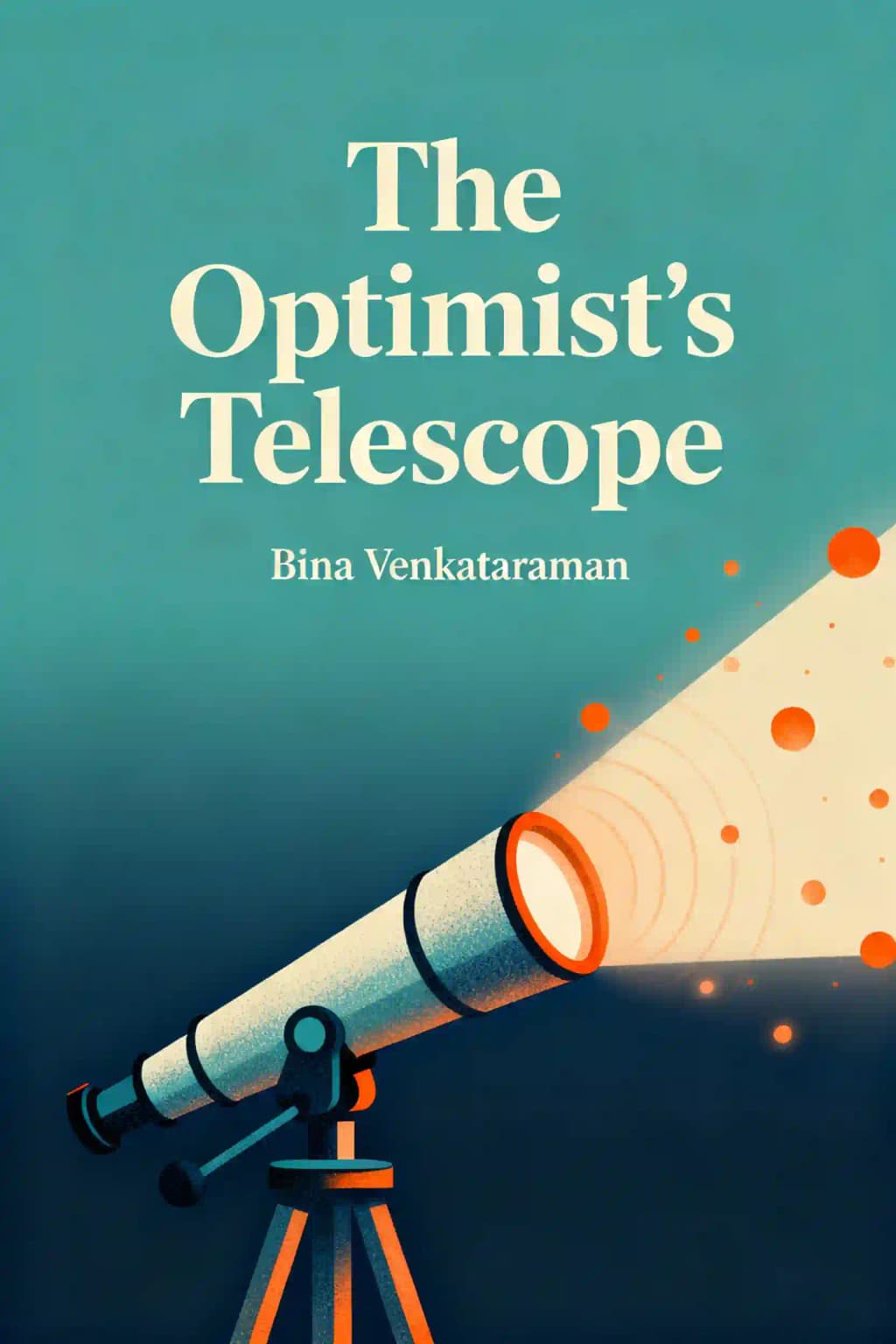
What if you could see the future? Not through supernatural powers, but through something far more accessible-intentional foresight. Bina Venkataraman's "The Optimist's Telescope" offers exactly this possibility, challenging our assumption that humans are inherently shortsighted. This New York Times bestseller has captured attention from business leaders to policymakers, with Bill Gates naming it one of his top picks and Barack Obama including it in his summer reading recommendations. The book arrives at a critical moment when our collective decisions about climate, technology, and resources will echo for generations. Drawing from her unique experience as a White House climate advisor and MIT teacher, Venkataraman doesn't just identify our shortsightedness problem-she provides a practical toolkit for overcoming it, making this work both timely and essential in our increasingly complex world.
Kapitel 2
When Warning Signs Go Unheeded
Nothing confronts us with the consequences of ignoring the future quite like personal disaster. Venkataraman opens with her own painful lesson-ignoring a suspicious rash after hiking in tick-infested woods, only to develop debilitating Lyme disease months later. This personal failure to heed warning signs mirrors a broader pattern she observed throughout her career: smart people making reckless decisions despite clear warnings.
We live in an era demanding foresight more than ever before. With unprecedented technological powers and environmental impacts, the stakes of our decisions have never been higher. Yet paradoxically, as our prediction capabilities have grown more sophisticated, our ability to act on those predictions remains stubbornly underdeveloped.
Consider how hurricane forecasting has evolved since Columbus's time. Today, meteorologists can map a storm's trajectory 72 hours in advance with remarkable precision. Yet most people facing hurricane warnings do little more than buy bottled water, failing to elevate homes, waterproof walls, or purchase flood insurance. Hurricane damage costs have skyrocketed into hundreds of billions, partly because people continue building in storm paths and don't prepare adequately.
The problem isn't just knowledge-it's imagination. Daniel Kahneman calls this "availability bias": future scenarios with colorful details seem more likely, regardless of actual probability. We incorrectly judge an earthquake in California as more likely than a catastrophic flood in North America simply because it's more geographically specific. Media coverage reinforces rare events like terrorist attacks while we underestimate common hazards.
Our capacity to imagine the future-what Thomas Suddendorf calls "prospection"-may be what distinguishes humans from other animals. This future-thinking relies on episodic memory, our ability to rearrange past experiences into new possibilities. When we successfully imagine the future, it becomes sensorially alive and motivates current choices. Studies show detailed future visualization can combat impulse buying among alcoholics, encourage teenage patience, and help obese people make healthier choices.
Virtual reality offers powerful tools for experiencing potential futures. At Stanford's lab, simulations of coral reefs showing present conditions and future degradation generate greater environmental concern than reading about ocean acidification. Commercial applications include aging suits that simulate cataracts and arthritis to sell elder care insurance. These tools help people feel the future-experiencing flooded streets or damaged homes before they occur.
Beyond technology, simple imagination exercises work too: writing letters to future generations, holding "Death Over Dinner" conversations, or drafting one's own obituary. For truly ambitious future-thinking, Danny Hillis is building a 10,000-year clock in a Texas limestone cliff, with ceramic bearings and sapphire windows, powered by temperature differences between day and night-a project that forces consideration of volcanic eruptions, language changes, and climate shifts beyond our lifetimes.
Kapitel 3
When Metrics Mislead Our Vision
Our obsession with metrics often replaces actual progress toward goals. A woman participating in a workplace step-counting competition found herself walking more but stopping at bakeries, gaining weight while her team climbed the leaderboard. The number of steps became a false measure of fitness, creating an illusion of health despite increased sugar consumption.
This "dashboard driving" means we steer by gauges like speed or fuel levels without seeing we're heading toward a cliff. Short-term metrics reinforce our availability bias-our tendency to prioritize what we can sense immediately. Daily targets, like those of NYC cabdrivers who quit early on rainy days after meeting earnings goals (despite greater earning potential), override long-term goals.
The microfinance industry's collapse in India's Andhra Pradesh state perfectly illustrates this danger. Vijay Mahajan, who pioneered microcredit in India through his organization BASIX, watched in horror as the industry imploded in 2010. Loan officers had aggressive incentives to sign as many borrowers as possible, with some offered 100% salary increases or free motorcycles for meeting targets. By 2010, the state held 30% of India's microloan portfolio despite having only 7% of its population.
SKS Microfinance, led by Vikram Akula, grew most aggressively, adding four million borrowers between 2008-2010 (488 loans per officer), making proper vetting impossible. After raising $150 million from venture firms, SKS went public in July 2010 valued at $1.5 billion. Muhammad Yunus criticized Akula's profit-focused model, warning of "loan sharks under the guise" of microfinance.
Despite warning signs reported in The Wall Street Journal and analysis identifying a dangerous credit bubble, Akula dismissed concerns by pointing to high repayment rates (99% at SKS). The bubble finally burst when desperate borrowers began committing suicide, prompting the state government to intervene, allowing borrowers to leave debts unpaid and triggering an industry collapse.
The repayment rates told a deceptive story, creating an illusion that masked threats to the industry. Only during his pilgrimage across India did Mahajan discover the truth: women's self-help groups masked individual inability to pay, borrowers were taking loans for survival rather than business, and many took new loans just to repay old ones-an unsustainable pattern despite high repayment rates.
Ancient wisdom offers perspective on our metrics obsession. Herodotus wrote of Solon, who told King Croesus that a life shouldn't be measured by wealth at a single moment but by its entirety across 26,250 days. When we measure only immediate achievements, we lose patience for endeavors requiring time to bear fruit.
We can resist this myopia by tuning out metric noise when it distracts from the big picture. Hedge fund investor Anne Dias shields herself from checking her portfolio too frequently, knowing investors who constantly monitor performance make panic-driven decisions that reduce profits. Studies show investors often sell outperforming stocks and keep underperforming ones due to emotional impulses to avoid immediate loss.
Kapitel 4
Breaking Free from Instant Gratification
The famous marshmallow test-where children who resist eating one marshmallow to receive two later show better life outcomes-isn't the full story about delayed gratification. A University of Rochester study revealed children's waiting behavior was strongly influenced by environmental reliability-those in environments where adults kept promises waited longer for rewards than those in unreliable settings.
Cultural factors also play a crucial role. German psychologist Bettina Lamm found 70% of Cameroonian children from subsistence farming families waited for double treats compared to only 30% of German children. The Cameroonian children, despite being economically poorer, were raised with different cultural values emphasizing respect, self-control, and responsibility.
Las Vegas represents the epitome of our reckless, present-focused culture-a place where casinos deliberately design environments to exploit our tendency toward instant gratification. Through sensory overload, free perks, and carefully crafted reward systems, casinos create an atmosphere where most people abandon wisdom about the future for immediate desires.
This casino mentality now extends to our everyday technologies-smartphones and social media provide constant dopamine hits through notifications and likes, training us to sacrifice future aspirations for urgent desires. The compression of time through technology has made waiting increasingly intolerable, leaving us anxious when gratification isn't immediate.
Yet within this environment, professional poker players represent a counterculture. Unlike typical gamblers, successful poker pros earn their living not through dramatic single plays but through patient strategy over time. They endure strings of losing hands, fold frequently, and wait for optimal opportunities to bet. Their subculture has its own language that reinforces delayed gratification, with the long path to success called "grinding."
We can cultivate similar countercultural habits in our lives. William Powers created such a practice with his family's "Internet Sabbath," abstaining from digital devices each weekend to enable deeper thinking and focused interactions. Corporate America is exploring similar approaches, with former Walmart executive Neil Pasricha advocating "untouchable days"-periods without meetings, calls, emails or social media that boost productivity and help complete long-term projects.
Poker champion Matt Matros overcame his fear of momentary losses by developing a strategic ritual before games. Rather than reacting emotionally at the table, he created a game plan with specific ratios of bluffs to value bets, anticipating scenarios he might face. This approach resembles what NYU psychologist Peter Gollwitzer calls "implementation intentions" or "if/then tactics"-a powerful technique for adhering to long-term goals amid immediate temptations.
In hundreds of studies across contexts from healthy eating to completing homework, Gollwitzer found that people who anticipate obstacles and plan specific responses dramatically improve their ability to resist short-term urges. The ritual involves envisioning concrete actions you'll take when faced with temptation: "If I feel tempted to check email because I hit a hard spot in my project, I'll take a short walk instead."
Kapitel 5
Designing Organizations for Wiser Decisions
Organizations make costly mistakes not just through deliberate fraud but through routine, legal decisions that sacrifice long-term interests for near-term profits. Dr. Sara Cosgrove, an infectious disease expert leading Johns Hopkins Hospital's antibiotic stewardship program, demonstrates how organizations can avoid such recklessness through her work fighting superbugs-bacteria resistant to antibiotics that now kill over 700,000 people annually.
The antibiotic crisis stems from a disconnect between doctors' knowledge and their actions. At Johns Hopkins, Cosgrove found that residents who knew when not to prescribe antibiotics still did so in practice. Several factors drive this behavior: fear of patients getting sicker, potential lawsuits, the medical culture's emphasis on providing treatment, and time constraints. As shifts wear on, doctors become more likely to prescribe unnecessarily-it takes "five times longer not to prescribe" because of patient explanations required.
To combat this, Johns Hopkins implemented a system requiring approval from infectious disease specialists before certain antibiotics could be prescribed. This buffer created reflection time and reduced antibiotic resistance without harming patients. Cosgrove's team now works collaboratively with doctors, creating small delays that allow for better decision-making.
Researcher Daniella Meeker discovered three effective approaches for primary care: requiring justification in electronic health records when prescribing antibiotics, sending monthly performance report cards comparing doctors to peers, and having physicians post commitment posters in exam rooms. These interventions worked better than education or financial incentives by setting cultural norms and buffering impulses rather than just providing information.
Organizations can design environments for foresight through "nudges"-carefully designed choice architecture that tips decisions toward better long-term outcomes while preserving freedom. Techniques include making retirement savings the default option, tracking antibiotic prescriptions through "bug-drug mismatches," and sharing patient stories to make abstract future consequences concrete.
Montessori classrooms uniquely feature single objects of a kind, building in natural delays of gratification as children must plan and wait for desired materials. Teachers rarely say "no," instead redirecting children toward alternatives-environmental cues that develop patience and foresight. This redirection principle appears elsewhere, like in Cuban bus stops where people ask "Quien es el ultimo?" to establish position but then disperse to socialize until buses arrive, creating distraction from the wait.
Kapitel 6
Investing with the Long View
In 1998, Ravenel and Beth Curry boarded a plane to Oregon facing potential ruin. Their investment firm, Eagle Capital Management, had underperformed the S&P 500 for four consecutive years during the dot-com boom, causing clients to withdraw funds. While Wall Street chased soaring tech stocks, the Currys refused to join the speculative frenzy, maintaining their philosophy of buying undervalued companies with 5-7 year growth potential rather than chasing quarterly profits.
When meeting with Peter Rothschild from the University of Oregon's foundation, the Currys expected to lose another account. Instead, Rothschild increased their allocation after confirming they wouldn't abandon their long-term strategy. Within 18 months, the market crashed and Eagle's performance vindicated their approach, ultimately growing to manage over $25 billion with 13% annual returns over twenty years-double the S&P 500's performance.
Eagle's investment strategy involves buying undervalued stocks with short-term headwinds likely to disappear over years. They profit from Wall Street's shortsightedness, seizing opportunities when traders overreact to irrelevant metrics and undervalue future growth potential. Amazon exemplifies this-it turned off many investors as costs skyrocketed and margins shrank, while actually building an empire through reinvestment.
Eagle employs "reverse stress tests" when evaluating investments: "Imagine looking back in five years feeling we made a grave mistake-what might have happened?" This approach mirrors Google X's "pre-mortems" where teams predict why projects might fail before launching them. The technique builds on Deborah Mitchell's research on "prospective hindsight"-explaining future events as if they've already occurred-which shifts focus from mere prediction to evaluating consequences of current choices.
When share prices dive, Eagle's team follows a disciplined response: they revisit their original investment thesis. After Microsoft's stock fell 40% in 2009, they investigated and found the drop related to declining PC sales, not their thesis about cloud computing leadership. They maintained their position and even bought more shares.
Most investment managers receive compensation based on annual performance, encouraging short-term thinking that contradicts their clients' long-term retirement goals. Eagle Capital deliberately avoids annual bonuses, instead tying compensation to the firm's long-term growth.
Some CEOs are adopting metrics that better align with long-term goals. When Paul Polman became Unilever's CEO in 2009, he stopped quarterly earnings predictions and tied executive compensation to sustainability goals like carbon reduction. Jeff Bezos defined his own metrics at Amazon, prioritizing customer growth and loyalty over profits. For nearly twenty years, Amazon reinvested revenue into new ventures rather than showing earnings to satisfy Wall Street.
As artificial intelligence advances, machines are increasingly competing with humans for cognitive tasks. While computers excel at pattern recognition from vast datasets-already replacing traders at firms like Goldman Sachs-humans retain advantages in understanding factors that don't follow historical patterns. Howard Marks notes that quantitative investment funds struggle to predict changes in patterns or anticipate aberrant periods. Humans can look beyond metrics and ask deeper questions about trends outside typical datasets.
Kapitel 7
Balancing Present and Future in Communities
Even mighty civilizations throughout history have collapsed by failing to heed warning signs of their demise. However, societies that survive existential threats do so through shared values, wise community practices, and deliberate government decisions that help them endure across generations.
The Green Diamond development in South Carolina exemplifies how political and economic pressures can override prudent planning. Led by Burroughs & Chapin, a legendary company that transformed Myrtle Beach from rural backwater to tourist destination, the project represented a departure from the company's traditionally cautious approach.
County Councilwoman Kit Smith, despite her prominent family background and natural charm, found herself socially ostracized for opposing the development. Though she'd previously enjoyed developer support in campaigns, her growing concerns about the project's wisdom led her to speak out publicly. She faced accusations of betraying the black community, dirty looks at church and book club meetings, and sleepless nights as she wrestled with the consequences of her stance.
Modern democracy systematically encourages shortsightedness. Politicians face constant pressure to win elections and secure campaign financing, prioritizing quick wins over long-term consequences. As Barbara Tuchman observed, the "lust for power" drives leaders across all political systems to make counterproductive decisions despite knowing better.
Leaders need strategic devices to resist shortsightedness under pressure. Like Odysseus having himself tied to the mast to resist the Sirens, political leaders can create mechanisms that enforce patience. Kit Smith used such an approach with Green Diamond, drafting a resolution that bought time for proper research while appearing to offer tentative support. This delay allowed the discovery of critical historical information: Columbia had previously been sued for $4 million after a levee breach on the same property decades earlier.
Smith's success in stopping Green Diamond came from buying time for deliberation and building an unlikely coalition that crossed party lines. When Republican hunter Weston Adams allied with liberal environmentalists, they created a potent force against short-term special interests.
Just months after Richland County's legal victory, historic rainfall hit South Carolina in October 2015, causing $12 billion in damages. Though devastating, this event paled compared to what might have happened had Green Diamond been built. Former floodplain coordinator Lisa Sharrard noted that the development could have led to a true catastrophe with "hundreds or even thousands of people" losing homes and jobs simultaneously.
Kapitel 8
Learning from the Past to Protect the Future
When the phone rang at 5:15 a.m. in Munich in 1972, psychologist Georg Sieber immediately suspected what had happened. As security advisor to the Olympic Games, he had predicted with uncanny accuracy the scenario unfolding-Palestinian extremists had scaled the Olympic Village fence and taken Israeli athletes hostage. Months earlier, Sieber had outlined twenty-six potential crisis scenarios, including this exact situation, but Olympic organizers had dismissed his warnings.
The Munich Olympic organizers' dismissal of security warnings stemmed from Germany's desire to overcome its Nazi legacy and present itself as carefree rather than militaristic. This demonstrates how collective trauma can distort future planning. Similarly, after 9/11, American companies overcompensated by paying exorbitant premiums against terrorist attacks.
Six years after the Fukushima disaster, TEPCO was rebuilding the Kashiwazaki-Kariwa plant with extensive safeguards specifically designed to prevent another tsunami disaster-forty-nine-foot seawalls, water reservoirs, emergency vehicles, and monthly drills. Yet when questioned about other threats like North Korean missiles, sea level rise, or climate change impacts, executives had no answers. Their "safest" nuclear plant was only safe from the specific disaster they had just experienced.
When the 2011 tsunami struck Japan, residents of Murohama and Aneyoshi survived by heeding ancient stone markers warning of past tsunamis. In Aneyoshi, a stone tablet commanded: "Do not build your homes below this point!" Both communities preserved this knowledge through cultural continuity and education. Yet these villages were exceptions. Hundreds of similar markers across Japan were ignored by other communities.
When people actively rehearse future scenarios rather than merely hearing about them, they become more willing to prepare. Games help communities understand and feel the consequences of loss from disasters they haven't experienced in their lifetime. Pablo Suarez found that humanitarian organizations fear "acting in vain"-spending resources on precautions for disasters that might not materialize-yet later regret inaction when disasters do strike.
Larry Susskind from Harvard Law School and MIT designed climate change games for coastal communities in Rotterdam, Singapore, Boston, and New England towns. Tracking hundreds of participants over two years revealed that playing these games significantly increased concern about local climate risks and willingness to support preparatory action. Most importantly, participants experienced increased belief that local action could make a difference-they gained a sense of agency despite catastrophic predictions.
Kapitel 9
Our Legacy to Future Generations
What will it take for communities and societies to be less reckless about choices that ripple across generations? This question brought together six specialists-a physicist, anthropologist, architect, linguist, archaeologist, and astronomer-in a Buffalo winter cabin. Their mission from the Sandia National Laboratories: devise a way to warn future humans, ten thousand years hence, about radioactive nuclear waste buried near Carlsbad, New Mexico.
Our generation faces unprecedented obligations. Nuclear waste represents one of our most enduring imprints on Earth, but other choices present similar conundrums. Climate change from fossil fuel use will continue heating the atmosphere for at least four decades even if we stopped emissions immediately. Scientists can now edit human embryos' genetic code with CRISPR, potentially changing human evolution forever despite our limited understanding of genetic trade-offs.
With such Promethean power to define future generations' existence-whether altering their climate or changing the species itself-we have extraordinary responsibilities. Yet most people struggle to think beyond a generation or two, limited by emotional ties to children and grandchildren.
Our generation neglects future interests by default. One economic tool that justifies this disregard is "social discounting." While it's rational for individuals to value immediate rewards over future ones, governments apply this concept to policy decisions by discounting future benefits at market rates. This approach fails to reflect society's values and aspirations. Using social discounting, we wouldn't build enduring wonders like the Brooklyn Bridge or establish National Parks. It's why we do too little about climate change.
Concern for future generations is nearly universal across cultures, religions, and political philosophies. Edmund Burke, the godfather of conservatism, described society as a partnership "not only between those who are living, but between those who are living, those are who are dead, and those who are to be born."
Georgetown law professor Edith Brown Weiss argues this partnership forms a social contract to protect every generation's welfare in relation to the planet. This concept of intergenerational stewardship appears in John Locke's writings, Thomas Jefferson's letters, Theodore Roosevelt's speeches, and ancient legal traditions like the public trust doctrine.
I've witnessed firsthand how communities can treat resources as shared heirlooms. In Mexico's Baja Peninsula, fishing villages transformed their approach to the Pacific red rock lobster fishery. After an abalone population crash in the 1980s, local leaders banded together to protect lobsters as a common inheritance for future generations. Their fishing cooperatives form a federation that polices the fishery, keeping each village honest and protecting against poachers.
The Ise Shrine in Japan, first built in 4 BCE, has been rebuilt every twenty years for over a millennium-a "living monument" that passes architectural skills to each generation. In the Italian Alps, the Bosco Che Suona ("woods that sing") has supplied spruce for Stradivarius violins for centuries, with careful harvesting that allows forest regeneration.
Kapitel 10
Hope for a Reckless Age
When we anticipate pleasant futures we've experienced before, we engage fully-planning vacations or weddings with empathy for our future selves. Yet when facing dreaded futures beyond our control, we often feel anxiety and paralysis. Our culture offers little guidance for engaging with threatening futures except as passive recipients of prediction.
To become less reckless, we must learn to weigh future threats and opportunities without paralysis or naivete. Despite growing knowledge about looming dangers, we've lacked ways to think about unsavory futures with imagination, empathy, and agency. Climate change discourse typically offers only three visions: climate doomsday, economic collapse from emissions cuts, or maintaining the status quo-none of which inspire action.
We need new ways of looking at the future where we see ourselves taking steps to make communities better despite real threats. Research by psychologist Paul Bain shows people across political spectrums are motivated to support environmental policies when they imagine futures with increased social warmth and morality.
Five key lessons can help us navigate our reckless age:
First, look beyond near-term targets by avoiding single data points as measures of progress, instead adopting rituals of reflection on long-range goals. Organizations should use multiple metrics and track trends over longer spans of time rather than singular snapshots.
Second, stoke the imagination by creating anchors to the future-perennial gardens, letters to our future selves, or sensory experiences of future risks through virtual reality. Leave time for minds to wander and generate future scenarios, practicing if/then rituals that help navigate those scenarios with agency.
Third, create immediate rewards for future goals by finding ways to make what's best for us over time pay off in the present. Businesses can apply long-range research to immediate challenges and develop technologies like perennial grains that bear fruit now while sustaining purpose over time.
Fourth, direct attention away from immediate urges by reengineering cultural and environmental cues that condition us for urgency and instant gratification. Organizations can use dedicated teams and technologies to interrupt hasty decisions, like inappropriately prescribing antibiotics or cutting corners in rocket programming.
Finally, demand and design better institutions that foster foresight. Vote for rules encouraging looking ahead, like catch shares that make fishermen long-range investors and legal frameworks protecting communities from lawsuits when exercising precaution about dangerous development.
While some actions can be taken immediately in our personal lives, others require exercising power as investors, voters, business leaders, teachers, consumers, and community members. The book suggests that smaller-scale communities and organizations have greater success exercising foresight. The author's hope comes from learning that even in this reckless age, we are not powerless-what once seemed inevitable about human nature is actually the result of past decisions. How we use our power to shape the future remains our choice.