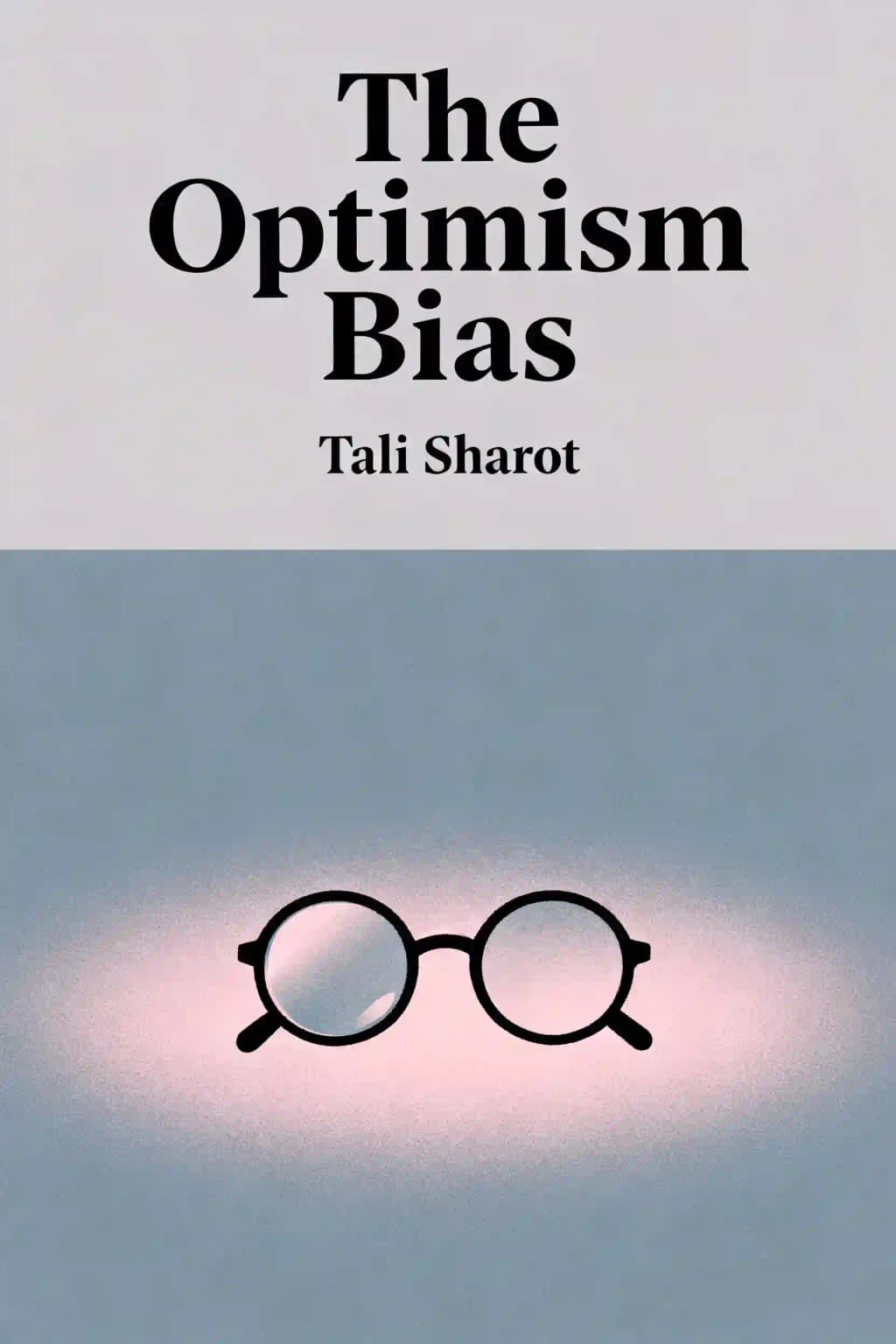
Why are we hardwired for hope despite reality? Neuroscientist Tali Sharot reveals how optimism bias shapes our decisions, success, and mental health. Annie Duke calls it "adaptive" - this counterintuitive science explains why seeing life through rose-colored glasses might actually be our evolutionary superpower.
Erlebe das Buch durch die Stimme des Autors
Verwandle Wissen in fesselnde, beispielreiche Erkenntnisse
Erfasse Schlüsselideen blitzschnell für effektives Lernen
Genieße das Buch auf unterhaltsame und ansprechende Weise
What if I told you that right now, as you read this sentence, your brain is quietly deceiving you about your future? Not maliciously, but systematically-painting tomorrow in rosier hues than reality will likely deliver. About 80% of us walk around convinced that our personal futures will be brighter than statistics suggest, that we're less likely than our neighbors to get divorced, develop cancer, or fail at our goals. This isn't personality or temperament. It's neuroscience. Our brains are hardwired with an optimism bias so fundamental that it operates below conscious awareness, shaping every decision we make. Your brain didn't evolve to show you truth. It evolved to keep you alive. Consider the checker shadow illusion, where two identical gray squares appear dramatically different because your visual system "corrects" for shadows. Even knowing they're identical doesn't help-you still see different shades. This isn't a bug; it's a feature. For most of human history, quickly interpreting shadows mattered more than perfect accuracy. Cognitive illusions work the same way, but they're far harder to detect in ourselves. Take the superiority illusion: 93% of American drivers rate themselves above average. Mathematically impossible, yet we all nod along, certain we're the exception. When a pilot with thousands of flight hours crashes because his brain insists the plane is level when it's banking toward disaster, or when we confidently explain choices we never actually made, we're witnessing the same phenomenon: our neural systems create compelling illusions we mistake for reality. The question isn't whether we're biased-it's whether this beautiful lie serves us or sabotages us.
Zerlegen Sie die Kernideen von The Optimism Bias in leicht verständliche Punkte, um zu verstehen, wie innovative Teams kreieren, zusammenarbeiten und wachsen.
Destillieren Sie The Optimism Bias in schnelle Gedächtnisstützen, die die Schlüsselprinzipien von Offenheit, Teamarbeit und kreativer Resilienz hervorheben.

Erleben Sie The Optimism Bias durch lebhafte Erzählungen, die Innovationslektionen in unvergessliche und anwendbare Momente verwandeln.
Fragen Sie alles, wählen Sie die Stimme und erschaffen Sie gemeinsam Erkenntnisse, die wirklich bei Ihnen ankommen.

Von Columbia University Alumni in San Francisco entwickelt
"Instead of endless scrolling, I just hit play on BeFreed. It saves me so much time."
"I never knew where to start with nonfiction—BeFreed’s book lists turned into podcasts gave me a clear path."
"Perfect balance between learning and entertainment. Finished ‘Thinking, Fast and Slow’ on my commute this week."
"Crazy how much I learned while walking the dog. BeFreed = small habits → big gains."
"Reading used to feel like a chore. Now it’s just part of my lifestyle."
"Feels effortless compared to reading. I’ve finished 6 books this month already."
"BeFreed turned my guilty doomscrolling into something that feels productive and inspiring."
"BeFreed turned my commute into learning time. 20-min podcasts are perfect for finishing books I never had time for."
"BeFreed replaced my podcast queue. Imagine Spotify for books — that’s it. 🙌"
"It is great for me to learn something from the book without reading it."
"The themed book list podcasts help me connect ideas across authors—like a guided audio journey."
"Makes me feel smarter every time before going to work"
Von Columbia University Alumni in San Francisco entwickelt

Erhalten Sie die The Optimism Bias-Zusammenfassung als kostenloses PDF oder EPUB. Drucken Sie es aus oder lesen Sie es jederzeit offline.