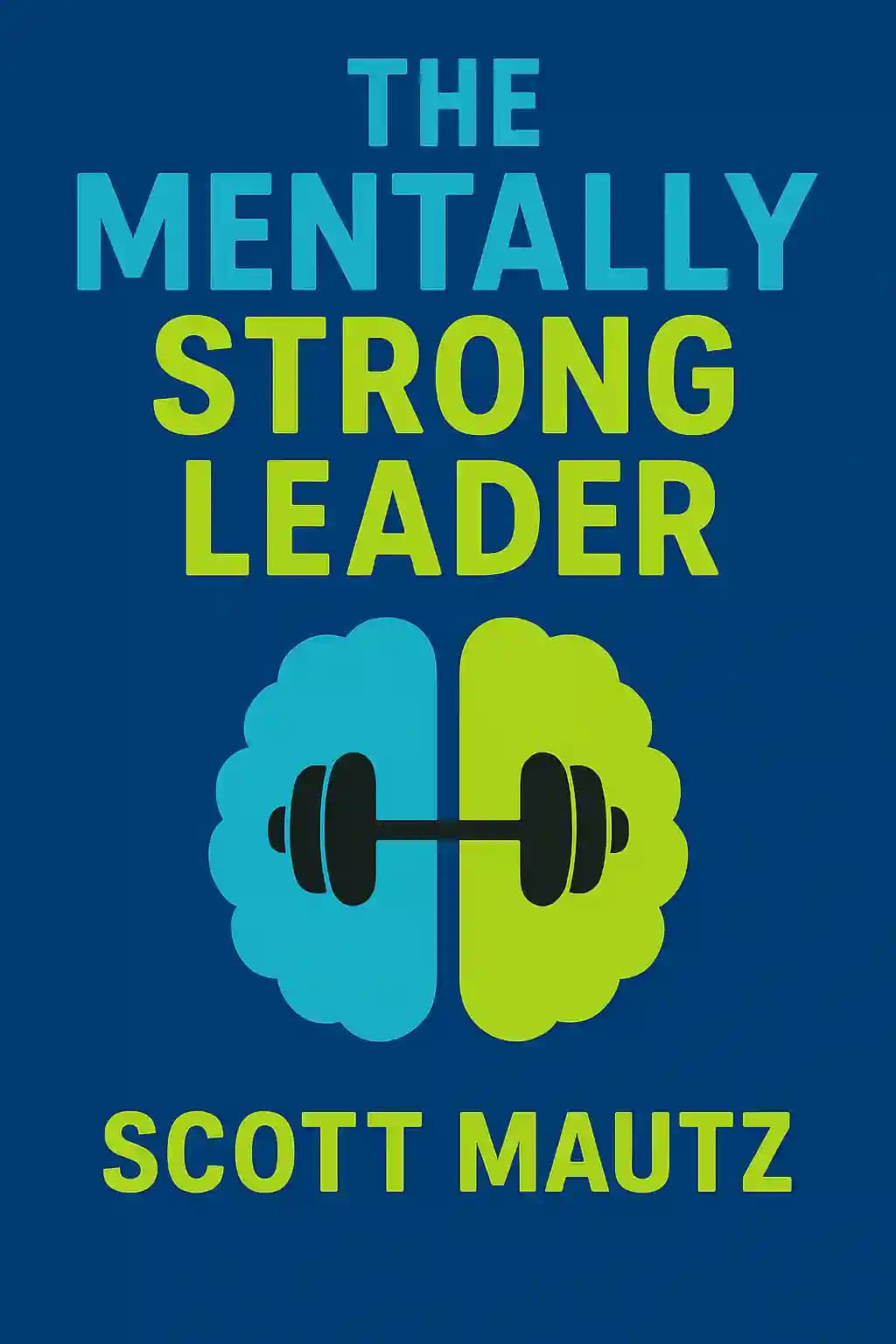
Discover the science-backed blueprint for mental fortitude in leadership. Based on research with 3,000 executives, Mautz reveals six core attributes of mentally strong leaders. What's the one trait 91% of high-achieving organizations share that you might be missing?
Scott Mautz, bestselling author of The Mentally Strong Leader and a globally recognized authority on workplace psychology and leadership resilience, combines decades of corporate leadership with evidence-based strategies for mental toughness.
A former Procter & Gamble executive who transformed billion-dollar divisions, Mautz ties his firsthand experience managing high-pressure teams to the book’s focus on building emotional regulation, crisis leadership, and sustainable performance habits.
He teaches executive education at Indiana University’s Kelley School of Business and authored the acclaimed Make It Matter: How Managers Can Motivate by Creating Meaning (a “Leadership Book of the Year” finalist) and Find the Fire: Reignite Your Inspiration & Make Work Exciting Again.
A weekly Inc. Magazine columnist and LinkedIn Learning instructor, Mautz’s frameworks have been featured in Harvard Business Review, Entrepreneur, and top leadership podcasts. The Mentally Strong Leader debuted as a Wall Street Journal bestseller, distilling his 30+ years of research and corporate leadership into actionable tools for modern executives.
The Mentally Strong Leader teaches leaders to build habits for self-regulating emotions, thoughts, and behaviors to achieve exceptional outcomes. It focuses on six mental muscles: fortitude, confidence, boldness, decision-making, goal-focus, and messaging. The book includes over 50 practical tools and a 50-question Mental Strength Self-Assessment to help leaders navigate challenges and sustain high performance.
This book is ideal for managers, executives, and professionals seeking to strengthen leadership resilience and emotional regulation. It’s particularly valuable for those navigating high-stress environments, career transitions, or organizational change. Scott Mautz’s research-backed frameworks also benefit educators, coaches, and anyone interested in self-leadership development.
Yes—the book blends 30 years of leadership research with actionable habit-building strategies. It’s praised for its structured approach to mental strength, offering tailored tools for overcoming procrastination, perfectionism, and decision paralysis. The inclusion of self-assessment and real-world applications makes it a practical resource for sustained professional growth.
The six core habits focus on:
Scott Mautz defines mental strength as “the ability to self-regulate emotions, thoughts, and behaviors productively, no matter the circumstances.” It emphasizes internal management to improve external leadership impact, particularly during challenges like uncertainty, criticism, or failure.
The book includes:
These are designed to create customized habit-building plans.
Unlike theoretical approaches, Mautz emphasizes habit formation through neuroscience-backed techniques. The book’s unique structure allows readers to focus on specific weaknesses (e.g., confidence vs. decision-making) rather than generic advice. It also integrates self-assessment for personalized growth.
Some readers may find the 50+ tools overwhelming without prioritizing. The self-guided format requires disciplined implementation, which could challenge those preferring step-by-step programs. However, the modular design lets users focus on relevant sections.
The book addresses common issues like managing difficult conversations, maintaining focus during crises, and rebuilding team morale. For example, its Problem-Solving Eye framework helps leaders reframe obstacles into solvable challenges.
Key quotes include:
These emphasize proactive emotional regulation.
While focused on self-leadership, the principles apply to influencing teams. The “messaging” habit, for instance, teaches leaders to model positivity and clarity to inspire others. Mautz also includes strategies for upward and peer leadership.
Drawing from his Procter & Gamble executive career, Mautz combines academic research with real-world testing. His frameworks for sustaining motivation and transforming organizational culture stem from leading billion-dollar divisions while improving employee engagement scores.
Erlebe das Buch durch die Stimme des Autors
Verwandle Wissen in fesselnde, beispielreiche Erkenntnisse
Erfasse Schlüsselideen blitzschnell für effektives Lernen
Genieße das Buch auf unterhaltsame und ansprechende Weise
Mental strength isn't just a trendy concept.
Confidence isn't about eliminating doubt but managing your relationship with it.
Boldness requires the right frame of mind-one focused on possibilities rather than limitations.
Your messaging directly impacts how employees view themselves and their work.
Mental strength isn't an innate trait but develops through habits.
Zerlegen Sie die Kernideen von Mentally Strong Leader in leicht verständliche Punkte, um zu verstehen, wie innovative Teams kreieren, zusammenarbeiten und wachsen.
Erleben Sie Mentally Strong Leader durch lebhafte Erzählungen, die Innovationslektionen in unvergessliche und anwendbare Momente verwandeln.
Fragen Sie alles, wählen Sie Ihren Lernstil und gestalten Sie Erkenntnisse, die wirklich zu Ihnen passen.

Von Columbia University Alumni in San Francisco entwickelt
"Instead of endless scrolling, I just hit play on BeFreed. It saves me so much time."
"I never knew where to start with nonfiction—BeFreed’s book lists turned into podcasts gave me a clear path."
"Perfect balance between learning and entertainment. Finished ‘Thinking, Fast and Slow’ on my commute this week."
"Crazy how much I learned while walking the dog. BeFreed = small habits → big gains."
"Reading used to feel like a chore. Now it’s just part of my lifestyle."
"Feels effortless compared to reading. I’ve finished 6 books this month already."
"BeFreed turned my guilty doomscrolling into something that feels productive and inspiring."
"BeFreed turned my commute into learning time. 20-min podcasts are perfect for finishing books I never had time for."
"BeFreed replaced my podcast queue. Imagine Spotify for books — that’s it. 🙌"
"It is great for me to learn something from the book without reading it."
"The themed book list podcasts help me connect ideas across authors—like a guided audio journey."
"Makes me feel smarter every time before going to work"
Von Columbia University Alumni in San Francisco entwickelt

Erhalten Sie die Mentally Strong Leader-Zusammenfassung als kostenloses PDF oder EPUB. Drucken Sie es aus oder lesen Sie es jederzeit offline.
A television executive sits in her boss's office, hearing words that would devastate most people: "You're fired." But Oprah Winfrey didn't crumble. She didn't rage. She regulated her emotions, reframed the moment, and moved forward-eventually building a media empire that changed millions of lives. What separated her from countless others facing similar setbacks? Mental strength. Not toughness. Not stubbornness. The disciplined ability to manage thoughts, emotions, and behaviors when circumstances demand your best but deliver their worst. This isn't motivational fluff. Research shows mentally strong leaders achieve organizational goals at rates 22% higher than their peers. Bill Gates calls it "the most important skill I've ever developed." From Satya Nadella reshaping Microsoft's culture to Sara Blakely building Spanx through relentless rejection, the pattern is clear: mental strength separates exceptional leaders from merely competent ones. And unlike technical skills that become obsolete, this capability only grows more valuable as complexity increases. Leadership presents six specific challenges where mental strength determines success or failure-daily battles that reveal who thrives and who merely survives.
**Fortitude** is self-determination to persevere when everything pushes you to quit. When a major retailer made impossible demands on Sharon, a business leader at a packaged goods company, sales dropped 15% and her team panicked. She held steady, reframing the disaster as an opportunity to diversify partnerships. Within eighteen months, she'd recovered and built more profitable relationships. Fortitude fuels problem-solving, helps you thrive under pressure, and gives you strength for difficult conversations. **Confidence** manages your relationship with doubt. Maya, managing her nonprofit's biggest project, could have drowned in imposter syndrome. Instead, she used doubt to prepare thoroughly while projecting calm assurance. Her team succeeded brilliantly. Confidence isn't eliminating doubt-it's refusing to let doubt eliminate you. Steve Kerr, champion coach of the Golden State Warriors, emphasizes: "Your team needs to see you as confident"-anything less caps your group's potential. The **Doubt Continuum** helps you evaluate where you stand: overconfident, perfectly confident, embracing healthy doubt, or paralyzed by fear. When overconfident, seek contradiction. When paralyzed, employ "name and reframe"-identify what you're truly afraid of and transform it. "I might fail" becomes "I'm creating an opportunity to learn." **Boldness** focuses on possibilities rather than limitations. When Kurt, a school administrator, proposed reshaping teacher-parent interactions, skeptics dismissed it: "That doesn't work in this district." He maintained a possibility-focused mindset, launched pilots, and gradually won support. Boldness drives big thinking, emboldens smart risk-taking, and gives you conviction to lead meaningful change. Group narratives often become collective limiting beliefs. Breaking these cycles requires challenging assumptions and revealing that real barriers are often fear rather than facts.
**Messaging** shapes how others perceive themselves and their work. When Charlotte's maternity benefits proposal was rejected, she regulated her emotions, listened actively, and responded thoughtfully. One month later, her revised proposal succeeded. The **Redirect Rhythm** manages negative emotions through four steps: create space by breathing, name your emotions, reassess the situation, and redirect to what's next. This process helps you choose beneficial actions rather than letting emotions derail you. **Decision-making** gets compromised when emotions hijack logic. CEO Vijay, facing venture capital takeover, used disciplined, data-based decisions that impressed the board and preserved his leadership. The **Bias Buster** tool identifies twelve common biases, from sunk cost bias to availability bias. The **Who, What, How Questions** prevents chaos by clarifying who decides, what you're deciding, and how you'll decide. The **Decision Timing Table** guides optimal timing: at realistic deadlines, when energy peaks, after reflection, when focused, and when you add unique perspective. **Goal-focus** requires regulating wayward thoughts to maintain direction. Sales leader Javier, tasked with increasing sales 25% in a slow-growth category, kept his team focused despite setbacks. By celebrating small victories and controlling controllable factors, they achieved explosive final-quarter results. Accountability powerfully maintains goal focus. Merely committing to a goal gives you 25% success probability, but committing to someone important raises odds to 65%. Regular Accountability Appointments boost success to 95%.
Mental strength develops through habits-small systems of self-regulation that bring discipline to thoughts, feelings, and behaviors. Focus on habits relevant to your specific challenges rather than mastering everything. The **Lenses of Resilience** tool reframes setbacks four ways: seeing opportunities in challenges (Agreeable Adversity Lens), focusing on progress (Gratitude Lens), choosing action over emotional reaction (Respond versus React Lens), and building resilience through relationships (Perspective Lens). **Grindfulness** combines gratitude and mindfulness-being present in daily life, noticing details, expressing appreciation in the moment. Lower the bar on what deserves gratitude while raising the frequency of expressing it. Acknowledge punctuality, celebrate small wins, or find learning moments in routine tasks. The **Criticism Critical Path** handles feedback through three steps: First, decide if criticism is relevant by setting criteria for who qualifies to criticize you. Second, neutralize your emotional reaction and practice active listening. Third, extract valuable insights by methodically sifting through feedback. Avoiding criticism makes you weaker-not the criticism itself. The **Self-Acceptance Scale** ensures you remain anchored in authentic self-worth. The 90:10 Rule: derive 90% of self-worth from self-acceptance and only 10% from external validation. The **Figure-It-Out Figure Eight** framework develops learning agility through continuous cycles: being learning-oriented, expanding observation, unlearning limiting beliefs, taking calculated risks, and recalibrating based on results. This builds confidence through competence, turning unknown situations into growth opportunities.
The **Problem-Solving Eye** framework moves from narrow to broad and back to narrow. Start with the right mindset: believe you can solve the problem, stay flexible, and attack problems rather than people. When addressing declining sales, examine specific customer feedback (narrow), explore broader market trends (broad), then implement targeted solutions (narrow again). Successful leaders create triggers that activate these habits-morning reflection sessions, pre-meeting preparation routines, end-of-day gratitude practices. The **Think Big Blueprint** expands possibilities: give yourself permission to dream big, uncover limiting beliefs, replace them with empowering alternatives, identify limiting behaviors, replace those with empowering actions, use power prompts to spark big thinking, and develop big-thinker attributes. Instead of asking "Can we afford this?", bold leaders ask "How can we make this financially viable?" The **Flip the COIN** exercise breaks limiting group narratives: Challenge assumptions by separating facts from assumptions; Open minds to introspection; Introduce new information; Navigate underlying emotions. When teams say "We don't have the budget," COIN reveals the real barrier is often fear of accountability. Creating a culture of courage requires closing the "say-do gap." Research shows executives believe only 2-5% of failures are truly blameworthy, yet 70-90% are treated as such. To foster genuine risk-taking, establish clear rules about good and bad risks, celebrate "failed" risks through "failure parties" that highlight learning, and help teams see change happening FOR them rather than TO them by identifying specific benefits and creating safe spaces for expressing concerns.
The **PALMS Up** exercise manages anger: Project (consider how losing control looks); Accept (acknowledge different viewpoints); Laugh (use humor); Measure (ensure proportional reactions); Separate (distinguish person from point). The **Eight to Eliminate** tool removes demotivating phrases like "It's your fault" (replace with "What should we do next?") and "I'll do it myself" (replace with "Is there anything I can do to help?"). Active listening means catching what's unsaid and validating feelings. The **WAIT** acronym (Why Am I Talking?) prevents interruptions. The **Window of Transparency** framework builds trust through five practices: share information, explain decisions, be honest about standing, acknowledge shortcomings, and avoid hidden agendas. Consistent transparency drives engagement, loyalty, and smart risk-taking - creating a cycle where trust enables better communication, which deepens trust further. Your words shape culture and determine whether people feel valued or dismissed, making communication skills critical for mentally strong leaders.
The **Cascading Goal System** creates intrinsic motivation by flowing from purpose (your "why") to macro-goals (major objectives) to micro-goals (manageable steps). While writing goals increases achievement, visualizing both goals and required work proves more powerful. The **GRAB** (Goal Realization and Action Board) combines images of goals with visuals of specific work needed, making your brain assign higher value to these objectives. The **Control Check** creates two columns: Setbacks and Systems. List barriers in Setbacks, circle only what you control, then list processes in Systems-"goals set direction, but systems make progress." The **Circle of Perpetual Progress** builds momentum through communicating progress, reconnecting achievements to advancement, celebrating wins, and removing barriers. For decisions: Debate. Decide. Commit. Use the **Decision Confidence Test**: evaluate time frames, test against past decisions, assess feasibility, and verify vision alignment. Mental strength isn't binary-everyone has a baseline to build from. Identify strengths and gaps, then adopt specific habits: strengthen fortitude through resilience, build confidence by managing doubt, cultivate boldness by challenging limiting beliefs, improve messaging through emotional regulation, enhance decision-making by overcoming biases, and sharpen goal-focus through accountability. Mental strength means disciplining thoughts, managing emotions intentionally, and committing to growth when everything wants you to quit. That's the superpower separating good leaders from great ones.