Kapitel 1
The Tribal Mind: How Societies Form and Why They Matter
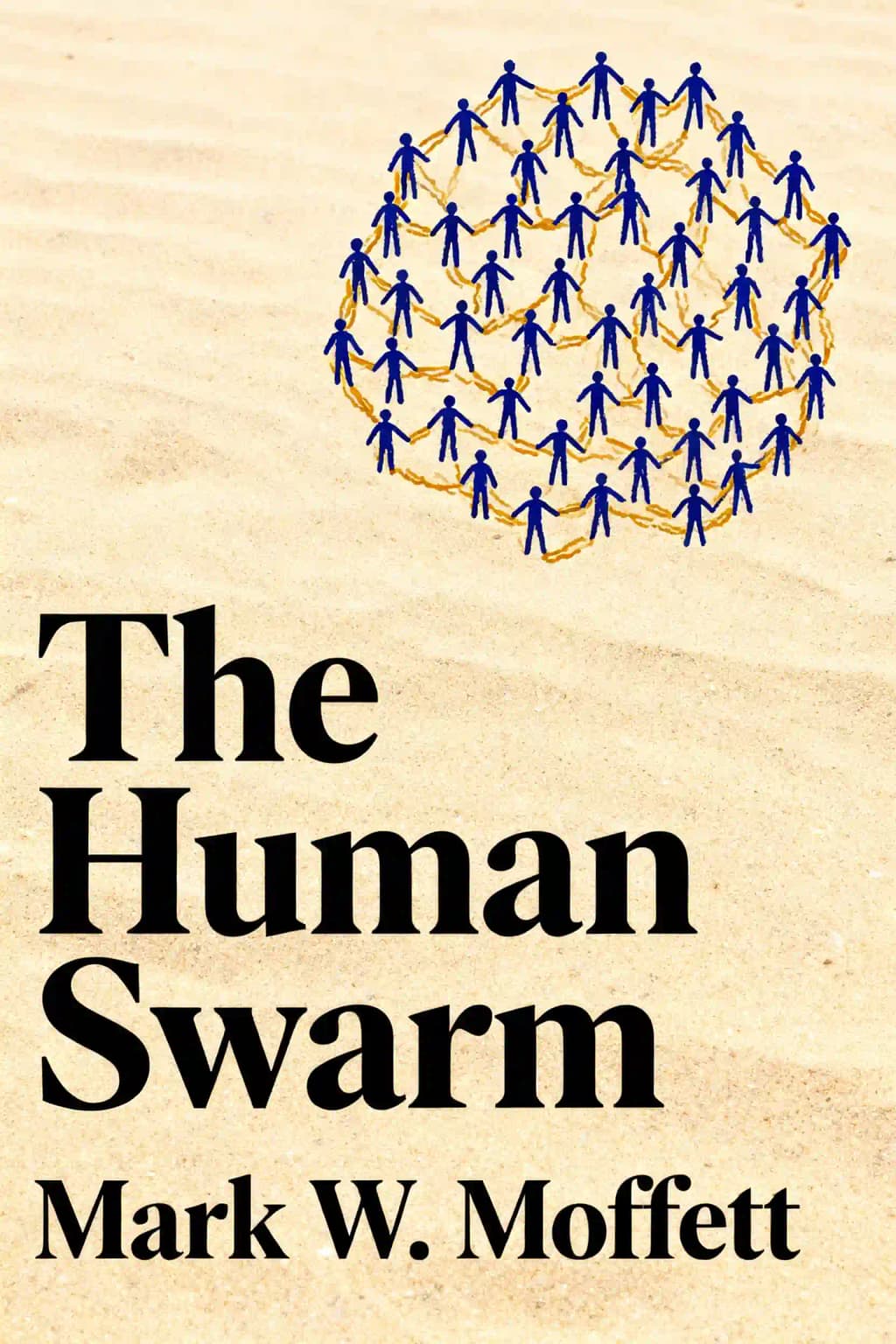
What makes humans willing to die for their country? Why do we instinctively categorize strangers as "one of us" or "one of them" within milliseconds? In Mark W. Moffett's groundbreaking work "The Human Swarm," we discover the biological foundations of our most powerful social bonds. This New York Times bestseller has captivated readers from Bill Gates to E.O. Wilson, who called it "a magnificent exploration of human societies." Drawing from decades of field research studying both human tribes and animal societies, Moffett reveals the uncomfortable truth: our tendency to form exclusive societies with rigid boundaries isn't a modern invention but a fundamental aspect of our evolutionary heritage-one that connects us more closely to ants than to our primate cousins.
Kapitel 2
Societies: More Than Just Cooperation
What exactly is a society? While many biologists define societies by cooperation, Moffett argues this approach misses the mark. A society is fundamentally a discrete group with shared identity that persists across generations and sets members apart from outsiders. The critical feature is that societies are "bounded"-membership changes rarely and arduously.
This definition captures what most people intuitively understand as "society," though any definition breaks down at interesting edges. The Kurds in Iran, for instance, illustrate how conflicting identities can either strengthen societies or tear them apart.
Robin Dunbar's research shows humans can maintain about 150 close relationships-far too few to explain even small societies. No human society has ever consisted solely of mutual friends; even in the smallest tribes, people pick and choose their companions. Societies, distinguished by member identities, transcend personal networks.
Unlike other species, humans maintain social functioning through rules and penalties that enforce fair exchanges across strangers. Despite shared benefits, societies experience internal conflicts and even violence, yet can endure for centuries despite dysfunction.
Cooperation exists without forming societies. The vast majority of Earth's organisms-over 99 percent of species-thrive as solitary individuals. For most creatures, staying close to others means competing for the same resources. Even basic social units like mated pairs or mother-offspring relationships aren't universal-salmon release eggs to be fertilized in open water, and turtles abandon eggs after hiding them.
What holds societies together isn't just cooperation but identity-a psychological sense of belonging that transcends personal relationships and creates a foundation within which cooperative networks can flourish.
Kapitel 3
The Benefits of Social Living
What do members get from belonging to societies? For both humans and other social species, the answer falls into two overlapping categories: societies provide, and they protect.
In providing resources, societies offer access to dependable long-term helpers-particularly valuable for mothers raising young. Gray wolves and Florida scrub jays practice cooperative breeding, with offspring assisting parents in raising siblings. Helper meerkats babysit, clean burrows, and supply insect prey to young. In some monkey species, inexperienced females gain practice handling babies under the watchful eyes of mothers.
Societies also enable efficient group hunting, though cooperation varies by species. Painted dogs require teamwork, while lions can be lazy about joining hunts. Knowledge transfer represents another benefit, as seen in bottlenose dolphins teaching young to drive fish onto beaches, and in chimpanzees passing down traditions.
The protection societies provide is equally crucial. Chimpanzee males guard territory and resources partly to prevent females from defecting to other groups. Many species secure dens for young or defend valued topographic features: lookouts for wolves, windbreaks for horses, and safe sleeping spots for primates.
Within societies, animals form personalized relationships and networks that serve various functions. Gray wolves and horses turn to special companions for comfort, lionesses form creches with females raising cubs simultaneously, and male bottlenose dolphins maintain lifelong partnerships that help in courting females and fending off rivals.
These tight bonds don't guarantee an easy life. Societies become battlegrounds where individuals struggle for resources and status. Power differences create social hierarchies that cause physiological stress in many species, particularly evident in primates and spotted hyenas.
Kapitel 4
Moving Together and Apart
The benefits societies offer are fundamentally shaped by movement patterns. For many species, separation from the group constitutes an emergency. When a painted dog in Botswana becomes separated from her pack, she hoots anxiously until receiving a response, then bounds toward her companions.
Not all societies require constant proximity. Most intriguing are the "fission-fusion" species, whose members temporarily cluster in social groups that form, dissolve, and reform elsewhere. This is the primary social pattern for spotted hyenas, lions, bottlenose dolphins, bonobos, and chimpanzees-and humans.
In these societies, animals travel as best serves their social success, using their social intelligence to navigate relationships with fewer physical constraints. Freedom of movement allows for more complex social interactions and provides relief from adversaries. Spreading out also allows territories to sustain larger populations as resources aren't depleted by everyone feeding in the same area simultaneously.
Whether animals are "together" or "apart" depends on their sensory capabilities. Elephants, with superior hearing, remain connected through low-frequency rumbling across kilometers, coordinating activities despite physical separation. They're more informed about each other's movements than baboons in a compact troop.
For society members to act in concert, what matters isn't physical proximity but awareness of others' locations. Even in dispersed fission-fusion societies, animals maintain contact through vocalizations: hyenas whoop, chimps pant-hoot, lions roar, and wolves howl-keeping communication lines open without complete isolation.
Kapitel 5
The Recognition Limit
Societies based on individual recognition face an inherent size ceiling. With the exception of humans, ape societies peak at about 200 members in chimpanzees. Larger animal groupings are typically aggregations-schools, flocks, herds-not societies with rigid memberships.
These can reach millions (herring schools, quelea flocks) because they're "crowds of strangers" with minimal individual recognition. Geladas demonstrate these constraints clearly. Despite foraging in herds of hundreds, they recognize only 20-30 individuals-their immediate troop. Alpha males treat all outside males as interchangeable threats, unable to distinguish between them.
This reveals a fundamental limitation: societies based on individual recognition face an inherent size ceiling. Chimpanzees need to know everybody. Ants need to know nobody. Humans only need to know somebody. And that has made all the difference.
Kapitel 6
Anonymous Societies: The Ant Solution
Despite our genetic closeness to chimps and bonobos, ants are the animals humans most resemble socially. Among the 14,000+ ant species, leafcutters exemplify social complexity with their agricultural practices-harvesting leaves to cultivate fungus gardens ranging from baseball to soccer-ball size.
Unlike most vertebrate societies, many ant species establish permanent settlements, basing operations from central nests rather than constantly moving. Some leafcutter nests can reach the square footage of a tennis court, with elaborate tunnel systems extending six meters underground. These metropolises face resource challenges similar to human cities, requiring extensive foraging networks and commuting routes.
With large populations come sophisticated coordination mechanisms impossible in smaller groups. Ant hunting parties demonstrate elaborate organization with specialized roles-some workers immobilize prey, others deliver death blows, and still others dismantle and transport the carcass.
Division of labor in leafcutter ant colonies is extraordinarily specialized. Large soldiers guard the nest and clear highways for smooth traffic flow. The assembly line for tending gardens involves workers of decreasing sizes: medium-sized ants cut foliage, slightly smaller ones transport it, smaller ones mince it, even smaller ones crush it into pulp, diminutive ones integrate the mulch into gardens, tinier ones plant fungus tufts, and the tiniest ants meticulously weed out contaminants.
How can ants with minimal neural tissue manage societies vastly larger than those of big-brained vertebrates? Unlike wolves or chimps who know each society member individually, ants don't recognize individuals-they simply distinguish between types (soldiers, workers, queen). This means ants never confront rivals or build alliances within their societies-every worker is equally on the same side, with only the society, not the individual, mattering.
Colony membership in ants is marked by chemistry, not individual recognition. Ants identify nest-mates through hydrocarbon molecules on their bodies-a scent that functions like a flag pin every ant must wear. An ant with an alien scent is quickly detected and often killed.
Kapitel 7
The Human Solution: Markers of Identity
Humans possess a remarkable ability to remain calm among strangers-something most other society-dwelling vertebrates cannot do. While a chimp encountering an unknown individual would fight or flee, humans navigate coffee shops full of strangers with ease, even enjoying crowds at concerts and parks. We accomplish this through recognizing certain signs in others that fit our expectations-markers of identity that allow anonymity within our society.
Unlike ants with their odors or sperm whales with their vocalizations, humans use an extraordinary variety of markers to identify society-mates. Some markers are continuously displayed (dress styles), others occasional (values, customs); some require conscious intent (passports), others are involuntary (skin color in certain societies).
Languages, dialects, and accents are our most potent identity markers. Most societies and many ethnicities have their own language or version of one. What makes language special is its difficulty to replicate precisely unless learned from childhood, making it excellent for unmasking foreigners, as in the biblical shibboleth test where 42,000 Ephraimites died for mispronunciation.
Our societal markers are so distinct that even animals can detect them-Kenyan elephants fear Maasai tribesmen (who hunt elephants) but ignore Kamba people (who don't), distinguishing them by body odor and red clothing. Humans evolved markers for identity because our safety depends on them.
While humans use markers for societal identification, other primates likely lack this capability. Despite the cognitive demands of marker recognition seeming complex, the lowly ant demonstrates that large societies don't necessarily require formidable brainpower-ant species with larger colonies actually have smaller brains.
Unlike individual recognition which requires tracking everyone separately, markers allow us to identify group members through shared similarities rather than distinguishing differences. This dual capacity-maintaining complex personal relationships within our intimate networks while relating to strangers based on shared identity-gives humans the unique ability to think of unknown people as "one of us," enabling our societies to grow to continent-spanning scale.
Kapitel 8
Hunter-Gatherers: Our Social Origins
Hunter-gatherer bands functioned not just as social neighborhoods but as self-contained production units. Each band operated as a minimal manufacturing center, creating everything from materials gathered locally. Their production methods were simple and direct-like the Aborigine who treated congestion by crushing weaver ants into a pulp rich with eucalyptus oil.
Division of labor by sex and age formed the backbone of this factory system. Men typically hunted large game while women gathered fruits, vegetables, and small prey, providing the bulk of calories. As a mobile factory, each band was assembled redundantly with multiple hunting and gathering parties. Mobility limited possessions to what could be carried-about 25 pounds per person, with exceptions like Inuits with dog sleds or groups with canoes.
What made the band an economic unit was the exchange of goods and information. Food sharing was essential for survival, with many groups viewing food as belonging to the forest rather than the finder. Unlike the stinginess of chimpanzees, human hunters shared large kills they couldn't consume alone, creating a social security system where giving today ensured eating tomorrow.
Band societies followed a jack-of-all-trades strategy-when labor force is minimal, dependence on specialists spells disaster. With limited ownership and nomadic lifestyles, all essential knowledge had to fit inside each member's head.
Band societies lacked formal leadership roles. When asked if Bushmen had headmen, one man replied, "Of course we have headmen! In fact, we are all headmen. Each of us is headman over himself!" Anyone seeking to control others faced ridicule in these intimate groups where privacy was scarce.
To be influential required nuanced social skills-the ability to "persuade but not command." The successful band member was a diplomat and skilled debater who could guide discussions without appearing pushy. This social dynamic extended to recreation, where games were typically non-competitive, with winning rarely the point.
Kapitel 9
The Transition to Settlement
In Victoria, Australia, an ancient lava plain near Mount Eccles contains archaeological evidence of hunter-gatherer settlements dating back thousands of years. These settled hunter-gatherers transformed their environment, creating an elaborate waterscape with dams, diversions, and canals extending for kilometers. Despite having no domesticated food sources, they established permanent settlements that may have been occupied year-round.
This presents a fascinating contrast with the nomadic hunter-gatherer lifestyle. While nomadic bands rejected leadership and hierarchy, settled societies developed different social structures. Modern preferences for leadership, social hierarchy, wealth accumulation, and specialization seem antithetical to the egalitarian hunter-gatherer band structure. As people settled down, they drew upon different mental tools than those employed by nomadic hunter-gatherers.
Humans demonstrate remarkable flexibility in social spacing that most animals lack. While most species have narrow tolerances for proximity to society-mates, humans can thrive both in dense urban environments and in isolation. This versatility was displayed when hunter-gatherer bands converged in aggregations of up to a few hundred people during seasons of resource abundance.
Some hunter-gatherer bands developed practices that made wild foods productive enough to approach agricultural yields. The Wiradjuri people of Australia harvested millet on fire-cleared plains, drying and grinding it into bread. Others, like the Ache of South America, cultivated beetle larvae by felling and sectioning trees, choreographing their movements to return for harvest.
Settling permanently required not just abundance but the ability to store surplus for lean times. Unlike most vertebrate societies, some human groups developed sophisticated storage methods: Inuits preserved seal carcasses on ice, Western Shoshone gathered excess pinyon nuts in baskets for winter consumption, turning seasonal scarcity into "social and culinary boom."
The complexities of settled life demanded new approaches to handling discord and logistics that routinely broke up nomadic hunter-gatherer bands. Leadership emerged from our proclivity to defer to parents and authority figures. While dominance exists in many vertebrate species, true leadership-directing a society's affairs-is rare in nature.
Kapitel 10
The Deep History of Human Societies
The development of markers to distinguish between societies may have begun far earlier than we typically imagine. Archaeological discoveries from 44,000 years ago in South African caves reveal items any recent Bushman would recognize: digging sticks, bone awls, counting notches, shell beads, decorated arrowheads, and poison applicators. Yet these ancient tools would have seemed somewhat foreign to modern Bushmen, just as tools from neighboring Bushmen societies appeared slightly different to each other. These stylistic variations likely served as identity markers.
Unlike chimpanzees, whose cultural variations don't serve as identity markers, humans evolved to use markers to reduce misidentification risks. Chimps don't ostracize others for deviating from local traditions like leaf-sponging or grooming styles. However, one intriguing exception exists: the pant-hoot call. Each chimp community shares a distinct pant-hoot "accent" that differs from neighboring groups.
The first human markers may have functioned as passwords-a simple but powerful hypothesis. Like chimps with their pant-hoots and bonobos with high hoots, our common ancestors likely had similar calls that could be adapted as identity signals. While modern humans rarely rely on passwords for recognition, there are exceptions: soldiers in wartime use signs to signal they're friendly, and Yanomami tribesmen returning to their village call out "friend."
As human societies evolved, a single password proved insufficient-vulnerable to cheating or mistakes that might allow outsiders entry. Our initial passwords were gradually supplemented by varied and inimitable markers like intricate rites. While no single marker needed to be costly, a society's complete package of markers became exceedingly difficult to duplicate.
Humans evolved to be living billboards for their identities. Our naked skin and head hair-anatomical features distinguishing us from other primates-became canvases for expressing identity. Hair styling has been necessary throughout human history, not just for practicality but as cultural markers. The 5,300-year-old Iceman mummy bore 14 sets of tattoos, and human skin has been nearly hairless for 1.2 million years. Through these bodily modifications, humans transformed natural skin into social skin, creating walking advertisements of their identities.
Kapitel 11
The Psychology of Group Identity
Human brains are constructed to recognize social identities from infancy. When we realize we're interacting with a person rather than a machine, specific brain regions activate-the medial prefrontal cortex and superior temporal sulcus-even if we're mistaken.
Babies show remarkable abilities to categorize people by group markers. Three-month-olds focus on faces of their own race; five-month-olds prefer their parents' language and dialect. Between six and nine months, babies excel at categorizing other races by facial features, but subsequently become less adept at distinguishing individuals from unfamiliar groups-similar to how language acquisition ability diminishes after age five.
From about three months old, infants begin attributing an "essence" to every living thing-a core quality that defines what something fundamentally is. This concept appears in hunter-gatherer cosmologies and extends to how we view society membership.
Unlike optional modern groups like book clubs or professional associations, society membership is viewed as essential and inalterable. Starting at age three, people see their society, race, or ethnicity as fixed permanently by an essence. These identities stay with us "till death do us part"-they are perceived as natural and inborn.
We make snap judgments about others in a tenth of a second, particularly about outsiders. These quick evaluations activate the amygdalae-the same brain region triggered by threats-and are resistant to change. Remarkably, these verdicts form before conscious awareness, creating a mental simulacrum that overrides the real individual's qualities.
We grant deeper consideration only to people from our own society or ethnic group. For them, we engage the fusiform gyrus for face recognition and, if particularly likeminded, activate the medial prefrontal cortex-the same region active when thinking about ourselves. This creates a bottleneck in understanding outsiders.
Despite good intentions, we struggle to judge individuals from other groups by character alone. We automatically "judge the book by its cover," taking a deeper look only if the cover passes initial screening. Memory follows this pattern too-we recall people more accurately if they're from our group, explaining why cross-racial eyewitness testimony often leads to false imprisonments.
Kapitel 12
The Great Chain of Being
Our sense of societal superiority is universal and often extreme. As Ernst Gombrich noted, while individual boasting seems ridiculous, collective claims of being "the most intelligent, strongest, bravest people on earth" earn patriotic applause. This superiority complex appears in national anthems worldwide, which share identical themes of adulation for heroes, pride in work ethic, and celebration of freedom.
We intuitively organize societies into a hierarchy-the medieval "Great Chain of Being"-with our group at the top (just below God), other humans below in descending order, and animals at the bottom. This hierarchical thinking appears innate; research shows children naturally place outsiders closer to animals than their own group.
We rank outsiders based on their perceived emotional complexity. While all humans express basic emotions (happiness, fear, anger, sadness, disgust, surprise), we associate secondary emotions (hope, honor, embarrassment) with humanity and civilization. We doubt outsiders' capacity for these complex feelings, seeing them as driven by animal-like basic emotions, lacking self-control and rationality. This dehumanization places them outside our "scope of justice," justifying unequal treatment.
The disgust toward marginalized groups places them at the nadir of the hierarchy, equating them with vermin. The Arawak were called "ferocious rats," Jews were likened to leeches and snakes by Nazis, Tutsis were compared to roaches by Hutus, and Black people have been equated with apes since first European contact with West Africa. This dehumanization isn't mere insult but allows for treating people as subhuman.
Marginalized peoples face both psychological and economic disadvantages from their low status. They often internalize their inferiority, as revealed by a !Xo Bushman's explanation that God created white people first, black people second, and Bushmen last from "pot scrapings," making them "small" with "little sense compared to other people."
Yet even oppressed groups strive to maintain dignity by finding distinctive qualities to value. The !Xo might take pride in their superior knowledge of nature despite their disadvantaged position. This demonstrates how societies protect their identity despite acknowledging foreign superiority in certain domains.
Kapitel 13
The Birth and Death of Societies
Societies follow predictable patterns of birth, growth and dissolution tied to how members perceive identities in changing environments. When needs aren't met-especially when a society outgrows what its environment can support-physical and social stressors trigger decay. Though large societies can overrun smaller neighbors, their swelling populations intensify internal competition and strain members' ability to manage relationships, ultimately leading to fragmentation.
The birth of new societies remains poorly documented due to their rarity, occurring perhaps once in decades or centuries. Jane Goodall's observations of Gombe chimpanzees revealed how societies split: first forming internal factions that initially mix amicably, then completely severing relations to create independent, incompatible entities. This two-step process-faction formation followed by division-appears universal among primates living in societies.
While division is the primary method of society formation, alternatives exist across species. In some mammals, solitary individuals or mated pairs establish new societies, though this risky approach succeeds rarely. Naked mole rats uniquely send solo members above ground to establish new colonies, waiting for potential mates to discover them. Prairie dogs, spotted hyenas, and gray wolves occasionally establish new territories as pairs, though with significant challenges.
"Budding" offers better prospects when small groups break away to establish new societies, especially when claiming familiar territory. The most dramatic successes occur when groups discover unoccupied lands, as with prehistoric human migrations and invasive species like Argentine ants.
Division remains the primary path to creating new human societies, offering the advantage of substantial populations on both sides. Unlike animal societies, human divisions aren't driven by population size issues. While resource shortages contributed to many societal collapses, they weren't necessary preconditions.
Though societies like the Walbiri of Australia believed they had existed unchanged since time immemorial, societal stability is an illusion. We suffer from cultural amnesia that lets us imagine our identity as bedrock. In reality, markers constantly evolve-the US flag increased from 13 to 50 stars without undermining national identity. What matters isn't specific markers but that whatever markers exist ensure separation from outsiders, making societies open to transformation.
Kapitel 14
From Tribes to Nations
Ten thousand years ago as the last ice age ended, some hunter-gatherers turned to farming in the Neolithic Revolution. This transformation occurred independently in six global regions: Mesopotamia (11,000 years ago), China (9,000), New Guinea (7,000), Mexico and Peru (5,000-4,000), and eastern United States (4,000-3,000). From these beginnings, enormous kingdoms emerged in four areas.
While more people requires more food, a sufficient food supply alone doesn't guarantee societal growth. Urban macaque monkeys in New Delhi, despite abundant stolen food, maintain troops similar in size to forest-dwelling ones-there are simply more troops packed tightly together.
Growing civilizations don't form through voluntary mergers of societies-such combinations are virtually nonexistent across animal species. Even bonobos and chimps, our closest relatives, don't truly merge communities in the wild. The rare cases of monkey troop mergers occur only when populations are decimated to a few survivors-essentially refugee situations.
Slavery, an almost exclusively human practice, became the first mechanism for incorporating substantial numbers of foreigners into societies. While band societies rarely practiced slavery (escape was too easy), some tribal groups like Plains Indians captured and traded people as commodities.
Captives often couldn't return home, their identities permanently defiled. Helena Valero, captured by the Yanomami as a child, found after 24 years that her Spanish community rejected her as "an Indian." Bondage expanded as settlements became organized to hold captives, with tribes like the Northwest Indians kidnapping people from remote villages to prevent escape.
The presence of slaves required societies to expand their social boundaries-a radical achievement that made the inclusion of outsiders in substantial numbers comprehensible. Completely destroying foreign groups was seldom the goal or outcome of conflicts historically, making modern genocidal campaigns like the Nazi Holocaust or ISIS's targeting of Shia Muslims historically aberrant.
Subjugation proved more economically lucrative than killing people, allowing tribute and labor to be extracted continuously. Unlike ants, who can only take slaves or destroy enemies, humans developed colonial conquest. Hunter-gatherer bands couldn't achieve this, but villages could.