Kapitel 1
The Unbreakable Walls: A Story of Resilience and Reinvention
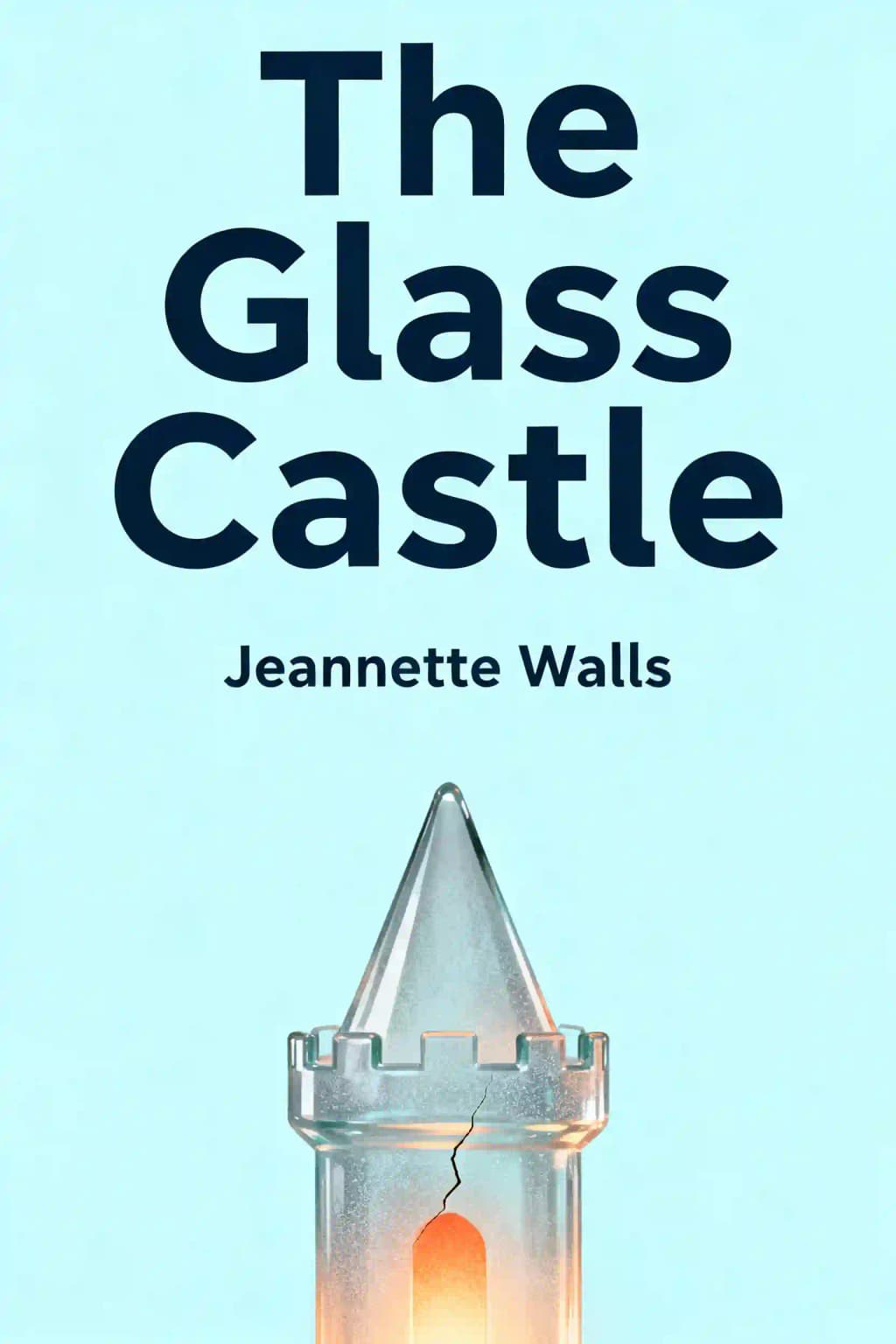
The Glass Castle by Jeannette Walls stands as one of the most compelling memoirs of our time, selling over 2.7 million copies since its publication in 2005 and remaining on the New York Times bestseller list for an astonishing 421 weeks. This raw, unflinching account of Walls' unconventional childhood has resonated deeply across cultural boundaries, earning praise from Oprah Winfrey, who featured it in her book club, and Jennifer Lawrence, who was initially slated to play Jeannette in the 2017 film adaptation (the role eventually went to Brie Larson).
What makes this memoir so captivating is its refusal to indulge in self-pity. Instead, Walls presents her extraordinary upbringing-marked by poverty, neglect, and the brilliant but destructive influence of her alcoholic father and eccentric artist mother-with remarkable clarity and even humor. The narrative begins with an adult Jeannette spotting her homeless mother dumpster diving in New York City while she herself is en route to a high-society function-a moment that encapsulates the vast distance she traveled from her chaotic childhood to her polished adult life. Yet beneath this journey lies a more profound story about the complexity of family bonds that can simultaneously damage and strengthen us.
Kapitel 2
A Childhood Forged in Fire
My earliest memory is being on fire. At three years old, I stood before a stove in our trailer, cooking hot dogs while wearing a pink dress. One moment I was stirring the pot; the next, flames were racing up my body. The hospital stay that followed introduced me to a world of order and comfort that contrasted sharply with our chaotic home life. Clean sheets, regular meals, a television-these simple luxuries seemed foreign and fascinating.
But Dad had other ideas. Hospitals represented authority, something Rex Walls refused to acknowledge. "We're going to check out Rex Walls-style," he announced before whisking me away without proper discharge. This dramatic escape became my introduction to a family pattern: rules existed for others, not for us.
Back home, I didn't shy away from cooking again. Dad encouraged me to face the flames, to understand fire rather than fear it. "You can't cower in the corner," he said. "You've got to face what frightens you." This philosophy-confronting rather than avoiding challenges-became a defining feature of our family ethos. I began testing fire's boundaries, sometimes with disastrous results, like when I melted my beloved Tinkerbell figurine just to watch what would happen.
This pattern of confronting danger extended beyond fire. Dad taught us to embrace the desert's harshness, to find beauty in the Joshua trees that Mom described as "telling the world you can't beat them down." We learned to hunt for turquoise stones, identify edible plants, and appreciate the stark landscape that others found inhospitable. These lessons in resilience were interwoven with Dad's grand stories and promises, particularly his plans for the Glass Castle-a magnificent house with solar panels and a water-recycling system that we would build once he struck gold or perfected one of his inventions.
Kapitel 3
The Art of the Skedaddle
"Time to pull up stakes and hit the road," Dad would announce in the middle of the night, rousing us from sleep with an urgency that made the departure feel like an adventure rather than what it often was-an escape from bill collectors or the law. We called these abrupt relocations "skedaddles," and they became so routine that we children developed a system: grab essential belongings, help younger siblings, and climb into whatever vehicle Dad had procured for the journey.
What possessions couldn't fit were simply left behind. When I cried about abandoning my beloved cat Quixote during one skedaddle, Dad's response was characteristically blunt: "We can't take the cat. There's no room. Sometimes you've got to leave things behind." This lesson in detachment became another survival skill in our nomadic existence.
The desert towns we inhabited-Blythe, Battle Mountain, Phoenix-formed a constellation of temporary homes across the Southwest. In each location, we adapted quickly, learning the terrain and making do with whatever shelter we found, whether a decrepit mining company house or an abandoned train depot. Our family's resilience was remarkable; we transformed these spaces into homes using found materials and boundless creativity.
In Battle Mountain, we converted an old railroad station into our dwelling. The lack of proper furniture didn't deter us-we fashioned beds from wooden crates and used ammunition boxes as chairs. When Mom attempted to bring a piano into this makeshift home, it proved too unwieldy for the space, becoming just another example of our family's peculiar blend of ambition and impracticality.
Despite the hardships, these years held moments of genuine wonder. Desert explorations yielded treasures: colorful minerals, fossils, and animal remnants that became educational tools as Mom and Dad shared their considerable knowledge about geology and wildlife. The desert, with its hidden beauties and dangers, became both playground and classroom.
Kapitel 4
Parental Paradoxes
Mom and Dad existed in a realm of contradictions. Rex Walls possessed brilliant intelligence-he could expound on physics, geology, and mathematics with impressive depth-yet he couldn't maintain steady employment. His charisma was undeniable; he captivated us with elaborate tales of his adventures and inventions, making us believe that prosperity was just around the corner. But these stories were frequently fueled by alcohol, which transformed him from a charming dreamer into a destructive force.
"Your father has a little drinking situation," Mom would say, employing her gift for understatement. This "situation" meant money for food disappeared into bottles, promises were broken, and violent arguments erupted between our parents. Yet even in his darkest moments, Dad maintained a magnetic pull on our loyalty, particularly mine. I remained his staunchest defender long after my siblings grew disillusioned.
Mom, with her artist's temperament and teaching credentials, could have provided stability but chose a different path. Rose Mary Walls believed suffering built character and that too much help created dependency. "I'm not raising my children to be hothouse flowers," she would declare when we complained about hunger or cold. Her philosophy extended to animals as well; when we took in strays, she refused to pamper them, insisting they learn self-reliance.
This hands-off approach reached absurd extremes. When Dad lost his job in Battle Mountain, plunging us into deeper poverty, Mom had a hidden stash of money from her teaching position-not for groceries, but for art supplies. "I've spent my whole life taking care of people," she explained. "Now it's my turn to be the one taken care of." This declaration came as we children were scrounging for food in school trash cans.
The paradox was painful: our parents equipped us with intellectual curiosity and independence while failing to provide basic necessities. They taught us to question authority and think creatively, yet their own choices repeatedly undermined our security. This contradiction formed the central tension of our childhood-loving parents whose neglect forced us to raise ourselves.
Kapitel 5
The Education of Outcasts
School presented its own challenges. Our irregular attendance, unusual knowledge base, and obvious poverty marked us as outsiders. In Battle Mountain, I entered a classroom already knowing binary numbers and advanced reading material, confounding teachers with knowledge that didn't match my ragged appearance. In Welch, West Virginia, our Southwestern accents and unconventional behavior made us targets for bullying.
Yet education became our salvation. Despite Mom's belief that schools stifled creativity, books offered escape and hope. We devoured whatever reading material we could find, from classic literature to encyclopedias. The local libraries became sanctuaries where we could temporarily forget our hunger and the cold of our unheated house.
When I discovered journalism at Welch High School, working on The Maroon Wave newspaper, I found my calling. The newsroom's atmosphere of purpose and the power of sharing information gave me a sense of control that had been lacking in my life. Under Miss Bivens' guidance-the same teacher who had once taught my father-I learned to transform chaos into coherent narratives, a skill that would eventually become my profession and pathway out of poverty.
Our home education was equally significant. Dad's impromptu astronomy lessons, pointing out constellations he claimed to be giving us as Christmas gifts, instilled wonder despite our material deprivation. Mom's artistic perspective taught us to see beauty in unlikely places-like the fungus growing on our bathroom ceiling, which she praised for its interesting patterns rather than addressing the leak causing it.
These unconventional lessons, combined with the self-reliance forced upon us by necessity, created a unique educational experience. We learned to think independently, solve problems creatively, and find humor in adversity-skills that would eventually help us transcend our circumstances.
Kapitel 6
The Welch Years: Descent and Determination
Our move to Welch, West Virginia, marked a turning point. After years in the desert's expansive landscapes, the Appalachian coal town felt suffocating with its narrow valleys and declining economy. Dad had promised a fresh start in his hometown, but instead, we found deeper poverty and social isolation.
The house on Little Hobart Street epitomized our deteriorating circumstances. It had no indoor plumbing, inadequate heating, and a roof that leaked so badly we placed buckets throughout the rooms during rainstorms. Winter brought temperatures so cold that water froze in glasses beside our beds. The foundation for Dad's Glass Castle, which we dutifully began digging, became instead a pit where household garbage accumulated, attracting rats that we battled with baseball bats.
In this environment, the family dynamics shifted. Dad's drinking worsened, and his absences grew longer. Mom retreated further into her painting, leaving us children to fend for ourselves. Brian and I foraged for food, picking berries and apples, occasionally stealing corn from cattle feed. Lori focused on her artwork as an escape, while little Maureen sought refuge with neighbors who fed and cared for her.
The harshness of Welch life crystallized our determination to escape. When Lori was offered a chance to spend a summer in Iowa helping an acquaintance, it became the first step in our exodus plan. I began saving money from odd jobs, creating an "escape fund" that would eventually finance our move to New York City.
This period also taught us about community in unexpected ways. Dinitia Hewitt, initially my tormentor at school, became a friend after I saved her from a dog attack. Ginnie Sue Pastor, known as the local prostitute, showed kindness by cooking me a meal when I visited her home. These connections revealed humanity in a place where survival often overshadowed compassion.
The Welch years, while marked by extreme hardship, forged our resolve. We witnessed the consequences of unfulfilled potential in the adults around us and determined to create different futures. When our escape fund disappeared-likely taken by Dad for alcohol-the betrayal only strengthened our commitment to leave. The dream of New York City, with its opportunities and anonymity, became our North Star.
Kapitel 7
Breaking Free: The Journey to New York
"You can't leave," Dad insisted when I announced my plan to join Lori in New York after my junior year. He unrolled the tattered blueprints for the Glass Castle, pointing out the larger room he'd designed for me. But the promise had worn thin after years of unfulfilled dreams. "I need to go," I told him, my determination unwavering despite the flicker of hurt in his eyes.
The bus ride from Welch to New York represented more than geographic distance; it was a journey from one life to another. Arriving in the city's chaotic energy, I felt both terrified and exhilarated. Lori had secured a small apartment in the South Bronx, and though the neighborhood was rough, it offered something Welch couldn't-opportunity.
Finding work became my priority. I started at a hamburger joint, then a jewelry store, eventually landing a position at a small newspaper called The Phoenix. Meanwhile, I attended community college classes, determined to continue the education that had always been my pathway to a better life. When Brian joined us after finishing his junior year, our sibling support system grew stronger. Later, we would help Maureen escape as well.
The transition wasn't seamless. City life required different survival skills than those we'd learned in the desert or Appalachia. We had to navigate public transportation, manage rent payments, and interact with people from diverse backgrounds. Yet the independence we'd developed through years of self-reliance served us well. We worked multiple jobs, studied diligently, and slowly built more stable lives than we'd ever known.
The culmination of this effort came when I was accepted to Barnard College. The prestigious institution seemed worlds away from dumpster diving for food or bathing in the Ohio River, yet I belonged there as much as anyone. My unconventional education had given me perspectives my classmates lacked, and my hunger for learning matched my literal hunger from childhood.
This period of breaking free wasn't just about physical distance from our parents; it was about creating identities separate from the chaos that had defined our family. We were no longer just the strange Walls kids-we were individuals with aspirations and the determination to achieve them.
Kapitel 8
When Worlds Collide: Parents in New York
The phone call came on a typical New York morning: "Guess what, Mountain Goat? We've decided to move to New York!" Mom's cheerful announcement sent a chill through me. The life I'd carefully constructed-college classes, professional job, apartment in a decent neighborhood-suddenly seemed threatened by the prospect of my parents' chaotic presence.
Their arrival was predictably unconventional. The van broke down on the New Jersey Turnpike, their dog escaped into traffic, and they arrived with no plan beyond finding me. Within weeks, they were homeless, sleeping in abandoned buildings and parks, yet characteristically framing their situation as an adventure rather than a crisis.
"Being homeless is an adventure," Mom insisted during one of our tense meetings. "We're exploring the city from a different perspective." Dad added, "Most people are afraid to live like this, but we're free." Their refusal to acknowledge hardship as anything but a choice made offering help nearly impossible. When I suggested shelters or assistance programs, they dismissed these options as constraints on their independence.
The collision of my worlds became increasingly difficult to manage. By day, I attended classes at Barnard and worked at a respected publication; by night, I worried about my parents sleeping on park benches. I began compartmentalizing, creating elaborate fictions about my background when colleagues or classmates inquired. "My parents are living between homes right now," I would say, or "They're taking some time to travel."
This double life created constant tension. When I met Eric, a successful financial analyst who lived in a Park Avenue apartment, the contrast between my origins and present circumstances became even more pronounced. His ordered, privileged world represented everything my childhood wasn't-stable, comfortable, predictable. I found myself drawn to this security while simultaneously feeling like an impostor.
The ultimate irony emerged when I discovered that Mom owned land in Texas potentially worth millions-inheritance from her mother that she refused to sell based on principle. "It's not about the money," she explained when I confronted her about living in poverty by choice. "It's about holding onto what's mine." This revelation highlighted the maddening contradiction at the heart of our family dynamic: genuine hardship created by ideological stubbornness.
Despite these tensions, moments of connection persisted. When I needed money for college tuition, Dad appeared with a wad of bills won in poker games. When Maureen faced legal troubles after a mental breakdown, we gathered as a family despite our differences. These instances reminded me that the bonds formed in our chaotic childhood, though strained, remained unbroken.
Kapitel 9
Reckoning with the Past
Dad's health declined rapidly, his body ravaged by decades of alcohol abuse and cigarettes. During one of my visits to the abandoned building where he and Mom had become squatters, he asked me to sit with him on the roof. Looking out over the city, he pointed to the skyscrapers and said, "You know what I like about New York? The buildings are like mountains. Man-made mountains."
Two weeks before he died, we had our final meaningful conversation. The subject turned, inevitably, to the Glass Castle. "I'm sorry I never built it for you," he said, his voice uncharacteristically vulnerable. The admission contained all the disappointment of unfulfilled promises and squandered potential. Yet in that moment, I felt not anger but a profound sadness for dreams that had sustained us through hardship, even if they never materialized.
After his death, I found myself reassessing my carefully constructed life. The marriage to Eric had provided security but not fulfillment. The high-society reporting job allowed me to move in privileged circles but required me to deny my origins. Gradually, I recognized that in running from my past, I had created a life that didn't fully reflect who I was.
The process of writing about my childhood became both therapy and revelation. Initially, I feared exposure-what would colleagues think knowing I had eaten from garbage cans or lived without indoor plumbing? But articulating these experiences helped me integrate the disparate parts of my identity. The resilience and resourcefulness that had helped me survive were strengths, not sources of shame.
This reckoning extended to my relationship with Mom, who continued living as a squatter even after Dad's death. Her stubborn independence, once a source of frustration, became something I could view with a measure of respect. "Your father and I gave you children the best gift possible," she told me. "We let you learn to fend for yourselves." While I couldn't fully embrace this perspective, I recognized the grain of truth within it. Our unusual upbringing had forced us to develop resilience that served us well in adulthood.
The culmination of this reconciliation came during a Thanksgiving gathering years later. Seated around a table with my siblings, Mom, and our respective partners and children, we shared stories about Dad-his brilliance, his flaws, his unforgettable personality. Laughter mingled with tears as we acknowledged both the damage and the gifts of our upbringing. In that moment, I understood that accepting my past didn't mean condoning the neglect we experienced; it meant recognizing how it shaped me and choosing which lessons to carry forward.
Kapitel 10
The Legacy of Resilience
Looking back on the journey from that burning three-year-old to the woman I became, the thread of resilience runs continuous and strong. Each hardship-hunger, cold, instability-forced adaptations that ultimately became strengths. The creativity required to make meals from minimal ingredients translated into problem-solving skills in my professional life. The self-reliance necessitated by absent parents became independence and initiative. Even the storytelling that helped us escape our circumstances evolved into my career as a writer.
This isn't to romanticize poverty or neglect-no child should have to search through school trash cans for lunch or sleep in cardboard boxes to stay warm. The damage was real and lasting, particularly evident in Maureen's struggles with mental health and my own difficulties forming stable relationships. Yet alongside this damage grew remarkable capacities for survival and even joy amid adversity.
Perhaps the most significant legacy is the understanding that humans contain multitudes. Dad was simultaneously a brilliant physicist, a loving father who taught us about stars, and a destructive alcoholic who stole our escape money. Mom was both a talented artist with profound insights and a woman who prioritized painting over feeding her children. They gave us tools for survival while creating the conditions that made those tools necessary.
This complexity extends to how we process difficult childhoods. Society often presents a binary: either completely reject toxic parents or practice unconditional forgiveness. My experience suggests a middle path-acknowledging harm while also recognizing the humanity and even the gifts within imperfect relationships. The Glass Castle that Dad designed but never built becomes a perfect metaphor for this duality-a beautiful dream that provided hope even as its non-existence represented profound disappointment.
In writing my story, I discovered that sharing what once seemed unspeakable created connections rather than rejection. Countless readers have recognized pieces of their own families in mine, finding comfort in the knowledge that survival is possible and that our origins influence but don't determine our destinations. The walls I built to protect myself from my past eventually became glass-transparent barriers that allowed me to see where I came from while moving forward into a life of my own design.
This journey from shame to acceptance represents perhaps the most important form of resilience-the ability to integrate all parts of ourselves, even those formed in fire, into a coherent whole. The Glass Castle may never have been built in the desert, but its blueprint lives on in the strength, creativity, and determination that allowed a girl from the wrong side of the tracks to build her own life-one sturdy enough to withstand the winds of memory and transparent enough to let the light shine through.
Kapitel 11
Thanksgiving: Coming Full Circle
The aroma of roasting turkey fills my apartment as I set the table for Thanksgiving dinner. This gathering feels significant-Mom and Lori are coming, along with Brian and his daughter Veronica, and my husband John's daughter Jessica. The table settings are elegant but not ostentatious; I've learned to find middle ground between the extreme deprivation of my childhood and the excessive consumption I once embraced to distance myself from that past.
When Mom arrives, she's wearing her typical eclectic outfit-a man's coat over a paint-splattered dress, mismatched socks, and jewelry made from found objects. She brings odd gifts: a broken clock she thought I could fix, a half-empty bottle of perfume, a rock she found interesting. These offerings, once embarrassing to me, now seem endearing in their genuineness. She has never learned to perform normalcy, and I've finally stopped wishing she would.
Conversation flows easily as we share recent news. Mom has finally secured an apartment through a city program for artists, though she still speaks nostalgically about her squatting days. Lori's illustrations are gaining recognition. Brian mentions his work with the police force, his steady presence a counterpoint to our chaotic upbringing. We carefully avoid discussing Maureen, who moved to California after her release and rarely communicates with any of us-the family member most damaged by our unusual childhood.
When John raises a glass to toast, he includes a tribute to Dad: "To Rex Walls, who would have appreciated this fine meal and probably would have told us all about the molecular structure of the turkey while eating it." This brings laughter and a moment of wistful remembrance. Dad has been gone for years now, but his presence-both the brilliant light and the destructive shadow-remains part of our family narrative.
As we eat, I look around at these people who share my history and those who have joined our story later. The journey from dumpster diving for food to hosting Thanksgiving dinner represents more than economic mobility; it reflects an integration of past and present that once seemed impossible. I no longer hide where I came from, nor do I allow it to define me entirely.
Mom catches my eye across the table and smiles, her artist's perception perhaps sensing my thoughts. "You've done well, Mountain Goat," she says, using the childhood nickname that once connected me to our desert wanderings. "But you always were a climber."
In this moment, I feel the truth of her observation. Life is indeed a climb-sometimes treacherous, often beautiful, always challenging. The skills for that ascent can come from unexpected sources, even from parents who failed to provide stability but taught resilience by its absence. The Glass Castle was never built, but its promise-of light, transparency, and the ability to see both where we've been and where we're going-has found its way into my life after all.