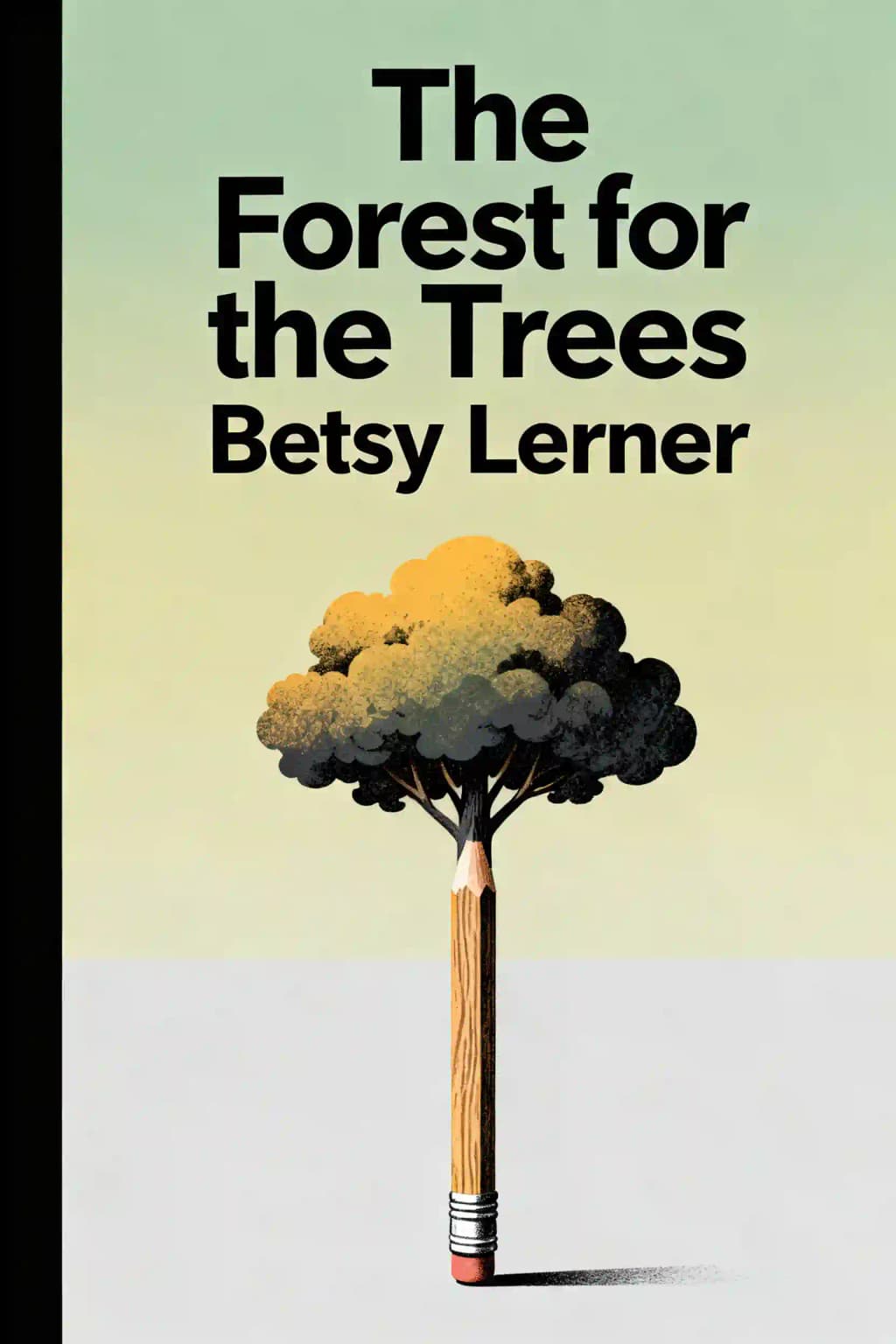
Ever wonder why writers struggle? "The Forest for the Trees" offers a compassionate behind-the-scenes look at publishing that's transformed countless writing careers. Betsy Lerner's insider wisdom demystifies the creative process while revealing the universal anxieties every author secretly shares.
Betsy Lerner, author of The Forest for the Trees: An Editor’s Advice to Writers, is an award-winning author and seasoned literary agent with over three decades of experience in publishing.
A graduate of Columbia University’s MFA program in poetry, Lerner distills her expertise from roles at major publishing houses like Simon & Schuster and Doubleday, as well as her current position as a partner at Dunow, Carlson & Lerner Literary Agency.
Her nonfiction work, including the memoir The Bridge Ladies and the critically acclaimed Food and Loathing, explores themes of creativity, identity, and human connection, often blending sharp wit with psychological insight. The Forest for the Trees remains a cornerstone resource for writers, praised for its candid exploration of the writing process and publishing industry.
Lerner’s essays and advice have been featured in outlets like NPR and Publishers Weekly, and her debut novel, Shred Sisters, expands her literary reach into fiction. Over 30,000 copies of The Forest for the Trees have been sold, cementing its status as a trusted guide for aspiring authors.
The Forest for the Trees is a practical guide for writers navigating the publishing industry, blending insider advice with psychological insights about the creative process. Betsy Lerner, a seasoned editor and literary agent, demystifies publishing hurdles, from drafting manuscripts to managing author-editor relationships, while addressing common fears like rejection and creative blocks.
Aspiring authors, seasoned writers, and publishing professionals will benefit from Lerner’s candid advice. It’s particularly valuable for those seeking to understand industry dynamics, overcome creative inertia, or learn strategies for successful collaboration with editors and agents.
Yes—the revised edition updates its guidance for modern publishing trends, including digital platforms and shifting market demands. Lerner’s blend of humor, actionable tips, and psychological support remains relevant for writers adapting to today’s competitive landscape.
Key concepts include:
Lerner reframes writer’s block as a natural part of the creative cycle, offering strategies like setting realistic goals and embracing imperfection. She emphasizes discipline over inspiration, urging writers to “show up even when the muse doesn’t.”
While King focuses on craft and memoir, Lerner’s guide prioritizes industry navigation and psychological hurdles. Both emphasize perseverance, but The Forest for the Trees offers more tactical advice for publishing success.
Some critique its focus on traditional publishing over self-publishing avenues. However, Lerner’s insights into editorial relationships and author mindset remain widely praised as timeless.
Drawing on 30+ years as an editor and agent, Lerner reveals industry “trade secrets” with specificity—like decoding rejection letters or negotiating contracts—while empathizing with writers’ emotional challenges.
Lerner outlines:
Though focused on traditional publishing, its advice on building resilience, crafting pitches, and understanding readership applies equally to indie success. Lerner’s emphasis on professionalism bridges both worlds.
Lerner normalizes impostor syndrome and fear of exposure, offering strategies to channel anxiety into productive revision rather than paralysis. Her tone blends tough love with reassurance.
Erlebe das Buch durch die Stimme des Autors
Verwandle Wissen in fesselnde, beispielreiche Erkenntnisse
Erfasse Schlüsselideen blitzschnell für effektives Lernen
Genieße das Buch auf unterhaltsame und ansprechende Weise
I write because I hate.
Most writers are haunted individuals for whom the world doesn't sit right.
Writing demands quieting the voices insisting you're not worthy.
Equal we are not.
Writing is nothing if not breaking the silence.
Zerlegen Sie die Kernideen von The Forest for the Trees in leicht verständliche Punkte, um zu verstehen, wie innovative Teams kreieren, zusammenarbeiten und wachsen.
Destillieren Sie The Forest for the Trees in schnelle Gedächtnisstützen, die die Schlüsselprinzipien von Offenheit, Teamarbeit und kreativer Resilienz hervorheben.

Erleben Sie The Forest for the Trees durch lebhafte Erzählungen, die Innovationslektionen in unvergessliche und anwendbare Momente verwandeln.
Fragen Sie alles, wählen Sie die Stimme und erschaffen Sie gemeinsam Erkenntnisse, die wirklich bei Ihnen ankommen.

Von Columbia University Alumni in San Francisco entwickelt
"Instead of endless scrolling, I just hit play on BeFreed. It saves me so much time."
"I never knew where to start with nonfiction—BeFreed’s book lists turned into podcasts gave me a clear path."
"Perfect balance between learning and entertainment. Finished ‘Thinking, Fast and Slow’ on my commute this week."
"Crazy how much I learned while walking the dog. BeFreed = small habits → big gains."
"Reading used to feel like a chore. Now it’s just part of my lifestyle."
"Feels effortless compared to reading. I’ve finished 6 books this month already."
"BeFreed turned my guilty doomscrolling into something that feels productive and inspiring."
"BeFreed turned my commute into learning time. 20-min podcasts are perfect for finishing books I never had time for."
"BeFreed replaced my podcast queue. Imagine Spotify for books — that’s it. 🙌"
"It is great for me to learn something from the book without reading it."
"The themed book list podcasts help me connect ideas across authors—like a guided audio journey."
"Makes me feel smarter every time before going to work"
Von Columbia University Alumni in San Francisco entwickelt

Erhalten Sie die The Forest for the Trees-Zusammenfassung als kostenloses PDF oder EPUB. Drucken Sie es aus oder lesen Sie es jederzeit offline.
Every writer knows the secret terror: you're brilliant one moment, worthless the next. This isn't imposter syndrome-it's the writer's natural state. Between these extremes lies the only question that matters: can you hold yourself together long enough to finish something? Most people believe they have a book inside them, yet few understand that writing isn't about talent alone. It's about managing the psychological warfare that accompanies creative expression. The difference between published authors and abandoned manuscripts isn't genius-it's the capacity to contain your own ambivalence, to write through the voices insisting you're not worthy, to finish despite the fear. Your subject chooses you more than you choose it. Writers don't select themes based on market trends; they're haunted by obsessions they can't escape. Who predicted bestsellers from a Savannah murder story or essays about childhood humiliation? The most striking books emerge from what writers can't stop thinking about-whether exile, revenge, or love. As William Gass admitted, "I write because I hate." Many great books are born from anger and the struggle for self-definition. Writers are people for whom the world doesn't sit right, and books become safe spaces to explore feelings banished from polite conversation.