Kapitel 1
When Empathy Becomes Extraordinary: The Science of Heroes and Villains
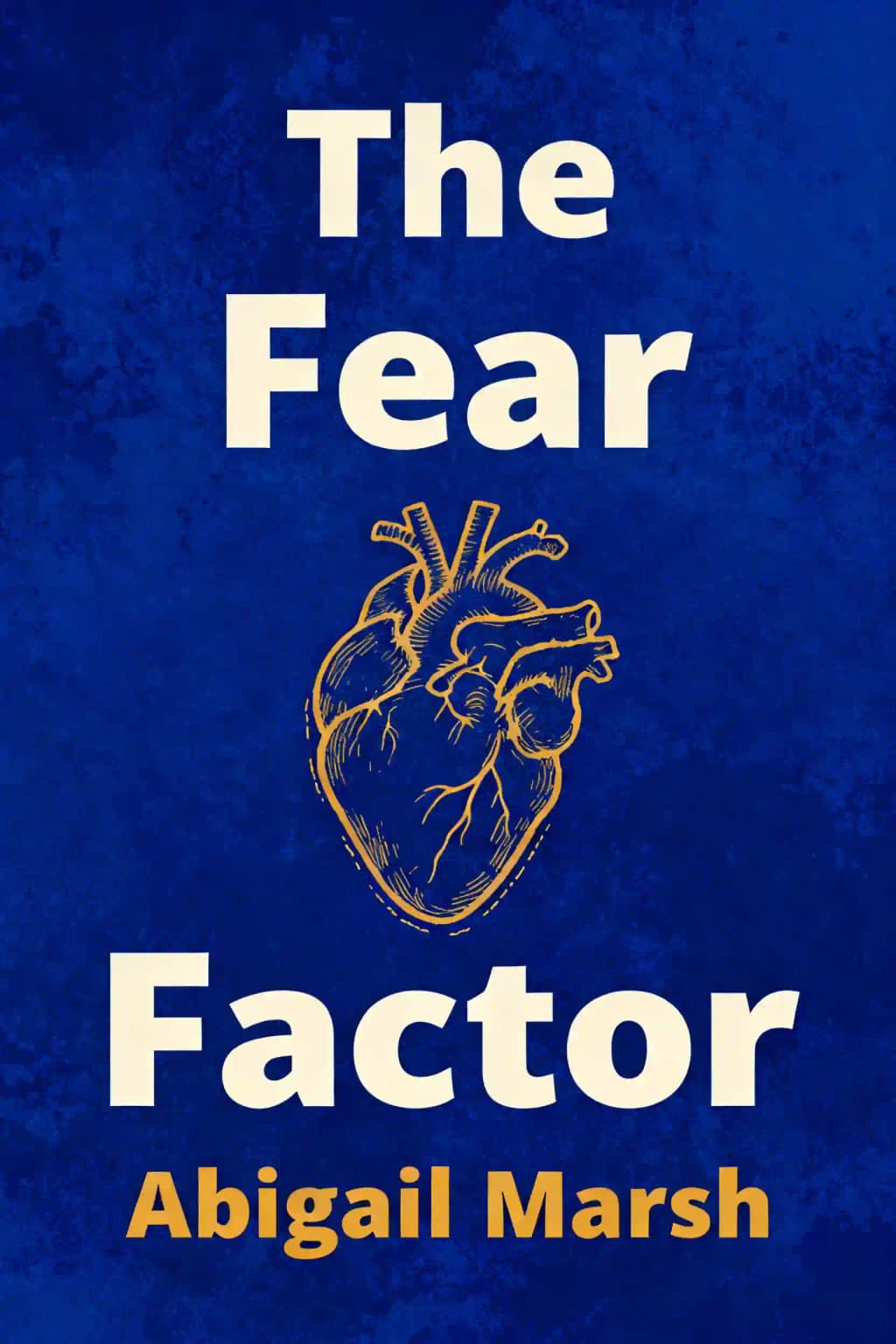
What makes someone risk their life for a stranger? Why would a person donate a kidney to someone they've never met? And what drives individuals like the Green River Killer to commit heinous crimes without remorse? These questions have fascinated humans for centuries, but only recently has neuroscience begun to unravel their mysteries. Abigail Marsh's groundbreaking research reveals that extraordinary altruism and psychopathy represent opposite ends of a neurological spectrum-one defined by our brain's ability to recognize and respond to fear in others. Named one of the most influential psychology books by Psychology Today and praised by figures from Daniel Pink to Adam Grant, "The Fear Factor" challenges long-held assumptions about human nature while offering hope that we can cultivate greater compassion in ourselves and society.
Kapitel 2
The Rescue That Changed Everything
The night Abigail Marsh found herself stranded in the fast lane of Interstate 5 near Tacoma would alter the course of her life forever. After swerving to avoid a dog, she lost control of her mother's unstable SUV, spinning across four lanes before stalling in the worst possible position-facing backward toward oncoming traffic with no shoulder to escape to and no cell phone to call for help. As vehicles sped dangerously close to her car, she felt certain she would die.
Then a man appeared-someone who, with his gold jewelry and shaved head, might have triggered wariness under normal circumstances. Yet this stranger risked his life three times crossing the busy freeway to help her. He calmly fixed the gear shift she'd accidentally left in drive, started the engine, and skillfully navigated them to safety. Before disappearing into the night, he asked only if she needed him to follow her home. He sought no recognition, not even sharing his name.
This selfless act of heroism haunted Marsh intellectually. What makes someone risk death for a complete stranger? The question would shape her future research path, leading her from undergraduate studies at Dartmouth to doctoral work at Harvard, where she discovered that altruism correlates strongly with people's ability to recognize fearful faces. This finding suggested a neurological basis for extraordinary compassion-one that might be the mirror opposite of psychopathy.
The concept of "moral typecasting" helped Marsh understand why altruists are so difficult for us to comprehend. We automatically divide people into moral "agents" (doers) and "patients" (recipients), ascribing more planning and self-control but less emotional capacity to agents. This binary view typecasts heroes as stoic and impassive, like movie superheroes who never show fear. But real heroes like Senator Cory Booker, who rescued his neighbor from a burning house while feeling "terrified," prove this stereotype wrong. What distinguishes heroes isn't absence of fear but willingness to move toward danger when someone needs help.
Kapitel 3
The Compassionate Majority
Contrary to popular belief, research consistently shows that compassion for strangers is powerful and common-ultimately stronger than obedience to authority. Stanley Milgram's famous experiments are often misinterpreted as demonstrating human cruelty, but they actually revealed that most participants refused to continue administering shocks when they believed they were causing serious distress. This is particularly noteworthy given that the "victim" was hardly the most sympathetic figure-just an unremarkable middle-aged stranger the volunteers had barely met and would never see again.
Princeton psychologist Daniel Batson's research further illuminated human compassion. In studies inspired by Milgram's work, Batson had female volunteers watch "Elaine" (actually an actor) receive painful electric shocks during a memory test. When Elaine revealed the shocks were triggering traumatic memories, nearly two-thirds of volunteers offered to take the remaining shocks themselves rather than let Elaine continue suffering. Even when given easy opportunities to escape the situation entirely, over half still volunteered to take Elaine's place.
These studies reveal that while some people may behave callously toward suffering strangers, most will not. When compassion and authority are equally pitted against each other, compassion typically wins. This helped Marsh understand her roadside rescue-while dozens of drivers passed her by, she needed only one compassionate person to stop, and one did.
While social psychology traditionally focuses on how situations affect people on average, understanding individual variability is crucial. For most psychological traits, including aggression and compassion, heritability hovers around 50%. This contradicts the once-dominant behaviorist view championed by B.F. Skinner, who argued all behavior variations resulted from learning histories and reinforcement. Heritability studies conclusively show genes play a major role, with aggression being 50-75% heritable.
Kapitel 4
Inside the Psychopathic Mind
Psychopathy robs the human brain of compassion, characterized by callousness, poor behavioral control, and antisocial manipulation. Though only 1-2% of Americans are true psychopaths, they may represent up to 50% of violent criminals. The disorder is highly heritable at around 70%, contradicting common assumptions that violent individuals must come from abusive homes.
Gary Ridgway, the Green River Killer, exemplifies this reality. Despite a relatively normal upbringing in a poor but not abusive household, Ridgway attempted his first murder at fourteen, stabbing a six-year-old boy seemingly without motivation. He later became America's most prolific serial murderer, killing at least 49 women while appearing completely normal to others. Unlike psychotic killers who can't distinguish fantasy from reality, psychopaths blend in seamlessly, making them particularly frightening.
James Blair's Violence Inhibition Mechanism (VIM) theory helps explain psychopathic behavior. This theory, inspired by animal behavior experts like Konrad Lorenz, proposed that group-living animals use specific body postures and vocalizations to prevent conflicts from escalating to violence. Blair suggested that psychopaths lack this mechanism that normally inhibits aggressive behavior in humans.
When threatened, wolves display submission by crouching low, rolling onto their backs, flattening ears, and emitting high-pitched whimpers-behaviors that signal weakness and vulnerability to prevent attacks. Humans use comparable signals: cringing postures that make us appear smaller, high-pitched vocalizations, and fearful facial expressions with widened eyes and raised brows. These appeasement displays effectively inhibit aggression in normal individuals. Studies show that children naturally learn to avoid behaviors that cause distress in others.
However, in approximately 7% of children, this mechanism fails, resulting in conduct disorder-persistent violent or cruel behaviors. While most of these children show remorse after aggression, suggesting an intact VIM overwhelmed by other factors, about one-third show no emotional reaction to others' distress, indicating an impaired VIM itself. These children struggle to recognize fearful expressions and fail to show empathic responses-making them most at risk for developing psychopathy.
Kapitel 5
The Children Who Feel No Remorse
Twelve-year-old Dylan was initially referred to Marsh's research team for mood dysregulation due to his frequent tantrums, but these were far beyond typical childhood outbursts. At 5'3" and 120 pounds, Dylan's hour-long rages included threatening his parents with violence, punching holes in walls, smearing excrement, and once threatening his mother with a knife-forcing her to take his younger sisters to safety.
Walking through the NIH Clinical Center with her colleague Liz Finger, Marsh approached with trepidation, reviewing safety protocols: stay three feet away, avoid loose objects that could become weapons, never let him block their path to the door. But the boy they met defied all expectations-a polite, suntanned, white-blond child with freckles who looked like he'd stepped out of a cereal commercial. His warm smile and friendly demeanor seemed utterly incongruous with his history of violence.
This stark contrast between his charming appearance and violent history was precisely what Hervey Cleckley described in "The Mask of Sanity"-the psychopath's ability to seem "particularly agreeable" and make "a distinctly positive impression." Using the Psychopathy Checklist: Youth Version (PCL:YV), Dylan scored 24 points-qualifying him as their first research subject with significant psychopathic traits.
The concept of psychopathic children makes many uncomfortable-we view children as innocent and psychopaths as depraved. Yet psychopathy is a developmental disorder that invariably begins in childhood. While scientists can identify these traits early, the stigma of labeling a child a "psychopath" is immense. Responsible clinicians never use this label, instead referring to them as having "psychopathic traits," "callous-unemotional traits," or the DSM-5 designation "conduct disorder with limited prosocial emotions."
Finding children with psychopathic traits proved challenging. Unlike autism or ADHD, there are no advocacy groups or support networks for parents of such children. The parents who responded to research advertisements shared heartbreaking stories. Their homes knew no peace-daily episodes of violence, theft, and destruction had become routine. Many parents had been physically injured by their children. Schools frequently expelled these children for injuring classmates or teachers. Despite causing such suffering, these children showed a striking lack of remorse.
The belief that badly behaved children must have terrible parents is deeply rooted in our culture, but the evidence contradicts this assumption. The parents Marsh met had tried everything to help their children-counselors, medication, special schools, social workers. Most tellingly, nearly all had other children who were perfectly normal-just as serial killer Gary Ridgway had normal siblings. Poor parenting can certainly produce badly behaved children, but not psychopathy specifically.
Kapitel 6
The Neuroscience of Compassion
To understand what was happening in these children's brains, Marsh's team used functional magnetic resonance imaging (fMRI), a technology that allows precise measurement deep inside living, behaving human brains. The amygdala plays a critical role in recognizing fearful facial expressions, first discovered in 1994 through studies of a patient called S.M. with Urbach-Wiethe disease that had completely calcified both her amygdalae. While her intelligence and memory remained intact, S.M. couldn't recognize fearful expressions in others, consistently misidentifying them as sad, disgusted, or angry.
The results were striking: children with psychopathic traits showed zero activation in their right amygdala when viewing fearful faces compared to neutral ones. Unlike healthy children and those with ADHD who showed reliable increases in amygdala activity, these children's brains simply didn't register others' distress. This finding, now reproduced by multiple laboratories, helps explain why psychopathic children struggle to recognize fear in others and why witnessing the distress they cause has little power to inhibit their cruelty.
Further testing revealed these children experience fear differently themselves. When asked to recall times they felt strong emotions, children with psychopathic traits reported feeling fear only infrequently and weakly. Some claimed they had never felt fear in their entire lives. Even when they did report fear experiences, they described minimal physical sensations compared to healthy children.
An intact amygdala coordinates the physiological and subjective processes that create fear. When threats are detected, the amygdala-described as the most densely interconnected structure in the cerebrum-rallies neuronal responses throughout the brain. It signals ancient subcortical structures like the hypothalamus and brain stem to increase heart rate and blood pressure, maximize air intake, release adrenaline, direct blood to muscles, and pump sugar into the bloodstream. Without an intact amygdala, these coordinated responses to danger break down, and the subjective feeling of fear is largely lost in both amygdala lesion patients and psychopaths.
Kapitel 7
The Anti-Psychopaths
If psychopathy follows a half-normal distribution, there may exist "anti-psychopaths" on the opposite end-individuals with extraordinarily high capacity for caring and compassion. This parallels research on face recognition abilities, where developmental prosopagnosia (face blindness) affecting 1-2% of people is balanced by "super face recognizers" at the opposite extreme. Both conditions show significant genetic influence.
Marsh's research has revealed distinct brain patterns in children with conduct problems. Those with psychopathic traits show underactive amygdala responses to fearful expressions, with this underactivity statistically accounting for their proactive aggression. In contrast, children with conduct problems but without psychopathic traits show heightened amygdala responses to fear, suggesting their antisocial behavior stems from emotional overreactivity rather than callousness.
Extraordinary altruism must exceed everyday generosity in three ways: first, the beneficiary must be unrelated and unknown to the altruist; second, the act must present significant risk or cost to the altruist; and third, the behavior must be non-normative-something people aren't expected or taught to do. Only acts meeting these criteria become impossible to attribute to anything but genuine altruistic motivation.
Altruistic organ donation represents extraordinary altruism comparable to saving a drowning stranger. While kidney donation carries a one in 3,000 risk of death-thirty times higher than skydiving-what truly distinguishes it is the complete separation of risks and benefits. The donor assumes all medical risks while the recipient receives all benefits, contradicting the assumption that human nature is fundamentally selfish.
From just five anonymous donations in 1999, numbers grew to over 200 annually by 2010. Like heroic rescuers, these donors typically report instantaneous, intuitive decisions to donate and resist being labeled heroes. Their availability through transplant networks made them ideal subjects for studying the neural basis of extraordinary altruism-the "anti-psychopaths" whose brains might reveal the roots of human compassion.
Kapitel 8
The Neurobiology of Extraordinary Altruism
When seeking participants for the first-ever study on the neural basis of extraordinary altruism, Marsh discovered something remarkable about altruistic kidney donors. Despite the typical challenges of recruiting non-student research participants, these extraordinary altruists responded enthusiastically to recruitment advertisements. Their emails were exceptionally friendly and effusive, providing a fitting introduction to the world of extraordinary altruism.
To understand extraordinary altruism, we must first explore how humans connect mentally and emotionally. While language provides a window into others' minds, it remains an imperfect tool for understanding complex mental states. We often rely on educated guesswork to interpret others' intentions, frequently with limited success. However, emotional states are more directly accessible-they pour from people through chemical signals, vocal qualities, body language, and especially facial expressions.
Paul Ekman and Wallace Friesen's pioneering work identified six recognizable emotional expressions, with fear being particularly relevant to altruism. A fearful expression requires three specific muscle movements: widened eyes with exposed white sclera, raised eyebrows with crinkled inner edges, and tightened lips drawn backward. These movements convey vulnerability, distress, submission and appeasement-the same traits that trigger the Violence Inhibition Mechanism.
When light reflects from a fearful face into an observer's eye, it triggers an extraordinary neural cascade. This privileged neural pathway exists specifically for fearful expressions, not for other emotions. The amygdala responds vigorously even to briefly glimpsed fearful expressions-even when only the white sclera of fearful eyes flash for a mere seventeen milliseconds, far too quickly to be consciously detected.
For years, scientists thought fearful expressions functioned as alarm signals, warning others of danger. But this explanation has problems. The amygdala doesn't respond similarly to angry faces or threatening scenes, which would be expected if fearful faces merely signaled threat. Instead, amygdala responses to fearful faces may represent a form of deep empathy-an internal simulation of another's fearful state. This neural mirroring allows us to understand and label others' fear, while causing physiological responses like increased heart rate.
The brain's empathic response to others' pain offers a parallel to fear recognition. When we witness someone in pain, our "pain matrix" brain regions activate similarly to when we experience pain ourselves. A striking study of Swiss soccer fans demonstrated this empathic response is selective-their anterior insula activated when fellow fans received electric shocks, but remained quiet when rival fans were shocked. This neural empathy directly predicted willingness to help by taking on others' shocks.
Kapitel 9
The Evolutionary Roots of Compassion
A large sea turtle laboriously drags herself across the sand of a north Florida beach. Weighing over 200 pounds, she struggles up the sloping shore, leaving a ragged trench behind her. After half an hour of determined effort, she finally reaches her destination where packed sand gives way to sugary heaps shaded by sea oats and purslane. She builds a nest, deposits dozens of rubbery eggs, and after covering them with sand, returns to the sea without a backward glance-the only care her offspring will ever receive from her.
During a July visit to Florida, Marsh joined her family to observe the Mickler's Landing Sea Turtle Patrol excavate loggerhead nests. The first nest revealed only death-perfectly formed but lifeless hatchlings whose intricate bodies with four-chambered hearts, complex eyes, and fully formed brains had developed for nothing. The second nest was even more devastating, with countless rotting hatchlings killed by fire ants. But the third nest yielded eight living hatchlings that they watched struggle determinedly toward the ocean.
Why would Marsh feel such profound sentiment for these reptiles when their own mother abandoned them without a thought? The answer lies in evolutionary history. While loggerhead turtles trace their lineage back over 200 million years, humans descend from furry, warm-blooded cynodonts that diverged from other four-limbed animals about 250 million years ago. These ancestors faced a reproductive dilemma: they could either produce eggs too large for their bodies or very small eggs with developmentally immature, helpless offspring-altricial babies that would require constant warmth and nourishment.
The solution that allowed cynodonts to flourish was the evolutionary development of milk-the remarkable ability of mothers to literally dissolve their own flesh and bones to produce perfect nourishment for their young. This spectacular evolutionary development contains all essential nutrients perfectly formulated for offspring, allowing mammalian babies to be born small yet thrive through maternal care. Milk ultimately transformed mammalian social life, creating necessary dependency between mother and child that required a powerful motivational tether: love.
Love emerged as the essential companion to milk production-a powerful force that compels mothers to remain in close contact with their offspring, finding their presence reinforcing and feeling fierce longing when separated. This maternal love became the template for all forms of caring. Once the proto-mammalian brain developed the capacity to care about beings outside itself, there was no limit to what other kinds of love could emerge.
Kapitel 10
The Science of Caring for Strangers
Approach and avoidance responses reveal our innate motivations. In laboratory tests using joysticks, subjects showed equal response times to adult faces, but pulled significantly faster toward baby faces-indicating a strong approach motivation. This pattern was stronger in less psychopathic, more caring individuals, suggesting an intrinsic link between compassion and our response to infants.
Babyish features universally trigger caring responses. Adults with infant-like appearances receive more help from strangers, lighter judicial sentences, and greater concern-effects that persist even when controlling for attractiveness. This nurturing instinct extends beyond humans to babyish-looking animals, toys, and cartoon characters.
Allomothering-caring for young that aren't our own-is fundamentally altruistic. Whether it's a rat pup rescued by a strange female, an oryx calf protected by a lioness, or a blue jay saved from traffic, these acts mirror human extraordinary altruism. Research across 24 primate species found that allomothering was the single strongest predictor of altruistic behavior-more significant than brain size, social tolerance, or cooperative hunting.
Altruism correlates strongly with responsiveness to fearful facial expressions. While psychopaths fail to recognize and respond appropriately to fear, altruists show enhanced sensitivity to these expressions. What makes this connection profound is that fearful expressions make human faces appear more infant-like-with wide eyes, high brows, rounded mouth, and receding jaw. Research confirms that fearful expressions cause faces to appear more babyish, triggering the same approach responses as actual infant faces.
The amygdala functions as the entry point into our parental care system, responding to key baby stimuli and transforming our response to others' distress. Though seeing fearful expressions creates a mild simulation of fear in us, instead of triggering escape, it prompts approach behaviors compatible with providing care.
Oxytocin, a nine-amino-acid neurotransmitter unique to mammals, is responsible for this transformation. Research shows oxytocin dramatically increases our ability to recognize fearful expressions-improving recognition by 7-20% in various studies. This provides compelling evidence that oxytocin underlies our response to vulnerable, infantile expressions.
Oxytocin accomplishes two things simultaneously: it promotes strong empathic responses to distress cues while inhibiting avoidance behaviors in favor of approach and care. This explains why anxious rats make better mothers, showing greater courage when defending their pups. In humans, when the amygdala detects fear, it triggers both an empathic response and oxytocin production. The oxytocin suppresses avoidance behaviors while promoting approach and care. The result is a powerful signal that someone vulnerable needs help-triggering an instinctive caregiving response.
Kapitel 11
Building a More Compassionate World
Humans are not fundamentally selfish or callous-we possess all the neural and cognitive tools needed for genuine concern and helping behaviors. These capacities evolved as part of our mammalian heritage of caring for helpless infants. While people vary in their levels of concern and helpfulness, very few are completely blind to others' distress.
Despite attention-grabbing atrocities, kindness is overwhelmingly the norm. The World Giving Index reveals that over half the world's population helps needy strangers monthly, while over a billion people donate money and volunteer time each month. Americans now donate three times more to charity per capita than in 1975 (adjusted for inflation). Blood donations are increasing worldwide, with bone marrow donations tripling since 1995.
People aren't just helping more-they're hurting less. Steven Pinker's research shows all forms of violence and cruelty have steadily decreased for centuries. Homicide rates in Europe are now just one-fiftieth of medieval levels. Practices like slavery and torture, once commonplace, are nearly extinct. Yet most people believe the opposite-that humans are selfish and society is deteriorating. This perception gap stems from our brain's negativity bias, which makes us disproportionately notice, remember, and predict bad things.
Extraordinary altruism isn't just about heightened compassion-it's about extending that compassion to strangers. While most people readily sacrifice for loved ones, what makes acts like altruistic kidney donation remarkable is that they violate the usual pattern of helping only socially close others. Laboratory research using the social discounting task demonstrates this mathematically. Typical people show a hyperbolic decline in generosity as relationships become more distant-sacrificing significant resources for close loved ones but dramatically less for distant acquaintances.
When comparing altruistic kidney donors with matched controls, both groups were equally generous toward their closest relationships, but their patterns diverged dramatically as social distance increased. At the most distant relationship, controls would sacrifice only about $23-roughly one-quarter what they would for a loved one-while altruists still sacrificed $46, more than twice as much. This explains why altruistic kidney donors find giving to strangers so intuitive: they simply don't discount others' welfare based on social distance the way most people do.
Altruism is fundamentally emotional, not rational-emerging from deep, primitive brain structures that respond quickly to vulnerability and distress. Research shows altruistic kidney donors typically describe their decisions as immediate, intuitive responses rather than calculated choices. Yale researcher David Rand has found that generosity toward strangers comes from fast, intuitive processes, with deliberation actually suppressing altruistic impulses.
If self-control isn't driving increased compassion, perhaps improved quality of life is. The last millennium has seen extraordinary improvements in human prosperity and well-being. Research consistently shows that well-being and altruism rise together. Despite popular tropes about wealthy people being selfish, large-scale research shows that incremental increases in well-being across populations actually increase altruism. This isn't about the super-wealthy, but rather how ordinary people become more generous as they move from poverty into financial security.
Prosperity within cultures correlates with shifts from collectivist to more individualist values. Collectivist cultures emphasize interdependence within family or community, valuing generosity primarily toward in-group members. In contrast, individualist cultures promote altruism toward strangers, ranking higher on the World Giving Index and showing greater rates of blood, marrow, and organ donation to unknown recipients.
Widespread literacy, initiated by the printing press during the Renaissance, has profoundly expanded human compassion. Books-particularly fiction-serve as "the mind's flight simulator," allowing readers to explore the emotional landscapes of strangers. Fiction readers demonstrate better ability to identify subtle emotions in faces and maintain heightened empathic concern long after reading.
The joy accompanying altruism often leads to misunderstandings. When altruistic kidney donors report satisfaction from their donations, some mistakenly claim this proves their actions were selfish rather than altruistic. This fallacy confuses foreseen outcomes with intended outcomes-achieving any goal naturally brings satisfaction, but this doesn't reveal the original motivation. True altruism means acting with the ultimate goal of benefiting another's welfare, regardless of personal pleasure that might result.
This reinforcing quality of altruism creates a virtuous cycle-small acts of giving lead to larger ones, eventually becoming second nature. Many extraordinary altruists began with smaller acts like donating blood before working up to extraordinary generosity. The final essential ingredient for extraordinary altruism is humility-a sense of oneself as equal to rather than above others. This explains why genuine altruists uniformly resist being called heroes or receiving accolades. Their humility flattens the slopes of narcissism and parochialism, allowing them to recognize they're not fundamentally different from anyone else-a recognition that paradoxically motivates their exceptional actions.