Kapitel 1
The Spark Within: Awakening Your Creative Birthright
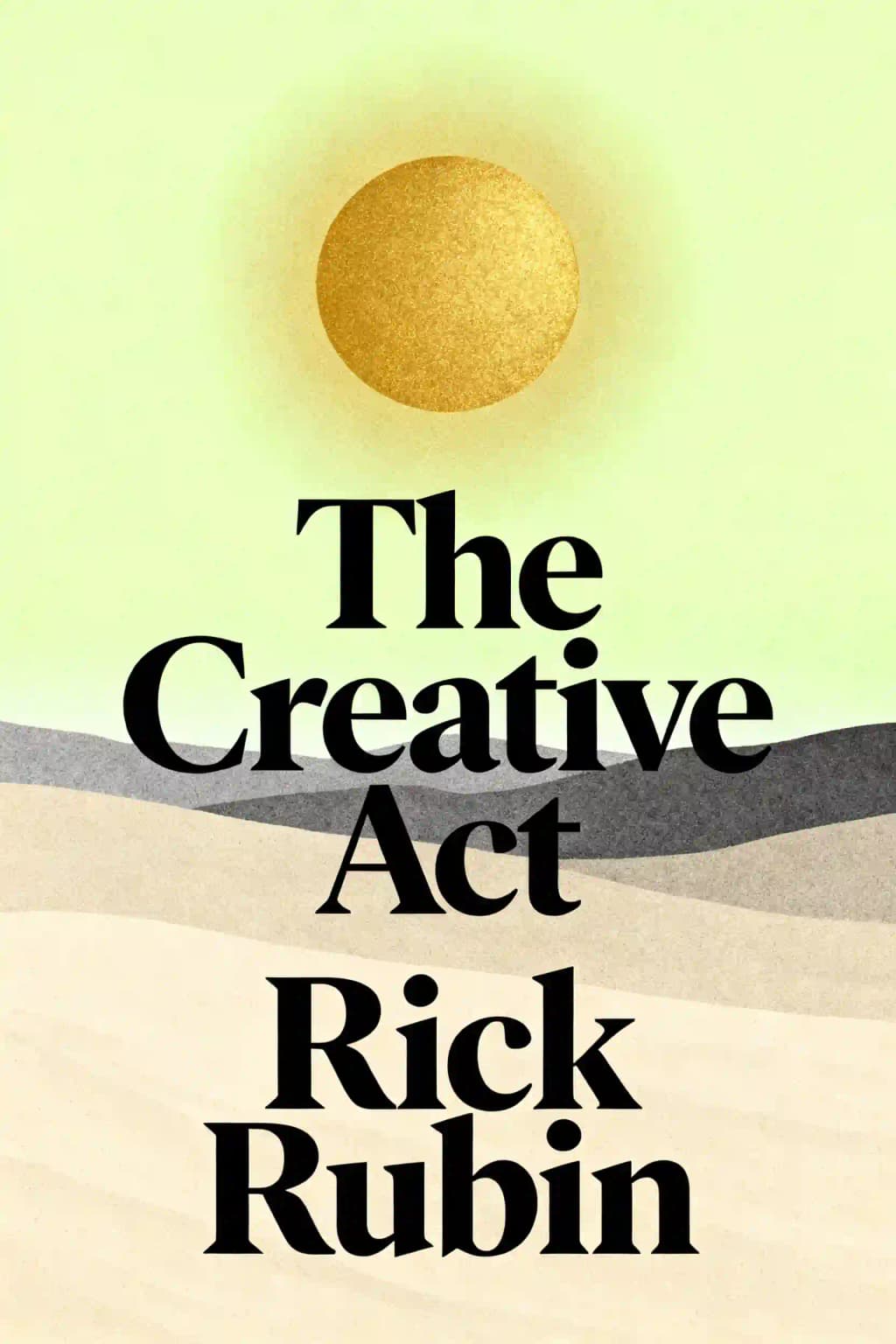
Imagine standing before a blank canvas, paralyzed by the question: "Am I truly creative?" According to Rick Rubin, one of music's most influential producers who has worked with everyone from Johnny Cash to Jay-Z, that question itself reveals a fundamental misunderstanding of human nature. In "The Creative Act: A Way of Being," Rubin dismantles the myth that creativity belongs only to a gifted few. This book has become a touchstone for artists across disciplines, earning praise from figures like Brene Brown and Tim Ferriss for its accessible wisdom. Unlike typical how-to guides, Rubin's approach treats creativity not as a skill to acquire but as an innate human quality to uncover-a perspective that has made this book a surprise bestseller in our achievement-oriented culture. Through gentle philosophical musings rather than rigid techniques, Rubin invites us to recognize that we're all already creating constantly, whether we're rearranging furniture, finding new driving routes, or simply perceiving the world around us.
Kapitel 2
The Universal Creative Force
Creativity isn't a rare gift bestowed upon special individuals-it's our fundamental human birthright. We create constantly, not just in traditional arts but in everyday life: conversations, problem-solving, finding new routes home, arranging furniture, planning meals, or even organizing our daily schedules. What you make doesn't need to be witnessed or sold to be considered art. Through ordinary existence, we're profound creators, constructing our reality from undifferentiated matter through our senses, shaping our world with each choice and action.
When you look at a forest, you don't see individual trees, leaves, and insects-you perceive "forest." Your brain constructs this unified concept from countless sensory inputs: the interplay of light and shadow, the rustling of leaves, the scent of pine needles, the texture of bark, and the movement of wildlife. Similarly, when you hear music, you don't consciously process individual sound waves but experience melodies and emotions. This everyday perception is profoundly creative, transforming raw sensory data into meaningful experiences that shape our understanding of reality.
The universe functions like a perfectly synchronized clock, with natural rhythms we participate in rather than control. Ideas exist in the ether, ripening on schedule, ready for expression, much like fruits reaching maturity in their proper season. When you don't bring an exciting idea to life, it often finds voice through another maker-not because they stole it, but because its time has come. Have you ever noticed how certain innovations seem to emerge simultaneously from multiple unconnected sources? Consider how calculus was independently developed by both Newton and Leibniz, or how multiple inventors worked on electric light bulbs around the same time as Edison. This phenomenon speaks to the cosmic timetable of creativity.
As artists, we translate messages the universe broadcasts, acting as conduits for ideas that seem to float in the collective consciousness. Those with the most sensitive antennae draw in the energy resonating at a particular moment, like radio receivers tuned to specific frequencies. Many great artists first develop this sensitivity for self-protection because they feel everything more deeply, processing both joy and pain with heightened awareness. Art movements-Bauhaus architecture, abstract expressionism, French New Wave cinema-appear like waves because multiple creators are tuning into the same frequency simultaneously, responding to shared cultural and spiritual impulses of their time.
To receive these signals, we must create open mental space-a vacuum that draws down ideas. Children naturally have this receptivity, accepting new information with delight instead of comparison, living in the moment, remaining spontaneous and curious. They don't judge their creative impulses or worry about market value; they simply create for the joy of expression. Artists who create great works throughout their lives preserve these childlike qualities, seeing the world through uncorrupted, innocent eyes, maintaining wonder at the ordinary and finding magic in the mundane. This preserved innocence allows them to remain open channels for creative energy, unblocked by cynicism or preconception.
Kapitel 3
The Wellspring of Artistic Expression
We begin with everything-everything seen, done, thought, felt, imagined, forgotten, and everything that rests unspoken within us. This is our source material for building each creative moment.
This content doesn't originate inside us. The Source exists externally-a surrounding wisdom, an inexhaustible offering always available. We sense it, remember it, or tune into it through experiences, dreams, intuitions, and subliminal fragments. Though material appears to come from within, that's an illusion. Tiny fragments of Source's vastness store within us, arising from the unconscious like vapor to condense as thoughts and ideas.
Each of us contains a vessel constantly filling with data-the sum of our thoughts, feelings, dreams, and experiences. Information doesn't enter directly but passes through a unique personal filter. Not everything penetrates this filter, and what does often arrives altered. We each reduce Source differently due to limited memory, sensory misperceptions, and finite processing power.
Early in life, we learn to focus on seemingly essential information while tuning out the rest. As artists, we seek to restore childlike perception-a state of wonder not tethered to utility or survival. Our filter inevitably reduces Source intelligence by interpreting incoming data rather than letting it pass freely. As our vessel fills with recast fragments, they form relationships that produce beliefs and stories about ourselves and the world.
The creative act involves taking our vessel's contents as potential material, selecting elements that seem significant in the moment, and re-presenting them. This is Source drawn through us and made into books, paintings, buildings-whatever projects we create. When shared, our work recirculates as source material for others.
While this system often operates beyond our control, with training we can improve our interface with Source and expand our vessel's capacity to receive. Think of it as developing a more sensitive antenna-one that picks up signals others might miss.
Kapitel 4
Cultivating Artistic Awareness
Unlike most daily activities where we create the program, awareness operates differently. The world becomes the doer while we become the witness, with little control over content. This gift allows us to notice what's happening around and inside ourselves in the present moment without attachment-observing bodily sensations, passing thoughts, feelings, and sensory inputs.
Through detached noticing, awareness reveals more of an observed object without our intervention. It requires little effort but persistent presence and acceptance of the eternal now. The moment we label or analyze, we're no longer purely noticing-analysis is secondary to the primary connection with our attention's object.
Though we can't change what we notice, we can change our ability to notice-expanding or narrowing awareness, experiencing with eyes open or closed, quieting our inside to perceive more outside or vice versa. We can zoom in until something loses its defining features or zoom out until it transforms into something new. The universe is only as large as our perception; cultivating awareness expands both the universe and the material available for creation.
While animals must narrow their focus to survive-concentrating on food, shelter, predators, procreation-artists benefit from widening their scope. This expanded awareness builds a treasury of noticed moments to draw from later. A practice embodies an approach to a concept, supporting our desired state of mind. Through repetition, we move toward living in a continually open state where expanded awareness becomes our default.
Small daily rituals-three deep breaths upon waking, mindful eating, nature walks, moments of bodily awareness before sleep-build our psychic musculature for heightened perception. The purpose isn't in the doing itself, just as meditation's goal isn't merely meditating. We're evolving how we perceive the world when not engaged in these practices.
Of all great works we can experience, nature stands as the most absolute and enduring. Its endless variations-mountains, oceans, changing moonlight, seasonal shifts-provide inexhaustible inspiration. Even dedicating our lives solely to observing natural light and shadow would yield constant discoveries. Through communion with the natural world, we move closer to our own essence and the infinite source of creativity.
Kapitel 5
Navigating Inner Landscapes
Our inner world is just as extraordinary as external experiences, containing vast territories waiting to be explored. By focusing inward on sensations, emotions, and thought patterns, we discover a wealth of material as beautiful and complex as nature itself. When we go inside, we're not retreating from reality but rather processing what's happening outside-becoming connected rather than separate. The boundary between internal and external inspiration often blurs, revealing that whether inspiration comes from within or without, both are equally valuable sources of creativity, and there are always more options available than our conscious minds initially recognize.
Some vocalists have discovered a profound creative technique by recording their first spontaneous sounds when hearing new instrumental tracks-singing random words or melodic gibberish that often reveals complete stories and key phrases without conscious effort. Artists like Elizabeth Fraser of Cocteau Twins and Jonsi of Sigur Ros have mastered this approach, creating entire languages from their subconscious. This type of creation taps into hidden material within us, accessing deeper wells of creativity that logical thinking often blocks. Various practices can help access this deeper well: anger-releasing exercises followed by immediate stream-of-consciousness writing; dream journaling upon waking before memories fade; embracing apparent randomness through tools like the I Ching or Oblique Strategies cards; and meditation followed by automatic drawing.
Transitional states offer particular insight and creative potential. Artists throughout history have sometimes created their best work while feverish or in trance-like conditions that bypass ordinary thinking and access dream states. Salvador Dali famously used hypnagogic states - the transition between wakefulness and sleep - to access surreal imagery. As Tibetan dream yoga teaches, the dream state is just as real-or unreal-as waking life, offering a parallel reality where different rules apply and new insights emerge.
The world transforms constantly, even when we think we're observing something familiar. Practice the same awareness exercise in the same location for five consecutive days, and each experience will differ dramatically-varying sounds, shifting smells, changing winds, and evolving sunlight ensure perpetual newness. Even seemingly static elements-museum artworks or kitchen objects-reveal previously unnoticed aspects when examined deeply. A simple cup observed daily might reveal new patterns in its glaze, different reflections of light, or varying relationships to surrounding objects. Rereading the same book repeatedly uncovers new themes, undercurrents, and connections with each pass, as our own life experiences inform our interpretation.
Like a flowing stream you can never step into twice, everything exists in constant flux, including our own consciousness. We ourselves embody this perpetual change-learning and forgetting, moving through different moods and thoughts, our cells dying and regenerating approximately every seven years. No one remains the same person throughout a single day, as our biochemistry shifts, our thoughts evolve, and our perspectives adjust. Even if the external world somehow remained static, our perception of it would continue evolving, as would the work we create from it. This constant state of flux, rather than being an obstacle to creativity, becomes its very source.
Kapitel 6
Confronting Creative Obstacles
Self-doubt lives in all of us and serves a purpose. Our flaws and imperfections make our art resonant and human-soulless perfection lacks soul. We create pieces reflecting who we are, and if insecurity is part of us, our work gains truth.
Art isn't competitive but representative of self. Many renowned artists can't bear to hear their own performances-the same sensitivity enabling their art makes them vulnerable to judgment. Yet they continue sharing because being an artist is who they are.
For those paralyzed by fear of judgment, perhaps the desire to protect themselves exceeds their need to share. Creating is a privilege, not an obligation. Some successful artists channel deep insecurity or hardship into powerful work, but these same challenges often prevent sustained productivity over time. Many great artists die young from overdoses, using substances to numb the painful sensitivity that made them artists-seeing tremendous beauty or pain where others see nothing creates overwhelming emotions and isolation.
While emotional undercurrents can serve art, they often interfere with beginning, completing, and sharing work. The best strategy is lowering the stakes-seeing each project not as a career-defining masterpiece but as a small stepping stone in a lifelong creative journey.
All art is a work in progress, an experiment with unpredictable outcomes that provide useful information for future endeavors. Starting from the position that there's no right or wrong, just free play without rules, makes creative immersion joyful. We're playing to play, not to win. Perfectionism kills fun; comfort in the process allows successive works to flow with ease.
As Oscar Wilde said, some things are too important to be taken seriously-art is one. Setting the bar low frees you to explore without attachment to results, leading to happy surprises and better work. Ultimately, your desire to create must exceed your fear. Even legendary performers who suffer stage fright for decades still step into the spotlight. By accepting self-doubt rather than fighting it, we diminish its interference.
Kapitel 7
The Creative Process Unveiled
The creative journey typically unfolds in distinct phases, beginning with seed collection. We gather potential starting points without judgment-phrases, melodies, characters, shapes, or societal needs that might grow into something beautiful. This requires little effort-it's more about receiving than forcing, like casting a fishing line and waiting patiently.
The artist's role is to gather seeds, plant them, and water them with attention to see which take root. Premature judgment limits possibilities-seemingly weak seeds may grow into beautiful works while exciting ones might yield nothing. Until developed, it's impossible to assess accurately which will flourish.
Having collected our seeds, we enter the experimentation phase where we begin developing initial ideas to discover which might flourish. This phase is playful-nothing is at stake and there are no rules. We cultivate each seed as a gardener creates optimal conditions, exploring countless directions without premature editing. The heart of experiment is mystery; we cannot predict where a seed will lead.
In creating art, combinations often defy expectation. The gap between imagination and reality means ideas that seem brilliant in our mind might fail in execution, while seemingly dreary concepts might be perfect. The only way to truly know is to test everything. Ask "what if" questions, explore polarities, and temporarily assume there are no bad ideas.
Once a seed's true form emerges through experimentation, we enter the craft phase. The unbounded discovery shifts to directed building-we're filling in colors where lines have been drawn. This less glamorous phase can challenge our commitment as we face the long climb ahead rather than chasing new inspirations. Yet completing the work is essential for art to exist.
The craft phase requires balance-working without boundaries can extend unnecessarily long. Once the vision is clear, setting deadlines helps maintain momentum. When stuck on difficult sections, maintain momentum by working around them-complete other parts first, as solutions often reveal themselves once the overall context emerges. Like a puzzle, the more pieces in place, the clearer we see where the remaining ones belong.
Kapitel 8
Breaking Through Creative Blocks
When creativity stalls during the craft phase, breaking patterns can refresh your excitement. Rather than abandoning work, find ways to engage with it anew. Various techniques can help: committing to small daily tasks (like writing just one line), altering your environment (working in darkness or changing physical positions), shifting the psychological stakes (imagining it's your last performance), inviting observers, reimagining context (singing a love song as a devotional), changing perspective (using extreme volume in headphones to force quieter playing), creating for someone else's style, adding vivid imagery as inspiration, or limiting information (giving musicians only basic chord structures).
For blocked musicians, committing to writing just one line daily-without judgment about quality-can reopen creative channels. This approach breaks seemingly insurmountable projects into manageable pieces, often leading to complete compositions more quickly than expected.
Altering physical surroundings can transform performances. Playing in darkness, changing microphone positioning, recording at unusual hours, or even adopting unconventional physical positions (like hanging upside down) can break patterns and access new creative variations.
Modifying psychological context affects performance quality. Imagining it's your final performance of a piece creates different energy than treating it as routine. Sometimes lower stakes (like considering it merely practice) paradoxically produces the best results.
While much of art-making involves breaking free from rules, deliberately imposing constraints can paradoxically unleash creativity. Self-imposed limitations reduce overwhelming options and force innovative problem-solving. These constraints become a project's palette, giving work distinctive character. Georges Perec wrote an entire book without using the letter 'e'; Yves Klein limited his palette to one color, discovering "International Klein Blue"; filmmaker Lars von Trier created the Dogme 95 manifesto with ten strict filmmaking rules that yielded critical success.
Distraction, when used skillfully, becomes one of the artist's most powerful tools. Like a meditation mantra that occupies the conscious mind to allow deeper work, certain distractions free our unconscious to solve creative problems. When we reach an impasse, stepping away from the project creates space for solutions to emerge. Holding a problem lightly in the back of our consciousness while engaging in simple, automatic activities-driving, walking, swimming, showering-often yields breakthroughs.
Kapitel 9
Embracing Artistic Completion
The completion phase requires overcoming fears of imperfection and permanence that often paralyze creators. Many potentially great artists never share their work because they can't make this leap. Releasing work becomes easier when we recognize each piece merely reflects who we are in this moment-not our entire being. Hanging onto work is like writing the same diary entry for years while leaving future pages empty.
The deeper anxieties about releasing work often involve fears of judgment, misunderstanding, or irrelevance. Part of letting go means releasing concerns about reception-the audience comes last in the creative process. Every artwork is simply an iteration; there is never a "right" version, only different ones. Finishing work builds confidence and reduces insecurity's weight.
The abundant mindset views creativity as an endless river flowing through us-ideas are replenished when shared, but stagnate when hoarded. Living in creative scarcity leads to perfectionism and paralysis; we fear releasing work because we believe great ideas are rare. Each mindset follows a universal rule: whatever we concentrate on expands. In abundance, we complete and release work freely, knowing more inspiration awaits.
Artists typically lean toward one of two creative tendencies: Experimenters love dreaming and playing but struggle with completion, while Finishers race toward endpoints with immediate clarity but may miss creative possibilities along the way. Each benefits from borrowing the other's strengths. Finishers should spend more time in early creative phases-writing beyond minimum requirements, exploring materials and perspectives, allowing space for improvisation. Experimenters need practice completing even small segments of work, which builds confidence and momentum.
After spending thousands of hours on a piece, it's nearly impossible to judge it neutrally. When someone experiences your work for the first time, they may see it more clearly in two minutes than you can after endless revisions. We develop a kind of blindness, losing perspective. If we train ourselves to step away completely, to detach and immerse in something else, we can return later and see the work as if for the first time.
Kapitel 10
The Artistic Life: A Way of Being
Making art is both a serious matter-harnessing creative energy from Source, shepherding ideas into the physical plane-and pure play. Within every artist is a child searching for the perfect crayon. We must preserve this playfulness throughout the gravity of the enterprise, taking art seriously without approaching it in a serious way. In play, there are no stakes, boundaries, or quotas for productivity-it's an uninhibited state where your spirit runs free and the best ideas arise most easily.
If you're looking for your art to support you, you may be asking too much of it. We create in service to art, not for what we can get from it. If the choice is between making great art and supporting yourself, the art comes first. It's okay to have a job that supports your art habit-doing both keeps the work pure. Choose occupations that give you mental space to develop your creative vision, or seek work in fields you're passionate about to glimpse behind the scenes of the craft.
Success isn't measured by popularity, money, or critical acclaim-it's a private feeling that comes the moment you decide to release your work, knowing you've done everything possible to realize its potential. True success happens before any external validation, in the quiet satisfaction of completion. What follows is subject to countless variables beyond your control: timing, distribution, cultural mood, competing releases.
Greatness begins with creating something magnificent solely for yourself-like building an exquisite mountaintop home no one will ever visit. This metaphor illustrates how true artistic excellence emerges from personal standards rather than external validation. We create art as a devotional act, bringing our full selves to every project. Greatness requires focusing purely on creative intent, free from fears of criticism, commercial pressures, or past successes.
As you deepen your creative practice, you discover a paradox: self-expression isn't really about you. Most artists feel compelled to create by some primal instinct-to deny it feels like violating nature. When work takes shape, we experience a dynamic surge followed by an urge to share, hoping to replicate that emotional charge in others. Our creative purpose isn't necessarily to understand ourselves or be understood, but to share our unique way of seeing to spark echoes in others.
Art becomes a reverberation of impermanent life-enduring affirmations of existence that cry out "I was here." When you contribute your perspective, it's refracted through others' filters and distributed again in a continuous process that shapes our collective reality. Every work, however seemingly trivial, plays a role in this greater cycle. Art connects us beyond the limitations of language, bridging the isolation that comes from our individual ways of seeing the world. Through this, we remove boundaries of separation and participate in the great remembering of what we inherently know: There is no separation. We are one.