Kapitel 1
Reimagining the Creative Process: How Design Thinking Transforms Everyday Problems
When David Kelley walked into a Silicon Valley boardroom with his legendary collection of briefcases, he wasn't just showing off accessories. Each briefcase told a story about its intended user-from the rugged outdoorsman to the meticulous executive. This simple demonstration perfectly encapsulated the philosophy that would later become Stanford's d.school: design isn't about creating beautiful objects; it's about solving human problems through deep understanding and creative experimentation.
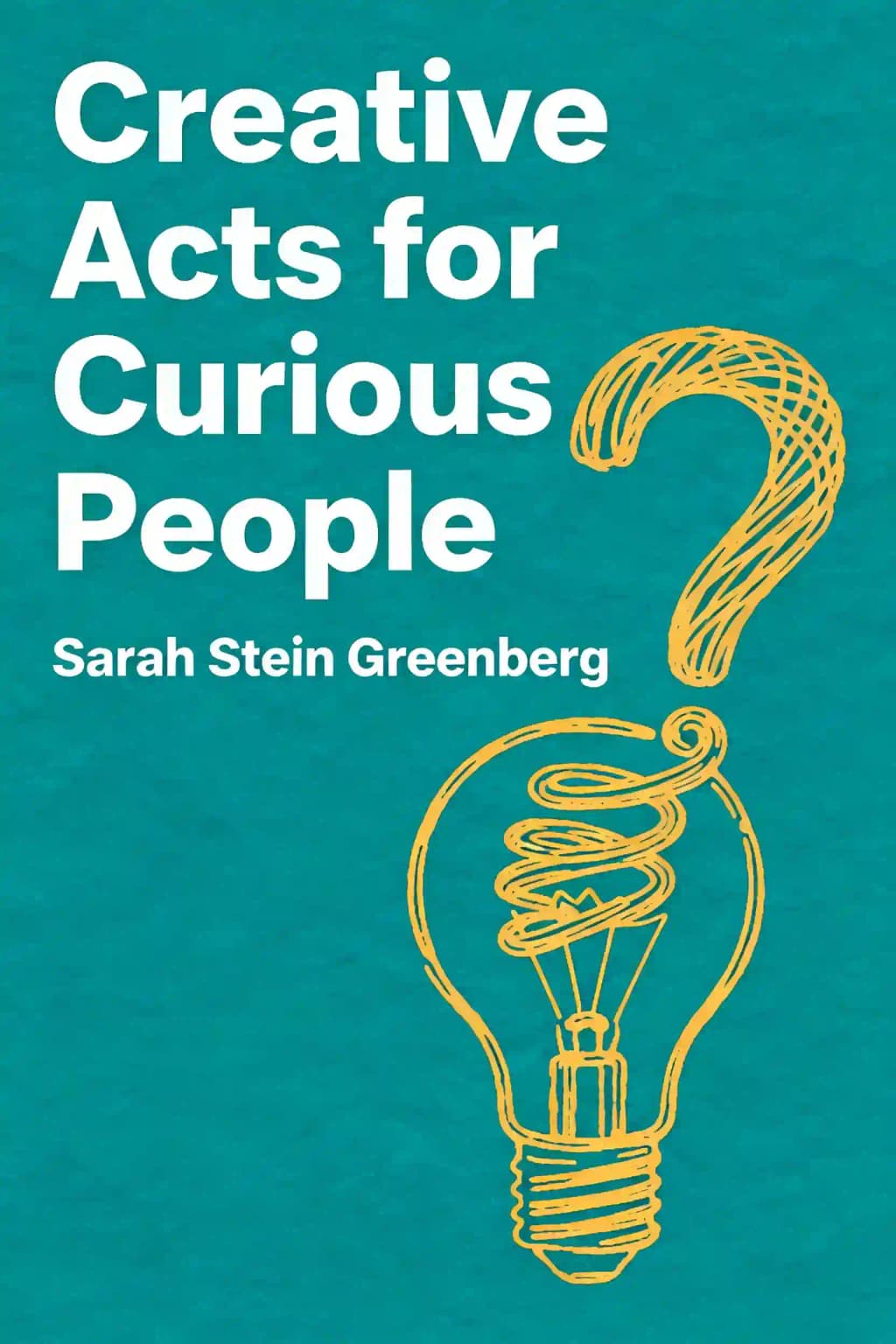
"Creative Acts for Curious People" has become something of a phenomenon since its publication, with celebrities like Reese Witherspoon and Tim Ferriss citing it as essential reading for anyone looking to unlock their creative potential. The book has transformed how major companies approach innovation and has been integrated into curricula at universities worldwide. Author Sarah Stein Greenberg, executive director of Stanford's d.school, distills fifteen years of groundbreaking design education into accessible exercises that anyone can use-whether you're developing the next revolutionary product or simply trying to think differently about everyday challenges.
Kapitel 2
Breaking Free from the Inner Critic: The First Step to Creative Confidence
We all have that persistent voice in our head-the one that whispers "you're not creative enough" or "that idea will never work" or "you'll look foolish if you share this." This inner critic, shaped by years of social conditioning and past experiences, is perhaps the most formidable barrier to creative thinking, acting as a gatekeeper that filters out potentially innovative ideas before they have a chance to develop.
The book presents several powerful exercises designed to circumvent this internal censor. The "Blind Contour Bookend" exercise tackles this challenge head-on by having participants draw someone's face without looking at their paper or lifting their pen. The results are predictably messy-often hilariously distorted-but that's precisely the point. Some faces end up with eyes at different levels, noses in unlikely places, and mouths that wander off the page. By separating the act of creating from the act of judging, participants learn to temporarily silence their inner critic-a crucial skill for generating innovative ideas in any domain.
"The goal isn't to make a good drawing," explains Charlotte Burgess-Auburn, "but to experience what it feels like when you're not judging yourself while creating." This simple exercise creates a powerful shift in mindset, allowing wild ideas to emerge without premature dismissal. Participants often report feeling liberated and notably more relaxed in subsequent creative exercises, having experienced firsthand that imperfection doesn't equal failure.
The "ABC Sketching" assignment builds on this foundation by demonstrating that basic visual communication isn't about artistic talent but about combining simple shapes-like letters of the alphabet-to express ideas. Participants learn how the letter 'C' can become the base of a coffee cup, 'B' can transform into a butterfly, or 'D' can evolve into a smiling face. By lowering the stakes around drawing skills and providing these basic building blocks, participants overcome their fear of visual expression and discover a powerful tool for communicating concepts that words alone cannot capture.
Another effective technique introduced is the "Two-Minute Tornado," where participants must generate as many ideas as possible within a strict time limit, emphasizing quantity over quality. This time pressure helps bypass the inner critic simply because there isn't time to second-guess each idea. Participants often surprise themselves by generating 15-20 ideas in such a short span, many of which turn out to be valuable upon later review.
These exercises reveal a fundamental truth about creativity: the biggest obstacle isn't lack of ability but self-imposed limitations and fear of judgment. By creating safe spaces to experiment without criticism, we can bypass our inner critics and access the creative potential that's been there all along. The book emphasizes that this isn't about permanently silencing the inner critic-which can sometimes offer valuable insights-but about learning when to quiet it down to allow new ideas to emerge and take shape.
Kapitel 3
Seeing with Fresh Eyes: How to Notice What Others Miss
Our brains are remarkably efficient at filtering information, which helps us navigate daily life but also blinds us to potential insights and opportunities. This filtering mechanism, while essential for preventing sensory overload, can create significant blind spots in our perception and understanding. Several exercises in the book train participants to control these perceptual filters and notice details hiding in plain sight, effectively expanding their observational capabilities.
"The Derive" (inspired by philosopher Guy Debord) has participants wander without a planned route for an hour, following a specific quality like color, sound, or smell. This deliberate drift breaks habitual patterns of perception, revealing previously unnoticed aspects of familiar environments. For example, following sounds might lead to discovering hidden courtyards with fountains, while tracking colors could reveal patterns in urban architecture that tell stories about neighborhood history. Carissa Carter notes that participants "come back transformed-without fail," gaining fresh perspectives that help them process complex information differently. Many report discovering entire streets, buildings, and community spaces they had passed by hundreds of times without noticing.
"A Seeing Exercise" similarly trains participants to slow down the connection between eye and brain through structured observation. By examining documentary photographs and repeatedly asking "What's going on? What do you see that makes you say that? What else do you see?", participants extend their engagement with visual information from seconds to minutes. This practice of sustained attention helps identify "duct tape" solutions (makeshift fixes that reveal underlying needs), desire lines (worn paths showing where people actually walk versus designated pathways), and telling omissions in everyday scenes. For instance, participants might notice how people modify public spaces to meet their needs, such as improvised seating arrangements or unofficial shortcuts through parks.
Perhaps the most revealing exercise is "Expert Eyes," where participants walk the same route multiple times with experts from different disciplines. An artist might point out interesting color combinations and shadow patterns, while a landscape architect notices drought damage in trees and meaningful sidewalk cracks that indicate root growth patterns. A social worker might observe gathering spots that serve as unofficial community centers, while an urban planner identifies traffic flow patterns and pedestrian behavior. By comparing these different perspectives, participants discover how dramatically expertise shapes perception and learn to see environments through multiple lenses simultaneously.
These exercises demonstrate that creativity often begins not with having brilliant ideas but with seeing what others miss. By training ourselves to notice details, patterns, and opportunities that others overlook, we create the raw material for innovative thinking. This enhanced observational ability becomes particularly valuable in design thinking, where understanding unmet needs and unexpressed desires can lead to breakthrough solutions. Regular practice of these techniques can permanently alter how we perceive and interact with our environment, leading to more nuanced understanding and creative problem-solving capabilities.
Kapitel 4
Embracing Productive Struggle: The Essential Discomfort of Creation
One of the book's most powerful insights is that discomfort isn't just an unfortunate side effect of creative work-it's an essential ingredient. The "trough of despair" that accompanies any meaningful creative project isn't something to avoid but rather a signal that you're working on something worth your full attention.
"Only problems without easy answers require the difficult creative leaps that lead to breakthroughs," Greenberg writes. "Only work that pushes you to develop new skills keeps you on the edge of your learning curve and reaching toward your full potential."
This concept of "productive struggle" appears throughout the book's exercises. The "Monsoon Challenge" gives teams just $20 and a few days to build a device that can collect the most water during a simulated monsoon (a sprinkler on a ladder). The time pressure and material constraints create a powerful learning environment that rewards resourcefulness and rapid iteration.
What's particularly interesting is how the exercise reveals patterns in problem-solving approaches: teams that immediately build and test prototypes dramatically outperform those who spend time planning without testing. The struggle of discovering that water is heavier than expected or that materials behave differently than imagined becomes productive because it leads to better solutions.
Similarly, the "Five Chairs" exercise challenges participants to create five different versions of their "dream chair" using various materials. By forcing exploration of multiple representations rather than fixating on a single solution, participants discover how different materials influence thinking and expand their creative options.
These exercises teach participants to reframe the queasy feeling of not-knowing-yet into the more powerful feeling of being positioned for a breakthrough. Over time, this approach transforms how we view challenges-we begin to prefer problems with uncertainty and invite more ambiguity into our work, finding the perilous feeling of not knowing somewhat intoxicating.
Kapitel 5
Building Bridges of Understanding: The Power of Empathy in Design
Design thinking has increasingly emphasized empathy as its foundation-not just as a moral virtue but as a practical tool for creating effective solutions. The book offers numerous exercises to develop this capacity, moving beyond superficial understanding to genuine insight.
"Immersion for Insight" has participants follow the exact steps someone would take to navigate a system, developing emotional and intuitive understanding that complements intellectual knowledge. In one powerful example, participants attempt to apply for public benefits online within a strict 25-minute time limit, using either a library computer or phone to simulate limited access. Most fail to complete the application, experiencing firsthand the frustration of navigating poorly designed systems.
"A Day in the Life" takes this immersion further, having participants create a 5-7 minute documentary video about someone after shadowing them for three days. The goal is to understand their life holistically-not just their interactions with your work, but their complete human experience. This approach ensures you discover what's meaningful to your subject rather than imposing your preconceptions.
Perhaps the most innovative empathy exercise is "Empathy in Motion," which creates equitable connection through shared transit experiences. By arranging to travel together via public transportation-with the community member leading the way-you create a side-by-side rather than face-to-face dynamic. This unscripted setting becomes disarming and genuine, acknowledging power differentials that often exist when designers work with communities.
These exercises reveal that empathy isn't just about feeling what others feel-it's about gaining insights that would be impossible to access through abstract analysis alone. By physically experiencing others' challenges and contexts, designers develop a deeper understanding that leads to more meaningful and effective solutions.
Kapitel 6
Transforming Collaboration: How to Build Creative Teams
Creative work rarely happens in isolation, and several exercises address the challenge of building psychological safety and effective communication in groups.
"Party Park Parkway" uses physical space and positioning to accelerate trust-building through three progressive rounds of conversation. Participants begin standing as if at a cocktail party, then sit on the ground in an imaginary park, and finally huddle closely together in a darkened room. These physical transitions create dramatic shifts in conversational depth and intimacy, demonstrating how intentionally designing physical space can transform interpersonal dynamics.
"Talkers & Listeners" addresses how people process and share information differently in groups. By having participants self-identify as either "talkers" or "listeners" and then exchange questions between groups, the exercise reveals assumptions about what motivates different communication styles. This simple activity creates powerful insights about unspoken group dynamics and helps establish new norms where everyone can contribute effectively.
"Rock Paper Scissors Tournament" transforms a simple game into a lesson about support and team dynamics. Losers become enthusiastic fans of their opponents, with fan bases merging as winners advance. By the final match, the room divides into two passionate cheering sections. Beyond injecting energy, the exercise demonstrates how quickly we can shift from opposition to wholehearted support-a valuable lesson for collaborative environments.
Perhaps the most innovative team-building exercise is "How Are You Doing, Really?", where participants write different emotions they're experiencing on sticky notes, attach them to themselves, and engage in conversations about these feelings. By making internal states externally visible, the activity creates psychological safety and breaks down artificial barriers between professional and personal spaces.
These exercises demonstrate that effective collaboration isn't just about bringing smart people together but about deliberately designing interactions that foster trust, vulnerability, and genuine connection.
Kapitel 7
Prototyping as a Way of Thinking: Making Ideas Tangible
One of the book's core principles is that thinking happens not just in our heads but through our hands. Several exercises demonstrate how making ideas tangible through prototyping leads to deeper understanding and better solutions.
"First Date, Worst Date" introduces "thinking with things" by having participants build LEGO models representing their worst first dates. With limited materials and a tight time constraint, creators must translate personal experiences into physical representations. This humorous, relatable theme helps participants overcome hesitation about working with physical materials while building comfort with tangible prototyping.
"Distribution Prototyping" applies this physical thinking to abstract challenges. Using string, index cards, and paper clips, participants create a physical model of their distribution channel, mapping the journey from product to customer. This bodystorming technique transforms abstract concepts into tangible models you can analyze, helping anticipate challenges before they arise.
"High Fidelity, Low Resolution" challenges the notion that creative work progresses linearly toward a single solution. The exercise teaches parallel prototyping-testing several concepts at once to avoid getting emotionally attached to a single path. Using Paul Rothstein's framework, participants create test scenarios with high experiential fidelity while keeping prototypes deliberately unfinished, focusing on atmosphere, actors, artifacts, and activities.
Perhaps the most powerful insight comes from "The Monsoon Challenge," where teams that immediately build and test prototypes dramatically outperform those who spend time planning without testing. Participants quickly discover unexpected physical realities (like how heavy water becomes) and learn to iterate rapidly based on real-world feedback.
These exercises demonstrate that prototyping isn't just about testing finished ideas but is itself a form of thinking-a way to discover insights that would be impossible to reach through abstract reasoning alone. By making ideas tangible early and often, we learn through doing rather than just thinking.
Kapitel 8
Designing for the Future: Ethical Considerations and Implications
As design's influence continues to permeate every aspect of society, from digital interfaces to physical spaces, its responsibility grows exponentially. The power to shape human behavior and experiences comes with profound ethical obligations that designers must actively consider throughout their creative process.
"Identify, Acknowledge, Challenge" serves as a foundational exercise in confronting unconscious biases. Participants begin by explicitly documenting stereotypes they've encountered about different groups affected by their work - from age-based assumptions to cultural misconceptions. These are organized visually on large boards, creating a stark representation of collective biases. The exercise then moves into developing specific "How might we?" questions that challenge these biases. For example, "How might we design financial services that respect elderly users' tech capabilities while ensuring their security?" This transformation of awareness into action points avoids prescriptive solutions while encouraging innovative thinking.
"The Futures Wheel" expands temporal thinking about design implications through systematic mapping. Starting with a central trend (like facial recognition in public spaces), participants identify immediate consequences (enhanced security, privacy concerns), then trace these to second-order effects (changed behavior in public, new social norms), third-order implications (evolution of protest movements, emergence of counter-technologies), and fourth-order possibilities (restructured social contracts, redefined concepts of privacy). This exercise regularly reveals unexpected connections and forces participants to consider long-term societal impacts.
"Build a Bot" delves deep into AI ethics by examining how seemingly neutral design decisions shape technological interactions. Participants create detailed personas for AI assistants, including personality traits, knowledge boundaries, and ethical principles. They then design different datasets for answering questions about controversial topics from multiple perspectives. This process reveals how choices about data sources, language models, and response parameters can either perpetuate or challenge existing biases. Teams often discover how their own cultural assumptions influence their bot designs.
"More Brave People" pushes participants to examine design's moral dimensions through concrete examples. The exercise begins with participants documenting cases where design has improved lives (accessible architecture, inclusive product design) alongside instances of harmful design (addictive social media features, discriminatory algorithms). Through guided discussion, participants analyze how design choices either perpetuate or challenge systemic inequities. The exercise emphasizes that design decisions are never neutral and that designers have the power to actively work against oppression and exclusion.
These exercises demonstrate that ethical considerations must be woven into every stage of the design process, from initial concept to final implementation. By developing tools to anticipate consequences, examine biases, and consider multiple perspectives, designers can create solutions that address immediate needs while contributing to a more equitable and sustainable future. The framework these exercises provide helps transform abstract ethical principles into actionable design practices.
Kapitel 9
From Learning to Living: Applying Design Thinking to Your Own Life
The book concludes with a comprehensive set of exercises that transform design thinking from a professional methodology into a powerful framework for personal growth and life design. These practical tools help participants reshape their approach to learning, decision-making, and personal development.
"Learning How You Learn" guides participants through a detailed self-discovery process to identify and analyze powerful learning moments from their lives. Participants recall specific instances where learning felt natural and effective - whether mastering a new skill, overcoming a challenge, or having an "aha" moment. They examine these experiences through multiple lenses: the physical environment, emotional state, social context, and learning methods involved. For example, some might discover they learn best through hands-on experimentation, while others thrive in collaborative discussions or quiet reflection. By identifying these patterns, participants can intentionally design future learning environments that align with their natural preferences.
"Learning Journey Maps" elevates personal reflection into a visual analytical tool. Participants create detailed timelines that plot both their learning progress and emotional states during significant projects or life transitions. The mapping process reveals critical patterns: breakthrough moments often follow periods of frustration, and seemingly unproductive "stuck" periods frequently precede major insights. The exercise helps identify specific triggers that either accelerate or inhibit learning, such as deadline pressure, peer feedback, or solitary work time. These maps become particularly valuable when planning future projects or navigating challenging transitions.
"Personal Project," Bernie Roth's landmark exercise taught at Stanford for over four decades, transforms abstract aspirations into concrete action. Participants choose either a persistent problem they've always wanted to solve (like improving work-life balance) or a long-held dream they've never pursued (such as writing a book or starting a business). The exercise provides minimal structure but maintains accountability through regular check-ins and peer support. Participants learn to overcome self-imposed limitations and develop practical strategies for turning intentions into reality.
"The Final Final" addresses the universal challenge of perfecting work under deadline pressure. By establishing a preliminary "final" presentation several days before the actual deadline, participants create a structured opportunity for crucial refinement. This buffer period allows for incorporating feedback, refining details, and making those improvements that typically occur to us only after declaring work "finished." The technique has proven particularly valuable for creative projects, presentations, and strategic initiatives where that final iteration can significantly enhance quality.
These exercises demonstrate that design thinking transcends its origins as a product development methodology to become a comprehensive approach to living. By applying principles like empathy, experimentation, and iterative improvement to personal development, participants learn to design lives that are not just more productive but more meaningful and fulfilling. The approach encourages embracing uncertainty, learning from failure, and maintaining curiosity about both ourselves and the world around us.
Kapitel 10
The Creative Journey: From Not Knowing to Knowing
At its core, "Creative Acts for Curious People" is about embracing the journey from not knowing to knowing-a path that defines every creative endeavor. The book's exercises provide structured ways to navigate this uncertain territory, building the confidence and skills needed to face ambiguity with curiosity rather than fear.
As Greenberg writes, "Learning how to learn is the fundamental ability needed for our dynamic century-being inquisitive, framing opportunities for change, and making ideas tangible." In a world of accelerating change, this ability to learn and adapt becomes increasingly valuable.
The book's approach challenges traditional education models that separate thinking from feeling and theory from practice. Instead, it integrates ideas and emotions, recognizing that this combination facilitates effective learning. Most formal education overemphasizes thinking and observing while neglecting feeling and doing-like working out only one side of your body at the gym.
By deliberately creating conditions for creativity-psychological safety, fun, and productive struggle-these exercises unblock creative abilities that might otherwise remain dormant. They demonstrate that creativity isn't a rare gift possessed by a select few but a capacity that can be developed through deliberate practice and the right environment.
Perhaps the most important insight is that design isn't just about creating beautiful objects or elegant solutions-it's about developing a mindset that assumes the world is imperfect and we can improve it. This perspective gives us agency to build capacity for future demands and tackle problems without knowing all answers beforehand.
As philosopher Eric Hoffer noted, "In a time of drastic change it is the learners who inherit the future. The learned usually find themselves equipped to live in a world that no longer exists." Through its practical exercises and profound insights, "Creative Acts for Curious People" equips us to be those learners-curious, adaptable, and ready to shape whatever future awaits.