Kapitel 1
The Courage to Be Curious: Escaping the Advice Trap
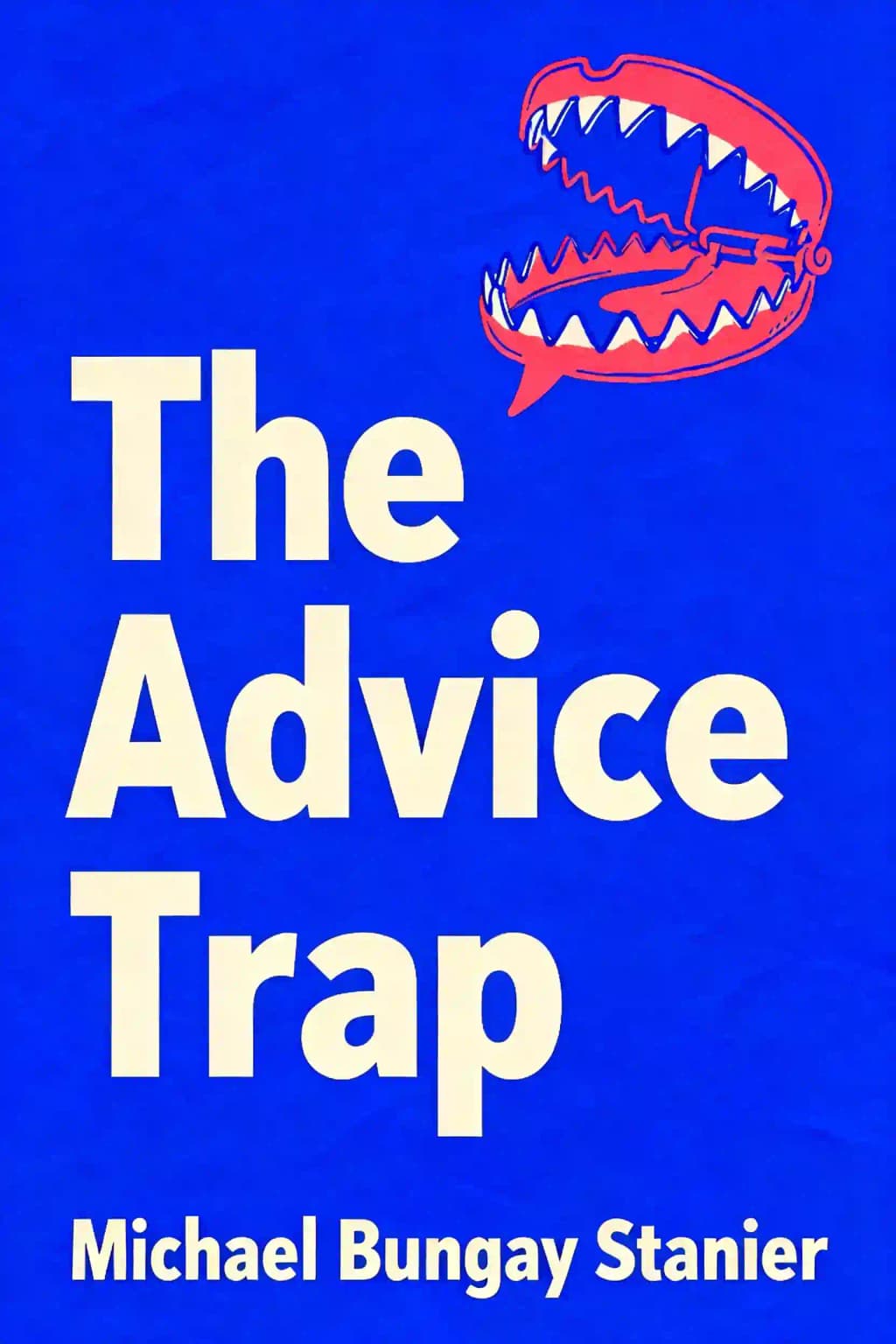
When Michael Bungay Stanier's "The Coaching Habit" became a runaway bestseller with over 700,000 copies sold, it touched a nerve in the business world. Leaders everywhere recognized themselves in his description of the advice-giving default that dominates workplace conversations. Named the #1 thought leader in coaching by Thinkers50, Stanier didn't rest on his laurels. Instead, he dug deeper into why smart, successful people struggle to implement the seemingly simple practice of asking questions instead of providing immediate answers. "The Advice Trap" emerged as the essential companion that addresses the psychological barriers preventing leaders from becoming truly coach-like. The book has gained a cult following among progressive leaders at companies like Microsoft, Google, and Salesforce who recognize that traditional command-and-control leadership is giving way to curiosity-driven approaches that unlock greater innovation and engagement.
Kapitel 2
When Good Advice Goes Bad: The Hidden Costs of Helping
Your advice works less effectively than you think it does. This uncomfortable truth lies at the heart of the Advice Trap-that moment when giving advice becomes your default response to any situation. While advice occasionally works, it often fails for two fundamental reasons.
First, you're frequently solving the wrong problem. When someone approaches with an issue, your Advice Monster immediately jumps to fix the first challenge mentioned rather than discovering what's really going on. Throughout organizations, people waste enormous resources working on non-critical issues because leaders don't stay curious long enough to uncover the actual problem. The first challenge mentioned is rarely the real one-it might be a symptom, a guess, or simply the most visible issue. By rushing to solve it, you miss addressing what truly matters.
Second, even when you're addressing the right challenge, your solutions are mediocre. You're operating with incomplete information-a mix of partial facts, assumptions, and opinions-while overestimating the brilliance of your own ideas. Your advice suffers from self-serving bias, where you naturally favor your own perspective regardless of its actual merit.
The real cost of the Advice Trap is dysfunctional work patterns that ripple through organizations. When leaders default to advice-giving, it demotivates those receiving the advice by undermining their autonomy, mastery, and purpose. It signals they're only valued for implementing others' ideas, not for thinking. This creates teams overly dependent on leaders for direction rather than developing self-sufficiency.
Meanwhile, advice-givers become overwhelmed by unnecessarily taking on everyone else's problems, creating bottlenecks that compromise team effectiveness. You can't scale your impact when everyone depends on you for answers. The Advice-Giving Habit (AGH!) ultimately limits organizational change by generating waste, leaching innovation, and reducing capacity to scale for success.
The solution isn't eliminating advice entirely but becoming more coach-like-staying curious a little longer and rushing to advice-giving a little more slowly. This seemingly simple shift represents a profound change in how we lead and interact with others.
Kapitel 3
The Battle Between Present You and Future You
Becoming more coach-like falls into the category of Hard Change-the kind of transformation we struggle with repeatedly. Unlike Easy Change, where you simply identify a problem and add a solution (like downloading an app or learning a new route), Hard Change requires installing a completely new operating system.
Hard Change pits Present You against Future You in a marshmallow-test-like dilemma. Present You seeks immediate gratification while Future You requires delayed rewards through uncomfortable transformation. Like children in the famous marshmallow experiment who must choose between one treat now or two later, you face a similar choice: the immediate comfort of your current habits versus the long-term benefits of becoming more coach-like.
We persist with dysfunctional behaviors because they offer short-term benefits-what might be called #WinsNotWins-despite their long-term downsides. The Karpman Drama Triangle illustrates this perfectly through three roles we play: Victims avoid responsibility while gaining attention; Persecutors maintain control while blaming others; and Rescuers feel noble while meddling in others' business. Each role provides immediate satisfaction despite significant long-term costs.
Your Advice Monster similarly offers Present You immediate benefits: feeling smart, helpful, and in control. But these short-term wins come at the expense of Future You-the leader who could be developing others, scaling your impact, and creating sustainable success. Every choice involves both prizes and punishments. Present You gains short-term benefits from avoiding change but misses Future You's gains. Hard Change means choosing the bigger, longer-term prizes: becoming a leader who values staying curious by taming your Advice Monster.
This isn't about perfection-it's about progress. The journey involves many small experiments and safe steps, gradually building your coaching habit through consistent practice rather than sudden transformation. Like climbing Mount Everest, you'll take many steps forward and back, but the view from the summit-where you've become the leader you aspire to be-makes the challenging journey worthwhile.
Kapitel 4
Meet Your Advice Monster: Three Personas That Sabotage Success
Your Advice Monster manifests through three distinct personas, each with unique characteristics that drive your tendency to give advice rather than stay curious. Recognizing which dominates your behavior is the first step toward taming this counterproductive impulse.
Tell-It is the loudest and most common Advice Monster persona. This voice convinces you that your value comes solely from having answers and that you'll fail if you don't provide them immediately. Tell-It loves the spotlight and dresses in the plumage of authority and wisdom. It appears whenever time feels short and urgency high, moves in packs (where one person giving advice triggers others), and wants you to believe you know best. When Tell-It takes over, you stop listening once you have an idea, blurt out solutions immediately, and impose your "best" solution regardless of others' input.
Save-It is more subdued but equally damaging. This persona convinces you that without your constant intervention, everything would fail. Save-It insists you must be responsible for every person, situation, and outcome. It camouflages itself as "being helpful," appears when conflict looms, carries the scent of martyrdom, and accelerates when encountering victims. When Save-It dominates, you take responsibility for others' problems without asking for their input, fill awkward silences with solutions, and feel personally responsible for fixing everything.
Control-It operates subtly from the background, assuring you that success requires maintaining control at all times. This tricksy persona convinces you everything is controllable if you're in charge, warning against trusting others or sharing power. Control-It remains discreet but manipulative, exhibits delusions of grandeur, struggles to let go, and fears empowerment. When Control-It takes over, you dominate conversations, feel anxious when discussions go off-script, and constantly redirect conversations back to your agenda.
While you likely recognize all three personas with one being particularly dominant in your life, they all share the same core belief: you're better than the other person. This uncomfortable truth reveals that when your Advice Monster takes over, you're implicitly saying others aren't smart enough, wise enough, capable enough, or good enough to figure things out themselves. This belief is unsustainable, unscalable, exhausting for you, and disempowering for others.
Taming your Advice Monster requires a four-step process: First, identify what triggers your Advice Monster ("Who let the dogs out?")-specific people and situations that activate your advice-giving tendency. Second, confess your specific behaviors when the Monster takes over. Third, recognize both the short-term benefits (Prizes) and long-term costs (Punishments) of these behaviors. Finally, commit to "Future You" by clarifying why change is worth the effort.
Future You embodies three key leadership qualities: empathy (understanding what's real for others), mindfulness (being less reactive to situations), and humility (knowing your strengths and weaknesses realistically). These aren't soft qualities but practical leadership strengths that make you smarter, more human, and more effective.
Kapitel 5
Coaching Simplified: The Essential Tools for Staying Curious
The success of "The Coaching Habit" came from making the complex simple, transforming coaching from a mysterious "black box" into a clear practice with practical tools. Being more coach-like means staying curious a little longer and rushing to advice-giving a little more slowly-a simple but powerful definition that supports your journey toward Hard Change and Future You.
The three foundational coaching principles are Be Lazy (stop working on others' problems), Be Curious (the essential principle requiring hard work to tame your Advice Monster), and Be Often (the most radical principle, making every interaction potentially coach-like). These principles transform coaching from an occasional formal event to an everyday practice that can happen in any communication channel.
To deliver on these principles, seven essential questions form the backbone of effective coaching conversations:
1. The Kickstart Question: "What's on your mind?" opens the conversation and gives the other person control over the agenda.
2. The AWE Question: "And what else?" is the best coaching question in the world, helping you resist the urge to jump in with advice and uncovering deeper issues.
3. The Focus Question: "What's the real challenge here for you?" cuts through the noise to identify what truly matters.
4. The Foundation Question: "What do you want?" helps people clarify their actual desired outcome.
5. The Strategy Question: "If you're saying Yes to this, what must you say No to?" acknowledges that every choice involves trade-offs.
6. The Lazy Question: "How can I help?" ensures you provide the right kind of support.
7. The Learning Question: "What was most useful or valuable here for you?" creates closure and reinforces learning.
These questions become even more powerful in combinations, like the Focus Combo (drilling down with "What's the real challenge here for you?" followed by "And what else?" multiple times) or the AWE Combo (following any open question with "And what else?" to get beyond surface-level answers).
Asking questions effectively requires skill: ask one question at a time; cut the intro and just ask; avoid rhetorical questions; stick to questions starting with "What" (avoiding "Why" which triggers defensiveness); get comfortable with silence; actually listen to the answer; acknowledge responses simply; and use any communication channel to ask good questions.
When preparing for coach-like conversations, prime yourself to stay curious. Use techniques like whispering a keyword to yourself ("gentle, gentle, gentle" or "And what else?") or starting conversations with "I'm curious..." to trigger your curiosity. You can also shape your environment to support coaching-many readers write out the seven questions and keep them visible during meetings or conversations.
Kapitel 6
Uncovering What Really Matters: The Art of Finding the Real Challenge
Rather than playing the Advice Monster's game of always having the best answer, change the game entirely. Frame your role as helping to find the real challenge-being relentlessly curious long enough for the other person to create insight and reach the heart of the matter. You can be known as the person who helps articulate critical issues rather than the one providing hasty answers to the wrong problems.
Six common conversation patterns-"Foggy-fiers"-prevent uncovering the real challenge. To address any of them, follow a consistent approach: notice the pattern, say what you see, and ask the Focus Question ("What's the real challenge here for you?").
Twirling happens when you leap too quickly into solving the first challenge someone mentions. The first thing people tell you is rarely the actual challenge-it might be their best guess, a starting point, or a half-baked solution. Use the "Focus Combo"-combining "What's the real challenge here for you?" with "And what else?" to dig deeper.
Coaching the Ghost occurs when the conversation focuses on another person or situation rather than on the person you're coaching. You've been misdirected-spending time discussing someone who isn't even in the room. To overcome this, acknowledge the difficulty but bring the spotlight back: "This sounds frustrating. But I'm interested in how this is hard for YOU." Then ask "What's the real challenge here FOR YOU?" with emphasis on those last two words.
Settling happens when you sense there's a more important issue beneath the surface, but both of you avoid addressing it. You're colluding in timidity, conspiring to keep the conversation comfortable rather than useful. The solution requires courage-gently pushing past the comfortable topic to where the real challenge lies: "I might be dead wrong here, but it feels like we might not yet be on the real topic. Is that just me, or do you feel it too?"
Popcorning occurs when multiple challenges emerge in rapid succession-pop, pop, pop! This proliferation of problems can make the conversation feel chaotic and overwhelming. Remember that you can only solve one problem at a time, and identifying the right problem is more important than offering solutions to trivial ones. Name what's happening-"There's a lot of challenges on the table here!"-then ask "Of all these, which ONE is the real challenge here for you?"
Big-Picturing happens when conversations remain high-level and impersonal-full of "we" and "them" statements with no personal stake. Coaching requires moving from generalized to abstract, from abstract to personal. Point out what's happening: "This is important, but still pretty high-level." Then emphasize the personal aspect: "What's the real challenge here FOR YOU?"
Yarning is the endless story that has no apparent endpoint-excessive detail, perfect context, and you nodding along while silently screaming "When will we get to the point?!" The solution? Interrupt! Say "I'm going to stop you for a moment," hold up your hand if needed, then acknowledge what's happening: "I can hear there's a lot going on. In the interest of time, what's the real challenge here for you?"
To refine your coaching skills, practice "making smaller circles"-breaking down skills into component parts and practicing each mindfully. Pick one core thing to practice rather than trying to improve everything at once, and focus on repetitions, not time. As Gretchen Rubin says, "What you do every day matters more than what you do once in a while."
Kapitel 7
Creating Safety: How to Keep People Engaged When Conversations Get Tough
When conversations get tough, the brain seeks escape routes. Our pessimistic brains scan for threats every five seconds, defaulting to "retreat" when conversations become challenging. This retreat manifests as fight, flight, or freeze-the person disengages, sees things in black and white, and becomes less creative.
Your job is to keep people engaged by manipulating the neuroscience of engagement through TERA: Tribe, Expectation, Rank, and Autonomy-the four drivers that determine if a situation feels safe or threatening to the brain.
Tribe addresses whether the brain feels among friends, asking "Are you with me or against me?" Your mantra should be "Be on their side" by removing barriers between you. Try asking questions rather than giving advice, using encouraging words, employing "we" language, checking in on them as humans, and acknowledging their feelings. Physically, nod in agreement, use appropriate touch, display shared symbols, create common enemies, and assume positive intent. Your Control-It Advice Monster will resist this approach because removing barriers means reducing control and increasing vulnerability.
Expectation addresses the brain's craving for predictability, asking "Do I know what's about to happen?" Your mantra should be "Show them the future" by creating mini-milestones and revealing the process. Use stage directions ("Let me ask you a question..."), numbers, time frames, and clarifying questions. Explain processes as they happen, create clear transitions, offer limited choices, go meta about the conversation, and share what's happening for you. Control-It will resist this transparency, but ignore it and see what happens.
Rank addresses the brain's desire to feel equal or superior in status. Your mantra should be "Raise them up" by keeping them feeling important-not through false flattery but by allowing them to step fully forward. Ask coaching questions to signal their opinion counts. Let them speak first with phrases like "I've got some thoughts, but before I share my ideas... what are your first thoughts?" Lower your own rank by acknowledging their expertise or removing certainty from your statements.
Autonomy addresses our craving for choice. When the brain feels a sense of control, it stays engaged. The solution is straightforward: give them choices, even small ones within the big things you need to control. Asking coaching questions inherently raises Autonomy-"What's on your mind?" lets them shape the conversation. Perhaps the most powerful question is "What do you want?" Notice when you've taken ownership of problems and ended up writing down their action items-if you're rescuing them, you're depriving them of Autonomy.
The TERA tactics sometimes oppose each other-increasing Tribe's togetherness might diminish Rank's importance, while clarifying Expectation could lower Autonomy's freedom. Your goal isn't perfection in each area but raising the overall TERA Quotient. Think of it like a music mixing board where you're balancing different elements to create psychological safety and engagement.
Kapitel 8
Making Coaching an Everyday Practice: From Special Event to Way of Being
Coaching is no longer an event but a way of being with each other. As an in-the-moment behavior-staying curious longer and rushing to advice-giving more slowly-it can infuse any interaction across any channel. Your job is to make coaching an everyday interaction.
Real-time communication offers immediate opportunities to stay curious longer-during hallway conversations, while waiting for elevators, over coffee. Video calls work well but require intentional presence-shut down distractions, look into the camera, and give real attention. Phone coaching, despite concerns about missing body language, can be surprisingly effective. Many professional coaches prefer it because people often feel freer to "take off the mask" when not face-to-face, and you can detect remarkable energy shifts when fully listening.
Email, Slack and texting are overlooked coaching channels. Their transactional nature means your Advice Monster often takes over the keyboard. Change this by keeping the seven coaching questions nearby and asking at least one before offering advice. This approach transforms rambling emails-instead of detailed point-by-point responses, simply ask "What's the real challenge here for you?" or "What do you want from me?" Manage tone carefully in written exchanges by using emoticons or phrases like "Out of curiosity..." to help questions land more lightly.
Standard weekly one-to-ones often become dispiriting, ritualized reporting sessions that bore everyone involved. Don't waste precious time on updates that could be shared other ways. Revitalize these meetings by setting aside the standard agenda and opening with "What's on your mind?" (perhaps giving advance notice of this approach). When they respond, resist fixing their problem immediately-ask another question like "What's the real challenge here for you?" See how long you can go before sharing an idea or opinion.
Transform meetings by keeping attendance small (Amazon's "two pizzas should feed everyone" rule), and either halving the time (to get to the point) or doubling it (to allow collective thinking). Add curiosity by opening with "What's on your mind?" Turn agenda items into questions, recognizing that meetings should either celebrate something or solve a problem. Ask "What's the real challenge here?" for each topic. Close by asking "What was most useful or valuable here for you?" to identify what worked and what to do more of next time.
While coaching and feedback are distinct, they work well together. Coaching is staying curious to help others find insights; feedback is initiating conversation to share your perspective on a situation. After delivering feedback about what happened, its impact, and what to do differently, shift to coaching mode with questions like: "Having heard the feedback-what's on your mind?", "What's the real challenge here for you?", "What do you want?", and "What was most useful here for you?" This approach transforms feedback into a collaborative growth opportunity.
Kapitel 9
Testing Your Fears: Moving Beyond the Advice Monster's Prophecies
Your journey to becoming more coach-like requires courageously stepping into your Future Self, moving beyond the fears that keep you trapped in present patterns. The real test isn't just whether you stayed curious longer, but whether the disasters your Advice Monster predicted actually materialized when you changed your behavior.
Your Advice Monster prophesies disaster if you change your behavior: Tell-It believes everyone will fail without your directions, Save-It is convinced catastrophe awaits if you don't take responsibility for everything, and Control-It insists chaos will reign without your vigilance. By making these fears tangible through specific tests, you can see if your imagined disasters actually materialize when you try being more coach-like.
For Tell-It types, test whether others will generate decent ideas without your immediate input, whether they'll eventually arrive at the same solution you would have offered, and whether you'll still be respected if you don't "add value" by constantly offering ideas. These questions challenge your fear of not being the first to provide answers.
For Save-It types, test whether problems will remain broken if you don't jump in to fix them, whether the team will fail without you playing the main role, and whether others will step up or remain dependent if you don't make choices for them. These questions challenge your assumption that everything depends on your intervention.
For Control-It types, test whether conversations that go in unexpected directions without your "course correction" still reach useful outcomes, whether critical issues will be neglected if you don't address what you consider most important, and whether your career will survive if you relinquish full control. These questions challenge your need for control.
By intentionally testing your fears and discovering that the worst didn't happen-that you not only survived but flourished-you create moments of freedom from the Advice Trap. This disciplined reflection transforms abstract anxieties into concrete evidence of your capacity to grow.
When you inevitably slip back into old habits-giving advice prematurely-don't fall into the "what the hell" syndrome. Instead of letting one moment of weakness become an "all-meeting Advicefest," simply acknowledge the slip and immediately return to curiosity by asking a question. Each time you reset, you'll notice something new about yourself and your Advice Monster. As Samuel Beckett wrote: "Ever tried. Ever failed. No matter. Try again. Fail again. Fail better."
Kapitel 10
The Three Secrets of Coaching Mastery: Generosity, Vulnerability, and Continuous Learning
Masterful coaches employ generosity in three unexpected ways that dramatically enhance the power of their conversations. The journey to mastering silence progresses through three stages: first, anxiously filling any silence at all costs; second, tentatively allowing silence while holding your breath uncomfortably; and finally, offering generous silence that creates a warm, comfortable space for insights to blossom. Even brief moments of silence-three to five seconds-can transform a coaching conversation.
The second type of generosity involves willingly being transparent about both the coaching process and your own feelings during the conversation. This means moving from anxiety about revealing your lack of control to eventually sharing your "internal weather"-whether you're bored, confused, excited, or uncertain. Rather than hiding behind a facade like the Wizard of Oz, this transparency makes conversations more human and raises the TERA Quotient.
The final form of generosity is appreciating someone by letting them know how they matter. This evolves from anxiety about giving praise (fearing it will make others soft), to offering basic acknowledgment of tasks completed ("Nice job with the presentation"), to finally reaching true generous appreciation-recognizing someone's qualities beyond what they've done. This means acknowledging their courage, resilience, innovation, or persistence, especially when they're struggling.
Being a good coach requires being willing to be coached yourself. This vulnerability goes beyond the practical benefits of coaching and connects to leadership principles of empathy, mindfulness, and humility. By experiencing what it feels like to have an "aha" moment and the anxieties of vulnerability, you become a more effective coach.
The first step to being effectively coached is recognizing and owning your evasive patterns-whether it's misdirection, amping up your expert status, playing helpless, passive resistance, or emotional detachment. After acknowledging these patterns to yourself, share them with your coach through "social contracting"-conversations about how you want to work together rather than what you're working on.
Coaching involves playing a bigger game that nurtures autonomy and self-sufficiency. As Peter Block notes, stepping into your power brings both anxiety (about making the right choice) and guilt (about saying no to alternatives). Despite the discomfort, the autonomy, mastery, and purpose gained are worth the emotional price.
While the book emphasizes slowing down the rush to give advice, there's a time and place for advice-giving as a leadership behavior. When advice is necessary, it should be delivered thoughtfully and effectively. Recognize when advice is truly appropriate-like when someone asks a direct factual question or when the decision genuinely falls to you. Tone down your certainty with phrases like "Here's my best guess" to reduce pressure on others to agree. When it's absolutely the right moment for advice, deliver it boldly and clearly, and afterward, check how it landed with questions like "Does that give you what you were looking for?"
The journey to becoming more coach-like-to taming your Advice Monster and staying curious longer-isn't easy. It requires courage, practice, and a willingness to challenge your deepest assumptions about your value and role. But the rewards-for you, your team, and your organization-make this Hard Change worth pursuing. By shifting from always having the answer to helping others find their own solutions, you become not just a better leader but a catalyst for others' growth and success.