Kapitel 1
The Freedom Blueprint: Reinventing Your Career with Minimal Investment
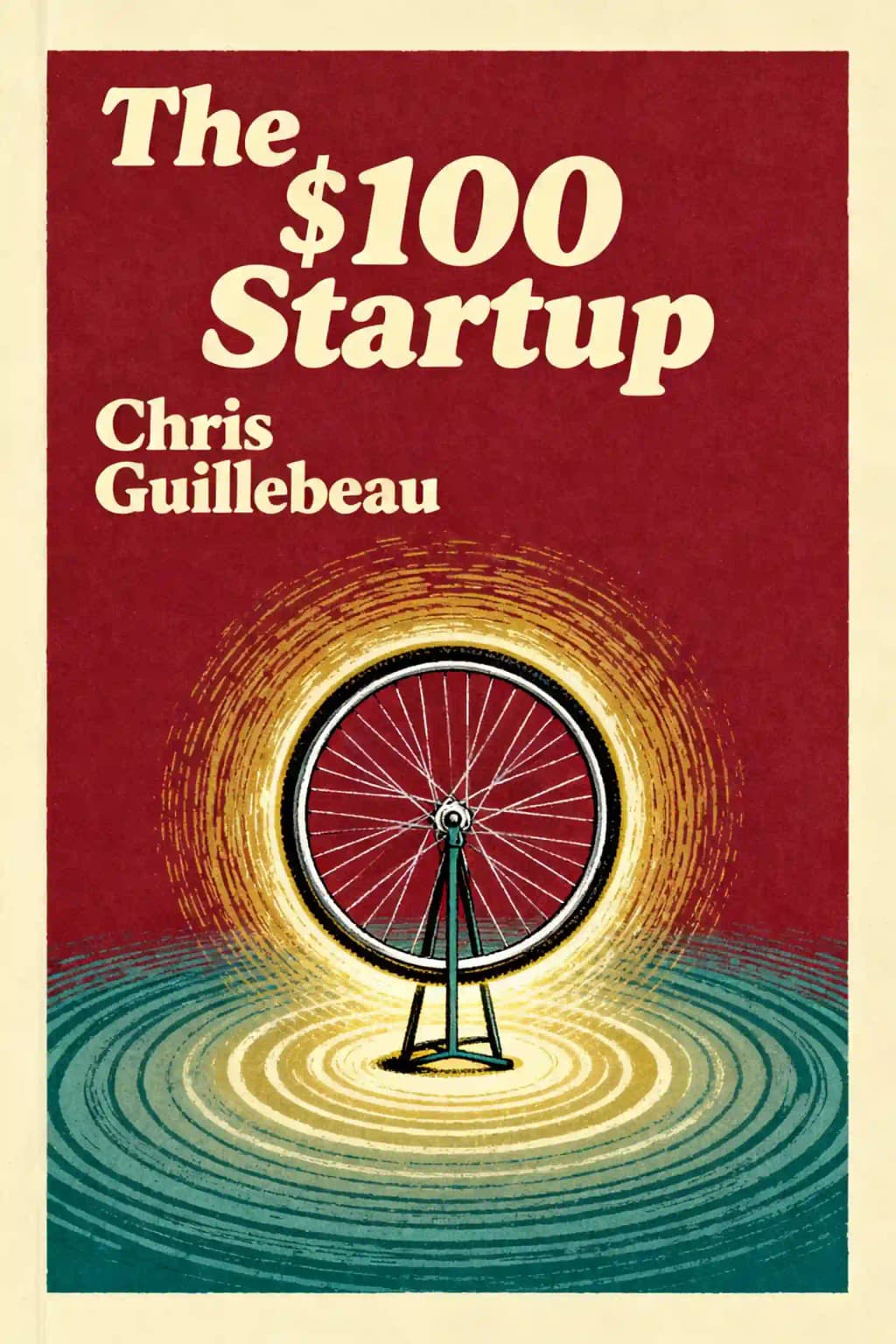
In a world where the traditional 9-to-5 grind leaves many feeling trapped and unfulfilled, Chris Guillebeau's "The $100 Startup" emerges as a revolutionary manifesto for the modern worker. This New York Times bestseller has sold over 500,000 copies worldwide and continues to inspire a generation of entrepreneurs who crave autonomy over their careers and lives. Celebrities like Tim Ferriss and Seth Godin have praised its practical wisdom, while countless readers have used its blueprint to escape corporate confines and build sustainable businesses with minimal investment.
What makes this book particularly relevant today is its prescient understanding of the gig economy and remote work revolution - concepts that exploded in popularity years after its 2012 publication. Guillebeau didn't just write another business book; he documented an emerging cultural shift toward value-driven entrepreneurship that prioritizes freedom and fulfillment over corporate climbing. The stories within these pages have launched thousands of microbusinesses, from digital nomads running global enterprises from their laptops to parents creating flexible careers that accommodate family life.
Imagine waking up tomorrow with no alarm clock, working on projects you genuinely care about, and designing your life around your priorities rather than an employer's demands. This isn't a fantasy - it's the reality that awaits when you understand how to transform your skills and passions into a viable business that serves others while serving your desire for freedom.
Kapitel 2
Unexpected Entrepreneurs: When Adversity Sparks Innovation
The journey to entrepreneurial freedom often begins not with grand ambitions but with unexpected circumstances. Consider Michael Hanna, who found himself suddenly jobless after years in corporate sales. Rather than desperately seeking another position, he noticed something peculiar about mattress stores - they all employed aggressive sales tactics that customers universally disliked. With just $1,000 and a contrarian approach - no hard selling, just education and fair pricing - Michael launched a mattress store that quickly became profitable. His success wasn't about revolutionary products but about addressing a common frustration in a straightforward way.
This pattern repeats across countless microbusiness success stories. Sarah Young transformed her love of knitting into a thriving yarn shop by creating a welcoming community space both online and offline. Benny Lewis turned his language learning techniques into a global business helping others become fluent faster. These entrepreneurs didn't start with business degrees or venture capital - they started with problems they could solve and skills they already possessed.
What sets these unexpected entrepreneurs apart is their ability to find the sweet spot where passion meets practicality. This intersection - what Guillebeau calls "convergence" - happens when personal skills or interests align with what others are willing to pay for. Not every passion makes a good business, but when you discover something you enjoy that also provides value to others, you've found entrepreneurial gold.
The beauty of today's business landscape is that the barriers to entry have never been lower. With minimal investment - often just a few hundred dollars - and access to global markets through the internet, anyone can test business ideas without risking financial ruin. This democratization of entrepreneurship means that ordinary people with extraordinary determination can create sustainable businesses that support their desired lifestyles.
Have you ever considered what skills or interests you possess that others might value? The path to entrepreneurial freedom often begins with recognizing that what comes naturally to you might be precisely what someone else struggles with and would gladly pay to solve.
Kapitel 3
The Value Doctrine: Creating Something People Actually Want
At the heart of every successful microbusiness lies a fundamental truth: value creation trumps everything else. But what exactly is value? Simply put, it's providing something people want and are willing to pay for. This sounds obvious, yet countless businesses fail because entrepreneurs become enamored with their ideas without confirming that customers actually desire what they're offering.
Consider the V6 Ranch in California. On the surface, they sell horseback riding experiences, but what customers really buy is freedom - temporary escape from urban life and reconnection with nature. Higher Ground Yoga doesn't just offer fitness classes; they deliver stress relief and emotional well-being. Understanding these deeper benefits is crucial because customers rarely purchase features - they purchase outcomes and emotional transformations.
Creating value doesn't require reinventing the wheel. Often, it means taking existing concepts and improving them or making them more accessible. Brandon Pearce, a piano teacher, created software to manage his teaching schedule and billing. When other music teachers expressed interest, he refined his solution and turned it into Music Teacher's Helper, eventually generating over $30,000 monthly. His passion for music and teaching combined with his programming skills to solve a common problem in his industry.
The path to value creation follows a simple framework: identify a pain point or desire, develop a solution that addresses it effectively, and make that solution easily accessible to those who need it. This might mean creating a product, offering a service, or simply connecting people with resources they struggle to find on their own.
What's remarkable about the value doctrine is how it shifts the entrepreneurial mindset from "How can I make money?" to "How can I help people?" This subtle but powerful reframing leads to businesses that naturally attract customers rather than requiring aggressive marketing tactics. When you genuinely solve problems, word spreads, and growth follows.
Think about your own experiences as a consumer. What products or services have you enthusiastically recommended to friends? Chances are, these offerings provided exceptional value - they solved a problem or fulfilled a desire better than alternatives. That's the standard to aim for in your own business ventures.
Kapitel 4
The $100 Startup Model: Minimal Investment, Maximum Freedom
The traditional business model often involves substantial startup capital, elaborate business plans, and years of preparation before launch. The $100 Startup model flips this approach on its head, advocating for minimal investment, rapid testing, and continuous adaptation based on real customer feedback. This lean methodology isn't just more accessible - it's often more effective in today's fast-changing marketplace.
At its core, this model relies on three fundamental lessons. First is the concept of convergence - finding the sweet spot where your skills and passions intersect with what others will pay for. Not everything you love will make a good business, but when you discover activities you enjoy that also provide value to others, you've found entrepreneurial gold.
The second lesson involves skill transformation - recognizing that abilities developed in one context can often be repurposed for business opportunities. Kat Alder leveraged her waitressing experience - particularly her people skills and ability to handle pressure - to launch a successful PR firm. The lesson? You likely already possess valuable skills; the challenge is applying them in new ways that create marketable value.
The third and perhaps most crucial lesson is what Guillebeau calls the "magic formula": passion or skill + usefulness = success. Jaden Hair's cooking blog, Steamy Kitchen, began with a $200 investment and her enthusiasm for Asian cooking. By creating useful content that solved problems for home cooks, she built a six-figure business. Brandon Pearce's music teaching software emerged from his own need to manage his piano students more efficiently. Both examples illustrate how combining personal interests with genuine utility creates businesses that naturally attract customers.
What makes this model particularly appealing is its accessibility. With just a laptop and internet connection, entrepreneurs can reach global markets without traditional gatekeepers. Digital products can be created once and sold infinitely with minimal ongoing costs. Services can be launched with little more than a website and the willingness to solve problems for clients.
The $100 Startup approach isn't about getting rich quick - it's about creating sustainable freedom through value creation. By starting small, testing ideas in the real world, and growing organically based on customer response, entrepreneurs minimize risk while maximizing their chances of building something truly valuable.
Have you considered what business you could start with just $100? The answer might be closer than you think.
Kapitel 5
Finding Your Market: Passion Meets Practicality
Turning passion into profit requires more than enthusiasm - it demands a strategic approach to finding and serving a viable market. The most successful microbusinesses don't just follow personal interests; they identify where those interests intersect with market needs and economic opportunities.
Consider Gary Leff, who transformed his obsession with travel hacking - maximizing airline miles and hotel points - into a thriving consulting business. While many people shared his passion for travel, Gary recognized a specific pain point: the complexity of redeeming miles for premium flights. By offering a service that helps clients book dream vacations using their accumulated miles, he created value that customers gladly pay for. His business succeeds because it solves a real problem, not just because Gary enjoys the subject matter.
This pattern of finding practical applications for personal passions appears consistently among successful entrepreneurs. Megan Hunt's love for creating wedding accessories became a profitable business when she identified brides seeking unique, handcrafted items. Brandon Pearce's music teaching software emerged from his own needs as a piano instructor but grew because it addressed widespread challenges faced by music teachers everywhere.
To evaluate whether your passion has business potential, consider these key questions: Do you enjoy teaching others about this subject? Is there an identifiable market of people interested in what you offer? Are customers willing to pay enough to make the business viable? Can you handle the administrative aspects that come with monetizing your passion?
The "follow your passion" model works best when it's grounded in market reality. This means conducting research to understand customer needs, testing offerings on a small scale before major investments, and remaining flexible enough to adjust based on feedback. Kyle Hepp's photography business flourished because she identified a niche for candid wedding photography with a journalistic style and marketed herself globally rather than limiting her business to a single location.
Bernard Vukas, known as "The Spreadsheet King," built his business by recognizing that his technical skills with Excel could solve significant problems for companies struggling with data management. By focusing on the practical value he provides rather than just his enjoyment of the work, he created a sustainable business that supports his location-independent lifestyle.
The key insight here is that passion alone isn't enough - it must be channeled toward solving problems that people are willing to pay to have solved. When you find this alignment between what you love and what the market needs, you create the foundation for a business that's both personally fulfilling and financially viable.
Kapitel 6
Creating Irresistible Offers: The Art of Value Packaging
The difference between struggling businesses and thriving ones often comes down to how they package and present their value. Creating irresistible offers isn't about manipulation or hype - it's about thoughtfully combining benefits in ways that make purchasing decisions obvious and compelling for customers.
Consider Jonathan Fields, who transformed his yoga studio's business by understanding seasonal patterns. Rather than struggling through slow December months, he created a special offer: four months of unlimited yoga at a reduced rate, available only during the typically quiet period. This approach filled his studio during off-peak times and created committed customers who continued their practice into the busy January season. The offer succeeded because it aligned his business needs with customer benefits in a win-win arrangement.
Effective offers address both obvious and hidden objections that prevent customers from purchasing. This is why FAQ sections are so powerful - they anticipate and resolve concerns before they become barriers. Similarly, strong guarantees reduce perceived risk, making it easier for customers to say yes. When Brandy Agerbeck offers her graphic facilitation services to corporate clients, she addresses their uncertainty by clearly explaining how her visual recording enhances meeting outcomes and knowledge retention.
The concept of perceived value plays a crucial role in offer creation. A locksmith who solves a problem in five minutes might charge $50 - not for the time spent but for the expertise required to solve the problem quickly. Similarly, businesses must focus on the outcomes they deliver rather than the processes they use. Customers don't pay for your time; they pay for the transformation or solution you provide.
Overdelivering - providing unexpected value beyond what was promised - creates memorable customer experiences that drive referrals and repeat business. This might mean including bonus materials with a purchase, following up with personalized support, or simply exceeding expectations in quality or service. These touches cost little but significantly enhance perceived value.
Creating urgency is another essential element of compelling offers. Limited-time promotions, exclusive bonuses for early adopters, or capacity constraints (such as limited enrollment periods) motivate customers to act now rather than postponing decisions. When Scott McMurren created his Alaska TourSaver coupon book, the seasonal nature of Alaskan tourism naturally created urgency, but he enhanced this by pricing the book at $99.95 - an amount that seemed trivial compared to the thousands customers would save on their vacations.
The most powerful offers combine multiple elements: clear value proposition, risk reversal through guarantees, bonus elements that enhance perceived value, and legitimate reasons to act quickly. When crafted thoughtfully, such offers don't feel "salesy" - they feel like obvious solutions to customer needs.
Kapitel 7
The Launch Strategy: Building Momentum and Anticipation
A successful launch transforms a business introduction into an event that captures attention and drives action. Just as Hollywood builds anticipation for new movies through trailers and promotional campaigns, entrepreneurs can create excitement around their offerings through strategic launch planning.
The most effective launches follow a narrative arc that begins well before the actual release date. This storytelling approach starts with mystery - hints and teasers that pique curiosity without revealing everything. As the launch approaches, the communication shifts to anticipation, providing more details and building emotional connection to the upcoming offering. The launch itself becomes the climax of this story, with clear calls to action that convert interest into sales.
Andreas Kambanis exemplifies this approach with his cycling app launch. Despite facing significant challenges, including a potential lawsuit and a partner dropping out, he committed to launching his product before boarding a flight to Brazil. This self-imposed deadline created urgency that pushed him to complete the project. While flying over the Atlantic, sales began coming in - enough to cover his travel expenses by the time he landed. The lesson? Sometimes the most powerful motivator is simply committing to a launch date and making it public.
A comprehensive launch strategy addresses multiple dimensions. Technically, everything must function flawlessly - payment processing, product delivery, and customer support systems need thorough testing. Financially, clear goals help measure success and inform future launches. Promotionally, coordinated outreach through various channels maximizes visibility and engagement.
The pre-launch period is crucial for building anticipation. This might include creating a "coming soon" page that collects email addresses, sharing behind-the-scenes glimpses of the creation process, or offering special incentives for early adopters. The goal is to create a sense of insider access that makes people feel connected to the offering before it's even available.
Launch day itself should feel like an event. Personal engagement with early customers, prompt responses to questions or issues, and celebration of milestones all contribute to the sense of occasion. This energy is contagious and can help propel word-of-mouth promotion.
Post-launch activities are equally important. Following up with customers, gathering testimonials, and maintaining communication momentum prevents the common "launch and abandon" pattern that undermines long-term success. Each customer interaction during this period is an opportunity to exceed expectations and convert initial buyers into loyal advocates.
Remember that launches aren't just for new businesses - they're valuable for introducing new products, services, or initiatives within existing operations. Each launch creates an opportunity to reconnect with previous customers, attract new audiences, and reinvigorate your business narrative.
Kapitel 8
Strategic Hustling: Building Visibility Without Annoying People
"Hustling" often carries negative connotations of aggressive self-promotion, but strategic hustling is actually about creating genuine connections and delivering value while building visibility for your business. The most effective entrepreneurs understand that sustainable growth comes from meaningful engagement rather than pushy marketing tactics.
Elizabeth MacCrellish built a thriving art workshop community in New Hampshire through this approach. Rather than bombarding potential customers with advertisements, she focused on creating exceptional experiences and fostering connections among participants. The quality of these interactions naturally led to word-of-mouth promotion that proved more effective than traditional marketing could have been.
Strategic hustling begins with clarity about your message. Before promoting anything, you need to know exactly what you want to communicate and why it matters to your audience. This foundational understanding guides all subsequent outreach efforts, ensuring consistency and relevance.
Once your message is clear, creative outreach becomes possible. Karen Starr attracted attention to her interior design business not through conventional advertising but by commissioning eye-catching art installations that sparked community conversation. John Morefield gained national media coverage by offering "5-cent architecture advice" at a farmers market booth during the recession - a novel approach that demonstrated his expertise while helping people who couldn't afford traditional architectural services.
Building relationships represents another crucial aspect of strategic hustling. Scott Meyer, who runs a community-focused business in Sioux Falls, South Dakota, prioritizes genuine connections over transactional interactions. By consistently supporting others and contributing to his community, he creates a network of goodwill that naturally generates business opportunities and recognition.
The "give something away" strategy often proves remarkably effective. Megan Hunt designs custom wedding dresses for influential bloggers, knowing that their social media coverage will reach potential customers more authentically than paid advertising. This approach works because it provides genuine value rather than merely seeking attention.
For new entrepreneurs, saying "yes" to opportunities - unless there's a compelling reason to decline - opens doors to unexpected growth. As businesses mature, Derek Sivers' "hell yeah or no" test becomes valuable: commit enthusiastically to projects that genuinely excite you, and decline everything else to maintain focus and energy.
Contests and giveaways can generate engagement when structured thoughtfully. The key is designing participation requirements that create meaningful interaction rather than simply collecting email addresses. Asking entrants to share stories or create content related to your business builds deeper connection than merely requesting contact information.
Strategic hustling isn't about working harder - it's about working smarter by focusing on high-impact activities that build genuine relationships while increasing visibility. The most successful entrepreneurs recognize that sustainable growth comes from creating value at every touchpoint, not from aggressive self-promotion.
Kapitel 9
Profit First: Building a Business That Actually Makes Money
While passion and purpose drive many entrepreneurs, profitability determines whether a business survives long enough to fulfill its mission. Naomi Dunford's story illustrates this perfectly - facing homelessness with a young child, she launched IttyBiz with a laser focus on generating income rather than building a conventional business. Her unconventional approach worked because she prioritized profit above all else, understanding that without financial sustainability, nothing else matters.
Three key principles can help entrepreneurs maximize profitability from the start. First, base prices on benefits rather than costs. Traditional pricing often calculates production costs and adds a markup, but this approach ignores the actual value customers receive. When you solve significant problems or fulfill important desires, the value to customers far exceeds your production costs. Pricing based on this value rather than your expenses allows you to capture more of the benefit you create.
Second, offer a limited range of prices rather than a single option. Apple exemplifies this strategy by offering good, better, and best versions of their products. This approach serves multiple purposes: it captures more revenue from customers willing to pay premium prices, strengthens the perceived value of mid-tier offerings (which often become the most popular), and gives price-sensitive customers an entry point. Even service businesses can implement tiered pricing through packages that combine different service levels or components.
Third, get paid more than once from the same customer. Subscription models or continuity programs create predictable, recurring revenue streams that reduce the constant pressure to find new customers. From Netflix to utility companies, businesses that establish ongoing payment relationships enjoy greater stability and higher customer lifetime value. Even businesses that traditionally rely on one-time purchases can develop recurring revenue through maintenance plans, membership programs, or regular replenishment models.
A simple pricing experiment demonstrates the power of these principles. When a business owner tested two price points - $49 and $89 - for the same offering, sales volume decreased slightly at the higher price but overall revenue increased significantly. By selling fewer units at a higher price per unit, the business generated an additional $35,000 annually without creating any new products or acquiring additional customers.
The most successful entrepreneurs recognize that financial resources extend beyond traditional capital. Naomi Dunford's experience highlights how creative thinking and social capital can provide access to unexpected resources and solutions. By leveraging connections, bartering skills, or finding unconventional funding sources, entrepreneurs can overcome financial limitations and build profitable businesses with minimal initial investment.
Remember that profitability isn't about greed - it's about sustainability. A business that consistently generates profit can serve more customers, create more impact, and provide greater freedom for its owner than one that struggles financially while clinging to idealistic notions about money.
Kapitel 10
Growth Through Tweaks: Small Changes, Big Results
Once a business achieves initial traction, strategic tweaking often proves more effective than dramatic overhauls. Nev Lapwood's snowboard instruction business illustrates this principle perfectly. After establishing his core offering of instructional DVDs, Nev implemented a series of small but significant improvements - enhancing his website's conversion rate, adding complementary products, and improving customer follow-up. These incremental changes compounded to transform a modest side business into a six-figure enterprise without requiring massive additional investment.
The mathematics of business growth reveals why tweaking works so well. Even small improvements across multiple areas create multiplicative effects rather than merely additive ones. Consider the impact of three modest 15% improvements: increasing traffic by 15%, boosting conversion rate by 15%, and raising average sale value by 15%. Rather than a 45% total improvement, these changes combine to produce a 52% revenue increase due to their multiplicative relationship.
Practical tweaks that consistently deliver results include creating a customer "Hall of Fame" that showcases testimonials and success stories, implementing strategic upsells at the point of purchase, establishing referral programs that incentivize existing customers to recommend your business, and holding contests that increase engagement while expanding your reach. Each of these approaches requires minimal investment but can significantly impact revenue when executed thoughtfully.
Product and service businesses can benefit from crossing boundaries - product businesses can add service components, while service providers can "productize" aspects of their offerings. Happy Knits, a successful yarn store, exemplifies this approach by combining a welcoming physical retail space with a robust online presence, creating multiple revenue streams that reinforce each other.
For service providers, regular price increases represent one of the most straightforward yet often overlooked tweaks. Many entrepreneurs fear raising rates will drive away clients, but experience consistently shows that reasonable increases rarely result in significant customer loss. In fact, many clients expect periodic adjustments and respect businesses that value their own services appropriately.
Social media strategy benefits from similar refinement. Rather than following conventional advice to primarily promote others, successful entrepreneurs recognize that their followers are interested in their authentic voice and experiences. Sharing personal insights and perspectives typically generates more engagement than constantly highlighting others' achievements.
The key to effective tweaking is systematic testing and measurement. By implementing changes one at a time and tracking their impact, entrepreneurs can identify which adjustments produce the greatest returns. This methodical approach allows for continuous improvement without the risks associated with major overhauls or directional changes.
Remember that growth should be intentional rather than pursued for its own sake. Some entrepreneurs deliberately choose to optimize their businesses for freedom and flexibility rather than maximum revenue, focusing on tweaks that improve profitability or reduce time commitment rather than simply expanding operations.
Kapitel 11
The Freedom Framework: Building a Business That Serves Your Life
The ultimate measure of entrepreneurial success isn't revenue or profit - it's the freedom to design a life aligned with your personal values and priorities. The most satisfied business owners create enterprises that support their desired lifestyle rather than demanding constant sacrifice for some future payoff that may never arrive.
This freedom framework presents entrepreneurs with fundamental choices about how their businesses will operate and grow. Some, like Cherie Ve Ard, deliberately keep their ventures small and manageable, prioritizing location independence and work-life balance over expansion. Cherie's software business generates substantial income while allowing her to travel full-time in an RV, working just a few hours daily. Her decision to limit growth isn't about lack of ambition - it's about conscious alignment with her definition of success.
Others, like Tom Bihn, choose a middle path, growing their businesses to medium size while maintaining control and independence. Tom's bag manufacturing company employs dozens of people and operates its own factory, but he sells directly to consumers rather than through retailers, preserving his freedom to make product decisions based on quality rather than mass-market appeal. This approach allows for significant growth while avoiding the constraints that often accompany traditional scaling.
Partnership represents another pathway to freedom through strategic collaboration. Patrick McCrann and Rich Strauss combined their triathlon coaching expertise to create a business that serves more clients than either could individually. By clearly dividing responsibilities based on their respective strengths, they created a partnership that amplifies their impact while distributing the workload.
The outsourcing debate highlights how different freedom definitions shape business decisions. Some entrepreneurs, like Megan Hunt and Jen Adrion, embrace outsourcing as a way to focus on their core strengths while growing their businesses. Others, like Gary Leff and Adam Westbrook, prefer maintaining complete control, seeing personal delivery as essential to their value proposition and lifestyle goals. Neither approach is inherently superior - the key is alignment with your personal priorities.
For those seeking location independence, digital businesses offer unprecedented flexibility. Kyle Hepp's photography business allows her to live in Chile while shooting weddings worldwide. Bernard Vukas provides Excel consulting services remotely, working with clients globally while living wherever he chooses. These entrepreneurs have structured their businesses specifically to support geographical freedom, making deliberate trade-offs to preserve this core value.
The freedom framework requires regular business audits to ensure continued alignment with personal goals. These reviews examine revenue sources, marketing effectiveness, pricing strategies, and customer relationships, identifying opportunities for adjustment when the business drifts from its intended purpose. Such systematic evaluation prevents the common trap of building a business that technically succeeds while failing to deliver the freedom it was meant to create.
Remember that entrepreneurial freedom isn't about escaping work - it's about choosing work that matters to you and structuring it to support your broader life goals. The most successful microbusiness owners aren't necessarily those with the highest revenues but those who have crafted enterprises that consistently serve their vision of a well-lived life.
Kapitel 12
Taking the Leap: From Dreaming to Doing
The gap between aspiration and action often represents the greatest barrier to entrepreneurial success. While many dream of starting businesses, relatively few take concrete steps toward making those dreams reality. The entrepreneurs featured throughout this book distinguish themselves not by extraordinary talent or resources but by their willingness to begin - often with imperfect plans and limited knowledge.
Fear naturally accompanies any significant venture, but successful entrepreneurs learn to transform that fear into motivation rather than paralysis. When asked about their concerns, business owners typically mention both external factors (market changes, competition, technological shifts) and internal challenges (maintaining passion, avoiding burnout, balancing growth with quality). Yet they consistently report that the rewards of autonomy and purpose outweigh these anxieties.
Many entrepreneurs recall specific moments when they knew their businesses would succeed. For Gary Leff, it was receiving his first payment check for travel consulting services. Karen Starr persevered through multiple bank rejections before securing financing for her design store. Kyle Hepp realized her photography business had international potential when booked for a destination wedding far from home. These pivotal experiences provided confidence that sustained them through subsequent challenges.
The path to entrepreneurial action follows a simple but powerful sequence: identify a problem you can solve, create an offering that addresses that problem, ensure people can find and purchase your solution, and deliver exceptional value that encourages repeat business and referrals. This straightforward framework doesn't require elaborate planning or perfect conditions - it simply requires beginning.
Starting small allows for learning through action rather than analysis paralysis. Jen Adrion and Omar Noory invested just $500 to print their first batch of maps, testing market interest before making larger commitments. When customers responded enthusiastically, they gradually expanded their offerings while maintaining the quality and aesthetic that attracted their initial supporters.
The most effective approach combines action bias with strategic thinking - moving forward quickly with initial offerings while remaining flexible enough to adjust based on customer feedback. This "launch and learn" methodology minimizes risk while maximizing the opportunity for discovery and refinement.
Remember that seeking permission or waiting for perfect conditions often serves as a form of procrastination. Chelly Vitry launched her Denver food tour business despite warnings from well-meaning advisors who lacked her specific market knowledge. By trusting her research and intuition, she created a successful enterprise that might never have existed had she waited for universal approval.
The entrepreneurial journey begins not with certainty but with commitment - the decision to transform ideas into action despite inevitable uncertainties. As countless $100 startup founders have discovered, the freedom and fulfillment that come from creating a business aligned with your values and skills make the initial leap of faith worthwhile.
The question isn't whether you have what it takes to succeed - it's whether you're willing to begin the journey and discover your capabilities along the way.




![[the-100-startup-by-chris-guillebeau:c0000] The $100 Startup p1-1](/_next/image?url=https%3A%2F%2Fd1y2du6z1jfm9e.cloudfront.net%2Fassets%2Fpodcast%2Fgreen.png&w=1024&q=50)
![[the-100-startup-by-chris-guillebeau:c0002] The $100 Startup p1-1](/_next/image?url=https%3A%2F%2Fd1y2du6z1jfm9e.cloudfront.net%2Fassets%2Fpodcast%2Fpurple.png&w=1024&q=50)
![[the-100-startup-by-chris-guillebeau:c0003] The $100 Startup p1-1](/_next/image?url=https%3A%2F%2Fd1y2du6z1jfm9e.cloudfront.net%2Fassets%2Fpodcast%2Fblue.png&w=1024&q=50)