Kapitel 1
When Mental Illness Becomes a Defining Narrative
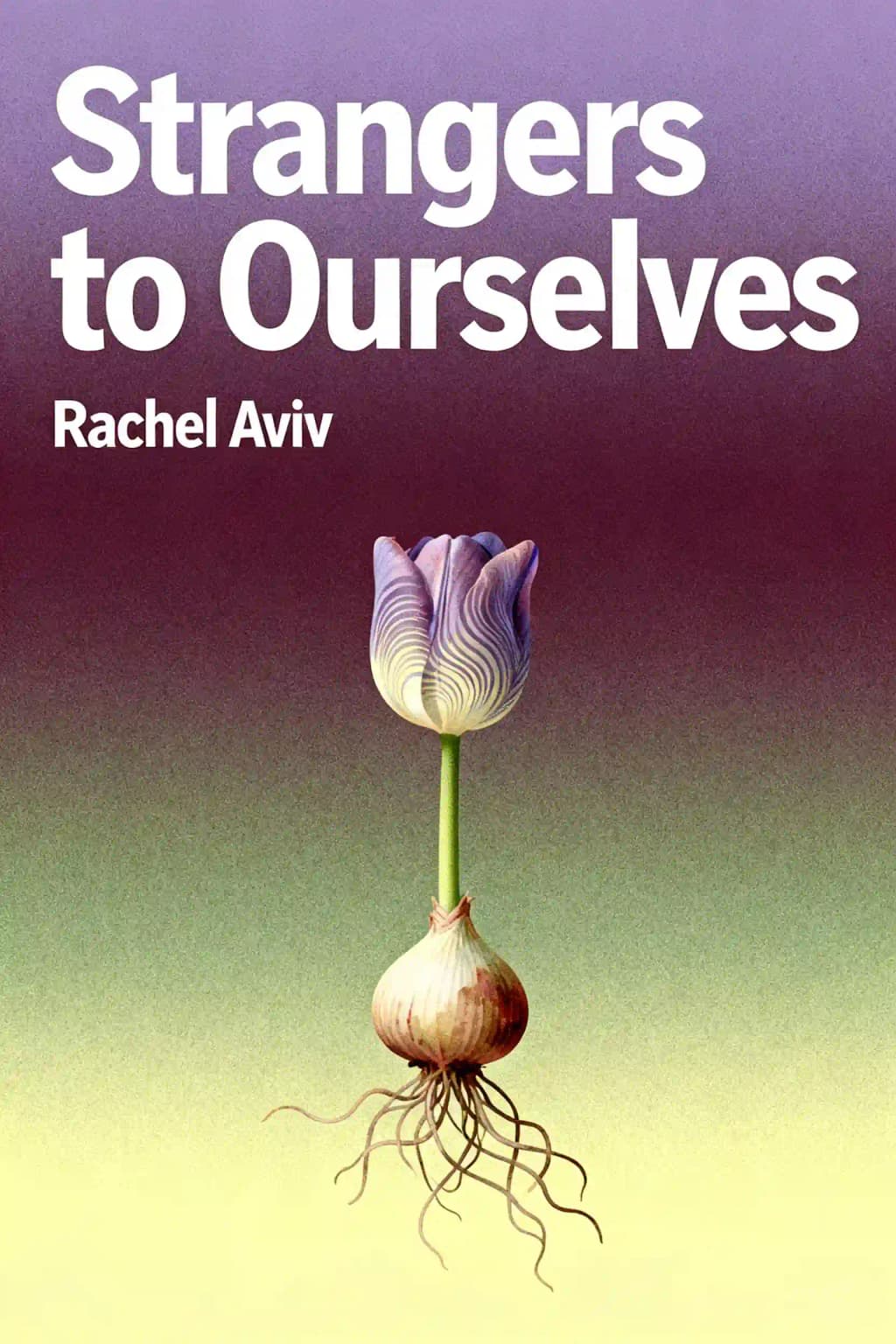
What happens when a diagnosis becomes the story of who we are? Rachel Aviv's "Strangers to Ourselves" explores this profound question through intimate portraits of individuals caught between competing explanations for their psychological suffering. The book has garnered widespread acclaim for its nuanced examination of how psychiatric labels can both illuminate and obscure our understanding of mental distress. Oprah Winfrey called it "one of the most important books about the human condition," while The New York Times praised Aviv's "extraordinary sensitivity and perception." Drawing from her own experience as perhaps the youngest person ever diagnosed with anorexia at age six, Aviv examines how the stories we tell about mental illness shape their course and our identities, challenging readers to consider the thin line between pathology and personhood.
Kapitel 2
The Permeable Boundaries Between Self and Illness
At six years old, Rachel Aviv refused food for three days after Yom Kippur, finding strange pride in her ability to say no. This initial act of defiance, rooted in the religious context of fasting, transformed into something more concerning. Hospitalized for "failure to eat," she was diagnosed with anorexia nervosa-a condition she had never heard of before. The diagnosis itself became a pivotal moment, introducing her to a new framework for understanding her behavior and potentially shaping her future identity.
On the hospital's eating disorder unit, she met twelve-year-olds Carrie and Hava who became her mentors in the intricate rituals of illness. They taught her sophisticated avoidance techniques: not to sit down, to do jumping jacks at night, to remain constantly in motion. She learned to read standing up and developed an elaborate system of food-related superstitions, refusing even to pronounce words that might reference eating. In her mind, saying "eight" became dangerously close to saying "ate," revealing how deeply the illness logic had already begun to take hold.
This early experience revealed to Aviv how quickly one can be "recruited" into an illness identity, a process that happens through both subtle and overt mechanisms. The hospital environment itself, with its strict routines and focus on food and weight, created a microcosm where these behaviors seemed normal, even necessary. Had she remained hospitalized longer, she might have followed Hava's path, who embraced her diagnosis with an unsettling enthusiasm, writing that psychiatric labels "give you a title to live up to...and an identity!!!!" The exclamation marks betrayed both excitement and desperation in finding a framework for understanding oneself.
Years later, while investigating children with "resignation syndrome" in Sweden, Aviv recognized similar patterns in a dramatically different context. This mysterious condition affected refugee children facing deportation, who became completely unresponsive to the world around them. Like anorexia, this syndrome followed cultural scripts for expressing distress, demonstrating how mental illness often manifests in culturally specific ways. Children embodied their powerlessness through various forms of withdrawal, with food refusal emerging as one of the few available forms of protest in both cases.
Philosopher Ian Hacking's concept of the "looping effect" helps explain this phenomenon - people get caught in self-fulfilling illness narratives that fundamentally alter their possibilities for being in the world. The diagnosis becomes not just a description but a prescription, shaping behavior and identity in profound ways. This process is particularly powerful in psychiatric conditions, where the line between symptoms and selfhood often blurs.
Aviv's own narrow escape from a lifetime of illness made her uniquely attuned to these early, crucial phases of psychiatric conditions. Her experience highlighted the critical period before diagnoses become fixed aspects of identity, before temporary coping mechanisms solidify into chronic patterns. This understanding raises vital questions about the nature of psychiatric treatment: When does a helpful framework for understanding distress become a self-fulfilling prophecy? How do we balance the need for treatment with the risk of creating lasting illness identities? Aviv's story suggests that the timing and duration of psychiatric intervention may be crucial factors in determining whether a diagnosis becomes a temporary tool for healing or a permanent aspect of identity.
Kapitel 3
When Treatment Becomes a Battleground: Ray's Story
In 1979, Raphael "Ray" Osheroff paced Chestnut Lodge psychiatric hospital for eight hours daily, walking approximately eighteen miles in slippers until his feet blistered. His psychiatrist, Manuel Ross, diagnosed him with "a form of melancholia, not mourning," believing Ray's obsessive regret masked deeper denial about losing his idealized self-image.
The Lodge, resembling a Southern plantation with its brick mansion and hundred acres of tree-shaded land, represented the pinnacle of psychoanalytic treatment. Founded in 1910 by Ernest Bullard and transformed by his son Dexter, the institution was devoted to uncovering the mysteries of the mind through intensive psychotherapy. While other hospitals used medications, electroconvulsive therapy and lobotomies, Dexter insisted "pharmacology has no place in psychiatry." The renowned analyst Frieda Fromm-Reichmann lived on the grounds, sometimes taking patients to lunch or concerts, imitating their posture to understand their perspective.
Before entering the Lodge, Ray had been a charismatic, overworked physician who embodied the American dream. He opened three dialysis centers in Virginia with "clear and distinct prospects of success." However, after selling part of his business, he immediately regretted the decision, writing, "I went outside and sat in my car and I realized that I had become a piece of wood." His depression deepened until he threatened suicide, prompting his colleague and wife to deliver an ultimatum: check into a hospital or lose both marriage and practice.
Despite months of therapy at the Lodge, Ray's condition deteriorated. His wife filed for divorce, his ex-wife sought to restrict his visitation rights with their sons, and his dialysis clinic position was at risk. Disillusioned, Ray's mother transferred him to Silver Hill in Connecticut, a hospital that embraced antidepressants. Within three weeks of medication, Ray experienced a breakthrough: "Something is happening to me," he told an aide. He began crying about his separation from his sons-realizing that his prior state hadn't been grief but "a total absence of feeling."
Ray's transformation through medication became the foundation for a landmark lawsuit against Chestnut Lodge for negligence and malpractice. The case became a watershed moment in psychiatry, pitting biological psychiatrists against psychoanalysts in what Peter Kramer called a "showdown between two forms of knowledge" about mental illness. Though Ray eventually settled for $350,000, the case fundamentally changed psychiatric practice, with the Lodge beginning to prescribe medication to nearly all patients despite their philosophical objections.
Kapitel 4
The Spiritual and the Medical: Bapu's Journey
Bapu, a Tamil Brahmin woman from Chennai, India, left her family in 1970 to pursue spiritual devotion, leaving biscuits and chocolate for her children with a note saying "Be smart. Many kisses." Her husband filed a police report describing her as "limping on the right leg" and "in the habit of visiting holy places." When police brought her home wrapped in cloth like a straitjacket, she seemed displaced in her own home, lingering in hallways without entering rooms, as if domestic duties no longer held meaning.
At her sisters' urging, Bapu's husband took her to psychiatrist Peter Fernandez, who diagnosed her with schizophrenia merely by looking at her: "The schizophrenic has no insight. She doesn't know who she is." This reflected the European psychiatric "doctrine of the abyss"-the belief that schizophrenic patients emanate an alien strangeness, fundamentally different from "normal" people.
Western psychiatric frameworks proved inadequate for understanding Bapu's experience, which drew from Hindu mystical traditions. Indian psychiatrist Sudhir Kakar noted that Western psychology failed to understand how mystical quests "pervade and inform life in its deepest layers," addressing the "depressive core at the base of human life." N.C. Surya, director of Bangalore's All India Institute of Mental Health, rejected the Western view of mental health as merely statistical normality, noting that Indian healing traditions aimed to raise the self to a higher ideal.
Bapu's family tried various explanations for her behavior. Suspecting supernatural forces, her father invited priests who concluded the house was haunted by a Brahma Rakshasa-the spirit of a Brahmin scholar who nearly reached enlightenment before dying by suicide. Bapu rejected this explanation as "stupid," insisting her poems and prayers flowed "only with the blessings of god." Meanwhile, she became increasingly strategic about her escapes, finding sanctuary among other devotees at temples where intense religious behaviors went unchallenged.
In her journals, she described mystical experiences-feeling Krishna embrace her-while acknowledging others might consider this evidence of mental illness: "If I mention all this, you all will think to send me straight to Kilpauk Hospital." Though she yearned for transcendence like the dissolved "lump of salt in water" described in the Upanishads, she remained tormented by separation from her children: "Is it my mistake to have left you? I did not leave your playground and come of my own volition!"
In 1978, psychiatrist Peter Fernandez forcibly sedated Bapu and drove her to a private hospital in Chennai. There, she suffered what philosopher Miranda Fricker calls "epistemic injustice"-not being treated as a credible witness to her own experiences due to her patient status and colonial attitudes toward Indian religions. After her discharge, Bapu disappeared completely, only to be discovered five years later by her son Karthik, living as a beggar near Srirangam temple.
Kapitel 5
When Society Fails: Naomi's Desperate Act
On July 4, 2003, Naomi Gaines, a 24-year-old Black mother of four young children, attended the Taste of Minnesota celebration. Pushing her 14-month-old twin boys in a stroller while feeling increasingly isolated among the predominantly white crowd, she perceived hostility in every face she passed. Overwhelmed by paranoia and isolation, she dropped her twin boys into the Mississippi River and jumped after them, shouting "Freedom!" as she fell. Only one child survived.
Naomi's life had been marked by poverty and displacement. Raised in Chicago's Robert Taylor Homes, a massive public housing complex where 99% of residents were Black and 96% unemployed, her family lived on welfare, dividing each month between having food and going hungry. When Naomi was nine, her mother Florida fled an abusive boyfriend in the middle of the night, taking her children to Milwaukee, only to return less than a year later to Chicago and the same abusive relationship.
In 1996, Florida and Naomi's sister moved to Minnesota, which Florida had heard was "a women and children's state," part of a migration of Black Americans to Minneapolis-Saint Paul for its robust social services. Naomi joined them in 1997 after finishing high school, bringing her baby son. She worked as a teacher's assistant while taking night classes, determined not to become "another casualty of circumstances."
Three years after moving to Minnesota, Naomi attempted suicide by slitting her wrist. At the hospital, she was diagnosed with "adjustment disorder" attributed to being a "single mother working two jobs" and feeling discouraged about discrimination. Though prescribed Zoloft, she stopped taking it, believing medication couldn't "change the heartache in the world." Her family didn't dwell on the suicide attempt, preferring prayer over medical intervention. "We trust an invisible force more than we trust doctors who, in our opinion, haven't proven that they have our best interests at heart," Naomi explained.
After giving birth to twins, Naomi's mental health deteriorated rapidly. She became increasingly paranoid, believing she'd gained special insight that would allow her to cure racism through music. After multiple hospitalizations and diagnoses including "psychosis not otherwise specified" and bipolar disorder, Naomi was forcibly medicated at Minnesota Security Hospital. With medication, she gained clarity about her actions, telling her mother, "When I take these medications, I'm not scared that people are worming their way into my life so they can hurt me."
Though Naomi wanted to plead not guilty by reason of insanity for dropping her children from the bridge, her public defender warned that no jury in Ramsey County had accepted such a plea in twenty years. The doctors evaluating her concluded she didn't meet the insanity requirements because her delusions stemmed from "astute observations about society"-the first time her perspective on racism had been institutionally validated, only to be used against her. She accepted an eighteen-year plea deal rather than risk permanent separation from her children.
Kapitel 6
The Medication Identity: Laura's Chemical Self
Laura Delano grew up in wealthy Greenwich, Connecticut, descended from Franklin Delano Roosevelt. Despite excelling as class president and squash player, she felt empty inside, living "two separate lives"-one performing, one observing herself. When she began cutting herself and having suicidal thoughts, a psychiatrist diagnosed her with bipolar disorder at age fourteen, during a time when such diagnoses in children had risen 4,000 percent.
At McLean Hospital, "the best mental hospital in the US," Laura's psychiatrist confirmed her bipolar diagnosis. She felt relieved: "It was like being told: It's not your fault." Starting on 20mg of Prozac, her dosage eventually reached 80mg, leading to a "prescription cascade"-Provigil for Prozac-induced drowsiness, then Ambien for Provigil-induced insomnia. Despite her doctors' efforts to optimize her functioning, Laura withdrew socially at Harvard, considering friendships "frivolous" while experiencing sexual disconnection as a medication side effect.
After a suicide attempt at twenty-five, Laura received a new diagnosis of borderline personality disorder. Unlike bipolar disorder, which she had accepted as blameless, this diagnosis-predominantly given to women-felt accusatory, pathologizing stereotypically feminine traits. Reading Robert Whitaker's critique of psychiatric medication, Laura began questioning her fourteen-year history on nineteen different drugs. She realized the "chemical imbalance" theory was merely a hypothesis without biological markers, and decided to discontinue her medications against her doctors' initial resistance.
Laura's medication withdrawal created intense physical and emotional distress. After stopping Ativan and Abilify, she experienced hypersensitivity to light, excessive sweating, dizziness, and a constant buzzing sensation under her skin. When she discontinued Effexor, she developed what the online withdrawal community called "neuro-emotions"-exaggerated feelings disconnected from reality. Without the framework of bipolar disorder to organize her experiences, she felt lost in a void, unsure how to interpret her symptoms or what path she was now on.
Eight months after stopping her medications, Laura experienced sexual desire for the first time-a sensation so foreign and overwhelming she didn't know how to process it. At thirty-one, she experienced her first orgasm, an achievement that brought her to tears of triumph after years of believing sexual connection was impossible for her. She started blogging about her psychiatric medication experience, attracting others struggling to discontinue psychiatric medications, many using improvised methods like grass-seed counters to taper doses.
Laura's story highlights how psychiatric medication can become intertwined with identity. For many patients, medication becomes a "badge of illness," representing an attachment to their physician and a framework for understanding themselves. Discontinuing means facing a new identity where "everything that you are doing is yours, and not necessarily your medication."
Kapitel 7
The Afterlife of Diagnosis: Hava's Legacy
Three decades after her childhood hospitalization for anorexia, Aviv reconnects with Thomas Koepke and his colleagues who had treated her. During their meeting, the doctors recall her as a compliant patient who gained weight well, suggesting her disorder was a way to "avert pressure" from her chaotic family situation onto herself. When Aviv mentions admiring a girl named Hava during her hospitalization, the doctors become notably uncomfortable, reluctant to discuss her.
Aviv later discovers that Hava had recently died. Unlike many former patients who distance themselves from their illness history, Hava had embraced her identity as someone with mental illness, once devastated when a fellow patient rejected her attempt to connect over their shared institutional experiences. At seventeen, Hava wrote to President Clinton pleading against cuts to mental health funding, explaining she had spent five years in and out of hospitals for an eating disorder.
Hava's journals contained exercise plans, eating schedules, signed contracts about food restriction, and anthropological accounts of hospital life. Her writing style changed with her weight-when feeling "fat," her language became cliched and repetitive, but when approaching her "ideal" skinniness, she would reevaluate what she was sacrificing. Despite her deep self-awareness about her condition, Hava still felt unknown, writing "I am one of those people that thoroughly understands myself yet am a stranger to myself."
At thirty-one, Hava moved into her father David's condominium after her insurance ran out and following a suicide attempt that left her in a coma for weeks. David essentially ran "an intensive care unit for one person," keeping detailed medical records and treating his daughter like his patient. On April 11, 2019, Tim found Hava unresponsive in bed. She had asphyxiated after throwing up in her sleep, her esophageal muscles weakened by years of bulimia.
Psychologist Pat Deegan, diagnosed with schizophrenia at seventeen, challenges the idea that mental illness recovery means returning to one's former identity. She criticizes antidepressant ads showing people "getting back" to normal, arguing that for long-term sufferers, "transformation rather than restoration becomes our path." Recovery involves accepting limitations rather than being cured, with hope playing a crucial role beyond clinical intervention.
Kapitel 8
Beyond Diagnosis: Finding Humanity in Mental Distress
Throughout "Strangers to Ourselves," Aviv explores how mental illness narratives are shaped by culture, race, gender, and economic factors that extend far beyond individual biology. Bhargavi, Bapu's daughter, founded an organization called Bapu Trust that offers counseling acknowledging both neurological and spiritual dimensions of mental distress. Working in India's urban slums, her counselors engage not just individuals but entire family units and neighborhood networks, using local dialects and informal settings to address what Bhargavi calls the fundamental problem of not having "an ordinary, existential language for talking about mental distress." This grassroots approach recognizes that mental health exists within a complex web of social relationships and cultural understanding.
This approach aligns with concerns raised by Indian psychiatrist Vikram Patel about imposing Western psychiatric frameworks on different cultural experiences, noting a "credibility gap" between clinical categorization and lived experience. World Health Organization studies have shown better recovery rates from schizophrenia in developing nations like India than in developed ones, with explanations ranging from the plurality of healing practices to more supportive family structures. Traditional healing methods, religious practices, and community support systems often work alongside or instead of conventional psychiatric treatment, offering multiple pathways to recovery that Western medicine might overlook.
The racial dimensions of mental health diagnosis and treatment reveal equally complex challenges. Naomi Gaines struggled with how psychiatric frameworks failed to account for her experiences as a Black woman in America. "Your mental break could never be my mental break. We have different fears than white people," she explained, highlighting how racial trauma and systemic racism shape mental health experiences. The history of American psychiatry includes deeply racist assumptions, including claims that Black people didn't experience depression or commit suicide-beliefs that persisted despite clear evidence to the contrary. These historical biases continue to influence diagnosis patterns, treatment accessibility, and cultural competency in mental health care.
For Laura Delano, recovery meant questioning the chemical imbalance narrative that had defined her identity for fourteen years. Through her blog, she discovered that many others shared her experience of feeling reduced to a diagnosis. She helped create online and in-person communities where people could safely explore their identities beyond medical labels, supporting each other through the complex process of redefining themselves. These spaces became crucial for individuals seeking to understand their experiences outside the constraints of purely clinical frameworks, while acknowledging that both medical and social approaches to mental health have their place.
The book emphasizes that mental health care must evolve beyond one-size-fits-all diagnostic models to embrace the diverse ways people understand and cope with psychological distress. This includes recognizing how cultural wisdom, community support, and personal narrative can complement or sometimes replace traditional psychiatric approaches.
Kapitel 9
The Stories We Tell About Our Minds
Mental illness exists in a unique space between objective reality and subjective experience. The stories we tell about our psychological suffering-whether framed as chemical imbalances, spiritual crises, or responses to trauma-profoundly shape how we understand ourselves and how others perceive us. These narratives determine treatment paths, social responses, and ultimately, the course of the conditions themselves. The language we use to describe mental health challenges carries immense weight, influencing everything from insurance coverage to social acceptance to personal identity formation.
The power of these narratives extends beyond individual experience into broader societal structures. When depression is framed primarily as a chemical imbalance, it leads to pharmaceutical solutions. When viewed through a trauma lens, therapeutic approaches dominate. When understood as a spiritual crisis, religious or contemplative practices become central to healing. Each framework opens certain doors while potentially closing others, creating what Aviv calls "narrative foreclosure" - where one story becomes so dominant it excludes other possibilities for understanding and treatment.
Aviv's book reveals how psychiatric diagnoses can both illuminate and obscure, providing frameworks for understanding while sometimes limiting the possibilities for personhood. Each subject in her book navigates this complex territory differently: Ray embraces the biological narrative that validates his suffering, finding comfort in the certainty of medical explanation. Bapu resists psychiatric categorization in favor of spiritual understanding, drawing on her cultural heritage to make sense of her experiences. Naomi struggles against a system that pathologizes her legitimate responses to racism, highlighting how mental health frameworks can perpetuate social injustice. Laura questions the medication identity that has defined her for most of her life, wrestling with the implications of chemical solutions to existential problems. Hava incorporates her diagnosis into a complex self-understanding that acknowledges both her illness and her humanity, demonstrating how multiple narratives can coexist.
What emerges is not a rejection of psychiatric categories but a call for more nuanced, culturally informed, and personally meaningful ways of understanding psychological distress. As William James noted, science seeks a "closed and completed system of truth" by neglecting the "unclassified residuum." This tension between systematic classification and individual experience remains central to mental health care. Aviv's book explores people whose struggles exist outside this system, in psychic hinterlands where language fails, through their writings and diverse explanations-chemical, existential, cultural, economic, political-reminding us that the divide between psychic hinterlands and normality is permeable, both haunting and promising. These stories demonstrate how mental health narratives can either constrain or liberate, depending on their flexibility and responsiveness to individual circumstances.
The book ultimately suggests that the most helpful approach might be one that maintains multiple perspectives simultaneously - acknowledging both the validity of scientific frameworks and the importance of personal meaning-making. This multiplicity allows for both structured treatment approaches and the preservation of individual agency in understanding one's own mental health journey.