Kapitel 1
From Kitchen Table to Global Enterprise: The Entrepreneur's Guide to Scaling
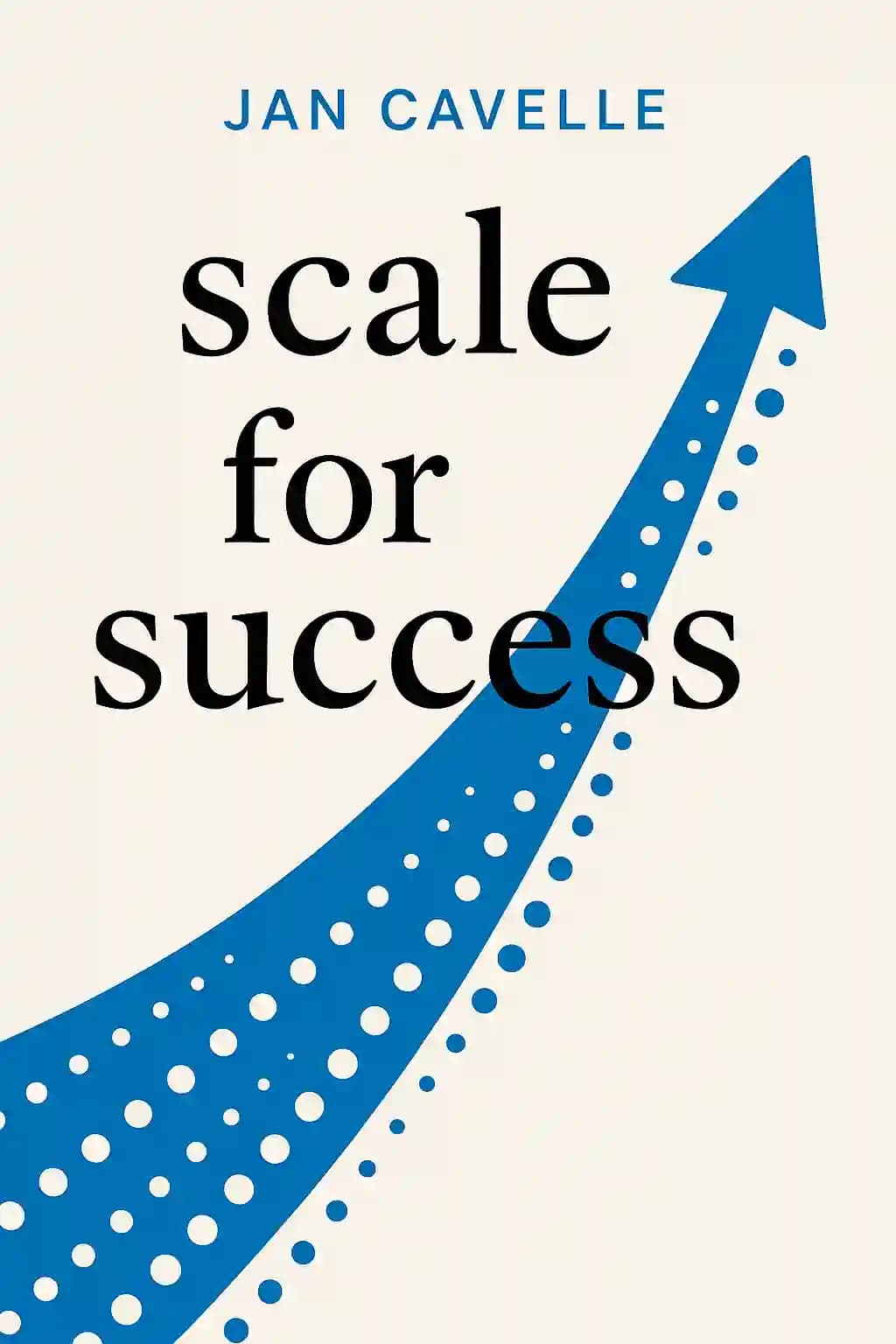
Ever wondered why some businesses skyrocket while others plateau? Scale for Success by Jan Cavelle pulls back the curtain on this mystery through the stories of entrepreneurs who've successfully scaled their companies from humble beginnings to multi-million dollar enterprises. This isn't just another business book-it's a survival guide for the treacherous journey from startup to scale-up, filled with hard-won wisdom from those who've navigated the path before you. The book has become required reading at top business schools worldwide, with entrepreneurs like Richard Branson citing it as instrumental to Virgin's expansion strategy. What makes it particularly valuable is how it addresses the psychological challenges of scaling-the fears, doubts, and identity shifts that no spreadsheet can prepare you for-alongside practical business advice.
Kapitel 2
The Mindset Shift: From Founder to Leader
James Bartle's journey with Outland Denim powerfully illustrates how authentic purpose drives sustainable business growth. Growing up in remote Australia with pastor parents who regularly opened their home to those in need, James witnessed firsthand the transformative power of practical compassion. His childhood experiences of sharing his bedroom with strangers in crisis laid the foundation for his future mission. The pivotal moment came during a life-changing visit to Southeast Asia, where he encountered an 11-year-old girl being sold into trafficking - a moment that would forever alter his trajectory from casual observer to committed change-maker.
Rather than pursuing traditional charitable approaches like fundraising or donations, James envisioned a sustainable solution through business. Despite having no background in fashion or manufacturing, he embarked on an ambitious five-year journey to develop a comprehensive business model. This model went beyond simply offering jobs - it created a holistic training program teaching technical seamstress skills, financial literacy, and life skills while ensuring living wages and safe working conditions.
The company's watershed moment arrived when Meghan Markle was photographed wearing their jeans during a royal tour. This exposure catalyzed explosive growth, enabling them to hire 46 additional women from vulnerable backgrounds. However, this rapid scaling presented significant operational challenges, from maintaining product quality to preserving their mission-driven culture across a growing organization. James navigated these challenges by consistently returning to their foundational purpose.
The depth of this purpose-driven approach manifests in countless ways throughout the organization. In Cambodia, employees like Sreymom not only purchased their first homes but also used their earnings to rescue family members from exploitation. During the COVID-19 crisis, the Australian headquarters team voluntarily offered to reduce their salaries to ensure their Cambodian colleagues remained fully paid - a testament to how deeply the mission had become embedded in the company culture.
James firmly believes that modern businesses must transcend pure profit motives to survive. He predicts that companies lacking genuine purpose and sustainability commitments "will become dust within 10 years" as consumers increasingly demand authentic social impact. This isn't just idealism - it's a practical business strategy. Purpose-driven organizations demonstrate greater resilience during challenges, higher employee engagement, and stronger customer loyalty. The Outland Denim story proves that when profit and purpose align, both business success and social impact can scale sustainably.
Their journey also highlights how leadership evolves in purpose-driven organizations. James transitioned from passionate founder to strategic leader by building systems and teams that could scale their impact while maintaining their core values. This evolution required developing new skills in areas like supply chain management, team building, and organizational development - all while keeping their mission at the center of every decision.
Kapitel 3
Preparing Your Business for Scale
Bev Hurley, CEO of YTKO Group, emphasizes that scaling requires thorough preparation. Her journey from social housing work to running multiple businesses taught her that scaling isn't simply doing more of what you've been doing-it requires fundamental changes to your operations.
According to Bev, what makes a company truly scalable is identifying significant unmet market needs and supplying products or services that satisfy those needs better than competitors. The larger the market need, the more sustainable your scalability will be. She recommends finding niches where you have the best fit and competitive advantage, then using effective marketing and sales strategies to capitalize on those opportunities.
To test your readiness, Bev suggests imagining receiving a full year's turnover tomorrow and working through what you'd need to do. Working capital typically tops the list, as growth demands investment in recruitment, salaries, stock, equipment, and support staff. Her own company once doubled from 20 to 40 employees without adequate infrastructure, forcing them to pause business development for months to establish proper systems.
As companies scale, leaders must build a senior team of trusted individuals who can share the load. She recommends having two or three key people you trust absolutely, as it's impossible to effectively manage more than a dozen people directly. An independent board and experienced mentors can provide invaluable guidance through growth phases.
Stephen Kelly, chair of Tech Nation, adds that to cross "Death Valley" (the leap from 1m to 10m), companies must overcome founder's syndrome and ensure organizational readiness with strong teams. He advises drip-feeding investment, focusing on minimal viable products to maintain revenue, and concentrating on four essentials: winning customers, retaining them, building perfect products, and hiring the best talent.
Kapitel 4
Designing a Business Built to Last
Durell Coleman's approach to building sustainable businesses combines purpose with practical design thinking. Growing up poor with parents he describes as elemental forces, Durell learned perseverance and the family motto: "never give up." A transformative exercise at Stanford, where he listed 100 problems he wanted to solve, shifted his thinking from personal inconveniences to significant social issues.
For entrepreneurs scaling businesses, Durell emphasizes following your North Star over crafting perfect vision statements. This North Star-your mission, values, and what truly matters to you-guides business decisions instinctively and provides the fuel needed to overcome inevitable challenges.
To discover your North Star, Durell teaches a process: identify what brings you joy and what makes you angry, then develop goals to maximize joy and reduce anger across one, five, and fifteen-year timeframes. Businesses without authentic purpose may bring external validation through money, power, or fame, but won't provide genuine fulfillment or longevity.
For testing business sustainability, Durell applies design thinking. First, understand who you serve-every business should function as a service organization. Second, clearly define the problem you're solving, particularly focusing on "hair on fire" problems (urgent needs requiring immediate solutions). Third, develop ideas without becoming overly attached to them, as assumptions must be tested. Finally, create simple prototypes to gather feedback quickly before investing heavily.
Nicole Lamond's journey with Eloments vitamin tea demonstrates how values drive business decisions. After witnessing tea plantation workers who couldn't afford basic necessities despite full-time employment, Nicole became passionate about fair trade principles. When seeking growth capital, she bypassed Australian venture capitalists whose values didn't align with hers, instead raising AU$1 million from US investors committed to organic farming.
For Eloments, values weren't merely aspirational statements but foundational drivers of product development. Their commitment to organic farming made manufacturing significantly more challenging, but this alignment with core beliefs was non-negotiable. Nicole sees tangible results from these strong values in partnerships with customers, suppliers, and investors. She insists core values cannot change-Fairtrade is written into their constitution to ensure it remains even if ownership changes.
Kapitel 5
Funding Your Growth: Options and Pitfalls
Scaling requires substantial cash-for bigger premises, wages, marketing, systems, better people, or improved cash flow. While self-funding growth is ideal, entrepreneurs have increasingly diverse funding options available.
Alex Packham, founder of ContentCal, found his breakthrough through the Accelerator Academy, a 12-week high-growth program for digital entrepreneurs. Through the accelerator, Alex met his mentor Colin Smith, who invested and suggested merging ContentCal with Alex's agency. This led to raising 1 million, then another 1.6 million, and eventually a Series A round of 2 million.
Alex credits the accelerator for his success and advises entrepreneurs to thoroughly research accelerator options, talk with program leaders and alumni, and consider the equity requirements carefully. The true value extends beyond the course itself to the lasting network and support system it provides.
Crowdfunding has become another attractive option. Ben Revell, founder of Winebuyers.com, raised over half of his 1m+ funding through Crowdcube. Beyond capital, crowdfunding provided exposure to industry-knowledgeable investors: "We had 300 people invest, a lot in the industry with wealth of knowledge. It's great to get their opinions and strategies from people with a vested interest in the company succeeding."
Success requires thorough preparation-Ben's 30-day campaign actually required 12-14 months of preparation. With platforms like Crowdcube, it's all-or-nothing-you must achieve your target or receive nothing.
For those considering venture capital, David Siegel offers brutal honesty: most VC funds don't outperform public markets, with average returns of 1.9x when they need 2.5x to break even over ten years. He outlines six fallacies of venture capital, including the illusion that VCs can reliably "pick winners" and the reality that smart investors accept 70% of investments will fail.
David advises entrepreneurs to focus on revenue rather than products. VCs rarely say outright "no," and most deals come through pre-existing relationships. Rather than raising huge sums, entrepreneurs should build minimum viable products quickly and focus on sales. The value-add from VCs is largely mythical-they're playing a numbers game to extract profits.
When seeking formal Series A investment, Roby Sharon-Zipser emphasizes that your first investor is crucial as they set the precedent for future investors. Find someone aligned with your vision who can support you through the lonely early journey. Investors should commit long-term (10-15 years), understanding business growth isn't linear.
Kapitel 6
Building and Leading Your Team
Dame Shellie Hunt, who rose from humble beginnings to entrepreneurial success, believes we've become too focused on destinations rather than journeys. She emphasizes that success comes from overcoming limiting beliefs and returning to childhood authenticity.
When seeking mentors, ask about their three biggest successes, failures, and assets. A true mentor wants you to exceed their achievements, but don't expect them to excel in everything. Seek mentors in their specific areas of expertise, be coachable, and trust their knowledge.
As a leader, surround yourself with experts, understand what motivates them, create belonging, and inspect without micromanaging. Develop a culture of honesty where team members can acknowledge limitations and request help.
For remote teams, Ranzie Anthony of Athlon emphasizes outcomes over micromanagement-how people spend their time matters less than their results. To build culture across distances, Athlon holds regular inter-office meetings, annual worldwide gatherings, and virtual coffee breaks where team members connect informally.
Leaders must strike the right balance of check-ins: daily with local teams, weekly with direct reports, and monthly with global teams. For successful remote work, provide proper equipment, develop robust onboarding processes, and maintain learning opportunities through online resources and a buddy system. Recruitment should focus on finding autonomous workers who are comfortable asking for help when needed, with a foundational policy of trust rather than excessive monitoring.
Rob Hamilton, founder of Instant Offices, believes "the customer is not always king, the people are." His approach earned numerous workplace culture awards while building a highly successful company. He created a transparent environment where everyone understood the company's three-year plan, summarized on a one-page document that guided all activities.
The company fostered camaraderie through a designated "Minister of Fun," company-wide ski trips, and a daily ritual where different team members would serve tea and cake to colleagues. Their recruitment focused on finding exceptional non-corporate talent, with a "Keep the Jerks Out" policy that included team approval of new hires.
Creating the right culture requires crystal-clear purpose and values that everyone understands. Natalie Lewis of Dynamic HR advises implementing processes early, as they become harder to change later. Job descriptions must clearly define what success looks like in each role. The employer-employee relationship should be treated like a bank account-always maintain a positive balance by giving more thanks and feedback than criticism.
Adrian Kingwell of Mezzo Labs developed an innovative retention strategy called the Inside Out program. New hires receive a book with chapter headings on their first day, with a life coach helping them define goals and create a roadmap. This life-coaching approach addresses both workplace and personal challenges, helping employees connect with their purpose. This innovative approach has helped Mezzo Labs achieve an attrition rate 2-3 times better than industry average while tripling their team size in six years.
Kapitel 7
Marketing in the Digital Age
As businesses scale beyond random selling, strategic marketing becomes essential. David Meerman Scott, a sales and marketing strategist, emphasizes that effective marketing strategy begins with developing clear buyer personas-detailed biographies of typical customers that go beyond job descriptions to understand them as people.
The marketplace has shifted away from pushy sales tactics toward providing genuine value. David advises against immediately demanding personal information from website visitors, comparing it to asking for a business card within seconds of meeting someone at a party. Instead, offer valuable content without expectation of return.
Companies should stop talking about themselves and focus on solving customer problems. The 2020s demand authentic, transparent communication-eliminating corporate jargon, stock photos, and deception. Marketing analytics should measure engagement beyond just sales leads, and ungated, free content often proves more effective than requiring information submission.
George Sullivan built The Sole Supplier from his bedroom while working in recruitment, creating a website that shared information about trainer releases. His three-point framework for successful content marketing focuses on creating content so good it spreads organically. First, be the first to share content by developing relationships with brands and influencers who provide exclusive information. Second, if you can't be first, be the best by enhancing existing content with additional research and value. Third, be original with unique perspectives that serve your audience.
Understanding your customers isn't just a meme-it requires truly knowing them at a fundamental level. Matt Sweetwood transformed Unique Photo into New Jersey's largest camera superstore by deeply understanding his customers: staffing his store with passionate photographers, treating merchandise as precious, and creating joyful photography classes that brought 1,000 customers monthly.
To truly understand customers, business owners must interact with them directly rather than outsourcing this connection. You must analyze your customer acquisition costs by dividing marketing expenses by customers gained, while considering how much each customer spends. The goal is finding higher-spending customers at lower acquisition costs.
Ed Molyneux of FreeAgent cautions against the tech industry's unicorn obsession, noting many businesses can be profitable at modest scale without massive venture capital. Word-of-mouth marketing stands out amid non-authentic marketing messages, providing significant growth as satisfied customers refer others. From the start, Ed identified a market gap with no accounting system specifically for freelancers, deliberately avoiding larger companies to stay true to their core customers.
Paris Cutler's business strategy consultancy has helped 90% of clients double turnover within a year by identifying under-served consumers in crowded markets. She applies "Blue Ocean Strategy" principles, which contrast "red oceans" (bloody, competitive markets) with "blue oceans" (uncontested market space). While most businesses fight in red oceans, blue ocean strategists create new markets by examining where competitors aren't selling.
Kapitel 8
Sales and Customer Relationships in the Digital Era
Andrew Milbourn of Kiss The Fish consultancy identifies two main reasons businesses struggle with growth: hiring the wrong salespeople (those who "talk the talk" but lack emotional strength to handle rejection) and employing sales managers who lack strategic experience, focusing only on day-to-day management rather than leadership.
Andrew challenges conventional sales approaches by often telling potential clients that their problems lie in marketing rather than sales-surprising those expecting an immediate pitch. His methodology centers on "customer curiosity"-a cultural shift from selling to buying that engages customers emotionally. He advises salespeople to forget themselves and focus entirely on bringing value to customers, insisting that sincerity builds trust while inconsistency breeds suspicion.
For global expansion, Anneke van den Broek of Rufus & Coco recommends thorough market research using resources like Euromonitor reports to identify viable markets and gaps. She emphasizes understanding regional differences in consumer needs due to political, cultural, and demographic factors. Rather than launching an entire product line at once, she recommends entering with a single strong product as your "pocketknife" to open doors.
James Davidson of tails.com learned the hard way that customer experience is paramount. Despite securing 5 million in seed funding and assembling a team of veterinarians, nutritionists, and engineers, the company nearly collapsed months after launch because customers were frustrated with their subscription system. James convinced shareholders to continue by promising to redesign their software for better customer control and visibility.
This near-failure taught them a crucial lesson: "although you are deeply passionate about your product, unless you understand and solve the actual needs and expectations of your audience, it won't work." The company transformed to become entirely customer-focused, from personalized packaging to user-friendly interfaces and one-on-one support.
Sam Kennis of Three Wolves views competition as healthy and necessary. Rather than obsessing over rivals, Three Wolves collaborates with other bars, sending customers to competitors when appropriate and receiving the same courtesy. Their strategy involves identifying market gaps-each new venue serves a distinct niche with carefully crafted experiences.
In today's digital landscape, online reputation management is critical. Simon Wadsworth of Igniyte Ltd shares alarming statistics: one in five companies are unhappy with their Google page one portrayal, one in three say negative content has damaged their business, and companies risk losing 22% of potential customers with just one negative result.
Kapitel 9
Building Value and Planning Your Exit
Growing too quickly can devastate profits. Scaling requires understanding that increased revenue doesn't automatically mean proportional profit growth. Lex Deak, founder of QVentures, emphasizes that the value of your company varies significantly by sector and requires regular assessment. While many entrepreneurs drift into scaling up, proper valuation preparation should begin nine months before seeking investment or exit.
Preparation involves creating a bulletproof plan with exact figures rather than having premature investor conversations, testing your pitch on friends and family, and demonstrating market fit with compelling data. Structure your business from day one as if a sale were imminent, avoiding pitfalls like taking stock in acquiring firms, accepting onerous earn-out periods, or allowing deals to drag until exhaustion sets in.
Mike Lander identifies seven key factors that prevent companies from scaling to 1m profit. First is timing-knowing when to enter and exit markets rather than relying on luck. While entrepreneurs typically start businesses with trusted friends, adding people with specialized skills is crucial. With limited resources, businesses must ignore distractions and maintain laser focus on their core proposition, though early experimentation is necessary to discover that core quickly.
Natalie Douglas warns that entrepreneurs who reach the 1m mark often get distracted by new ideas instead of maintaining focus on their original business. She emphasizes that businesses fail because they're not fundamentally sound, particularly in tech where early investment can mask the need for profitability. The secret is building solid foundations like Lego, focusing on profit throughout the journey from 1m to 5m turnover.
Jeff Fenster's approach to business growth revolves around vertical integration-owning parts of your supply chain. With Everbowl, he applied this principle extensively: founding WeBuild Stuff to construct outlets cost-effectively, creating SuperFuel Coffee to supply his chain, and establishing Real Happy Foods as a superfood importer. This strategy simultaneously increases sales, improves efficiency, and builds company value-a true superpower for scaling businesses.
Jeremy Harbour challenges the traditional approach to business ownership where entrepreneurs "work your butt off until you are almost dead and then try and do what you want." Instead, he advocates for "short bursts" of business building followed by selling to create capital and reclaim time. Once a business efficiently delivers its product or service, the owner should focus on systemizing operations and building value-not continuing as the lynchpin.
Kapitel 10
The True Meaning of Success
After speaking with numerous successful entrepreneurs, Jan Cavelle discovered that while their initial motivations varied, financial success is rarely cited as their primary driver. Instead, money enables what they truly value: freedom-the ability to choose what they do both professionally and personally.
Beyond freedom, these entrepreneurs share a need to feel good about their work-doing something they're proud of and that makes them happy. Most define satisfaction by their impact on others, whether addressing societal issues like Dame Shellie Hunt and James Bartle, or simply providing excellent service to customers and developing their teams.
Success also brings the privilege of choosing collaborators. Creating a workplace where people want to contribute becomes a priority rather than a burden. Financial success enables a balanced lifestyle-not defined by luxury possessions but by time with family and gratitude for the present.
Increasingly, these successful entrepreneurs find fulfillment in self-development and purpose-becoming their best selves and creating legacies that improve others' lives. This signals a shift toward more meaningful business motivations that can only benefit humanity.
When scaling your business, remember that advice should be taken with caution-everyone's circumstances differ. Scaling isn't for everyone and should never be pursued without good reason or proper preparation. Moving from your first million to multi-millions requires significant changes to both yourself and your business.
The journey of scaling requires mental toughness, personal resilience, and a strong support network. Embrace failure as part of learning, maintain commitment and focus, and ensure your purpose-your North Star-is best served by scaling up. Only then can you transform your kitchen table startup into a global enterprise that not only succeeds financially but also fulfills your deepest values.