Kapitel 1
The Art of Creative Impact: Where Inspiration Meets Execution
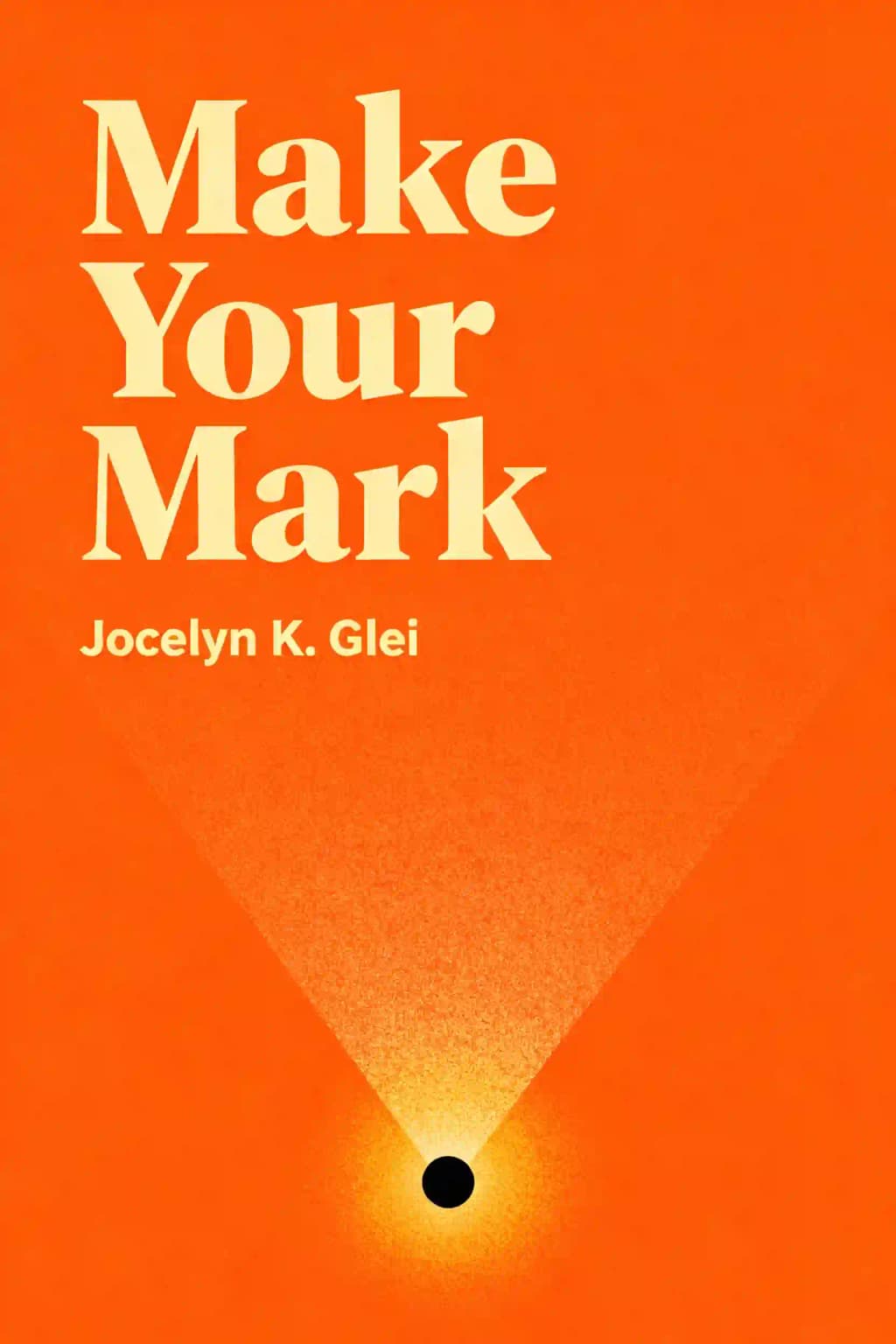
In a world obsessed with innovation, we've forgotten a fundamental truth: ideas are worthless without execution. As Thomas Edison famously declared, "Genius is 1 percent inspiration, and 99 percent perspiration." This insight forms the foundation of "Make Your Mark," a revolutionary playbook for the modern creative entrepreneur. Unlike traditional business books that feel outdated in our rapidly evolving digital landscape, this collection taps into the wisdom of twenty-one leading experts who have helped transform small startups into billion-dollar businesses in record time.
The book has garnered praise from creative professionals across industries, with figures like Tim Ferriss and Arianna Huffington citing it as essential reading. Its principles have shaped companies from Airbnb to Warby Parker, proving that purpose-driven businesses focused on craftsmanship and meaningful change can outperform those fixated solely on profit. Whether you're launching a new venture or revitalizing an existing one, this guide offers fresh thinking on how to build something that truly matters in today's connected world.
Kapitel 2
Finding Your North Star: The Power of Purpose
The most successful businesses aren't driven by profits or even products-they're guided by purpose. They solve real problems, meet pressing needs, and change the world in ways both large and small. This purpose-driven approach creates resilience during difficult times and inspires both employees and customers to become passionate advocates for the organization's mission.
To discover your purpose, examine four critical questions that dig deep into your core identity and aspirations: How will the world be better off because of you? This question forces you to consider your broader impact beyond financial metrics. What are your unique gifts? This reveals the distinctive capabilities and perspectives you bring. Who have you been at your best? This helps identify patterns of excellence and fulfillment in your past experiences. Who must you fearlessly become? This challenges you to embrace your highest potential despite fears or obstacles.
This process works equally well for individuals and organizations. For companies, ask what the world hungers for, examining unmet needs and emerging challenges in society. Consider what unique talents the organization possesses - not just technical capabilities but cultural strengths and institutional knowledge. Reflect on who the company has timelessly been, its enduring values and authentic character. Finally, envision who it must fearlessly become to fulfill its highest potential. When personal and organizational purpose align, the synergy creates extraordinary momentum and impact.
Consider Casey Sheahan, who aligned his personal purpose of mindful living with Patagonia's environmental mission, leading to groundbreaking sustainability initiatives and strong business growth. Maya Lin's unwavering commitment to artistic integrity and social commentary allows her to consistently decline lucrative but misaligned opportunities. Dave Morin's purpose-driven leadership at Path pioneered the "slow product movement," prioritizing thoughtful development and user experience over rapid deployment in an industry obsessed with speed.
Today's most successful organizations operate on what could be called a "Responsive OS" - they're lean, learning machines with an intense bias toward action and high risk tolerance. These organizations share key characteristics: They experiment constantly through rapid prototyping and iteration. They obsess over culture and talent, recognizing that purpose-driven people are their greatest asset. They eliminate friction in processes and decision-making. They build with their communities, involving users and stakeholders in development. They embrace uncertainty as a source of opportunity, and most importantly, they are driven by purpose beyond profit.
As Tim O'Reilly explains, successful entrepreneurs see the world as it should be, not just as it is-they build for how the world should work. This visionary perspective allows them to identify transformative opportunities others miss. The key is identifying a community that cares deeply about the problem you're solving and understanding their needs, sometimes before they do. When entrepreneurs transcend self-interest and focus on solving real problems that matter, they make the biggest impact and build the most enduring companies.
Kapitel 3
Solving Problems That Matter
We've become so obsessed with "innovation" that we forget to ask why new ideas matter. The best entrepreneurs aren't just seeking freedom from day jobs-they're driven by seeing something broken that they must fix. This obsession powers them through years of late nights, doubt, and sacrifice.
Meaningful innovation starts with identifying real problems, whether it's world hunger or simply finding flattering swimwear. Even if your idea didn't begin as a response to a problem, you must rigorously test it by asking "what problem am I solving?"
Entrepreneurs often struggle to articulate their core problem, jumping straight to solutions instead. But staying focused on the problem prevents the fatal assumption that people are waiting for your product. People aren't wishing for "crunchy cereal with raisins"-they're struggling to find quick breakfasts that don't make them feel sluggish.
The "why?" test is crucial for fireproofing your idea. Like a persistent two-year-old, keep asking why until you reach the core human need. This helps you move beyond functional descriptions to emotional solutions that connect with people. By focusing on the problem you're solving, you create something that truly matters-making those late nights easier to bear.
As Peter Drucker once remarked, "One does not begin with answers. One begins by asking, 'What are our questions?'" Seven essential questions can guide your business journey:
1. Why are we here in the first place?
2. If we disappeared, who would miss us and why?
3. What business are we really in?
4. How can we become a cause, not just a company?
5. What are we willing to sacrifice?
6. How can we make a better experiment?
7. What is our mission question?
These questions help you determine what you're doing, why you're doing it, and how to do it better-creating a foundation for meaningful impact.
Kapitel 4
The Power of Singular Focus
Consumers don't need many things from your brand-they just need one thing. Your job is to care about what they want, not what you want them to want. Many brands fail by trying to get too many things right instead of perfecting one thing. The best way to build a brand is through a single stellar product, not a collection.
Great brands like Ralph Lauren (tie), Diane von Furstenberg (wrap dress), Google (search box), and Warby Parker (glasses) all started with one perfect product. You must earn the right to create product #2 by making product #1 extraordinary.
At Bonobos, Andy Dunn and co-founder Brian Spaly focused exclusively on perfecting men's pants. They sold pants at trunk shows and parties, collecting cash and checks, proving their product worked before seeking investors. With 90% of try-on customers purchasing and 25% buying multiple pairs, they knew they had a hit. Only after reaching $1 million in revenue six months after launching e-commerce did they consider expanding.
The paradox: even two great items makes it harder for customers to know what job to hire you for. Start with one perfect product that solves a real problem, and opportunities to grow will follow.
Sebastian Thrun, creator of Google Glass and Self-Driving Car, approaches innovation like mountain climbing: pick a peak because you want to go there (not because it's easy), assemble a trustworthy team willing to learn, and maintain purpose through inevitable setbacks. Focus on enjoying the process rather than distant outcomes like IPOs.
For true innovation-climbing mountains no one has climbed before-fast iteration and failing quickly are essential. Thinking alone won't work. Common product development mistakes include perfectionism (building components without testing the whole system), being discouraged by failure, and changing course out of fear when competitors make moves.
Kapitel 5
Creating Magical User Experiences
Great product creators aren't just makers-they're stewards of user experience. For your customer, the product is nothing more than their experience of it. This requires deep empathy for users and their needs.
To create exceptional products, first ground your ambition and maintain simplicity. Products often gain an edge through initial simplicity only to become bloated over time in the "Cycle of Simplicity Loss"-users flock to simple products, products add features, then users flee to simpler alternatives.
Second, help customers survive the first fifteen seconds. People are impatient and distracted, so minimize friction in onboarding. At Behance, removing a 120-second field selection during signup dramatically increased conversions.
Third, create an effective hook that appeals to short-term interests while connecting to long-term value. Like a book cover or store window display, your hook determines whether users engage deeper with your product.
Finally, remember users don't follow directions-they explore. The default settings and initial experience matter tremendously. As Dave Morin says, "the devil is in the default." Your default experience will determine success or failure because most users never customize or explore advanced features. Since you're an advanced user, it's hard but crucial to focus on the newcomer's experience.
Jane ni Dhulchaointigh discovered Sugru's purpose through an accident-creating a silicone-wood dust mixture that bounced surprisingly well. After initial confusion about its application, she realized its potential to turn anyone into a designer by allowing them to improve and fix everyday objects rather than replacing them.
Despite not being a scientist, she pursued developing this self-setting rubber through painstaking R&D. What sustained her through three difficult years of development was user testing-sending samples to 150 people from various backgrounds who provided feedback and photos of their fixes.
This user engagement functioned like "time travel"-giving her a glimpse of how people would actually use Sugru in the real world. The tangible evidence from these early collaborators kept her motivated through the toughest development challenges while providing invaluable insights about the product's potential applications.
Kapitel 6
Building Authentic Customer Relationships
Building a loyal community isn't about viral posts or massive audiences-it's about cultivating relationships over time. Chris Guillebeau has witnessed this power firsthand, raising $22,000 in a single day for clean water in Ethiopia and generating $100,000 in product sales from a small, engaged audience. These successes weren't flukes but the result of years of trust-building.
To build your own army of allies, first produce remarkable work that gives people something to believe in. Then serve them daily by asking: "What am I making?" and "Whom am I helping?" Strategic giving becomes your marketing plan-make expertise freely available, share paid content on different channels, and be genuinely helpful wherever possible. The more you give, the stronger your community bonds become, creating a reservoir of goodwill for when you need support.
Don't treat customers like page view statistics or budget line items-they'll know. Successful companies like Amazon, Airbnb and Charles Schwab put customer service before profit, addressing actual pain points and removing frustrations. Being human isn't just good policy-it's more rewarding. Nothing beats launching a product you believe in and asking customers to help make it better. Every website visitor or customer is raising their hand to show they care. Return the favor by listening, no matter how much it slows you down.
Warby Parker co-founder Neil Blumenthal reveals that authentic customer relationships require transparency-people have sensitive BS detectors and can immediately sense fakeness. When mistakes happen, brands must admit them, apologize, and actually fix the problem. The social web has fundamentally changed brand control-as Lady Gaga's former manager put it, "It's not your brand; it's our brand." Companies can influence but not dictate conversations happening across social platforms.
Kapitel 7
The Power of Story and Small Kindnesses
What makes customers voluntarily promote products they love? Stories. The products we truly connect with become part of our personal narratives about working smarter, dreaming bigger, and building a better world. These narratives transform customers from passive consumers into active brand advocates who feel emotionally invested in a company's success. DODOcase, named after the extinct dodo bird, built its identity around protecting the art of bookbinding from extinction. Despite long wait times and premium pricing, customers became advocates because the company shared its journey authentically-posting pictures of sawdust-covered workers, detailed videos of their crafting process, and behind-the-scenes glimpses of their Brooklyn workshop.
This transparency turned waiting customers into engaged participants who would tweet about their orders, share updates, and post pictures when products arrived. They created unboxing videos, wrote blog posts about their DODOcase experience, and proudly displayed their handcrafted items. By inviting customers into their story through honest glimpses of the manufacturing process, including both successes and challenges, DODOcase transformed potential frustrations into connection points. When production delays occurred, customers understood why because they had seen the careful attention given to each piece. This proved that when customers feel close to your process, they become your most passionate advocates.
The most memorable aspects of our lives aren't professional achievements but small kindnesses, those unexpected moments of delight that stick with us long after they occur. This principle applies equally to business, where thoughtful touches can create lasting impressions. Companies that focus on tiny considerations in customer interactions-putting people before profits-often see tremendous returns. Tattly, a temporary tattoo company, includes free extra tattoos with every order, often themed to match the customer's original selections. Their invoices are beautifully designed with playful illustrations, their packaging includes personalized notes, and their website is sprinkled with unexpected humor and easter eggs for visitors to discover.
These seemingly "inefficient" practices are actually strategic investments in customer loyalty and word-of-mouth marketing. Similar examples abound across industries: Uber drivers offering mints and phone chargers, Tumblr writing humorous terms of service that people actually enjoy reading, and Google maintaining its famously minimalist homepage despite countless opportunities to monetize it. Even B2B companies like MailChimp incorporate playful elements, with their chimp mascot offering high-fives after successful campaign sends. As Arianna Huffington notes, we never hear in eulogies that someone "increased market share by 30 percent"-we hear about their kindnesses, their thoughtfulness, and how they made others feel. This approach isn't just good for customers; research shows businesses centered on improving lives consistently outperform competitors, with higher customer retention rates, stronger word-of-mouth referrals, and more engaged employees who feel proud of their work's impact.
Kapitel 8
Redefining Leadership for Creative Teams
In today's innovation-focused economy, true leadership isn't about commanding others but helping everyone do their best work. The leader's job is shifting from giving orders to providing agency and information that empowers team members to take ownership. This requires abandoning the "I-know-best" mindset in favor of transparency and shared responsibility.
The stereotype of the useless, power-hungry manager persists in popular culture from Dilbert to Office Space. But these "pointy-haired bosses" aren't inevitable-they're symptoms of organizations that don't take management seriously. In startups, this manifests as the assumption "We can't do this well, so we're not going to do it at all." When you decline leadership opportunities, you create vacuums that may be filled by the very people you hoped to avoid.
Chuck Newman's insight changed my perspective: "I've always thought that the hardest and most valuable thing in work is to get a group of smart people to work together toward a common goal." Leadership isn't about power or control-it's about serving. As Clayton Christensen notes, "If you want to help other people, be a manager. If done well, management is among the most noble of professions."
At Buffer, they approach everything with a mindset to "Default to transparency." They share salary numbers, equity details, internal emails, and metrics publicly. This openness creates five crucial benefits: First, transparency breeds trust, eliminating politics and envy that make teams unproductive. Second, sharing all information is essential for innovation-people can't make smart decisions without full context. Third, openness attracts customer loyalty by humanizing your business. Fourth, transparency leads to fairness in compensation and prevents favoritism. Finally, being open allows you to gain invaluable feedback from team members and customers.
Kapitel 9
From Control to Empowerment: The New Leadership Model
David Marquet's transformation as captain of the USS Santa Fe represents a pivotal case study in modern leadership evolution. During a routine exercise, he ordered his crew to proceed at a speed that the submarine wasn't capable of reaching - a mistake that could have been catastrophic if his officer hadn't eventually spoken up. This near-miss became the catalyst for completely reimagining leadership dynamics aboard the vessel. Instead of the traditional top-down command structure where officers waited for orders, Marquet instituted a radical shift toward distributed leadership and individual empowerment.
The implementation began with language changes that reflected deeper philosophical shifts. Officers were trained to use "I intend to..." statements, followed by their planned actions and reasoning. This subtle but powerful linguistic shift accomplished multiple objectives: it required officers to think through their decisions completely, demonstrated their competence to leadership, and psychologically positioned them as active decision-makers rather than passive order-takers. The crew replaced traditional passive morning briefings with interactive "certifications" where team members had to actively declare their readiness and planned actions for critical operations.
The results were remarkable and measurable. Within twelve months, the USS Santa Fe transformed from the fleet's poorest performer to its standout success story. Performance metrics improved across all categories, from operational effectiveness to safety records. Most telling was the dramatic surge in reenlistments - from just three sailors choosing to continue their service to thirty-three, indicating a fundamental shift in crew engagement and satisfaction.
Marquet's experience revealed crucial insights about human potential in organizations. When people operate in compliance-based systems, they typically perform at minimal acceptable levels and suppress their natural creativity and initiative. However, when given genuine control coupled with clear responsibility, they tap into what Marquet calls their "inner superhero" - their natural drive to excel and contribute meaningfully. This transformation requires leaders to fundamentally shift their approach: from hoarding information to sharing it abundantly, from controlling decisions to enabling decision-making capabilities in others, and from maintaining hierarchical distance to fostering open communication at all levels.
John Maeda's insights complement Marquet's findings by addressing the specific challenges faced by technical experts transitioning to leadership roles. Maeda observed that skilled practitioners often view leadership skeptically, seeing it as merely "talking" rather than "doing." His revolutionary insight was to reframe leadership through the familiar lens of craftsmanship - suggesting that building relationships and developing teams requires the same attention to detail and dedication as creating physical products. He encourages leaders to approach team building with the same precision and care they once applied to their technical work.
Maeda's framework particularly resonates with creative professionals moving into leadership positions. Rather than mourning the reduction in hands-on work, he advocates seeing leadership as an evolution of making - creating organizational cultures, nurturing talent, and building sustainable systems. Creative leaders bring unique advantages to these challenges: their comfort with ambiguity helps navigate uncertain business environments, while their ingrained focus on integrity and quality often leads to more sustainable and ethical business practices than purely profit-driven approaches.
Kapitel 10
The Courage to Begin Before You're Ready
Seth Godin challenges our deeply ingrained notion of readiness, arguing that we're never truly ready for significant innovations or breakthrough endeavors. He illustrates this through numerous historical examples, pointing out that groundbreaking products like Instagram, which launched without a revenue model, and the first telephones, which had no network of users, were released before their supporting ecosystems were fully developed. Even the Wright brothers flew before there were airports, air traffic controls, or commercial aviation infrastructure.
Godin makes a crucial distinction between preparation and being ready. While preparation involves acquiring skills, knowledge, and resources, being ready is fundamentally an emotional choice-a decision to put something into the world despite lingering uncertainty. He notes that perfectionism and over-preparation often serve as sophisticated forms of procrastination, masking our fear of failure or criticism.
"Every idea that matters hits the market too soon," Godin asserts, citing examples like early personal computers, electric cars, and digital cameras-all of which were initially criticized as premature or imperfect. He warns that while we're busy practicing and preparing, seeking that elusive state of complete readiness, we're actually hiding our potentially world-changing ideas from those who need them most. This excessive preparation can lead to missed opportunities and market windows, as competitors with more courage but perhaps less polish move forward.
This perspective connects powerfully to Thomas Edison's famous observation about success being "1% inspiration and 99% perspiration." The most successful creative entrepreneurs aren't necessarily those with the most brilliant ideas or perfect preparation-they're the ones who have the courage to execute imperfectly, learn quickly from real-world feedback, and persist through inevitable challenges. They understand that purpose drives impact, that singular focus creates breakthrough products, and that authentic relationships build loyal communities. These leaders recognize that empowering leadership unlocks human potential, and they're willing to lead from a place of vulnerability and continuous learning.
In today's world that celebrates overnight success stories and polished launches, "Make Your Mark" offers a compelling counter-narrative. Meaningful impact comes from consistent execution guided by clear purpose, coupled with the courage to begin before everything is perfect. The book emphasizes that success isn't about waiting for perfect conditions-it's about starting now, with whatever resources you have, wherever you are. This approach acknowledges that the world needs your ideas not just conceived, but brought to life through that crucial 99 percent: the perspiration of daily execution, learning, and refinement.