Kapitel 1
When Revolution Turns Against Its Children
In 1966, twelve-year-old Ji-li Jiang's world turned upside down. Born on Chinese New Year and named "lucky and beautiful," she was the model student every teacher adored-until Chairman Mao's Cultural Revolution swept through China like a devastating storm. This memoir, which Oprah Winfrey once described as "a painful reminder of what happens when freedom is compromised," has become required reading in many American schools for its unflinching portrayal of political fanaticism through a child's eyes. The book resonated deeply with readers worldwide, selling over two million copies and being translated into more than a dozen languages. What makes Ji-li's story so compelling is not just the historical backdrop of China's most chaotic decade, but how it captures the universal experience of adolescence colliding with forces beyond one's control-when the very qualities that once earned praise suddenly become reasons for persecution.
Kapitel 2
The Shattering of a Perfect Life
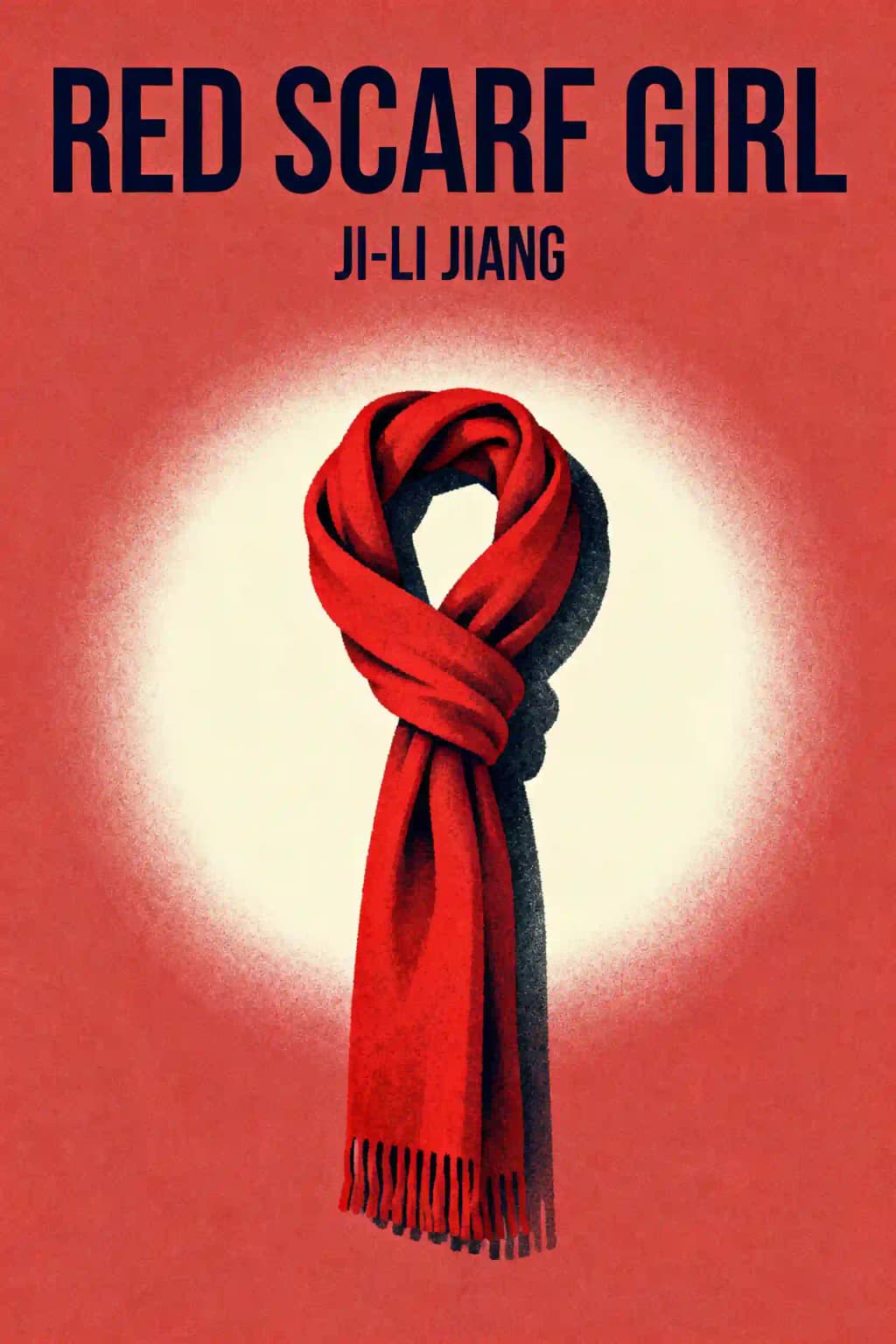
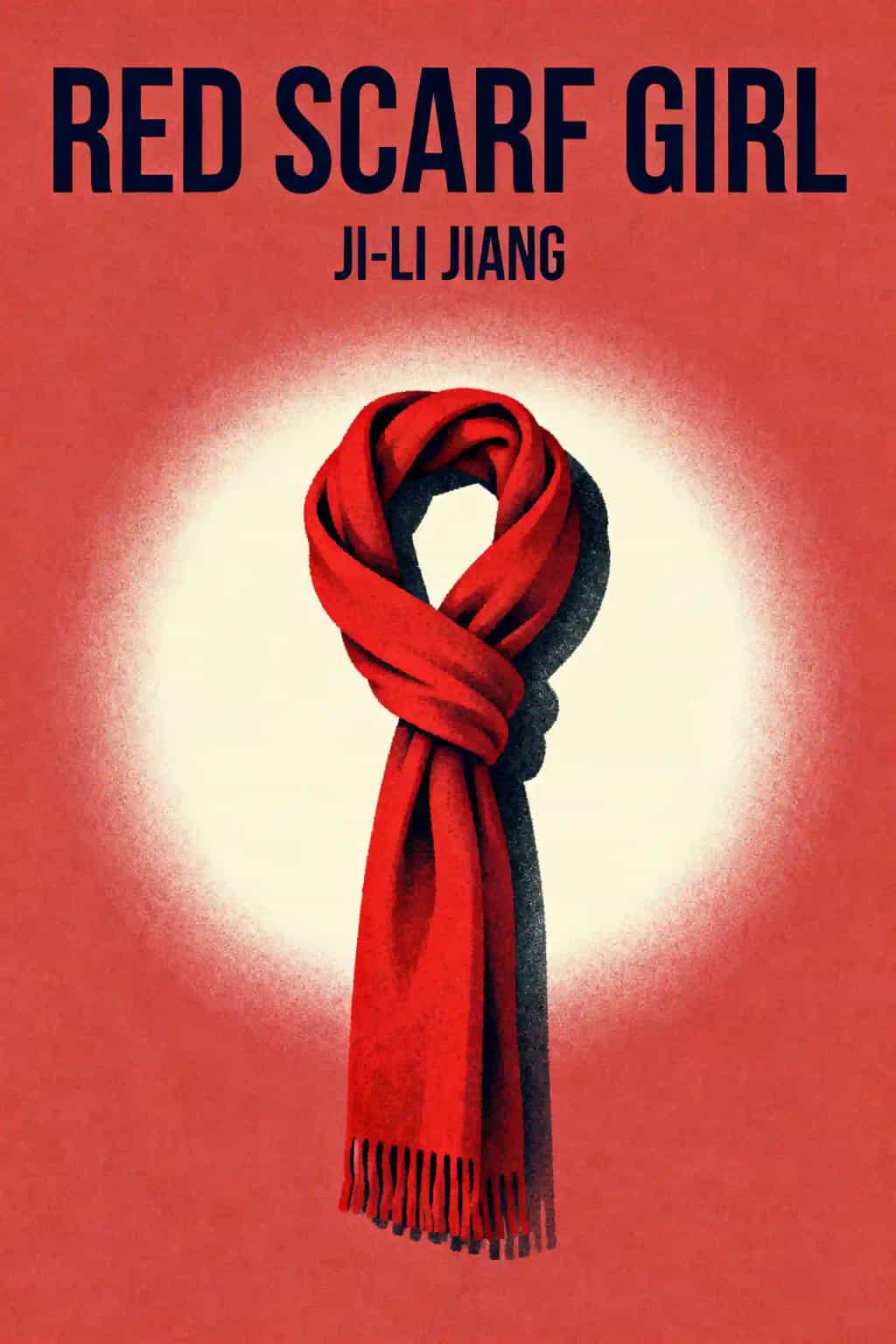
Ji-li Jiang had everything a young girl in Communist China could want. As an Outstanding Student and Excellent Young Pioneer, she excelled academically and socially, proudly wearing her red scarf as a symbol of her dedication to Chairman Mao and the revolution. Her future seemed limitless until a pivotal moment changed everything-when a beautiful Liberation Army dancer visited her school to recruit talented students for the prestigious Central Liberation Army Arts Academy.
Despite being selected for flexibility tests and showing remarkable promise, Ji-li's father forbade her from auditioning. With pain in his eyes, he revealed a family secret: their "class status" would not pass the required political background investigations. Despite her tears and protests, her father insisted it was for her protection-if she passed the audition but failed the background check, everyone would know their family had political problems.
This devastating blow was just the beginning. Ji-li began to realize that in this new revolutionary China, talent and hard work might not be enough. The family's ancestral background-something she had no control over-could determine her entire future. Her dreams of becoming a doctor, architect, or actress suddenly seemed as fragile as soap bubbles.
The rejection marked Ji-li's first encounter with the cruel reality that her identity was now defined not by her achievements but by her "class origin." This revelation shattered her understanding of merit and fairness in a society she had been taught was building equality. As she hid from classmates in shame, the once-confident girl began questioning everything she believed about her place in revolutionary China.
Kapitel 3
The Four Olds and the Rise of Revolutionary Fervor
"Destroy the Four Olds!" This battle cry of the Cultural Revolution swept through Shanghai like wildfire in the summer of 1966. Fourteen-year-old Ji-li joined crowds watching people attack the Great Prosperity Market sign, feeling victorious when it finally splintered under an ax. Walking home with friends, they suggested revolutionary replacements for traditional shop names-changing "Good Fortune Photo Studio" to "Proletarian Photo Studio" and "Peace Theater" to "Revolution Theater."
Within days, shop signs throughout the city were replaced with red banners bearing revolutionary names-even the Peace Theater became the Revolution Theater as they'd suggested! This transformation fueled a sense of revolutionary purpose among young people eager to prove their loyalty to Chairman Mao. Student inspectors began enforcing revolutionary standards for clothing, cutting open pants deemed too tight and destroying "bourgeois" pointed shoes in public humiliation rituals.
The campaign against the "Four Olds"-old ideas, culture, customs, and habits-created confusion about what exactly constituted counterrevolutionary behavior. At school, heated arguments broke out about whether using umbrella terminology or greeting teachers respectfully was now forbidden. Traditional respect for teachers, once a cornerstone of Chinese education, was suddenly considered backward thinking.
When classes were suspended indefinitely, students were directed to write big character posters (da-zi-bao) criticizing the educational system. White paper, brushes, and ink appeared in classrooms while teachers vanished. Ji-li struggled with this assignment, finding nothing truly bad to say about her teachers. Looking at what others wrote, she found bitter accusations-teachers supposedly promoting personal ambition and corrupting young minds with "invisible knives more dangerous than real weapons."
The revolutionary fervor took a darker turn when students were assigned to post da-zi-bao on "bourgeois" homes. Ji-li was horrified to find herself confronting her relative, Aunt Xi-wen, who dressed stylishly with makeup from her American sister. Though uncomfortable, Ji-li watched as classmates forced her aunt to paste accusations on her own door and read them aloud while trembling. Later, Ji-li herself became a target when someone wrote a da-zi-bao questioning her relationship with a teacher, implying impropriety where there was only fair grading and helping other students.
As the movement intensified, Ji-li witnessed how quickly revolutionary enthusiasm could transform ordinary people into enforcers of ideological purity, and how easily accusations could be weaponized against anyone-even a dedicated young Pioneer like herself.
Kapitel 4
When Blood Becomes a Curse
The Cultural Revolution's obsession with class background reached its cruel peak during the Red Successor election at Ji-li's school. Despite her academic excellence and dedication to revolutionary principles, Ji-li's candidacy was derailed when classmate Du Hai dramatically announced that her grandfather had been a landlord and her father a rightist. The class erupted in shock, and Ji-li fled home in tears.
That evening, her father took her for a walk to explain their family history. He had indeed been born into a once-wealthy family that owned land and businesses, though most wealth was lost before his birth. His father-Ji-li's grandfather-had been a businessman and landlord in Shanghai, though he was never in charge of finances and was bedridden until his death. Her father emphasized that regardless of her grandfather's status, it wasn't Ji-li's responsibility or fault.
This revelation transformed Ji-li's social standing overnight. Former friends like Du Hai and Yin Lan-lan, now wearing Red Successor armbands, confronted her about her "bourgeois lifestyle"-taking pedicabs, having a housekeeper, and being descended from a landlord. They quoted Chairman Mao about class thinking being determined by family background, suggesting Ji-li needed to be "remolded." The humiliation was complete when they forced her to stay after school for criticism, treating her like an enemy despite years of friendship.
The impact extended beyond social rejection. When teachers' assignments were invalidated by a new directive stating students would attend schools in their residential districts, Ji-li lost her place at the elite Shi-yi Junior High School. Instead, she would attend Xin-zha Junior High with the very classmates who had humiliated her.
As the Cultural Revolution intensified, Ji-li witnessed how blood ties became determinative of one's revolutionary potential. Her younger sister Ji-yun came home crying after classmates threw her schoolbag out the window and called her a "black whelp." At only ten years old, Ji-yun was suffering because of a family history that predated her birth by decades.
The cruelty of this blood-based classification system became increasingly apparent as Ji-li saw how it affected everyone around her. Aunt Xi-wen was forced to sweep streets in patched clothing, looking aged and worn. When she fell, her own son Shan-shan walked past without helping, unwilling to risk criticism for assisting someone from a black category. He had formally broken relations with his mother through a da-zi-bao after their house was searched.
This twisted logic-that revolutionary consciousness was inherited through blood rather than developed through education and practice-contradicted the very principles of Marxism that the revolution claimed to uphold. Yet it became the mechanism through which countless families were torn apart, with children encouraged to denounce parents and siblings to turn against one another in the name of ideological purity.
Kapitel 5
Home Becomes a Battlefield
As the Cultural Revolution intensified, the sanctity of home-once a refuge from the outside world-crumbled under the weight of political scrutiny. The search at Old Man Rong's house marked the beginning of this invasion, with Red Guards carrying out antiques and a mahogany four-poster bed with carved dragons. Ji-li felt uncomfortable when someone called the bed "typical capitalist" since her family had one just like it.
The atmosphere in their alley grew increasingly tense as more searches occurred. Neighbors avoided conversation, children stayed indoors, and everyone lived in constant anxiety. Only Ji-yong remained enthusiastic, sharing stories of hidden treasures found in neighbors' homes, while Six-Fingers, supposedly too ill to work at the factory, eagerly participated in every search.
These cultural upheavals forced many changes in the Jiang household. Song Po-po, their beloved housekeeper with naturally curly hair, had to be dismissed to avoid accusations of "exploiting working people." Ji-li took over marketing duties, learning to navigate crowded morning markets and eventually cooking as well. When Grandma fell ill, they transported her to the clinic in a borrowed pedicab, with Ji-yong pedaling while Ji-li and Ji-yun pushed.
Even cherished family possessions became dangerous liabilities. Dad decided to dye Grandma's beautiful red dowry trunks black to avoid them being classified as "Four Olds." As Grandma lovingly cleaned a brass handle one last time, her sadness was palpable-these trunks had traveled with her a thousand miles when she married. Meanwhile, Mom and Grandma reluctantly cut up ancestral silk gowns with dragons and phoenixes into comforter covers rather than risk being accused of hiding bourgeois treasures.
The ultimate violation came when Red Guards conducted a "search in passing" at their home. Six-Fingers led about a dozen teenage Red Guards who ransacked their apartment, throwing belongings everywhere. They confiscated Ji-li's precious stamp album, calling her a "xenophile." After they left, Ji-li found her sanitary belt exposed on the floor and felt violated-wasn't home supposed to be private? An Yi helped her clean up, and Ji-li finally understood: their bad class status meant strangers could do whatever they wanted to them.
This transformation of private space into public territory for political inspection destroyed the concept of home as sanctuary. Families were forced to destroy their own histories, burning photographs showing signs of wealth-even a cherished photo of young Dad riding a camel with Grandma in a fur coat. As Ji-li watched flames consume family memories, the ashes flushed down the toilet, she dreamed that night their house was on fire-a fitting metaphor for the destruction of domestic peace that the Cultural Revolution had wrought.
Kapitel 6
When Heroes Fall and Neighbors Turn
The Cultural Revolution's most insidious achievement was turning ordinary people against each other. Ji-li witnessed this transformation firsthand when Old Qian, a stubborn but harmless elderly neighbor, refused to lend his bicycle to Red Guards. The next day, they returned with drums and gongs, forcing the old man to kneel on a wooden washboard under the hot sun. When his wife brought him water, a Red Guard kicked the cup from her hand.
Ji-li watched from her balcony, feeling sick but reminding herself not to feel sorry for someone who opposed the Red Guards. Still, she kept checking on him throughout the afternoon until he finally fainted. The Red Guards carried him inside, then loaded their truck with his possessions-including the bicycle he had refused to lend them-leaving behind only his walking stick, the washboard, and an overturned enamel cup.
The cruelty spread like a contagion. An Yi's grandmother committed suicide after relentless persecution. Despite suicide being considered a crime against the people, Ji-li attended her memorial at the crematorium. The white walls, carts, and smoke created an oppressive atmosphere as An Yi and her mother sobbed while Grandma's body was wheeled away, the attendant warning them about showing grief for a suicide.
Even more shocking was witnessing the public humiliation of Du Hai's mother, the once-powerful Neighborhood Party Committee Secretary. Xu A-san accused her of tricking him into moving to Xinjiang where he became crippled. When Ji-li mentioned to An Yi how satisfying it was to see Du Hai's family suffering, An Yi quoted: "The wheel of fate makes a full turn every sixty years."
This wheel of fate seemed to turn with increasing speed. Xiao-cheng's father was paraded through the streets wearing a dunce cap, his arms painfully tied behind his back. Ming-ming's father allegedly hanged himself in custody, though Xiao-cheng suspected he was beaten to death first. An Yi's mother was forced to climb a factory chimney as "remolding."
The Cultural Revolution's genius lay in its ability to make neighbors suspicious of each other and turn minor personal grievances into political crimes. Six-Fingers, once an insignificant figure in the neighborhood, grew cocky with his new power as chairman of the Neighborhood Dictatorship Group. He eagerly reported on neighbors, suggested names for the Black Categories, and patrolled day and night, gaining particular satisfaction after catching a ragpicker who accidentally tore a newspaper containing Chairman Mao's picture.
This transformation of community relationships destroyed the social fabric that had sustained Chinese society for centuries. Neighbors who had once shared meals and watched each other's children now avoided eye contact. The most basic acts of human kindness-helping an elderly person who had fallen, bringing food to a sick neighbor-became politically dangerous gestures that could mark one as a sympathizer with class enemies.
Kapitel 7
A Father's Detention and a Daughter's Choice
The Cultural Revolution's most devastating impact on Ji-li's family came when her father was detained on Chinese New Year's morning-which was also Ji-li's fourteenth birthday. The detention followed mounting pressure at work meetings, where officials threatened to name him publicly if he didn't make false confessions about listening to foreign radio broadcasts.
Ji-li spent her birthday alone in the freezing kitchen, drawing "Happy Birthday" in the frost on the window as tears dripped down. Her mother lay sick with Meniere's disease, her face waxy yellow. When Ji-li accompanied her weak mother to a meeting at the district office, she overheard officials threatening her mother, saying her "position was very tenuous" and suggesting they might "take stronger actions" if she remained "stubborn like her husband." They mentioned cutting Dad's salary until he confessed and reducing Mom's pay until she cooperated.
The situation worsened when Ji-li visited the Children's Art Theater where her father worked. Though she'd always enjoyed visiting his workplace, today the theater seemed like a threatening cave. The receptionist coldly refused her request to see her father, only allowing her to leave clothes but confiscating Grandma's chili sauce. Unexpectedly, the thin, fierce-eyed foreman permitted Ji-li to see her father from a window-she glimpsed him carrying a concrete pipe, stooped but alive. Afterward, the foreman threatened her, calling her parents despicable and warning Ji-li to make a "clean break" with them or "not come to a good end."
This threat soon materialized as an ultimatum. Despite being selected to narrate at the school's Class Education Exhibition about landlord cruelty, Ji-li was summoned to the Revolutionary Committee office. There, the thin-faced foreman demanded she testify against her father at an upcoming struggle meeting, suggesting she could become "an educable child" if she broke with her "black family." When Ji-li insisted her father never spoke against Chairman Mao, they threatened to hold "study sessions" with her siblings too.
Ji-li's refusal to denounce her father cost her dearly. The next day, she arrived at the exhibition only to discover she'd been replaced due to her "political situation." She fled in shame, refusing even to take her dictionary when a classmate tried to return it.
This moment represented the Cultural Revolution's cruelest demand-forcing children to choose between political acceptance and family loyalty. By refusing to denounce her father, Ji-li chose family over revolutionary status, a decision that would define her character far more profoundly than any political label ever could.
Kapitel 8
Finding Humanity in Inhumanity
Despite the Cultural Revolution's destructive force, moments of unexpected kindness illuminated the darkness. When Ji-li's classmate Lin-lin visited with a message about a school meeting, Ji-li confided about her father's detention and found unexpected understanding. Lin-lin revealed that her own family's house had been searched too, creating a small bridge of empathy between them.
Similarly, when Ji-li forgot her Precious Red Book during Morning Benediction, quiet classmate Sun Lin-lin cleverly handed her the book's cover while keeping the pages herself, saving Ji-li from punishment. This quick thinking and kindness from someone usually shy surprised Ji-li and reminded her that humanity persisted even in the most dehumanizing circumstances.
Perhaps most touching was Song Po-po's continued loyalty to the Jiang family despite their difficult circumstances. Though officially dismissed to avoid accusations of "exploiting working people," she continued secretly helping the family-mopping stairs and bringing food despite the risks to herself. This quiet resistance to revolutionary dictates showed that genuine human connections could survive even the most determined efforts to replace them with political loyalty.
Teacher Zhang also demonstrated moral courage by selecting Ji-li to represent her class at the Class Education Exhibition, calling her an "educable child" who could overcome her family background. When Ji-li questioned this decision, Teacher Zhang told her that while "we cannot choose our families," she could choose her own path through bravery and determination. This affirmation of individual agency in a system determined to deny it gave Ji-li hope when she needed it most.
Even Chang Hong, despite her revolutionary zeal, revealed her humanity during an all-night session preparing a millet portrait of Chairman Mao. When she and Ji-li were alone in the early morning hours, Chang Hong shared her brother's epilepsy and likely short life expectancy, yet insisted on prioritizing revolutionary duties over personal matters. This glimpse into her classmate's personal struggles reminded Ji-li that even the most dedicated revolutionaries carried private burdens.
These moments of connection amid chaos sustained Ji-li through her darkest hours. When her family's situation reached its nadir-with her father detained, her mother ill, and her grandmother forced to sweep the streets-Ji-li contemplated running away or even ending her life. Her mother asked her to promise to care for her siblings if anything happened, and Ji-li realized she had already made this promise long ago-during their hiding in the park, when refusing to testify against her father, and when hiding an incriminating letter.
Ji-li resolved that her family was "too precious to forget, and too rare to replace." Watching her grandmother from the window, she no longer worried about Grandma being a landlord's wife-she was simply her grandmother. Ji-li's life was now defined not by her former goals of being a revolutionary leader or Red Guard, but by her responsibilities to her family. She vowed to hide her tears and fear for their sake, finding strength in love rather than ideology.
Kapitel 9
The Long Shadow of Revolution
"We were all brainwashed," Ji-li explains in the epilogue, reflecting on why she didn't hate Chairman Mao despite her suffering. Mao controlled everything they read, heard, and learned, and they believed him completely. Only after Mao's death in 1976 did people realize the Cultural Revolution was merely a power struggle disguised as ideological purification.
This realization taught Ji-li the frightening lesson that without a sound legal system, even one person can control an entire country. The Cultural Revolution's legacy extended far beyond the immediate suffering it caused-it created a "lost generation" whose education was disrupted and whose faith in institutions was permanently damaged.
Ji-li's contemporaries mostly spent years in "reeducation" in the countryside before returning with few skills or beliefs. Chang Hong worked on a farm near Mongolia, An Yi worked in a factory, Bai Shan became a business manager, and Lin-lin became a doctor. Their collective experience represented millions of young Chinese whose potential was diverted or destroyed by political chaos.
Eventually, Ji-li's family's situation improved-her father returned home though still labeled a landlord, and in 1980 was finally cleared and appointed Vice President of the Children's Art Theater. Ji-li moved to America in 1984, seeking freedom to think and speak freely. Despite starting over with no money, friends, or English skills, she established herself and founded East West Exchange to promote cultural understanding between China and America.
The Cultural Revolution's most enduring impact may be psychological-the trauma of betrayal, the loss of trust in institutions, and the realization that society's moral compass can be completely inverted overnight. Ji-li's journey from devoted Young Pioneer to disillusioned teenager to cultural ambassador represents both personal resilience and historical reconciliation.
Her memoir serves as both warning and testament-a warning about the dangers of ideological extremism and personality cults, and a testament to the human capacity to maintain dignity and compassion even under the most dehumanizing conditions. The red scarf that once symbolized revolutionary pride becomes, in retrospect, a blindfold that prevented an entire generation from seeing the manipulation behind the movement that claimed their youth.
Kapitel 10
The Enduring Power of Family Bonds
In the Cultural Revolution's darkest moments, when political loyalty was demanded above all else, Ji-li discovered that family bonds proved stronger than revolutionary fervor. When her mother suggested letting her aunt adopt Ji-yun to protect her from political persecution, Ji-li vehemently refused, realizing that their family unity was "too precious to forget, and too rare to replace."
This epiphany came after witnessing how easily political pressure could sever family ties. She had seen Shan-shan formally break relations with his mother Aunt Xi-wen through a da-zi-bao after their house was searched. She had watched him walk past without helping when his mother fell in the street, unwilling to risk criticism for assisting someone from a black category. The regime had created a system where children were rewarded for betraying parents and siblings encouraged to denounce each other.
Yet within this system designed to atomize society and replace family loyalty with political devotion, many families like Ji-li's found the courage to remain united. When officials demanded Ji-li testify against her father at a struggle meeting, suggesting she could become "an educable child" if she broke with her "black family," she refused despite the personal cost. When her mother and Uncle Tian drafted a letter to the Municipal Party Committee reporting abuses at her father's theater, they risked everything to defend him.
Even as their material circumstances deteriorated-straw mats for beds, a packing crate for storage, a makeshift table-their emotional bonds strengthened. Ji-li took on adult responsibilities, shopping, cooking, and caring for her siblings while her mother was ill and her father detained. Grandma continued providing emotional support despite being forced to sweep the streets as punishment for being a "landlord's wife."
The Cultural Revolution's failure to break these family bonds represents its ultimate defeat. For all its power to destroy careers, confiscate property, and control public discourse, it could not penetrate the most fundamental human connection-the love between parents and children, siblings and grandparents. In choosing family over revolutionary status, Ji-li and countless others like her preserved something more precious than political approval: their humanity.
This preservation of family bonds despite overwhelming pressure became the foundation for China's eventual recovery from the Cultural Revolution. When political winds shifted after Mao's death, these families-damaged but intact-provided the continuity and support necessary for healing. Ji-li's father was eventually cleared and appointed Vice President of the Children's Art Theater. Ji-li herself found the courage to start a new life in America and build bridges between cultures.
The red scarf that once symbolized her devotion to Chairman Mao ultimately proved less significant than the invisible threads connecting her to her family-threads that bent under pressure but never broke, even in revolution's fiercest storm.