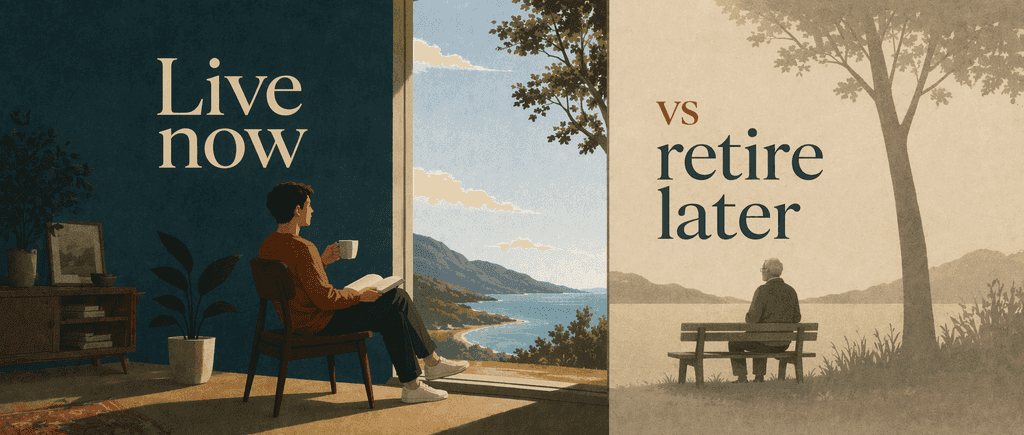
In "Radiant Rebellion," activist and lawyer Karen Walrond dismantles aging myths, offering a revolutionary toolkit for embracing your later years with defiance and joy. What if getting older actually makes you happier? Anti-ageism advocate Ashton Applewhite thinks so.
Karen Walrond is the award-winning author of Radiant Rebellion: Reclaim Aging, Practice Joy, and Raise a Little Hell and a certified leadership coach specializing in positive psychology and activism.
Blending self-help wisdom with memoir, her work challenges ageist narratives by exploring themes of purpose, adventure, and joyful resilience—drawing from her background as an attorney, global engagement director for Brené Brown’s education group, and trained Wholebeing Institute coach.
A TEDx speaker and host of The Make Light Show podcast, Walrond’s insights have been featured on PBS, CNN, and The Oprah Winfrey Show. Her prior book, The Lightmaker’s Manifesto, empowers readers to advocate for change without sacrificing well-being.
Radiant Rebellion earned the 2024 Nautilus Book Award Silver Medal and serves as a rallying cry for redefining aging through actionable journal prompts and bold experiments.
Radiant Rebellion challenges cultural narratives around aging, framing it as a time of growth, joy, and purpose. Karen Walrond combines personal stories, interviews with experts like Brené Brown, and actionable experiments (e.g., embracing gray hair, health revamps) to inspire readers to reject ageist stereotypes and embrace aging as a season of expanded potential. The book won the 2024 Nautilus Book Award and an Audiofile Earphones Award.
This book is ideal for anyone questioning societal views on aging, particularly midlife readers navigating transitions like milestone birthdays or empty nests. It’s also valuable for advocates of anti-ageism, self-care enthusiasts, and fans of Walrond’s previous works (The Lightmaker’s Manifesto).
Yes—readers praise its empowering tone, practical exercises, and blend of research and storytelling. Reviews highlight its ability to reframe aging as a “radiant rebellion” against decline, with actionable steps for cultivating joy and purpose.
Walrond debunks myths by exploring aging through health, spirituality, and adventure. She critiques beauty standards (e.g., encouraging natural gray hair) and interviews activists like Ashton Applewhite to expose systemic biases. The book also includes reflection questions to help readers identify personal ageist beliefs.
While direct quotes aren’t provided in search results, themes include:
Unlike clinical guides, Walrond’s approach blends memoir, research, and interactive exercises. It’s often compared to This Chair Rocks by Ashton Applewhite but focuses more on personal empowerment than systemic critique.
Yes—Walrond explores mindfulness through practices like silent retreats and interviews with clergy. She frames spirituality as a tool for finding meaning in aging, rather than adhering to specific doctrines.
Some reviewers note the tone skews optimistic, with less focus on structural barriers to aging well. However, most praise its balance of personal anecdotes and research.
With aging populations globally, the book’s message aligns with movements for age-inclusive workplaces and healthcare. Its emphasis on joy and resilience resonates amid societal challenges.
Karen Walrond is an award-winning author, attorney, and leadership coach trained in positive psychology. She’s a Certified Dare To Lead™ Facilitator, TEDx speaker, and board member of the Houston Coalition Against Hate.
Yes—the book includes reflection questions and activities, making it ideal for book clubs. Topics range from self-compassion exercises to intergenerational dialogue prompts.
Erlebe das Buch durch die Stimme des Autors
Verwandle Wissen in fesselnde, beispielreiche Erkenntnisse
Erfasse Schlüsselideen blitzschnell für effektives Lernen
Genieße das Buch auf unterhaltsame und ansprechende Weise
Aging [is] an adventure rather than a decline.
Ageism [is] an 'insidious scourge'.
Aging is simply living.
Food is about nourishing wellness.
Beauty standards are fickle.
Zerlegen Sie die Kernideen von Radiant Rebellion in leicht verständliche Punkte, um zu verstehen, wie innovative Teams kreieren, zusammenarbeiten und wachsen.
Erleben Sie Radiant Rebellion durch lebhafte Erzählungen, die Innovationslektionen in unvergessliche und anwendbare Momente verwandeln.
Fragen Sie alles, wählen Sie Ihren Lernstil und gestalten Sie Erkenntnisse, die wirklich zu Ihnen passen.

Von Columbia University Alumni in San Francisco entwickelt
"Instead of endless scrolling, I just hit play on BeFreed. It saves me so much time."
"I never knew where to start with nonfiction—BeFreed’s book lists turned into podcasts gave me a clear path."
"Perfect balance between learning and entertainment. Finished ‘Thinking, Fast and Slow’ on my commute this week."
"Crazy how much I learned while walking the dog. BeFreed = small habits → big gains."
"Reading used to feel like a chore. Now it’s just part of my lifestyle."
"Feels effortless compared to reading. I’ve finished 6 books this month already."
"BeFreed turned my guilty doomscrolling into something that feels productive and inspiring."
"BeFreed turned my commute into learning time. 20-min podcasts are perfect for finishing books I never had time for."
"BeFreed replaced my podcast queue. Imagine Spotify for books — that’s it. 🙌"
"It is great for me to learn something from the book without reading it."
"The themed book list podcasts help me connect ideas across authors—like a guided audio journey."
"Makes me feel smarter every time before going to work"
Von Columbia University Alumni in San Francisco entwickelt

Erhalten Sie die Radiant Rebellion-Zusammenfassung als kostenloses PDF oder EPUB. Drucken Sie es aus oder lesen Sie es jederzeit offline.
Have you ever looked in the mirror and barely recognized the person staring back? Not because of wrinkles or gray hair, but because something essential seems missing? That's exactly what happened when Karen Walrond stood in her newly rebuilt bathroom after Hurricane Harvey destroyed her Houston home in 2018. Exhausted and depleted, she initially blamed age for her diminished reflection. Then came the revelation: it wasn't age stealing her vitality-it was stress. This moment sparked a quiet revolution, leading her to commit to small daily acts of self-care: meditation, movement, water, gratitude. A year later, a friend immediately noticed the transformation, perfectly capturing what had occurred: "Your pilot light went out... And now it's back." This simple observation reveals a profound truth about aging-what we attribute to growing older is often something entirely different, something we actually have the power to change.
Half the world holds ageist attitudes, per the World Health Organization. We've internalized aging messages so deeply we don't recognize them. Complimenting someone for looking "great for their age" reveals our assumption that looking good and being older are incompatible. A knee twinge triggers "I'm getting old" rather than considering other causes. Ashton Applewhite offers a radical reframe: aging is simply living - we've been aging since birth. The real issues aren't age but invisibility, incompetence, and irrelevance, none age-specific. Dr. Becca Levy's research confirms our aging beliefs become self-fulfilling prophecies, affecting memory and longevity. Those with positive aging perceptions live seven and a half years longer. Mike Gebremedhin, who grew up in East Africa, witnessed elders revered rather than dismissed. In his culture, aging brings increasing respect and wisdom, not diminishing value. Our Western productivity obsession created an aging crisis absent in many cultures.
When Walrond described her changing body-stubborn weight gain, night sweats, joint discomfort-her nurse practitioner dismissed it: "Welcome to getting older. It happens." This casual brushoff reflects a broader problem in how we approach aging bodies. Rather than obsessing over weight loss or fighting natural changes, what if we shifted to nurturing wellness? Working with neurologist Reeta Achari revealed something unexpected: despite insisting her diet was healthy, lab work showed Walrond needed eight vitamin supplements, with concerningly high cholesterol and blood sugar. But Reeta's approach wasn't restrictive-it was expansive. She suggested specific supplements, daily yogurt for gut health, and accompanied Walrond to farmers' markets to select nutrient-rich foods. For movement, Walrond rediscovered jumping rope and Hula-Hooping-rhythmic activities that improved her mood through their cadence. After six months, her lab results improved dramatically, and she felt "bien dans ma peau"-well in her skin. The crucial shift came from Reeta's Ayurvedic perspective: food isn't "medicine" (which implies sickness) but nourishment that brings life energy into the body. This mirrors positive psychology principles-nurturing the healthy aspects of ourselves rather than fixating on what needs fixing.
At eleven, newly moved to Texas from Trinidad, Walrond secretly bought makeup with her allowance to fit in. Her mother's instructions revealed internalized racism: minimize your big lips, make your broad nose appear smaller. She continued trying to minimize her features for nearly two decades until a friend complimented her lips. Beauty standards are fickle and often racist, shaped by culture and fads lasting about a decade. From Rubenesque figures to waifishly thin models to curve-celebrating influencers, "ideal beauty" remains ideal precisely because it doesn't exist, as Naomi Wolf noted. At fifty-three, Walrond questioned her habit of dyeing her hair every six weeks-a relatively new practice that beauty companies marketed by exploiting aging anxiety. When she stopped dyeing and cut her hair short, revealing her salt-and-pepper natural color, she feared people would think she'd "let herself go." Instead, reactions were surprisingly positive. She'd given herself permission to define beauty on her own terms-wearing lipstick over her entire lips, stopping attempts to alter her nose shape, even ceasing chemical hair straighteners she'd been told were necessary to appear "professional." In a world that profits from our insecurities, choosing to embrace your natural self becomes a radical act.
In Avignon, France, Walrond met Miguel, a Peruvian craftsman whose impromptu celebration with friends-complete with wine, guitar music, and storytelling-demonstrated our capacity for genuine connection across differences. Former Surgeon General Dr. Vivek Murthy reveals that chronic loneliness poses health risks equivalent to smoking fifteen cigarettes daily, significantly increasing addiction, anxiety, and depression. Through conversations with Brene Brown, Walrond explores how true belonging requires embracing our authentic selves rather than modifying behavior for acceptance. Her father exemplifies this through his weekly "limes"-traditional Trinidadian gatherings where lifelong friends share meals and wisdom. Practical strategies for combating isolation include dedicating fifteen minutes daily to genuine interaction, eliminating digital distractions during social time, embracing solitude for self-awareness, and engaging in service activities. Research confirms that expressing genuine gratitude enhances happiness, strengthens relationships, improves sleep and cardiovascular health, and reduces stress hormones by 23%.
Alfred Nobel read his premature obituary labeling him a "merchant of death" for inventing dynamite. This stark confrontation prompted him to establish the Nobel Prizes, fundamentally reshaping his legacy. We can redefine our life's purpose at any age. After fourteen years in an unfulfilling legal career, Walrond made her most rebellious decision: quitting without another job to pursue writing, photography, and speaking. Though earning less initially, she was finally doing meaningful work that energized her. Viktor Frankl's insights from Auschwitz showed that meaning isn't just beneficial-it's essential for survival. Through conversations with accomplished individuals like journalist Linda Lorelle and activist Tarana Burke, Walrond explores how purpose develops through clarifying values, following curiosity, and integrating life lessons. Their stories reveal how callings evolve through unexpected challenges yet return us to our authentic selves. Following her friend's philosophy that "the first half of your life is biographical, and the second half is autobiographical," Walrond crafted a new mission: to convince the skeptical of their uncommon light and model living an expansive life through growth, play, and adventure.
A terrifying scuba dive transformed into transcendent joy when playful sea lions appeared-proof that stepping outside comfort zones unlocks profound presence. Play, any joyful act where you forget time and results, activates creativity and releases dopamine, oxytocin, serotonin, and endorphins. Michelle Fishburne exemplifies this-after losing her hearing, her job, becoming an empty-nester, and facing homelessness in 2020, she created "Americans of the Pandemic," interviewing and photographing people nationwide, leading to media coverage and a book deal. Daniel Pink's research reveals that as we age, we regret inaction more than action-making a compelling case for following curiosity toward seemingly impossible dreams. Fishburne's kaleidoscope metaphor beautifully captures positive aging-with slight perspective shifts, we discover "new, beautiful iterations of ourselves" at any age. In a world capitalizing on age-related fears, choosing joy becomes radical resistance. Your pilot light doesn't have to dim. Keep it burning-not by fighting age, but by embracing the freedom, wisdom, and authenticity that only time can bring.