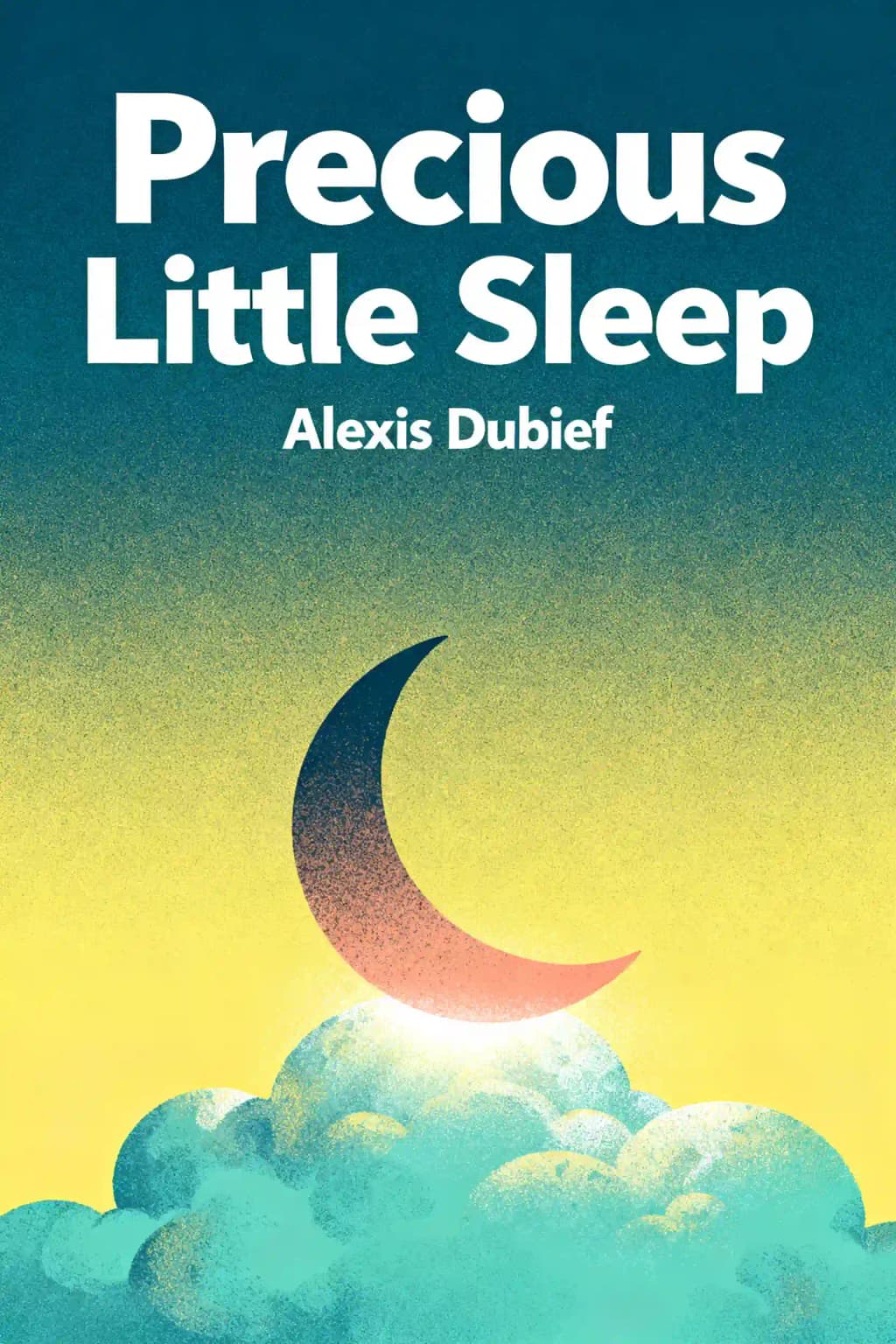
"Precious Little Sleep" revolutionized baby sleep training with humor and science-backed strategies. Parents rave it transformed "velcro babies" into 12-hour sleepers. What's the counterintuitive technique that made this 2017 guide a parenting lifesaver when conventional wisdom fails?
Alexis Dubief, author of the bestselling parenting guide Precious Little Sleep: The Complete Baby Sleep Guide for Modern Parents, is an internationally renowned infant sleep expert and founder of the popular parenting resource Precious Little Sleep. Combining scientific research with practical strategies, her work empowers parents to solve sleep challenges for babies and young children.
A former tech professional with a Master of Finance and MBA, Dubief pivoted to sleep coaching after her own struggles with her children’s sleep led her to analyze decades of sleep science and developmental research.
She launched the Precious Little Sleep blog in 2011, which now attracts 4 million annual visitors, along with a top-rated parenting podcast and a 40,000-member online support community. Known for her humor and evidence-based approach, Dubief’s methods are endorsed by pediatricians and featured in media outlets like The Washington Post and Parents magazine.
Precious Little Sleep has sold over 100,000 copies, ranked #16 among Amazon’s 9,000+ sleep-related titles, and is widely praised for its actionable, judgment-free guidance. Dubief resides near Burlington, Vermont, where she advocates for parental well-being as a cornerstone of child sleep health.
Precious Little Sleep provides evidence-based strategies to help parents teach babies and toddlers healthy sleep habits. It focuses on understanding why children struggle with sleep, offering flexible methods like the SWAP (Sleep With Assistance Plan) and SLIP (Sleep Learning Independence Plan) to address night wakings, nap challenges, and sleep associations. The book blends scientific research with humor, emphasizing safety and adaptability to each child’s needs.
This book is ideal for parents of infants and toddlers experiencing sleep challenges, particularly those seeking alternatives to rigid sleep-training methods. It’s also valuable for caregivers interested in safe sleep practices, understanding sleep science, or adapting strategies to high-needs babies. First-time parents and seasoned caregivers alike benefit from its practical, non-judgmental approach.
Yes—it’s praised for its actionable advice, empathetic tone, and humor. Parents appreciate its realistic solutions for night feedings, nap transitions, and fostering independent sleep. Reviews highlight its effectiveness in improving sleep without strict routines, making it a top choice for families prioritizing flexibility.
Both methods prioritize safety and customization to a child’s temperament.
The book guides parents on when and how to wean night feeds based on a baby’s age, weight, and developmental readiness. It provides step-by-step plans to reduce feedings gradually while ensuring nutritional needs are met, helping families distinguish between hunger and habitual waking.
Yes. The book recommends optimizing sleep environments (darkness, white noise), tracking wake windows to prevent overtiredness, and using techniques like “nap extension” to gradually lengthen rest periods. It also addresses developmental shifts affecting naps between 4-12 months.
These quotes underscore the book’s philosophy of balancing compassion with actionable change.
Unlike rigid programs, Dubief’s approach combines evidence-based flexibility with humor, avoiding one-size-fits-all solutions. It’s often contrasted with Ferber or Weissbluth methods for its gentler, more adaptable techniques and emphasis on parental intuition.
These guidelines align with AAP recommendations to minimize SIDS risks.
Yes. The book extends its strategies to older children, addressing challenges like bedtime resistance, night terrors, and transitioning to toddler beds. Solutions focus on maintaining consistent routines and adjusting methods as kids grow.
Some parents find the gradual methods time-intensive or struggle with SLIP’s initial crying phases. However, most critics praise its balance of empathy and effectiveness, noting that alternatives are often more rigid.
Alexis Dubief is a parenting blogger and sleep consultant who developed her expertise through extensive research and hands-on work with families. Her popular website and support community complement the book, offering ongoing resources for sleep-deprived parents.
Erlebe das Buch durch die Stimme des Autors
Verwandle Wissen in fesselnde, beispielreiche Erkenntnisse
Erfasse Schlüsselideen blitzschnell für effektives Lernen
Genieße das Buch auf unterhaltsame und ansprechende Weise
Sleep is a learned skill.
Babies don't outgrow sleep issues; they grow into them.
Sleep Fairies are unreliable-it's all on you.
Sometimes tears are necessary for sleep progress.
Zerlegen Sie die Kernideen von Precious Little Sleep in leicht verständliche Punkte, um zu verstehen, wie innovative Teams kreieren, zusammenarbeiten und wachsen.
Destillieren Sie Precious Little Sleep in schnelle Gedächtnisstützen, die die Schlüsselprinzipien von Offenheit, Teamarbeit und kreativer Resilienz hervorheben.

Erleben Sie Precious Little Sleep durch lebhafte Erzählungen, die Innovationslektionen in unvergessliche und anwendbare Momente verwandeln.
Fragen Sie alles, wählen Sie die Stimme und erschaffen Sie gemeinsam Erkenntnisse, die wirklich bei Ihnen ankommen.

Von Columbia University Alumni in San Francisco entwickelt
"Instead of endless scrolling, I just hit play on BeFreed. It saves me so much time."
"I never knew where to start with nonfiction—BeFreed’s book lists turned into podcasts gave me a clear path."
"Perfect balance between learning and entertainment. Finished ‘Thinking, Fast and Slow’ on my commute this week."
"Crazy how much I learned while walking the dog. BeFreed = small habits → big gains."
"Reading used to feel like a chore. Now it’s just part of my lifestyle."
"Feels effortless compared to reading. I’ve finished 6 books this month already."
"BeFreed turned my guilty doomscrolling into something that feels productive and inspiring."
"BeFreed turned my commute into learning time. 20-min podcasts are perfect for finishing books I never had time for."
"BeFreed replaced my podcast queue. Imagine Spotify for books — that’s it. 🙌"
"It is great for me to learn something from the book without reading it."
"The themed book list podcasts help me connect ideas across authors—like a guided audio journey."
"Makes me feel smarter every time before going to work"
Von Columbia University Alumni in San Francisco entwickelt

Erhalten Sie die Precious Little Sleep-Zusammenfassung als kostenloses PDF oder EPUB. Drucken Sie es aus oder lesen Sie es jederzeit offline.
You've probably spent more time thinking about air conditioning than breathing itself. That changes the moment you can't catch your breath. Sleep works exactly the same way-until you're running on fumes with a baby who treats 3 a.m. like party time. Here's what nobody tells you: babies don't automatically drift off when exhausted. They need teaching, and what works beautifully in those hazy newborn weeks can turn into a nightmare by month four. This isn't like pulling an all-nighter in college where you crash hard the next day. This is relentless, grinding exhaustion layered with guilt that you're somehow breaking your child. The stakes feel impossibly high because they are-you're not just tired, you're questioning everything about your ability to parent. Let's start with reality: some babies are sleep unicorns. About 40% naturally figure out sleep with minimal help. If you're reading this, your baby probably isn't one of them. The other 60% range from mildly challenging to full-blown sleep terrorists who wake every 45 minutes and treat your arms like the only acceptable sleeping surface. These babies turn brushing your teeth into a legitimate daily victory. Here's the foundation you need before anything else makes sense. First, stop beating yourself up-you're exactly the parent your child needs, even when it feels like you're failing spectacularly. Second, you and your partner will argue about sleep. Forgive each other now. Third, babies don't magically outgrow sleep problems; they grow into bigger, louder versions of them. Fourth, sometimes babies don't sleep simply because they're babies, and that's maddening but true. Safety comes before everything else. SIDS-Sudden Infant Death Syndrome-kills about 1 in 2,000 babies, peaking between 2-3 months. Always place babies on their backs on firm surfaces. No blankets, no pillows, no soft toys. Keep the room cool. Consider room-sharing for six months. These rules aren't suggestions-they're the difference between safe sleep and tragedy.