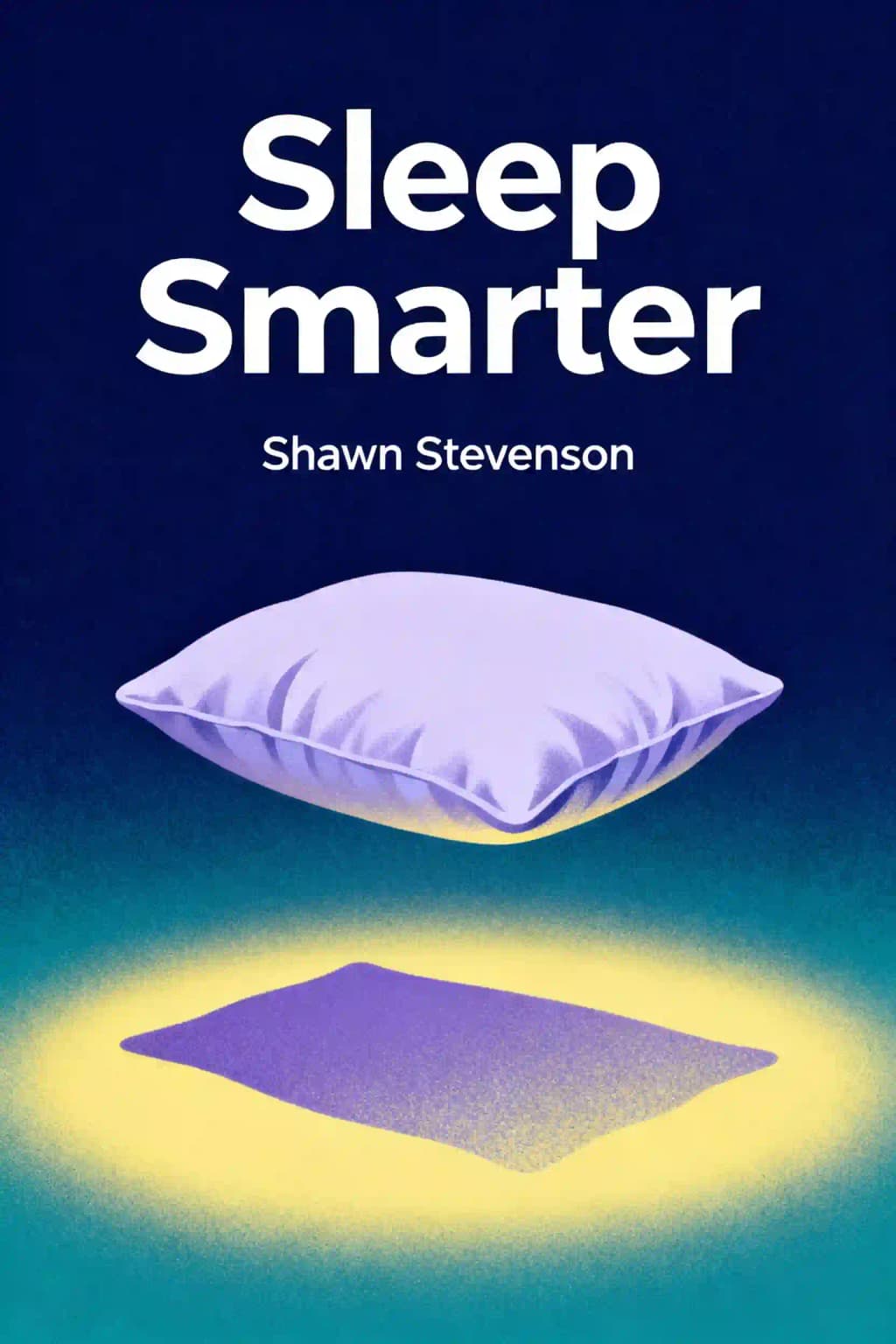
Transform your life by mastering sleep - the missing key to optimal health. "Sleep Smarter" offers 21 science-backed strategies from Shawn Stevenson, who healed his degenerative disease through better rest. What if eight quality hours could revolutionize your productivity, weight, and mental clarity?
Shawn Stevenson, bestselling author of Sleep Smarter and a leading nutrition and wellness expert, combines cutting-edge research with personal transformation in his work.
A former clinical nutritionist and founder of Advanced Integrative Health Alliance, Stevenson’s expertise stems from his own triumph over a degenerative spinal diagnosis in his twenties, which he reversed through lifestyle changes.
His #1-rated The Model Health Show podcast, a top fitness and nutrition resource, reaches millions globally, amplifying his mission to democratize health education. Stevenson’s follow-up bestseller, Eat Smarter, expands on his science-backed approach to holistic wellness.
Sleep Smarter, initially self-published before becoming an international phenomenon, has been translated into over 20 languages, cementing Stevenson’s status as a trusted voice in sleep optimization and preventive health strategies.
Sleep Smarter offers 21 science-backed strategies to improve sleep quality, health, and productivity. It combines practical tips like optimizing light exposure, sleep environments, and stress management with a structured 14-Day Sleep Makeover plan. The book emphasizes sleep’s role in weight management, disease prevention, and mental clarity, drawing on Shawn Stevenson’s personal health journey.
This book is ideal for chronic insomniacs, health enthusiasts, and professionals seeking energy boosts. It’s particularly valuable for those wanting actionable steps to fix sleep hygiene, regulate circadian rhythms, or understand sleep’s impact on fitness and cognitive performance.
Yes—readers praise its blend of scientific research (e.g., sleep’s role in hormone regulation) and practical frameworks like temperature optimization and “sleep sanctuary” creation. The 14-Day Makeover provides clear, incremental steps backed by Stevenson’s expertise as a health podcaster and wellness advocate.
This step-by-step plan includes strategies like morning sunlight exposure, evening screen-time reduction, and bedroom temperature adjustments (ideal: 65°F–68°F). It also covers stress-reduction exercises and sleep-supportive nutrition, helping readers reset their sleep patterns sustainably.
Stevenson explains how morning sunlight regulates cortisol/melatonin cycles, while evening blue light disrupts them. Solutions include using amber-tinted glasses post-sunset and blackout curtains—methods proven to enhance sleep onset and depth.
The book advises against late-night eating and suggests magnesium-rich foods (e.g., spinach, almonds) and herbal teas. It also highlights sleep-enhancing supplements like magnesium glycinate and adaptogens, tailored to improve sleep architecture.
While both cite sleep’s health impacts, Sleep Smarter focuses more on actionable lifestyle tweaks versus Why We Sleep’s broader scientific exploration. Stevenson’s 14-Day Plan offers a structured approach missing in Walker’s work, making it better for immediate implementation.
Some readers note overlaps with general sleep hygiene advice, though Stevenson’s personal anecdotes and podcast-style tone add relatability. A few find the 21 strategies overwhelming initially, but the phased 14-Day Makeover mitigates this.
Notable lines include:
These emphasize sleep’s transformative power and environment’s role in quality rest.
The book links poor sleep to leptin/ghrelin imbalances that increase hunger. By improving sleep duration and quality, readers can stabilize appetite hormones, reduce late-night cravings, and enhance workout recovery for fat loss.
Stevenson advises using devices like Oura Ring or WHOOP to monitor sleep stages but cautions against obsessive data-checking. He prioritizes subjective refreshment over metrics, aligning with holistic health principles.
Techniques include evening journaling to “download worries,” breathwork (4-7-8 method), and magnesium supplementation. These reduce cortisol spikes, making it easier to fall and stay asleep.
Erlebe das Buch durch die Stimme des Autors
Verwandle Wissen in fesselnde, beispielreiche Erkenntnisse
Erfasse Schlüsselideen blitzschnell für effektives Lernen
Genieße das Buch auf unterhaltsame und ansprechende Weise
We are in the midst of a sleep deprivation crisis.
Sleep isn't an obstacle to productivity-it's the foundation of it.
By failing to prepare, you are preparing to fail.
The most successful professionals treat sleep as a strategic advantage rather than a luxury.
Zerlegen Sie die Kernideen von Sleep Smarter in leicht verständliche Punkte, um zu verstehen, wie innovative Teams kreieren, zusammenarbeiten und wachsen.
Erleben Sie Sleep Smarter durch lebhafte Erzählungen, die Innovationslektionen in unvergessliche und anwendbare Momente verwandeln.
Fragen Sie alles, wählen Sie Ihren Lernstil und gestalten Sie Erkenntnisse, die wirklich zu Ihnen passen.

Von Columbia University Alumni in San Francisco entwickelt
"Instead of endless scrolling, I just hit play on BeFreed. It saves me so much time."
"I never knew where to start with nonfiction—BeFreed’s book lists turned into podcasts gave me a clear path."
"Perfect balance between learning and entertainment. Finished ‘Thinking, Fast and Slow’ on my commute this week."
"Crazy how much I learned while walking the dog. BeFreed = small habits → big gains."
"Reading used to feel like a chore. Now it’s just part of my lifestyle."
"Feels effortless compared to reading. I’ve finished 6 books this month already."
"BeFreed turned my guilty doomscrolling into something that feels productive and inspiring."
"BeFreed turned my commute into learning time. 20-min podcasts are perfect for finishing books I never had time for."
"BeFreed replaced my podcast queue. Imagine Spotify for books — that’s it. 🙌"
"It is great for me to learn something from the book without reading it."
"The themed book list podcasts help me connect ideas across authors—like a guided audio journey."
"Makes me feel smarter every time before going to work"
Von Columbia University Alumni in San Francisco entwickelt

Erhalten Sie die Sleep Smarter-Zusammenfassung als kostenloses PDF oder EPUB. Drucken Sie es aus oder lesen Sie es jederzeit offline.
What if the single most powerful health intervention wasn't a pill, a diet, or an exercise program? What if it was something you're already doing every night - just doing it wrong? Sleep deprivation has become so normalized in modern culture that we've forgotten what it feels like to be truly rested. We wear our minimal sleep hours like badges of honor, yet this widespread exhaustion is quietly sabotaging our health, relationships, and potential in ways we barely recognize. Your brain runs on glucose, and when you skimp on sleep, you're essentially putting yourself on a cognitive starvation diet. After just one sleepless night, glucose reaching your brain drops six percent. But here's the kicker - this reduction isn't evenly distributed. Your prefrontal cortex, the sophisticated command center responsible for decision-making and emotional regulation, loses a staggering 12-14 percent of its fuel supply. You're essentially being hijacked by a significantly dumber version of yourself. The Lancet published research showing sleep-deprived people take 14 percent longer to complete tasks and make 20 percent more errors. In practical terms? That important presentation takes longer and contains more mistakes. That crucial conversation with your partner goes sideways because your emotional regulation is compromised. Driving after 18 hours awake is equivalent to having a blood alcohol content of .05 percent - after 24 hours, you're legally drunk. One night of poor sleep makes you as insulin resistant as a type-2 diabetic, accelerating aging and fat storage. Elite performers understand this: LeBron James sleeps 12 hours during training, Roger Federer gets 11-12. They treat sleep as a strategic advantage, not a luxury.
Camping trips improve sleep by aligning with your biology. Your suprachiasmatic nucleus-a cluster of hypothalamus cells-operates as your master clock on a 24-hour rhythm. Morning sunlight between 6:00 and 8:30 a.m. resets this clock, triggering hormones that prepare you for sleep 14-16 hours later. Office workers without windows receive 173 percent less natural light and sleep 46 minutes less than windowed colleagues. Just 10-15 minutes of morning sun transforms sleep quality. Evening device light devastates sleep. Blue spectrum light from screens mimics midday sun, triggering cortisol while suppressing melatonin. Two hours of maximum-brightness iPad use suppressed melatonin by 22 percent. Chronic disruption contributes to cancer, diabetes, heart disease, and obesity. The solution? A digital sunset-turn off screens 90 minutes before bed. Read physical books or have face-to-face conversations instead. When screens are unavoidable, use blue light blocking apps like f.lux or amber-tinted glasses. These are Band-Aids-complete digital disconnect remains optimal.
That afternoon coffee sabotages your sleep invisibly. Caffeine consumed six hours before bed can steal a full hour of sleep - yet you won't notice subjectively. This creates a vicious cycle: poor sleep increases caffeine consumption, which worsens sleep further. Caffeine blocks adenosine receptors, preventing your brain's "I'm tired" signal while adenosine continues accumulating. With a half-life of 5-8 hours, coffee at 3:00 p.m. remains 25 percent active at midnight. Establish a caffeine curfew - no caffeine after 2:00 p.m. for most people. Temperature is equally crucial yet overlooked. The ideal bedroom temperature is 60-68 degrees Fahrenheit - cooler than most maintain. A warm bath 90-120 minutes before bedtime creates a pronounced temperature drop that triggers sleep initiation. Keep rooms cool but wear socks if extremities get cold. You're recreating the natural temperature drops our ancestors experienced, working with your body's programming rather than against it.
The hours between 10 p.m. and 2 a.m. provide maximum hormonal secretions and recovery. Around 10 p.m., your body increases metabolic energy for repair, with heightened antioxidant hormone production protecting DNA and improving brain function. If awake, you experience this as a "second wind" - feeling suddenly alert despite earlier fatigue. By staying up, you divert resources meant for internal repair. Aim for bed within a few hours of darkness falling, typically 9-11 p.m. Get sunlight exposure immediately upon waking to boost cortisol and fully activate your system. Align wake times with 90-minute sleep cycles to avoid mid-cycle interruptions. If you sleep at 10 p.m., wake at 5:30 a.m. (five cycles) or 7:00 a.m. (six cycles) rather than 6:00 a.m., which interrupts a cycle. This strategic timing works with your natural sleep architecture, moving through stages of light sleep, deep sleep, and REM. Honoring these cycles means waking refreshed rather than groggy, even with the same total sleep duration.
Magnesium-the overlooked sleep mineral-affects 80 percent of Americans. This anti-stress mineral balances blood sugar, optimizes circulation, relaxes muscles, and calms the nervous system through over 300 enzyme reactions. Chronic insomnia is a central deficiency symptom. Topical magnesium oil spray offers superior bioavailability-apply four to six sprays on sore areas, chest, neck, and shoulders before bed. Include magnesium-rich foods: leafy greens, pumpkin seeds, sesame seeds, spirulina, and Brazil nuts. Your bedroom should be a sanctuary for sleep and intimacy-not entertainment or work. Fresh air is vital; open windows or use ionizers. Add plants: English Ivy absorbs formaldehyde, Snake Plant releases nighttime oxygen, and Jasmine decreases anxiety. Keep lighting dim with amber or red bulbs, eliminate electronic noise, maintain 68-degree temperature, and use comfortable bedding. Every element either supports or sabotages your rest. By intentionally designing your sanctuary, you create conditions for your body to do what it naturally does brilliantly.
With an estimated 50,000 thoughts daily, many struggle with racing minds at bedtime. Meditation offers a powerful solution. MIT research found eight weeks of training improved focus by helping control alpha brain rhythms. Harvard Medical School discovered meditation literally changes brain structure, thickening regions for attention and sensory processing. The American Academy of Sleep Medicine found it effectively treats insomnia-improving sleep latency, duration, efficiency, quality, and depression-with only positive side effects unlike harmful sleep medications. Our brains produce four main wave frequencies: Beta during wakefulness, Alpha during relaxation, Theta during deep meditation and light sleep, and Delta during deep dreamless sleep when healing occurs. Meditation consciously shifts these patterns. Optimal times are upon waking or before bed when you're naturally close to alpha and theta waves. Start with 5-10 minutes daily. Meditate before getting into bed to maintain the association that your bed is only for sleep and intimacy. For a simple in-bed technique: lie on your back, breathe deeply (five seconds in, hold five, out five, hold five) three times, then focus on circulating oxygen from toes upward. Many drift off before reaching their knees.
In a culture glorifying hustle and demonizing rest, we've forgotten that sleep isn't weakness - it's the foundation of human performance. Without quality sleep, your best diet fails, your exercise backfires, and your potential remains locked. The transformation doesn't require expensive supplements or complicated protocols. It requires respect for your biology: morning sunlight, a digital sunset, a caffeine curfew, and a cool bedroom. These aren't just sleep tips - they're acts of self-respect in a culture profiting from your exhaustion. Every night offers a choice: continue sleepwalking through life in chronic fatigue, or reclaim the restorative rest that is your biological birthright. Your body knows how to sleep brilliantly. You just need to remove the obstacles you've placed in its way. Start tonight. Your future self - sharper, healthier, more vibrant - is waiting on the other side of better sleep.