Mitochondria: tiny cellular powerhouses with cosmic implications for life, sex, and death. Nick Lane's bestseller, translated into 20 languages, reveals how these ancient bacteria shaped human evolution and aging. Scientists call it required reading - Bill Gates named it among his favorites for understanding life itself.
Nick Lane is a British biochemist and acclaimed science writer whose book Power, Sex, Suicide: Mitochondria and the Meaning of Life delves into evolutionary biochemistry and cellular bioenergetics. A professor at University College London and founding member of its Consortium for Mitochondrial Research, Lane bridges cutting-edge research with accessible science communication.
His works, including Oxygen: The Molecule That Made the World and Royal Society Prize-winning Life Ascending: The Ten Great Inventions of Evolution, examine life’s fundamental mechanisms through an energy-focused lens.
Lane’s exploration of mitochondria in Power, Sex, Suicide draws from his pioneering studies on cellular evolution and hydrothermal vent theories. A regular contributor to BBC programs and Radio Four’s In Our Time, he translates complex biochemistry into compelling narratives.
His books have been translated into 20 languages and praised by The Independent as “essential reading” from “one of the most exciting science writers of our time.” With over 150,000 copies sold globally, Lane’s work remains foundational in popular science literature.
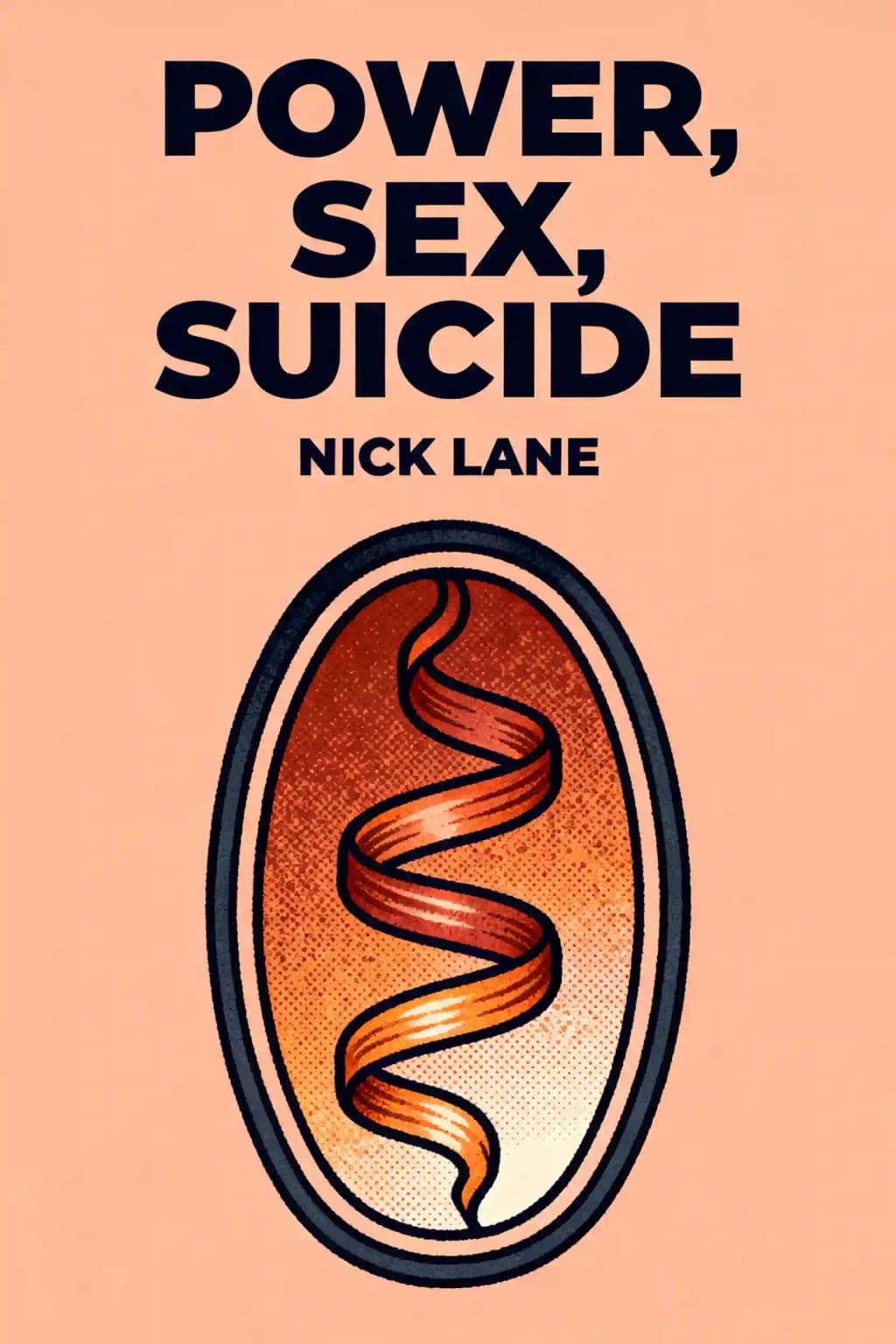
Power, Sex, Suicide explores mitochondria’s central role in shaping life, arguing these organelles drive energy production (power), sexual reproduction (sex), and programmed cell death (suicide). Nick Lane posits that mitochondria’s symbiotic origin 2 billion years ago enabled complex life, influencing aging, gender evolution, and cellular survival strategies. The book bridges biochemistry, evolution, and philosophy to explain how mitochondria underpin life’s complexity.
This book suits readers interested in evolutionary biology, biochemistry, or the origins of life. Scientists, students, and curious non-specialists will appreciate Lane’s accessible explanations of mitochondria’s role in energy, sex, and death. It appeals to those seeking interdisciplinary insights into how cellular mechanisms shaped human existence.
Yes. Lane’s engaging narrative transforms complex concepts like bioenergetics and apoptosis into compelling stories, earning praise for clarity and originality. The book was shortlisted for the 2006 Royal Society Science Book Prize and remains influential for its groundbreaking mitochondrial-centric perspective.
Lane argues mitochondria originated from a unique symbiotic merger between bacteria and archaea, enabling eukaryotic cells’ evolution. By outsourcing energy production to mitochondria, cells could specialize, driving multicellular complexity. This “mito-centric” view frames mitochondria as indispensable architects of life’s diversification.
Lane discusses Mitochondrial Eve, the ancestral woman from whom all humans inherit mitochondrial DNA. This concept underscores mitochondria’s maternal inheritance and their role in tracing human evolutionary lineage, highlighting their genetic stability compared to nuclear DNA.
Mitochondria regulate apoptosis (programmed cell death) by releasing enzymes that trigger self-destruction, a process critical for preventing cancer. Lane also ties mitochondrial DNA damage to aging, as accumulated mutations impair energy production, accelerating cellular decline.
Some scholars note Lane’s speculative theories on topics like gender roles and evolutionary singularities lack conclusive evidence. However, his hypotheses are praised for stimulating debate and redefining mitochondria’s perceived importance in evolutionary biology.
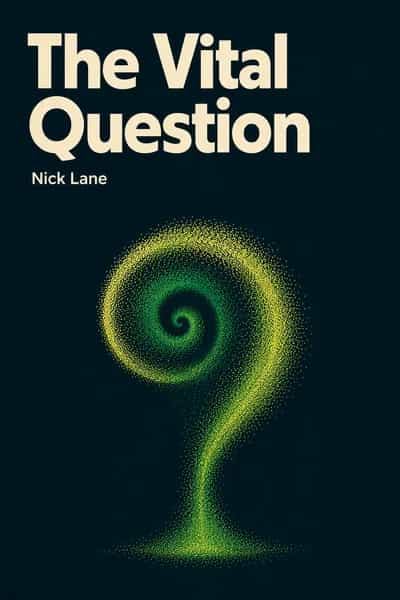
Like Life Ascending and The Vital Question, this book blends rigorous science with narrative flair. However, Power, Sex, Suicide uniquely focuses on mitochondria, whereas later works address broader themes like energy’s role in life’s origins.
The book remains pivotal for understanding mitochondrial diseases, aging research, and evolutionary biology. Its insights into energy metabolism inform current studies on longevity and cellular health, maintaining its scientific and medical relevance.
Lane combines wit, analogies, and storytelling to demystify complex science. Critics compare his approach to “a thriller,” balancing technical detail with accessible explanations for non-experts.
Lane proposes that mitochondrial inheritance created an evolutionary pressure for two sexes: one (female) preserving mitochondria and another (male) minimizing mitochondrial mutations in offspring. This asymmetry influenced reproductive strategies and genetic diversity.
Erlebe das Buch durch die Stimme des Autors
Verwandle Wissen in fesselnde, beispielreiche Erkenntnisse
Erfasse Schlüsselideen blitzschnell für effektives Lernen
Genieße das Buch auf unterhaltsame und ansprechende Weise
Bacteria have dominated Earth for nearly four billion years.
The deepest evolutionary chasm...complex multicellular life evolved just once.
Every eukaryote either has or once had mitochondria.
The proton force field is more fundamental than ATP itself.
Mitchell's ideas were initially dismissed as insane.
Zerlegen Sie die Kernideen von Power, Sex, Suicide in leicht verständliche Punkte, um zu verstehen, wie innovative Teams kreieren, zusammenarbeiten und wachsen.
Erleben Sie Power, Sex, Suicide durch lebhafte Erzählungen, die Innovationslektionen in unvergessliche und anwendbare Momente verwandeln.
Fragen Sie alles, wählen Sie Ihren Lernstil und gestalten Sie Erkenntnisse, die wirklich zu Ihnen passen.

Von Columbia University Alumni in San Francisco entwickelt
"Instead of endless scrolling, I just hit play on BeFreed. It saves me so much time."
"I never knew where to start with nonfiction—BeFreed’s book lists turned into podcasts gave me a clear path."
"Perfect balance between learning and entertainment. Finished ‘Thinking, Fast and Slow’ on my commute this week."
"Crazy how much I learned while walking the dog. BeFreed = small habits → big gains."
"Reading used to feel like a chore. Now it’s just part of my lifestyle."
"Feels effortless compared to reading. I’ve finished 6 books this month already."
"BeFreed turned my guilty doomscrolling into something that feels productive and inspiring."
"BeFreed turned my commute into learning time. 20-min podcasts are perfect for finishing books I never had time for."
"BeFreed replaced my podcast queue. Imagine Spotify for books — that’s it. 🙌"
"It is great for me to learn something from the book without reading it."
"The themed book list podcasts help me connect ideas across authors—like a guided audio journey."
"Makes me feel smarter every time before going to work"
Von Columbia University Alumni in San Francisco entwickelt

Erhalten Sie die Power, Sex, Suicide-Zusammenfassung als kostenloses PDF oder EPUB. Drucken Sie es aus oder lesen Sie es jederzeit offline.
Every breath you take, every thought you think, every heartbeat that keeps you alive-all depend on ancient bacteria living inside your cells. These microscopic powerhouses, called mitochondria, aren't just cellular accessories. They're the reason complex life exists at all. Without them, Earth would still be a planet of nothing but bacteria, as it was for the first two billion years of life's history. No plants, no animals, no consciousness. Just single cells drifting in primordial seas. This isn't speculation-it's the revolutionary insight that transformed biology in the early 2000s, earning Nick Lane's work the Royal Society Prize and a place on Bill Gates' essential reading list. What makes mitochondria so extraordinary isn't just what they do, but what they reveal about why we age, why we need two sexes, and why we die. These tiny structures hold answers to life's deepest questions, written in a molecular language we're only beginning to decode.
Life's most profound split isn't between humans and other animals-it's between bacteria and everything else. For nearly four billion years, bacteria have dominated Earth, thriving everywhere from Antarctic ice to volcanic vents. Yet despite this numerical supremacy, they remain structurally simple. Meanwhile, eukaryotic cells-those with nuclei, like ours-are 10,000 to 100,000 times larger and carry vastly more genetic information. Complex multicellular life evolved exactly once in Earth's history. Despite trillions of opportunities over billions of years, bacteria never made the leap. Every mushroom, maple tree, and mammal shares a single common ancestor. Scientists once thought certain primitive organisms were eukaryotes without mitochondria, but genetic analysis revealed these creatures lost their mitochondria after inheriting them. Mitochondria weren't a later upgrade-they were the defining event that made complexity possible. The traditional story seemed straightforward: a predatory cell engulfed a bacterium but failed to digest it. But genetic evidence revealed a paradox-the host cell was related to methanogens, microbes that survive only without oxygen. Why would an oxygen-hating organism harbor an oxygen-loving bacterium? The 1998 hydrogen hypothesis provided the answer: the bacterial ancestor produced hydrogen through fermentation, and the methanogen host, addicted to hydrogen for energy, formed a partnership to secure reliable supply. This merger provided energetic liberation. By internalizing energy production, the host cell could support features defining complex life: dynamic shape-changing, large size, elaborate internal structures, and sophisticated DNA management. Bacteria, generating energy across their outer membrane, face geometric constraints keeping them perpetually simple. This explains why the merger happened only once-it required a precise sequence of unlikely evolutionary steps that made intelligent life possible.
Mitochondria pump protons across their inner membrane, creating roughly 30 million volts per meter. This proton-motive force drives ATP synthase-a molecular turbine that rotates as protons flow through, producing ATP. When Peter Mitchell proposed this mechanism in the 1960s, colleagues dismissed him as insane. Two decades later, he won the Nobel Prize. This gradient powers ATP production, nutrient transport, waste removal, and bacterial flagella. Bacteria will even reverse their ATP synthase, burning ATP to maintain their charge when respiration fails. Recent research suggests life began at hydrothermal vents, where natural proton gradients existed. Early cells harnessed these geological batteries, then developed machinery to recreate them anywhere-a solution refined over billions of years but never replaced. Bacteria face a brutal constraint: surface-to-volume ratio. They generate energy across their outer membrane, but when a cell doubles in size, surface area increases fourfold while volume increases eightfold. Energy production per unit volume drops by half, forcing bacteria to keep genomes small-typically fewer than 5,000 genes. Mitochondria shattered these constraints. By moving energy production inside, eukaryotes escaped the geometric trap. They maintain efficiency by adding more mitochondria as they grow, enabling them to grow 10,000 to 100,000 times larger than bacteria while supporting energy-intensive activities like predation and complex information processing. Despite their 3.5 billion year head start, bacteria remained simple while eukaryotes built redwood forests, coral reefs, and civilizations.
If mitochondria originated as bacteria, why keep their own genes? Cells harbor hundreds of mitochondrial genome copies - seemingly wasteful. Most mitochondrial genes transferred to the nucleus (95-99.9 percent now reside there), yet no species moved them all. Remarkably, different species independently retain the same core genes, suggesting necessity. The answer lies in respiration's demands. Energy production requires perfect molecular balance - "poise" where half the electron carriers are oxidized, half reduced. This maximizes efficiency while minimizing free radicals. But respiratory needs shift constantly - sleeping versus sprinting, fasting versus feasting. These rapid changes demand immediate adaptation that distant nuclear genes can't manage. When a mitochondrion lacks respiratory components, electrons back up, generating free radicals that signal protein needs. Local genes trigger immediate on-site production. Nuclear genes couldn't direct proteins to specific mitochondria - all would receive identical proteins regardless of individual need, causing respiratory chaos. This necessity for on-site genetic control represents a fundamental constraint. Mitochondria can never fully integrate; they must remain semi-autonomous. This creates complications for aging and disease, but it's the price of complexity.
Even primitive organisms like algae and fungi have two mating types despite identical gametes. This contradicts evolutionary logic-a third type able to mate with both would have twice the potential partners and should dominate. Yet it never appears. The answer lies in organelle inheritance: one sex passes on mitochondria, the other doesn't. This uniparental inheritance represents the fundamental asymmetry from which all sexual differences grow. Mixing cytoplasm creates conflict between different mitochondrial genomes. Competing mitochondria jettison genes needed for energy production but not replication, harming the host cell. Evolution solved this by tagging male mitochondria for destruction or preventing their entry into eggs. This battle drove extreme differences: eggs contain 100,000 mitochondria while sperm have fewer than 100. Mitochondrial function requires precise coordination between mitochondrial and nuclear genomes. Misalignment catastrophically affects energy production, fertility, and aging. During early development, the egg's 100,000 maternal mitochondria undergo a severe bottleneck to as few as ten per cell, exposing functional deficits and allowing selection for optimal mitochondria. The asymmetry that began as conflict-avoidance ultimately shaped everything from gamete size to courtship complexity.
Mitochondria give us life but also take it away. As the primary source of oxygen free radicals, they damage DNA, proteins, and membranes-yet free radicals aren't merely destructive. They're vital signals that fine-tune respiration and communicate deficiencies to the nucleus. When multiple mitochondria fail simultaneously, elevated free radicals activate the "retrograde response"-shifting cells into a stress-resistant but energy-limited state. These cells survive for years unless stressed, potentially fueling chronic inflammation underlying age-related diseases. When ATP falls critically low, cells trigger apoptosis-programmed suicide-removing themselves quietly rather than dying through inflammatory necrosis. Timing depends on accumulated free-radical exposure, which is why long-lived animals develop diseases later. Birds naturally slow free-radical leakage by maintaining their respiratory chain in a lower reduction state, creating "spare capacity." Humans live several times longer than equivalent mammals, suggesting we evolved greater spare capacity-perhaps because longevity benefited social cohesion, letting elders pass on knowledge. Our mortality is written in mitochondrial mathematics, but understanding that equation might let us rewrite it.
Every aspect of what makes us human-our size, complexity, two sexes, aging, very existence-traces back to that singular moment two billion years ago when one bacterium entered another and never left. This violent accident transformed both partners so profoundly that neither could survive alone, creating an entirely new form of life that would eventually give rise to every complex organism on Earth. Understanding mitochondria reveals the deep constraints shaping all life. We're locked into architectural decisions made billions of years ago. The mitochondrial genes that refuse to transfer to the nucleus, the two sexes required to manage organelle inheritance, the free radicals that both power and destroy us-these aren't bugs but fundamental features of how complex life must work. Yet this understanding offers hope. Birds that live decades longer than equivalent mammals by managing their respiratory chains differently prove that the equations governing lifespan can be rewritten. The challenge isn't to escape our mitochondrial legacy-that's impossible-but to work within its constraints more intelligently.