Kapitel 1
The Social Science of Connection: Unraveling Human Relationships
When I first heard the NYPD hostage negotiator casually mention that their expert communication techniques "don't work at home," I was stunned. Here was a professional trained to talk down armed criminals, yet he couldn't use the same skills with his spouse. Marriage therapists recommend active listening, but research by relationship expert John Gottman confirms the negotiator's wisdom: these techniques fail in personal conflicts where you're emotionally invested. Most couples can't maintain active listening during heated arguments, and even those who master it see only short-term benefits before old patterns return.
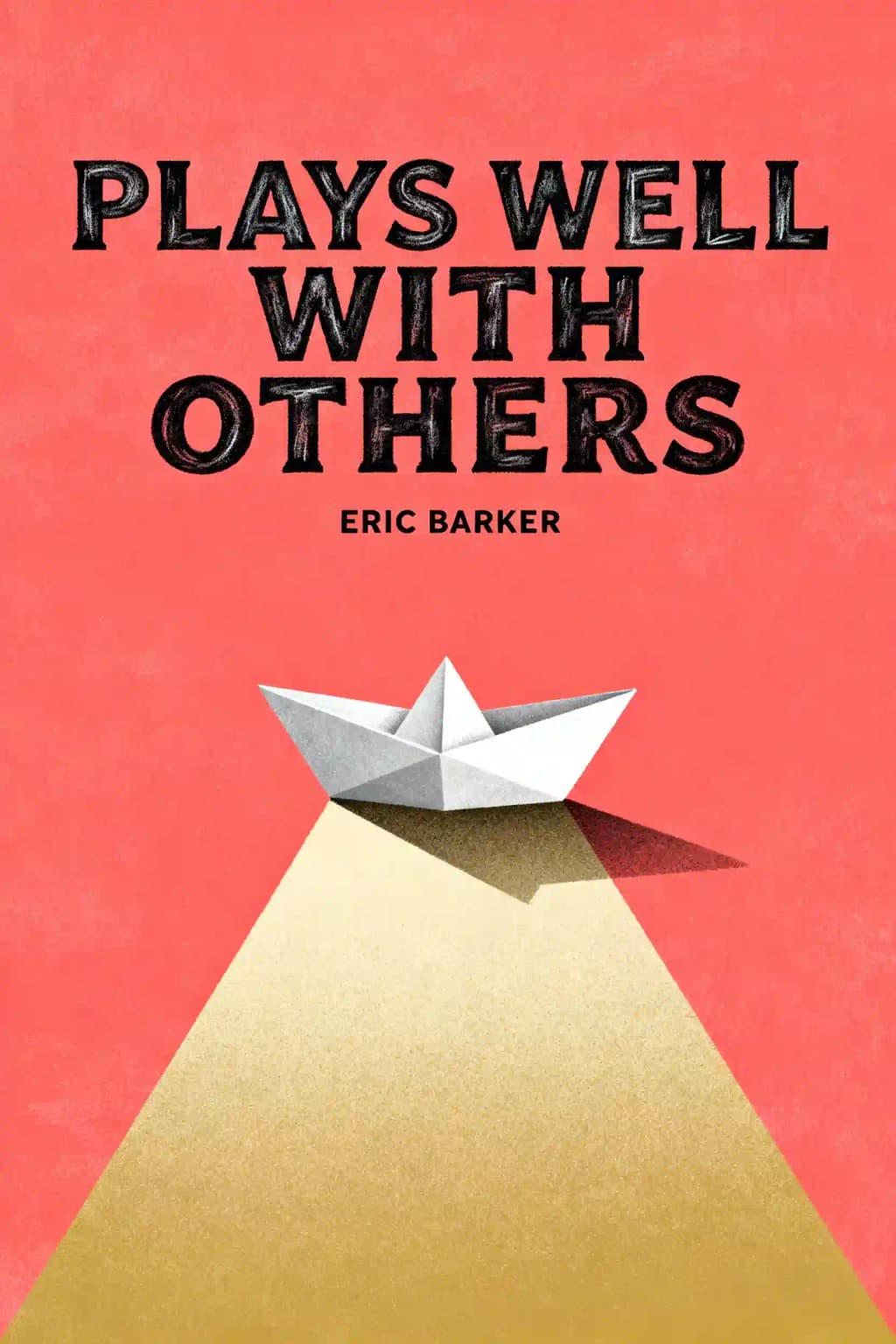
This disconnect between professional wisdom and personal reality highlights why Eric Barker's exploration of human connection is so revolutionary. "Plays Well With Others" has become required reading in psychology programs nationwide, with figures from Brene Brown to Adam Grant citing its research. The book's popularity stems from its rare combination of scientific rigor and practical wisdom-examining what actually works in relationships rather than what should work in theory.
Kapitel 2
The Illusion of Reading Others
In 1917, America's greatest detective Grace Humiston-known as "Mrs. Sherlock Holmes"-solved the disappearance of Ruth Cruger when police had given up. Despite being one of only a thousand female lawyers in America and unable to vote, Grace had already become the first female US district attorney. With her partner Julius "Kronnie" Kron, she discovered Ruth's body beneath the workbench of suspect Alfredo Cocchi, who had fled to Italy. Ironically, despite her "Sherlock" nickname, Grace dismissed deduction as the key to solving mysteries, instead crediting "common sense and persistence."
This reveals a profound truth: criminal profiling-what we consider the gold standard for analyzing people-is largely pseudoscience. Studies show college chemistry majors produce more valid profiles than trained homicide investigators, and UK data reveals profiling helps in just 2.7% of cases. Yet 86% of psychologists involved in legal cases believe it works, demonstrating how easily we're fooled about judging others.
The "Barnum effect" explains this delusion. In 1948, Professor Bertram Forer gave students identical personality profiles from an astrology book, yet they rated them 4.3 out of 5 for accuracy. Criminal profiling similarly combines high base-rate statements with unverifiable claims. When wrong, these are overlooked; when right, they seem brilliant. Our minds actively make vague statements fit, just as with psychic readings. We crave stories that give us a sense of control, even when false.
Research shows we correctly detect strangers' thoughts only 20% of the time, close friends 30%, and spouses peak at 35%. Yet we remain confidently wrong, believing we understand others 82% of the time. This "egocentric anchoring" keeps us trapped in our own perspective. Women do have a slight 2% edge in reading nonverbal cues-not from biology but from motivation. When men are told empathy will make them more attractive to women, their accuracy improves.
The truth is, our people-reading skills aren't that variable, but how expressive people are ranges widely. Since we can't significantly improve our reading abilities, we must make others more readable by manipulating context, bringing in third parties, and discussing emotional topics rather than safe ones.
Kapitel 3
The Science of Deception
Humans have struggled with lie detection for millennia. The polygraph, developed in the 1920s by William Moulton Marston (who later created Wonder Woman), has been deemed unreliable by the US National Academy of Sciences. People can beat it with minimal training-even by clenching their anus at strategic moments.
The Reid interrogation technique, still dominant in US law enforcement, is equally problematic. While effective at generating confessions, it works too well, extracting false confessions from innocent people. Canada and the UK have abandoned it as coercive and unethical.
Modern science offers a better approach through the High-Value Detainee Interrogation Group (HIG), which has invested over $15 million researching effective techniques. Their surprising conclusion? Be nice. The "Friendly Journalist Method" involves doing homework beforehand, building rapport, and getting suspects talking freely without accusation.
The method focuses not on improving your lie detection skills but on making their lie-telling skills worse by applying cognitive load. Lying requires significant mental effort-maintaining a false narrative while appearing honest and monitoring the interviewer's reactions. Two powerful techniques emerge: asking unanticipated questions and strategic use of evidence (gradually revealing contradictions between their story and known facts).
These methods aren't perfect but dramatically improve detection rates. Studies show police officers typically detect lies 56% of the time, but those trained in strategic evidence use score 85.4%. The approach requires time and patience but proves far more effective than looking for mythical body language "tells."
Kapitel 4
First Impressions: Blessing and Curse
First impressions are surprisingly powerful and persistent, wielding an influence that extends far beyond casual social interactions. Studies show they predict election outcomes 70% of the time based on perceived competence alone, with voters making lasting decisions from brief exposure to candidates' faces. We make snap judgments about assertiveness, beauty, competence, likability, and trustworthiness in less than a second - as little as 100 milliseconds in some cases. These judgments are immediate, consistently shared across observers from different cultures, and surprisingly accurate-often predicting personality traits two-thirds of the time, particularly for extroversion and self-confidence.
However, our first impressions are only about 70% accurate due to cognitive biases like "overgeneralization" and confirmation bias. For example, we might judge someone with naturally downturned lips as unfriendly, or someone with a strong jawline as more competent. These biases are nearly impossible to overcome consciously because we have a bias against noticing our own biases - a phenomenon known as "bias blindspot." We readily identify prejudices in others while maintaining an illusion of our own objectivity, making these snap judgments particularly resistant to change.
First impressions become self-fulfilling prophecies through behavioral confirmation. If someone has an "untrustworthy" face, we act more guarded and distant, which prompts them to respond with similar reserve, thereby "confirming" our initial suspicion. This cycle perpetuates itself across multiple interactions. Research shows that even when presented with substantial contradicting evidence, our explicit impressions might change while our implicit feelings and gut reactions remain largely unchanged.
To overcome confirmation bias, we need three key strategies: Feel accountable (setting a high bar before cementing opinions, like imagining having to justify your judgment to others), distance before decision (stepping back to be more rational, such as considering how you'd view the situation as an outside observer), and consider the opposite (actively looking for evidence that contradicts our initial impression by asking "What if I'm wrong?").
The implications are twofold: First, invest in making good first impressions since they have remarkable staying power - this includes being aware of facial expressions, body language, and initial verbal exchanges. Second, consciously give people second chances, especially in professional settings. Since negative judgments lead us to avoid people, creating fewer opportunities for disconfirmation, they're inherently less reliable than positive impressions that naturally lead to more interactions and better-informed evaluations. This is particularly crucial in workplace settings where initial negative impressions might unfairly limit someone's opportunities for growth and collaboration.
Kapitel 5
The Power of True Friendship
Standing in socks without a coat as temperatures dropped below zero, Hector Cafferata faced hundreds of approaching enemy soldiers while his squad lay wounded nearby during the Korean War. His buddy Kenneth "Bens" Benson was blinded by a grenade flash, and the rest of the squad was incapacitated.
For five hours, Hector single-handedly held off a regimental-sized enemy force-firing his M1 rifle until it overheated, batting away incoming grenades with a shovel, and racing through the creek bed as bullets whizzed past. Bens, still blind, loaded bullets by feel and handed them to Hector when he heard the empty "click."
When asked why he risked his life, Hector gave the same reason as other Medal of Honor recipients: "They were killing my friends."
Friendship is nearly universal, appearing in 395 of the 400 most studied cultures worldwide. Mutual aid, reported in 93 percent of societies surveyed, is friendship's most agreed-upon quality, along with the prohibition against "keeping score." Unlike transactions with strangers, friendship means ignoring strict accounting of favors.
Studies show Americans typically have four close relationships, two being friends. Those with five or more friends they can confide in are 60 percent more likely to consider themselves "very happy." Friendship numbers peak in our teens but decline with age, which is unfortunate since friends make us happier than any other relationship.
Daniel Kahneman's research shows people report highest happiness levels when with friends, regardless of age or location. Even in marriages, friendship is paramount-70 percent of marital satisfaction comes from the friendship between spouses.
Workplace friendships dramatically impact wellbeing-those with three friends at work are 96 percent more likely to feel satisfied with their lives. While income changes bring minimal happiness increases, spending more time with friends equates to happiness gains comparable to earning an extra $97,000 annually.
Friends also significantly impact health-loneliness affects health like smoking fifteen cigarettes daily. Studies of breast cancer patients showed those with ten close friends had quadruple the survival rate compared to those with none, while having a spouse showed no impact on survival.
Kapitel 6
The Essence of Connection: Another Self
What defines true friendship? Aristotle had the answer all along: "a friend is another self." Modern science confirms this ancient wisdom through self-expansion theory-we literally expand our sense of self to include close friends. Over sixty-five studies show that the closer we are to someone, the more the boundary between us blurs. Brain scans reveal that when women hear the names of close friends, their brains activate the same regions as when hearing their own names.
This explains why empathy exists despite Darwin's survival-focused theory. Empathy occurs when the line between you and another blurs. Closeness happens when your vision of "self" makes room for someone else. A friend becomes part of you-which is why losing close friends can feel like losing part of yourself.
Williams syndrome offers profound insights into human connection. This rare genetic disorder creates "superfriendly" people who love unconditionally. People with WS have an average IQ of 69 and struggle with math and spatial tasks, yet excel verbally and emotionally. Brain scans reveal they have "diminished amygdala reactivity to socially frightening stimuli"-they simply never perceive faces as unfriendly.
Fascinatingly, these same genes distinguish wolves from dogs, explaining why those with WS treat everyone as potential friends. They embody qualities religions urge us toward-showing zero racial bias and practicing inclusion naturally. Harvard psychologist Karen Levine half-jokingly suggests we're the ones with a disorder: "The Rest of Us Syndrome."
The tragic irony is that despite their social desire, those with WS lack the skills to maintain relationships. They miss social cues, ask repetitive questions, and struggle to deepen connections. About 80% report friendship difficulties-they're the sweet children everyone is nice to but no one invites to parties.
Kapitel 7
Building Lasting Bonds
True friendship requires costly signals that can't be easily faked. Time is the first crucial signal because it's scarce-spending an hour daily with someone means you can only do this with limited people. Research shows companionship (simply spending time together) is what makes friendship produce happiness, while lack of time is the most common source of friendship conflict.
Making new friends requires significant time investment-60 hours for a light friendship, 100 hours for a regular friendship, and 200+ hours for best friendship. Rituals that ensure regular contact every two weeks help maintain friendships.
Vulnerability is the second crucial signal. Ironically, trying to impress people often backfires, while sharing weaknesses builds trust. Studies show that trust creates trust-by making yourself vulnerable first, you signal trustworthiness. Arthur Aron's research demonstrated that strangers could become close in just 45 minutes through structured self-disclosure.
The "beautiful mess effect" shows we overestimate how negatively others will judge our vulnerabilities. The "Scary Rule": "If it scares you, say it." Start small, build gradually, and accept others' vulnerabilities. Research shows more small talk actually decreases closeness, while not opening up can even increase health risks like heart attacks.
For every ten friends gained, data shows we also gain one enemy. More problematic than enemies are "frenemies" (ambivalent relationships), which research shows increase anxiety and blood pressure more than outright enemies due to their unpredictability. These ambivalent relationships correlate with depression and heart disease, yet comprise half our social connections.
Narcissists represent a particular challenge because they don't include others in their sense of self. While everyone has fantasies of superiority, narcissists become addicted to these dreams, finding strength only in themselves rather than in connections with others.
Kapitel 8
The Paradox of Modern Love
The story of Viagra illustrates how complicated love and sex can be. Despite overwhelming resistance from Pfizer's conservative culture and external critics who considered it "undignified medicine," two unlikely champions-marketing expert Rooney Nelson and pharmacist "Dr. Sal"-fought to bring the medication to market. Through creative strategies like rebranding "impotence" as "erectile dysfunction," they overcame obstacles to create what became a cultural phenomenon.
With roughly 40% of US marriages ending in divorce (most commonly around four years after the wedding), love clearly doesn't conquer everything. Yet romantic love itself is universal, recognized in 90% of studied cultures and documented in poetry dating back 3,500 years.
Marriage itself doesn't guarantee health or happiness-only good marriages do. While happily married people enjoy significant health benefits and longer lives, unhappily married people fare worse than those who never married. Bad marriages increase illness risk by 35% and reduce lifespan by four years, with some negative health effects persisting even after remarriage.
Historically, marriage had little to do with love-it was primarily economic, providing social security and stability. For the wealthy, marriage was about forging alliances through in-laws. Love within marriage was often considered impossible or threatening to social order. The Enlightenment and rising economic independence enabled love marriages in the 1800s, but immediately made marriage less stable.
Today, we've reached the "self-expressive marriage" era where expectations are sky-high but couples spend less time together. Marriage has crowded out other relationships while becoming the primary determinant of happiness. While marriage rates decline globally, the best modern marriages are better than any in human history-creating an "all or nothing" scenario.
Kapitel 9
The Neurochemistry of Love and Connection
The power of romantic love is undeniable-death row inmates mention it more than God or family in their final words. Yet love's intensity can be both heaven and hell. Throughout history, love was often considered an illness rather than an emotion. Modern science shows that love's symptoms closely resemble mental disorders like mania, depression, OCD, and addiction. Brain scans of people in love look remarkably similar to those of people on cocaine or morphine.
This seemingly irrational state serves important evolutionary purposes. First, it drives reproduction. Second, love's madness functions as a "costly signal" that demonstrates genuine commitment. Acting crazy about someone proves you're not operating from selfishness-you're trustworthy precisely because you're not being rational. This explains why impractical gestures like flowers and diamonds are considered romantic while practical gifts aren't. The irrationality of love is, paradoxically, extremely rational.
When ardor fades, do we focus on reigniting passion or building practical systems? John Gottman's research identifies four communication patterns that predict divorce with 83.3% accuracy: criticism (attacking personality rather than behavior), stonewalling (shutting down during discussions), defensiveness (shifting blame), and contempt (communicating superiority). Contempt is the single strongest divorce predictor.
How you start an argument determines its outcome with 96% accuracy-harsh beginnings lead to harsh endings. Even when these negative patterns appear, relationships can survive through what Gottman calls "repair"-soothing gestures, humor, or affection during conflicts that prevent escalation.
A helpful perspective is treating your partner like a child-not condescendingly, but with the generosity and compassion we naturally extend to children. We don't expect children to always be rational, and we shouldn't expect that from partners either.
Kapitel 10
Rekindling and Maintaining Love
To rekindle love, we need four strategies: Rekindle, Remind, Renew, and Rewrite.
Recent feelings are eight times more important to relationship satisfaction than overall history. Self-expansion is crucial-couples need to grow together through exciting, challenging activities rather than merely pleasant ones. Research shows that couples who dance, ski or tackle obstacle courses together experience greater satisfaction than those who just have dinner or watch movies.
This works through emotional contagion-when we feel excited around our partner, we associate that excitement with them. Any strong emotion can increase love. Self-expansion activities also increase sexual desire, with couples who do exciting things 12% more likely to have sex.
Couples who open up deeply to each other are nearly two-thirds more likely to report a happy union. Gottman's concept of "love maps" involves knowing your partner intimately-from how they take their coffee to their deepest hopes and dreams. This knowledge builds intimacy and enables "preemptive repair" by helping you avoid their sensitivities.
Wanting to change your partner usually backfires and decreases marital satisfaction. The irony is that people only change when they feel they don't have to-you must accept someone fully before they can transform. Rather than trying to mold your partner into who you want them to be, help them become their ideal self. Like Michelangelo who saw the sculpture already complete within the marble block, see the potential in your partner and encourage aspects aligned with who they want to become.
Love is ultimately a shared story. Gottman can predict divorce with 94% accuracy simply by asking couples to tell their story-the facts matter less than how they frame it. "Glorifying the struggle" is crucial; couples who present challenges with a positive spin ("We had troubles but overcame them") fare better than those with disappointment.
Kapitel 11
The Loneliness Epidemic
The chapter examines the complex paradox of loneliness versus solitude in modern society. While loneliness increases reaction time as an evolutionary response (if you're alone, you need heightened vigilance for survival), numerous studies consistently show that meaningful relationships are what make people happiest. A groundbreaking economics study from the London School of Economics valued a better social life at an additional $131,232 per year in happiness terms - more than doubling one's income. Loneliness dramatically increases depression risk and negatively impacts physical health through multiple pathways, including elevated stress hormones, increased inflammation, and compromised immune function. Research from Harvard's longitudinal studies shows that good relationships can add up to a decade to lifespan, equivalent to the impact of quitting smoking.
Surprisingly, before the 1800s, "loneliness" as a negative concept barely existed in written language. The word appeared in literature but simply meant "being alone" without negative connotations. The Romantic movement fundamentally shifted this meaning, as exemplified in Mary Shelley's Frankenstein (1818), where solitude transforms into miserable isolation. The monster's isolation becomes a metaphor for modern alienation. Previously, solitude was viewed positively - associated with wisdom, spiritual insight, and creativity. Religious texts, philosophers, and artists celebrated time alone as essential for deep thought and self-discovery.
The cultural shift toward individualism in the 19th century fundamentally changed our relationship with being alone. While individualism brought personal freedom and autonomy, it also created unprecedented social disconnection. Modern research reveals that loneliness isn't about physical isolation - lonely people spend as much time with others as non-lonely people - but about the quality of meaningful connection. Our evolutionary wiring, shaped by millions of years of living in close-knit tribes, still craves deep community despite our modern emphasis on independence and self-reliance.
This evolutionary mismatch helps explain why modern society, despite remarkable technological and medical advances, has unprecedented rates of depression, anxiety, and chronic loneliness. Social scientists have documented a dramatic collapse in social trust - from 77% of Americans trusting others in 1964 to just 24% by 2012. This decline correlates with rises in single-person households, reduced community participation, and decreased extended family connections. The average American now reports having only one close confidant, compared to three in 1985, suggesting a fundamental shift in our social fabric that our Stone Age brains aren't equipped to handle.
Kapitel 12
Finding Meaning Through Connection
Despite media reports of chaos after disasters like Hurricane Katrina, research consistently shows that humans respond to crises with altruism and unity. The Disaster Research Center found that looting "always pales in significance to the widespread altruism" during emergencies. When threatened as a group, people willingly sacrifice because they feel needed and connected.
Paradoxically, during times of war and disaster, psychiatric admissions decline and people often report feeling happier. Dorothy Day wrote about the 1906 San Francisco earthquake: "What I remember most plainly was the human warmth and kindliness of everyone afterward." Twenty years after Sarajevo's war, many residents admitted missing the community bonds formed during that time.
Modern society has "perfected the art of making people not feel necessary," as Sebastian Junger noted. Research shows that wealthier individuals tend to be less wise about social relationships, while those with lower socioeconomic status demonstrate greater interdependence. Communities function as "another self," with studies showing that interconnected friend groups provide stronger support than isolated friendships.
The Amish exemplify prioritizing community over technology, approving innovations based on their effect on community closeness. During Rumspringa, when Amish youth experience modern life, over 80% choose to return to their traditional community. Research confirms that people embedded in communities have 50% lower mortality rates over seven years.
The story of Hawaiian lepers exiled to Molokai in 1866 powerfully illustrates our cooperative nature. Sixteen people, most strangers to each other, were abandoned on the island with minimal supplies and no medical care. Logic would suggest the healthy would abandon the sick to improve their own survival chances. Instead, when ships returned two weeks later, they discovered the healthy had cared for the sick, repaired huts, planted crops, and maintained fires. Every person from the initial group was still alive.
This "irrational" cooperation represents our true human nature. We survived as a species precisely because we chose cooperation over selfishness. Studies show that a sense of belonging directly causes feelings of meaningfulness. While our stories may not always be factually true, they serve to unite us. The solution to conflicts between different groups' stories is to create more stories that can unite us in new ways.